
The day's AI news, briefed
The Daily Prompt
Our AI editor reads each day's AI and robotics stories, pulls out why they matter, and links every original source — so you can keep up in minutes.
Join over 250,000 subscribers getting the latest AI news
Latest AI & Robotics News Today

‘Queer Eye’s’ life coach Karamo Brown launches Kē, a wellness app featuring his AI digital clone
Kē, an AI-powered wellness app featuring a digital clone of Karamo Brown, highlights how celebrities are leveraging technology to blend personal development with artificial intelligence in wellness applications.
- Karamo Brown has launched Kē, a wellness app that features an AI digital clone allowing users to receive personalized fitness and nutrition guidance.
- The app offers features such as guided workouts, meditation videos, and community engagement for individuals focused on personal growth.
- Kē utilizes AI technology from startup Delphi to create an authentic digital replica of Brown, which users can interact with for advice.
Kē represents a growing trend of celebrities using AI to enhance interactions in personal development. Similar to projects by other stars, Brown created this app to provide a supportive tool for users. Future updates may introduce additional capabilities for the AI to assist users more actively.
Read the original ↗
AI data centers just got a government-mandated fast lane to the grid
The Federal Energy Regulatory Commission's new directive may speed up data center grid connections amidst a growing electricity demand, but it does not address existing capacity shortages.
- The Federal Energy Regulatory Commission (FERC) directed grid operators to prioritize interconnection requests from data centers and large electricity users.
- Data centers will bear the costs of their interconnection under the new orders, which were approved unanimously by FERC commissioners.
- Grid operators are tasked with reporting available generating capacity within 30 days and revising electricity rates within 60 days.
- FERC's approach offers opportunities for grid technology startups by encouraging consideration of alternative transmission technologies.
- Despite this fast lane for connections, there remains a significant shortage of generating capacity to meet rising electricity demands from data centers.
The Federal Energy Regulatory Commission (FERC) regulates interstate electricity sales and transmission. Recent delays in grid connections for data centers have raised concerns about U.S. competitiveness in the AI sector. As electricity demand from data centers is projected to nearly triple by 2035, the strain on the grid continues to escalate.
Read the original ↗
Bernie Sanders unveils $7 trillion plan to give Americans control of AI industry
This proposal could significantly reshape the AI industry by redistributing wealth from major firms to the public, altering the relationship between technology companies and societal interests.
- Bernie Sanders has proposed a $7 trillion plan aimed at giving Americans control of the AI industry through a sovereign wealth fund.
- The fund would be financed by a one-time 50 percent tax on the stock of the largest AI companies generating $200 million in annual sales.
- The plan includes creating a bipartisan Independent Commission for Democratic AI to oversee decision-making and ensure public benefits from AI developments.
- Sanders estimates that each American could receive more than $1,000 annually in dividends from the fund's earnings.
Bernie Sanders is a U.S. Senator known for advocating for wealth redistribution and public welfare. The proposed legislation aims to address concerns over the concentration of wealth and power in the AI sector as technology rapidly evolves. Observers are watching how this proposal will be received by lawmakers and the AI industry, particularly given its ambitious financial implications.
Read the original ↗
Grok Goes to War: Pentagon Reveals Musk’s AI Chatbot Launched Missiles in U.S. War with Iran
The involvement of AI in military operations raises critical questions about accountability, decision-making, and the implications for civilian safety amidst emerging technologies in warfare.
- The Pentagon reportedly used Elon Musk's xAI to assist in launching up to 2,000 munitions in the U.S. war with Iran.
- The AI, known as Grok, facilitated the deployment of these munitions to 2,000 distinct targets within 96 hours during Operation Epic Fury.
- This revelation emerged from a sworn statement amid a lawsuit alleging xAI's data centers' role in environmental pollution.
xAI is a company founded by Elon Musk focused on developing advanced artificial intelligence systems. The Pentagon's use of Grok marks a significant reliance on AI technologies in military operations, raising concerns over ethical implications and oversight. Ongoing legal challenges may impact how AI is deployed in national security contexts.
Read the original ↗
Waymo Recalls Robotaxis Over Risk They'll Drive at Speed Into Freeway Construction Zones
This recall illustrates significant challenges in the safety of autonomous vehicles, emphasizing the need for effective operational safeguards in complex driving environments like construction zones.
- Waymo is recalling 3,871 driverless cars due to failures in recognizing and responding to closed freeway construction zones.
- The problem stems from the vehicle's automated driving system, which sometimes prioritizes avoidance of freeway hazards over recognizing construction zones.
- No remedy for the issue currently exists, and Waymo has restricted its vehicles from entering freeways until a software fix is developed.
Waymo is a company that develops autonomous driving technology and has been offering rides since late 2025. This recall is the fourth since February 2024, reflecting ongoing safety concerns as the company navigates complex urban infrastructures.
Read the original ↗
General Intuition in talks to raise $300M at around $2B valuation
Successful fundraising will position General Intuition for growth in the competitive field of artificial intelligence, specifically in training agents using cutting-edge datasets for spatial reasoning.
- General Intuition is in talks to raise approximately $300 million, which would enhance its valuation to over $2 billion.
- The startup, focusing on training AI agents through spatial and temporal models, spun out of Medal eight months ago after raising a $134 million seed round.
- Backers include notable investors such as Jeff Bezos, Eric Schmidt, and Khosla Ventures.
- General Intuition plans to use the new funds to increase computing capacity and release a new product by late summer or early fall.
General Intuition is a New York-based startup specializing in training embodied AI to navigate real-world scenarios using a dataset of 2 billion videos annually. The startup emerged from Medal, which allows users to upload and share video game content, and aims to create AI agents for commercial applications in gaming and robotics.
Read the original ↗
To Cut AI Costs, Start with Cloud Spend
Reducing cloud expenditure is crucial for organizations looking to manage AI operational costs effectively amid rising expenses associated with AI deployment.
- Organizations are advised to begin cutting AI costs by optimizing cloud spending.
- Cloud spend is identified as a key area for reducing overall expenses in AI operations.
The article discusses the importance of managing cloud costs in the context of rising operational expenses for AI technologies. As AI continues to evolve, effective cost management strategies are becoming increasingly essential.
Based on the headline only — the full article could not be fetched.
Read the original ↗
BoolSi Raises $6M to Transform Software Into Custom Silicon Using AI
The successful funding round enables BoolSi to advance its technology, potentially transforming software development by allowing for customized silicon tailored to specific requirements.
- BoolSi has raised $6 million in funding.
- The company aims to transform software into custom silicon using artificial intelligence.
BoolSi is focused on using artificial intelligence to create custom silicon chips from software specifications. The shift towards custom silicon is becoming increasingly important in the tech industry, enabling enhanced performance for specific applications.
Based on the headline only — the full article could not be fetched.
Read the original ↗
Archaeologists Discover Stonehenge ‘Prototype’ Constructed 500 Years Before Britain’s Most Famous Megalithic Site
The discovery of a Stonehenge prototype can reshape understanding of ancient astronomical knowledge and cultural practices leading up to the construction of the famous stone circle in Britain.
- Archaeologists discovered a structure aligned with the solstices, which predates Stonehenge by 500 years, indicating earlier monumental construction practices.
- The prototype structure was uncovered 5 kilometers from Stonehenge and features wooden pole pits that point to the summer and winter solstices.
- Radiocarbon analysis suggests the wooden poles were set around 5,000 years ago, demonstrating advanced astronomical alignment among prehistoric societies.
The discovery, made by a team from Wessex Archaeology, signifies the earliest known alignment with the solstices in this region. Previous excavations uncovered elements suggesting large gatherings at the site. This new find indicates that practices related to solstice celebrations existed long before the iconic Stonehenge was constructed.
Read the original ↗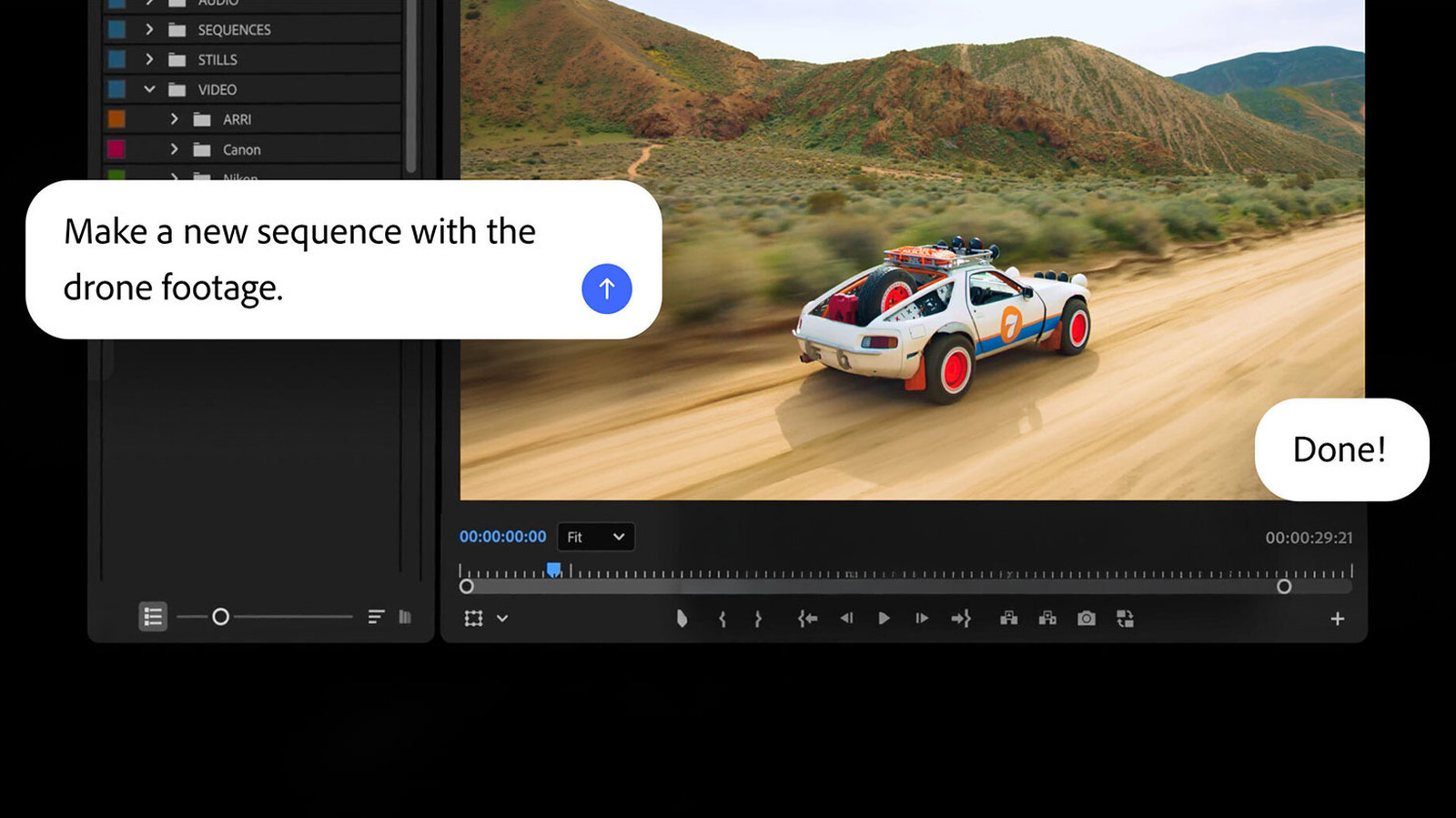
Adobe brings its Firefly AI Assistant inside of Premiere, Photoshop and Illustrator
Adobe's integration of Firefly AI Assistant into its Creative Cloud apps enhances creative workflows by streamlining repetitive tasks, empowering users to focus on higher-level creative decisions.
- Adobe has added its Firefly AI Assistant to Premiere, Photoshop, Illustrator, InDesign, and Frame.io as part of a public beta.
- The Firefly AI Assistant can now perform complex tasks, such as creating a brand identity and generating video from storyboards.
- A new Elements feature allows users to save and reuse previously generated characters, locations, and objects.
Adobe is a leading software company known for its creative applications. Firefly AI Assistant, launched earlier in 2023, is designed to assist users with creative tasks across its app ecosystem. Upcoming developments to watch include the full public release of the Firefly creative AI studio.
Read the original ↗
Sound Waves Give Neuromorphic Chips a Brain-Simulating Edge
The development of acoustic synapses represents a significant advance in neuromorphic computing, potentially leading to more efficient AI technologies that consume less power and process information faster.
- Researchers at the University of Arizona have created an acoustic device that mimics biological synapses to enhance energy efficiency in AI hardware.
- The new acoustic synapse performs computations using sound waves, achieving results with lower power requirements compared to traditional electronic neuromorphic devices.
- The acoustic device successfully classified types of flowers with 96.7% accuracy, outperforming conventional neural networks in speed and efficiency.
Neuromorphic computing simulates the brain’s neural structure to perform tasks more efficiently than standard processors. Acoustic synapses aim to enhance this technology by improving energy efficiency and processing capabilities, presenting new opportunities for AI development.
Read the original ↗
From RAG to Memory: Non-Parametric Continual Learning for Large Language Models
Advancements in non-parametric continual learning for large language models can enhance AI's ability to process and utilize information, mimicking human cognitive functions and improving overall performance.
- HippoRAG 2 improves upon the standard retrieval-augmented generation (RAG) model by integrating deeper passage information and utilizing a more effective large language model.
- The new framework shows a 7% improvement in associative memory tasks compared to leading embedding models, and also performs better in factual knowledge and sense-making tasks.
- This approach addresses challenges in continual learning, moving closer to mimicking human long-term memory capabilities.
Retrieval-augmented generation (RAG) models are used in AI to introduce new information effectively. Previous methods incorporating knowledge graphs improved associativity but underperformed in factual tasks. The development of HippoRAG 2 seeks to close these performance gaps and enhance memory capabilities in AI systems.
Read the original ↗
Kairos: A Native World Model Stack for Physical AI
Kairos offers a comprehensive framework that enhances the efficiency and effectiveness of physical AI, potentially transforming how machines interact with and learn from their environments.
- Kairos is a world model framework designed for physical AI applications, learning from diverse experiences and maintaining persistent states.
- It utilizes a Native Pre-training Paradigm and a Cross-Embodiment Data Curriculum to organize data from videos, human behavior, and robot interactions.
- Hybrid Linear Temporal Attention components enable Kairos to capture local and global dynamics, minimizing error accumulation over time.
Kairos represents a shift in world modeling for AI, moving from simple passive generators to active, adaptive systems. This framework is essential for developing self-evolving physical intelligence capable of real-world applications. Future developments will likely focus on enhancing its capabilities for broader deployment scenarios.
Read the original ↗
Beyond the Current Observation: Evaluating Multimodal Large Language Models in Controllable Non-Markov Games
This research is crucial as it sets a new standard for evaluating multimodal models in complex decision-making, potentially enhancing AI's ability to recall and utilize past information effectively.
- A new benchmark suite called RNG-Bench has been introduced to evaluate multimodal foundation models' decision-making skills in multi-step interactions.
- RNG-Bench features two games, Matching Pairs and 3D Maze, to assess the models' ability to reconstruct past observations amid varying difficulty levels.
- The benchmark includes a Memory Gap metric to differentiate between forgetting and suboptimal decision-making.
- Testing revealed that memory-related errors predominantly result from forgetting earlier observations rather than poor decision-making processes.
RNG-Bench is designed to evaluate the capabilities of multimodal foundation models in reconstructing past experiences for decision-making in non-Markovian settings. This approach addresses limitations in existing benchmarks that fail to isolate specific cognitive skills. Future research could explore further advancements in multimodal AI performance and benchmarks.
Read the original ↗
Securing the future of AI agents
The development of advanced AI agents necessitates comprehensive security measures to mitigate risks and ensure their safe deployment in various sectors.
- DeepMind has introduced its AI Control Roadmap to secure its internal systems against advanced AI agents, which can execute complex tasks autonomously.
- The AI Control Roadmap employs a defense-in-depth strategy that combines traditional security measures with enhancements for handling potentially misaligned AI agents.
- Through careful monitoring and threat modeling, DeepMind aims to preemptively address risks from AI agents deemed as potential insider threats.
DeepMind is a research lab focused on artificial intelligence, renowned for developing systems that perform complex tasks. The AI Control Roadmap represents a proactive measure to ensure that increased AI capabilities do not come at the cost of security and safety, addressing both existing and emerging risks as AI technology evolves.
Read the original ↗
AI Convinces People to Donate Nearly 3x More Than Human Fundraisers
The ability of AI to significantly outperform human fundraisers in persuasion could reshape the dynamics of charitable giving and influence public opinion.
- AI fundraising methods generated an average donation rate of 17.2%, compared to 6.4% from human canvassers, marking a significant disparity.
- The AI models tested include advanced versions of Claude, ChatGPT, Grok, and Google Gemini, which excelled in persuasion across multiple messaging strategies.
- The study involved 18,978 conversations with 6,923 participants, examining the impact of AI versus highly trained human persuaders.
- Even when human debaters received coaching based on AI strategies, their performance did not exceed that of unconstrained AI systems.
- AI's advantage diminished when responses were restricted to human writing speeds and lengths, suggesting speed of information delivery is key to persuasion.
This study, led by researchers from Oxford and various associated institutions, demonstrates that leading AI language models can be more effective in persuasive communication than professional human fundraisers. Prior research has indicated the potential of AI in various sectors, but its capability to surpass human persuasion marks a critical shift in understanding AI's role in society.
Read the original ↗
Speaking the Language of Science: Toward a General-Purpose Generative Foundation Model for the Natural Sciences
This research on LOGOS could revolutionize how scientific data is processed, potentially leading to more efficient AI applications in the natural sciences through a unified generative framework.
- LOGOS is a unified generative language model for the natural sciences, encoding scientific objects and spatial interactions as token sequences.
- The model demonstrates superior performance in various domains by using an autoregressive framework based on shared scientific grammar.
- LOGOS models are available in sizes of 1B, 3B, and 8B parameters, with larger models showing better performance.
- The research suggests integrating scientific foundation models with large language models (LLMs) to enhance AI applications in science.
LOGOS is designed to unify different tasks in natural sciences, breaking knowledge silos created by traditional models requiring specialized training for each task. The development of LOGOS signals a shift towards a shared generative approach for scientific data modeling, aiming for a more cohesive AI for Science framework.
Read the original ↗
AI’s New Economy Is Built on Tokens — But We’re Measuring Them All Wrong
Understanding the shift from requests to tokens in AI is crucial for businesses aiming to measure productivity and return on investment accurately in their AI systems.
- AI has shifted its measurement unit from requests to tokens, reflecting the work done by the system.
- Tokens are now considered the fundamental unit of AI, impacting cost and perceived value but not all tokens represent equal business value.
- The efficiency of AI operations increasingly relies on how well the underlying infrastructure can sustain energy and thermal loads associated with token generation.
Tokens have emerged as the new currency of AI performance measurement, but their value varies significantly based on context and application. As organizations scale AI systems, they need to focus on optimizing infrastructures and workflows rather than just counting tokens. This shift represents a deeper understanding of AI operational dynamics and their implications for business.
Read the original ↗
HSBC expands AI banking partnership with Google Cloud
HSBC's expansion of its AI banking partnership with Google Cloud may enhance its financial services and innovation using artificial intelligence technologies.
- HSBC is expanding its partnership with Google Cloud focused on artificial intelligence in banking.
- The collaboration aims to enhance HSBC's financial services through advanced AI resources.
HSBC is a global banking and financial services organization. This partnership with Google Cloud follows a growing trend among banks to leverage AI technologies for improved services and efficiency.
Based on the headline only — the full article could not be fetched.
Read the original ↗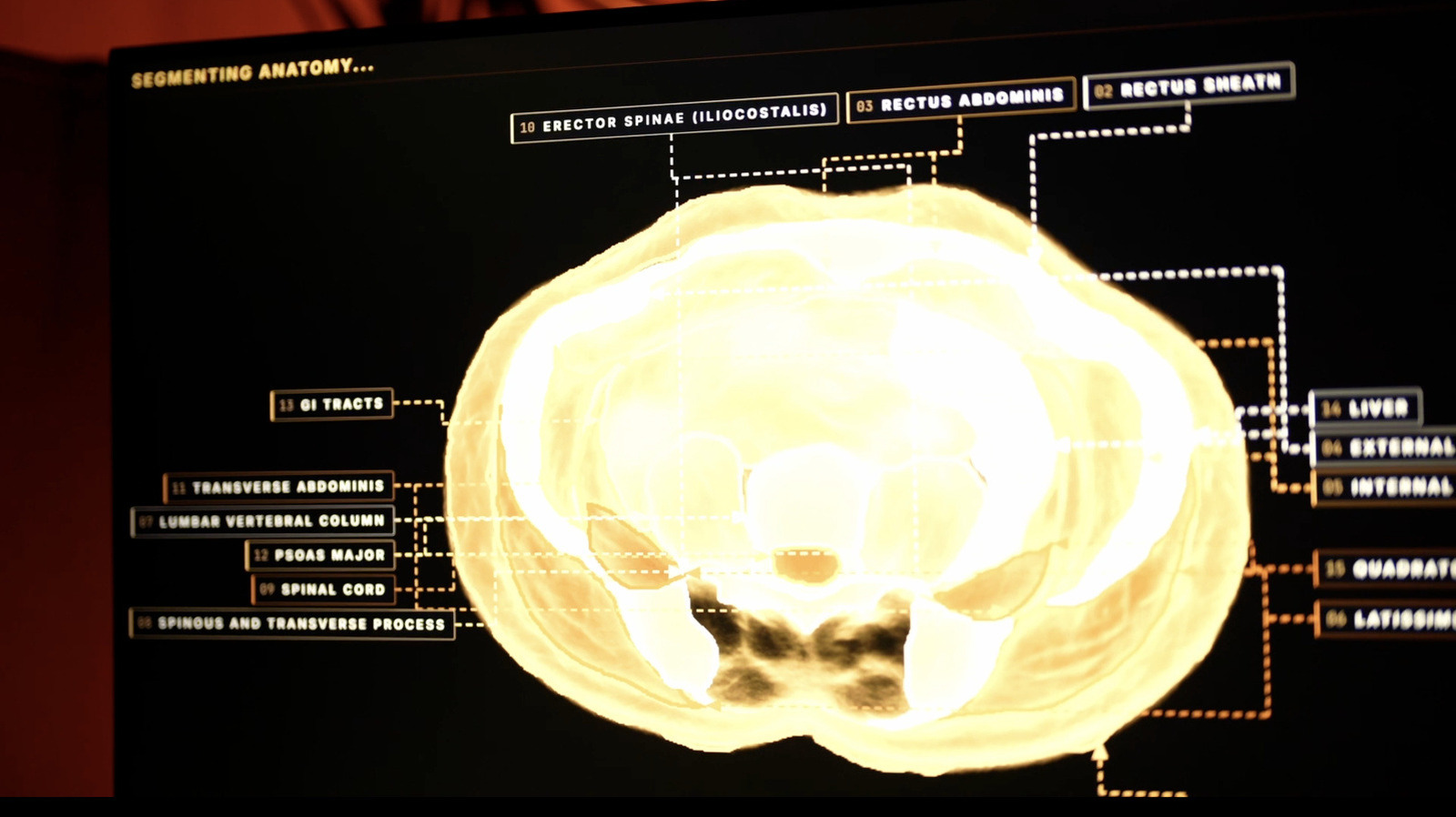
Midjourney, the AI image generator, is developing a full-body ultrasonic scanner
This development could revolutionize medical imaging, offering faster and potentially more accessible scans compared to traditional MRIs, impacting healthcare delivery and diagnostics.
- Midjourney is developing a full-body ultrasonic scanner that can complete scans in under 60 seconds.
- The scanner will be available in specially designed spas, starting with a location in San Francisco next year.
- The machine is being developed in partnership with Butterfly Network, which provides ultrasound-on-chip technology.
- Midjourney aims to operate 50,000 Scanners globally by 2031, with hopes to significantly reduce healthcare costs and improve diagnostic capabilities.
Midjourney, known for its AI image generation technology, is launching a hardware project under the new Midjourney Medical division. This represents a shift from its original focus on digital images to innovative medical technology. Upcoming efforts include finalizing the Scanner's design, obtaining FDA approval, and expanding its market presence.
Read the original ↗