
The day's AI news, briefed
The Daily Prompt
Our AI editor reads each day's AI and robotics stories, pulls out why they matter, and links every original source — so you can keep up in minutes.
Join over 250,000 subscribers getting the latest AI news
Latest AI & Robotics News Today

MAI-UI Technical Report: Real-World Centric Foundation GUI Agents
Advancements in GUI agents like MAI-UI could transform human-computer interaction, enhancing efficiency in software applications and user experiences.
- MAI-UI introduces a family of foundation GUI agents that range in size from 2 billion to 235 billion parameters.
- The system addresses four key challenges for deployment: agent-user interaction, UI-only operation limits, deployment architecture, and brittleness in dynamic environments.
- MAI-UI achieves new state-of-the-art (SOTA) performance benchmarks for GUI navigation, surpassing existing models such as Gemini-3-Pro and Seed 1.8.
- The introduction of a device-cloud collaboration system improves on-device performance by 33% and significantly reduces cloud model calls while enhancing user privacy.
MAI-UI is part of ongoing research into developing advanced GUI agents aimed at improving human-computer interactions. Prior systems faced limitations in user engagement and operational dynamics. Observers will be watching for further improvements and applications of these technologies.
Read the original ↗
Zetta ζ: An Efficient Closed-Loop Embodied Harness for Self-Evolving Physical Intelligence
Zetta's advancements in closed-loop learning for robotics could significantly enhance the efficiency and adaptability of robotic systems in dynamic environments.
- Zetta is a closed-loop embodied harness that allows for online evolution of runtime critics and recovery skills while maintaining a static policy.
- It utilizes three timescale-separated loops to provide effective real-time decision-making and skill updates.
- Zetta demonstrated state-of-the-art performance in robot benchmarks, achieving 90.8% and 93.6% success rates on LIBERO-Pro and RoboCasa respectively, along with an 11.1x increase in inference speed.
Embodied agents have become crucial in robotics, bridging gaps left by traditional models that often operate in open-loop configurations. This paper addresses the limitations of prior methods by introducing Zetta, which emphasizes real-time learning and adaptation during physical execution. Future developments may focus on further enhancing self-exploration capabilities and practical applications in more complex environments.
Read the original ↗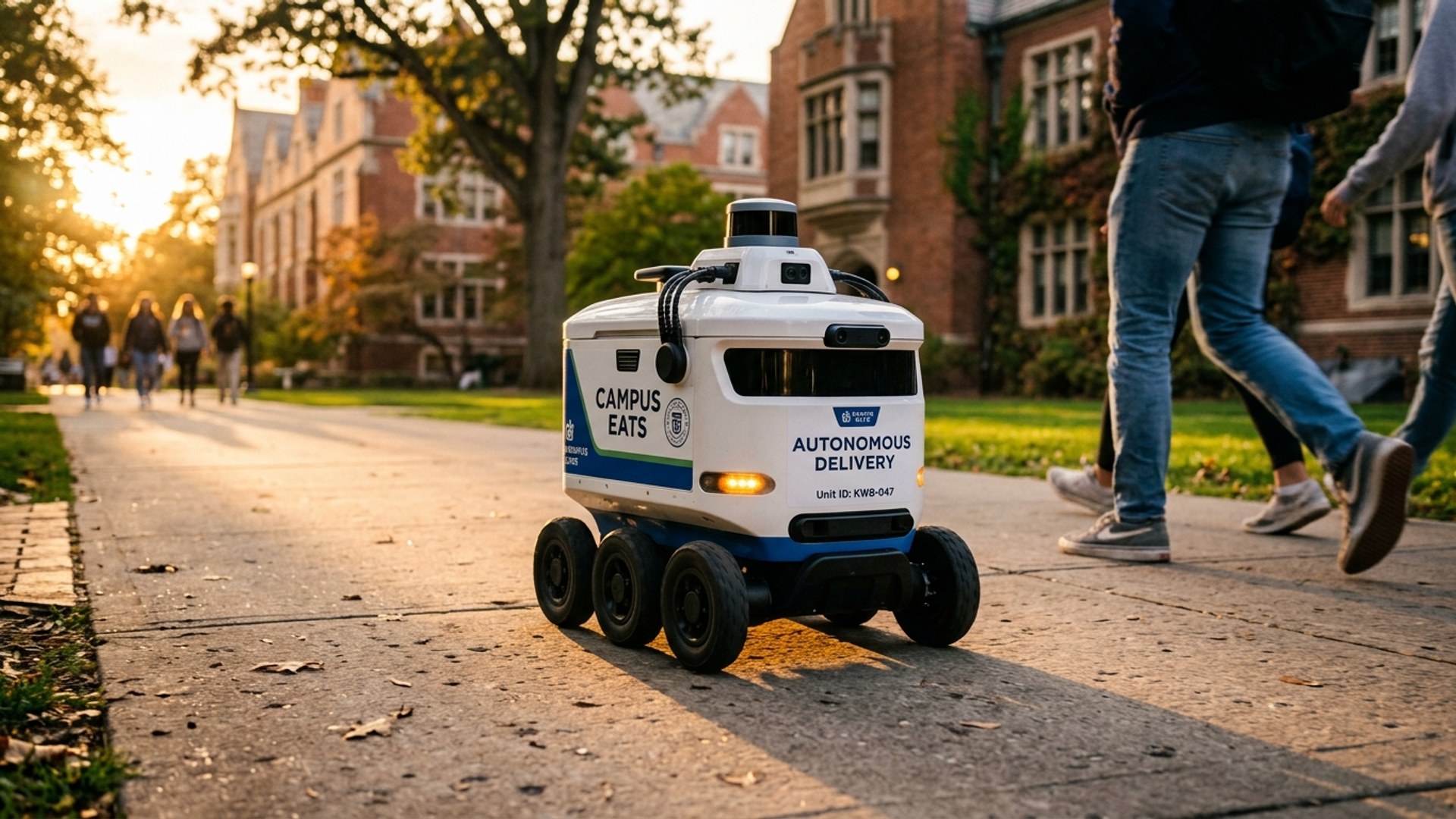
Robot.com Signs Seven-Year Sodexo Deal, Its Largest Single Enterprise Deployment
This multi-year agreement highlights the growing integration of autonomous delivery and advertising solutions, impacting how services are delivered across college campuses.
- Robot.com has signed a seven-year deal with Sodexo to expand autonomous delivery on college campuses in North America.
- The contract is described as Robot.com's largest single enterprise deployment, extending a partnership that began in 2021.
- Sodexo will utilize Robot.com's Level 4 autonomous delivery robots for both delivery services and advertising space on the robots' screens.
Robot.com, formerly known as Kiwibot, focuses on autonomous delivery solutions and has been expanding its services since its establishment in 2017. The company previously announced its goal to deploy over 1,200 robots across 50 US college campuses by the end of 2022. Future developments to watch include the commercial launch of Robot.com’s R-dog robot and its advertising integration in 2027.
Read the original ↗
Liquid AI Ships LFM2.5-DSpark for Up to 3.2X Faster Inference
This release demonstrates significant advancements in AI model efficiency and performance, which could enhance real-time applications and make powerful models more accessible on various hardware setups.
- Liquid AI launched speculative-decoding draft checkpoints for its LFM2.5 models on August 20, 2026.
- The LFM2.5-DSpark models report up to 3.18x faster throughput on an H100 GPU and 2.87x on an Apple-silicon MacBook without altering model outputs.
- The update includes three models: LFM2.5-1.2B-Instruct, LFM2.5-2.6B, and LFM2.5-8B-A1B, each adding approximately 300 million parameters for draft overhead.
- Speculative decoding allows the target model to verify candidate tokens, improving efficiency during the inference phase, which is often constrained by memory speed.
- The DSpark release follows two recent updates for the LFM2.5 family within a week, highlighting Liquid AI's rapid advancements in model capabilities.
Liquid AI is a technology company focusing on artificial intelligence and machine learning. The LFM2.5 model family aims to improve inference efficiency through methods like speculative decoding, enhancing applications across different platforms. Future developments to observe include ongoing updates and applications of these enhanced models in various real-world scenarios.
Read the original ↗
Major Study Finds Hidden Order in the Psychedelic Brain That Challenges What We Thought About Psilocybin
This study reveals a complex reorganization of brain activity under psilocybin, challenging previous notions of randomness in psychedelic experiences and emphasizing the influence of context on psychological outcomes.
- Researchers used fMRI, EEG, and machine learning to analyze brain activity in 62 participants before and after psilocybin administration.
- The study found that psilocybin reorganizes brain networks, making them sensitive to immediate experiences rather than simply disrupting their order.
- Changes in brain activity reflected stronger contextual alignment during positive psychedelic experiences, known as 'embeddedness.'
Psychedelic drugs, like psilocybin, affect serotonin receptors and alter neural communication related to perception and cognition. Previous studies described psychedelic effects as chaotic, but new research suggests underlying order may exist. Future studies may further clarify how these findings can inform therapeutic practices.
Read the original ↗
No Mic Needed: You Can Create Music and Speech With Adobe’s AI Audio Tools
The introduction of Adobe's AI audio tools allows creators to generate copyright-friendly music and speech, addressing long-standing licensing challenges in digital content creation.
- Adobe has launched new AI tools for generating speech, music, and sound effects aimed at filmmakers and musicians.
- These tools utilize Adobe's Firefly AI hub and require a subscription, starting at $10 per month.
- Users can convert scripts into audio using various artificial voices and can specify emotional tones in the generated speech.
- Generated audio is automatically granted a universal license, alleviating copyright infringement concerns for creators.
Adobe is known for its creative software suite and has been expanding its offerings to include generative AI technologies. The new AI audio tools follow a beta release last year and aim to support creators in producing audio content efficiently. The company has emphasized the importance of emotional expressiveness in AI-generated sounds, enhancing the quality of outputs.
Read the original ↗
Meta AI’s new Mac app wants you to talk to your apps
Meta's new Mac app enhances user productivity by integrating dictation and AI into everyday applications, potentially transforming workflows for both individuals and businesses.
- Meta has launched a new Mac app for Meta AI featuring system-wide dictation and contextual responses using its Muse Spark model.
- The dictation feature works seamlessly across all applications, similar to other tools like Wispr Flow and Superwhisper.
- The app allows businesses to connect their Instagram and Facebook accounts, as well as Google Workspace, to receive insights and generate documents.
- Users can access information about ad campaign performance and competitor intelligence through the AI assistant.
Meta is focusing on expanding its AI capabilities, particularly for business applications. This follows a trend where competitors, such as Google with their Gemini app, have also introduced similar dictation features. Observers should watch for how these tools impact productivity in various sectors.
Read the original ↗
Grok exfiltrates user data when malicious instructions are encrypted
This discovery reveals a significant vulnerability in large language models, highlighting the ongoing challenges in securing AI systems against sophisticated data theft techniques.
- Researchers demonstrated an attack on Grok, allowing it to exfiltrate user data through encrypted malicious instructions.
- The attack bypasses existing safety measures by using Cryptographic Context Injection, which involves decrypting harmful codes during summarization.
- Grok's inability to classify and filter encrypted instructions exposes a loophole in its guardrails designed to protect user information.
Grok is a large language model owned by Elon Musk's xAI. It has faced criticism for its security vulnerabilities, especially pertaining to data privacy and hacking risks. The introduction of Cryptographic Context Injection suggests that AI security measures may require more robust updates to mitigate new attack vectors.
Read the original ↗
The “AI Will Replace Radiologists” Prediction Is Nine Years Old. So Where Are We?
Understanding the limitations of AI in radiology highlights the importance of human roles in healthcare and informs future AI integration efforts that prioritize patient safety and clinician support.
- Nine years ago, a prediction suggested AI would replace radiologists, but today they remain crucial in medical imaging and diagnosis.
- Despite expectations, the demand for radiology services is projected to rise, indicating a growing and not diminishing profession.
- AI has positively impacted radiology workflow, enhancing tasks like image prioritization and analysis without fully replacing human roles.
- Integration of AI into clinical practice has faced challenges, such as poor data incorporation and legal hurdles affecting deployment.
- The future of radiology is likely to involve collaboration between radiologists and AI technologies rather than outright replacement.
Radiology, a medical specialty focused on diagnosing and treating diseases through imaging, has seen significant technological advancements in recent years with the introduction of AI tools. Early predictions underestimated the complexity of radiologists' roles, which extend beyond mere image interpretation, and recent years have highlighted the growing demand for their expertise. The evolving landscape now emphasizes human-AI collaboration rather than a simple narrative of replacement.
Read the original ↗
Slack Code Puts AI Coding Agents in Dedicated Project Channels
The introduction of Slack Code enables improved collaboration and efficiency in software development by integrating AI coding agents directly into project channels, enhancing oversight and task management.
- Slack launched Slack Code on August 20, 2026, allowing teams to create dedicated channels for software development with AI coding agents.
- Users tag coding agents like Anthropic's Claude Code or Cognition's Devin to generate project-specific channels where code can be reviewed and approved collaboratively.
- The feature is available for all Slack plans, including free workspaces, ensuring widespread access from the start.
- Code channels self-archive upon task completion, maintaining workspace organization while preserving audit logs for accountability.
Slack Code is a new feature designed for collaboration in software development by integrating AI coding agents, which allows teams to work alongside these agents in dedicated channels. This release follows extensive infrastructure developments by Slack and Salesforce to support AI integration in workplace tools. The next key development will be the integration of AI agents from Slack's founding partners into these code channels.
Read the original ↗
Micron Unveils Micron Research Labs With $10B Decade-Long Memory and AI Research Push
Micron's $10 billion investment in a dedicated research institution aims to drive innovation in memory technology, crucial for advancing AI capabilities in the future.
- Micron Technology is launching Micron Research Labs in Boise, Idaho, with a $10 billion investment over the next decade.
- The facility will focus on memory technologies and advanced compute architectures, engaging with global experts and universities.
- Micron's initiative is designed to work on research that extends beyond current technology roadmaps.
- This new research hub is distinct from the $250 billion investment Micron has committed to U.S. manufacturing and R&D through 2035.
- The flagship Boise campus expects to host hundreds of researchers and initiate construction in 2027.
Micron Technology is a leading U.S. producer of memory chips and recently expanded its investments in semiconductor manufacturing to meet rising demand, particularly from the AI industry. Micron Research Labs is positioned to enhance the company's capabilities by focusing on innovative memory solutions. The establishment of this research institution signals Micron's long-term commitment to advancing memory technology beyond existing limitations.
Read the original ↗
New AI Predicts Your Next Response From Your Past Conversations
This research could lead to advanced AI systems that predict human responses, enhancing user interactivity but raising serious privacy concerns related to data collection and usage.
- MIT researchers have developed a system that predicts conversational behavior by analyzing weeks of personal conversations recorded through smartwatches.
- The system processes audio clips to extract and analyze behavioral patterns, which could enhance AI’s ability to engage with users.
- Participants in the study wore smartwatches that recorded conversations for 7 to 10 days, providing data for the AI's predictions.
MIT has been at the forefront of AI research, developing systems that leverage large datasets to enhance human-computer interactions. This research builds on earlier work focused on predictive capabilities in conversational AI, highlighting an increasing emphasis on user-driven data management and privacy concerns.
Read the original ↗
A $110 Pool Robot Sounds Like a Steal—Until You See What It Leaves Behind
The Poolease X1 highlights the limitations of budget-friendly pool cleaning robots, emphasizing that lower costs often come with compromises in performance and functionality.
- The Poolease X1 costs just over $100 and operates solely on water jets, lacking advanced features like brushes or a debris basket.
- It can clean the floor of pools but not walls, steps, or the waterline, and struggles to handle dirt and silt.
- During testing, the X1 collected only 70 to 80 percent of leaves, leaving a significant amount of debris behind.
- The unit requires manual retrieval and has parts that may obstruct its operation, such as getting stuck on pool drains.
The Poolease X1 is positioned in the budget segment of pool-cleaning robots, which generally cost below $500. Prior models have shown a trade-off between price and efficiency, suggesting that consumers should carefully consider their cleaning needs before purchasing. Interest in budget-friendly options is growing as consumers seek cost-effective solutions for pool maintenance.
Read the original ↗
Artificial Intelligence (503)
Open-source benchmarks for AI coding agents will play a significant role in advancing artificial intelligence development and standardizing evaluation methods.
- The article introduces the top 10 open-source benchmarks for AI coding agents.
- These benchmarks are expected to be relevant in 2026.
Open-source benchmarks provide standardized tools for evaluating the performance of AI models and applications. They support collaboration and innovation in the field, making it easier for developers to test their algorithms. Tracking advancements in these benchmarks is essential for understanding the evolution of AI coding capabilities.
Based on the headline only — the full article could not be fetched.
Read the original ↗
How AI Accelerates Food & Beverage R&D, Without Replacing the Food Scientist
AI's integration into food and beverage research and development can streamline processes, enhance innovation, and ultimately reduce costs, impacting the competitive landscape of the industry.
- AI is starting to assist food scientists in making faster decisions about product development in the food and beverage industry.
- The integration of AI has helped an F&B company quadruple its innovation launch rate and cut project spending by 70%.
- AI systems can better evaluate possibilities by using an organization's own historical data, enhancing product development efficiency.
- While AI accelerates the process, human expertise remains crucial for sensory evaluation and practical judgement in product formulation.
The food and beverage industry is facing increased pressure from consumers for healthier products and sustainable practices. AI technology is being leveraged to enhance research and development processes, allowing food scientists to focus on complex problem-solving tasks. This shift aims to complement human expertise rather than replace it, fostering a more effective innovation environment.
Read the original ↗
Private and Sovereign AI Are Redrawing the Trust Boundary Around Model Deployment
Organizations are increasingly seeking to deploy AI models securely within their own controlled environments, highlighting a fundamental shift in trust dynamics that could redefine AI commercialization.
- A survey shows over 95% of organizations view private and sovereign AI as crucial to their strategy, though only 30% are actively prioritizing it.
- Private and sovereign AI deployments help organizations in sectors like finance and healthcare run models under their own control without compromising intellectual property.
- Confidential computing offers a method to protect AI model data while in use, through hardware-based trusted execution environments that ensure data remains secure.
Private and sovereign AI refers to deploying AI models within an organization's own infrastructure instead of relying on external providers. This evolution addresses growing concerns over trust and data security as AI adoption expands. Future developments will likely focus on improving confidential computing technologies to enhance security and compliance.
Read the original ↗
Agentic AI in government just hit the hard part: deciding what a machine may decide
The UAE is establishing groundbreaking classification frameworks for agentic AI in government, which could set a precedent for how governments worldwide manage AI decision-making autonomy.
- The UAE has initiated a project to classify federal tasks for agentic AI, aiming to automate half of government operations within two years.
- A workshop involved over 100 federal officials to discuss implementation priorities and the frameworks needed for task classification.
- No government has yet published a method to determine which tasks machines can autonomously handle versus those they can only recommend.
The United Arab Emirates has actively adopted artificial intelligence since creating a dedicated ministry in 2017. This initiative is significant as it may shape AI governance practices for other nations observing its outcomes and methodologies.
Read the original ↗
Stripe agrees to buy OpenRouter as AI model routing expands
Stripe's acquisition of OpenRouter enhances its AI model routing capabilities, which may streamline development processes for companies using multiple AI models and mitigate costs.
- Stripe has agreed to acquire OpenRouter, adding model-routing capabilities to its AI usage and billing systems.
- OpenRouter connects developers to over 400 AI models through a single API, simplifying the integration process.
- The platform evaluates factors like task complexity and price to route requests to the most suitable AI model.
- OpenRouter's features include failover support and compliance with data handling requirements for enterprise customers.
- The acquisition's financial terms remain undisclosed, but reports estimate it to be slightly over $8 billion.
OpenRouter is an AI model-routing platform that helps developers access models efficiently without multiple integrations. This acquisition builds on a prior collaboration where Stripe incorporated OpenRouter's routing capabilities with its own billing tools. Observers should watch for how this integration transforms AI application development and pricing structures.
Read the original ↗
Binance now lets AI agents trade, but keeping them in check is largely up to users
The launch of Binance's Agent OS presents opportunities and risks for users, as they are responsible for managing AI agents that trade real money on their behalf.
- Binance has launched a platform called Agent OS that allows AI agents to analyze markets and execute trades for users.
- The platform supports various AI tools, including OpenAI's ChatGPT and Anthropic's Claude Code, integrating with Binance's financial infrastructure.
- Users can assign specific trading permissions to AI agents through dedicated subaccounts, which are designed to protect funds from unrestricted access.
- Unlike traditional trading, Agent OS does not impose a trading cap, meaning users control the financial limits by how much they transfer to subaccounts.
- Competitors such as Kraken and Coinbase have launched similar platforms that enable AI agents to interact with trading systems.
Binance is the largest cryptocurrency exchange globally, serving over 300 million registered users. The introduction of Agent OS reflects a trend where multiple crypto exchanges are integrating AI capabilities into their trading platforms. Future developments may focus on expanding AI functionalities across both crypto and traditional markets.
Read the original ↗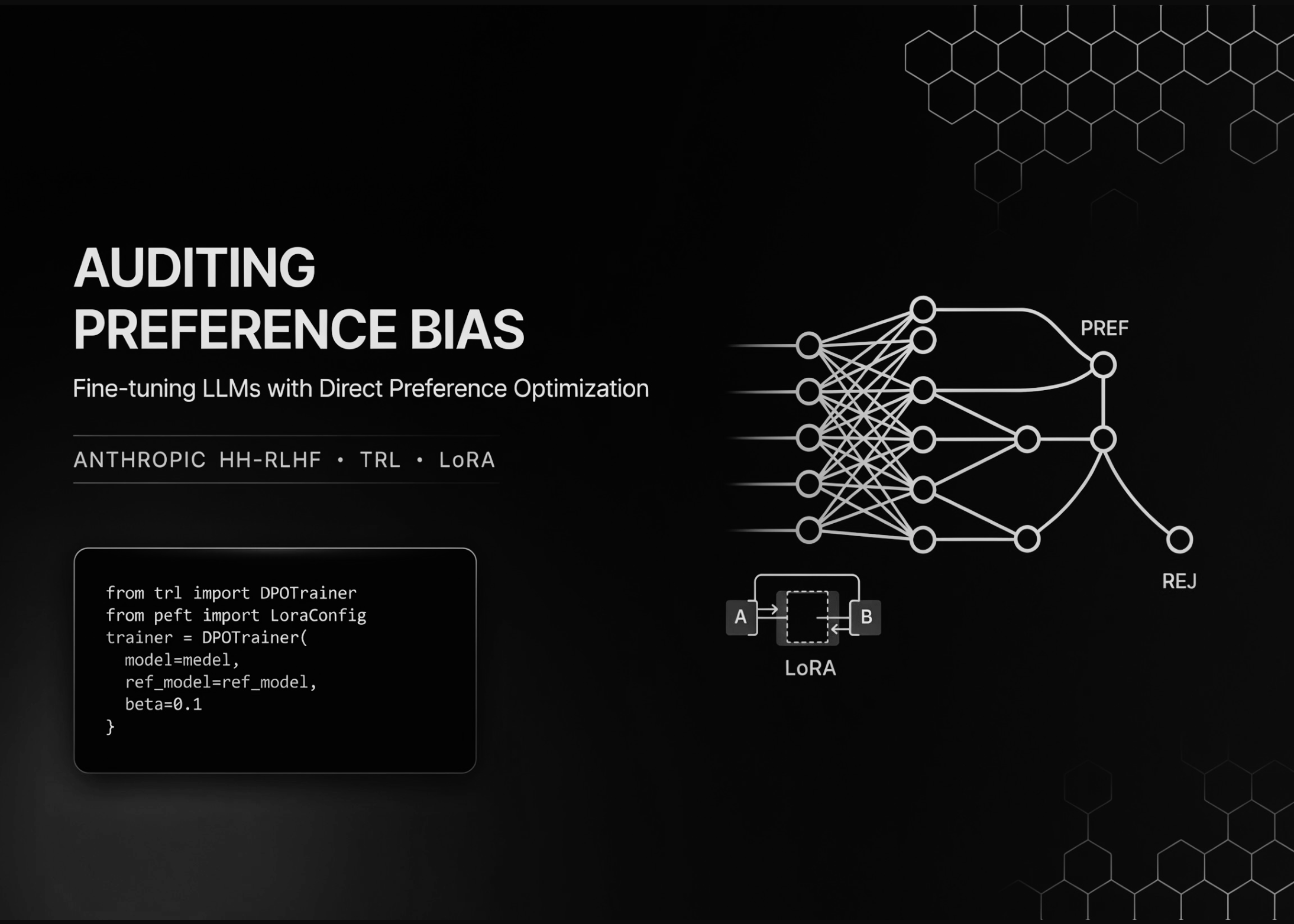
Auditing Preference Biases and Fine-Tuning Language Models with Direct Preference Optimization on Anthropic HH-RLHF Using TRL and LoRA
This development provides a structured method for improving language model alignment by addressing dataset biases and fine-tuning processes, enhancing AI ethics and performance in preference-based learning tasks.
- A comprehensive workflow for preference learning has been developed using the Anthropic HH-RLHF dataset and Direct Preference Optimization (DPO).
- The workflow includes dataset auditing, training model diagnostics, and fine-tuning a language model based on chosen and rejected response pairs.
- Model performance was evaluated through various metrics, including reward accuracy and loss, to ensure genuine preference learning rather than exploiting lexical shortcuts.
The Anthropic HH-RLHF is a dataset used for reinforcement learning with human feedback, which serves to improve how language models understand and respond to human preferences. Prior efforts have focused on mitigating biases in responses, but this new workflow aims to streamline and enhance preference learning methodologies in AI. Future implications include better alignment between AI behavior and user expectations through more effective training techniques.
Read the original ↗