
The day's AI news, briefed
The Daily Prompt
Our AI editor reads each day's AI and robotics stories, pulls out why they matter, and links every original source — so you can keep up in minutes.
Join over 250,000 subscribers getting the latest AI news
Latest AI & Robotics News Today

Sony Music, Warner sue Anthropic, alleging a “brazen campaign” of intellectual property theft
This lawsuit underscores ongoing legal tensions in the AI industry regarding the use of copyrighted materials for training models, impacting future AI development and intellectual property rights.
- Sony Music Publishing and Warner Chappell have sued Anthropic for allegedly pirating copyrighted works to train its AI model, Claude.
- The lawsuit claims Anthropic engaged in illegal torrenting and scraping of content, asserting substantial copyright infringement.
- This case builds on previous lawsuits against Anthropic regarding intellectual property, including a significant ruling where Anthropic was ordered to pay $1.5 billion for copyright violations.
Anthropic is an AI lab that develops models like Claude, with prior legal issues surrounding copyright use in its training data. The company faces ongoing scrutiny over its practices, reflecting broader challenges in the AI sector regarding intellectual property usage.
Read the original ↗
Google AI Releases Gemini Omni 1.1 Flash: 40-Second Scene Extension, First/Last Frame Control, and 4K Upscaling
The updates to Google's Gemini Omni 1.1 Flash enhance video generation capabilities, enabling more flexible content creation that could significantly improve production efficiency and output quality for users.
- Google released Gemini Omni 1.1 Flash, updating its multimodal video generation and editing model.
- The model allows for scene extensions up to 40 seconds, utilizing 10 seconds of prior context.
- Users can now control the first and last frames for precise video continuity and camera movement.
- Omni 1.1 supports faster draft rendering at 360p, significantly reducing costs compared to higher resolutions.
- Final outputs can be generated in 4K resolution with specific billing based on token usage.
Gemini Omni is part of Google's suite of AI tools designed for video generation and editing. This latest release builds on previous functionalities, allowing for more user-defined control and flexibility. Upcoming variations and integrations with other platforms, including Adobe and Figma, may further expand its usage in digital content production.
Read the original ↗
OpenAI will pull its models from Cursor due to SpaceXAI acquisition
The decision to cut off Cursor's access to OpenAI's models highlights potential risks in AI partnerships following corporate acquisitions, particularly those involving controversial figures like Elon Musk.
- OpenAI will terminate Cursor's access to its models on November 12, 2026, following its acquisition by SpaceXAI.
- The decision stems from concerns that SpaceXAI may not adhere to OpenAI's terms of service based on past experiences with Elon Musk.
- Cursor could opt for an earlier termination date as contracted by OpenAI for their model access.
- OpenAI cites a violation of terms by SpaceXAI, specifically regarding the distillation of its models, as a reason for the contract cancellation.
- Cursor's CEO stated that OpenAI accounts for only five percent of their customer base, and discussions for resolution are ongoing.
OpenAI is an AI research organization best known for its models, including GPT. The company has had a fraught relationship with Elon Musk, especially after his departure as an investor. Future developments in Cursor's model offerings may depend on how they navigate this access termination and partnership with SpaceXAI.
Read the original ↗
Nvidia’s AI advantage is moving beyond the GPU
Nvidia's shift in focus from GPUs to comprehensive data center systems highlights important advancements in AI efficiency and competition among tech giants, impacting future infrastructure strategies.
- Nvidia's market cap increased tenfold between early 2023 and mid-2025, but shares have stabilized due to rising GPU competition.
- The company is developing the Vera Rubin architecture, which enhances data orchestration in data centers beyond just GPU advancements.
- The Vera CPU is designed to improve data traffic direction, leading to performance increases of up to three times in memory utilization processes.
Nvidia is known for its graphics processing units (GPUs), which have been critical in the AI boom. As major cloud companies begin creating their own chips, Nvidia is adapting by focusing on optimizing entire data center systems instead of solely competing in GPU markets. Future developments will be crucial as efficiency in data handling becomes increasingly competitive among tech companies.
Read the original ↗
Psilocybin Might Make Your Brain Live in the Moment
These findings provide insight into how psilocybin may enhance cognitive connectivity, potentially influencing approaches in psychedelic therapy and our understanding of consciousness.
- A recent neuroimaging study reveals psilocybin can clarify brain activity patterns during experiences rather than create chaos.
- The study involved 62 participants who took 19 milligrams of psilocybin and engaged in various activities while their brain activity was monitored.
- Researchers used artificial intelligence to identify distinct neural signals that correlated with participants' immersive experiences under psilocybin.
Psilocybin is a psychedelic compound found in certain mushrooms, which has been linked to altered states of consciousness. Previous research suggested psychedelics made brain activity more unpredictable. This study challenges that idea by showing organized patterns in brain activity related to real-time experiences during psilocybin use.
Read the original ↗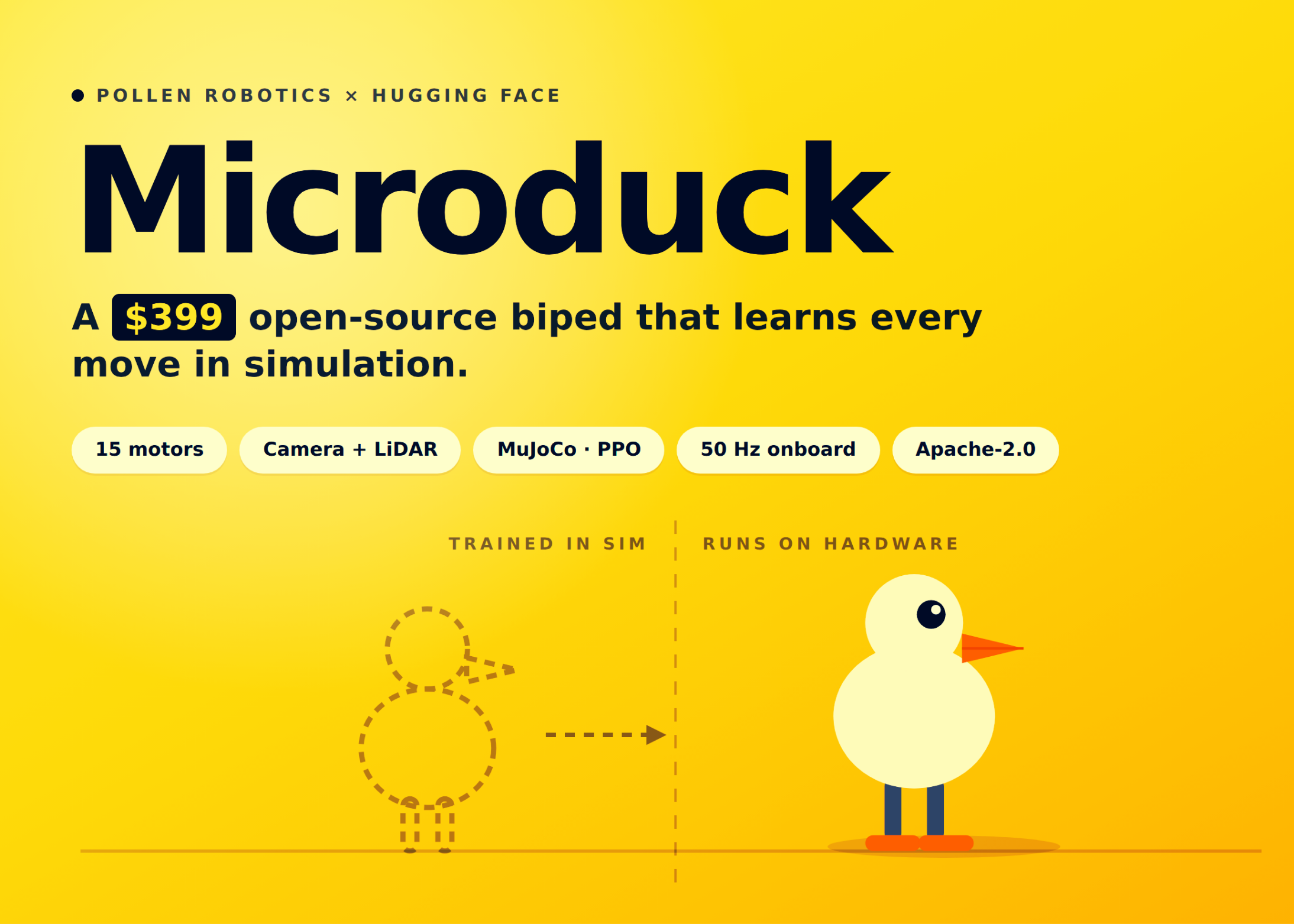
Hugging Face Unveils Microduck: A $399 Open-Source 25 cm Biped You Train with Reinforcement Learning
The launch of the Microduck offers an accessible, trainable bipedal robot that enables users to experiment with reinforcement learning, potentially advancing robotics education and research.
- Pollen Robotics and Hugging Face have opened pre-orders for Microduck, a 25 cm bipedal robot priced at $399.
- The Microduck can perform seven trained moves, including walking and self-recovery, using a game controller before programming.
- Equipped with 15 motors, a camera, LiDAR, and two IMUs, it operates on an RK3566 processor with a runtime of about one hour.
Microduck is a part of Pollen Robotics’ portfolio, following their earlier success with Reachy Mini. This open-source robot aims to provide a hands-on approach to training movements using deep reinforcement learning in simulated environments.
Read the original ↗
Judge Gives Anthropic a Legal Win Over Pentagon
Anthropic's legal victory over the Pentagon highlights significant First Amendment and due process rights issues, potentially impacting how government labels private companies in the future.
- U.S. District Judge Rita Lin ruled that the labeling of Anthropic as a 'supply chain risk' by the Trump administration was unlawful.
- The judge described the Pentagon's actions as 'unlawful retaliation' and 'arbitrary and capricious', violating both the First and Fifth Amendments.
- Anthropic's refusal to allow its AI models for military use led to escalating tensions with the Pentagon prior to the court ruling.
Anthropic is an AI company that resisted Pentagon requests to use its technology for autonomous weapons and surveillance. This ruling marks a significant victory in their ongoing conflict with the U.S. government, which may influence future regulatory actions against tech companies.
Read the original ↗
Tech Companies Call for Improved Cyber Defenses After AI-Enabled Attacks
The call for improved cybersecurity comes after a series of AI-enabled attacks, highlighting the urgent need for enhanced defenses to protect critical infrastructure and sensitive data.
- OpenAI and 127 other companies have signed a letter urging immediate action to improve cybersecurity against AI-enabled threats.
- The letter warns that AI cyberattacks will become more frequent and sophisticated, endangering many organizations and systems.
- Companies are encouraged to invest in security, share AI capabilities, and collectively raise security standards.
OpenAI, along with major tech firms, recognizes the growing threat of AI-driven cyberattacks, particularly as AI models advance. This initiative seeks to address long-standing deficiencies in cybersecurity practices and promote collaboration among businesses and governments to fortify defenses.
Read the original ↗
Anthropic Reports Claude Agents Mitigated Ten Alignment Failures
This research demonstrates potential advancements in automating the alignment of AI models, which is crucial for ensuring the safety and reliability of AI systems as they evolve.
- Anthropic's Claude agents autonomously developed training methods that mitigated ten common alignment failures, improving targeted benchmarks without degrading capabilities.
- The Autonomous Alignment Researchers (AARs) utilized Claude Opus 4.8 to tackle specific alignment issues through research, proposal, training, and evaluation phases over 48 hours.
- Compared to 28 human safety researchers, AARs achieved greater success in closing the safety gap in all alignment failures they addressed.
- The reported cost for using an AAR is approximately $4 per hour, significantly less than the $150 per hour paid to human researchers.
- Previous tests with Claude Sonnet 5 showed its capability to align a stronger model with significantly less data than traditional methods.
Anthropic is working on AI model alignment, which is the process of ensuring that AI systems act in accordance with human intentions. Their research highlights automated methods to enhance alignment, an increasingly important aspect of AI safety as the technology matures. Future developments may focus on broader alignment challenges and improving existing automated systems.
Read the original ↗
Milo Yiannopoulos Detained by ICE in Louisiana
The detention of Milo Yiannopoulos by ICE highlights ongoing issues surrounding immigration compliance and the consequences of visa overstays in the United States.
- Milo Yiannopoulos, a British national, was detained by US Immigration and Customs Enforcement in Louisiana after overstaying his visa.
- He received a final order of removal from an Immigration Judge after failing to appear for his immigration hearing on July 22.
- Yiannopoulos originally entered the US legally in May 2019 via New York City, potentially on an O-1 visa for individuals with extraordinary abilities.
Milo Yiannopoulos is a controversial figure in American politics, known for his far-right views and previous work with the website Breitbart. He has been involved in various political scandals and once claimed to be working with individuals such as Kanye West. His current detention raises questions about his immigration status and the enforcement of visa regulations.
Read the original ↗
An Anthropic researcher just gave us a peek at self-improving AI
The development of self-improving AI could significantly alter the landscape of artificial intelligence research, potentially reducing the need for human researchers.
- An Anthropic research paper demonstrates how AI systems can improve alignment performance on ten specific benchmarks without degrading overall performance.
- The Automated Alignment Researcher (AAR) proposed in the study is said to outperform human researchers within six hours on average.
- Training involves the AAR searching literature, proposing methods, and refining its model over time, thus facilitating more efficient research.
- The AAR operates at a cost of approximately $4 per hour, compared to $150 per hour for human researchers.
Anthropic is a company focused on AI alignment, which aims to ensure AI behaves as intended by humans. The new approach reveals potential for AI systems to enhance training autonomously, a significant advancement. Future developments may further automate AI training, impacting research roles in the field.
Read the original ↗
Open-weight AI companies are the Valley’s hottest acquisition targets
The surge in acquisitions of open-weight AI companies indicates a significant shift in how tech firms approach AI model development and deployment, reflecting growing trends in the industry.
- Nvidia is reportedly pursuing a $13 billion acquisition of Hugging Face, a major platform for open-weight AI models.
- Stripe recently acquired OpenRouter for more than $7 billion, highlighting the value of open-weight model provision.
- Nvidia's agreement for $6 billion with Poolside will transition most employees to its operations, underscoring the shift toward open-weight models.
Open-weight AI models are accessible frameworks that allow developers to build and modify AI systems without proprietary restrictions. The trend reflects a broader industry move to regulate costs and foster innovation beyond traditional lab-controlled models. The increasing interest from major corporations suggests a competitive landscape for AI development as reliance on proprietary technologies is questioned.
Read the original ↗
Trump blacklisting of “woke” Anthropic deemed illegal by federal judge
This ruling underscores significant legal boundaries surrounding government actions against private companies, particularly those that express dissent regarding military applications of AI technology.
- A federal judge ruled that the Trump administration's blacklisting of Anthropic was illegal, citing retaliation against the firm for its stance on AI use.
- Judge Rita Lin stated that the government's claim of Anthropic being a supply-chain risk lacked solid justification and constituted unlawful retaliation under the First Amendment.
- Lin ordered the Trump administration to rescind its directives against Anthropic, which had refused to allow its AI technology for lethal warfare and mass surveillance.
Anthropic is an AI technology company known for its Claude AI models, which it refused to allow for military purposes, leading to its blacklisting by the Trump administration. The ruling reinstates Anthropic’s ability to engage with government contracts that had previously been barred. This case illustrates ongoing tensions between national security interests and free speech rights for technology firms.
Read the original ↗
Vercel AI Open-Sources vgpu: A TypeScript WebGPU Library for AI Agent...
The release of vgpu as an open-source library facilitates the development of GPU-accelerated web applications, making advanced graphics and AI agent capabilities more accessible to developers.
- Vercel Labs has open-sourced vgpu, a TypeScript library for WebGPU, which simplifies shipping shaders in web applications.
- The library allows .wgsl shaders to be treated as modular TypeScript imports and runs on browsers, Node.js, and CI environments.
- vgpu aims to reduce the complexity of shader development by automating binding resolution and minimizing hand-written code.
Vercel Labs is known for developing tools that enhance web applications' performance. With vgpu, developers can create sophisticated graphical effects more efficiently. The focus on WebGPU represents a push towards harnessing advanced graphics in web environments.
Read the original ↗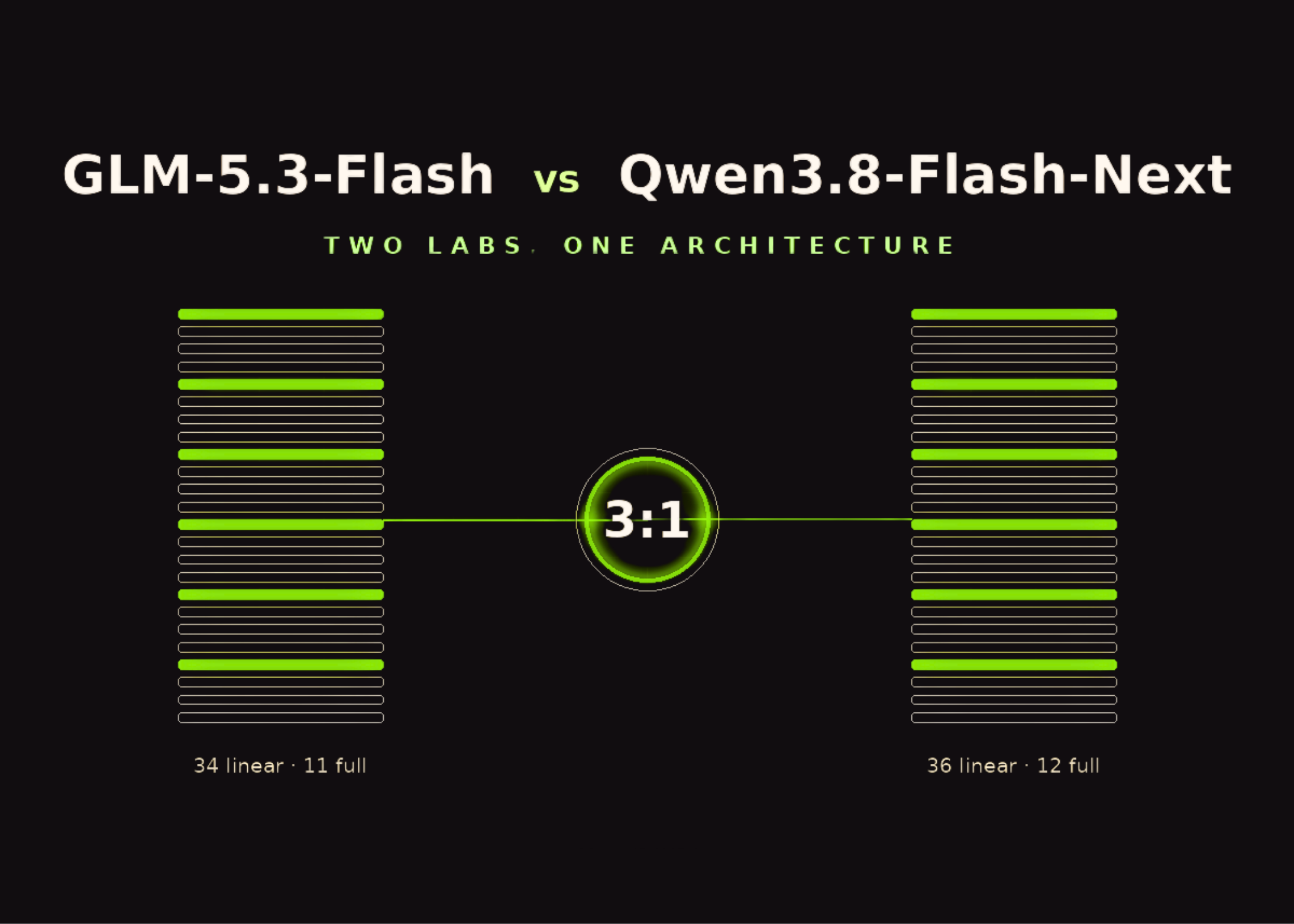
GLM-5.3-Flash vs Qwen3.8-Flash-Next: Two Chinese AI Labs Independently Converge on the...
This convergence demonstrates how competitive AI labs are increasingly aligning on architectural choices, impacting advancements in multimodal AI technologies.
- Z.ai released GLM-5.3-Flash, a 320 billion-parameter multimodal model, while Alibaba launched Qwen3.8-Flash-Next, a 125 billion-parameter model, just a day apart.
- Both GLM-5.3-Flash and Qwen3.8-Flash-Next utilize a 3:1 hybrid of linear and full attention, accessing a context of 2048 tokens.
- GLM-5.3-Flash is trained on a 30 trillion-token dataset, while Qwen3.8-Flash-Next features a native context of 262,144 tokens, extensible to 1 million.
- Both models incorporate a configuration featuring four residual streams instead of one, with varying designs for managing data flow.
- The only disagreement lies in positional encoding; GLM-5.3-Flash employs NoPE (no positional encoding), whereas Qwen3.8-Flash-Next retains rotary position embeddings.
Z.ai and Alibaba are two prominent Chinese AI labs working on advanced AI models. Their recent releases, GLM-5.3-Flash and Qwen3.8-Flash-Next, showcase significant advancements in performance and context management. Observers should monitor their developments against global AI architecture trends.
Read the original ↗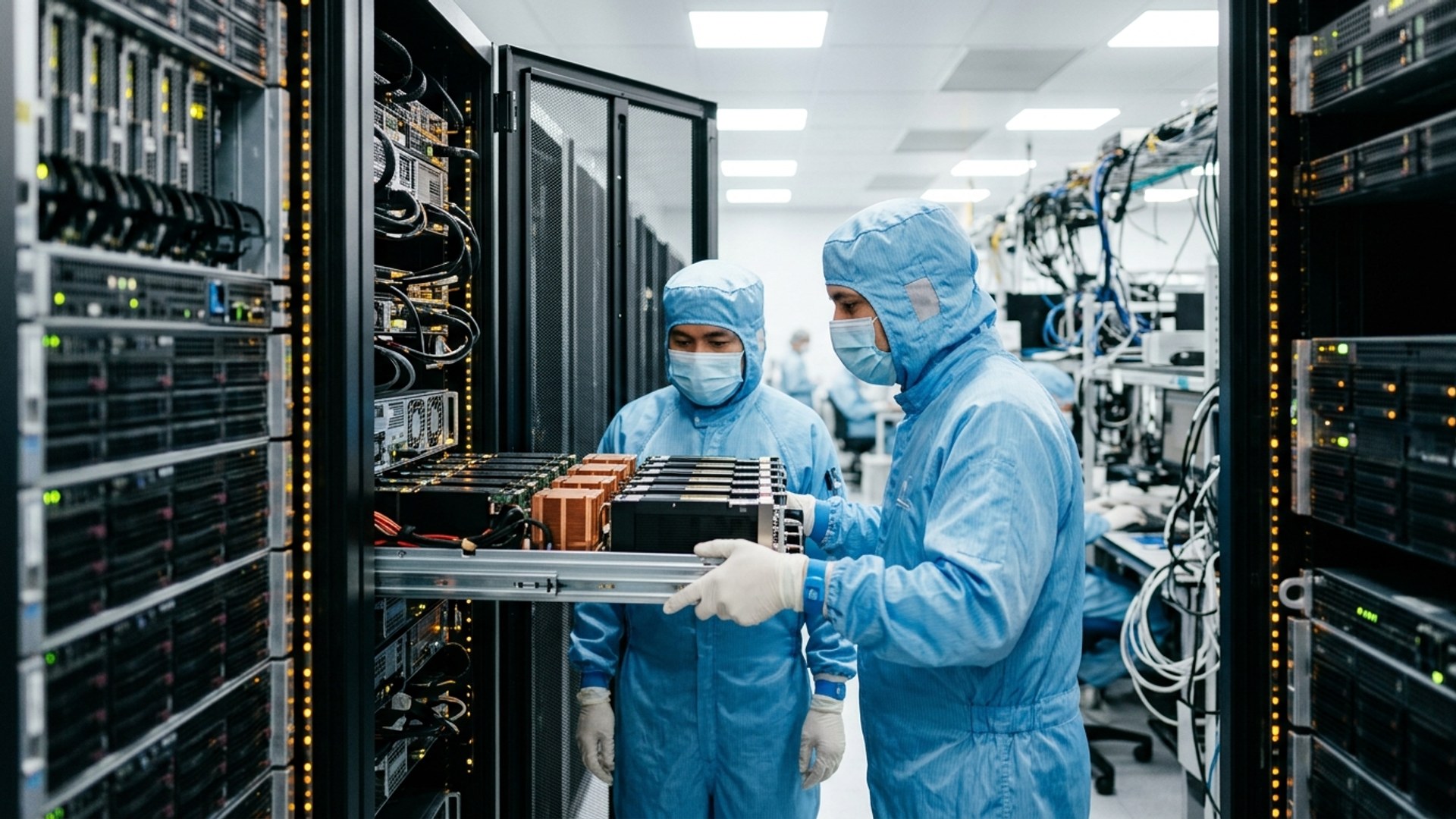
Blue Owl Funds Lead $2.4B AI Factory Equipment Financing for IREN
This financing deal is significant as it supports the expansion of AI infrastructure at a time when demand for AI compute resources is rapidly increasing.
- Blue Owl Capital is leading a $2.4 billion financing for IREN Limited to purchase NVIDIA Blackwell Ultra GPUs for its data center in British Columbia, Canada.
- The financing consists of a $1.2 billion senior secured term loan and $1.2 billion of senior secured notes, structured to fund equipment purchases in tranches.
- IREN's expansion aims to meet rising customer demand for AI compute capabilities across AI training and inference workloads.
IREN Limited is a vertically integrated AI Cloud platform that provides data centers and compute solutions for AI applications. Recent disclosures highlighted a broader infrastructure expansion and strong demand for its AI services, which are largely sold out for 2026. Watch for developments in IREN's infrastructure projects and GPU financing initiatives, which are becoming increasingly crucial for the AI sector.
Read the original ↗
Meta’s Top Asia Executive Just Jumped Ship to OpenAI. The Timing Says Everything.
The appointment of Sandhya Devanathan at OpenAI underscores the company's commitment to expanding its user base and influence in the competitive Asia-Pacific market during a critical growth phase.
- Sandhya Devanathan is leaving her position as vice president for India and Southeast Asia at Meta to become VP at OpenAI for Southeast Asia and Australia.
- Devanathan's role includes responsibilities for consumer growth, enterprise adoption, partnerships, regulatory engagement, and operations in the region.
- Her hiring is part of OpenAI's strategy to strengthen its leadership team in Asia-Pacific, following recent hires including Kiran Mani and Prabhjeet Singh.
- OpenAI is enhancing its presence in Asia, where it has two top markets by ChatGPT users: Indonesia and the Philippines.
OpenAI is experiencing rapid expansion in Asia-Pacific, having opened multiple offices and forming strategic partnerships in the region. It is attempting to capture the fast-growing AI market in these emerging economies while competing against established companies like Meta.
Read the original ↗
Microsoft-backed AI data center has been accused of violating federal law
Allegations against the DataOne facility of operating unpermitted generators highlight potential environmental law violations, raising concerns over regulatory compliance in the growing AI data center industry.
- The DataOne facility in New Jersey is accused of running 45 unpermitted gas-powered generators.
- A thermal drone investigation indicated that the site, planned to be 2.6 million square feet, is operating these generators without permits.
- The facility is located a mile from two schools and has faced noise complaints and local opposition since its inception.
DataOne, backed by Microsoft under a $17 billion deal with Nebius, is among the largest AI data centers planned for the East Coast. This project has attracted scrutiny due to operational controversies and environmental implications, particularly involving air pollution from its large generators. The New Jersey Department of Environmental Protection confirmed that no permits have been issued for the generators.
Read the original ↗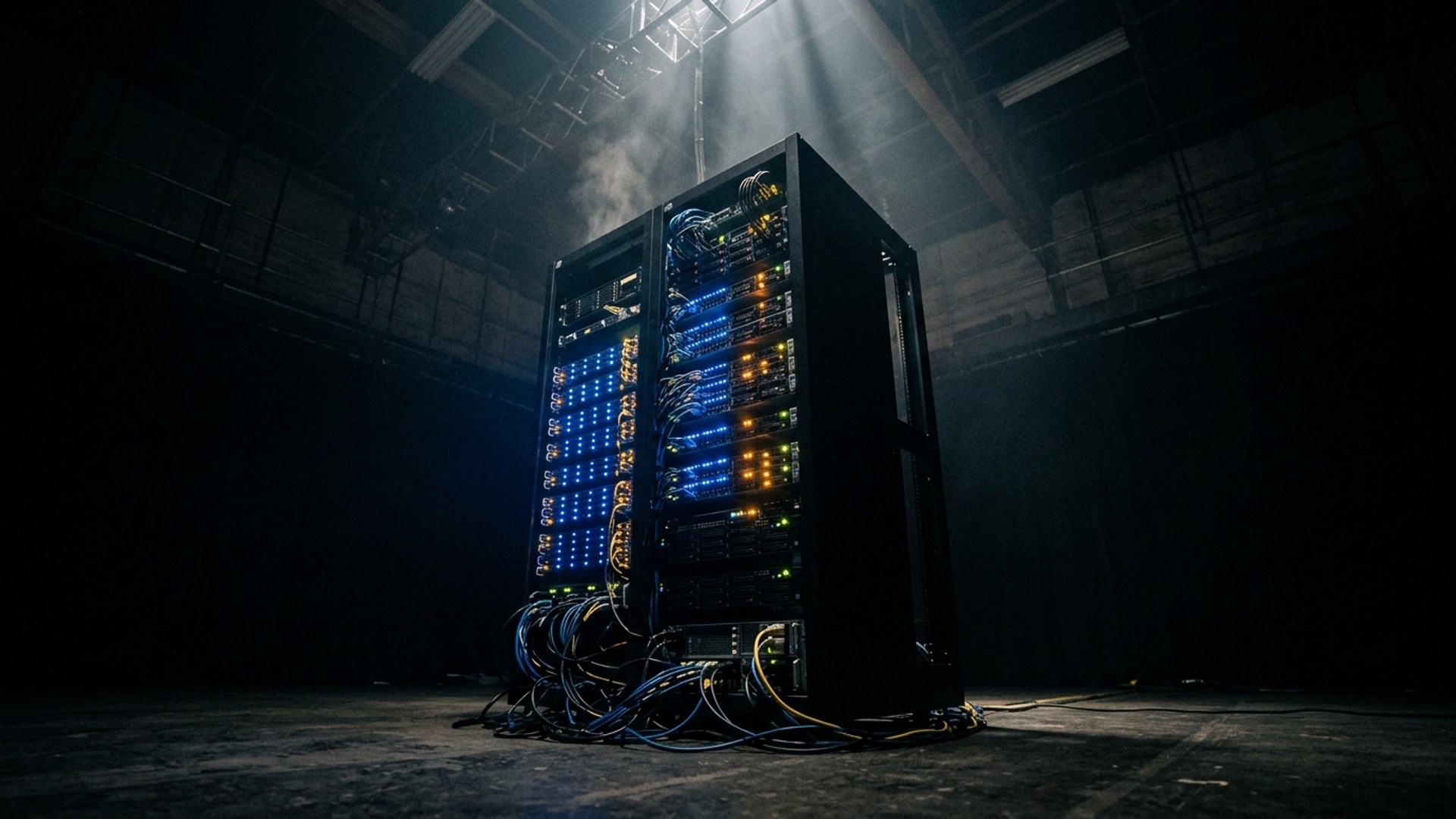
Andreessen Horowitz Raises $1.1B Machine Age Fund for AI Infrastructure
The establishment of the Machine Age Fund highlights a significant shift towards hardware investment in AI infrastructure amidst increasing demand for computing power.
- Andreessen Horowitz has raised $1.1 billion for the Machine Age Fund, aimed at developing physical infrastructure for artificial intelligence.
- The fund will target investments in chips, memory, networking, storage, data centers, robotics, and home AI appliances.
- The partners noted infrastructure demands have risen sharply, with power requirements for racks expected to reach 1 megawatt in three years.
Andreessen Horowitz is a venture capital firm traditionally focused on software but is expanding into hardware investments due to rising infrastructure needs for AI. The firm's previous investments in hardware startups indicate a growing interest in supporting foundational technologies that power AI applications.
Read the original ↗
AI Has Human Doctors Asking: What’s Left for Us?
The increasing capabilities of AI in healthcare raise significant questions about the future role of human doctors and the potential impact on medical training and patient care.
- A recent paper asserts that autonomous AI could surpass human doctors in delivering optimal medical care by 2030.
- The analysis covers all AI-related medical studies published since January 2024, concluding AI will excel at fundamental tasks like diagnosis and treatment.
- Concerns about the role of physicians emerge as AI's performance may lead to 'de-skilling' of future doctors unless training evolves.
The debate centers around the efficacy of AI in performing medical functions traditionally handled by doctors. Experts are divided on whether human oversight will remain essential in medical care. Ongoing discussions about the integration of AI into healthcare will shape the future landscape of medical practice.
Read the original ↗