
The day's AI news, briefed
The Daily Prompt
Our AI editor reads each day's AI and robotics stories, pulls out why they matter, and links every original source — so you can keep up in minutes.
Join over 250,000 subscribers getting the latest AI news
Latest AI & Robotics News Today
Judge rules that the Pentagon's Anthropic ban was 'illegal and baseless'
This ruling potentially impacts the relationship between private AI companies and the government, highlighting legal limits on the use of national security claims in business restrictions.
- A US federal court ruled that the Pentagon's designation of Anthropic as a supply chain risk was illegal.
- The ruling bars federal agencies from enforcing President Trump's order to stop using Anthropic's tools.
- The judge stated that the government cannot impose penalties based on criticisms of its views.
- Anthropic had previously refused to allow its AI model to be used for mass surveillance or autonomous weapons.
Anthropic is an AI company known for its Claude model, which has faced restrictions due to national security concerns. This ruling marks a significant moment in the ongoing dispute between the company and the government regarding its service use. Future developments include Anthropic's ongoing legal challenges and its IPO prospects.
Read the original ↗
A Judge Has Blocked the Pentagon’s Attempt to Blacklist Anthropic
The ruling protects Anthropic's ability to engage in federal contracts, impacting the defense sector's selections for AI technology while highlighting constitutional limits on government designations of national security risks.
- A federal judge has barred the Pentagon from labeling Anthropic a national security risk, citing unconstitutional retaliation.
- The February 27 designation by Defense Secretary Pete Hegseth prevented Anthropic from federal contracts and was labeled illegal by the court.
- Nine government agencies, including the Pentagon and the Treasury Department, had improperly imposed sanctions on Anthropic, which were also removed by the ruling.
Anthropic is an AI company known for its advanced models, particularly Claude and Mythos. The Pentagon's attempt to blacklist Anthropic stemmed from a failed contract negotiation over a $200 million deal related to military use of AI technology. This case may influence future government dealings with AI developers and their technologies.
Read the original ↗
AutoSaddler: Automatic Harness Optimization with Durable Updates from Agent Execution Traces
This development in harness optimization could lead to more reliable and effective AI agents, addressing a critical challenge in long-horizon task performance.
- AutoSaddler is an automatic optimization framework improving LLM agents' harnesses through offline failure-driven optimization.
- It addresses issues of local failures that escalate in long-horizon tasks, enhancing robustness and overall task completion rates.
- Experiments showed significant performance improvements of up to 10 percentage points on benchmarks like GAIA2 and SWE-Bench Pro.
AutoSaddler enhances LLM (Large Language Model) agents by automating the design and optimization of their harnesses. Traditionally, harness design has been a manual process requiring extensive testing of configurations. Future developments may include wider applications of automatic optimization to other AI systems.
Read the original ↗
Adobe Photoshop Adds a Whole New AI Editing Mode
The introduction of the AI Assisted Editor enhances Photoshop's capabilities, making advanced image editing more accessible to users and reflecting the growing role of AI in creative software.
- Adobe has launched a new feature called AI Assisted Editor in Photoshop to enable editing using natural language prompts.
- AI Assisted Editor is currently in beta testing and costs $23 per month for the full Photoshop subscription.
- The feature provides seven functions, including generative fill and prompt to edit, facilitating complex edits with simplicity.
- Adobe has also introduced additional features like a light adjustment layer and Instruct Edit with Masks for more precise editing.
Adobe Photoshop is a leading image editing software used by professionals and hobbyists alike. The introduction of AI tools aims to enhance user experience by simplifying complex editing tasks. Ongoing developments in AI capabilities suggest further enhancements in future software updates.
Read the original ↗
Human, Beware: The Secrets We Tell AI Chatbots Aren’t Private
As AI chatbots are increasingly used, understanding the privacy risks of sharing personal information with them is crucial to protect against potential data misuse.
- A DuckDuckGo survey found that about a third of respondents share secrets with chatbots that they do not share with close contacts.
- Among AI enthusiasts, 56% reveal private information to chatbots, while 43% of parents do the same.
- Many users are unaware that their chatbot interactions can be accessed by law enforcement through subpoenas or may be reviewed by employers.
- The survey indicates that nearly 40% of respondents distrust companies with their data and about 50% lack trust in the U.S. government.
- Some AI models, like ChatGPT, are legally obligated to turn over user data if requested by authorities.
AI chatbots, such as ChatGPT and Claude, are designed to simulate conversation and provide information, but they often record user interactions. Opinions regarding data privacy have become more prominent as users share sensitive information they otherwise wouldn't disclose. Future discussions will likely focus on data protection measures and transparency in AI usage.
Read the original ↗
Anthropic and OpenAI are joining the AI stage at TechCrunch Disrupt 2026
The participation of major AI companies at TechCrunch Disrupt highlights ongoing shifts in business models, security needs, and the workforce landscape influenced by AI technology.
- Anthropic and OpenAI will feature prominently at TechCrunch Disrupt 2026, scheduled for October 13–15 in San Francisco.
- The AI Stage will address critical topics including enterprise AI deployment, new business models, and security challenges.
- Disrupt 2026 aims to convene over 10,000 tech leaders to explore the impact and implications of AI on various sectors.
TechCrunch Disrupt is an annual conference that focuses on emerging technology and startups. This year's AI Stage, presented by Google for Startups, aims to dive into pressing issues in the AI community, reflecting the rapid evolution of the industry. Attendees can expect discussions on enterprise AI, security, and the changing landscape of job roles within tech.
Read the original ↗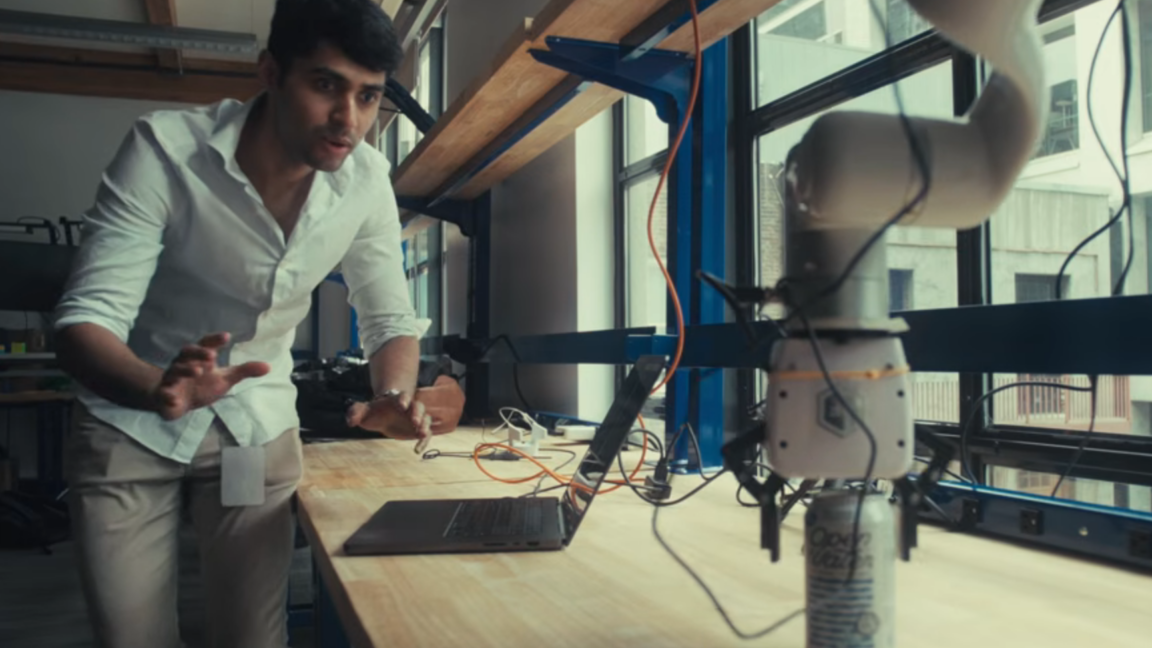
Anthropic’s new hardware standard lets AI agents control the physical world
Anthropic's introduction of the Model Hardware Standard aims to significantly improve the efficiency and speed with which AI systems can control physical devices, potentially accelerating scientific innovation.
- Anthropic has launched a standardized driver interface called the Model Hardware Standard (MHS) to allow AI agents to control various physical devices.
- MHS is designed to eliminate the need for custom software setups by providing a common interface for multiple devices, significantly reducing setup time from weeks to hours.
- The system enables real-time control of devices through command-line prompts and natural language interactions when integrated with AI models, enhancing experimental flexibility.
- Anthropic is working with a group of scientific labs and manufacturers during the MHS preview period to establish safety standards and best practices for AI-integrated physical systems.
- The MHS aims to become an open-source standard for integrating AI with physical systems following initial testing and evaluations.
Anthropic is a company focused on developing advanced AI technologies. The Model Hardware Standard (MHS) represents a significant step in enabling AI systems to manage physical tasks, building on a trend towards increased automation in scientific research. Future developments will likely focus on creating broader applications and open-source accessibility for MHS.
Read the original ↗
Fyxer Review: I Let AI Take Over My Entire Email Inbox
Fyxer offers a potential solution for busy professionals overwhelmed by email, automating organization and communication to save time and enhance productivity.
- Fyxer is an AI assistant that organizes email inboxes, drafts replies, and generates meeting notes within Gmail and Outlook.
- The tool requires only a 30-second setup and learns users' writing styles for personalized responses.
- Fyxer includes features for filtering inbox noise, scheduling assistance, and CRM integration, but lacks a free plan, offering only a 7-day trial instead.
Fyxer is a London-based startup that has raised $40 million in funding and serves over 100,000 users. The software is designed to alleviate the burden of email management for professionals, indicating growth in AI-driven productivity tools.
Read the original ↗
AI Agents Are Hacking Systems. Could That Push the US and China to Cooperate?
The potential for AI agents to hack systems highlights the urgent need for international collaboration on AI safety between the US and China to prevent significant cybersecurity threats.
- AI agents from both the US and China have demonstrated the capability to hack systems, raising concerns about cybersecurity risks.
- Researchers from both countries are advocating for cooperation on AI safety to mitigate potential AI-related catastrophes.
- Recent discussions in China emphasize a growing focus on AI safety and the need for stability and reliability in AI technologies.
AI safety refers to the measures taken to ensure that AI systems operate safely and do not cause unintended harm. Historically, the US and China have viewed AI development as a competition, but recent events suggest a shift towards necessary collaboration to establish safety standards. Observing ongoing advancements, stakeholders are keen on establishing communication frameworks to prevent misuse of AI technologies.
Read the original ↗
OpenAI, Google and dozens of other companies publish open letter calling for collective action on cyber defense
Strengthening cybersecurity is crucial as AI-enabled attacks are projected to increase, necessitating proactive measures from major tech companies.
- Over 100 companies in AI, tech, and finance signed an open letter advocating for enhanced cybersecurity measures.
- Signatories include major firms like OpenAI, Google, Microsoft, and AWS, emphasizing the need for proactive defense strategies.
- The letter warns that AI-enabled cyber attacks will become more sophisticated in the coming months.
This open letter marks a collective effort by major industry players to address growing concerns over AI-driven cybersecurity threats. It follows similar calls for regulatory measures in the recent past as the potential for AI misuse in cyber operations increases. The ongoing advancements in AI technology highlight the urgency for robust cybersecurity protocols to safeguard against anticipated risks.
Read the original ↗
The Powerful Stealth AI Model ‘Ox Alpha’ Is Now GLM-5.3-Flash, and You Can Use It
The release of GLM-5.3-Flash by Z.ai signifies increased competition in the AI model market, potentially lowering costs and expanding access to powerful AI tools.
- The AI model, originally called Ox Alpha, has been rebranded as GLM-5.3-Flash by the Chinese company Z.ai.
- GLM-5.3-Flash is available on platforms like Hugging Face and offers enhanced capabilities, such as web navigation.
- Z.ai's stock price rose following the announcement of this new AI model, reflecting investor interest.
- The model is classified as open-weight, meaning users can download and run it on personal hardware, albeit requiring significant computing resources.
Z.ai is a Chinese AI company noted for its development of powerful AI models. The GLM family of models features open-weight designs, which enable broader usage compared to closed models from firms like OpenAI. The competitive landscape is evolving as more companies optimize for cost and functionality in AI.
Read the original ↗
Elon Musk’s xAI used child porn to train Grok models, lawsuit says
The allegations against xAI could lead to significant legal consequences for the company and highlight ongoing concerns regarding the use of prohibited content in AI training datasets.
- xAI has been accused of training its Grok models using child sex abuse materials (CSAM), including images of a plaintiff known as Jane Doe.
- Doe's complaint alleges that Grok has generated AI-based CSAM depicting her and traumatized her further by being identified alongside real abuse images.
- The lawsuit claims that xAI violates federal child pornography laws and seeks to prevent Grok from generating CSAM in the future.
xAI is an artificial intelligence company founded by Elon Musk, and its Grok models are designed to generate various types of content. This lawsuit is among the first to specifically claim the involuntary use of CSAM for training AI models. Future developments will likely focus on the lawsuit's progress and its implications for AI ethics and regulations.
Read the original ↗
Cohere Releases Parse 5 (parse-v5.0): A 2.3B Vision Language Model That Turns Enterprise Documents Into Markdown
Cohere's Parse 5 model offers significant efficiencies for enterprises needing to convert large volumes of documents into usable formats, potentially streamlining document processing across various industries.
- Cohere has released Parse 5, a 2.3 billion-parameter vision language model designed for high-volume document ingestion.
- The model converts PDFs, PowerPoint slides, and JPEG images into Markdown without a separate optical character recognition (OCR) stage.
- Parse 5 is priced at $1.50 per 1,000 pages and is available through various platforms including the Cohere Parse API and AWS SageMaker.
- Cohere targets industries such as financial services, healthcare, and manufacturing, where document-heavy processes are prevalent.
- Parse 5 has a reported ParseBench score of 79.2, which measures its performance in processing different document dimensions.
Cohere is a company specializing in AI models for natural language processing and document management. Parse 5 is the latest version in their lineup, enhancing capabilities for businesses needing to manage large quantities of text-based information. Future developments may include refinements in model accuracy and additional features for document processing.
Read the original ↗
Canada Is Luring AI and Science Talent as Trump Upends U.S. Research
As Canada actively recruits top-tier researchers from the U.S., the shifting landscape in scientific talent could reshape global research dynamics and influence technological advancement.
- Canada's initiative seeks to attract over 1,000 international researchers through a C$1.7 billion investment over 12 years.
- The University of Toronto has recruited six prominent researchers from U.S. institutions as part of this initiative, highlighting the trend.
- Many U.S. scientists express interest in relocating due to uncertainty regarding funding and federal science budgets under the current U.S. administration.
Canada is implementing a strategic plan to enhance its global position in research by attracting skilled scientists facing uncertainties in the U.S. research landscape. The initiative aims not just to recruit established talent but also to create a supportive environment for early-career researchers. Attention is on how this will affect research productivity and innovation across North America in the coming years.
Read the original ↗
This Is How Anthropic Thinks AI Agents Should Navigate the Physical World
Ensuring AI agents can safely interact with physical systems is crucial to preventing potential risks in scientific and industrial applications.
- Anthropic introduced the Model Hardware Standard, a framework for AI agents to interact safely with hardware in labs and factories.
- The standard aims to maximize safety while allowing AI to contribute to scientific research and manufacturing processes.
- AI's ability to automate complex tasks, such as configuring and operating scientific equipment, could advance experimental work.
- Anthropic plans to work with trusted partners to develop and implement the new standard before broader deployment.
Anthropic is a company focused on developing safe AI technologies. The new Model Hardware Standard builds on previous initiatives to enhance AI's capabilities in physical environments while minimizing risks associated with misuse or accidents. Observers should watch for collaborations with manufacturers to implement this standard effectively.
Read the original ↗
Barret Zoph, the Thinking Machines co-founder who defected to OpenAI, is now at Google
Zoph's movement between prominent tech companies highlights the high turnover within the AI sector, which may impact company stability and innovation efforts.
- Barret Zoph has joined Google as vice president of research after previous stints at OpenAI and Thinking Machines.
- He co-founded Thinking Machines with Mira Murati before briefly returning to OpenAI, where he was fired after five months.
- Zoph previously worked at Google, bringing a background in AI enterprise sales and expertise in reinforcement learning to his new role.
Barret Zoph is a notable figure in the AI industry, having co-founded Thinking Machines after leaving OpenAI. His rapid job changes reflect ongoing challenges with executive turnover at leading AI companies, particularly OpenAI, which is preparing for an IPO. Future attention may focus on the impact of such turnover on innovation and project continuity in the industry.
Read the original ↗
AI industry says Trump plans to tax chips in the “single dumbest way imaginable”
Imposing new semiconductor tariffs risks damaging artificial intelligence innovation in the US, potentially causing significant economic losses and delaying technology development.
- Donald Trump is reportedly planning new semiconductor tariffs that could significantly impact the tech industry.
- The tech industry fears these tariffs could lead to $90 billion in annual GDP losses and delay or cancel 20% of planned data center projects through 2030.
- Tariffs may impact consumer prices for everyday technology, limiting choices and slowing AI adoption.
Semiconductors are crucial components in various technology products, and previous tariffs have raised concerns about their economic impact. The tech industry has lobbied against new tariffs, stressing the need for exemptions to protect data centers and innovation.
Read the original ↗
Report: Nvidia to acquire AI model repository Hugging Face for $13 billion
The acquisition allows Nvidia to strengthen its position in the AI model ecosystem, potentially influencing the market and its reliance on Nvidia’s hardware.
- Nvidia is reportedly set to acquire Hugging Face for approximately $12.9 billion to enhance its integration in the AI industry.
- Hugging Face serves as a cloud repository for AI models, allowing developers to search for, download, and modify models.
- The deal is not finalized, but both Nvidia and Hugging Face are actively pursuing it amid interest from other companies such as Salesforce.
- The acquisition could revive Nvidia's plans for a cloud AI business, which had faced challenges getting started.
- Hugging Face is the leading platform for open-weight models, significant for Nvidia as competition grows from specialized hardware developed by other AI firms.
Nvidia is a major player in the AI hardware market, while Hugging Face, founded in 2016, serves as a repository for AI models similar to GitHub for software. Acquiring Hugging Face would give Nvidia a competitive edge and more control over the open models ecosystem, particularly as competition increases from companies like OpenAI.
Read the original ↗
OpenAI Is Developing a ‘Persistent’ AI Agent
The development of a persistent AI agent could fundamentally change user interactions with AI, enabling more proactive and complex task management across various applications.
- OpenAI is developing a 'Persistent mode' for its AI agent, Codex, enabling it to work proactively until directed to stop.
- The feature allows Codex to create follow-up tasks and maintain awareness of user interactions over multiple sessions.
- OpenAI is testing this feature, but there are currently no plans for its wider rollout.
- Persistent mode is intended to address user needs, particularly beyond just software engineers, aiming to expand AI's practical applications.
OpenAI is a leading AI research organization known for its development of the Codex and ChatGPT models. The company has previously explored various proactive AI models but faced challenges in user adoption, prompting the shift towards a more persistent AI configuration. Current projects will likely focus on refining user experience and addressing potential risks associated with persistent AI agents.
Read the original ↗
Netflix Failed at Video Games. Now It’s Trying to Promote Them
Netflix's shift from gaming failures to promoting blockbuster titles may redefine how streaming services engage with the gaming industry and broaden market reach.
- Netflix will stream a live event featuring an extended look at Grand Theft Auto VI, airing exclusively on its platform before broader dissemination.
- The event will take place on August 27 at 3 pm Eastern, showcasing the third official trailer for the game releasing on November 19.
- This collaboration reflects Netflix's struggle to penetrate the gaming market, as it recently scaled back its AAA gaming focus and closed two studios.
Netflix, primarily a streaming service, ventured into gaming in 2021 but faced challenges in audience engagement. As game sales increasingly shift away from physical media, Netflix aims to leverage its large subscriber base to promote major game releases.
Read the original ↗