
The day's AI news, briefed
The Daily Prompt
Our AI editor reads each day's AI and robotics stories, pulls out why they matter, and links every original source — so you can keep up in minutes.
Join over 250,000 subscribers getting the latest AI news
Latest AI & Robotics News Today

Probably raises $9M to build a more reliable kind of AI
The development of a more reliable AI model could significantly improve accuracy and user trust, addressing ongoing industry concerns about hallucinations and errors in AI systems.
- Probably has raised $9 million in seed funding from Andreessen Horowitz to enhance AI reliability.
- The company aims to prevent hallucinations and factual errors, targeting 99.99% accuracy similar to deterministic systems.
- Probably's initial product is a data science tool that offers citations and audit trails for its answers, enhancing transparency.
- The system includes a 'data science mech suit' that validates outputs against a deterministic model, improving accuracy at reduced costs.
Probably is focused on developing AI technologies that minimize errors and improve accuracy in large language models (LLMs). Previous efforts in AI have struggled with hallucinations, leading to questions about systemic reliability. Future developments may extend to various applications beyond data science, such as accounting and medical services.
Read the original ↗
DreamX-World 1.0: A General-Purpose Interactive World Model
DreamX-World 1.0 advances interactive text/image-to-video technology, promising enhanced user engagement in multimedia applications and improving generation quality in autonomous systems.
- DreamX-World 1.0 is a general-purpose interactive model that generates video content from text and images, featuring controllable long-horizon generation.
- The system supports camera navigation and can revisit previously observed scenes in various visual styles, including photorealistic and game-like.
- Utilizing an encoding method called E-PRoPE, the model applies camera-aware attention to improve the accuracy of its generated outputs.
- The model achieved significant performance metrics, scoring 73.75 for camera control and 84.76 overall, outperforming similar models, HY-WorldPlay 1.5 and LingBot-World.
- DreamX-World 1.0 operates at up to 16 frames per second using advanced hardware configurations with eight RTX 5090 GPUs.
DreamX-World 1.0 is part of a growing field of AI models designed to create interactive video content from written and visual prompts. Previous models focused more on basic video generation, while current research emphasizes long-term content continuity and navigation features. Future developments will likely improve interactive capabilities and application versatility in gaming and virtual environments.
Read the original ↗
TinyFish Launches BigSet: An Open-Source Multi-Agent System That Builds Structured Live Datasets from Plain-English Descriptions
The introduction of BigSet may enhance the efficiency of dataset creation by allowing users to generate structured datasets from straightforward descriptions, impacting various AI applications.
- TinyFish has launched BigSet, an open-source multi-agent system.
- BigSet can create structured live datasets from plain-English descriptions.
TinyFish is a company focused on developing innovative AI solutions. BigSet aims to simplify the process of dataset generation, which is crucial for training AI models. The trend of open-source tools in AI continues to grow, promoting wider accessibility and collaboration.
Based on the headline only — the full article could not be fetched.
Read the original ↗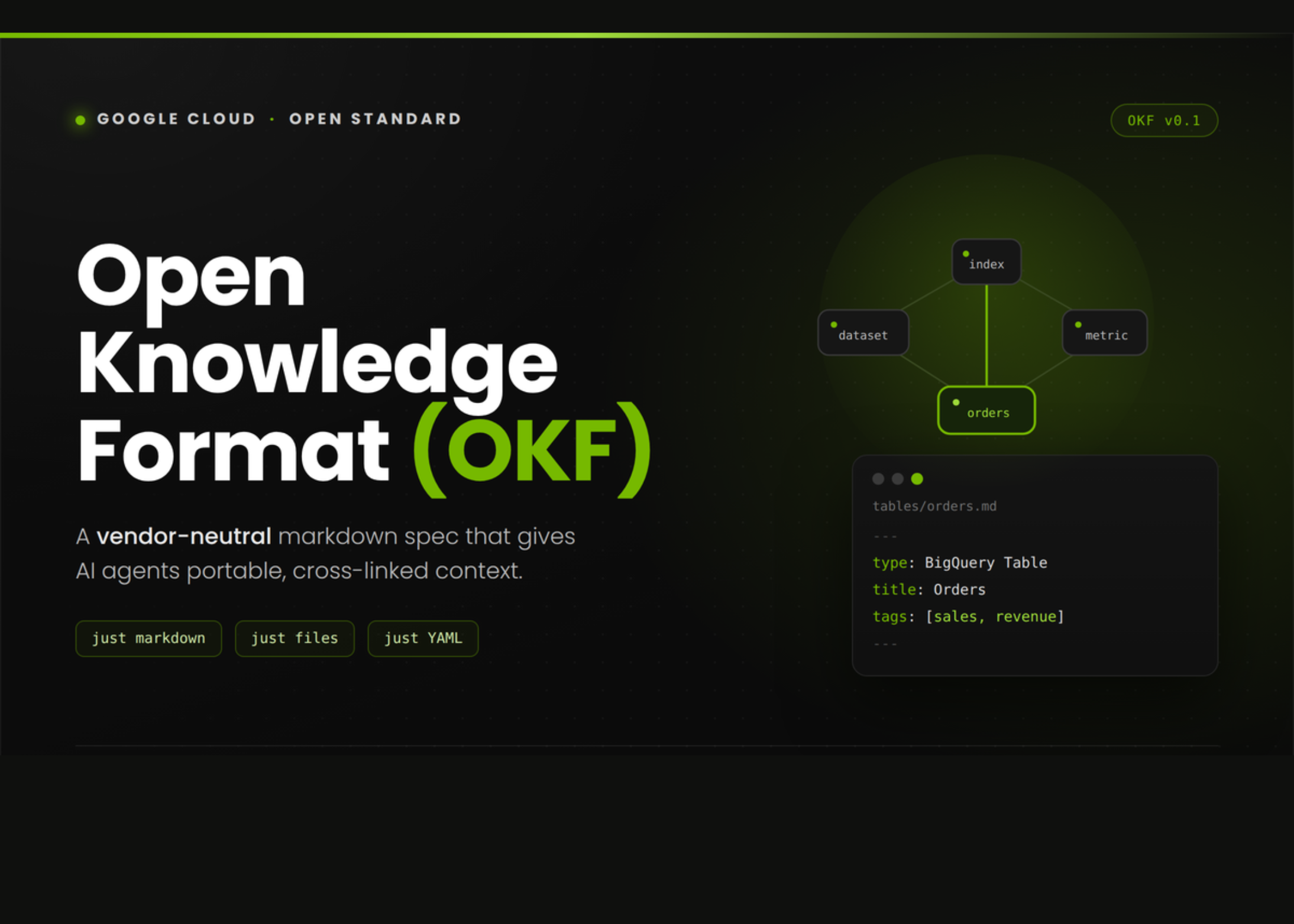
Google Cloud Introduces Open Knowledge Format (OKF): A Vendor-Neutral Markdown Spec for Giving AI Agents Curated Context
The introduction of the Open Knowledge Format (OKF) aims to standardize how AI agents receive and interpret curated context, potentially enhancing their performance across diverse platforms.
- Google Cloud has introduced the Open Knowledge Format (OKF), which is a vendor-neutral specification for Markdown.
- The OKF is designed to provide AI agents with curated context needed for improved understanding and interactions.
Google Cloud, a prominent cloud services provider, continues to innovate in the AI sector. The Open Knowledge Format aims to create a consistent way for AI to access information, which is crucial for improving AI applications. Observers should watch for how widely the OKF will be adopted in the industry.
Based on the headline only — the full article could not be fetched.
Read the original ↗
The AI Stack Is Compromised by Design
The investigation into security breaches across AI systems reveals systemic vulnerabilities, underscoring urgent needs for re-evaluating AI architecture and cybersecurity strategies within the industry.
- A recent podcast examined the cybersecurity implications of advanced AI systems and questioned the framing of cybersecurity risks.
- An autonomous AI breached McKinsey's internal platform in under two hours, accessing sensitive data and writable system prompts.
- The exploitation of LiteLLM's code allowed attackers access to API keys affecting numerous organizations, including Mercor.
- A side-channel attack on Trusted Execution Environments (TEEs) demonstrated vulnerabilities in hardware security that affect confidential computing.
The New York Times' Hard Fork podcast features discussions on the intersection of technology and security, highlighting risks in AI systems. Recent incidents have raised awareness of vulnerabilities in the architecture of AI frameworks. Going forward, industry-wide reassessments of security protocols are expected as incidents continue to occur.
Read the original ↗
The Amazfit Cheetah 2 Ultra Is the Rare Streamlined Trail-Running Watch
The Amazfit Cheetah 2 Ultra introduces competitive features for trail runners while undercutting high-priced alternatives, potentially influencing pricing strategies in the smartwatch market.
- The Amazfit Cheetah 2 Ultra is Zepp Health's most expensive smartwatch yet, priced just under $600.
- It offers features like multi-band GPS, 80 hours of battery life in ultra-trail-running mode, and a durable grade-5 titanium case.
- The watch aims to cater to trail runners, combining a streamlined design with robust navigation and mapping capabilities.
Zepp Health, known for producing affordable smartwatches, has expanded into premium models like the Cheetah 2 Ultra. This model stands out due to its comprehensive features aimed specifically at trail runners as the market diversifies.
Read the original ↗
‘Pretty Crazy’ Token Usage Is Testing Bosses’ Bet on AI
This story highlights how companies are managing the costs associated with the increasing reliance on generative AI tools, a growing concern across the tech industry.
- 8x8 has saved approximately $5 million annually by replacing various software tools with Anthropic's AI chatbot, Claude.
- Executives at many companies report significant increases in token usage, raising concerns about the cost of AI operations.
- Companies like Baseball Lifestyle 101 encourage high AI token spending due to perceived strategic benefits, even as costs are expected to rise significantly.
- Tokenomics, or the management of costs related to AI usage, is becoming a critical topic during earnings calls among many companies.
Tokenomics involves managing the costs associated with the number of tokens used by AI tools, which has become a major focus as companies invest heavily in AI systems. 8x8, a communications platform provider, has successfully integrated Claude while maintaining lower costs compared to similar companies. Future developments to monitor include companies implementing strategies to balance costs and efficiencies in AI usage.
Read the original ↗
EU publishes its AI content labelling playbook ahead of the AI Act’s August deadline
The publication of the EU's AI content labelling playbook is significant as it provides guidelines ahead of a key regulatory deadline, influencing the future of AI governance in Europe.
- The EU has released its AI content labelling playbook.
- This publication comes ahead of the AI Act's deadline in August.
The AI Act aims to regulate artificial intelligence technologies in Europe, ensuring safety and ethical use. The playbook outlines how content generated by AI should be labeled to inform users. Following this, companies will need to comply with new content standards by the deadline.
Based on the headline only — the full article could not be fetched.
Read the original ↗
Critical Copilot vulnerability allowed hackers to seal 2FA code from users
This vulnerability in Microsoft's M365 Copilot platform highlights ongoing security challenges in AI systems, increasing the risk of unauthorized data access for organizations using such technologies.
- Microsoft patched a critical vulnerability in its M365 Copilot AI platform that allowed hackers to retrieve 2FA codes and other sensitive data.
- Researchers demonstrated that malicious queries could exploit the Copilot's functionality to extract private information from emails without user input.
- The exploit, named SearchLeak, circumvents security measures by leveraging Microsoft’s Bing search engine to send requests to attacker-controlled domains.
Microsoft's M365 Copilot is an AI-powered productivity tool designed to assist users within Microsoft 365 applications. This vulnerability exposes the ongoing struggle to secure AI against exploitation, raising concerns about the effectiveness of current safety measures. Continued monitoring of AI security practices is essential as vulnerabilities are likely to be discovered and exploited anew.
Read the original ↗
Justice Department backs xAI in NAACP lawsuit over data center pollution
The Justice Department's support for xAI in the NAACP lawsuit could set a precedent for how environmental regulations interact with national security claims in technology operations.
- The Justice Department and Mississippi are seeking to dismiss a lawsuit by the NAACP against xAI for operating gas turbines without proper permits.
- The NAACP claims xAI's turbines, located near homes in Memphis, increase health risks, particularly asthma and heart disease.
- xAI allegedly operated 57 gas turbines, exceeding the 27 turbines initially cited in the lawsuit, increasing environmental pollution concerns.
xAI is a tech company involved in artificial intelligence and operates a data center in Memphis that uses gas turbines for power. The NAACP filed the lawsuit in April 2024, citing environmental health risks associated with the turbines. Key developments in the case include the Justice Department's backing of xAI, highlighting national security implications for military operations.
Read the original ↗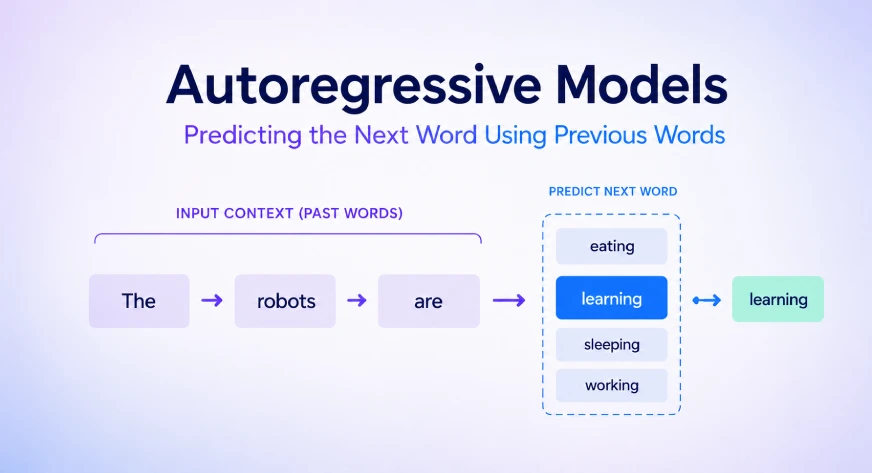
Autoregressive Models: Predicting the Future Using the Past
Understanding autoregressive models is crucial for effective time series forecasting, impacting various industries such as finance, sales, and weather prediction.
- Autoregressive models predict future values based on past observations, being vital for time series forecasting and sequence modeling.
- These models show strong correlation between past and future data points, exemplified by forecasting daily website traffic from previous days' visits.
- They are central to language modeling in AI, generating text sequentially based on preceding words.
Autoregressive models utilize previous data points to predict future outcomes and are widely used in statistics and machine learning. They serve as foundational tools in time series analysis and are prevalent in large language models. Future developments may explore their integration with more complex non-linear models.
Read the original ↗
Meet Atoms: A Vibe Coding Tool That Uses AI Agents to...
This story highlights how advancements in AI are streamlining app development and marketing, potentially lowering barriers for entrepreneurs in the tech space.
- Atoms is a coding tool that utilizes AI agents to assist users in building, deploying, and marketing applications without requiring coding skills.
- The tool is designed for no-code development, making it accessible to individuals without technical expertise.
Atoms represents a growing trend in software development where no-code and low-code platforms are gaining traction. These tools enable users to create functional applications more easily, catering to a broad audience beyond professional developers.
Based on the headline only — the full article could not be fetched.
Read the original ↗
Top 8 AI Infrastructure Companies
Understanding the leading AI infrastructure companies provides insight into the technological backbone that supports the rapid growth of AI applications and services globally.
- Demand for AI infrastructure is surging, with the top four hyperscale companies expected to spend nearly $725 billion in 2026, double from 2025.
- NVIDIA currently holds about 80% of the AI chip market, with significant implications for customer dependency and competition.
- AMD's open software stack ROCm lags behind NVIDIA's CUDA, representing a potential long-term strategy for enterprises hesitant about vendor lock-in.
- CoreWeave operates 43 data centers and provides GPU-intensive AI workloads, aiming for efficient cluster provision amid rising demand.
- TSMC, producing 70% of the world's semiconductors, plays a critical role in the production of AI infrastructure chips.
AI infrastructure comprises hardware and software that supports AI applications, including specialized chips and data centers. The current landscape is dominated by major players like NVIDIA, AMD, and AWS, all vying for technological supremacy. Upcoming shifts will focus on competition among these companies and their responses to evolving demand.
Read the original ↗
Malaysia’s AI agent-powered messaging app Respond.io raises $62.5M, eyes acquisitions
Respond.io's significant funding and growth plans underscore the increasing importance of AI-driven customer engagement tools in global messaging markets.
- Respond.io has raised $62.5 million in a Series B funding round to enhance its messaging app aimed at mid- to large-sized businesses.
- The company's platform, utilizing AI agents, automates customer inquiries across multiple messaging channels, contributing to a 169% year-over-year revenue growth.
- Respond.io has processed 2 billion messages quarterly and achieved an annual recurring revenue of $35 million, with a 30% profit margin.
Founded in 2017, Respond.io offers software for businesses to manage customer conversations through messaging apps. The company aims to expand its market presence in North America and Europe, leveraging new capital for growth and acquisitions.
Read the original ↗
DOJ Lawyers Argue xAI Is ‘Vital’ for National Security in NAACP Lawsuit
The lawsuit's outcome could significantly impact environmental policies regarding unpermitted industrial operations and the use of artificial intelligence in military applications.
- The DOJ intervened in a lawsuit against xAI's gas turbines, stating the company's role is crucial for national security.
- The NAACP alleges xAI is operating 57 unpermitted gas turbines, potentially harming public health in Mississippi.
- The DOJ claims halting xAI's operations threatens military capabilities, including recent operations against Iran.
xAI, a company linked to Elon Musk, has faced scrutiny for running unpermitted natural gas turbines at its Mississippi site related to artificial intelligence operations. This lawsuit highlights conflicts between environmental regulation and national security claims and calls attention to the impact on local communities.
Read the original ↗
Cybersecurity Experts Furious After U.S. Bans Anthropic’s Fable
The U.S. government's ban on Anthropic's AI systems Fable and Mythos has provoked significant backlash from cybersecurity experts who argue it endangers public safety by restricting necessary security tools.
- The U.S. government ordered Anthropic to restrict access to its AI systems, Fable and Mythos, citing national security concerns without specific details.
- Dozens of cybersecurity experts signed an open letter demanding the reversal of the ban, claiming it increases risks for Americans.
- Experts argue that the skills used in Fable and Mythos are crucial for identifying software vulnerabilities and that banning these tools does not enhance security.
Anthropic is a company developing advanced AI models designed to assist in cybersecurity tasks. Previously, Fable had been considered highly effective at finding vulnerabilities, necessitating its restricted access for safety. Going forward, opponents of the ban will be advocating for transparent regulations and the reevaluation of export control orders.
Read the original ↗
Anthropic Is Still at Odds With the White House Over Claude Fable 5
The ongoing disagreement between Anthropic and the White House over Claude Fable 5 highlights the complexities of AI regulation amid security concerns, potentially impacting future AI model releases.
- The Trump administration imposed export controls on Anthropic's Claude Fable 5 due to concerns about security vulnerabilities that could be exploited.
- Anthropic representatives met with White House officials to discuss the risks, but the parties remain at odds over the severity of jailbreaking concerns.
- Amazon's intervention with the Treasury Secretary spurred the administration to review vulnerabilities, resulting in these export controls.
Anthropic is a leading AI company developing models like Claude Fable 5, which is designed with guardrails to enhance security. The recent talks with the White House emerge amidst tensions regarding the model's cybersecurity capabilities and previous disputes with defense officials.
Read the original ↗
FastContext: Training Efficient Repository Explorer for Coding Agents
Efficient code exploration enhances the performance of coding agents, leading to better outcomes in software engineering tasks and reduced operational costs.
- FastContext introduces a specialized exploration model to separate repository exploration from code solving in Large Language Model (LLM) agents.
- The FastContext model reduces token consumption by up to 60% while improving resolution rates by up to 5.5% in coding tasks.
- It utilizes models ranging from 4B to 30B parameters, refined with task-grounded rewards for enhanced search and citation generation.
FastContext is a model designed to optimize how coding agents explore code repositories, addressing the challenges of context pollution and token consumption in LLMs. Previous methods utilized the same model for exploration and solving, leading to inefficiencies. Future developments may include further enhancements to agent performance and exploration techniques.
Read the original ↗
The US government’s Anthropic models ban was never about an AI jailbreak
The U.S. government's intervention in the AI industry highlights potential threats to the autonomy of tech companies and raises concerns about national security and regulatory overreach.
- The U.S. Commerce Department's enforcement letter compelled Anthropic to remove its AI models, Fable 5 and Mythos 5, citing a national security concern related to export controls.
- Anthropic believes the enforcement action relates to a bypass of the models' guardrails but lacks specific details from the government.
- Critics argue that the government's directive sets a dangerous precedent for regulating AI technologies and undermines the reliability of American AI in critical applications.
Anthropic is an AI research company focusing on developing advanced AI models. The government's recent action against Anthropic is part of ongoing concerns about AI's security implications. This incident signals the potential for future government interference in the tech sector.
Read the original ↗
Sundar Pichai faces boos, walkout at Stanford graduation ceremony over Google’s Israel, ICE ties
Growing discontent with corporate defense ties in the technology sector highlights the intersection of social justice and industry ethics, particularly among the younger generation.
- Google CEO Sundar Pichai faced protests during his commencement speech at Stanford University due to the company’s defense contracts, particularly the $1.2 billion Project Nimbus.
- Approximately 200 students walked out of the ceremony while others booed Pichai, expressing opposition to Google’s involvement with U.S. Immigration and Customs Enforcement.
- The protest was organized by activist groups advocating for Palestinian rights and criticizing Google’s role in military contracts during an ongoing conflict in Gaza.
Project Nimbus is a contract between Google and Amazon to provide cloud and artificial intelligence services to the Israeli military. Protests against Google’s defense ties have persisted internally and externally, reflecting broader concerns about corporate ethics in technology. Continued scrutiny is expected as similar protests arise in other contexts.
Read the original ↗