
The day's AI news, briefed
The Daily Prompt
Our AI editor reads each day's AI and robotics stories, pulls out why they matter, and links every original source — so you can keep up in minutes.
Join over 250,000 subscribers getting the latest AI news
Latest AI & Robotics News Today

AI Data Centers Need More Than More Cooling: They Need Faster Engineering
Inefficient cooling systems in AI data centers can severely impact operational costs and energy efficiency, making rapid advancements in engineering design critical for meeting growing demands.
- AI data centers will face power demand increases of more than thirty times by 2035 in the U.S., according to Deloitte.
- Modern GPU clusters can produce heat levels exceeding 50 kW per rack, a tenfold increase from a decade ago.
- Engineering teams are adopting AI-accelerated simulation workflows to validate cooling strategies and thermal performance earlier in the design process.
AI technology is transforming digital tasks and heavily influencing the physical infrastructure of data centers. Traditional data center cooling systems are struggling to keep pace with the increased heat output from modern AI servers, necessitating a rapid evolution in engineering processes. Future developments will likely focus on more efficient design and operational capabilities to accommodate AI's growing infrastructure demands.
Read the original ↗
Why Agentic AI Projects Stall at Scale, and What Enterprises Must Fix First
Addressing the shortcomings in data governance and modernization is crucial for enterprises to successfully scale agentic AI, moving beyond pilot programs to reliable, operational deployment.
- Many enterprises face project stalls between demo environments and production deployment of agentic AI due to unresolved data issues.
- Agentic AI projects are often hindered by fragmented data sources and outdated infrastructure that are not modernized prior to deployment.
- Enterprises need to prioritize evaluating agent behavior end-to-end, rather than focusing solely on model accuracy, to ensure effective performance in real-world situations.
Agentic AI, which involves autonomous AI workflows in businesses, is critical for modern enterprises. While most organizations have adopted AI in some capacity, scaling these initiatives effectively remains a challenge. Success requires a strong foundation in data governance and modernization to support agentic systems.
Read the original ↗
6 AI-Native LMS Platforms for Employee and Partner Training in 2026
Understanding the evolution of learning management systems to AI-native platforms highlights the strategic importance of workforce development in today's remote and complex business environments.
- Organizations in 2026 are using AI-native learning management systems (LMS) for employee, partner, and customer training rather than just internal onboarding.
- The shift towards AI-native LMS enables automation, personalization, and governance controls, making training more efficient in distributed environments.
- Docebo, CYPHER Learning, and Cornerstone are among the recognized LMS platforms that support various external training audiences and have integrated advanced AI capabilities.
Learning management systems (LMS) have transitioned from simple training tools to AI-driven platforms that assist in training diverse audiences. This transformation is driven by the need for scalable and efficient solutions as organizations manage increasingly remote and complex environments. Going forward, companies will prioritize systems that combine artificial intelligence with strong governance and integration capabilities.
Read the original ↗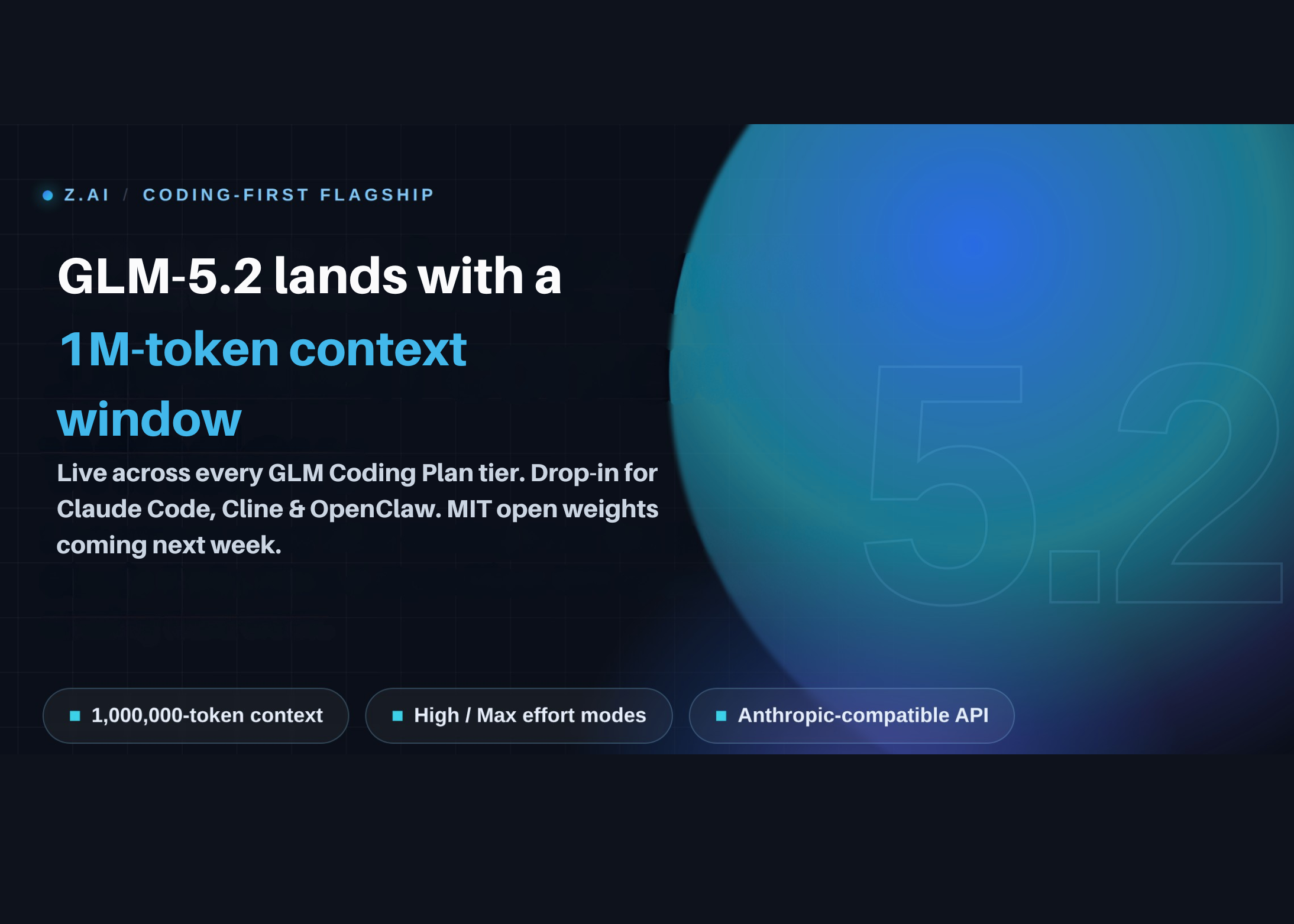
Z.ai Launches GLM-5.2 With a Usable 1M-Token Context, Two Thinking-Effort Levels, and No Benchmarks at Launch
The introduction of Z.ai's GLM-5.2 system, featuring a 1 million-token context, could significantly enhance AI's ability to manage larger datasets, impacting various applications.
- Z.ai has launched its GLM-5.2 AI model.
- The model supports a usable 1 million-token context, which enables handling extensive information more effectively.
Z.ai is known for developing advanced AI models aimed at improving natural language processing capabilities. Previous versions of their models have set high benchmarks in AI performance. The industry will be watching how GLM-5.2 compares once benchmarks are made available.
Based on the headline only — the full article could not be fetched.
Read the original ↗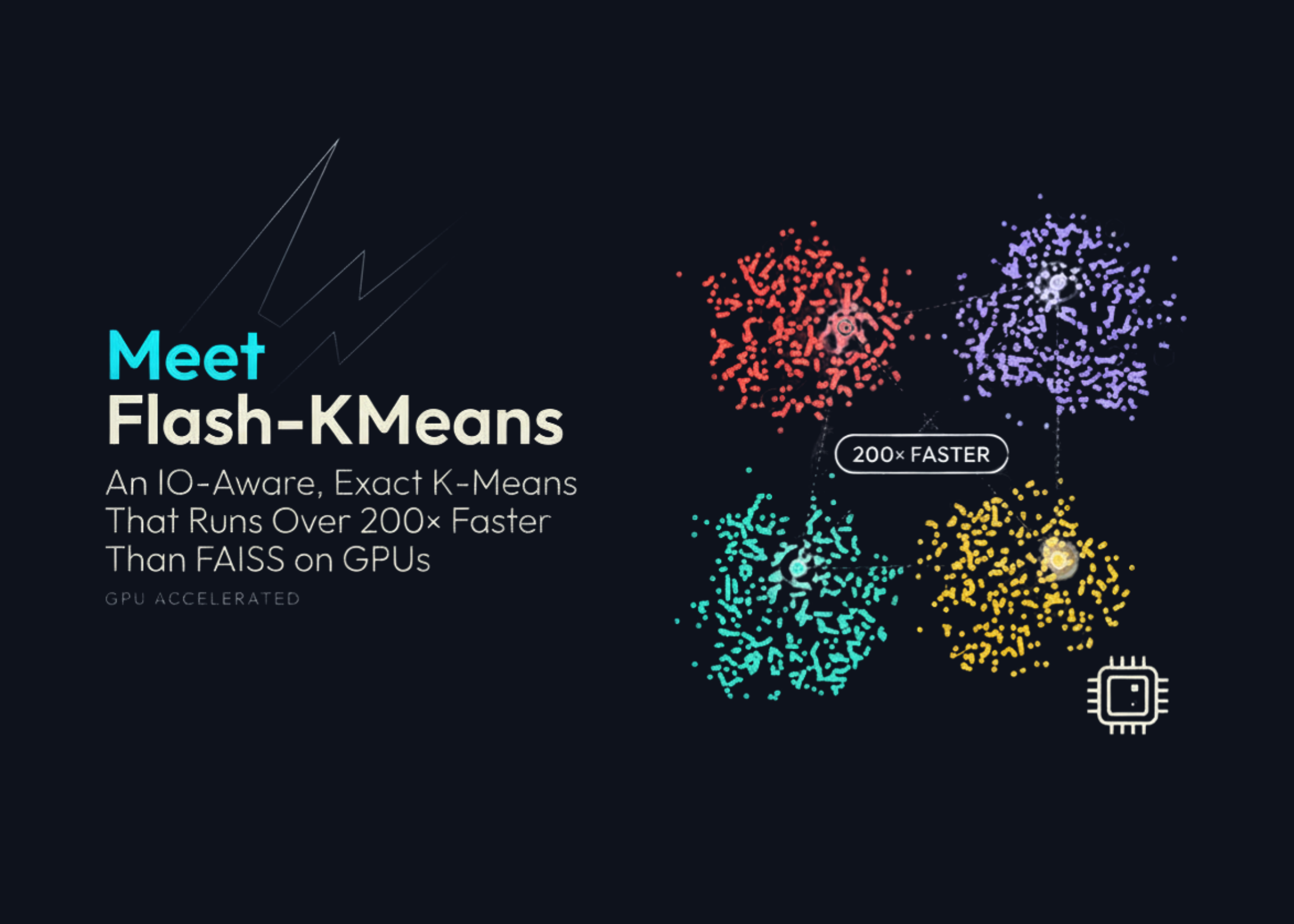
Meet Flash-KMeans: An IO-Aware, Exact K-Means That Runs Over 200× Faster Than FAISS on GPUs
The introduction of Flash-KMeans highlights significant advancements in processing speeds for K-means clustering, which could enhance data analysis across various AI applications.
- Flash-KMeans is an IO-aware, exact K-means clustering algorithm.
- It reportedly runs over 200 times faster than FAISS, a popular similarity search library, on GPUs.
K-means is a widely used clustering algorithm in machine learning for grouping data points. FAISS, developed by Facebook, is often utilized for similarity searches in large datasets. Advancements like Flash-KMeans could significantly impact efficiency in AI data processing.
Based on the headline only — the full article could not be fetched.
Read the original ↗
The AI off switch: How Anthropic’s export controls sparked a global AI sovereignty scramble
As nations grapple with the implications of AI export controls, the competition for technological sovereignty could reshape global power dynamics and innovation.
- Anthropic's implementation of export controls has triggered a race among countries for AI sovereignty.
- The controls are perceived as a strategic move that could influence international AI development and governance.
Anthropic is a prominent AI research organization known for its advanced machine learning models. The recent export controls reflect growing concerns about national security and technological leadership in AI. Observers will anticipate how this will affect global cooperation and competition in AI technologies.
Based on the headline only — the full article could not be fetched.
Read the original ↗
The AI layoff wave is becoming a powder keg
The ongoing wave of layoffs in tech, attributed to AI, raises concerns about corporate mismanagement and widening wealth inequality amid significant profits for AI insiders.
- Tech layoffs have reached nearly 150,000 this year, with a record pace of about 974 layoffs per day, according to TrueUp.
- AI has been the most-cited reason for layoffs for three consecutive months, affecting various industries, as reported by Challenger, Gray & Christmas.
- Critics argue that companies are using AI as a convenient justification for layoffs resulting from poor management rather than actual workforce reductions due to technology.
- Cerebras Systems and SpaceX are experiencing significant gains in market value, contributing to a growing wealth gap amid widespread job losses in the tech sector.
- Public sentiment shows increasing frustration, with surveys indicating that a majority of Americans feel a middle-class lifestyle is unattainable.
The article discusses the paradox of significant layoffs in the tech industry amidst record profits, largely attributed to advancements in AI technology. It highlights the divide between AI-driven wealth creation and worker job losses while pointing to public dissatisfaction with economic conditions. Observers suggest corporate mismanagement is being masked by claims about AI-induced job cuts.
Read the original ↗
Artificial Intelligence: Addressing Clinical Trials’ Greatest Challenges
The integration of artificial intelligence into clinical trial processes promises to reduce costs, improve efficiency, and enhance patient access, potentially accelerating the delivery of new medical treatments.
- Modern clinical trials are increasingly slow and costly, taking nearly a billion dollars and a decade to bring new medicines to market.
- Challenges like recruitment inefficiencies and a lack of diversity hinder the clinical trial process, with only one in seven drugs approved after initial trials.
- AI can optimize site selection and patient recruitment by analyzing historical data and improving access for underrepresented populations.
Clinical trials are vital for evaluating new medical treatments on human participants but face numerous inefficiencies. Prior efforts to improve trial effectiveness have been hampered by outdated processes and low patient diversity. Continued advancements in AI technology may provide critical solutions to these long-standing issues.
Read the original ↗
The Medicaid Cut Effect: Can AI Prevent an Incoming Healthcare Crisis?
The potential integration of AI in healthcare could mitigate the impact of massive Medicaid cuts, ensuring continued access to critical health services for millions of Americans.
- Republican lawmakers propose $880 billion cuts to Medicaid, impacting 83 million low-income Americans.
- AI technologies may streamline healthcare costs, with estimates of potential annual savings up to $150 billion.
- Startups like Kintsugi and Quantivly utilize AI to enhance patient care and optimize resource allocation.
Medicaid provides health coverage mainly for low-income individuals, and recent proposals seek to reduce its funding significantly. As healthcare costs rise, AI has emerged as a solution to improve efficiency and care outcomes while managing budget constraints. The future of Medicaid may hinge on how effectively AI is adopted in healthcare practices.
Read the original ↗
Combating Clinician Burnout with AI: A 2025 Vision for Smarter Healthcare Workflows
The integration of AI into healthcare workflows is essential for reducing clinician burnout, improving patient care quality, and addressing physician shortages projected by 2034.
- AI technologies are addressing clinician burnout, with nearly half of U.S. physicians still reporting burnout despite improvements.
- Burnout costs healthcare systems about $4.6 billion annually in turnover expenses, impacting patient care quality and workforce retention.
- AI tools like ambient clinical intelligence can reduce documentation burdens by generating structured clinical notes automatically, reportedly decreasing clinician burnout by up to 30%.
- Comprehensive AI solutions have led to productivity increases of over 40% and significant time savings for clinicians, enhancing overall workflow efficiency.
AI's role in healthcare has intensified recently, addressing the longstanding issue of clinician burnout driven by administrative tasks. Prominent AI developments aim to improve clinician efficiency, accuracy, and patient care engagement, creating a balanced healthcare environment. Future developments will require careful navigation of ethical considerations and integration challenges.
Read the original ↗
Ensuring Resilient Security for Autonomous AI in Healthcare
Strengthening cybersecurity measures for autonomous AI in healthcare is crucial to protect patient data and maintain trust in increasingly digital health systems.
- The average cost of a data breach in healthcare is $9.48 million in the U.S. and $4.45 million globally.
- 40% of disclosed data breaches involve information spread across multiple environments, increasing vulnerability.
- Organizations must adopt proactive defense strategies in the AI lifecycle, requiring a comprehensive threat model from data ingestion to deployment.
Healthcare organizations face a rising tide of data breaches, necessitating advanced security measures as AI becomes more prevalent in patient care. Continued developments in AI security frameworks, like NIST's and OWASP's guidelines, will be crucial as threats evolve. Vigilance and adaptation in security practices are imperative for maintaining secure AI systems.
Read the original ↗
The Future of AI in Healthcare: Connecting Patient Data Across Care Settings to Improve Preventative Care
The integration of AI in healthcare could substantially enhance patient care by improving data sharing and analytics, ultimately leading to better prevention and treatment outcomes.
- Healthcare providers face challenges with an overwhelming volume of patient data, with a survey showing that 69% of practitioners feel overwhelmed by this information.
- Approximately 97% of patient data goes unused due to difficulties in data extraction and contextualization.
- AI technologies are being implemented to enhance patient safety and to streamline data extraction and incident reporting processes.
- Remote patient monitoring tools and wearable devices are becoming crucial in capturing ongoing health metrics for better contextual analysis by providers.
- AI has the potential to connect and interpret patient data across various care settings, promoting a shift from reactive to preventative healthcare.
AI in healthcare aims to improve patient outcomes through enhanced data sharing and analysis. Previous efforts have faced challenges due to data overload and insufficient interoperability. Future developments in AI will focus on facilitating seamless data integration to support proactive care strategies.
Read the original ↗
Any AI Agent Can Talk. Few Can Be Trusted
Establishing trust in AI agents is critical for the healthcare sector, where inaccuracies can lead to patient confusion, compromised care, and increased costs.
- AI agents are expected to alleviate burdens on overworked healthcare teams by automating tasks.
- Trust issues prevent healthcare leaders from deploying AI technology on a larger scale due to safety concerns.
- To operate effectively, AI agents need robust infrastructure for control, context, and accountability; merely sounding compassionate is not enough.
Healthcare is increasingly looking to AI agents to improve efficiency and patient care, but concerns about accuracy and safety remain. Proper engineering of these systems is essential to ensure trust and reliability in clinical settings.
Read the original ↗
Gulf Nations Are in Pole Position for the Health AI Race – Here’s Why the UK Has Fallen Behind
Without immediate investment and regulatory reform in health AI, the UK risks losing its competitive edge and a generation of healthtech talent to the Gulf nations.
- Healthtech startups in the UK face challenges such as red tape and rising compliance costs, hindering their growth compared to Gulf countries.
- Last year, the UK attracted $443 million in AI healthtech investment, but founders are hindered by outdated NHS infrastructure and slow procurement processes.
- The UK's National Health Service (NHS) is struggling with technology adoption, exemplified by the pause of the Foresight AI project due to data privacy issues.
The UK has historically been strong in healthcare delivery, but recent complaints highlight its outdated infrastructure and complex data regulations. Meanwhile, Gulf nations are aggressively investing in health AI technology and supportive regulatory frameworks, making them increasingly attractive for startups.
Read the original ↗
AI Scribes Arrive in Lebanon: How Rhazes AI Is Redefining Frontline Healthcare
The introduction of AI scribes in a conflict zone highlights the potential for technology to significantly improve frontline healthcare delivery under challenging conditions.
- Rhazes AI has launched a pilot program for AI clinical scribes at Al Hamshari Hospital in southern Lebanon, the first of its kind in a conflict area.
- The hospital serves over 4,000 patients monthly and is critical for Palestinian refugees, offering limited resources with only 80 beds and 56 doctors.
- AI scribes will transcribe consultations in real time, streamline documentation, and support decision-making to reduce administrative burdens on healthcare professionals during crises.
- The pilot program will run from August to November 2025, assessing the scribe's impact on doctors' workflow, confidence, and patient care efficiency.
Rhazes AI is a healthtech startup from the UK and Qatar focused on enhancing clinical workflow using AI. The deployment of AI scribes in Lebanon represents a response to the pressing healthcare needs in conflict zones, where resources are minimal. Observing the outcomes of this pilot could inform future implementations of AI technology in similar environments globally.
Read the original ↗
Apple Names Former Google Gemini Lead as New AI Chief
Apple's appointment of Amar Subramanya as AI chief highlights the company's strategic push to enhance its AI capabilities and address past shortcomings, especially with Siri.
- Apple has appointed Amar Subramanya as its new vice president of AI, replacing John Giannandrea, who is retiring after leading AI efforts for seven years.
- Subramanya previously worked at Google as head of engineering for the Gemini Assistant and briefly at Microsoft.
- His new role will focus on Apple Foundation Models, machine learning research, and AI safety and evaluation, indicating a push for developing proprietary AI technology.
- Subramanya’s expertise in conversational AI aims to address the perceived lag of Siri compared to competitors like ChatGPT and Gemini.
Apple is a technology company known for its consumer electronics and software. The company has faced challenges in advancing its AI features and improving Siri, which has prompted leadership changes. The rollout of enhanced Siri features is anticipated next year under Subramanya's leadership.
Read the original ↗
Anthropic Brings Claude Code to Slack for In-Chat Development
Anthropic's integration of Claude Code into Slack allows for seamless coding task delegation directly from chats, potentially improving workflow efficiency in development teams.
- Claude Code is now available in Slack, allowing developers to assign coding tasks in chat without leaving the application.
- Developers can invoke Claude by tagging @Claude in Slack, enabling the AI to analyze context and start coding immediately.
- The integration supports monitoring progress and sharing completed work within Slack, streamlining communication and development.
- Claude Code can work on complex tasks like planning and executing multi-step workflows, enhancing productivity for engineering teams.
- This integration builds on a partnership between Anthropic and Salesforce, improving workflow management across platforms.
Claude Code is an AI coding assistant developed by Anthropic that helps automate software development tasks. The integration into Slack aims to reduce context-switching for teams that rely on chat for communication. Future performance will depend on Claude Code's ability to manage the limits of information conveyed in chat discussions.
Read the original ↗
OpenAI Hires Slack CEO as First Chief Revenue Officer
The appointment of a chief revenue officer at OpenAI indicates a strategic shift towards capitalizing on its user base, critical for the company's financial sustainability and growth.
- OpenAI has appointed Denise Dresser, former CEO of Slack, as its first chief revenue officer to oversee global revenue strategy.
- Under Dresser, OpenAI aims to convert its large user base of over 800 million weekly ChatGPT users into paid customers.
- Dresser has a decade of experience in enterprise sales at Salesforce, addressing a leadership gap in OpenAI's monetization efforts.
OpenAI, known for developing the AI language model ChatGPT, is shifting its focus from consumer products to enterprise contracts for sustainable revenue. Dresser's role is crucial as OpenAI aims to enhance its commercial viability amidst rising operational costs and competition from firms like Anthropic and Microsoft.
Read the original ↗
OpenAI Releases GPT-5.2 After Internal ‘Code Red’ Over Google’s Gemini 3
The release of GPT-5.2 showcases OpenAI's rapid response to competitive pressures, highlighting its importance in maintaining leadership in the fast-evolving AI market.
- OpenAI launched GPT-5.2 in response to Google's Gemini 3, marking the fastest major model iteration for the company.
- GPT-5.2 outperforms Gemini 3 and Anthropic's Claude Opus 4.5 in various reasoning tests according to OpenAI's benchmarks.
- The accelerated development comes after an internal 'code red' was declared by CEO Sam Altman to focus on enhancing ChatGPT's capabilities.
OpenAI is a leading AI research organization known for developing advanced language models like GPT-5.2. The company has seen increasing competition from others like Google and Anthropic, prompting quick iterations to maintain its market position. Upcoming developments will likely focus on enhancing ChatGPT's performance and functionality amidst this competitive landscape.
Read the original ↗
ChatGPT’s App Store Is OpenAI’s Bid to Become the Everything Platform
The launch of OpenAI's app directory for ChatGPT could redefine how users interact with digital services, potentially transforming the app ecosystem and user engagement in the AI space.
- OpenAI launched an app directory for ChatGPT on December 17, allowing 800 million weekly users to connect with third-party services during conversations.
- Initial partners include Spotify, Booking.com, DoorDash, Dropbox, Google Drive, and Apple Music, expanding ChatGPT's functionalities.
- Developers can submit apps through OpenAI’s Apps SDK, but monetization options are currently limited to linking out to external services.
OpenAI is evolving from a model provider to a platform company with its new app directory, inspired by Apple’s App Store model. This initiative aims to make ChatGPT the primary interface for interacting with digital services, while challenges remain regarding monetization and developer engagement.
Read the original ↗