
The day's AI news, briefed
The Daily Prompt
Our AI editor reads each day's AI and robotics stories, pulls out why they matter, and links every original source — so you can keep up in minutes.
Join over 250,000 subscribers getting the latest AI news
Latest AI & Robotics News Today
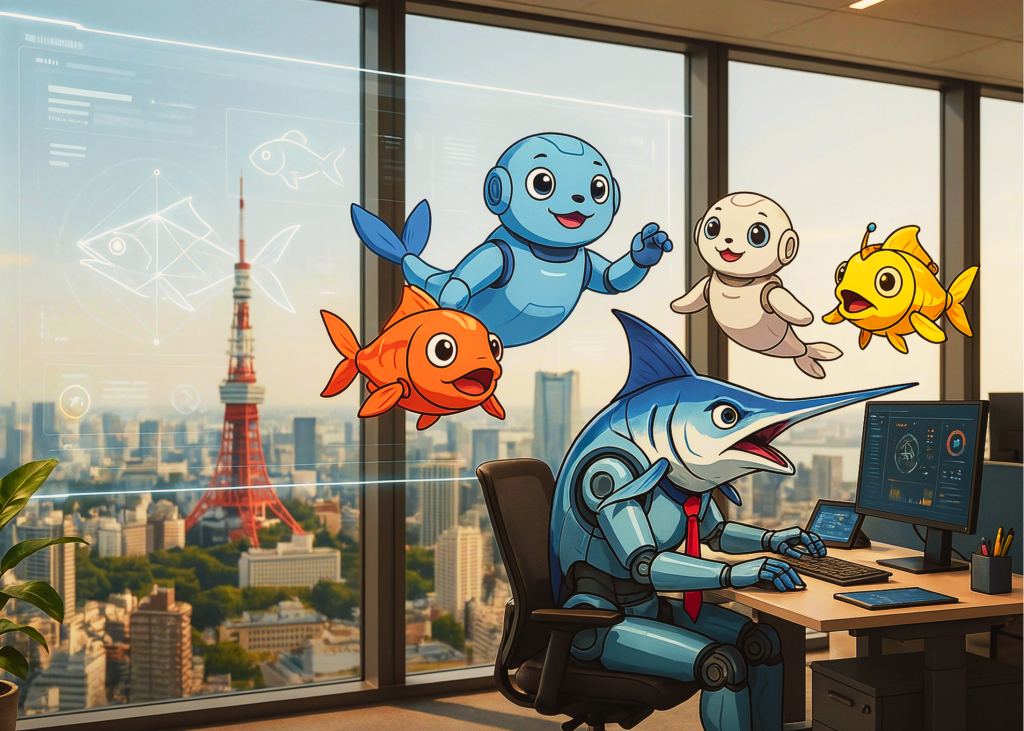
Sakana AI Commercializes AB-MCTS in Sakana Marlin, an Enterprise Agent Generating...
The commercialization of AB-MCTS in Sakana Marlin signifies advancements in AI-driven enterprise agents, potentially enhancing business automation and decision-making processes.
- Sakana AI has commercialized AB-MCTS technology in its product Sakana Marlin.
- Sakana Marlin is positioned as an enterprise agent that aims to generate smarter business solutions.
Sakana AI focuses on artificial intelligence innovations. AB-MCTS, or Adaptive Block Monte Carlo Tree Search, is a search algorithm used in decision-making processes. The release of Sakana Marlin indicates a step forward in the application of advanced AI in enterprise settings.
Based on the headline only — the full article could not be fetched.
Read the original ↗
Meta CTO Andrew Bosworth Admits the Company’s AI Reorg Was ‘Atrocious’
Meta's acknowledgment of its mismanagement in the rollout of its AI division highlights the importance of employee morale and effective communication during significant organizational changes.
- Andrew Bosworth, Meta's CTO, called the company's AI division rollout 'atrocious' in an internal memo addressing employee concerns.
- Meta formed its AI division with about 6,500 engineers and product managers in March to enhance its generative AI models.
- In response to widespread dissatisfaction, Bosworth promised improvements in management structure and workplace culture, including better communication and workplace perks.
Meta, a leading technology company, has faced declining morale following mass layoffs and restructuring. The company is now focusing on improving internal culture and communication amidst evolving strategies in artificial intelligence.
Read the original ↗
Investigation by The Atlantic reveals many millions of songs used for AI music training
The discovery of millions of copyrighted songs used to train AI models raises significant legal and ethical concerns for artists and the music industry.
- An investigation by The Atlantic found millions of songs, including those by Taylor Swift and Bad Bunny, used for AI music training.
- The investigation includes four databases, with one containing 12 million tracks and another 9 million.
- Ongoing legal cases against AI music platforms like Suno and Udio focus on copyright infringement and fair use claims.
- The databases could aid the music industry in pursuing lawsuits similar to those in book publishing, which recently concluded with a $1.5 billion settlement.
AI music training involves using existing music to develop algorithms that create new music. This practice has resulted in numerous legal actions, highlighting the tensions between traditional copyright laws and AI advancements. Observers anticipate further legal developments as the industry adapts to these technologies.
Read the original ↗
Why do South Koreans love AI so much?
The rising number of K-pop fan ads in Seoul's subway highlights the cultural impact of K-pop on social practices and urban spaces, while providing financial support to the transit system.
- The number of K-pop-themed ads in Seoul's subway reached 1,576 as of September 2022, up from 76 in 2014.
- K-pop fans raise funds to place advertisements celebrating idols' birthdays and anniversaries, contributing to a growing trend.
- Seoul Metro generates income from these ads, charging between 1.5 million to 4.5 million won ($1,300-$4,000) for monthly placements.
K-pop is a global music genre originating from South Korea, with extremely dedicated fan bases that often partake in activities such as fundraising for advertisements. This phenomenon not only demonstrates the power of fandom but also provides crucial revenue for transit systems like Seoul Metro, which is under financial strain. Future trends may include expanding fan engagement methods and increased visibility of K-pop culture in urban settings.
Read the original ↗
xAI's lawsuit accusing OpenAI of stealing trade secrets has been thrown out
The dismissal of xAI’s lawsuit signifies a setback for trade secret claims in the competitive AI industry, particularly as it relates to employee movements between tech firms.
- A federal judge dismissed xAI's lawsuit against OpenAI with prejudice, preventing any future attempts to refile.
- xAI accused OpenAI of persuading a former employee to steal trade secrets, but failed to prove a connection.
- This lawsuit followed a previous case where Musk's company sued a former employee for similar allegations.
xAI is a company founded by Elon Musk, focusing on artificial intelligence. This lawsuit stems from ongoing tensions between Musk and OpenAI, which he co-founded before exiting. Future legal disputes may arise as competitors vie for talent and technology in the AI sector.
Read the original ↗
Anthropic hit with lawsuit over its Claude Max usage limits
This lawsuit could impact consumer perceptions and expectations of AI subscription services, highlighting potential discrepancies between advertised usage limits and actual service availability.
- A Washington DC resident has filed a federal lawsuit against Anthropic, claiming the company misled users about Claude Max usage limits.
- The lawsuit alleges that actual usage caps for the Max 5x and Max 20x plans are lower than advertised.
- The complainant upgraded to the Max 20x plan, only to find he quickly exhausted his weekly usage limits during single sessions.
Anthropic offers AI services through various subscription plans, including Claude Pro and the Max plans, which promise increased usage capacities. Previous consumer dissatisfaction over usage limits has led to ongoing discussions and adjustments from the company.
Read the original ↗
Meta’s new ‘AI Mode’ on Facebook pulls from public info across its platforms
The introduction of AI Mode on Facebook signifies Meta's strategic push to enhance user engagement and improve information retrieval across its platforms amid rising competition in the AI sector.
- Meta has announced the rollout of 'AI Mode' on Facebook, allowing users to ask questions and receive answers sourced from public posts and discussions.
- The feature aims to transform how users search for information and engage with content on the platform.
- Users can also access new editing tools and AI-powered photo presets for personalized content creation.
- The initiative follows the recent launch of the Forum app, which includes an AI 'Ask' tab for community-driven answers.
Meta is a social media company striving to compete in the AI space by enhancing its platforms. The launch of AI features follows a series of updates aimed at improving user experience and interaction. Moving forward, watch for more AI-related subscription offerings from Meta as part of its evolving strategy.
Read the original ↗
Chipmaker Nvidia seeks to raise over $25B in first bond deal since 2021
Nvidia's bond sale reflects both the company's robust position in the AI market and the growing investor interest in the tech sector amid heavy borrowing pressures.
- Nvidia is planning to sell $25 billion of investment-grade debt in its first bond sale since 2021, set for Monday.
- The bond offering will include a range of maturities from two to 30 years and has received over $85 billion in orders.
- Due to strong demand, the yield for the 10-year bond portion has decreased from initial expectations of 0.75 percentage points above US Treasuries.
- This offering will increase Nvidia's total outstanding debt from approximately $8.5 billion to about $30 billion, tripling it.
- Nvidia intends to use proceeds from the bond sale for general corporate purposes, including refinancing existing notes.
Nvidia, a leading chipmaker, is a key supplier for AI technology, having significantly benefitted from increased investment in AI infrastructure. This bond offering occurs as companies face intense competition for funding amidst a surge in tech sector borrowing. Market concerns have emerged regarding concentrated risks associated with interdependencies among AI firms that Nvidia has invested in.
Read the original ↗
Facebook's new AI tools offer more of the same, with photo-editing and question-answering capabilities
Facebook's new AI tools enhance user engagement by integrating chat and photo editing features, potentially increasing overall platform activity for power users.
- Meta has launched a suite of new AI tools for Facebook users, including a chatbot named AI Mode for answering questions.
- AI Mode uses data from Facebook's apps like Groups and Reels to provide personalized responses.
- New photo-editing features include collage templates and video transition effects for creating sharable content with AI.
- Additional features allow users to alter their appearance in photos by changing clothing and accessories virtually.
Meta, the parent company of Facebook, has introduced AI tools to enhance user interaction on its platform following trends in AI development. These tools aim to provide unique experiences compared to other chatbots and photo editors in the market. Observers should watch for further updates on service expansion beyond mobile devices.
Read the original ↗
The Optical Breakthroughs That Will Make AI-Enabled AR Glasses Practical
Advancements in optical technology are crucial for making AI-enabled augmented reality glasses practical, potentially transforming how digital information is integrated into daily life.
- AI-enabled AR glasses aim to merge digital information with the physical world, leveraging spatial interfaces for improved user interaction.
- Waveguides, which are thin optical components, have seen increased adoption, accounting for 98% growth in AI-enabled AR glasses year-over-year.
- Challenges in AR glasses include balancing brightness, power consumption, and form factor, impacting usability and design for everyday applications.
Augmented reality (AR) glasses represent a significant advancement in wearable technology, allowing digital content to interact with the physical environment. The ongoing evolution of optical components like waveguides is key to developing lighter, more efficient devices. Future developments will focus on improving optical performance and adopting scalable manufacturing processes for wider consumer use.
Read the original ↗
Salesforce acquires AI customer service platform Fin for $3.6 billion
Salesforce's acquisition of Fin for $3.6 billion highlights the growing importance of AI in enhancing customer service capabilities across various communication channels.
- Salesforce announced it will acquire AI customer service platform Fin for $3.6 billion.
- Fin offers an AI agent that resolves customer queries via multiple channels such as live chat, WhatsApp, and Slack.
- Salesforce aims to improve its Agentforce platform by integrating technology from Fin, enhancing custom AI agent capabilities.
- The transaction is expected to close in the last quarter of Salesforce's 2027 fiscal year, starting in early 2027.
Salesforce is a cloud-based software company known for its customer relationship management platform. The company is expanding its services in AI to enhance customer support solutions. The acquisition of Fin follows a series of investments in AI to improve their product offerings for businesses.
Read the original ↗
Cybersecurity vets protest ‘dangerous’ US government ban on Anthropic’s most powerful models
The U.S. government's export control on Anthropic's AI models may weaken cybersecurity defenses against rapidly advancing adversaries.
- A group of 76 cybersecurity experts urged the U.S. government to lift export restrictions on Anthropic's Fable and Mythos models.
- The government imposed a ban on these models over national security concerns, but did not specify the reasons for the order.
- The experts argue that restricting access to these models limits defenders' abilities to identify and fix software vulnerabilities.
Anthropic's Fable and Mythos models are advanced AI tools for finding security vulnerabilities. The export ban raises concerns among cybersecurity professionals about adequately defending against cyber threats. Experts are advocating for reasonable regulations based on democratic processes and scientific research.
Read the original ↗
#503 Washington just repriced frontier AI
The US government's action to disable Anthropic's newly launched AI models signals potential regulatory risks that investors must now account for in the AI sector.
- The US government imposed a global export-control order on Anthropic, disabling models Fable 5 and Mythos 5 just days after their launch.
- State attorneys general from various states have opened a formal investigation into OpenAI's advertising and data practices.
- The incidents highlight a growing concern where advanced AI capabilities are subject to rapid regulatory changes, creating uncertainty for investors.
Anthropic is a firm specializing in advanced AI models, and their recent models raised concerns due to their technical capabilities. The regulatory actions align with previous warnings about AI technology's implications for national security and consumer protection, suggesting a need for more comprehensive oversight in the industry.
Read the original ↗
Entity Resolution Is Becoming AI Infrastructure, Not Data Cleanup
The evolution of entity resolution into real-time infrastructure highlights the urgency for organizations to ensure accurate and immediate identification of entities to prevent costly errors in automated systems.
- Entity resolution, historically a batch data cleanup process, is becoming essential for real-time AI systems that execute actions based on retrieved data.
- The shift means errors in data merging or identification can lead to immediate business consequences, rather than delays in reporting.
- A majority of organizations plan to deploy autonomous agents, but only about a third feel their infrastructure is prepared for them.
Entity resolution is the process of determining whether two records refer to the same real-world entity, which has been important since the 1950s. Traditionally regarded as a data cleaning task, it is now critical for AI agents that make immediate decisions based on integrated data. Moving forward, businesses must focus on ensuring their systems can accurately resolve entities at the point of data action.
Read the original ↗
Accenture: Consumers show growing trust in AI shopping agents
Growing consumer trust in AI shopping agents could significantly shift the retail landscape and influence how businesses engage with technology in sales.
- Accenture reports an increase in consumer trust towards AI shopping agents.
- The rise in trust may affect purchasing behavior and business strategies in the retail sector.
AI shopping agents utilize artificial intelligence to assist consumers in making purchasing decisions. This trend reflects broader advancements in AI applications across various industries, particularly in enhancing customer experiences. Monitoring consumer sentiment can provide insights into future retail innovations.
Based on the headline only — the full article could not be fetched.
Read the original ↗
HarmonyOS 7 steps into the AI gap Apple left open in China
HarmonyOS 7 aims to capture the market opportunity created by Apple's absence in China's AI landscape, potentially reshaping competition in the region.
- HarmonyOS 7 targets the AI gap left by Apple in China.
- The operating system is designed to enhance user experience through artificial intelligence.
HarmonyOS is an operating system developed by Huawei, primarily used in its devices. Apple's recent changes in strategy have opened a space for competitors in the AI segment of the Chinese market. Observers are watching how HarmonyOS will perform against other established systems in China.
Based on the headline only — the full article could not be fetched.
Read the original ↗
As AI agents become employees, NewCore emerges with $66M to give them identities
Managing AI agents as employees is critical for enterprises, impacting security and operational efficiency as adoption of digital workers increases.
- NewCore secured $66 million in funding to develop a platform that manages AI agents' identities in corporate environments.
- The startup asserts that companies will soon require systems to authenticate and control AI agents at scale, much like human employees.
- NewCore's platform features a unique 'split-key' architecture to enhance security and prevent single points of failure.
- The company aims to address the limitations of traditional identity platforms, which are not designed for AI workers.
- NewCore's team has experience from past ventures, with leadership that includes a former co-founder of a cloud-security startup.
NewCore is a cybersecurity startup focused on managing AI and human identities in enterprise systems. The emergence of AI agents as workplace participants has led to new challenges in identity management. Companies like Goldman Sachs and McKinsey are early examples of businesses integrating AI agents into their workforce.
Read the original ↗
Sarvam becomes India’s newest AI unicorn with $234 million funding round led by HCLTech
The funding reflects a growing trend in India to develop local capabilities in artificial intelligence as global access to advanced models becomes increasingly restricted.
- Sarvam has raised $234 million at a $1.5 billion valuation, becoming India's newest AI unicorn following significant investments.
- HCLTech is the lead investor, contributing $150 million to support Sarvam's growth and plans for a Series B round totaling $300 million.
- The startup specializes in AI models tailored for Indian languages and applications across various industries, including banking and defense.
Sarvam, based in Bengaluru, is focused on developing comprehensive AI solutions and has previously raised $41 million in earlier funding rounds. With this new investment, Sarvam aims to enhance its AI models and computing infrastructure amid rising demand for AI in India.
Read the original ↗
OmniVideo-100K: A Dataset for Audio-Visual Reasoning through Structured Scripts and Evidence Chains
The introduction of the OmniVideo-100K dataset enhances audio-visual reasoning, potentially improving performance in video analysis across various AI applications.
- The OmniVideo-100K dataset aims to improve automated audio-visual question answering through entity-anchored video scripting and clue-guided QA generation.
- This dataset addresses issues in current automated pipelines that separate audio and visual cues, often causing inconsistent video descriptions.
- Fine-tuning models on this dataset resulted in performance gains of up to 20.59% on the OmniVideo-Test evaluation set.
Automated audio-visual question answering systems, traditionally reliant on video captions, face challenges in integrating audio-visual information effectively. The OmniVideo-100K dataset is designed to enhance cross-modal reasoning and consistency in video analysis, marking a significant advancement in the field of AI-driven video understanding.
Read the original ↗
Memory is Reconstructed, Not Retrieved: Graph Memory for LLM Agents
This research introduces a new framework for memory access in AI, enhancing long-horizon reasoning while minimizing computational costs, which could significantly improve AI agent performance.
- MRAgent integrates associative memory graphs and active reconstruction for better memory access during reasoning tasks.
- The framework allows dynamic adaptation of memory retrieval based on intermediate evidence, improving efficiency.
- Experiments showed MRAgent achieved up to a 23% improvement over existing models, while reducing token use and runtime.
MRAgent seeks to address limitations in current large language models (LLMs) that struggle with reasoning across long histories. By enhancing memory access, this framework presents a step forward in AI reasoning capabilities. Future developments may focus on wider applications of this memory structure in various AI tasks.
Read the original ↗