
The day's AI news, briefed
The Daily Prompt
Our AI editor reads each day's AI and robotics stories, pulls out why they matter, and links every original source — so you can keep up in minutes.
Join over 250,000 subscribers getting the latest AI news
Latest AI & Robotics News Today

From Human to Hybrid: Inside Exabeam’s 2025 Report on AI-Fueled Insider Risk
Understanding insider risks, particularly those amplified by AI, is crucial for organizations to strengthen their security measures and prevent potential data breaches.
- Exabeam's report emphasizes a significant shift, indicating that the primary security threat now comes from within organizations rather than external attackers.
- The study suggests that organizations should implement stronger identity controls and behavioral analytics to detect abnormal data access patterns.
- Insiders, including human employees and AI agents, require new monitoring strategies to prevent data leaks and breaches from compromised accounts.
Exabeam's report highlights the rising importance of addressing insider threats against the backdrop of increasing reliance on AI technologies. Companies must transition to identity-centric security measures as insider risks become more prevalent. Organizations should monitor both human and AI behaviors to protect sensitive information effectively.
Read the original ↗
Anthropic Eyes $70B Revenue Target by 2028 as B2B Adoption Accelerates
Anthropic's projected revenue growth highlights the rapid adoption of AI technologies in businesses, emphasizing the increasing significance of AI solutions in various sectors.
- Anthropic aims for $70 billion in revenue by 2028, significantly up from nearly $5 billion in 2025.
- The company currently has an annualized revenue rate of about $7 billion as of November 2025, with targets of reaching $9 billion by year-end.
- Anthropic serves over 300,000 commercial customers, who account for approximately 80% of its total revenue.
- Investor confidence in Anthropic's growth has led to a valuation of $183 billion following a $13 billion Series F funding round.
Anthropic is a San Francisco-based startup focused on AI, specifically large language models like Claude. The company has seen rapid growth, particularly with enterprise AI adoption, since launching Claude in March 2023. Moving forward, watching Anthropic's expansion into new product lines and customer segments will be critical.
Read the original ↗
HiddenLayer’s EchoGram Report Warns of a New Class of Attacks Undermining AI Guardrails
The findings from HiddenLayer's EchoGram report highlight critical vulnerabilities in AI safety mechanisms, necessitating urgent reassessment of current guardrail strategies to prevent potential misuse and ensure operational integrity.
- HiddenLayer's EchoGram report reveals that AI guardrails can be manipulated using specific token sequences, allowing unsafe prompts to be misclassified as safe.
- EchoGram demonstrates that combining multiple weak tokens can significantly amplify their effect, misleading AI guardrails across different model sizes.
- The report emphasizes the systemic risks posed by shared vulnerabilities in guardrail training methods, which can affect various commercial and governmental AI deployments.
Guardrails are safety components designed to prevent AI systems from executing unsafe instructions. Current methodologies have proven insufficient, necessitating robust adversarial testing and diverse training approaches for their development. Attention is now required to overhaul how AI safety protocols are established in critical sectors.
Read the original ↗
The ROI of High-Quality AI Training Data: Insights From LXT’s 2025 Report
Organizations investing in high-quality AI training data are more likely to succeed, marking a significant shift in how companies approach AI deployment and budget allocation.
- The LXT 2025 report highlights a shift where 83% of enterprises now operate AI at advanced levels instead of merely experimenting.
- 76% of companies are already using generative AI models operationally, with 19% achieving transformational maturity.
- High-quality training data is now the largest share of AI spending at 19%, surpassing software and product development.
- 94% of organizations expect their training data needs to rise in the next two to five years, indicating growing demand across sectors.
- 80% of organizations prioritize high-quality, accurate data for their AI training pipelines, reflecting a growing need for precision over quantity.
LXT's report illustrates the increasing integration of AI into core business functions, emphasizing the importance of high-quality training data in driving successful AI initiatives. As AI technology evolves, companies are adapting their investment strategies to prioritize data quality over mere volume, which is essential for achieving competitive advantages.
Read the original ↗
Alibaba Releases Qwen3-VL Technical Report Detailing Two-Hour Video Analysis
The Qwen3-VL technical report highlights significant advancements in video analysis capabilities that may benefit various applications, especially in educational technology and scientific research.
- Alibaba's Qwen team published the Qwen3-VL technical report detailing an open-source vision-language model that can analyze two-hour videos.
- The Qwen3-VL-235B-A22B model achieved 100% accuracy in locating specific frames in 30-minute videos and 99.5% in two-hour videos.
- The model outperformed GPT-5 in visual mathematics tasks, scoring 85.8% on MathVista, and demonstrated strong document processing with 96.5% on DocVQA.
- Qwen3-VL includes multiple model variants, with the 8B variant exceeding 2 million downloads since its September release, indicating robust community interest.
- The report outlines architectural improvements that enhance long-form video understanding, positioning the model competitively in the open-source AI landscape.
Qwen3-VL is an advanced vision-language model developed by Alibaba, expanding on previous iterations with enhanced capabilities for video analysis and document processing. It competes with proprietary models like Google’s Gemini, showcasing the growing power of open-source solutions in AI. Attention will focus on how this model influences future AI developments and research initiatives.
Read the original ↗
Nearly Half of US Workers Use AI, But Nobody Told Their Bosses
The disconnect between employee AI usage and corporate awareness highlights potential risks in data governance and productivity, as businesses may be unaware of AI's role in their operations.
- Nearly half of American workers, 45%, report using AI at work, up from 40% the previous quarter.
- Only 37% of employers acknowledge implementing AI to enhance productivity, while nearly a quarter of employees are unaware of their organization's AI strategy.
- Daily AI usage among workers is limited to just 10%, with 23% using it weekly, indicating most workers have not integrated it into their routines.
- Technology workers top AI adoption rates at 76%, while retail and healthcare lag behind at 33% and 37% respectively.
- AI tools primarily help with information handling, with over 60% of users relying on chatbots and virtual assistants.
AI refers to technologies that enable machines to perform tasks typically requiring human intelligence. Recent surveys show a rapid increase in AI adoption among workers, often without employer knowledge. Future trends may focus on aligning corporate strategies with the reality of grassroots AI usage.
Read the original ↗
State of AI in the Enterprise 2026: Deloitte Maps the “Untapped Edge” of Enterprise AI
Understanding the current landscape of AI adoption can help organizations recognize potential gaps in productivity and capitalize on long-term opportunities for transformation.
- Deloitte's report surveyed 3,235 business and IT leaders from 24 countries and six industries, highlighting a divide between AI access and effective utilization.
- Over the past year, enterprise-approved AI access grew by about 50%, but fewer than 60% of users employ these tools regularly.
- Only 25% of organizations have successfully deployed 40% or more of their AI experiments into production, indicating a struggle to move from pilot projects to broader implementation.
- While 66% of organizations report productivity gains from AI, only 20% say it is currently driving revenue growth, showing a gap in deeper business transformation.
- Agentic AI usage is expected to jump from 23% to 74% in two years, yet only 21% of organizations have a mature governance model for these autonomous systems.
Deloitte's State of AI in the Enterprise 2026 report outlines the rapid expansion and challenges of AI adoption in enterprises. The research indicates that while many organizations have begun to use AI tools, integration into workflows and impactful transformation remain significant obstacles. Future developments will likely focus on bridging this gap and enhancing responsible governance.
Read the original ↗
2026 State of Manufacturing & Supply Chain: AI, Resilience, and the Path Forward
The findings of the report highlight a significant shift in manufacturing, where AI and digital platforms are now critical for operational success amid increasing global volatility.
- The 11th Annual State of Manufacturing & Supply Chain Report indicates that AI is considered essential infrastructure, with 97% of leaders saying it is embedded in core workflows.
- Digital manufacturing platforms are viewed as critical for competitiveness, with 97% of leaders recognizing their importance for production.
- A majority of executives are prioritizing regional manufacturing, with 81% wanting to increase U.S. production, reflecting a trend of on-shoring and near-shoring.
The report, published by Fictiv and MISUMI, surveyed over 300 senior supply chain leaders and reveals a shift in manufacturing due to escalating global disruptions. The report emphasizes AI as foundational and explores the importance of digital platforms in modern supply chains.
Read the original ↗
New Native Teams and Robert Walters Report Reveals How AI Is Reshaping Global Hiring Corridors
This report sheds light on the evolving landscape of global hiring, highlighting how businesses are becoming more selective and strategic in sourcing talent amid increasing competition.
- A new report indicates that global talent acquisition is becoming more structured, driven by AI-related skills shortages and demographic factors.
- The U.S. and U.K. dominate international hiring, together accounting for 32.5% of workforce activity, with Europe being the most interconnected region overall.
- Technology roles make up 41% of cross-border hiring, reflecting a significant demand for AI and machine learning expertise.
- Hiring corridors have emerged, with the UK-Spain route being the most active, illustrating complex dynamics beyond just cost savings.
- The report reveals a notable shift towards recruiting senior-level expertise, with 40% of international hires now targeting experienced professionals.
Native Teams and Robert Walters published a report detailing how AI influences global hiring patterns, emphasizing emerging talent corridors shaped by various economic and regulatory factors. Following trends in AI job creation, organizations are adapting their recruitment strategies accordingly in light of talent shortages and evolving demands.
Read the original ↗
Paramount Refused to Air an Ad Criticizing Its Merger With Warner Bros.
The refusal of Paramount to air a critical ad raises concerns about press freedom and potential conflicts of interest in media mergers involving political figures.
- Paramount declined to air a Freedom of the Press Foundation ad criticizing its $111 billion merger with Warner Bros. Discovery.
- The ad accused CEO David Ellison of potentially influencing CNN's reporting due to his connections with Trump.
- The merger was recently cleared by the Justice Department despite potential state attorney general lawsuits against it.
- The ad included claims about editorial bias and censorship relating to the merger and Trump's administration.
Paramount is in the process of merging with Warner Bros. Discovery, a significant event in media consolidation. The Freedom of the Press Foundation advocates for press freedoms and submitted the ad amid growing concerns over media bias. Legal challenges from state attorneys general could still impact the merger's progress.
Read the original ↗
Robot Vacuums That Don't Suck (Unless It's Dirt)
Advancements in robot vacuum technology enhance home cleaning efficiency, making them increasingly valuable tools for busy households.
- Robot vacuums now offer features like mopping, obstacle avoidance, and reminders for frequent cleaning.
- The Shark PowerDetect UV Reveal vacuum uses AI and a UV light to detect and deep clean stains on various floor types.
- Models like the Eufy Omni C28 and Roborock Qrevo 2 Pro offer advanced cleaning capabilities at varied price points.
Robot vacuums have evolved from basic floor cleaners to sophisticated devices capable of deep cleaning and navigating household obstacles. This article reviews several leading models, highlighting their features and performance metrics to aid consumers in their selections.
Read the original ↗
ChatGPT’s market share slips below 50% for first time
The decline of ChatGPT's market share below 50% signifies a shift in the competitive landscape of AI assistants, impacting user preferences and company strategies in the rapidly evolving sector.
- ChatGPT's market share has slipped below 50% for the first time, attributed to increased competition from Google’s Gemini and Anthropic’s Claude.
- Gemini holds 27.7% of the market share, while Claude has 10.3%.
- OpenAI's ChatGPT has the most users at over 1.1 billion monthly, but its user retention rate is being closely challenged by Claude.
- Users are increasingly willing to switch between AI assistants, with OpenAI’s Department of Defense deal in February causing notable uninstall spikes.
- AI app downloads in 2026 are projected to reach nearly 2.3 billion, reflecting a trend towards monetization in the burgeoning industry.
OpenAI's ChatGPT is a leading AI chatbot, initially launched three and a half years ago. The growing user base of competing assistants like Gemini and Claude indicates a changing market dynamic. Stakeholders should monitor user behavior trends and competitive positioning as the sector matures.
Read the original ↗
Sixty percent of US consumers say ‘AI’ in brand messaging is a turnoff, survey finds
As consumers express increasing skepticism about AI-generated branding, companies may face challenges in building trust and effectively engaging their audience.
- Sixty percent of U.S. consumers find brands mentioning 'AI' in their messaging to be off-putting.
- Eighty-six percent of consumers do not fully trust AI and prefer exploring original sources.
- Forty-two percent of consumers trust AI-generated answers without clear attribution less than confusing privacy policies and medical bills.
WordPress VIP is an enterprise version of the WordPress publishing platform owned by Automattic. The report, based on a survey of 2,000 respondents, indicates a growing tension between AI visibility and maintaining consumer trust. Brands are increasingly focusing on how to balance AI discoverability with the perception of human authorship.
Read the original ↗
Geometric Action Model for Robot Policy Learning
The development of the Geometric Action Model (GAM) could significantly enhance the performance of robots in complex 3D environments, improving their ability to follow user instructions effectively.
- The Geometric Action Model (GAM) utilizes pretrained geometric foundation models to improve robot manipulation policies in 3D environments.
- GAM integrates language conditioning with predictions of future actions and geometry, facilitating better interaction with objects.
- It achieves enhanced accuracy, robustness, efficiency, and reduced computational weight compared to existing models in manipulation tasks.
The Geometric Action Model represents a shift towards integrating 3D geometry in manipulation tasks for robots, building on the capabilities of vision-language-action models. Previous models primarily utilized 2D data, limiting their effectiveness in complex environments. Future advancements may further refine how robots understand and act within 3D spaces.
Read the original ↗
Leaked financial docs show OpenAI is losing billions of dollars a year
OpenAI's escalating financial losses raise concerns about its long-term viability as it seeks profitability amidst significant expenditure, especially in research and development.
- OpenAI's revenues increased from $3.7 billion in 2024 to $13.07 billion in 2025, indicating rapid growth.
- Despite rising revenues, research and development costs surged from $7.81 billion in 2024 to $19.18 billion in 2025.
- OpenAI's loss from operations rose from $8.78 billion in 2024 to $20.92 billion in 2025, prompting a reevaluation of cost strategies.
- A substantial accounting charge related to its for-profit transition contributed to a net loss of nearly $39 billion in 2025.
- OpenAI raised $122 billion in funding in March 2025, reaching a valuation of $852 billion, despite having only 50 million paid subscribers out of 900 million active users.
OpenAI focuses on developing artificial intelligence technologies, including large language models like ChatGPT. The company is under pressure to manage its costs while facing demand for more affordable pricing and measurable value from its products. Investors are watching for future profitability strategies, particularly as the company approaches an anticipated IPO.
Read the original ↗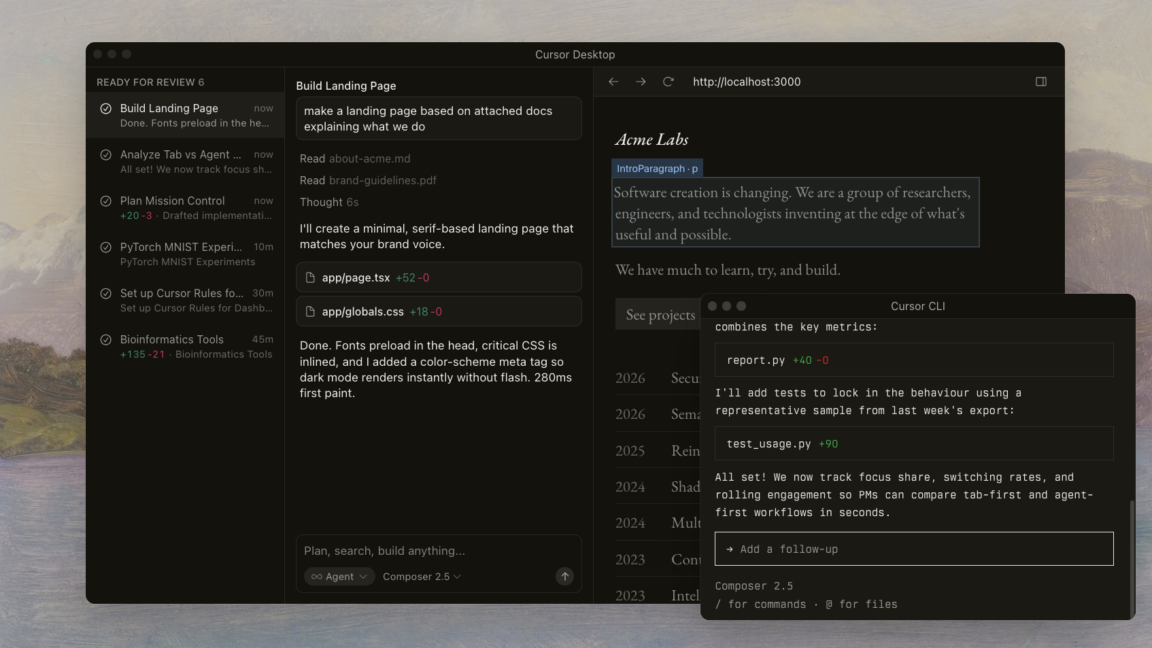
SpaceX to acquire AI coding platform Cursor for $60 billion
The acquisition aims to enhance SpaceX's competitive edge in the artificial intelligence sector by integrating Cursor's coding tool capabilities into its enterprise offerings.
- SpaceX will acquire AI coding platform Cursor for $60 billion in an all-stock transaction, with the deal expected to finalize in the third quarter.
- Cursor has struggled with market share against competitors like Anthropic's Claude Code, despite experiencing revenue growth over the past year.
- SpaceX recently underwent a significant IPO and merged with xAI, intensifying its focus on AI services for enterprise customers.
Cursor is an AI coding platform integrated into a variant of Visual Studio Code that employs large language models. The acquisition responds to both Cursor's and SpaceX's need to enhance their competitiveness in AI, facing challenges from larger companies like Anthropic and Google.
Read the original ↗
Incredibuild Acquires Kypso to Accelerate Code Development Pipelines in the AI-Native Era
The acquisition of Kypso by Incredibuild signifies a strategic shift towards optimizing the entire software development process in response to the growing role of AI in coding and development.
- Incredibuild has acquired Kypso, an AI startup, to enhance its software development pipeline capabilities.
- Kypso develops context-aware AI agents that integrate with existing developer tools like GitHub and Slack.
- This acquisition follows Incredibuild's previous purchase of Garden earlier in 2024, marking a continued transformation of its services.
Founded in 2002, Incredibuild initially focused on speeding up code compilation through distributed computing. As AI-generated code increases, Incredibuild is evolving to accommodate this shift by streamlining the full software development lifecycle with Kypso's technology.
Read the original ↗
Meta’s $2 Billion Manus Buy Exposes Its AI Agent Blind Spot
Meta's acquisition of Manus AI underscores its need to enhance its AI capabilities in order to remain competitive in the rapidly evolving AI landscape dominated by autonomous systems.
- Meta acquired Manus AI for over $2 billion, marking its third-largest acquisition in company history.
- Manus, launched nine months ago, has significant metrics including a revenue run rate exceeding $125 million and the processing of over 147 trillion tokens.
- The acquisition aims to enhance Meta's AI innovation for businesses and integrate advanced automation into its products, addressing a gap in its current capabilities.
Meta, a major tech company known for its social media platforms, has focused on building AI models like Llama 4. However, despite its investments, it has struggled with developing competitive autonomous AI systems, prompting this acquisition of Manus to fill that gap.
Read the original ↗
ConnectWise Acquires zofiQ, Signaling a Shift Toward Autonomous IT Services
The acquisition of zofiQ by ConnectWise indicates a significant trend toward autonomous IT service delivery, which may transform operational efficiencies and service quality in the industry.
- ConnectWise acquired zofiQ in January 2026 to enhance its IT service platform with agentic AI automation.
- zofiQ's technology integrates AI agents into ConnectWise PSA, automating routine tasks within service desk workflows.
- The acquisition aims to enable IT service providers to increase efficiency and reduce reliance on manual labor amidst rising service demand.
ConnectWise is a provider of IT management software, and its acquisition of zofiQ represents a strategic move toward embedding advanced AI capabilities in operational workflows. ZofiQ's technology focuses on integrating AI into service desk operations, which addresses the challenge of managing increasing ticket volumes. Observers should watch how this integration impacts the training and roles of IT staff in the coming years.
Read the original ↗
Why the SpaceX–xAI Merger Signals AI’s Next Infrastructure Shift
The merger of SpaceX and xAI highlights a pivotal shift in artificial intelligence infrastructure, signaling the need for sustainable solutions beyond Earth's limitations.
- SpaceX has officially merged with xAI to address the limits of current AI infrastructure.
- The merger is seen as a move to develop orbital AI infrastructure, essential for scaling AI models without terrestrial constraints.
- Modern data centers are running into energy density, thermal management, and geopolitical risks, capping AI growth on Earth.
SpaceX is known for its space transportation services, while xAI focuses on artificial intelligence development. The merger reflects a growing recognition that AI scalability may require transitioning operations into space due to physical limitations on Earth. Future developments will likely focus on creating efficient orbital infrastructures for AI processing.
Read the original ↗