
The day's AI news, briefed
The Daily Prompt
Our AI editor reads each day's AI and robotics stories, pulls out why they matter, and links every original source — so you can keep up in minutes.
Join over 250,000 subscribers getting the latest AI news
Latest AI & Robotics News Today

Unpacking President Biden’s Landmark AI Executive Order
This executive order reflects the U.S. government's comprehensive strategy to position itself as a leader in AI technology while safeguarding individual rights and promoting ethical practices in the sector.
- President Biden issued a comprehensive Executive Order aimed at solidifying U.S. leadership in artificial intelligence.
- The order addresses various aspects including intellectual property, privacy, labor concerns, and the semiconductor industry.
- Specific measures include guidance on AI patents from the U.S. Patent and Trademark Office and support for immigrant workers with AI expertise.
- Federal agencies will implement privacy-enhancing technologies while promoting ethical AI use in education, housing, and telecom sectors.
- The order also seeks to boost competition in the semiconductor industry through initiatives funded by the CHIPS and Science Act.
The executive order is part of a broader strategy to address the rise of artificial intelligence and its implications on society. Previous discussions surrounding AI regulation highlighted the need for a balance between innovation and protection of civil liberties. Future developments will likely focus on the implementation and effects of these directives across various sectors.
Read the original ↗
Key Points in the EU’s New AI Act, the First Big AI Regulation
The European Union's AI Act represents a significant advancement in the global regulatory landscape for artificial intelligence, potentially influencing worldwide standards and practices in AI governance.
- The EU's AI Act introduces extensive regulations for managing AI technology, focusing on transparency, risk management, and ethical use.
- It categorizes certain AI systems as 'high-risk' requiring strict oversight, particularly in healthcare and legal sectors.
- The Act limits the use of biometric surveillance technologies in public spaces to protect individual privacy and civil liberties.
The EU's AI Act is a pioneering regulatory framework aimed at ensuring responsible AI technology usage. This legislation could serve as a model for other countries considering similar regulations, with significant implications for global AI governance.
Read the original ↗
The UK Supreme Court’s Landmark Ruling on AI and Patent Law
This ruling reinforces the role of human inventorship in patent law, which is crucial for shaping future legislation concerning AI's integration into innovation and intellectual property rights.
- The UK Supreme Court ruled that artificial intelligence systems cannot be registered as inventors for patents.
- This decision stems from a legal battle involving Stephen Thaler, who sought to list his AI, DABUS, as the inventor of two patents.
- The court concluded that patent law requires inventors to be human, affirming traditional legal definitions of personhood in this context.
- The ruling reflects similar decisions in the United States and European Union, indicating a global consensus on this issue.
The UK Supreme Court's ruling addresses the intersection of artificial intelligence and intellectual property law, clarifying that AI cannot hold inventorship under current legal frameworks. This decision follows previous rejections of Thaler's claims by various legal bodies and underscores the need for potential legislative updates to accommodate AI advancements in the future.
Read the original ↗
Will the EU’s AI Act Set the Global Standard for AI Governance?
The EU's AI Act could serve as a foundational model for AI governance globally, influencing how other nations regulate artificial intelligence and ensuring ethical compliance.
- The European Parliament has officially passed the Artificial Intelligence Act, which establishes a framework for regulating AI technologies.
- The Act categorizes AI systems into four risk levels: unacceptable, high, medium, and low risk, with strict requirements for high-risk applications.
- Certain AI uses, such as indiscriminate surveillance and social scoring, are explicitly prohibited under the Act.
- The Act mandates risk assessments, data quality control, and human oversight for high-risk AI applications to safeguard citizens' rights.
The EU AI Act is the first comprehensive regulation of artificial intelligence in the world, developed since 2021 as lawmakers aimed to address rapid AI advancements. Similar to the GDPR for data privacy, it is expected to influence global AI governance standards. Observers anticipate that its success or challenges may encourage other countries to adopt similar regulations.
Read the original ↗
Brazil Halts Meta’s AI Training on Local Data with Regulatory Action
This regulatory action emphasizes the growing global focus on personal data protection in AI, potentially influencing how tech companies manage user data across different regions.
- Brazil's National Data Protection Authority (ANPD) has halted Meta's plans to use local user data for artificial intelligence training due to privacy concerns.
- The suspension applies to all Meta products and includes data from non-users of its platforms, citing risks to users' fundamental rights.
- Meta is given five working days to comply with the suspension, which incurs a daily fine of 50,000 reais for any violations.
Meta's updated privacy policy aimed to utilize public posts and photos from Brazilian users for AI development, raising privacy concerns. The ANPD's decision is part of a broader trend of increased scrutiny on data usage in AI, particularly in Brazil and the EU, contrasting with the U.S. approach.
Read the original ↗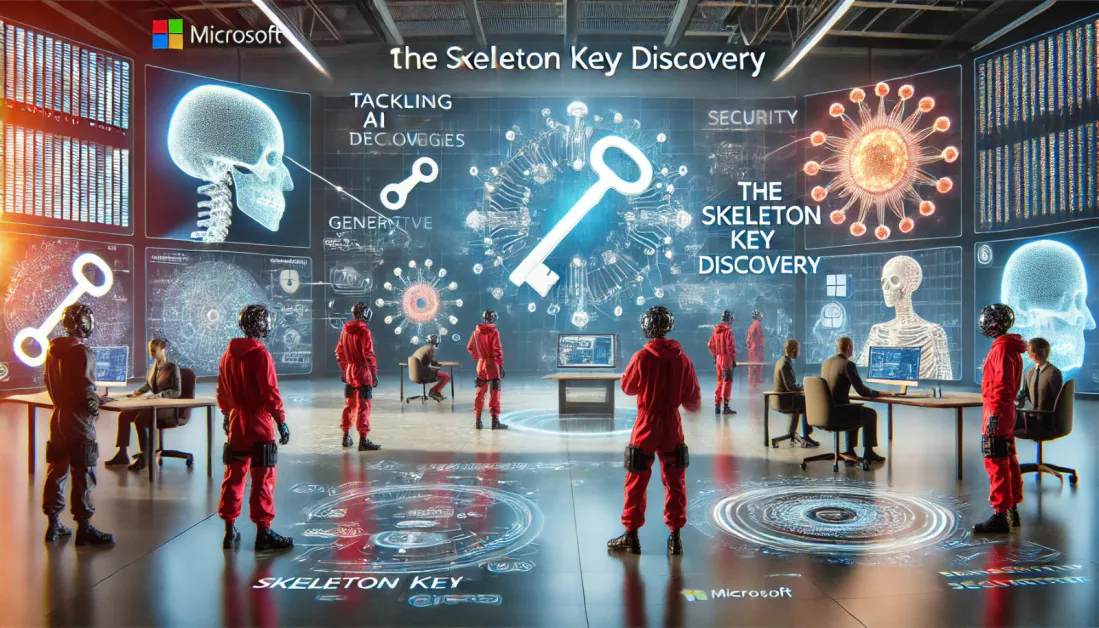
How Microsoft is Tackling AI Security with the Skeleton Key Discovery
The discovery of the Skeleton Key technique by Microsoft underscores significant vulnerabilities in generative AI systems, prompting a reevaluation of AI security strategies to prevent misuse.
- Microsoft researchers developed a new jailbreak technique called Skeleton Key, which can breach several major generative AI models' defenses.
- Skeleton Key allows attackers to manipulate AI behavior and potentially extract sensitive information by altering response patterns gradually.
- The technique has successfully impacted notable models, including OpenAI's GPT-4, Google's Gemini Pro, and Meta's Llama3-70b-instruct.
- Microsoft emphasizes the need for enhanced testing and monitoring methods to protect generative AI from such exploitation and to improve security protocols.
Generative AI can create various forms of content, but it faces risks such as misuse by bad actors. Previously established security measures are inadequate against new tactics like Skeleton Key, necessitating improved safety protocols going forward.
Read the original ↗
Meta Suspends Generative AI Features in Brazil Amid Regulatory Pressure
The suspension of Meta's generative AI features in Brazil underscores the increasing regulatory scrutiny of tech companies and their use of user data, impacting innovation and user engagement.
- Meta has suspended its generative AI features in Brazil, effective July 18, 2024.
- This decision follows a ban by Brazil's National Data Protection Authority (ANPD) on using local user data for AI training due to privacy concerns.
- The suspension affects existing AI tools on platforms like Facebook and Instagram, impacting user experience in Brazil.
- Meta's decision highlights ongoing regulatory challenges facing the company globally, including similar issues in the European Union.
- The situation may deter other tech companies from deploying AI technologies in Brazil, potentially hindering innovation in the region.
Meta’s generative AI features were previously active in Brazil, where data privacy issues have led to increased regulatory actions. Similar regulatory challenges have emerged in the EU, while the U.S. lacks comprehensive privacy legislation, allowing Meta to continue operations there. The outcome of these regulatory dynamics may set precedents for tech companies operating internationally.
Read the original ↗
AI and Legal Uncertainty: The Dangers of California’s SB 1047 for Developers
The implications of California's SB 1047 could limit innovation in AI, potentially causing economic repercussions and raising compliance burdens for developers and public institutions alike.
- California's Senate Bill 1047 seeks to regulate AI development by mandating transparency and accountability in AI algorithms.
- The bill requires developers to implement a kill switch in AI systems and includes stringent liability clauses for damages caused by AI.
- SB 1047 is viewed as stricter than the EU’s AI Act, causing concern about compliance costs and the potential slowdown of innovation.
- Legal ambiguity in SB 1047 could result in inconsistent enforcement, potentially limiting developer experimentation and deterring investment in AI startups.
SB 1047 was introduced in response to concerns about the ethical use of AI and risks to privacy and security. Its stringent measures could impact AI development significantly, raising costs and hindering research efforts. Observers are monitoring how this legislation affects innovation and competitiveness in the tech industry.
Read the original ↗
Inclusive Governance: How Generative AI is Making Public Services Accessible to All
Generative AI is reshaping public services by improving accessibility and engagement for marginalized communities, making governance more inclusive and efficient.
- Generative AI is improving public service accessibility by personalizing support through tools like chatbots and translation services.
- Chatbots such as Lumi in Germany and EMMA in the U.S. assist citizens with inquiries, streamlining interactions with public agencies.
- Generative AI is enabling fairer hiring practices by standardizing evaluations, reducing bias in recruitment processes for public sector jobs.
Generative AI refers to artificial intelligence that can generate content and responses, aiding in citizen engagement and service delivery. Historically, technology has transformed public sector interactions, with the internet's advent facilitating early e-government initiatives. Future focus will be on maintaining ethical standards for AI usage in governance.
Read the original ↗
EU’s New AI Code of Conduct Set to Impact Regulation
The EU's new AI Code of Conduct signifies a paradigm shift in AI regulation, compelling major companies to adopt stricter compliance with testing and intellectual property norms.
- The European Commission introduced a comprehensive Code of Conduct for AI that mandates external testing of high-risk AI models.
- AI companies like OpenAI and Google must report their training plans two weeks before starting, following the newly established guidelines.
- The regulations encompass requirements for intellectual property handling and adherence to the robots.txt standard for web data gathering.
The European Commission aims to enhance oversight of AI systems, addressing systemic risks in artificial intelligence technologies. This regulatory approach marks a significant change from self-regulation, with potential global implications for AI development and compliance.
Read the original ↗
US Copyright Office Releases New AI Guidance: What You Need to Know
This guidance clarifies the ownership of AI-created content, emphasizing the necessity of human creativity for copyright protection, which affects creators using AI tools.
- The US Copyright Office released new guidance on AI and copyright that emphasizes the need for human creativity in ownership claims.
- Copyright protection requires human creative input; using AI tools does not guarantee ownership of AI-generated works.
- Creators must document their creative process and differentiate between human and AI contributions when registering their work.
The US Copyright Office has outlined expectations for copyright protection regarding AI-created content, stating that human authorship is essential for legal claims. Previous guidance was less clear, and this new direction aims to establish standards amid growing AI advancements. Observers should note ongoing developments in this area as the technology evolves and influences copyright laws globally.
Read the original ↗
US Sanctions Backfire: Huawei’s AI Chips Accelerate China’s Self-Reliance
Huawei's new AI chips could reshape the global semiconductor landscape by enhancing China's self-reliance and challenging U.S. tech dominance amid ongoing tensions between the two countries.
- Huawei is preparing to mass-ship its Ascend 910C AI chips, a response to U.S. export restrictions on Chinese access to high-end chips.
- The Ascend 910C is engineered to deliver performance comparable to Nvidia’s H100 by utilizing two previous-generation chips in a single module.
- The chips aim to support AI development in China, filling a void left by U.S. sanctions that restrict Nvidia's and AMD's advanced chips.
- China's investment in semiconductor independence is accelerating, with Huawei's emergence as a viable competitor signaling potential shifts in the global AI hardware market.
Huawei Technologies is a Chinese tech company focusing on telecommunications and electronics. Increasing U.S. sanctions have restricted China's access to key technology, prompting a push for domestic semiconductor production. The development of Huawei's Ascend chips reflects China's broader strategy to enhance its technological self-sufficiency.
Read the original ↗
Most U.S. Tech Executives Want AI Regulation, But Who Should Lead it?
The debate over AI regulation raises critical questions about safety and innovation, impacting how U.S. companies manage AI technology amidst growing public concern over its risks.
- Most U.S. tech executives express concern about AI risks, with 97% acknowledging potential unethical uses.
- A September 2025 report found that 61% of CIOs and CTOs prefer public regulation for AI, while 36% favor industry-led solutions.
- Despite concerns, 82% of tech executives are responsible for internal AI governance, showing a gap in leadership structure for AI ethics.
AI technology has rapidly evolved since the mainstream launch of ChatGPT in 2022, yet U.S. federal regulation remains undeveloped. Historical regulatory delays in technology sectors highlight the need for balanced oversight as tech leaders navigate current challenges.
Read the original ↗
China Proposes Rules Requiring AI Chatbots to Monitor Users for Addiction
China's proposal for AI chatbot regulations underscores global concerns about emotional dependency and addiction to digital interactions, potentially setting a precedent for future legislation worldwide.
- China’s cyber regulator proposed draft rules requiring AI chatbots to monitor users' emotional states and intervene in cases of addiction.
- The regulations would hold providers responsible for user safety, including assessing emotional dependency and warning against excessive use.
- Users must be reminded they’re interacting with AI at login and every two hours thereafter if dependency signs are detected.
China's proposed regulations address rising concerns over psychological harm related to AI companionship as the user base grows significantly. Similar regulatory actions are emerging worldwide, including California's legislation. The implementation of these guidelines will bring enforcement challenges regarding mental state detection for AI systems.
Read the original ↗
National AI Framework: US Strategy for Energy and Innovation
The proposed National AI Framework in the U.S. aims to unify regulations, foster innovation, and establish clear guidelines for AI development amid growing state-level regulatory complexities.
- The White House released legislative recommendations for a National AI Framework to standardize regulations and encourage innovation.
- The framework seeks federal preemption of state AI laws to eliminate regulatory fragmentation that hinders developers.
- Energy independence is linked to AI progress, with proposals for streamlined permitting for power generation and protections against cost hikes for consumers.
- The framework addresses intellectual property issues, suggesting licensing frameworks to compensate creators without antitrust implications.
- Strategic recommendations include decentralized regulatory oversight, allowing existing agencies to apply their expertise to AI applications.
The National AI Framework responds to various state regulations that have made AI development cumbersome in the U.S. Historically, AI regulations have been inconsistent across states, and this framework seeks to centralize oversight. Key areas to watch include how the proposed policies affect federal-state dynamics and their implications for the AI industry.
Read the original ↗
OpenAI’s best model just shipped behind a government gate
The government-sanctioned access to OpenAI's GPT-5.6 Sol model indicates a significant shift in how AI capabilities are regulated and accessed, potentially impacting developers and users across the industry.
- OpenAI previewed its new AI model, GPT-5.6 Sol, on June 26, 2026, alongside its siblings Terra and Luna.
- The model includes a new max reasoning setting and an ultra mode for complex tasks, improving on existing benchmarks.
- Access to Sol is currently restricted to a small group of trusted partners who have been approved by the U.S. government.
- This controlled access process follows an executive order that outlines a review framework for frontier AI models, raising concerns about future accessibility.
- OpenAI stated that they do not support the idea of government-controlled access becoming the norm for AI model releases.
OpenAI is a leader in AI research, known for developing advanced natural language processing models. This release follows a broader trend where AI companies are aligning with government regulations, leading to tighter access controls for powerful models. Future developments may reveal how these government interactions shape AI accessibility and innovation.
Read the original ↗
OpenAI Poaches Uber’s Top Executive to Lead Indian Market
The appointment of Prabhjeet Singh as managing director for India highlights OpenAI's strategic commitment to a rapidly growing market for artificial intelligence.
- OpenAI has hired Prabhjeet Singh, former president of Uber India and South Asia, as its first managing director for India.
- Singh will oversee consumer growth, enterprise adoption, partnerships, regulatory engagement, and daily operations, reporting to Kiran Mani.
- India is now OpenAI's second-largest market after the United States, with significant user engagement from young adults.
- OpenAI plans to expand its presence in India, having opened its first office in New Delhi and announcing future offices in Mumbai and Bengaluru.
- The company has secured partnerships with major Indian industries, including Reliance and Tata Group, to strengthen its market position.
OpenAI is an AI research organization known for developing artificial intelligence technologies, including ChatGPT. Its operations in India have been growing steadily, with a focus on market partnerships and local expertise. Future developments may include enhanced AI products tailored for the Indian market.
Read the original ↗
Trump Administration Allows Anthropic to Release Mythos to Select US Organizations
The US government's decision to allow limited access to Anthropic's advanced AI model Mythos raises important considerations regarding AI governance and cybersecurity partnerships with private organizations.
- The US government has permitted Anthropic to grant access to its AI model Mythos 5 to over 100 US organizations, including corporations and government agencies.
- Commerce Secretary Howard Lutnick stated that appropriate safeguards are in place for the trusted partners accessing the model.
- Anthropic is still negotiating with the Trump administration regarding the broader release of its consumer-facing model, Fable 5, while maintaining restrictions on foreign access.
- The government had imposed restrictions on Mythos due to concerns about its access by organizations with potential foreign ties.
- Anthropic's ongoing discussions with the White House reflect a need for clearer guidance on future AI model releases.
Anthropic is an AI company that developed the Mythos models, focusing on cybersecurity applications. This event follows heightened concerns about foreign access and risks associated with AI technologies. Observers are now watching how this relationship shapes future AI policies and model distributions in the US.
Read the original ↗
Anthropic gets US government's permission to redeploy its Mythos cybersecurity AI model
The US government's approval allows Anthropic to enhance cybersecurity for key infrastructures, potentially improving national security and protecting vital systems from threats.
- Anthropic has received permission from the US government to redeploy its Mythos 5 cybersecurity AI model to certain US organizations.
- The company is restoring access to more than 100 institutions, including major corporations and government agencies, after a suspension ordered on June 12.
- An ongoing discussion with the government is also aimed at restoring access to Anthropic's Fable 5 model, although no timeline has been provided.
Mythos 5 is Anthropic's advanced cybersecurity AI model. The model was previously suspended following concerns about its potential misuse by unauthorized parties, including a China-linked group. Moving forward, Anthropic plans to collaborate with the US government on deployment protocols.
Read the original ↗
Trump Admin releases Anthropic Mythos to be used by more than 100 US companies, agencies
The release of Anthropic's Mythos 5 could significantly enhance cybersecurity efforts across over 100 U.S. organizations, improving protection of critical infrastructure amidst evolving security threats.
- The Trump administration has authorized over 100 U.S. companies and government agencies to use Anthropic's Mythos 5 model.
- Non-American employees at these organizations will also have access to Mythos 5, which was previously restricted under a ban.
- Anthropic had previously pulled its cybersecurity models from the market due to security concerns, but is now restoring access.
Anthropic is an AI company known for developing powerful models aimed at cybersecurity. This decision marks a shift in the administration's policy, previously imposing a ban on access due to security issues. Observers will watch for further developments regarding the use of other models like Fable 5.
Read the original ↗