
The day's AI news, briefed
The Daily Prompt
Our AI editor reads each day's AI and robotics stories, pulls out why they matter, and links every original source — so you can keep up in minutes.
Join over 250,000 subscribers getting the latest AI news
Latest AI & Robotics News Today

OpenClaw Releases iOS and Android Companion Node Apps That Connect a Phone to a Self-Hosted AI Agent Gateway
The release of these companion apps enhances accessibility to self-hosted AI agents, potentially broadening user interaction with AI technology on mobile platforms.
- OpenClaw has released companion apps for iOS and Android.
- These apps connect a phone to a self-hosted AI agent gateway.
OpenClaw is a technology firm focused on developing AI solutions. The introduction of mobile companion apps illustrates the trend of integrating AI with personal devices. Future developments may enhance AI capabilities and user experiences further.
Based on the headline only — the full article could not be fetched.
Read the original ↗
Gemini’s personalized AI image generation is now free for US users
This development allows a broader range of users to benefit from advanced AI image generation, reflecting Google’s continued push to enhance personal AI capabilities.
- Google has made its Gemini app's personalized image generation feature available for free to all eligible users in the U.S.
- Previously, this feature was accessible only to Plus, Pro, and Ultra subscribers.
- Gemini utilizes data from connected Google apps to create images that reflect user interests without explicit prompts.
- Additionally, Gemini can access images from Google Photos, eliminating the need for users to upload them manually.
- Google's AI chatbot, Gemini, has over 750 million monthly active users, indicating its popularity in the AI market.
Gemini is a conversational AI developed by Google, designed to provide personalized assistance and image generation based on user preferences. The app's functionality has expanded since its initial launch earlier this year, and it is also available in India and Japan. Future updates include new features and enhancements to further improve user experience.
Read the original ↗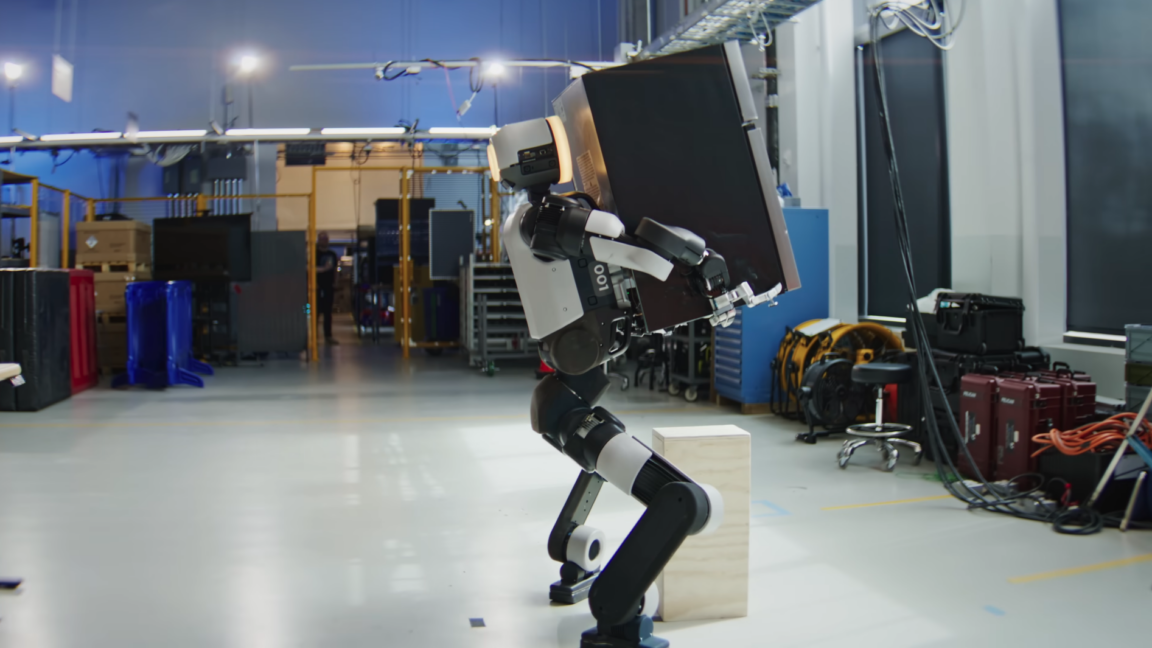
South Korea to spend $1T on more memory chip production and humanoid robots
South Korea's $1 trillion investment in memory chips and humanoid robots could significantly influence global technology supply chains and raise questions about workforce impacts and economic equity.
- The South Korean government and major tech companies will invest $1 trillion into projects for memory chip production and AI data centers, aiming for completion by 2028.
- The investment includes a $585 billion commitment to build new semiconductor fabrication plants and a $357 billion investment in large-scale AI data centers across several provinces.
- Hyundai plans to mass-manufacture humanoid robots with an aim to produce 30,000 units annually by 2028, while also training 10,000 robotics specialists over the next five years.
South Korea's initiative follows a surge in demand for memory chips driven by the AI industry, which has led to shortages and price increases. This megaproject aims to strengthen South Korea's position in global technology amidst rising labor concerns and economic inequality.
Read the original ↗
Anthropic and Gov. Newsom forge deal allowing California government to use Claude at half price
This agreement enables California government agencies to utilize AI resources more affordably, potentially improving operational efficiency and service delivery in the state.
- Governor Gavin Newsom announced a deal with Anthropic allowing California government agencies to access the AI chatbot Claude at a reduced price.
- The agreement provides training and support from Anthropic, helping state employees draft documents and analyze information more effectively.
- This deal follows Newsom’s executive order aimed at enhancing government efficiency and safety standards in the use of AI.
Anthropic is an AI company known for its chatbot Claude, which competes with tools from OpenAI. The recent partnership with California contrasts with federal tensions, as the U.S. Department of Defense has labeled Anthropic a 'supply-chain risk'. Ongoing collaboration with California could showcase the state's distinct approach to AI integration compared to the federal government.
Read the original ↗
NVIDIA BioNeMo Agent Toolkit Turns Biomolecular Models Into Callable Skills for AI Agents in Drug Discovery
The development of the NVIDIA BioNeMo Agent Toolkit could significantly enhance AI agents' capabilities in drug discovery by integrating biomolecular models into their functions.
- The NVIDIA BioNeMo Agent Toolkit allows biomolecular models to be converted into callable skills for AI agents.
- This toolkit is aimed at improving drug discovery processes through advanced AI functionalities.
NVIDIA is a leading technology company known for its innovations in graphics processing and AI. The BioNeMo Agent Toolkit represents a significant advance in applying AI to drug discovery, a field that has increasingly adopted computational techniques. Future developments may focus on refining these skills for more efficient drug discovery outcomes.
Based on the headline only — the full article could not be fetched.
Read the original ↗
AI agents are not your “coworkers”
Understanding the implications of treating AI agents as coworkers is crucial for organizations to maintain accountability and quality in the workforce.
- New research indicates that framing AI agents as employees can have negative effects on accountability and workflow.
- The study finds that anthropomorphizing AI leads to increased escalation of issues and lower review quality.
Many organizations are exploring the integration of AI agents into their structural frameworks, prompting concerns about accountability and workflow management. Prior studies indicated promising efficiencies, but the current research suggests a reevaluation of approaches is necessary. Future examination should focus on how to effectively redesign roles and governance involving AI.
Based on the headline only — the full article could not be fetched.
Read the original ↗
TIDAL cracks down on AI music by cutting off monetization
TIDAL's decision to restrict AI-generated music monetization marks a significant move in the ongoing debate about the role of artificial intelligence in the music industry.
- TIDAL has announced a new policy that will prevent fully AI-generated music from earning money on its platform starting July 15, 2026.
- The company will use automated tools to remove AI-generated music that impersonates artists or groups.
- Fully AI-generated tracks will be tagged and identified, receiving an 'AI' badge, and will not collect royalties or be eligible for sales.
- TIDAL's approach aims to protect organic creativity and responds to listener demand to limit exposure to AI music.
TIDAL is a music streaming service that facilitates the distribution and monetization of music. The policy aligns with similar steps taken by other platforms, such as Spotify and Deezer, to address the rise of AI-generated content. Observers will watch to see if TIDAL's limitations will effectively reduce the prevalence of AI music.
Read the original ↗
Arena, the AI leaderboard everyone uses, is now a $100M business
Arena's rapid growth to a $100 million business illustrates the increasing demand for performance analytics in the competitive AI model marketplace.
- Arena reached an annualized revenue run-rate of $100 million just eight months after launching its commercial service.
- The startup offers a crowdsourced AI model performance leaderboard based on over 10 million user evaluations.
- Arena began generating revenue with its AI Evaluations service, providing performance analytics for model labs and enterprises.
Arena originated as a research project at UC Berkeley in 2023 and launched its commercial service in September 2025. It competes with human labeling startups for AI model optimization services. Investors have provided Arena with a total of $250 million.
Read the original ↗
it works best for the people losing their jobs
The uneven productivity gains from AI highlight significant implications for job markets, particularly for entry-level workers who benefit most while facing potential job displacement.
- AI productivity gains are real but disproportionately benefit novice workers rather than experienced professionals, with novices seeing a 34% productivity increase on average.
- Only 5% of enterprise generative AI pilots show measurable positive economic impact, with most yielding little to no financial benefit.
- Expert developers can become slower with AI assistance, completing tasks 19% slower while mistakenly believing they are faster, revealing a disconnect in perceived versus actual productivity.
- The disparity in AI productivity suggests increasing pressure on entry-level jobs, as AI improvements occur where jobs are most vulnerable to automation.
- Organizations that adapt workflows to integrate AI technology show a higher success rate compared to those that do not redesign their processes.
Generative artificial intelligence (AI) tools have shown potential to increase productivity in specific tasks, yet their effectiveness varies significantly by worker expertise and task type. This trend raises concerns about job stability, especially for entry-level positions that may be automated due to such productivity advancements. Observing how this impacts future workforce structures is essential as organizations continue to adopt AI.
Read the original ↗
Don't like Gemini? Here's how to roll back to Google Assistant on your Android phone
Many users experiencing frustration with Google's new AI assistant, Gemini, can easily revert to the more familiar Google Assistant, influencing user experience and satisfaction with smart devices.
- Users frustrated with Gemini's performance can revert to Google Assistant on their Android phones.
- Steps include accessing the 'Digital assistants from Google' section in settings to select Google Assistant.
- Different Android skins may require alternative steps, such as tapping the Google profile photo.
Gemini is Google's latest AI assistant, intended to enhance user interaction, but it has faced criticism for errors and inefficiencies. Prior to Gemini, Google Assistant was the primary AI tool for managing smart home devices and inquiries. Users looking for familiarity can follow guides to switch back to Google Assistant or reduce Gemini's presence in other Google applications.
Read the original ↗
Why AI Is Making Product Creation Easier and Building a Business Harder
As AI democratizes product creation, understanding market dynamics becomes crucial for startups facing intense competition in an oversaturated landscape.
- AI tools now allow individuals to develop minimum viable products (MVPs), test ideas, and prepare for market launch in days instead of months.
- Despite easier product creation, startups struggle more than before to attract audiences and secure market share amid growing competition.
- The concept of 'product inflation' indicates an oversupply of products, leading to challenges in differentiating offerings and capturing consumer attention.
AI technology has transformed how products are developed, making it accessible for individuals to create their own. However, the increase in available products is creating a crowded marketplace where effective communication and execution are key. Future trends will likely see more solopreneurs enter the field, complicating competition further.
Read the original ↗
Scientists Create Bio-Inspired Robots to Hack the Hovering Powers of This Exceptional Species to Build Better UAVs
This research could significantly enhance the design and performance of small unmanned aerial vehicles (sUAVs), enabling safer and more efficient operations in adverse conditions.
- Engineers are studying the kestrel's hovering ability to improve future drone designs amid increasing turbulence due to environmental changes.
- The research, a collaboration between RMIT University and the University of Bristol, was published in the Journal of the Royal Society Interface.
- Researchers created a robotic replica of the kestrel to analyze its flight movements and discover techniques for enhanced stability in drones.
This study focuses on the flight capabilities of the nankeen kestrel, a bird known for its exceptional hovering ability. By examining how kestrels respond to turbulence, researchers aim to inform the design of more advanced small unmanned aerial vehicles (sUAVs) and potentially larger aircraft.
Read the original ↗
Omen AI’s plan to optimize data centers is all wet
Omen AI's technology aims to significantly reduce the downtime and costs associated with bacterial contamination in data center cooling systems, impacting the efficiency of critical infrastructure.
- Omen AI raised a $31 million Series A round to develop a spectrometer that monitors coolant fluid health in real time for data centers.
- The technology helps identify bacterial growth in cooling fluids, which can lead to contamination and costly downtime.
- Omen is also addressing other potential issues, such as pump wear and seal degradation, through its monitoring systems.
- Omen has partnered with a dozen data center customers, leveraging insights gained from the construction equipment sector.
Omen AI, founded in 2024 by Zach Laberge, specializes in real-time monitoring of fluid systems to prevent contamination and optimize performance. The company has raised a total of $40 million to date and targets data centers that face downtime issues from bacterial outbreaks. The development comes at a time when many tech firms are exploring in-house solutions for fluid analytics to improve operational efficiency.
Read the original ↗
Robot hand company settles Tesla trade secret suit and announces $11M raise
The settlement allows Proception to fully focus on advancing its technology in robotic hands, a critical area that could significantly impact various industries reliant on dexterous automation.
- Proception settled a trade secret lawsuit with Tesla, allowing the startup to move forward after months of legal tension.
- The company raised $11 million in a seed round led by First Round Capital, Y Combinator, and BoxGroup.
- Proception has begun shipping its high-dexterity robotic hand to researchers and robotics firms, with plans for wider availability.
Proception is a startup focused on developing advanced robotic hands that can mimic the dexterity of human hands. Previously, the company faced legal issues with Tesla over alleged trade secret theft, but has now settled and secured funding to enhance its product development efforts.
Read the original ↗
Half of Americans Are Asking AI for Financial Advice. The Real Question Isn’t Whether the Answer Is Right.
The growing reliance on AI for financial advice highlights concerns around the effectiveness of decision-making processes in managing personal finances amidst increasing economic complexity.
- Nearly half of Americans have turned to AI for financial advice on topics like budgeting and investing, according to MIT Sloan research.
- The trend arises as financial literacy among Americans declines to its lowest level in a decade amid rising economic pressures.
- Effective financial advice is not just about generating correct answers; it involves a comprehensive decision-making process considering individual circumstances.
AI is becoming increasingly utilized for various personal decisions, including financial guidance, as consumers seek clearer advice in a complex financial landscape. Previous reliance on human advisors is being challenged by AI's accessibility, but many users still face difficulties in turning information into actionable decisions.
Read the original ↗
Yeasound’s RIC800 Hearing Aids Perform Well, but the App Experience Is Frustrating
The user experience with Yeasound’s RIC800 hearing aids highlights significant challenges in the integration of technology and accessibility for hearing-impaired users.
- Yeasound’s RIC800 hearing aids feature AI-powered noise reduction and support both Android and iOS devices.
- The iYeasound mobile app enables hearing tests and environmental mode selections but suffers from frequent connectivity issues.
- Battery life for the RIC800 is reported at a maximum of 18 hours despite claims of 31 hours by the manufacturer.
Yeasound, a subsidiary of telecom company Yealink, focuses on behind-the-ear hearing aids, introducing the RIC800 model as an innovative option in the market. This model features advanced audio assistance but faces criticism primarily for its mobile application shortcomings. Observers may want to watch for future software updates to enhance the app experience and user engagement.
Read the original ↗
This Humanoid Robot Is a Terrifyingly Competent Office Intern
The success of Flexion Robotics in training humanoid robots for office tasks may signal a significant shift in workplace automation and the potential to replace traditional internships.
- Flexion Robotics, a Swiss startup founded by ex-Nvidia engineers, has developed a system for training humanoid robots to perform office tasks efficiently.
- Their approach combines simulated training with reinforcement learning, allowing robots to autonomously execute complex tasks in real environments.
- The company aims to position its software across various humanoid forms, increasing its commercial potential in a competitive market.
- Experts suggest that the evolution of humanoid robots depends on advancements in AI models rather than the robots themselves.
Flexion Robotics focuses on automating menial tasks traditionally performed by interns, utilizing AI to enhance the capabilities of humanoid robots. The startup's technology could reshape labor markets by enabling robots to assume roles that currently require human workers. Observers note the importance of collaboration with hardware manufacturers for the company's success.
Read the original ↗
I Found Jesus at a Drone Show
This story highlights the intersection of technology and spirituality, showcasing how drone shows are evolving to evoke emotional and potentially religious experiences in audiences.
- The Vatican hosted a groundbreaking drone show featuring images of Baby Jesus and Pope Francis, witnessed by tens of thousands in September 2025.
- The drone show was produced by Nova Sky Stories, a company owned by Kimbal Musk, which highlights the company's innovative approach to public performances.
- Drone shows have gained popularity as alternatives to traditional fireworks, with significant events like the Rose Bowl replacing fireworks with drone displays for the Fourth of July.
- Sky Elements is the largest drone show operator in America, utilizing up to 1,000 drones in performances and incorporating pyrotechnics called 'pyrodrones' in their shows.
Drone shows began to emerge as an entertainment medium around 2015, with pioneering events featuring coordinated aerial displays using unmanned aerial vehicles (UAVs). As more companies embrace this technology, drone shows are becoming a staple at various large-scale events, replacing traditional fireworks in many communities. The future of drone shows will likely continue to expand as technology advances and public interest grows.
Read the original ↗
Google reportedly capped Meta's use of Gemini AI for coding and chatbots
This development highlights the ongoing challenge tech companies face in securing sufficient computing power for large language models, impacting their ability to serve customers effectively.
- Google limited Meta's use of Gemini AI due to exceeded computing capacity, as reported by sources to The Financial Times.
- Meta relies on Gemini AI for customer service and coding, but does not have its own cloud services.
- Meta has committed $600 billion to expand its data center capacity over the next two years.
- Both Google and Meta struggle with data center capacity despite significant investments in infrastructure.
Gemini AI is a model developed by Google, utilized by Meta for various applications including chatbots and content moderation. The limitation imposed by Google on Meta reflects a broader pattern of tech companies grappling with high demand for AI processing power.
Read the original ↗
xFusion scales enterprise AI from edge workstations to liquid-cooled data centres
The ability to scale enterprise AI from various infrastructures, including edge workstations to liquid-cooled data centers, can enhance efficiency and performance for businesses.
- xFusion is expanding its enterprise AI capabilities from edge workstations to liquid-cooled data centers.
xFusion focuses on leveraging different computing infrastructures to optimize AI performance, addressing growing enterprise needs for efficient data processing. This development reflects trends in AI adoption across industries.
Based on the headline only — the full article could not be fetched.
Read the original ↗