
The day's AI news, briefed
The Daily Prompt
Our AI editor reads each day's AI and robotics stories, pulls out why they matter, and links every original source — so you can keep up in minutes.
Join over 250,000 subscribers getting the latest AI news
Latest AI & Robotics News Today

Meet container: Apple’s Open-Source Swift Tool for Running Linux Containers as Lightweight VMs on Apple Silicon
This development from Apple could enhance the compatibility and efficiency of running Linux applications on its hardware, potentially attracting a wider developer community.
- Apple has introduced an open-source tool called Container.
- This tool allows users to run Linux containers as lightweight virtual machines on Apple Silicon devices.
Apple's Container tool aims to streamline the use of Linux applications on its hardware, particularly for developers. The move underlines Apple's growing focus on broader software compatibility.
Based on the headline only — the full article could not be fetched.
Read the original ↗
Anthropic Thinks Its Own Success Is Key to Making AI Safe
Anthropic's approach to managing AI development reflects broader debates about safety, responsibility, and control in artificial intelligence, influencing industry standards and public policy.
- Anthropic has become one of the leading developers of advanced AI technologies, valued at nearly $1 trillion.
- The company aims to remain at the forefront of AI development while ensuring its safe implementation, believing it will lead to better outcomes.
- Founded by former OpenAI employees, Anthropic emphasizes a public benefit structure that prioritizes humanity's long-term interests over profits.
Anthropic, established in 2021, focuses on advancing AI technology responsibly, distinguishing itself from other tech giants. Its mission is framed around achieving safety in AI while competing with major industry players. The firm's partnerships and decisions are increasingly scrutinized as AI's role in society evolves.
Read the original ↗
Claude is Quietly Winning Over Paying Customers
Claude's significant growth in paying customers reflects changing consumer preferences in the AI market, indicating potential competition for established players like ChatGPT.
- Claude's paying user base has increased by approximately 75% since January 2026, according to credit card spending data from Indagari.
- The data covers subscription and API token purchases from early 2025 through May 2026.
- In March 2026, a surge in new users occurred after Anthropic refused to allow its AI models for controversial surveillance or weapons programs.
- Claude has become the most searched term on DataCamp, outpacing ChatGPT courses by three to one among self-directed learners.
- While ChatGPT remains the dominant AI tool, its growth is slowing, allowing Claude to gain ground in consumer spending.
Claude is an AI model developed by Anthropic, a company in the AI sector known for its ethical stance on technology use. Previously, ChatGPT by OpenAI was the predominant AI chatbot. Future developments include both companies' paths toward going public and how regulatory decisions impact their market standings.
Read the original ↗
Why Amazon Dropped Its OpenAI Movie, Data Center Workers Fight Back, and Meta Leaks Employee Data
The intertwining of AI and the film industry raises critical questions about artistic autonomy and corporate influence on media narratives.
- Amazon's MGM Studios dropped a biographical film about OpenAI's Sam Altman shortly before completion, citing it would be better suited for another studio.
- Google DeepMind announced a $75 million partnership with A24 to develop AI tools for filmmaking, highlighting the growing collaboration between tech and film.
- There is increasing backlash against data center construction, with some electricians refusing work due to labor concerns and regulation advocates among Amazon workers.
Amazon, which owns MGM, has substantial financial ties to OpenAI, including a $50 billion investment and a $38 billion compute deal. Recently, there has been notable tension regarding media portrayals of tech figures, particularly in light of labor disputes in data center operations. Ongoing scrutiny over data privacy is also affecting companies like Meta, which recently paused a controversial employee-tracking program after a leak.
Read the original ↗
OpenAI will initially only release ChatGPT 5.6 to government-approved customers
The controlled release of ChatGPT 5.6 highlights ongoing tensions between AI development and government oversight, raising questions about the future of AI access and regulation.
- OpenAI will initially release ChatGPT 5.6 only to federal government-approved users, according to a report.
- CEO Sam Altman stated that approvals will be granted on a customer-by-customer basis during the preview period.
- A more general release of ChatGPT 5.6 is expected a few weeks after the initial roll-out.
- This decision follows recent federal actions influencing the AI industry, including a voluntary review ordered by President Trump.
OpenAI is a leading artificial intelligence company known for its AI models including ChatGPT. The shift to government-approved access indicates a growing trend of regulatory scrutiny in AI development, coinciding with actions from other AI firms like Anthropic.
Read the original ↗
The White House is asking OpenAI to slow roll the release of its new model over safety concerns
This story highlights significant government influence on AI development, emphasizing concerns over safety and oversight in emerging technologies.
- OpenAI plans to release its new model, GPT 5.6, only to select partners instead of the public, due to requests from the Trump administration.
- CEO Sam Altman stated that the administration will approve access to the model customer by customer during a preview period.
- The Trump administration has shifted from a hands-off approach to advocating for stricter oversight and testing of AI models before public release.
OpenAI is a leading AI research organization known for developing advanced language models. Previously, the company released its models broadly, but recent government pressure has led to a more cautious approach. Future developments could further reflect federal influence on AI safety standards.
Read the original ↗
Patronus AI lands $50M to build ‘digital worlds’ that stress-test AI agents
The funding will bolster Patronus AI's ability to develop crucial simulated environments for stress-testing AI agents, addressing the growing demand for reliable AI performance in complex tasks.
- Patronus AI raised $50 million in a Series B funding round led by Greenfield Partners, bringing its total funding to $70 million.
- The startup, founded by former Meta AI researchers, specializes in creating digital environments to evaluate AI agents' performance.
- Patronus AI's revenue has increased 15-fold in the past year, reflecting significant interest from AI labs and emerging startups.
- The company uses reinforcement learning to stress-test AI agents in simulated environments, which helps improve their reliability for real-world applications.
Patronus AI was established in 2023 by Anand Kannappan and Rebecca Qian, both ex-Meta researchers. The company addresses the need for better evaluation methods for AI agents, moving beyond traditional benchmarks to ensure consistent performance in unpredictable real-world scenarios.
Read the original ↗
Qwen-AgentWorld: Language World Models for General Agents
The development of Qwen-AgentWorld models could significantly advance the capability of general agents in simulating and navigating complex environments, affecting various applications in AI.
- Qwen-AgentWorld-35B-A3B and Qwen-AgentWorld-397B-A17B are the first language world models designed to simulate agentic environments across seven domains.
- The development process involved a three-stage training pipeline enhancing reasoning capabilities and simulation accuracy.
- A new benchmark, AgentWorldBench, evaluates the performance of the models against real-world interactions and established benchmarks.
Qwen-AgentWorld refers to a series of language-based world models aimed at improving the performance of artificial agents in task execution. Previous models focused on simpler environments; the introduction of complex simulations reflects ongoing trends in AI to enhance generalization capabilities. Future developments may include refining simulation accuracy and evaluating real-world performance impacts.
Read the original ↗
Notion Mail is shutting down
The shutdown of Notion Mail reflects a strategic pivot towards AI-driven email management, potentially reshaping how users interact with their inboxes.
- Notion will shut down its email client, Notion Mail, on September 22, affecting web, mobile, and desktop platforms.
- Users are advised to manually export drafts, scheduled emails, snippets, and auto label instructions before the shutdown.
- The company is transitioning to emphasize AI agents that manage email workflows without users needing to access their inbox.
Notion is known for its suite of productivity tools and introduced Notion Mail after acquiring the startup Skiff in 2024. The decision to phase out Notion Mail is part of a broader shift towards AI solutions in managing emails.
Read the original ↗
ShutterMuse: Capture-Time Photography Guidance with MLLMs
This advancement in photography guidance using MLLMs could enhance how images are captured, enabling users to make better framing and posing decisions in real-time.
- Researchers introduced CaptureGuide-Bench, a benchmark for evaluating photography assistance tasks, focusing on composition and pose recommendations.
- ShutterMuse, a unified multimodal large language model, provides interactive capture-time photography guidance with both photographer and subject-side inputs.
- CaptureGuide-Dataset, comprising 130K samples, supports the development of MLLMs by offering structured visual annotations and textual rationales.
Capture-time photography involves real-time decisions about image framing and subject poses. Prior evaluations mainly focused on post-capture analysis, limiting the exploration of interactive guidance capabilities. Future developments will likely continue to refine assistance for photography applications using AI.
Read the original ↗
Anthropic says Alibaba must be punished for largest Claude cloning attack
The allegations against Alibaba highlight an escalating global competition in AI technology, affecting national security, investment integrity, and international relations regarding technological advancements.
- Anthropic accuses Alibaba of orchestrating a significant attempt to clone its AI model, Claude, generating over 28.8 million exchanges using fraudulent accounts.
- This alleged attack involved about 25,000 accounts and targeted Claude's advanced capabilities, which include agentic reasoning and software engineering.
- The campaign occurred after former President Trump warned against such cloning efforts, emphasizing national security concerns regarding AI technology theft by China.
- Anthropic has called for legislative measures to address these threats, including updating antitrust laws and imposing stricter export controls on chips used in AI training.
- Alibaba is preparing a legal challenge against the Trump administration's accusations linking it to the Chinese military, which it denies vehemently.
Anthropic is a leading AI company focused on developing advanced AI models. The company claims that Alibaba's actions represent a broader trend of Chinese firms attempting to replicate U.S. AI innovations without incurring substantial development costs. Future actions by U.S. lawmakers and regulatory bodies could determine the course of U.S.-China competition in AI technology.
Read the original ↗
Google finally releases a Finance Android app, promises iOS version later in 2026
The release of a dedicated mobile app for Google Finance allows users to access financial data and insights on the go, enhancing user experience and engagement in a competitive market.
- Google Finance's new standalone mobile app is currently available exclusively for Android users.
- The iOS version of the app is planned for release later in 2026.
- The app features generative AI capabilities that help users interpret financial market changes and generate personalized insights.
- An integrated chatbot allows users to interact with the app for stock-related queries and updates.
- The Finance website is transitioning out of beta, adding new AI-powered research tools and notifications for portfolio updates.
Google Finance has been operational for 20 years and has now introduced its first mobile application, aiming to modernize its financial tracking services. Previous updates have included enhancements to the website, which is also utilizing AI for improved functionality. Future developments will likely continue expanding app features and integrating AI tools further.
Read the original ↗
Notion killing Skiff-influenced email app since most users use AI agents instead
The shutdown of Notion Mail reflects a shift in how users manage email, favoring AI agents over traditional email clients, impacting productivity tools in the industry.
- Notion will shut down Notion Mail, an email service, on September 22, 2026, following its acquisition of Skiff in 2024.
- Notion claims more than half of Notion Mail users manage emails without opening their inbox, relying instead on AI agents for correspondence.
- Users are advised to export their drafts and scheduled emails by September 21, as they will not automatically transfer to another app.
- Organizations subject to HIPAA regulations should transition off Notion Mail by June 30, 2026, due to compliance requirements.
Notion is a productivity software company that integrates various tools for collaboration and tasks. After acquiring the email platform Skiff, Notion attempted to merge its technology with its own offerings, which has now been deemed unnecessary as users shift towards AI-driven email management. Going forward, Notion may leverage Skiff’s infrastructure for features other than email.
Read the original ↗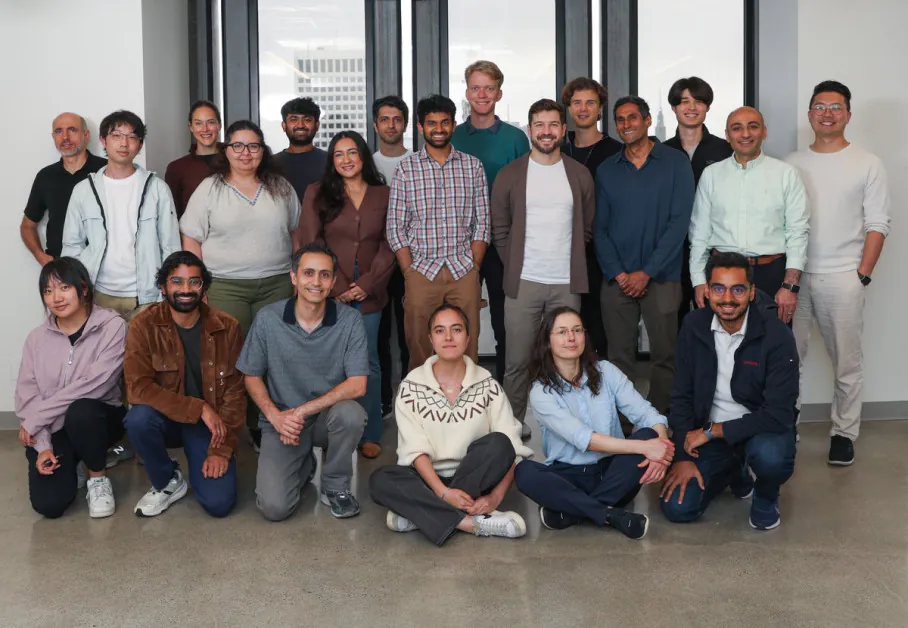
Former Anthropic Researchers Launch Mirendil at $1 Billion Valuation With $200M Seed Round
Mirendil's launch signifies a potential shift in AI research capabilities, allowing broader access to advanced AI tools for scientific development beyond wealthy laboratories.
- Mirendil, founded by former Anthropic researchers, has launched with a $200 million seed funding round at a valuation of $1 billion.
- The company aims to develop AI systems that help enhance research capabilities rather than focus solely on consumer applications.
- Mirendil plans to democratize frontier AI research, making advanced tools available to universities and smaller organizations.
- The startup emphasizes a reimagined research process, focusing on tools that support AI research and development across various scientific fields.
Mirendil is a San Francisco-based startup formed by researchers from Anthropic seeking to accelerate AI research through advanced systems. The company is part of a trend where experienced AI scientists are moving to independent firms to solve complex challenges in AI development. Watch for Mirendil's upcoming product release and how it may reshape access to AI technology in research.
Read the original ↗
Why Does a Bank Need a Chief Scientist?
The appointment of a Chief Scientist at a bank like Capital One highlights the increasing need for advanced AI expertise in finance to address complex customer problems effectively.
- Capital One is establishing a scientific community to drive AI research and innovation in finance, serving over 100 million customers.
- Prem Natarajan, formerly of Amazon, is now Chief Scientist at Capital One, focusing on real-world AI applications.
- The bank uses a 'destination-back thinking' approach to envision customer experiences and identify necessary scientific breakthroughs.
- Capital One's cloud-first infrastructure allows for rapid AI experimentation and continuous learning, critical for effective AI solutions.
Capital One is a leading financial institution known for its data-driven approach. The bank's investment in AI aims to create innovative solutions for finance, elevating its technological capabilities while ensuring customer security and satisfaction.
Read the original ↗
Databricks’ former AI chief thinks he can cut AI’s power bill by 1,000x
If successful, Unconventional AI's new technology could dramatically reduce the energy costs of running artificial intelligence, potentially transforming industry infrastructure and scaling AI applications.
- Naveen Rao, former head of AI at Databricks, leads Unconventional AI, which aims to improve inference processing efficiency.
- The company has released an image-generation model named Un-0, built on a new oscillator-based computer architecture.
- This architecture may reduce power consumption for AI tasks by up to 1,000 times compared to traditional computing methods.
Unconventional AI is working on a new computing architecture designed to enhance power efficiency in AI processing. Their debut model, Un-0, demonstrates the capability of this architecture, which differs significantly from conventional chip designs. Future developments include releasing the schematics for actual chips and building a complete inference stack for AI applications.
Read the original ↗
General Intuition’s $2.3B bet that video games can train AI agents for the real world
General Intuition's substantial funding aims to advance AI agents trained on video game data, potentially leading to more intuitive capabilities in real-world applications.
- General Intuition raised $320 million at a $2.3 billion valuation, bringing total funding to $454 million.
- The company trains AI models using data from millions of hours of video game gameplay, focusing on spatial-temporal reasoning.
- General Intuition's approach integrates AI from gaming environments with real-world robotics data in a short time.
- Investors include Khosla Ventures, General Catalyst, and notable figures like Jeff Bezos and Eric Schmidt.
General Intuition, spun out of the company Medal, focuses on developing AI agents that can learn from video game actions. The firm aims to make AI models adaptable for various real-world applications, exploring uses from robotics to gaming. Upcoming developments include scaling compute capacity and making their API available to broader audiences.
Read the original ↗
Anthropic’s Claude is winning over paid consumers, a market owned by ChatGPT
Anthropic's growing consumer base for Claude signifies a potential shift in the competitive landscape of AI products, particularly as it challenges ChatGPT's dominant market position.
- Consumers are increasingly choosing Anthropic's Claude, as indicated by transaction data from Indagari.
- Claude's revenue among paying customers has grown approximately 75% since January 2026.
- Claude is now the most searched AI term on DataCamp, surpassing even 'AI' itself.
- Demand for Claude courses has surged 18 times in the last 30 days, outpacing ChatGPT by three to one.
Anthropic is an AI research lab that has emerged as a competitor to OpenAI's ChatGPT. Recent trends show Claude gaining popularity among consumers, despite ChatGPT's overall market lead. Upcoming public offerings for both companies may further impact their market strategies and consumer adoption rates.
Read the original ↗
UnityShots: Memory-Driven Multi-Shot Audio-Video Generation with Boundary-Aware Gating
UnityShots offers a novel approach to audio-video generation that enhances coherent storytelling by maintaining subject appearance and audio fidelity across multiple video cuts, impacting video production methods.
- UnityShots is a memory-driven multi-shot audio-video generation system designed to preserve subject appearance and audio across video cuts.
- The system uses long-term and short-term memory slots, updating at every cut via a boundary-conditioned gate.
- It incorporates a reference speaker token in the audio stream to maintain vocal consistency in each shot.
- A benchmark of 200 multi-cultural multi-shot sequences in 13 languages has been released for evaluation.
- UnityShots outperforms open-source baselines and matches the performance of top closed-source systems in cross-shot coherence metrics.
UnityShots builds on existing audio-video generation technologies by incorporating memory management to improve continuity across cuts. Previous systems struggled with scalability or coherence, while UnityShots trains on curated cinematic data. Upcoming assessments should focus on its effectiveness in various content creation applications.
Read the original ↗
Four Senior AI Researchers Left Google in Six Days. That’s Not Normal.
The exodus of senior researchers from Google to competitor firms raises concerns about the company's ability to maintain its technological edge in AI development.
- Four senior AI researchers left Google in six days, including key contributors to the Gemini model and AlphaFold, with three joining Anthropic and one moving to OpenAI.
- Noam Shazeer, a co-author of the influential Transformer paper, was the first to announce his departure, followed by John Jumper, Jonas Adler, and Alexander Pritzel.
- The departures appear linked to competitive offers from startups poised for significant IPOs, with pre-IPO equity being a major incentive for leaving Google.
Google, a leader in AI technology, has seen several key researchers leave for competitors Anthropic and OpenAI, which are preparing for substantial public offerings. The losses raise questions about Google's future innovation capabilities as they approach major product launches and face increasing competition.
Read the original ↗