
The day's AI news, briefed
The Daily Prompt
Our AI editor reads each day's AI and robotics stories, pulls out why they matter, and links every original source — so you can keep up in minutes.
Join over 250,000 subscribers getting the latest AI news
Latest AI & Robotics News Today

Indian tech tycoon bets $30M of his own money to build AI alternative to Microsoft Office
The development of Neo highlights the growing competition in the enterprise AI sector, as tech leaders seek innovative solutions to transform workplace software fundamentally.
- Bhavin Turakhia is investing $30 million of his own money in Neo, an AI-driven alternative to Microsoft Office.
- Neo combines project management, documents, and AI into a single enterprise software platform.
- The startup aims to actively integrate AI into daily work rather than using it as a separate assistant.
- Turakhia plans to launch Neo for mid-sized businesses after internal use within his other companies began in April.
- Neo was developed in three months with a small team, utilizing AI to accelerate the process.
Neo is the latest venture by entrepreneur Bhavin Turakhia, who has previously founded multiple successful technology companies. The enterprise AI market is highly competitive, with major companies like Microsoft and Google integrating AI into their products, making Turakhia’s approach noteworthy.
Read the original ↗
Meta Plans to Trade Its AI Power Plants for Cash
Meta's move to monetize its AI infrastructure could reshape the competitive landscape of cloud computing, impacting how companies access AI resources and what they pay for them.
- Meta plans to launch a cloud infrastructure business to sell access to its AI computing power and models to external clients.
- This initiative will position Meta against established cloud services like Amazon Web Services, Google Cloud, and Microsoft Azure.
- Meta has invested $182.9 billion in its AI infrastructure, including significant projects in Louisiana and Ohio, the latter akin to the size of Manhattan.
- While Meta's AI tools have not generated substantial public demand, selling compute power might offer a more direct revenue stream.
- The new business is reportedly named Meta Compute and will combine selling server capacity with access to specific AI models.
Meta, a major tech company, has heavily invested in AI and built extensive data centers for its operations. Previously, companies like SpaceX have explored similar business models for monetizing their computing capabilities. Observers should monitor how this move affects Meta's financial performance and competitive strategy.
Read the original ↗
AI’s Growing Appetite for Energy and Water Sparks a New Cooling Solution Beneath the Earth
This research proposes a sustainable cooling solution for AI data centers, potentially reducing their significant environmental impact amid growing concerns over resource consumption.
- Researchers at the University of Illinois Urbana-Champaign suggest using underground aquifers as thermal batteries for cooling AI data centers.
- The proposed method could significantly decrease the energy and water demands associated with traditional cooling systems.
- Aquifer Thermal Energy Storage (ATES) can cool data centers by circulating groundwater, absorbing heat, and re-storing warmed water underground for later use.
AI data centers consume large amounts of energy and water, raising environmental concerns. The proposed ATES method aims to provide a sustainable cooling alternative to these facilities, particularly in regions like Illinois.
Read the original ↗
Anthropic’s long-sidelined Fable 5 is greenlit to return
The approval for Anthropic's Claude Fable 5 model indicates a shift in governmental regulations on AI technology, potentially impacting the deployment and accessibility of AI models in various markets.
- Anthropic's Claude Fable 5 has been cleared to return online after negotiations with the Trump administration.
- Access to Fable 5 will be restored globally on Wednesday, with plans to also enable use on cloud services soon.
- Export controls were lifted after addressing concerns over 'jailbreaks' that could compromise the model's safety.
- Anthropic aims to coordinate with the government on safety standards and expand access to its AI models.
Anthropic is a company developing AI models, notably the Mythos and Fable series. The export control directive disrupting Fable 5 was prompted by concerns regarding AI model vulnerabilities. Moving forward, Anthropic will work on improving safety measures and collaborating with government entities.
Read the original ↗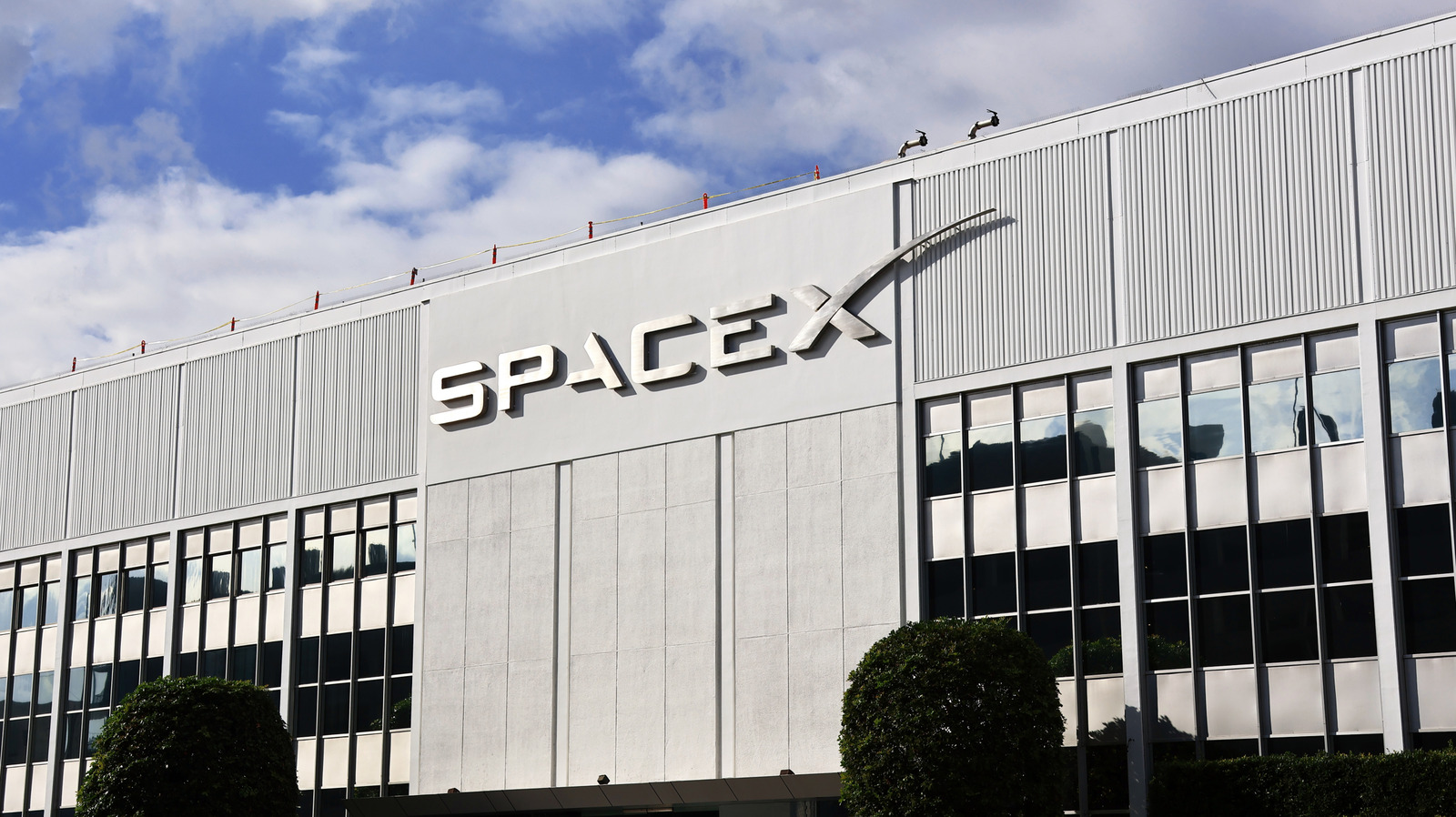
Report suggests SpaceX is testing a handheld AI device, Musk says it's 'utterly false'
The discourse surrounding SpaceX's rumored AI device highlights the challenges and competitive landscape for companies exploring proprietary AI hardware.
- SpaceX is reportedly testing a handheld AI device designed to access models from its startup xAI, according to a Wall Street Journal report.
- Elon Musk has publicly denied this report, calling it 'utterly false' within hours of its publication.
- The proposed device is intended to avoid the limitations and revenue sharing associated with existing smartphone platforms by providing a proprietary alternative.
SpaceX, known for its satellite internet services and rocket technology, has been exploring the AI field with its startup xAI. The company previously partnered with T-Mobile to enhance smartphone capabilities using its satellite network. Observers will be keen to see whether SpaceX pursues AI hardware further despite Musk's skepticism.
Read the original ↗
Anthropic Redeploys Claude Fable 5 on July 1 After US Export Controls Lift, Adds New Cybersecurity Classifier
The redeployment of Claude Fable 5 signals a response to previous export restrictions and introduces new safeguards, impacting cybersecurity practices within AI model usage.
- Claude Fable 5 was redeployed on July 1, 2026, after US export controls were lifted.
- The US government had imposed controls on June 12 due to a safeguard bypass reported by Amazon researchers.
- A new safety classifier blocks over 99% of requests that attempted the reported bypass technique.
- Mythos 5 access has been restored to select US organizations following the lifting of restrictions.
- GLM-5.2 emerged as an open-weight competitor during Fable 5's suspension, offering lower costs for similar capabilities.
Claude Fable 5 is a Mythos-class AI model aimed at providing safe general use. It was suspended due to export controls that restricted access, which are now lifted, allowing for broader deployment. Anthropic aims to strengthen AI model safety standards while maintaining competitive functionality in the market.
Read the original ↗
You Can Now Sound the Alarm on AI Behaving Badly
The launch of FLARE-AI could facilitate accountability and transparency in AI systems, addressing growing concerns about the technology's potential harms and malfunctions.
- Researchers have launched FLARE-AI, a crowdsourced website for reporting and tracking AI-related harms.
- The platform allows users to report issues such as malware generation or personal data leaks and route these reports to organizations like MITRE.
- FLARE-AI is developed collaboratively by 49 AI experts and aims to support better reporting mechanisms for AI flaws across different companies.
FLARE-AI is part of ongoing efforts to improve transparency in AI technology amidst increasing adoption and incidents of misbehavior. A recent congressional bill aims to establish a framework for AI flaw reporting, potentially enhancing the platform's impact.
Read the original ↗
SpaceX has an AI device prototype, and it sure sounds phone-ish
SpaceX's development of a new AI device could signal its intent to diversify into the consumer electronics market, potentially impacting the competition among tech giants in the wireless space.
- SpaceX has shown investors a prototype of a prototype AI device designed to be sleeker and slimmer than an iPhone.
- This device is still in an early stage of design development, allowing for future changes.
- The company may be looking to expand into the wireless industry, similar to its sister company Tesla.
- The device is expected to operate on a proprietary OS and incorporate technology from xAI, Musk's AI company.
- Analysts speculate about possibilities of acquisitions in the telecommunications sector, though no concrete plans have been announced.
SpaceX is a private aerospace manufacturer and space transportation company founded by Elon Musk. The firm has ventured into the telecommunications sector with Starlink, which provides satellite internet services. The AI prototype could reflect a shift towards consumer technology amid growing competition in AI devices.
Read the original ↗
GEAR: Guided End-to-End AutoRegression for Image Synthesis
GEAR provides a significant advancement in training visual generative models, enhancing convergence speed and feature quality, which is critical for improving image synthesis techniques.
- GEAR trains a vector-quantized tokenizer and autoregressive generator jointly using representation alignment, overcoming the limitations of traditional two-stage training.
- The method utilizes a dual read-out approach to address the non-differentiability of the VQ index fed to the AR model, enhancing training efficiency.
- Results show GEAR accelerates convergence on ImageNet by up to 10 times compared to the LlamaGen-REPA baseline, improving feature coherence in generated images.
- GEAR generalizes effectively across different quantizers and applications, including text-to-image generation, boosting both generation quality and reconstruction fidelity.
GEAR (Guided End-to-End AutoRegression) represents a novel approach to training visual generative models, traditionally limited by a two-stage process where tokenizers are decoupled from autoregressive generators. This new framework allows for integrated training, aiming to improve predictive accuracy and speed. Future developments may further refine these techniques, potentially linking to broader areas of AI like reinforcement learning and large language models.
Read the original ↗
An Efficient Heterogeneous Co-Design for Fine-Tuning on a Single GPU
This development promises to make fine-tuning large language models more accessible, potentially transforming how researchers and developers harness AI on single GPU setups.
- SlideFormer allows efficient fine-tuning of large language models on a single GPU, significantly lowering memory usage during the process.
- The system utilizes a unique asynchronous engine and heterogeneous memory management to enable fine-tuning of 123B+ models on an RTX 4090 graphics card.
- It achieves throughput improvements between 1.40x and 6.27x while reducing CPU/GPU memory requirements by approximately half compared to prior systems.
SlideFormer addresses the challenges of fine-tuning large language models, which traditionally require extensive GPU memory. This marks a continuation of research in single-GPU fine-tuning, building on previous systems like STRONGHOLD and Ratel. The code for the system is planned for release in May 2026.
Read the original ↗
Sony’s PlayStation Puts a Nail in Physical Media’s Coffin
Sony's shift to a digital-only gaming model could redefine consumer access to video games and the future of game ownership and distribution.
- Starting January 2028, Sony will cease production of physical game discs for all new PlayStation games.
- The decision reflects a broader industry trend towards digital media, with the majority of game sales now occurring digitally.
- This shift raises concerns regarding content ownership, as demonstrated recently by the removal of over 550 digital titles from PlayStation libraries due to licensing issues.
- The move has similarities to Microsoft's controversial Xbox One policies in 2013, which were unpopular among gamers.
- Sony will discontinue the digital PlayStation Store for older consoles PlayStation 3 and PlayStation Vita, raising questions about future backward compatibility.
Sony is pivoting away from physical media, citing changing consumer preferences, as digital game sales dominate the market. The transition is expected to significantly impact gamers, particularly regarding ownership rights and content availability. This decision follows challenges faced by competitors and ongoing scrutiny over digital purchase practices and pricing.
Read the original ↗
Anthropic Added a New Security Measure to Get Back Into the Trump Administration’s Good Graces
The agreement to extend security measures allows Anthropic to regain access to important markets while aiming to balance innovation with regulatory compliance.
- The Trump administration lifted export controls on Anthropic's Claude Fable 5 AI model after the company agreed to enhance security measures.
- Users attempting to access restricted capabilities will now be notified and redirected to a less advanced model, Opus 4.8.
- The new safety measures will specifically address a behavior identified in an Amazon paper that previously allowed users to bypass restrictions.
Anthropic is an AI company known for its Claude models. Previous export controls had taken these models offline over security concerns, leading to negotiations with the government. Moving forward, companies must balance innovation with regulatory standards to ensure compliance during model releases.
Read the original ↗
Cloudflare’s new policy pushes AI companies to pay for publishers’ content
This policy could significantly alter how AI companies access and utilize online content, impacting both their training processes and publisher revenue streams.
- Cloudflare requires AI companies to separate web crawlers for search and training by September 15, 2026.
- Mixed-use crawlers will be blocked by default from sites that host ads unless site owners change their settings.
- The changes affect new Cloudflare customers, new sites from existing customers, and all existing free customers.
- Cloudflare aims to protect publishers' content and revenue while promoting clearer bot intentions for AI companies.
Cloudflare is a web infrastructure and website security company that provides services such as content delivery and DDoS mitigation. This policy reflects ongoing tensions between AI companies and publishers over content usage rights. The situation may evolve as other companies adopt similar measures or as technology changes.
Read the original ↗
Fast and Faithful: Real-Time Verification for Long-Document Retrieval-Augmented Generation Systems
This new verification system aims to improve the reliability of AI-generated responses in document-heavy applications, addressing challenges in validating information from lengthy sources.
- The presented system supports retrieval-augmented generation (RAG) by enabling real-time verification of responses based on long documents up to 32,000 tokens.
- It balances latency constraints with comprehensive answer validation, crucial for interactive services.
- The system's design includes adaptive inference strategies to improve response time while ensuring extensive verification coverage.
Retrieval-augmented generation (RAG) combines document retrieval and generation techniques to provide accurate responses in applications like enterprise search. Previous methods struggled with validating outputs from complex source materials due to speed and context limitations. Future deployments should consider refining these verification systems to enhance operational efficiency and reliability.
Read the original ↗
After spooking Trump into safety testing, Anthropic AI models get global release
The lifting of export restrictions on Anthropic's AI models reflects a significant shift in US government policy regarding technology safety and international collaboration in AI development.
- The US government has lifted export restrictions on Anthropic’s Claude AI models, Fable 5 and Mythos 5, after assessing safety measures.
- Fable 5 is now available globally, while US organizations regained access to Mythos 5 on June 26.
- Commerce Secretary Howard Lutnick confirmed Anthropic will no longer need licenses for model exports or transfers after demonstrating compliance with safety requirements.
Anthropic is an AI firm that has been under scrutiny for the national security implications of its models. The recent changes follow previous restrictions aimed at preventing potentially harmful use of AI technology by foreign adversaries. Observers will watch for the potential re-evaluation of these regulations by the US government as they continue monitoring AI developments.
Read the original ↗
OmniOps and Allai Newroz Telecom Launch KI, the First Kurdish Conversational AI Platform
The introduction of KI is pivotal for Kurdish speakers, as it enhances accessibility to AI technology while ensuring data sovereignty in the Kurdistan Region.
- OmniOps and Allai Newroz Telecom have launched KI, the first Kurdish conversational AI platform, designed to operate locally within Newroz Telecom's infrastructure.
- KI supports multiple languages including Sorani, Badini, Kurmanji, Arabic, and English, addressing a significant language gap in AI interactions.
- The AI platform is powered by OmniOps' Bunyan infrastructure, enabling secure, on-premises data processing and compliance with local regulations.
OmniOps specializes in sovereign AI solutions, deploying AI infrastructure in controlled environments. Newroz Telecom provides essential telecom services in the Kurdistan Region, facilitating the local deployment of KI. This partnership aims to establish a foundational AI service that aligns with regional needs and promotes data control.
Read the original ↗
Aligned Raises $60M Series B to Expand Its AI Deal Workspace for Enterprise Sales
Aligned's new funding aims to enhance sales efficiency by enriching its AI capabilities in managing B2B transactions amidst increasing complexity in enterprise buying processes.
- Aligned has raised $60 million in a Series B funding round led by PeakSpan Capital, bringing its total funding to $73.8 million.
- The company plans to use the funding to enhance its AI Deal Workspace, focusing on autonomous agents that assist in the sales process.
- Aligned's platform is currently utilized by over 70,000 sellers and 1 million buyers each month, streamlining the B2B sales process.
- The AI Deal Brain feature enables real-time analysis of buyer and seller interactions to improve deal management.
Aligned is a company that provides an AI-powered platform designed to simplify B2B sales processes by centralizing communication and document management. It originally focused on Digital Sales Rooms but has now evolved to include AI-driven collaborative tools. The company's recent funding will support its plans to enhance its platform for enterprise-level clients and further develop its AI capabilities.
Read the original ↗
As AI Reshapes Global Energy Systems, Melbourne Leads Through Engineering Collaboration
Melbourne's leadership in engineering collaboration is crucial for addressing the energy demands driven by artificial intelligence, affecting global energy systems and infrastructure.
- Melbourne is positioning itself as a leader in integrating energy and AI systems amid rising electricity demands.
- Data centers in Australia are projected to consume up to 11 percent of the nation's electricity by 2035.
- The University of Melbourne's research aims to create resilient, efficient energy systems to accommodate AI-driven demand.
- Victoria's coordinated investments aim to enhance renewable energy, grid infrastructure, and battery storage capabilities.
- Melbourne will host the IEEE PES Generation Transmission and Distribution Conference in 2027 to foster global collaboration on energy challenges.
Melbourne is part of Australia's drive to lead in artificial intelligence and faces challenges in supporting its energy needs. The city has developed advanced energy infrastructure that integrates renewable sources, storage, and grid modernization, essential for accommodating AI's growth. Observers should watch for continued collaboration among government, academia, and industry to address these evolving challenges.
Read the original ↗
Gemini Spark, Google’s agentic assistant, is now available on Mac
The release of Gemini Spark for Mac enhances Google's AI assistant capabilities, allowing it to effectively compete with other desktop AI agents and broaden its functionality in managing digital tasks.
- Gemini Spark, Google’s AI assistant, is now available for Mac users.
- The update includes real-time topic tracking and connectivity with various applications such as Google Tasks and Google Keep.
- Users can sort files and create documents directly from their computer's files using Spark.
- Upcoming features will allow users to assign multi-step tasks involving both desktop and mobile devices.
Gemini Spark is designed to assist users in managing their digital lives effectively. Previously, it faced criticism for limited app integrations, which have now been expanded to include popular tools like Canva and Dropbox. Future improvements are expected to further integrate Spark with user workflows across devices.
Read the original ↗
Venice AI becomes a unicorn with $65M Series A as its privacy-first AI platform takes off
Venice AI's growth as a profitable startup highlights increasing investor interest in privacy-focused AI solutions amidst rising concerns regarding data security and user agency.
- Venice AI has raised $65 million in Series A funding, achieving a $1 billion valuation.
- The company serves over 3 million active users and sees an average of 1.7 million API calls daily.
- Venice AI's platform allows users to access more than 200 AI models while ensuring privacy through encryption and secure data handling.
Venice AI offers a privacy-first AI platform that enables users to interact with numerous AI models without compromising their personal data. Founded two years ago, the company is already profitable and plans to invest in its own infrastructure to further enhance its capabilities.
Read the original ↗