
The day's AI news, briefed
The Daily Prompt
Our AI editor reads each day's AI and robotics stories, pulls out why they matter, and links every original source — so you can keep up in minutes.
Join over 250,000 subscribers getting the latest AI news
Latest AI & Robotics News Today

Jeffrey Lai, Founder and CEO of IrisGo – Interview Series
The development of IrisGo highlights the push towards more autonomous AI systems that can proactively assist users, shifting the model from reactive responses to active task management.
- Jeffrey Lai, founder and CEO of IrisGo, has a background in AI and language technologies, having previously worked on Siri at Apple.
- IrisGo, launched in 2025, aims to create an AI operating system that observes and automates user workflows across applications.
- The platform features a 'Watch and Learn' capability, allowing users to demonstrate tasks for the AI to learn and replicate.
IrisGo is designed to improve human-computer interaction by enabling AIs to understand context and intent, addressing limitations found in traditional voice assistants. Lai believes that current AI tools often require excessive prompting and supervision, and aims to create a more intuitive experience. The technology represents a new frontier in personal computing by transforming how users interact with AI systems.
Read the original ↗
OpenAI proposed donating 5% of its equity to a US sovereign wealth fund
This proposal could significantly reshape how the U.S. public benefits from the financial gains of artificial intelligence, diversifying ownership in rapidly growing tech sectors.
- OpenAI CEO Sam Altman has suggested donating 5% of the company's equity to a U.S. sovereign wealth fund to improve relations with the government.
- The donation idea is part of broader discussions for AI companies to contribute equity stakes to public funds, although details remain unclear.
- Previous discussions include proposals for a public wealth fund that would invest in AI companies and share financial returns with citizens.
- Sen. Bernie Sanders has introduced a more taxing approach, proposing a one-time 50% tax on stock of AI companies to fund public initiatives.
- These talks are preliminary and may require congressional approval, complicating future actions.
OpenAI is a prominent artificial intelligence research lab focusing on creating beneficial AI technologies. Discussions about public financial benefits from AI have emerged as the sector rapidly grows, indicating a shift towards more inclusive ownership structures. Legislative responses, such as proposals by Senator Sanders, suggest a growing interest in regulating AI company's wealth distribution.
Read the original ↗
Perceive-to-Reason: Decoupling Perception and Reasoning for Fine-Grained Visual Reasoning
This framework enhances visual reasoning capabilities in AI, potentially improving applications requiring fine-grained understanding of high-resolution images.
- The Perceive-to-Reason (P2R) framework separates visual perception from reasoning in vision-language models through a two-stage process.
- P2R utilizes a role-aware reinforcement learning strategy called Perception-Reasoning Alternating GRPO (PRA-GRPO) to enhance training efficiency.
- P2R-4B model achieves high performance scores on various benchmarks, including 93.2% on V-Star and 81.9% on HR-Bench-4K.
Vision-language models integrate computer vision and natural language processing technologies to enable machines to understand visual inputs and respond to text queries. Traditional approaches to fine-grained visual reasoning often mixed perception and reasoning processes, leading to inefficiencies. The introduction of P2R offers a novel way to improve performance by explicitly decoupling these functions.
Read the original ↗
Musk’s X poses “serious risk to Americans’ privacy,” advocates warn FTC
The outcome of this FTC review could shape future regulations on tech companies' data practices and privacy protocols amid advancing AI capabilities.
- Advocates are urging the FTC to maintain audits of X, warning that Elon Musk's platform presents serious privacy risks to users.
- X requested an end to FTC oversight, claiming changes under Musk mitigate previous risks related to data handling.
- Privacy advocates argue that Musk's changes have heightened concerns, including a lawsuit linked to AI-generated harmful content and data leaks.
- The FTC found Musk directed actions that violated privacy compliance, necessitating continued scrutiny of X's practices.
- Advocates assert X's AI training practices raise significant privacy concerns, urging the FTC to reject Musk's appeal for reduced oversight.
X, formerly Twitter, is facing scrutiny from the FTC for its handling of user data and privacy laws, following a previous order due to mishandling user information. Critics argue that recent developments, including AI integration, justify ongoing oversight rather than reduced regulatory power. The situation highlights continuing tensions over industry accountability and user privacy.
Read the original ↗
Trump gets OpenAI to offer US 5% stake, far lower than Sanders’ target
The potential for the US to acquire a stake in OpenAI highlights ongoing debates about public ownership and regulation of AI technology amid rising public concern.
- OpenAI CEO Sam Altman is negotiating with the Trump administration for the US to acquire a 5% stake in the company.
- Discussions are reportedly in the early stages, with Trump favoring the public stake concept to mitigate anti-AI sentiment.
- Senator Bernie Sanders has proposed a larger public wealth fund, advocating for a 50% one-time tax on AI firms' stock to fund public benefits.
- Altman believes public ownership could enhance Americans' control over AI, while Sanders argues for a bipartisan commission to oversee AI's societal impact.
OpenAI is a leading artificial intelligence research entity advocating for public engagement in AI's economic benefits. As AI technologies face public skepticism, tensions rise around appropriate regulation and public governance of AI firms. Future discussions may shape legislative approaches toward AI regulation and public ownership.
Read the original ↗
Tripo AI Raises $150M Series A3 as 3D Foundation Models Move Toward Interactive Worlds
The successful funding round for Tripo AI highlights the rising importance of 3D foundation models in various sectors, signalling a shift towards more immersive and interactive digital environments.
- Tripo AI has raised over $150 million in Series A3 financing from a diverse group of strategic and financial investors.
- Investors included automotive and gaming companies, as well as financial firms, indicating broad interest in AI-generated 3D content.
- The company's tools facilitate the creation of 3D assets from text and images, essential for industries like gaming and manufacturing.
Tripo AI specializes in generating 3D assets through various AI techniques, addressing the complex needs of industries that rely on 3D modeling. With its recent funding, the company aims to enhance 3D creation capabilities while developing persistent interactive environments.
Read the original ↗
Australia Joins Brain-Computer Interface Race With Less-Invasive Brain Tech
This development in brain-computer interfaces could significantly enhance communication for individuals with speech impairments, using less invasive technology for safer implementation.
- The University of Melbourne startup Fluent is developing a device to help people with speech impairments communicate.
- Fluent's device will sit beneath the scalp and aims to provide a safer alternative to invasive brain-computer interfaces that require surgery.
- Preliminary testing shows the technology may achieve 96% accuracy in translating brain signals into speech-related text or audio outputs.
Brain-computer interfaces (BCIs) connect the brain with external devices to enable communication, especially useful for individuals with motor or speech disabilities. Traditionally, BCIs have required surgical implantation of electrodes, posing risks and accessibility challenges. As BCI technology evolves, regulatory approvals and market readiness are crucial for wider adoption.
Read the original ↗
Russia Has Now Lost More Troops in Ukraine Than in Every War Since World War II Combined, New Analysis Finds
The unprecedented human cost of Russia's invasion of Ukraine, as detailed in a CSIS analysis, highlights the severe impact on military resources and raises questions about long-term strategy.
- A CSIS analysis estimates Russia has suffered around 1.4 million casualties in Ukraine since February 2022, exceeding losses in all prior conflicts since World War II combined.
- The report suggests Ukraine's casualties are estimated between 525,000 and 625,000, making combined casualties over 2 million for both sides.
- The casualty ratio has deteriorated to nearly eight Russian casualties for every Ukrainian casualty by early 2026, indicating a widening gap in losses.
The Center for Strategic and International Studies (CSIS) provides detailed analyses of military conflicts and strategies. As Russia's military campaign in Ukraine continues, the violent frontline confrontations are increasingly resulting in disproportionate casualties, emphasizing the need to scrutinize the ongoing warfare tactics and their effectiveness.
Read the original ↗
Artificial Intelligence (469)
Understanding emerging artificial intelligence frameworks will be critical for businesses and developers anticipating technological advancements in the next few years.
- A list of ten agentic AI frameworks will be highlighted in the context of their development by 2026.
Agentic AI refers to systems capable of making decisions and taking actions autonomously based on their programming and data. As AI technology evolves rapidly, understanding these frameworks can influence industry practices and policies.
Based on the headline only — the full article could not be fetched.
Read the original ↗
Microsoft launches its own AI deployment company with $2.5 billion commitment
Microsoft's new AI deployment company, backed by a substantial investment, could reshape enterprise AI integration across various industries.
- Microsoft has launched a new entity called Microsoft Frontier Company to enhance enterprise AI deployments using its existing tools.
- The initiative is supported by a $2.5 billion investment and involves around 6,000 industry experts.
- Microsoft aims to establish the largest outcome-driven engineering organization in the AI sector.
- The company has already collaborated with major firms like the London Stock Exchange Group and Unilever.
Microsoft Frontier Company represents a strategic move by Microsoft to compete with similar AI ventures like Amazon's recent $1 billion initiative. The FDE model, which focuses on deploying engineers to client sites, is gaining traction among tech giants. Microsoft's established client relationships in the Fortune 500 may accelerate the venture's success.
Read the original ↗
Own the Intelligence, Win the Customer: A Retailer’s Guide to Agentic Commerce
The rise of agentic commerce, where AI agents play an active role in consumer purchasing, signifies a major shift in retail strategies and customer trust in technology.
- 74% of global consumers trust a personal AI agent more than a friend for purchasing decisions, according to Accenture.
- McKinsey estimates AI agents could mediate $3-5 trillion in consumer commerce globally by 2030.
- Retailers must own the data that informs AI agents to effectively engage with customers and drive sales.
- Many retailers struggle with fragmented data systems that inhibit their ability to leverage AI effectively for customer experiences.
- Building a strong context layer on existing data can accelerate innovation in agentic commerce for retailers.
Agentic commerce relies on AI agents to mediate consumer purchases, transforming traditional retail dynamics. As competition increases, retailers must adapt their data strategies to leverage AI in engaging customers more effectively. The focus is shifting toward creating proprietary systems that enable better use of customer data.
Read the original ↗
OpenAI’s Patch the Planet: AI-Powered Security for Open Source Software
The Patch the Planet initiative aims to enhance the security of open-source software, which is crucial for thousands of commercial applications, by leveraging AI and expert human review.
- OpenAI has launched Patch the Planet, a new initiative to enhance the security of open-source software.
- The initiative combines AI-assisted research with human expertise to help overwhelmed maintainers address security vulnerabilities more effectively.
- Trail of Bits, a security firm, has dedicated its entire research organization to collaborate with project maintainers on this initiative.
OpenAI's Patch the Planet initiative is part of its Daybreak program and addresses critical security challenges in open-source software, which underlies much of modern technology. The program aims to reduce the burden on maintainers by using AI tools and human reviews to identify and fix vulnerabilities. Future developments will rely on the ongoing collaboration with open-source communities and documented findings from the initiative.
Read the original ↗
The Weirdest Pool Cleaning Robot I’ve Ever Tested Uses a Vortex Instead of a Net
The Bublue BuVortex V5's unconventional vortex design raises questions about the efficiency and practicality of pool cleaning robots, especially given its dependence on limited battery life.
- The Bublue BuVortex V5 is the first active absorption pool skimmer, using a vortex to collect debris instead of a conventional net.
- It operates for up to four hours after a four-hour charge and lacks solar power capabilities found in traditional models.
- In testing, the BuVortex collected about 70% of leaves, but left 10% on the surface and struggled with extensive debris, especially during peak fall
- The robot can be controlled via a mobile app, but it initially faced Bluetooth connection issues during setup.
The Bublue BuVortex V5 represents a novel approach in pool cleaning technology, diverging from traditional skimming methods. Pool skimmers are typically designed to automatically collect debris from the water's surface, making this new vortex-based technology noteworthy. Future developments will need to address practicality and efficiency for broader adoption.
Read the original ↗
Inside the Luddite Festival Harnessing Gen Z’s Rage Against Big Tech
The Summer of Ludd festival reflects a growing movement among Gen Z to critically examine the impact of technology on personal autonomy and community interactions.
- The Summer of Ludd is a weeklong festival in Tompkins Square Park, NYC, focusing on offline living and community activities like dancing and mending.
- The festival features discussions on topics such as resisting tech overreliance and includes workshops for avoiding social media.
- Organizers emphasize that the events are meant to promote real-life connections, deliberately avoiding online advertising.
The Luddite movement originally emerged in early 19th-century England as a response to industrialization. Today's festivals like the Summer of Ludd aim to educate younger generations on the potential downsides of technology. Observers will watch for how these movements influence public discourse on tech's role in society.
Read the original ↗
#510 Altman Offered Washington 5% of OpenAI. And 5% of Everybody Else.
If the U.S. government accepts a stake in OpenAI, it would reshape AI oversight and have significant implications for federal involvement in technological development.
- Sam Altman has proposed offering the U.S. government a 5% equity stake in OpenAI, currently valued at approximately $852 billion.
- The proposal aims to extend similar stakes to other leading U.S. AI developers, marking a significant shift in government-industry relations regarding AI.
- This initiative follows a year of discussions where Altman pitched the idea to the White House, highlighting a growing interest in regulatory involvement in AI development.
OpenAI is an AI research and deployment company known for creating advanced AI models like ChatGPT. This proposal aligns with recent federal efforts to enhance oversight of the rapidly evolving AI sector, establishing a formal governmental role in the technological landscape.
Read the original ↗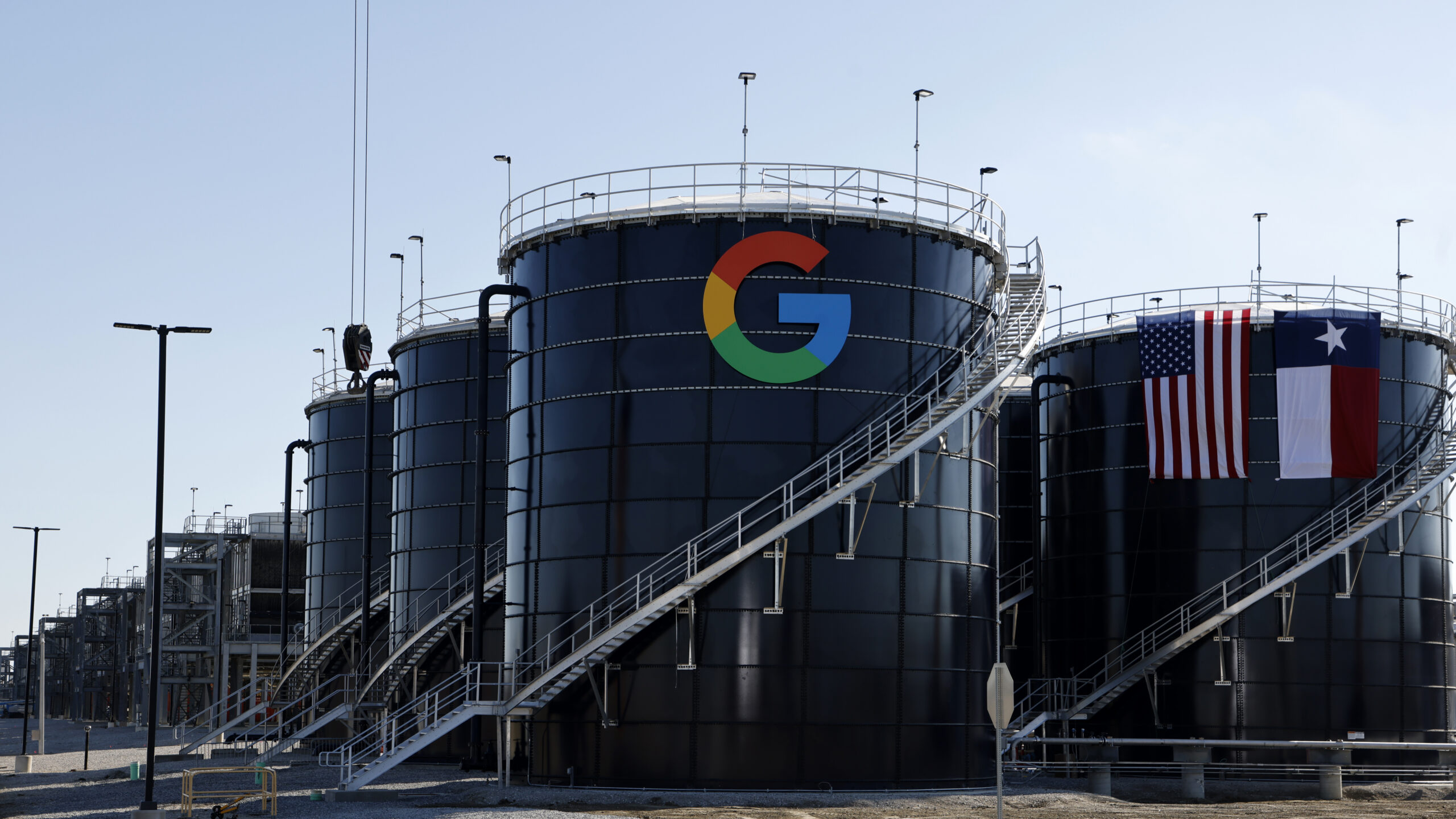
Google’s AI buildout drove 37% increase in electricity use in 2025
Understanding the increase in Google's electricity consumption is crucial as it highlights the company's response to growing demand for AI services while balancing sustainability efforts.
- Google's electricity usage rose by 37% in 2025, marking the largest increase in its history.
- The increase was driven by growth in Google Cloud, YouTube streaming, and AI data center operations.
- Despite higher electricity use, Google reported a 2% reduction in operational emissions for the same period.
- The company has invested over $3.8 billion in clean energy initiatives since 2010, adding 7.5 gigawatts of renewable energy capacity.
- Google aims to match 100% of its electricity consumption with renewable energy, emphasizing a '24/7 carbon-free energy ambition.'
Google is a major technology company known for its search engine and cloud services. Since 2019, it has seen significant growth in electricity usage due to cloud services and AI infrastructure. Future attention will focus on Google's clean energy investments and sustainability strategies.
Read the original ↗
Why Agentic AI Needs to be Part of Your Operations Management Strategy
The integration of agentic AI into operations management could significantly streamline decision-making processes and enhance efficiency across various industries, reshaping traditional roles and responsibilities within enterprises.
- Agentic AI will operate as numerous specialized digital workers across enterprises in retail, healthcare, and food service, managing tasks such as deliveries and inventory in real time.
- This technology allows digital agents to negotiate and coordinate objectives continuously, rather than waiting for periodic human-driven meetings.
- Human teams will shift from administrative roles to focusing on strategy and exceptions as agents handle routine decisions and escalations.
- Effective deployment will require specifically defined goals for agents, with clear operational constraints and accountability measures in place.
Agentic AI is a new approach to enterprise operations management, moving beyond traditional automation to enable continuous coordination among digital agents. This shift signifies a transformation in how organizations optimize processes and manage resources, transitioning from human negotiation to machine mediation. The evolution of agentic AI will influence various industries as it redefines roles and workflows, necessitating careful governance to ensure effective implementation.
Read the original ↗
What Does AI Hallucination Look Like in 2026?
The rise of AI hallucination poses significant risks in sensitive sectors such as law and healthcare, potentially leading to financial losses and legal penalties.
- In February 2026, a Nebraska attorney was suspended after using AI-generated citations in a court case, with 20 citations being outright hallucinations.
- Hallucinations in AI occur when systems confidently present false information, leading to errors that are challenging to detect.
- Research shows that legal AI tools can hallucinate between 17% and 88% of the time, depending on the question and model used.
AI hallucination refers to the erroneous outputs generated by AI models that seem plausible but are incorrect. As AI systems evolve, notably in legal and healthcare applications, accurate citation and fact verification remain pressing issues. Continued scrutiny is essential as more sectors implement AI for complex tasks.
Read the original ↗
OpenAI reportedly wants all AI companies to give the US government a stake in their businesses
The proposed stake for the US government in AI companies could influence future regulations and the broader public benefit from the rapidly expanding AI sector.
- Sam Altman of OpenAI is reportedly in talks with the US government regarding a proposal to give a five percent equity stake in AI companies to the government.
- Altman's idea extends beyond OpenAI to include other major AI firms like Google, Anthropic, xAI, and Meta.
- AI companies have faced political obstacles in releasing their technologies, with recent interventions from the US government impacting model access and release schedules.
OpenAI, a key player in the AI industry, has been exploring ways to navigate regulatory challenges amid rising calls for accountability and transparency in AI deployment. Previous U.S. efforts to involve government with corporate ownership, such as with Intel, suggest this strategy may not be unprecedented. Future discussions will determine if these proposals gain governmental or Congressional support.
Read the original ↗
The Google Health API Got a CLI: ghealth is an Open-Source Tool for Your Fitbit Air Data
This development simplifies access to health-related data for developers, enhancing the ability to create health applications and analyze user fitness data effectively.
- The ghealth CLI is an open-source tool for the Google Health API v4, designed for terminal and AI agent use.
- It provides access to 40 data types, including sleep, heart rate, and steps, formatted as structured JSON.
- Developers can set up ghealth using a single command and bring their own OAuth credentials for data access.
The Google Health API v4 is the successor to the Fitbit Web API, transitioning to Google OAuth 2.0 for security. ghealth facilitates easier interaction with the API for developers and data analysts, allowing for streamlined health data management. Future developments may include additional features and expanded compatibility with various health tracking devices.
Read the original ↗