
The day's AI news, briefed
The Daily Prompt
Our AI editor reads each day's AI and robotics stories, pulls out why they matter, and links every original source — so you can keep up in minutes.
Join over 250,000 subscribers getting the latest AI news
Latest AI & Robotics News Today
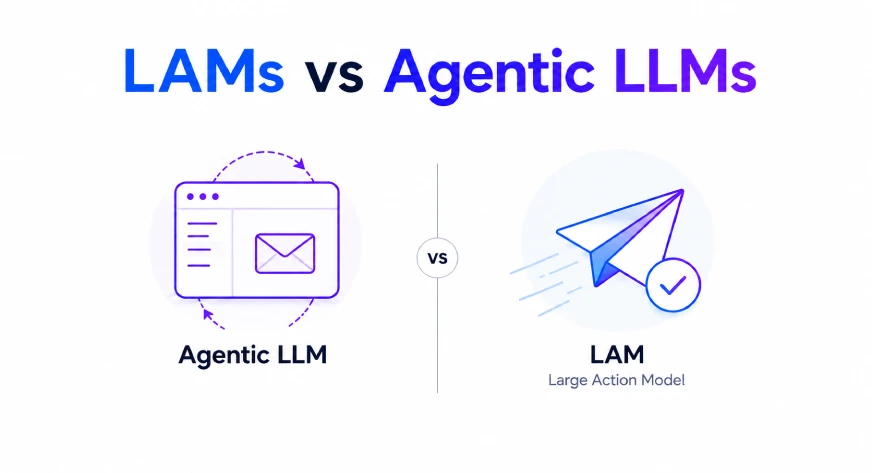
Large Action Models (LAMs) vs Agentic LLMs: What’s the Real D...
Understanding the differences between Large Action Models (LAMs) and agentic LLMs is crucial for optimizing AI systems used in various applications, affecting reliability and efficiency.
- Large Action Models (LAMs) focus on generating executable actions from the start, while agentic LLMs process a goal through reasoning loops and tools.
- LAMs use a different training process involving action trajectories, unlike standard LLMs which are trained on web-scale text.
- Salesforce has developed the AgentOhana pipeline to unify action data for LAMs, improving their ability to perform specific tasks efficiently.
Large Action Models (LAMs) and agentic LLMs are types of machine learning systems used in AI applications. LAMs prioritize producing specific actions quickly and reliably, while agentic LLMs offer flexibility in open-ended tasks. It is anticipated that future AI systems will effectively integrate both types for optimal performance.
Read the original ↗
Anthropic Plans to Develop Its Own Drugs, Not Just Sell AI to Pharma
Anthropic's entry into drug development could reshape the pharmaceutical landscape by introducing competition from an AI-first company targeting neglected diseases.
- Anthropic plans to develop its own drugs, competing directly with the pharmaceutical companies it currently supplies AI models to.
- The company will focus on diseases that receive little attention or funding from traditional drugmakers.
- Anthropic's new initiative includes the establishment of wet labs and recruitment of biologists for drug research and development.
Anthropic is a technology company known for its AI models, primarily used in biotechnology and pharmaceuticals. This move into drug development represents a significant shift in focus, positioning the company as both an AI provider and a competitor in the drug market. Future developments will reveal which specific diseases Anthropic targets and its collaborations for clinical trials and manufacturing.
Read the original ↗
OpenAI's GPT-5.6 Family, New Ways to Train Robots, Models Invoking Models
This story highlights significant advancements in AI and robotics, showcasing new training techniques and model developments that could influence future AI applications and efficiencies.
- OpenAI previewed three models in its GPT-5.6 family, which will have a wider release soon.
- Microsoft developed its own reasoning model, MAI-Thinking-1, independently from its partnership with OpenAI.
- Sakana introduced orchestrator models, Fugu and Fugu-Ultra, that manage multiple AI agents and demonstrate superior performance against individual models.
- Researchers created RoboReward, vision-language reward models that enhance robotic training through better reward functions.
OpenAI's GPT-5.6 family represents the latest evolution in language models, while RoboReward focuses on improving robotic training methods using advanced reward mechanisms. Microsoft and Sakana are also expanding the landscape by developing proprietary models and frameworks for collaborating AI systems. The prevalence of AI noise highlights the need for clear understanding among users and developers in this crowded space.
Read the original ↗
Representation Distribution Matching for One-Step Visual Generation
This research introduces Representation Distribution Matching (RDM), a method that significantly enhances image generation quality, setting a new standard in the field.
- RDM trains a one-step image generator by matching feature distributions under frozen pretrained encoders.
- The optimized batch size for generating images is above 2048, which exceeds conventional sizes.
- Improved evaluation metrics using multiple encoders ensure generated images are of high quality and less susceptible to manipulation.
Representation Distribution Matching (RDM) is a new approach to image generation that improves quality by aligning feature distributions. Previous methods struggled with training convincing generators, but RDM shows significant advancements in this area. Future developments will likely build on RDM to further enhance image generation techniques.
Read the original ↗
The Unconscious Brain May Be More Capable Than Scientists Realized
Understanding the capabilities of the unconscious brain could have significant implications for neuroscience and artificial intelligence, particularly in developing advanced communication aids for those with brain injuries.
- Researchers at Baylor College of Medicine recorded activity from the hippocampus, showing it processes language and predicts word sequences even during deep anesthesia.
- The study involved seven patients under propofol anesthesia, allowing direct recordings of neural activity using Neuropixels probes, which monitor hundreds of neurons simultaneously.
- Neuroscientists observed that hippocampal neurons displayed increased sensitivity to auditory stimuli and could distinguish language components in real-time, suggesting complex processing during unconsciousness.
The research published in Nature reveals that the brain is more active and capable during unconsciousness than previously understood, challenging traditional notions of consciousness. Previous studies largely relied on indirect measures of brain activity, while this study used direct recordings from the hippocampus. Future research may explore unconscious processing in other brain regions and its implications for therapies addressing brain injuries.
Read the original ↗
AI’s Volatile Power Use Quietly Tests Grid Limits
The rise of AI infrastructure is disrupting traditional grid stability, creating challenges that could affect electricity supply reliability as demand patterns shift unpredictably.
- Data centers are projected to account for 3 to 4 percent of global electricity consumption within this decade.
- High-density compute workloads introduce abrupt demand changes that can stress grid reliability and stability.
- Utilities are adjusting forecasts and planning frameworks to accommodate the complex demands of large-scale compute infrastructure.
- Traditional grid planning struggles to predict the erratic behavior of compute-related electrical loads compared to conventional demand profiles.
Artificial intelligence relies heavily on data centers, which have become significant energy consumers. The increasing demand from these centers is altering operational expectations for electrical grids, leading utilities to adapt their strategies accordingly.
Read the original ↗
All Your Favorite Gadgets Are Getting Way More Expensive … Again
Consumers should be aware that ongoing price increases for electronics may impact their purchasing decisions and overall expenses, leading to a shift toward refurbished products.
- Apple has announced price increases for its MacBooks and iPads, effective in June.
- Xbox consoles will experience price hikes starting in August.
- The ongoing memory chip shortage is primarily driven by the prioritization of production for AI data centers over standard consumer electronics.
- Demand for refurbished devices is rising as prices for new electronics continue to climb, with used smartphones now selling for 10 to 20 percent more than in December 2025.
- Manufacturers are encouraging trade-in and buyback programs, making it a favorable time for consumers to sell used devices.
The current price hikes in consumer electronics are largely due to a shortage of memory chips, which impacts products like smartphones, computers, and gaming consoles. There has been a notable increase in demand for refurbished electronics as consumers seek more affordable options during these challenging economic times. Observing trends in the secondhand market may provide insights into future pricing and purchasing behavior.
Read the original ↗
As builders race to ship AI agents, searches for “prompt injection” have doubled in a year
The doubling of searches for 'prompt injection' indicates a growing public awareness and concern about potential vulnerabilities in AI systems, which could pose significant security risks.
- Searches for 'prompt injection' have more than doubled in the past year to approximately 4,000 per month in the United States.
- Overall interest in techniques to attack large language models, including prompt injection and data poisoning, rose by about 63% year-over-year.
- Prompt injection is now regarded as the top security risk for AI agents, identified by the OWASP Foundation in their rankings for large language model applications.
Prompt injection is a technique that tricks AI models into ignoring instructions, raising serious security concerns for autonomous AI agents. Previous discussions around security have largely focused on traditional chatbots; however, the advent of autonomous agents has changed the landscape significantly. Moving forward, developers will need to enhance security measures in response to these growing threats.
Read the original ↗
Takeda signs US$600M AI drug discovery deal with Insilico
This collaboration could accelerate the development of new therapeutics through AI, potentially leading to innovative treatments in various disease areas.
- Takeda has signed a collaboration agreement with Insilico Medicine for AI-driven early-stage drug discovery worth up to $600 million.
- Insilico will utilize its Pharma.AI platform for target identification, molecular design, and clinical prediction under this agreement.
- Takeda will have exclusive worldwide rights to develop and commercialize the novel therapeutics identified during this collaboration.
Insilico Medicine specializes in AI-based drug discovery, providing platforms that assist in various phases of drug development. This partnership follows a significant collaboration between Takeda and another AI firm earlier this year, highlighting the growing trend of AI integration in pharmaceuticals.
Read the original ↗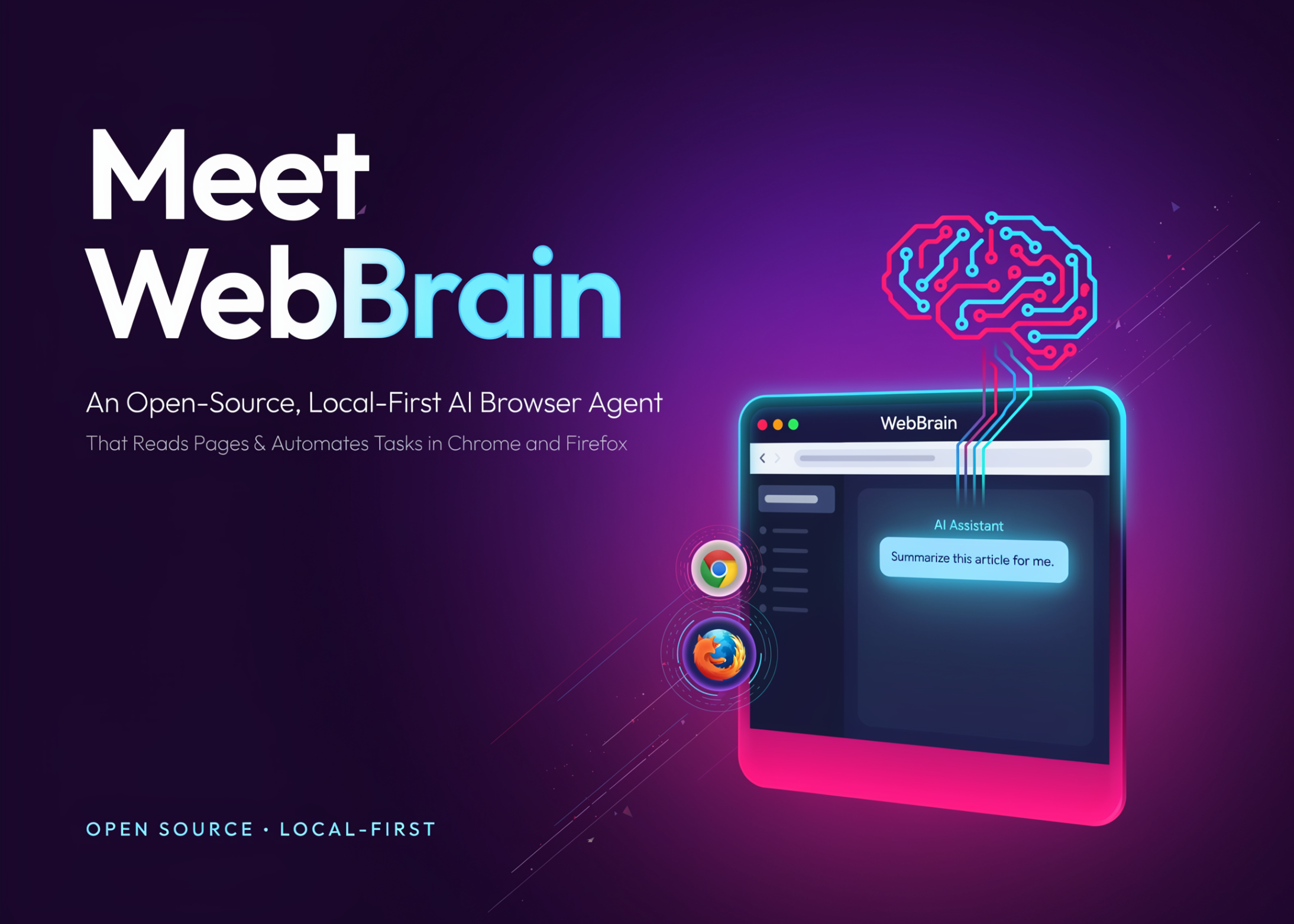
Meet WebBrain: An Open-Source, Local-First AI Browser Agent That Reads Pages...
WebBrain's local-first design enhances user privacy by processing data without sending it to the cloud, addressing growing concerns over data security in AI-driven browsing.
- WebBrain is an open-source browser agent for Chrome and Firefox that automates tasks and reads web pages.
- It operates using local machine learning models, ensuring no page data leaves the user's device.
- The agent features two modes: Ask mode for read-only tasks and Act mode for interacting with web pages using trusted input events.
WebBrain is designed to enhance browsing capabilities by using artificial intelligence to automate tasks without compromising data privacy. It offers local and cloud model options to suit different user needs. As AI integration in everyday tasks evolves, tools like WebBrain may redefine user interaction with web content.
Read the original ↗
Anthropic to Collaborate With Samsung for New AI Chip
Anthropic's collaboration with Samsung for a custom AI chip signals a strategic shift towards self-sufficiency in chip manufacturing amid rising industry demand and supply chain challenges.
- Anthropic has initiated discussions with Samsung to develop a custom AI chip, marking a shift from speculation to action.
- The partnership aims to alleviate dependencies on major chip suppliers like Nvidia through tailored hardware solutions.
- Anthropic's diverse hardware strategy includes using chips from various companies, indicating its commitment to optimize performance for AI applications.
Anthropic is a key player in the AI industry, focusing on developing technologies to enhance artificial intelligence. Previously, the company had contemplated creating its own chips in response to widespread chip shortages impacting the sector. The move towards custom silicon reflects a broader industry trend among companies seeking more independence from established suppliers like Nvidia.
Read the original ↗
Mark Zuckerberg tells staff that AI agents haven’t progressed as quickly as he’d hoped
The slower-than-expected progress in AI development at Meta highlights challenges in the tech industry and raises questions about the company's future direction and investments.
- Mark Zuckerberg stated that AI agent development at Meta has not accelerated as expected.
- Meta recently laid off 8,000 employees, about 10% of its workforce, while transferring another 7,000 to AI-related roles.
- Zuckerberg commented on the difficulties of implementing these job cuts, acknowledging they weren't as seamless as anticipated.
- He expressed belief that Meta would see improvements from its AI investments within the next three to six months.
Meta, the parent company of Facebook, has invested heavily in AI, with planned spending of up to $145 billion for infrastructure this year. The company has faced challenges in rapidly adapting to industry changes, particularly concerning AI advancements. Observers will watch for any signs of improvement in Meta's AI initiatives following the recent layoffs and restructuring.
Read the original ↗
Cloudflare will filter out web crawlers that serve AI companies
Cloudflare's new default policies aim to give website owners greater control over how their content is used by AI companies, potentially transforming industry practices around web crawling.
- Cloudflare plans to block mixed-use web crawlers that index websites while also serving AI purposes, effective September 15, 2026.
- New customers will automatically have settings to allow for search but block training and agent use for pages with ads.
- The new Pay Per Use feature will compensate site owners when their content is used in AI chatbot answers.
- Existing users can opt-out of new defaults before the September deadline, including those with free accounts.
Cloudflare is a web infrastructure company that aids website hosting and security. It previously allowed website owners to block AI scraping but is changing to a more protective default approach. Upcoming changes will reshape how AI companies access web data.
Read the original ↗
Jersey Mike’s IPO illustrates how bad the AI hype has become
The mention of AI in the IPO documents of a sandwich chain reflects the pervasive overvaluation of artificial intelligence in investment narratives, potentially misleading investors about real business fundamentals.
- Jersey Mike’s IPO documents contain 22 mentions of artificial intelligence (AI), despite the company primarily selling sandwiches.
- The company used AI in boilerplate risk warnings without detailing its specific application in their business.
- Investor demand for AI has led non-tech companies to include AI references in their financial documents to attract interest.
Jersey Mike’s is a sandwich chain that is leveraging investor interest in artificial intelligence despite not being a tech company. This trend highlights the excessive hype surrounding AI, impacting diverse sectors beyond traditional technology firms. Watching how IPO disclosures evolve in other non-tech industries may reveal similar patterns.
Read the original ↗
KELA’s 2026 Mid-Year AI Threat Landscape Report: AI Is Becoming Both the Weapon and the Target
The report highlights a critical shift in cybersecurity as AI evolves from a tool for attackers to an autonomous participant in sophisticated cyber threats, challenging traditional defense measures.
- KELA's 2026 report reveals AI is now actively involved in cyber attacks, moving beyond its previous role as a productivity tool for criminals.
- The report states that open-source AI models, such as DeepSeek and Qwen, allow attackers to build offensive systems independent of commercial providers.
- KELA warns of a new threat called Autonomous Vulnerability Discovery and Exploitation (AVDE), which can exploit vulnerabilities almost immediately after disclosure, reducing defenders' response time.
- Ransomware groups are using AI to enhance efficiency across their operations, automating tasks from software development to ransom negotiations.
- Cybercriminals are learning to manipulate AI models to conduct malicious activities by framing them as legitimate tasks.
KELA is a cybersecurity intelligence company that analyzes cyber threats. Their latest report indicates a significant shift where AI is both a strategic tool and an active participant in cybercrime, necessitating stronger security measures. This trend represents a growing challenge for cybersecurity professionals worldwide.
Read the original ↗
Can Cursor Remain a Platform for OpenAI and Anthropic’s Models Inside SpaceX?
The outcome of Cursor's ability to maintain its model-agnostic platform after being acquired by SpaceX could reshape competitive dynamics in the AI industry.
- SpaceX plans to acquire Cursor for $60 billion, enhancing its access to AI coding technology.
- Cursor hopes to retain its status as an open platform offering models from various AI labs post-acquisition.
- The acquisition raises questions about whether rival labs, such as OpenAI and Anthropic, will continue to provide their models to Cursor.
Cursor is an AI coding startup that allows users to utilize a range of third-party AI models, including those from OpenAI and Anthropic. As the company prepares for its acquisition by SpaceX, the future of its partnerships with these AI labs remains uncertain, impacting its operations and competition in AI development.
Read the original ↗
Anthropic is discussing a new custom chip with Samsung
Anthropic's pursuit of a custom AI chip in collaboration with Samsung highlights the growing trend among AI companies to develop specialized hardware to mitigate reliance on established chip manufacturers like Nvidia.
- Anthropic is exploring a collaboration with Samsung to develop a custom AI chip, as reported by The Information.
- The company initially considered producing its own chips in response to ongoing chip shortages.
- Anthropic has not disclosed details about the chip's intended use or capabilities.
- This announcement comes shortly after OpenAI revealed its custom AI chip developed in partnership with Broadcom.
Anthropic is an AI research company looking to innovate in hardware by creating its own chips, similar to efforts by companies like OpenAI and Google. The move towards custom chips is a strategic response to industry-wide chip shortages and growing competition in AI computing.
Read the original ↗
How AI Agents Are Transforming Large-Scale Recommendation Systems and AI
The introduction of AI agents in recommendation systems promises to enhance performance and efficiency, ultimately benefiting businesses through improved user engagement and satisfaction.
- Large-scale recommendation systems consist of interconnected models, data pipelines, and monitoring systems, which complicate their improvement.
- AI agents are designed to absorb system context and enable self-monitoring, reducing the need for constant human involvement.
- Current limitations of AI agents include risks of incorrect assumptions and trust issues, necessitating bounded execution and validation for safe adoption.
Recommendation systems analyze user behavior to make personalized suggestions across various platforms. The complexity of managing these systems has led to the exploration of AI agents to streamline processes and improve outcomes. Future developments will focus on enhancing AI agent capabilities and reducing their operational risks.
Read the original ↗
Don’t Build Your Enterprise AI on Borrowed Access
As access to frontier AI models becomes more restricted, enterprises need to rethink their strategies to ensure reliable performance and control costs moving forward.
- U.S. Commerce Department's decision to restrict access to Anthropic’s models indicates possible future limitations on frontier AI model access.
- AI companies may face rising costs post-IPO that could make subsidized pricing unsustainable.
- Frontier AI models are becoming larger and more compute-intensive, complicating their cost management.
- The application layer in AI systems is increasingly important for maintaining performance consistency across different models.
Frontier AI models refer to the most advanced artificial intelligence systems available, whose capabilities have historically been quickly commoditized. As companies prepare for uncertain future access to these models, rebuilding their AI architectures with a focus on the application layer will be crucial to maintain effectiveness and manage costs.
Read the original ↗
America at 250: From the Battle for Independence, to the Fight Over Artificial Intelligence
The impending AI revolution poses significant implications for the future of America, comparable to historical technological shifts that have redefined the nation.
- America's 250th birthday highlights the importance of technological revolutions in shaping its history and future.
- AI is positioned as the next major leap in technology, with potential benefits and risks.
- The choices made today regarding AI will significantly influence America's trajectory over the next 250 years.
This July, America marks its 250th anniversary, providing a platform to evaluate the impact of past technological advancements and consider the emerging influence of artificial intelligence. AI represents a transformative phase akin to previous revolutions that drastically changed societal capabilities and challenges. Observers are encouraged to reflect on past lessons as society navigates the complexities brought by AI.
Read the original ↗