
The day's AI news, briefed
The Daily Prompt
Our AI editor reads each day's AI and robotics stories, pulls out why they matter, and links every original source — so you can keep up in minutes.
Join over 250,000 subscribers getting the latest AI news
Latest AI & Robotics News Today

#511 AlphaFold's Nobel Winner Just Joined Anthropic. And 6 More AI Wins.
The shift of a Nobel laureate to Anthropic signals significant advancements in AI for scientific research, indicating a growing focus on practical applications in this field.
- John Jumper, a Nobel laureate for AlphaFold, joined Anthropic after nearly nine years at Google DeepMind.
- Anthropic launched Claude Science, a research workbench for scientific databases, with grants for up to 50 projects.
- Tencent released the Hunyuan Hy3 model under an open license, allowing broader access for developers and researchers.
John Jumper contributed to AlphaFold, a program that predicts protein structures, and his move to Anthropic highlights the push for AI in scientific applications. Anthropic aims to combine AI technology with scientific research to unlock new potentials. Future developments to watch include the impact of Claude Science and ongoing advancements in open-model accessibility by various companies.
Read the original ↗
#511 Anthropic Bet $19B on Compute. Treasury Quietly Said 'Bubble.'
The Treasury's warning implies significant concerns over the sustainability of investments in high-computing capabilities within the AI sector, potentially affecting future funding and innovation.
- Anthropic has invested $19 billion in computing resources.
- The Treasury Department has expressed concerns, suggesting a potential bubble in the computing investment.
Anthropic is an AI research company focusing on developing advanced AI models. Concerns over the financial health of tech investments are intensifying as the field grows rapidly. Stakeholders should monitor developments in funding and regulatory responses.
Based on the headline only — the full article could not be fetched.
Read the original ↗
Google now uses your uploaded search media to train AI
Google's new practice of using uploaded media for AI training raises privacy concerns, demanding user awareness of data collection practices and opt-out options.
- Google now uses user-uploaded media, including images, files, and audio recordings, to train its AI systems.
- Users are automatically opted in to this data collection unless they adjust their settings to opt out.
- To opt out, users must uncheck the 'Save Media' box on their Search Services History page and ensure no media is saved in personalization settings.
Google is a leading tech company known for its search engine and various AI platforms. This change comes amid increasing reliance on user data for AI improvements and highlights ongoing conversations about privacy and user consent. Users should monitor their settings regularly to manage their data preferences.
Read the original ↗
Reddit is using LLMs to solve a problem LLMs largely created
Reddit's innovative use of LLMs (large language models) to combat spam highlights ongoing challenges faced by online platforms in managing harmful content generated by the same technology.
- Reddit has developed tools utilizing LLMs to reduce the spam problem exacerbated by LLM accessibility.
- The platform reports blocking 23 million spam views and catching about 25,000 new spam posts daily.
- Reddit claims a 20% reduction in user exposure to spam from January to March compared to the previous three months.
- Other social platforms are also adopting AI techniques to manage AI-generated content alongside user disclosures.
Reddit, a popular social media platform, faces increased spam due to the rise of AI tools like LLMs. Other platforms such as YouTube and Meta have been implementing AI moderation without fully automating the process, highlighting the importance of combining human oversight with AI technologies.
Read the original ↗
Every major tech layoff in 2026 that has name-checked AI
Understanding how AI influences employment decisions can provide insights into the evolving job market and workforce dynamics in the tech industry.
- Multiple tech companies in 2026 have announced layoffs specifically citing AI as a factor in their decisions.
- This trend highlights the significant impact of AI on workforce management and job security within the tech sector.
As artificial intelligence continues to evolve, its integration into business processes raises questions about job displacement. The ongoing interaction between AI adoption and employment has led to notable layoffs in the tech industry, prompting further examination of the consequences.
Based on the headline only — the full article could not be fetched.
Read the original ↗
Your family’s $300 stake in OpenAI
OpenAI's family investment model suggests a shift towards more inclusive funding opportunities in the AI space, potentially impacting future investment dynamics.
- The article discusses a $300 investment opportunity for families in OpenAI.
- This initiative aims to broaden investment participation in the increasingly influential AI sector.
OpenAI is an AI research organization known for its development of advanced AI technologies and models. This investment approach represents a new trend in the engagement of small investors in AI funding.
Based on the headline only — the full article could not be fetched.
Read the original ↗
AI golem Tilly Norwood is reportedly 'starring' in a feature-length movie
The announcement of an AI character starring in a feature film raises questions about the impact of AI on the film industry and creative storytelling.
- Tilly Norwood, an AI character, is reportedly starring in a feature-length movie titled 'Misaligned'.
- The film is being produced by Particle6 Productions, known for short AI marketing videos.
- 'Misaligned' is described as a coming-of-age story set in the 'Tillyverse', featuring themes of AI and humanity.
- Particle6 has yet to announce any human collaborators or a script for the movie.
Particle6 Productions specializes in AI-generated content and has previously created short-form marketing videos. The introduction of Tilly Norwood at the Zurich Film Festival sparked significant interest and concern in Hollywood regarding AI's role in film. The industry is watching to see how this blend of traditional filmmaking and AI expertise develops.
Read the original ↗
Small-AI Models Gain Traction Around the World
The rise of small-AI models offers critical solutions for healthcare and agriculture in underserved regions, directly addressing the challenges of unreliable infrastructure and access to technology.
- Small-AI models, designed to operate with limited resources, are crucial in areas lacking reliable data infrastructure.
- Advocates highlight their potential to deliver life-saving services, particularly in healthcare, where counterfeit medications are a significant danger.
- The World Bank has begun promoting small AI through grants and support programs aimed at underserved communities, enhancing access to technology.
Small AI refers to compact machine learning models that require little power and can run on devices like smartphones, rather than on large data centers. This initiative is particularly important in developing regions where access to technology is limited. As small AI technologies proliferate, they are expected to transform sectors like healthcare and agriculture.
Read the original ↗
If you use Google, you’re training its AI. Here’s how to opt out.
Understanding Google's data collection practices is crucial for users seeking to protect their privacy and control their personal information used in AI training.
- Google's recent privacy update allows the storage of users' media, including images and audio, to enhance its AI models.
- Users can opt out of this data collection by adjusting settings in their Search Services History and Personalization options.
- The update affects various Google services beyond Search, including Maps, Shopping, and Translate.
Google has introduced changes to its privacy settings that allow more data collection for AI training, reflecting a trend in the tech industry focused on leveraging user-generated data. Users should be aware of how their media and activity can influence AI model development and their ability to manage privacy settings going forward.
Read the original ↗
Secret Claude tracker shocks users after Anthropic’s anti-surveillance stance
The incident reveals privacy concerns and trust issues as Anthropic attempts to prevent unauthorized use of its AI models while balancing user surveillance implications.
- Anthropic removed a covert tracker that was monitoring Claude Code users in China after its existence was revealed by a security researcher.
- The tracker, utilizing prompt steganography, was added in March 2026 to help prevent account abuse and protect against distillation attacks from Chinese firms.
- Privacy advocates have criticized Anthropic's actions, which contradict its previous anti-surveillance stance towards US government efforts.
Anthropic is an AI company known for its Claude language models, which has previously resisted governmental surveillance of US users. The company's actions are now under scrutiny as it navigates competition with Chinese AI firms that have rapidly advanced model capabilities.
Read the original ↗
Healthcare’s AI Challenge Isn’t Adoption. It’s Readiness
Establishing a strong operational foundation is crucial for healthcare organizations to effectively utilize AI, ensuring that investments translate into improved care delivery and operational efficiency.
- Healthcare organizations are projected to spend $1.4 billion on AI by 2025, nearly tripling their spending from 2024 levels.
- AI adoption in healthcare is outpacing the broader economy, with AI deployment occurring at 2.2 times the rate of other sectors.
- Successful AI implementation depends on united infrastructure and governance, rather than just technology investment, to address fragmented workflows and data issues.
Healthcare organizations have been advancing rapidly in AI adoption, responding to pressures for improved efficiency and decision-making. However, many face challenges with existing systems that hinder effective AI utilization. Future success hinges on solidifying operational and technological readiness to support AI's integration.
Read the original ↗
Artificial Intelligence (471)
Understanding artificial intelligence is crucial as it increasingly impacts various sectors, shaping how technology interacts with human activities.
- The article focuses on artificial intelligence.
- It is categorized under AI as a significant technological development.
Artificial intelligence (AI) is a branch of computer science that focuses on creating systems capable of performing tasks that usually require human intelligence. Advancements in AI technology are transforming industries and influencing daily life. Monitoring developments in AI is essential for understanding its broader societal implications.
Based on the headline only — the full article could not be fetched.
Read the original ↗
Reddit to combat AI with more AI
Reddit's proactive measures against AI-generated content illustrate the ongoing battle between social media platforms and emerging AI technologies, highlighting a shift towards employing AI for self-regulation.
- Reddit is using AI tools to combat AI-generated content, employing large language models (LLMs) to identify suspicious activity.
- The platform blocks 23 million spam views each day and detects about 25,000 problematic posts and comments daily.
- Reddit reported a 20 percent decrease in spam exposure from January to March 2026 compared to the previous three months.
- Reddit has improved enforcement actions against hate and violence, reducing harmful content exposure by over 40 percent.
- Detection-to-enforcement time has been reduced to less than five seconds.
Reddit, a well-known social media platform, is increasingly facing challenges from AI-generated content. In response, it is leveraging its own AI technologies to enhance platform safety and user experience. Observing the effectiveness of these measures will be crucial for Reddit's future and user trust.
Read the original ↗
UK regulator warns of “arms race” to keep up with AI use in financial services
The rapid adoption of AI in financial services raises significant regulatory challenges, as millions rely on these technologies for personal financial decisions without adequate protections in place.
- Regulators in the UK are engaged in an "arms race" to keep pace with the rapid use of AI in financial services.
- A report from the Financial Conduct Authority (FCA) emphasizes the need for greater regulatory powers as millions of users adopt AI for financial decision-making.
- One-fifth of UK adults are reportedly open to utilizing AI for making financial decisions, despite the lack of regulatory coverage.
- The FCA recommends a review of potential risks and consumer harm from unregulated AI financial services within the next six months.
The Financial Conduct Authority (FCA) oversees financial services in the UK and is addressing the impact of AI technologies. This follows increasing use of AI tools to assist consumers in managing finances, which raises concerns about regulation and accountability. Future discussions will focus on the authority's ability to supervise AI tools and the potential risks involved.
Read the original ↗
Station F ramps up as a launchpad for Europe’s hottest AI startups
The strengthening of Station F's F/ai accelerator program highlights its role in boosting Europe's AI startup landscape, which could enhance innovation and competition in the tech industry.
- Station F is preparing for its second cohort of the F/ai accelerator program, which begins in September.
- The program aims to help AI startups transition from early product development to generating real revenue within weeks.
- The first cohort collectively raised $34 million in pre-seed funding, and 80% of its participants were repeat entrepreneurs.
- Station F has gained recognition for connecting startups with major tech companies and investors, enhancing access to resources in Europe.
Station F, a prominent startup hub in Paris founded by Xavier Niel, serves as a co-working space and innovation center for numerous startups. Its F/ai program is designed to accelerate AI-focused ventures, responding to criticism of slow commercialization in Europe. The startup ecosystem in France has been growing, with initiatives aimed at fostering collaboration among tech firms.
Read the original ↗
Embodied.cpp: A Portable Inference Runtime of Embodied AI Models on Heterogeneous Robots
Embodied.cpp addresses the fragmented deployment of embodied AI models on diverse devices, which could enhance efficiency and effectiveness in robotics applications across varying hardware platforms.
- Embodied.cpp is a portable C++ runtime designed for deploying vision-language-action and world-action models on heterogeneous edge devices.
- It features modular execution layers that enable multi-rate execution and latency-first batch-1 inference for improved performance.
- The runtime supports a unified abstraction for different embodied models, facilitating easier integration and execution across various hardware.
- Evaluation shows high task success rates for two tested VLA models and notable memory reductions for a WAM benchmark.
Embodied AI combines perception, language, and actions for robotics, but deployment has been complicated by model specificity and hardware diversity. Embodied.cpp aims to streamline this process, promising improved support for various models and devices. Future developments will likely enhance its capabilities and optimization strategies.
Read the original ↗
Artificial Intelligence (470)
Understanding the role of small language models can enhance the development of next-generation AI agents, improving their efficiency in various fields.
- Small language models are increasingly being used to drive the capabilities of next-generation AI agents.
- These advancements reflect the growing importance of artificial intelligence in technology.
Small language models are compact AI systems capable of natural language processing. There is a trend toward developing these models as they offer efficiency and versatility for various applications. Future developments may focus on how these models can be further integrated into AI systems.
Based on the headline only — the full article could not be fetched.
Read the original ↗
China’s AI companion rules: what Beijing is really going after
China's new AI companion rules aim to protect users, particularly minors, from emotional manipulation and dependency while regulating the companionship aspect of AI technology.
- China's AI companion rules will take effect on July 15, requiring significant changes to popular AI apps.
- ByteDance's Doubao and Alibaba's Qwen have disabled features that allowed for emotional engagement with AI agents due to compliance issues.
- The rules mandate that AI companions implement anti-addiction systems and parental controls, particularly for users under 14.
- Providers of AI companions must now detect and address signs of user distress, including potential self-harm.
China's Cyberspace Administration is enforcing regulation on AI companions to mitigate emotional dependence and protect users, especially minors. These measures are unprecedented in a national context, contrasting with the looser regulations in other regions like the EU and the US. Future developments will likely focus on compliance and the balance between user protection and content control.
Read the original ↗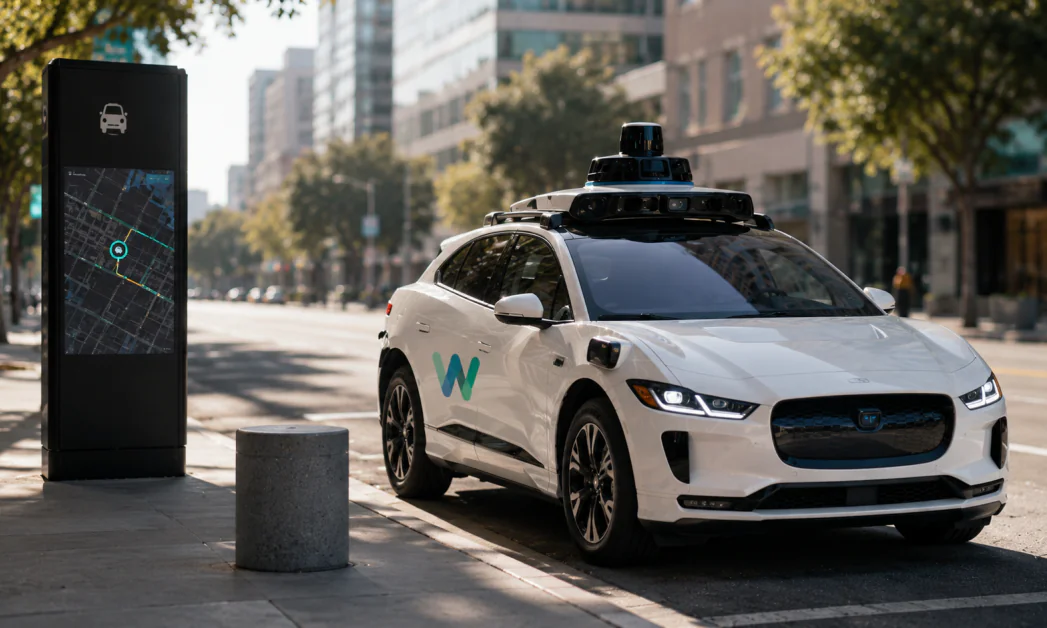
Autonomous Vehicle Expansion Hinges on the People Behind the Screens
The success of autonomous vehicle (AV) expansions relies not just on technology but significantly on the human support systems that ensure passenger safety and effective incident response.
- Autonomous vehicle robotaxis are increasingly becoming established in key markets across the United States.
- Human teleoperators monitor AVs remotely, intervening in case of incidents to ensure passenger safety.
- Effective hiring and training of teleoperators directly impacts passenger trust and overall experience with AV services.
As the autonomous vehicle industry grows, the role of human teleoperators is critical for operational success. These professionals monitor and assist AVs in real-time to prevent issues, ensuring public safety and trust in the technology.
Read the original ↗
Why the AI Chip Race Now Runs on Software
The AI hardware industry struggles to align rapid software development with slower hardware cycles, impacting adoption and revenue opportunities in the burgeoning inference market.
- AI accelerators are frequently launched with impressive performance benchmarks but lack production-ready software, hindering full utilization.
- The misalignment between fast-evolving AI workloads and slow hardware development cycles creates barriers for market adoption.
- NVIDIA leads the industry by providing a mature software ecosystem, allowing developers to effectively use their chips in production.
The AI hardware industry faces a critical software maturity issue as companies release advanced chips without adequate production-grade software. This disparity mirrors challenges previously seen in the automotive industry, where software became crucial for innovation. As demand for inference solutions grows, companies unable to integrate the necessary software risk losing market relevance.
Read the original ↗