
The day's AI news, briefed
The Daily Prompt
Our AI editor reads each day's AI and robotics stories, pulls out why they matter, and links every original source — so you can keep up in minutes.
Join over 250,000 subscribers getting the latest AI news
Latest AI & Robotics News Today

OpenAI’s Chief Futurist Is Leaving the Company
The departure of Joshua Achiam highlights a shift in leadership within OpenAI's safety-focused initiatives, which may impact the company's approach to AI regulation and policy.
- Joshua Achiam, OpenAI's chief futurist, is leaving the company later this month after nearly nine years.
- His role involved overseeing AI safety and policy, advocating for government regulations aligned with OpenAI's mission.
- Achiam's departure adds to a trend of safety-focused leaders leaving as OpenAI prepares for a public offering.
OpenAI is a technology company focused on developing artificial intelligence while ensuring its benefits for humanity. As part of its evolution, the company has reorganized its safety, product, and research teams multiple times. Following Achiam's exit, it will be important to monitor how OpenAI continues to address AI safety and policy issues.
Read the original ↗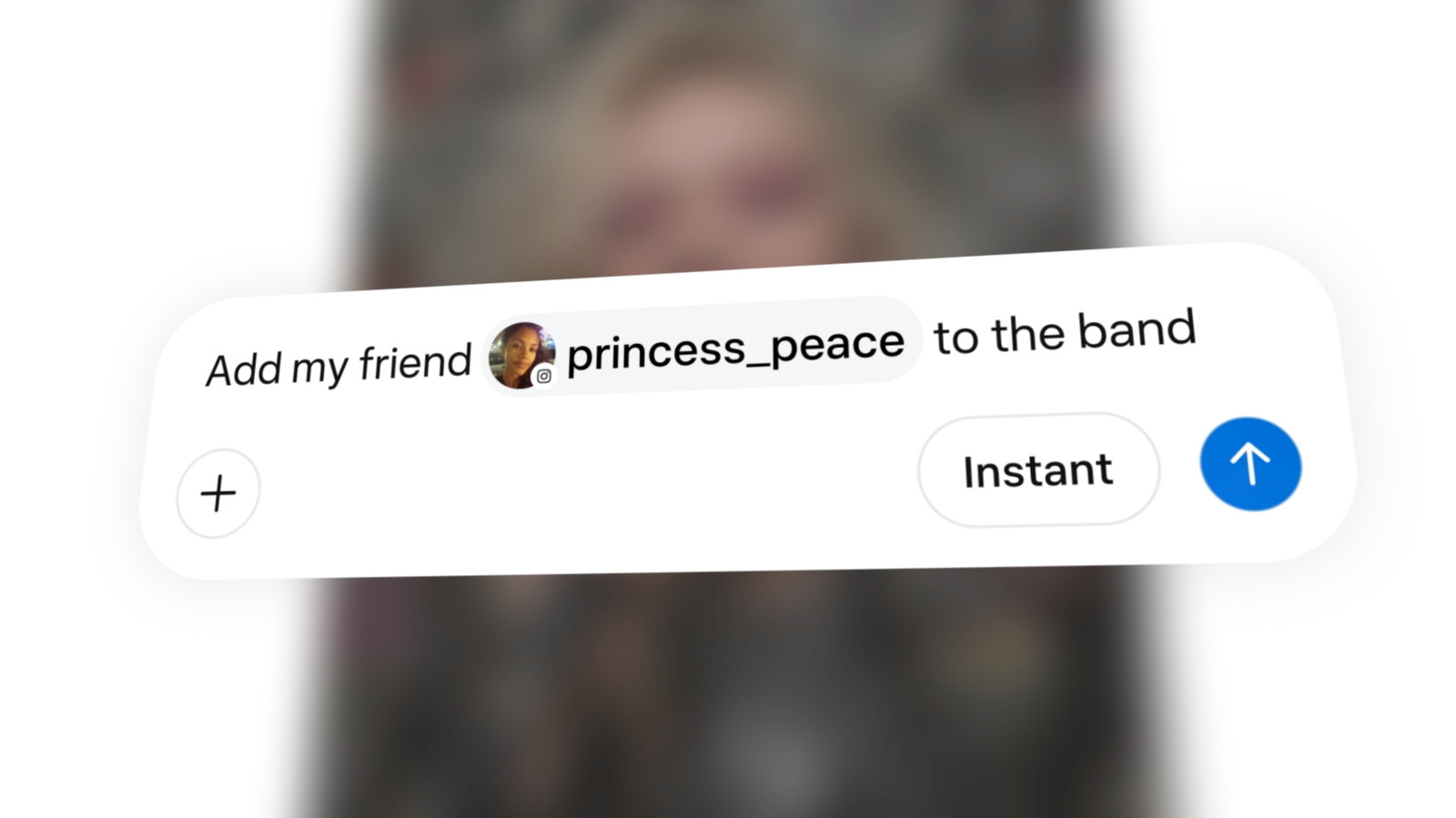
Meta's new Muse Image model accepts Instagram accounts as a prompt
The integration of Muse Image into Meta's platforms enhances user experience by allowing more personalized and creative content generation across Instagram and WhatsApp.
- Meta's Muse Image model accepts Instagram accounts as prompts for generating images.
- The model is available in the Meta AI app, Instagram, and WhatsApp in the US.
- Muse Image can create a functional QR code and produce legible text in images that fits stylistically.
- Over 30 new effects for Instagram Stories powered by Muse Image include various styles like disposable camera edits.
- Muse Image offers free everyday creation, with additional features accessible through a paid Meta One subscription.
Muse Image is part of Meta's new family of AI models launched in April 2026, designed for image generation and editing. The model enhances user interaction by allowing complex prompts and editing via social media connections. Meta is also developing a Muse Video model for future release.
Read the original ↗
Why the rise of open source AI isn’t hurting Anthropic … yet
The dynamics between open source and frontier AI models impact industry spending patterns, suggesting a stable economy where both can thrive simultaneously.
- Decacon CEO Jesse Zhang claims that open source and frontier AI models are not in competition, but represent different phases of a single life cycle.
- Open source models are increasingly capturing mature applications, yet investment in frontier models remains steady in total spending.
- Anthropic accounts for over half of the AI spending on platforms like Vercel, despite rising prices affecting its market share over the past month.
- DeepSeek V4 Flash has emerged as the leading open source model, processing significant token volumes compared to frontier alternatives like Opus 4.8.
Open source AI refers to freely available models, while frontier AI models are generally proprietary and expensive. The AI market is rapidly evolving, and companies are exploring strategies that leverage both open source and frontier models. Key trends to watch include spending patterns and the emergence of new use cases.
Read the original ↗
Erling Haaland Is Everywhere at the World Cup. Most of It Is AI
The increasing use of AI to create and share content about athletes like Erling Haaland highlights a shift in how sports fandom interacts with and shapes celebrity culture.
- A viral video purportedly featuring Erling Haaland was actually a deepfake of Chinese comedian Jin Long.
- Haaland has seen his popularity soar in China, leading to millions of followers on Douyin and Weibo.
- Fans now engage with athletes as evolving characters, contributing to their lore and narrative via AI-generated content.
Erling Haaland is a Norwegian footballer recognized for his scoring ability and charisma. The rise of AI-generated content allows fans to actively participate in creating athletes' public personas, shifting traditional views on celebrity. This trend of meme and AI culture transforms sports engagement, particularly among younger generations.
Read the original ↗
Shut Those Laptops! Anthropic Puts Its Claude Cowork Agent on Your Phone
This development signifies a shift in how AI agents can enhance user productivity by operating independently on mobile devices, reflecting a broader trend toward smartphone-centric technology.
- Anthropic has launched Claude Cowork for smartphones, allowing users to run tasks even when their laptops are closed.
- Users can now interact with Cowork via the Claude app or web browser, eliminating the need for active desktop sessions.
- This feature aligns with a trend in Silicon Valley towards always-running, semiautonomous AI agents controlled by text inputs.
- Claude Cowork is available in beta to subscribers of Anthropic's Max plan, starting at $100 a month, before expanding to lower-tier subscribers.
- Anthropic has reported increased usage of Claude Cowork among white-collar workers for tasks like data reporting and content creation.
Anthropic is a technology company that develops AI agents, with Claude being one of their key products. Previously, users had to keep their computers awake to utilize Claude Cowork, which has now changed to allow mobile operation. The move reflects a larger industry trend towards integrating AI agents into everyday mobile applications.
Read the original ↗
Discord admits AI moderation bug wrongfully banned users over harmless images
This incident underscores the potential consequences of relying on AI for moderation, as automated systems can lead to wrongful bans that significantly affect users' access to online communities.
- Discord identified a bug in its AI moderation system that mistakenly banned over 8,000 users due to harmless images being flagged as harmful.
- The issue has been ongoing since May, with additional bans occurring recently before the problem was addressed.
- Affected users are currently in the process of having their accounts restored after the bug was fixed.
Discord is a popular communication platform often used for gaming and social interactions. Automated moderation systems are increasingly used to detect harmful content but can lead to errors, as evidenced by this incident. Observing how Discord improves its moderation system will be important in the future.
Read the original ↗
Microsoft joins AI cost-cutting trend by relying more on its own models
Microsoft's shift to in-house AI models reflects broader trends of cost-cutting in the tech industry, highlighting concerns over rising AI service expenses.
- Microsoft is cutting costs by using more of its own AI models instead of relying heavily on external providers like OpenAI and Anthropic.
- The company is implementing its models in widely used programs, such as Excel and Word, to handle user prompts more efficiently.
- Microsoft recently launched seven new proprietary AI models, including a coder and a text-to-image generator, as part of its strategic pivot.
Microsoft is a leading technology company known for software products like Office 365, which has traditionally integrated external AI models. Recently, the tech industry has faced rising costs for AI services, prompting companies to find more economical solutions. Watch for potential changes in AI service offerings as firms continue to explore self-sufficient technologies.
Read the original ↗
Enterprise AI Divide Is Becoming a Competitive Moat
As enterprise AI adoption accelerates, the ability to derive measurable business value is becoming crucial, determining competitive advantages among organizations.
- 88% of organizations are deploying AI in at least one business function, but only 12% report both lower costs and higher revenue from it.
- 80% of firms capture only about 25% of AI's total economic value, with the top 20% capturing about 74%.
- 62% of executives cite talent and AI skills shortages as a top barrier to realizing AI value in enterprises.
Enterprise AI refers to the integration of artificial intelligence technologies into large organizations for operational efficiency and decision-making. While many companies have adopted AI, a significant gap exists between adoption and actual value derived from AI implementations. Upcoming trends include increasing executive involvement and the deployment of agentic AI, which automates tasks and decision-making processes within defined boundaries.
Read the original ↗
Now you can direct Anthropic's Claude Cowork AI from your phone
The ability to manage Anthropic's Claude Cowork AI from mobile devices enhances user accessibility and flexibility in managing tasks remotely, potentially streamlining workflows.
- Anthropic has introduced a mobile interface for Claude Cowork, allowing users to manage tasks from their phones.
- The latest app update is available for both Android and iOS users with a new Cowork tab.
- Tasks can now run in the background without a continuous internet connection, requiring user notification only for permissions.
Anthropic's Claude Cowork is an AI assistant designed to help with tasks on computers. The service has recently expanded its features, enabling greater functionality, with plans for further integration into a unified chatbot interface. Users can also look forward to enhanced organization features for managing projects and artifacts.
Read the original ↗
Claude Cowork expands to mobile and web
This expansion allows users to access Claude Cowork's features on mobile and web, enhancing workplace efficiency and integrating AI more closely with day-to-day business tasks.
- Claude Cowork, Anthropic’s AI tool, is now available on mobile and web for Max subscribers, expanding from its original desktop app launched in January.
- Users can start tasks on their desk, receive updates on their phone, and retrieve completed outputs, even with their laptop closed.
- Anthropic aims for Cowork to function as an administrative assistant rather than just a coding tool, reflecting a shift in how AI is utilized in the workplace.
Claude Cowork was designed to assist with general knowledge work and is part of a trend where AI tools are moving beyond basic chatbot roles into more complex job tasks. Both Anthropic and OpenAI are competing to make their AI products integral to everyday workplace functions, targeting non-developers as key users.
Read the original ↗
OmniOpt: Taxonomy, Geometry, and Benchmarking of Modern Optimizers
OmniOpt addresses the fragmented landscape of optimizer selection for large-scale model training, providing a systematic framework that can enhance efficiency and efficacy in model development.
- OmniOpt combines meta-pipeline transformations and norm-constrained linear minimization oracles to improve optimizer selection for large-scale models.
- The framework features a dual-dimension taxonomy organizing optimizers by mechanism family and measurable training objectives.
- OmniOpt includes a comprehensive cross-domain benchmark analyzing optmizer family performance across varying training objectives and model scales.
OmniOpt is a new framework for optimizer selection focused on improving large-scale model training efficiency. It aims to provide the research community with a standardized approach amid a growing number of optimization methods. Future developments in optimizer design may build upon this unified framework to tackle diverse training challenges.
Read the original ↗
Multiplayer Interactive World Models with Representation Autoencoders
This development enhances the ability of AI to simulate complex multi-agent scenarios, significantly advancing the field of interactive game environments and potential real-world applications.
- A new multiplayer world model has been trained using 10,000 hours of gameplay data from Rocket League.
- The model uses a 5-billion-parameter latent diffusion framework to generate real-time four-player matches at 20 frames per second.
- Unlike single-player models, this system conditions on the actions of multiple agents, ensuring coherence in their interactions.
- Stability of the model's rollouts is evident, maintaining quality beyond five minutes of simulated play, with practical use extending for hours.
- The dataset, training code, and a live demo have been released to support further research in multiplayer world models.
World models simulate environments for AI agents, traditionally focusing on single players. The introduction of multiplayer capabilities allows for more realistic interactions in dynamic settings. Future developments may lead to broader applications in gaming and training simulations.
Read the original ↗
Liquid AI Open-Sources Antidoom: A Final Token Preference Optimization (FTPO) Method that Reduces Doom Loops in Reasoning Models
The release of Antidoom by Liquid AI significantly improves the performance of reasoning models by addressing and reducing repetitive output, enhancing their reliability in complex tasks.
- Liquid AI has open-sourced Antidoom, a method that reduces doom loops in reasoning models, specifically targeting repetitive output.
- After implementing Antidoom training, the loop rate on the LFM2.5-2.6B model dropped from 10.2% to 1.4%, showing improved evaluation scores.
- Antidoom uses Final Token Preference Optimization (FTPO) to retrain only the first loop-start token, thus spreading probability across multiple alternatives.
Liquid AI's Antidoom method aims to fix a failure mode known as doom loops, where models excessively repeat outputs. The technique is specifically beneficial for small reasoning models, enhancing their accuracy on challenging prompts. Future developments may focus on further refining performance and exploring related training techniques.
Read the original ↗
GigaWorld-1: A Roadmap to Build World Models for Robot Policy Evaluation
Understanding effective evaluation techniques for robot policies is crucial for advancing robotics and ensuring reliable performance in real-world applications.
- A new benchmark called WMBench has been developed to study world models for robotic policy evaluation.
- Key findings indicate that long-horizon rollout consistency is more significant than short-term visual realism for policy assessment accuracy.
- GigaWorld-1, a world model optimized for policy evaluation, has been introduced and its code, models, and datasets have been released for research purposes.
World models serve as surrogate evaluators for robotic policies, which have traditionally been hard to assess due to the costs of physical trials. This systematic study aims to enhance understanding of what makes these models reliable, addressing a critical bottleneck in evaluating embodied robotic systems.
Read the original ↗
Vision Pretraining for Dense Spatial Perception
The development of LingBot-Vision might significantly improve depth estimation, which is critical for advancing embodied AI applications that require precise spatial awareness.
- LingBot-Vision enhances dense spatial perception through a method called masked boundary modeling, focusing on boundary and shape cues.
- The approach aims to improve depth estimation, which is crucial for creating intelligent systems that can understand their physical environment.
- Results indicate that LingBot-Vision outperforms previous iterations in depth completion, marking progress from LingBot-Depth 1.0 to LingBot-Depth 2.0.
LingBot-Vision is a model designed for better spatial perception in AI, employing self-supervised learning (SSL) techniques for depth estimation. Previous models often sacrificed spatial details for semantic consistency. Future developments will likely focus on further enhancing visual representation capabilities in AI applications.
Read the original ↗
The Rise of AI Boyfriends: Why Virtual Partners Are Becoming Mainstream
The rise of AI boyfriends indicates a significant shift in the AI companionship market, reflecting broader consumer needs and presenting business opportunities despite potential safety and ethical concerns.
- AI boyfriends are emerging as distinct virtual companions that simulate emotional support and romantic relationships, differing from traditional dating apps.
- The AI companion market recorded 220 million downloads by July 2025, with a notable demand for AI boyfriends still largely unmet.
- The mobile dating game 'Love and Deepspace' generated around $825 million globally, highlighting the commercial potential of virtual romantic interests.
- Regulatory scrutiny is increasing, with new laws in the U.S. mandating psychological safeguards for AI companions, emphasizing safety and user protection.
AI boyfriends are virtual companions that provide emotional engagement, differing from earlier AI girlfriend models. As demand develops, companies are prompted to balance user experience with ethical considerations. Future products may incorporate improved emotional intelligence and safety features.
Read the original ↗
Tangos Raises $20 Million Seed Round at $100 Million Valuation to Bring Autonomous AI to Financial Crime Investigations
The development of autonomous AI for financial crime investigations could significantly streamline a critical process, helping organizations better manage rising regulatory demands and increasing operational efficiency.
- Tangos AI raised $20 million in seed funding at a $100 million valuation to develop autonomous AI for financial crime investigations.
- The platform aims to automate evidence gathering and create regulatory-compliant reports, addressing the time-consuming investigation bottleneck faced by financial institutions.
- Founded by Eyal Azoulay in 2025, Tangos combines expertise from various sectors, including finance and intelligence, to enhance investigative processes.
- Tangos' AI agents can autonomously conduct investigations, validate findings, and produce comprehensive case files, transforming the investigative landscape in finance.
Tangos AI is an Israeli startup focused on using autonomous AI to improve investigations in financial crime. Traditional investigative processes are often slow and labor-intensive, leading to operational challenges for institutions facing increasing regulatory scrutiny. The company's platform targets various compliance needs, including anti-money laundering and fraud investigations, as well as enhancing efficiency across financial institutions and regulatory organizations.
Read the original ↗
How Organizations Are Changing Their Frontline Workers’ Perceptions On Using AI
Understanding how organizations can reshape frontline workers' perceptions of AI technology is crucial for successful implementation, ultimately impacting productivity and morale in the workplace.
- A 2024 EY survey found that 75 percent of employees worry that AI could make jobs obsolete, with 65 percent fearing for their own roles.
- Over half of U.S. workers expressed concerns about AI's future impact on their work, and 33 percent felt overwhelmed by it, according to a 2025 Pew Research Center study.
- The adoption failure of AI projects is primarily due to lack of user adoption rather than technical issues, with 70 to 80 percent failing to deliver expected benefits.
Organizations are increasingly adopting AI solutions, but many workers remain skeptical due to perceived threats to their jobs. Successful AI deployment requires involving employees in the process and addressing their concerns about how AI affects their roles. Future developments will likely focus on building trust through transparency and user involvement in AI design.
Read the original ↗
Can AI and One of History’s Most Preeminent Military Strategists Explain the U.S.-Iran War? The Answer Was Striking
Understanding the strategic implications of the U.S.-Iran conflict through Clausewitz's principles offers insights into military strategy and political objectives that could affect international relations significantly.
- AI was used to analyze the strategies of Prussian General Carl von Clausewitz in relation to the ongoing U.S.-Israeli war against Iran, which began on February 28, 2026.
- The analysis suggested that while the U.S. and Israel have conducted effective offensive military operations, they have yet to achieve their political objectives regarding Iran's capabilities and regional posture.
- Clausewitz's theories emphasize the need for military actions to align closely with political goals, cautioning against misjudging the type of war being fought.
The use of AI to reinterpret historical military strategy provides a modern lens on conflict analysis. Carl von Clausewitz is known for his influential work on military theory, especially regarding the relationship between war and policy. Observers are likely to continue assessing the effectiveness of current military strategies in the ongoing conflict.
Read the original ↗
The Brain’s Language System Is Far More Expansive Than Scientists Thought, New Study Finds
These findings could reshape our understanding of how language is processed in the brain, revealing a more complex network than previously recognized and potentially influencing future neuroscience research.
- Neuroscientists at MIT identified 17 additional regions in the brain involved in language processing, expanding the previously understood left-hemisphere focus.
- The study analyzed fMRI scans from 772 participants and found new areas in the cerebellum, hippocampus, and amygdala associated with language comprehension.
- Five newly identified language-sensitive regions are located in the cerebellum, traditionally linked to movement, suggesting a role in integrating information across brain systems.
- The findings challenge long-held beliefs about the brain's language organization and open new research avenues in neuroscience.
Traditionally, language processing was thought to be localized mainly in the left hemisphere of the brain, specifically in areas like Broca's area. This research challenges these views by demonstrating the involvement of additional brain regions in language comprehension, emphasizing the need for further exploration of brain functions. Future studies may focus on how these newly identified areas contribute to language and cognitive processes.
Read the original ↗