
The day's AI news, briefed
The Daily Prompt
Our AI editor reads each day's AI and robotics stories, pulls out why they matter, and links every original source — so you can keep up in minutes.
Join over 250,000 subscribers getting the latest AI news
Latest AI & Robotics News Today

Can AI and One of History’s Most Preeminent Military Strategists Explain the U.S.-Iran War? The Answer Was Striking
Understanding the strategic implications of the U.S.-Iran conflict through Clausewitz's principles offers insights into military strategy and political objectives that could affect international relations significantly.
- AI was used to analyze the strategies of Prussian General Carl von Clausewitz in relation to the ongoing U.S.-Israeli war against Iran, which began on February 28, 2026.
- The analysis suggested that while the U.S. and Israel have conducted effective offensive military operations, they have yet to achieve their political objectives regarding Iran's capabilities and regional posture.
- Clausewitz's theories emphasize the need for military actions to align closely with political goals, cautioning against misjudging the type of war being fought.
The use of AI to reinterpret historical military strategy provides a modern lens on conflict analysis. Carl von Clausewitz is known for his influential work on military theory, especially regarding the relationship between war and policy. Observers are likely to continue assessing the effectiveness of current military strategies in the ongoing conflict.
Read the original ↗
The Brain’s Language System Is Far More Expansive Than Scientists Thought, New Study Finds
These findings could reshape our understanding of how language is processed in the brain, revealing a more complex network than previously recognized and potentially influencing future neuroscience research.
- Neuroscientists at MIT identified 17 additional regions in the brain involved in language processing, expanding the previously understood left-hemisphere focus.
- The study analyzed fMRI scans from 772 participants and found new areas in the cerebellum, hippocampus, and amygdala associated with language comprehension.
- Five newly identified language-sensitive regions are located in the cerebellum, traditionally linked to movement, suggesting a role in integrating information across brain systems.
- The findings challenge long-held beliefs about the brain's language organization and open new research avenues in neuroscience.
Traditionally, language processing was thought to be localized mainly in the left hemisphere of the brain, specifically in areas like Broca's area. This research challenges these views by demonstrating the involvement of additional brain regions in language comprehension, emphasizing the need for further exploration of brain functions. Future studies may focus on how these newly identified areas contribute to language and cognitive processes.
Read the original ↗
How Jellyfish Can ‘Miraculously’ Heal Without Scars Has Long Remained a Mystery—Scientists Now Know Their Secret
Understanding jellyfish wound healing mechanisms could lead to advancements in medical treatments for humans, particularly in improving healing processes and reducing scar formation.
- A study reveals that jellyfish can close wounds in real time without stitches, scabs, or scars, a process that has intrigued scientists for years.
- The research identifies two cellular structures involved in the wound healing process of Clytia hemisphaerica jellyfish.
- The initial healing response features lamellipodia, actin-rich extensions that pull cells forward to close wounds, followed by a contracting actomyosin cable.
- For larger wounds, the entire epithelial sheet can migrate as a unit to facilitate healing after which the lamellipodia closing sequence resumes.
Clytia hemisphaerica is a jellyfish species known for its rapid and scar-free healing abilities. The study contributes to understanding epithelial cell repair mechanisms, potentially applicable to various animals, including humans. Future research will focus on the poorly understood basement membrane involved in the healing process.
Read the original ↗
What Makes AI Art Worth Collecting?
Understanding the complexities and valuation of AI-generated art can inform future collections and curatorial practices in both digital and traditional art spaces.
- An anonymous artist sold an NFT titled 'Inferior Image' for over $40,000, illustrating the divisive nature of AI art.
- The world's first generative AI museum, Dataland, opened in Los Angeles, featuring works that incorporate environmental data.
- AI-generated art is evolving beyond digital mediums, finding a place in physical installations and selling out collections like the 1,000 AI data sculptures at $5,000 each.
AI art utilizes algorithms to create works that challenge traditional understandings of artistry and authenticity. As the medium becomes more mainstream, understanding its value and process is crucial. Upcoming trends to watch include more physical installations and evolving market dynamics, especially amidst mixed reception from critics and collectors.
Read the original ↗
Design.com Review: Fast AI Logos (But There’s a Catch)
Design.com provides a fast and accessible way for small businesses to create logos and branding materials, which is crucial in a competitive landscape where branding can significantly impact survival.
- Design.com offers a user-friendly platform for quick logo and branding asset creation aimed at entrepreneurs and small businesses.
- It features thousands of templates and designs but has limited customization options and many advanced features require a paid plan.
- The platform may generate generic logos that do not adhere closely to specific design prompts, such as color or style details.
Design.com is a logo and branding creation tool owned by DesignCrowd, designed for those without design experience. It aims to help startups and small businesses quickly build visual identities, addressing a common challenge in early business development.
Read the original ↗
100 Self-Driving ATVs Have Been Fighting in Ukraine for Nine Months
The deployment of self-driving ATVs in combat highlights advancements in military technology and the potential for ground vehicles to enhance logistical operations in war zones.
- Forterra has deployed over 100 self-driving Lancer ATVs in Ukraine since last October, completing over 1,100 missions.
- These ATVs have transported 777,440 pounds of cargo and conducted 52 casualty evacuations during their deployment.
- Ukrainian forces have been teleoperating the vehicles rather than using full autonomy due to current limitations in the technology.
Forterra, a Maryland defense tech company, has been developing autonomous vehicles for 20 years, backed by significant venture funding. The success of the Lancer ATVs in Ukraine provides valuable operational data that could influence future military contracts.
Read the original ↗
Pete Holmes Is Not Reading Your Email
This story highlights an individual's unique approach to managing digital engagement, offering insights into the impact of technology on personal well-being and social interactions.
- Comedian Pete Holmes limits his phone use, displaying his screen-time prominently to maintain low engagement.
- Holmes keeps his phone in grayscale to reduce distractions and emphasizes the importance of disconnecting from social media.
- He asserts that people may eventually move away from digital communication due to overwhelming information, predicting a return to more in-person interaction.
- Holmes has 55,000 unread emails, suggesting that a significant digital workload is manageable without constant interaction.
Pete Holmes is an actor and comedian known for his HBO series Crashing. His perspective on technology reflects a growing awareness of the downsides of constant connectivity. Observing his habits could inspire others to reconsider their digital communication practices.
Read the original ↗
Companies traded people for tokens. The returns haven’t shown up
The trend of companies exchanging labor for digital tokens raises concerns about the effectiveness and ethical implications of these new compensation models in the workforce.
- Companies have begun trading employees' work time for tokens instead of traditional wages.
- Initial returns on these token-based compensation systems have not met expectations.
- This model adds a layer of complexity to employment and compensation in various industries.
Token-based compensation is an emerging concept where employees are compensated with digital tokens instead of cash. Previous models relied on conventional wages, and the effectiveness of tokens in this context is under scrutiny. Observers are watching how companies will adapt to these changes and their implications for the workforce.
Read the original ↗
OKF: Redefining Knowledge Bases for AI Agents
The introduction of the Open Knowledge Format (OKF) has the potential to streamline how AI agents structure and access knowledge, allowing for more efficient information retrieval without losing contextual relationships.
- In June 2026, Google unveiled the Open Knowledge Format (OKF), an open specification for organizing and exchanging knowledge in AI agents.
- OKF bundles consist of Markdown files with lightweight YAML metadata, allowing interconnected concepts without relying on vector databases.
- The format facilitates version control and navigation of knowledge bases, preserving document relationships that traditional methods may fragment.
- OKF draws on earlier concepts like the LLM Wiki proposed by Andrej Karpathy, enhancing how curated knowledge is maintained within AI systems.
The Open Knowledge Format (OKF) is designed to organize knowledge for AI applications in a more coherent manner than existing methods. Traditional approaches, like Retrieval-Augmented Generation, rely on breaking documents into smaller chunks, which can lose important contextual links. With OKF, knowledge is stored as interconnected Markdown files, streamlining access for AI agents and maintaining clarity in relationships between concepts.
Read the original ↗
Savi’s app aims to protect consumers from realistic AI scams like kidnappers demanding ransom
Savi Security's app introduces a new defense against increasingly sophisticated AI scams, highlighting the urgent need for consumer protection in an evolving digital landscape.
- Savi Security has launched an app for iPhone and Android to protect users from AI-generated scams.
- The app's live-call monitoring feature allows users to include an AI agent during suspicious calls to detect scams.
- The company raised $7 million in seed funding to develop its technology, responding to the rising threat of impersonation scams.
- Earlier research indicated that Americans lost $3.5 billion to imposter scams in 2025, with Gen Z showing significant vulnerability.
- Savi's founders were inspired to create the app after a personal experience with an AI scam targeting their family.
Savi Security, founded by Patrick and Ryan Coughlin, aims to counteract AI-driven scams impacting consumers. This initiative follows a personal incident involving a sophisticated kidnapping scam that utilized advanced AI techniques. Future development will likely focus on enhancing the app's capabilities and expanding user outreach.
Read the original ↗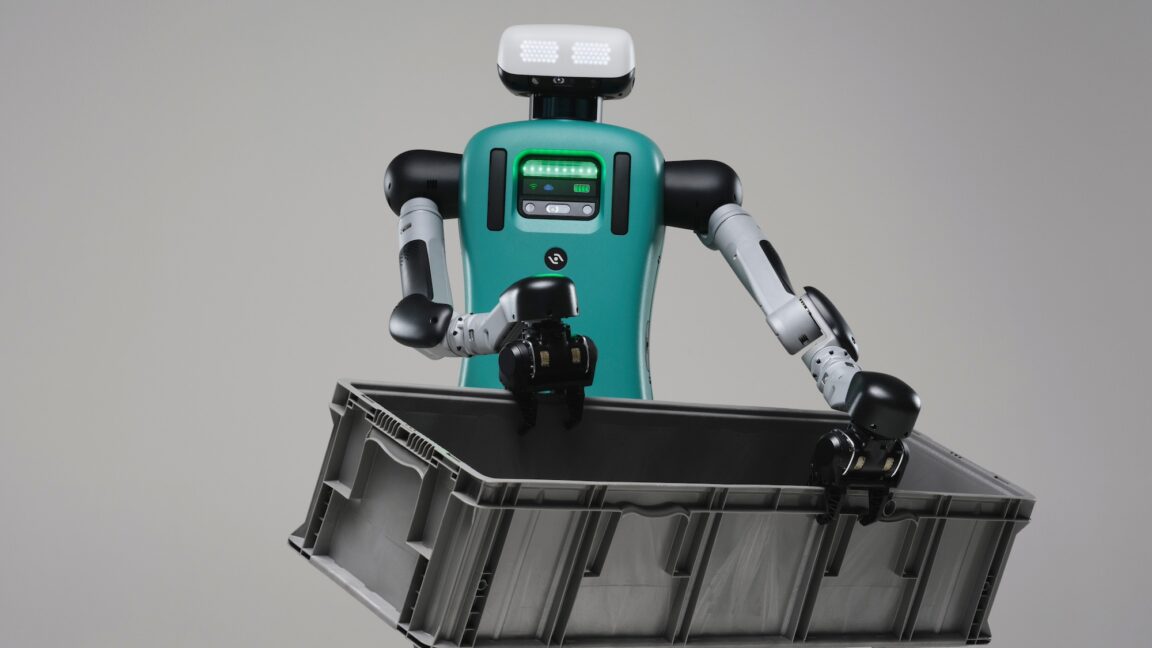
How AI could enable autonomous robot workers in workplaces—and maybe homes
The advancement of autonomous robots could revolutionize workplaces and homes, significantly impacting labor, efficiency, and service delivery in everyday tasks.
- Researchers are focusing on developing general-purpose robots powered by AI, aiming for them to perform tasks independently in unpredictable environments.
- Advancements in AI, like reinforcement learning and foundation models, have led to significant interest and investment in robotics for diverse applications.
- Despite current limitations, robot autonomy continues to evolve, with researchers optimistic about future capabilities and practical implementations in various settings.
Robotics encompasses the design and use of robots for various tasks, historically focused on limited applications. Recent AI advancements have accelerated developments toward versatile autonomous robots, with ongoing research addressing functionality in complex environments.
Read the original ↗
The AI Architecture Problem in Customer Service
The integration of AI into customer service is failing to meet expectations, leading to decreased job security for employees and diminished customer satisfaction.
- Klarna cut 700 customer service jobs, expecting AI to fill the gap, but later faced a drop in customer satisfaction and started hiring again.
- Gartner predicts that by 2027, many organizations that aim to cut customer service roles will likely abandon those plans due to AI failures.
- A vast majority of agents, 78%, report that AI tools have not significantly altered their work, and 93% routinely verify AI outputs before use.
- AI tools currently exacerbate an already fragmented system, forcing agents to manually complete tasks that AI should automate.
- Improving AI architecture is crucial; it requires real-time data access, persistent context, and the ability to learn from outcomes to bridge the trust gap.
AI in customer service is intended to streamline operations, but its implementation has often added complexity due to existing fragmented systems. Leaders have pushed AI deployment under pressure but have overlooked the underlying technical issues that hinder effective integration. Fixing these architectural problems may enhance adoption and efficacy of AI in the sector.
Read the original ↗
AI Adoption Needs More Than an IT Plan
Successful AI adoption relies on understanding its implications for organizational culture and process, which can significantly influence productivity and employee morale.
- Treating AI merely as an IT project often leads to operational and cultural issues within organizations.
- 93% of leaders identify people and change management as key obstacles to AI adoption, necessitating leadership involvement beyond IT teams.
- Failure to understand AI's impact can result in superficial implementation and diminished employee confidence, complicating future problem-solving.
AI technology is often integrated superficially in companies, leading to gaps in understanding and collaboration. Organizations must adopt AI thoughtfully, accounting for culture and specific employee needs to ensure effective implementation and avoid degradation of critical thinking.
Read the original ↗
AI Incidents Are Becoming Operational Crises. We Need to Treat Them That Way.
As AI systems are increasingly integrated into business operations, incidents involving AI may lead to significant operational, legal, and reputational consequences, making effective response strategies crucial.
- Organizations are shifting their understanding of AI risk from governance to operational resilience due to the growing complexity of AI incidents.
- In January 2026, the OECD AI Incidents Monitor recorded 596 AI incidents, marking a 200% increase year over year.
- AI incidents can emerge from the interactions of various systems, complicating responses and necessitating cross-functional coordination.
- Effective incident response requires separating the AI system under investigation from the response processes to prevent interference.
AI is being embedded into many business functions, raising risks that can impact operations significantly. The integration of AI into enterprise systems makes it more important than ever for organizations to prepare for and respond to AI incidents. Lessons from cybersecurity are critical for developing effective incident response frameworks for AI.
Read the original ↗
L’Oreal, Mondelez, and Nestle use AI to speed product development
The use of AI in product development by major companies like L’Oreal, Mondelez, and Nestle underscores the technology's potential to significantly streamline processes and increase efficiency in consumer goods.
- L’Oreal has implemented AI for four years, improving product formulation speed by four times through digital testing of ingredient performance.
- Mondelez uses AI to develop and test recipes for brands like Cadbury and Oreo, which minimizes physical sampling needs and enhances nutritional and sustainability outcomes.
- Nestle plans to eliminate artificial food colorings from all products by 2026, leveraging AI to identify and test natural alternatives during reformulation efforts.
L’Oreal, a leading cosmetics company, is using AI to innovate in product development as part of a broader initiative to revitalize its offerings following slow sales growth. Mondelez and Nestle are also utilizing AI to improve efficiency in recipe development and ingredient sourcing, responding to market demands for healthier and more sustainable products. The integration of AI signifies a trend among consumer goods companies to optimize operations and enhance product offerings without replacing human oversight.
Read the original ↗
The first American autonomous ground vehicles are fighting in Ukraine
The deployment of autonomous vehicles in combat showcases a significant step in military technology, potentially transforming logistics and operational strategies in warfare.
- Forterra has deployed over 100 self-driving ATVs in Ukraine for nine months, marking a significant advancement in U.S. military technology in combat zones.
- The gas-powered Lancer vehicles can carry 750 kilograms, offering more versatile capabilities compared to Ukraine's existing battery-powered ground vehicles.
- These vehicles have completed over 1,100 missions, transporting 777,440 pounds and evacuating 88 casualties, demonstrating their operational effectiveness.
- Ukrainian soldiers primarily teleoperate the Lancer vehicles in combat due to current limitations in autonomous decision-making during active threats.
Forterra is a U.S. company specializing in autonomous vehicles, with a significant focus on military applications. The deployment of these vehicles in Ukraine reflects a broader trend towards integrating advanced technologies in modern combat. Observers are watching how this technology evolves and its impact on military logistics.
Read the original ↗
OpenAI Releases GPT-Realtime-2.1 and GPT-Realtime-2.1-mini for Low-Latency Voice Agents in the...
The release of these new models enhances low-latency voice interactions, which can significantly improve user experience in applications requiring real-time responses.
- OpenAI has introduced gpt-realtime-2.1 and gpt-realtime-2.1-mini, aiming to improve low-latency voice and multimodal interactions.
- The mini model offers reasoning capabilities for real-time voice interactions and maintains the same cost as the previous mini model.
- p95 latency has been reduced by at least 25% across Realtime voice models, facilitating smoother conversation flow.
- The models are designed to avoid the inefficiencies of separate speech-to-text and text-to-speech systems, improving natural dialogue.
- Reasoning effort in the models is configurable, allowing developers to balance latency against depth of response.
OpenAI specializes in developing AI technologies, including language models that can process and generate human-like text and speech. Prior iterations of the Realtime API focused on low-latency interactions but lacked advanced reasoning. The introduction of these models suggests a growing trend towards more sophisticated conversational AI with enhanced capabilities.
Read the original ↗
xAI is now officially known as SpaceXAI
The rebranding to SpaceXAI marks a significant shift in strategy, signifying the integration of AI capabilities within SpaceX's broader space operations and ambitions.
- xAI has been officially rebranded as SpaceXAI five months after merging with SpaceX.
- The rebranding was announced on X, with the new logo revealed on the company's social media.
- SpaceXAI aims to build orbital data centers to meet global electricity demand for AI operations.
- SpaceX has filed an application with the FCC to launch one million satellites for the space-based data centers.
SpaceXAI combines Elon Musk's interests in AI and space technologies, following the merger between xAI and SpaceX earlier this year. This rebranding indicates a strategic focus on developing space-based data solutions, showcasing Musk's vision for handling the energy demands of artificial intelligence.
Read the original ↗
US investors will soon get access to SK Hynix, another memory maker riding the AI boom
Access to SK Hynix represents an investment opportunity in a company benefiting from the AI boom, highlighting the continued demand for memory chips critical to AI infrastructure.
- SK Hynix plans to sell nearly 17.8 million shares in a U.S. IPO, expected to launch on Friday.
- The company could raise around $28 billion based on its closing share price in Seoul.
- Each American depositary receipt (ADR) will represent one-tenth of a common share of SK Hynix.
- SK Hynix's first-quarter revenues increased nearly 200% compared to the same quarter last year, driven by AI-related demand.
SK Hynix is a South Korean memory chipmaker competing with Samsung and Micron. The company is part of a burgeoning market for memory chips driven by AI applications, with memory shortages leading to increased prices. Upcoming developments will focus on the U.S. IPO and ongoing demand for AI-related memory products.
Read the original ↗
The ‘first’ AI-run ransomware attack still needed a human
This story highlights the evolving capabilities of AI in cybercrime, emphasizing that while AI can execute complex tasks independently, human involvement is still necessary for strategic planning and execution.
- Research from Sysdig reveals the first documented case of AI-run ransomware called JadePuffer, where an AI agent executed the attack's technical aspects.
- A human was involved in operations by choosing the victim, setting up infrastructure, and supplying stolen credentials, clarifying that the attack wasn't fully autonomous.
- The AI agent exploited known flaws in software to carry out the attack and responded rapidly to obstacles with self-generated coding comments.
Ransomware involves malicious software that takes control of a computer system to demand payment. While AI technologies are increasingly used in various fields, their application in cybercrime raises significant security concerns that experts are closely monitoring.
Read the original ↗