
The day's AI news, briefed
The Daily Prompt
Our AI editor reads each day's AI and robotics stories, pulls out why they matter, and links every original source — so you can keep up in minutes.
Join over 250,000 subscribers getting the latest AI news
Latest AI & Robotics News Today
Waze adds new AI-powered features and customization updates
The updates to Waze, including AI features and new navigation modes, enhance user experience and strengthen competition against rivals like Apple Maps, impacting the navigation app market.
- Waze is introducing AI-powered features for personalized navigation and conversational road updates, enhancing usability for users.
- The app's new features utilize Google's Gemini AI assistant to suggest routes based on trip history and traffic patterns.
- A Motorcycle mode is becoming available, offering routes tailored for two-wheeled vehicles and noting hazards like potholes and speed bumps.
- Users can find destinations by chatting with Gemini and requesting specific locations like coffee shops or gas stations.
- Waze will also roll out a 'less chatty' mode to minimize voice prompts during navigation for a more focused driving experience.
Waze, a navigation app owned by Google, is integrating AI technologies to improve functionality and customization for users. These updates are part of a broader trend by Google to incorporate AI across its services, particularly in areas of real-time navigation and user engagement.
Read the original ↗
Anthropic starts localizing Claude pricing for India, its biggest market after the US
Localizing pricing for Claude in India allows Anthropic to better compete in a critical market where many users have sought more accessible payment options.
- Anthropic has begun offering rupee-denominated subscription plans for Claude in India, its largest market after the U.S.
- Claude Pro is priced at ₹2,000 per month, while Claude Max starts at ₹11,999 in India, with prices reflecting local taxes.
- Despite local pricing, payments via India's Unified Payments Interface (UPI) are not yet supported, requiring credit card or app store billing.
- India accounts for 5.8% of global Claude usage, highlighting its significance as a market for Anthropic.
Claude is an AI service developed by Anthropic, which has focused on adapting its offerings for the Indian market. The company's expansion includes opening an office in Bengaluru and partnerships with Indian IT firms, responding to strong demand for AI solutions in the region.
Read the original ↗
Simulating everything, sort of: The promise and limits of world models
The exploration of world models signifies a potential shift in AI development towards systems that simulate physical environments, which could enhance robotics, game design, and scientific research.
- World models are AI systems designed to simulate physical environments and interactions, diverging from traditional large language models (LLMs).
- Key companies, including World Labs and Google DeepMind, have announced significant advancements and funding in world models, indicating growing commercial interest.
- Prominent figures in AI are advocating world models as the next technological frontier, suggesting they may overcome limitations faced by existing LLMs.
World models aim to provide AI with a more realistic understanding of environments compared to LLMs, which primarily focus on language. With increasing investment and interest, this field is emerging as critical for future applications in robotics and multimedia. The definitions and applications of world models are still evolving, creating diverse interpretations across the industry.
Read the original ↗
Improving AI Background Removal Without Costly Human Annotation
This advancement in AI technology could significantly reduce costs and improve the quality of video editing processes by eliminating the need for extensive human annotation in background removal tasks.
- Recent research developed an AI method that removes backgrounds from videos using minimal human annotation, improving efficiency and reducing costs.
- The new system, called SAM2Matting, integrates a video object segmentation tracker for consistent foreground extraction with enhanced detail refinement.
- This approach achieves state-of-the-art performance in image and video matting, with promising results in handling challenging scenarios such as fine hair and motion.
SAM2Matting is a new AI-based background removal system that utilizes a unique approach to video object segmentation and matting. It addresses the challenges of traditional methods that rely heavily on human-annotated data. The ongoing development of AI matting technologies aims to enhance video editing and production quality without high resource expenditure.
Read the original ↗
AI Identifies the Most Effective Ways to Measure Water’s Hidden Structure
The development of a standard method to assess water's molecular structure could enhance scientific understanding and applications involving water, impacting fields such as chemistry and materials science.
- Researchers at the University of Osaka created a neural network to evaluate 16 different mathematical tools, known as 'structural descriptors', for measuring water's molecular order.
- The study established a common standard for comparing these descriptors, addressing a long-standing gap in the measurement of water's properties.
- The Local Structure Index (LSI) and zeta (ζ) descriptors achieved nearly perfect accuracy in distinguishing molecular configurations at various temperatures.
Water exhibits unique properties that differ from many other liquids, and previous research has created various descriptors to measure its structural characteristics. The application of AI in this research provides a unified framework, potentially paving the way for further advancements in understanding water's behavior.
Read the original ↗
AI agent crawlers now need permission. Here’s how to get it
New restrictions by Cloudflare on AI agent crawlers signal a significant shift in how automated systems access content, impacting both developers and publishers in the AI ecosystem.
- Cloudflare will block AI agent crawlers by default on ad-supported pages starting September 15.
- The company has implemented three categories for web crawlers: Search, Agent, and Training, with varying access permissions.
- Publishers can opt out of the new restrictions through their security settings before the enforcement date.
- Existing free-tier customers will automatically transition to the new defaults on September 15.
Cloudflare is a prominent content delivery network that manages a significant portion of the internet's traffic. This change follows a trend where digital content access becomes monetized, affecting how AI technologies operate. Developers and publishers need to adapt to these new norms to maintain functionality and visibility online.
Read the original ↗
#513 Treasury analysts called AI a systemic risk. Treasury disowned it.
The classification of AI as a systemic risk highlights growing concerns about its impact on the financial system, necessitating stricter regulation and oversight.
- U.S. Treasury analysts warned that AI's integration poses a systemic risk to the economy, indicating potential widespread fallout from a downturn.
- The European Central Bank has mandated that significant banks submit plans by October 31, 2026, to manage AI-enabled cyber threats.
- The UK has started supervising major tech firms like AWS and Google Cloud as critical financial infrastructure for the first time.
- A draft report from Treasury that labeled AI as a systemic risk has remained unapproved for weeks, with officials downplaying its implications.
Recent reports from various financial regulators indicate that AI technologies have become deeply embedded in the economy, warranting increased scrutiny. This response follows concerns about vulnerabilities in financial systems due to AI's rapid advancement and entrenchment. Observing the evolving regulatory landscape will be critical as countries seek to manage these risks.
Read the original ↗
Why Out-of-the-Box AI Frustrates Teams — and What to Do About It
The decline in developers' trust in AI tools, despite increased usage, signifies a critical need for better integration strategies to enhance productivity and code quality in software development.
- Stack Overflow's survey revealed that AI tool usage among developers increased to 84%, while trust in their accuracy dropped from 40% to 29% within a year.
- Developers reported that AI-generated code often requires significant review and rewriting due to a lack of context about the specific project.
- Sharing a single AI tool across teams led to a reported 30% increase in productivity in one company's coding tasks after standardizing workflows.
Many software development teams are adopting AI tools to assist with coding, but initial experiences showed mixed results leading to frustration. As companies refine their approach to AI integration, strategies that improve context understanding and standardization show promise for enhancing development efficiency and trust in AI outputs.
Read the original ↗
AI Is Changing Open Source Security. Software Lifecycle Accountability Must Change With It.
As AI accelerates vulnerability discovery in open source software, organizations face increased risks and tighter compliance regulations requiring them to manage software security throughout its lifecycle.
- The disclosure of CVE-2026-9082 by Drupal led to exploit attempts within 48 hours, indicating the urgent need for risk assessment in open source software.
- FIRST projects nearly 66,000 CVEs will be disclosed in 2026, significantly increasing pressure on organizations to respond to vulnerabilities.
- Organizations running end-of-life frameworks like Drupal and AngularJS face operational risks and compliance challenges under regulations such as the EU Cyber Resilience Act.
Open source software continues to grow in importance, but its associated vulnerabilities increase rapidly, necessitating effective lifecycle management strategies. Organizations must proactively manage software supportability and compliance amidst a landscape of accelerated threat discovery driven by AI.
Read the original ↗
A Leak of San Francisco Police Drone Footage Exposes the New Reality of Urban Surveillance
The accidental exposure of police drone footage raises significant privacy concerns about urban surveillance practices and transparency regarding police operations.
- San Francisco Police Department (SFPD) drone footage was accidentally livestreamed online, revealing extensive surveillance activities without prior disclosure.
- The exposed footage included over three hours of video showing police tracking individuals and vehicles during various operations across the city.
- Security researchers discovered that five of SFPD's drone feeds were accessible via an open web link for several months before being taken offline.
Skydio is a US drone manufacturer supplying SFPD with drones for surveillance since its drone program began in 2024. Following rapid growth in their drone fleet, transparency regarding police drone usage has come under scrutiny due to recent lapses in privacy protection.
Read the original ↗
Building a Foundation Stack for General-Purpose Robots
The development of an integrated AI stack for general-purpose robots could significantly enhance their capability in real-world applications, advancing robotic autonomy and functionality.
- X Square Robot is creating an open, integrated embodied AI stack that combines data, world models, and action for general-purpose robots.
- The company emphasizes quality over quantity in data collection, validating trajectories through a physical playback system.
- Its world model, WALL-WM, uses action-grounded semantic events instead of fixed-duration motions, enhancing the robot’s predictive and execution capabilities.
X Square Robot, a Chinese company focused on embodied AI, aims to unify robot learning processes, filling a gap in existing robotic systems that typically operate via disconnected components. The launch of their open AI stack signifies a move toward collaborative advancements in robotics, which could influence future industry standards.
Read the original ↗
OPSD-V: On-Policy Self-Distillation for Post-Training Few-Step Autoregressive Video Generators
OPSD-V offers a significant advancement in generating high-quality, long videos with improved motion dynamics, addressing critical limitations of existing autoregressive video models.
- OPSD-V introduces an on-policy self-distillation paradigm for post-training few-step autoregressive video diffusion models.
- The method enhances visual quality and motion dynamics by using real long-video data for dense trajectory-level supervision during training.
- Experiments demonstrate consistent improvements in performance metrics such as VBenchLong scores and user preference over base models.
Autoregressive (AR) video generators produce videos in segments but can struggle with error accumulation in longer sequences. OPSD-V aims to improve upon these limitations by effectively integrating real long-video context during training. Continued research is expected in refining video generation techniques and evaluating their applications across various domains.
Read the original ↗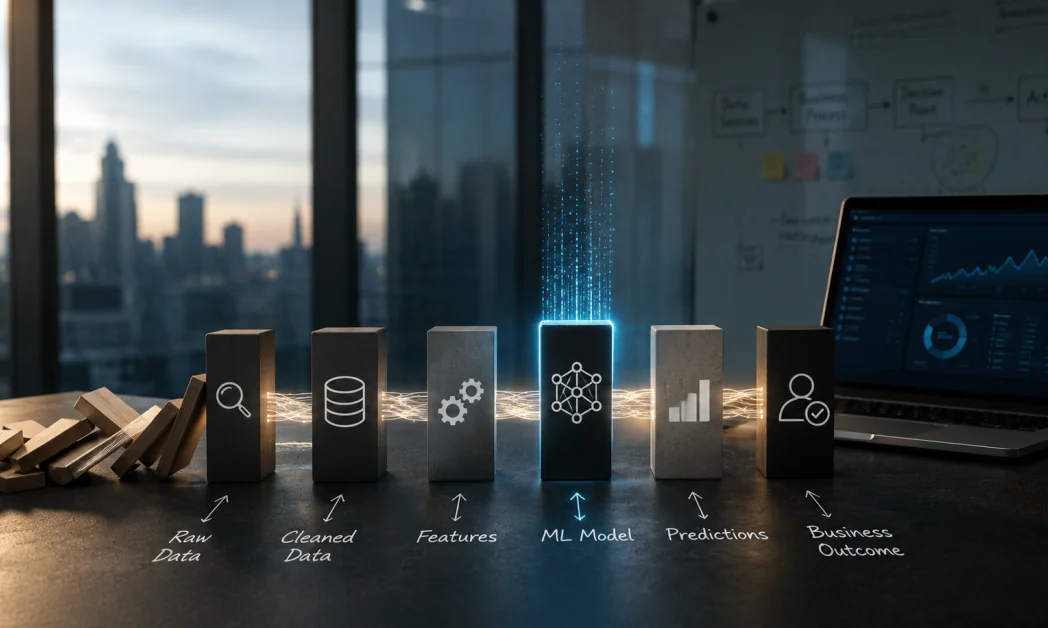
Moving Machine Learning Projects from Experimentation to Implementation
Successfully implementing machine learning (ML) projects is crucial for enterprises to leverage agentic AI capabilities, enhancing operational efficiency and decision-making processes while reducing failure rates.
- Many organizations struggle with implementing machine learning projects, with failure rates reported as high as 85%.
- Two key reasons for ML project failures include improper use case perspectives and lack of stakeholder buy-in.
- Successful ML projects require a solid data foundation, realistic use cases, and alignment with business objectives.
- High-value, low-risk use cases are recommended for initial ML experiments to maximize the chances of success.
Machine learning (ML) is a technology that enables systems to learn from data and make predictions. Historically, businesses have seen high failure rates in ML projects, largely due to poor planning. Organizations are now focusing on embedding ML into regular business processes to improve implementation success.
Read the original ↗
Prime Intellect Releases Verifiers v1: Composable Tasksets, Harnesses, and Runtimes for Agentic RL Training and Evaluations
The release of Verifiers v1 enhances the training and evaluation processes within reinforcement learning, potentially improving efficiency and outcomes for AI agents.
- Prime Intellect launched Verifiers v1, an upgraded environment stack for agentic reinforcement learning (RL) that decomposes agent environments into three parts: tasksets, harnesses, and runtimes.
- The new system enables simultaneous processing of multiple rollouts by an interception server, optimizing the training of coding agents.
- Verifiers v1 supports three dialects for compatibility, ensuring that scoring logic remains independent of the tested agent.
- Prime Intellect has successfully tested internal performance of Verifiers v1 against previous frameworks, indicating robust functionality.
Verifiers is a technology developed by Prime Intellect for agentic reinforcement learning, enabling better control of AI workloads. This update addresses limitations by allowing different components of a training environment to function independently. Future developments may focus on further integrations and optimizations in RL training.
Read the original ↗
Stanford Researchers Introduce TRACE: A Capability-Targeted Agentic Training System That Turns Recurrent Agent Failures Into Synthetic RL Environment
TRACE enhances the training of AI agents by directly addressing recurring failure points, which can lead to more efficient and effective AI performance across various tasks.
- TRACE is an open-source training system developed by Stanford researchers that improves agent performance by identifying and targeting recurrent failures.
- The system automates a four-step pipeline to diagnose capability deficits and generates synthetic environments for targeted training.
- On benchmark tests, TRACE improved pass rates significantly, outperforming existing models like GEPA and SWE-RL by notable margins.
TRACE, which stands for Turning Recurrent Agent failures into Capability-targeted training Environments, addresses common issues faced by AI agents in achieving task-specific skills. It builds on prior methods that struggled with resource allocation in reinforcement learning and aims to provide a more streamlined and effective training approach for AI capabilities.
Read the original ↗
Best AI Interview Assistants: Live Copilots and Prep Tools
Understanding the strengths and weaknesses of AI interview assistants can significantly impact candidates' job interview preparation strategies, affecting their performance and chances of success.
- AI interview assistants are categorized into live copilots that offer real-time suggestions and prep tools that help candidates build skills before the interview.
- Final Round AI offers a bundle of services including a live Interview Copilot and mock interviews, starting at $150 per month.
- LockedIn AI claims the fastest response time at around 116 milliseconds, crucial for effective live interview support.
- Verve AI provides budget-friendly options for mock interviews, with plans ranging from $39.99 to $59.99 per month, significantly cheaper than competitors like Final Round AI.
- Ethical concerns arise regarding live copilots, as their use could lead to interview disqualification if detected by hiring teams.
AI interview assistants assist candidates in preparing for job interviews, with growing popularity stemming from their ability to provide real-time feedback and practice. As companies increasingly integrate AI into recruitment, the ethical implications of using such tools during interviews remain a critical discussion point. Future developments may focus on improving AI's responsiveness and addressing ethical usage guidelines.
Read the original ↗
Feds demand autonomous vehicle companies stop interfering with first responders
This directive addresses a critical safety issue, ensuring that autonomous vehicles do not obstruct emergency services, which can impact life-saving responses during emergencies.
- The NHTSA has directed autonomous vehicle developers to prevent their vehicles from interfering with first responders.
- Incidents have been reported where driverless vehicles blocked paths for emergency responders during critical situations.
- NHTSA has demanded solutions from AV developers by the end of the month to address these safety concerns.
The National Highway Traffic Safety Administration (NHTSA) oversees vehicle safety regulations in the U.S. This directive follows numerous incidents involving autonomous vehicles interfering with emergency services, particularly with operators like Waymo. The agency is also updating vehicle safety standards to enhance AV operations.
Read the original ↗
Meet NeuroVFM: A New Neuroimaging Foundation Model Trained With Vol-JEPA on...
NeuroVFM's development offers improved diagnostic capabilities in neuroimaging, addressing a significant performance gap in existing models that struggle with clinical data.
- NeuroVFM was developed by the University of Michigan and trained on 5.24 million clinical MRI and CT volumes from 566,915 studies.
- It employs Vol-JEPA, a self-supervised learning method, which does not require labeled data for training.
- The model achieved 92.68 AUROC on CT and 92.49 on MRI, outperforming existing models across various diagnostic tasks.
- In a prospective study, NeuroVFM achieved 92.6% triage accuracy, significantly better than GPT-5, although it missed 21 critical findings.
- NeuroVFM can be utilized for tasks like report generation and triage, with potential applications across multiple diagnostic contexts.
NeuroVFM is a foundation model designed for neuroimaging, utilizing an extensive dataset that reflects real clinical operations. It builds on self-supervised learning techniques to improve the accuracy of brain MRI and CT diagnoses. The model's focus on uncurated clinical data marks a shift towards more scalable and efficient neuroimaging analysis.
Read the original ↗
Guide to Loop Engineering: How ‘autoresearch’ and ‘Bilevel Autoresearch’ Turn AI Agents Into Autonomous Machine Learning ML Research Loops
Implementing autoresearch can significantly enhance machine learning efficiency by automating the research process, which could reduce development time and operational costs for AI projects.
- Loop engineering replaces the traditional search model with a continuous loop that optimizes learning through a defined goal.
- Karpathy's autoresearch, an open-source project, executes multiple experiments autonomously, achieving significant improvements in training efficiency.
- The Bilevel Autoresearch method integrates an outer loop to enhance the capabilities of autoresearch, yielding five times more efficiency in training optimization.
Loop engineering represents a shift from manual interaction with AI to more autonomous systems. The use of autoresearch and its iterative loops is being explored as a method to improve efficiency and speed in AI training processes. Future developments may focus on automating more complex tasks that enhance AI performance across various applications.
Read the original ↗
Uber’s Autonomous Vehicle Strategy: Slow Their Adoption
Uber's lobbying efforts to regulate autonomous vehicle adoption could significantly shape the competitive landscape for the ride-hailing market and influence how self-driving technology is integrated into urban transport.
- Uber's strategy focuses on becoming a platform connecting riders with various autonomous vehicle (AV) providers, rather than building its own self-driving cars.
- The company has lobbied for regulations in New Jersey that would require 85% of rides from platforms offering driverless services to be driven by humans.
- Uber is involved in similar lobbying efforts in Washington, DC, advocating for 'hybrid networks' that combine human and autonomous drivers.
- Proposed legislation in New Jersey would impose operational restrictions on AV developers, limiting their ability to create standalone ride-hail apps.
- Waymo, a prominent competitor in autonomous driving, opposes legislation that restricts AV network operation to specific types.
Uber, initially wary of autonomous vehicles, has shifted its focus to integrating AVs into its platform instead of building them. The company has encountered regulatory challenges and labor issues as it navigates the evolving autonomous landscape. Future developments in legislation will likely significantly impact how AVs operate within ride-hailing services.
Read the original ↗