
The day's AI news, briefed
The Daily Prompt
Our AI editor reads each day's AI and robotics stories, pulls out why they matter, and links every original source — so you can keep up in minutes.
Join over 250,000 subscribers getting the latest AI news
Latest AI & Robotics News Today

Sotheby’s Big T. Rex Auction Raises Concerns Hype and Wealth Are Upending Science
The auction of rare fossils to private collectors threatens ongoing scientific research and access to essential paleontological data for future studies.
- Sotheby’s is set to auction a rare 67-million-year-old Tyrannosaurus rex skeleton, named Gus, which could sell for up to $30 million.
- In the U.S., an increasing number of fossils are ending up in private collections rather than museums, potentially limiting scientific study.
- Previous auctions have led to significant sales, such as a Stegosaurus sold for $44.6 million, showing the growing trend of wealthy collectors acquiring dinosaur fossils.
The auctioning of dinosaur fossils has become more common since the late 1990s, raising concerns among paleontologists about the loss of scientific access. A key challenge remains the increasing power of private collectors, which complicates the preservation of fossils for research.
Read the original ↗
The Chatbot That Foretold Why People Share Secrets With ChatGPT
The recovery of ELIZA's source code highlights its role in shaping human-computer interaction and the ongoing implications for modern AI systems, particularly in regards to identity and understanding.
- ELIZA, created by MIT professor Joseph Weizenbaum in the 1960s, is recognized as one of the first chatbots, simulating conversation as an automated psychologist.
- The new book, Inventing ELIZA, uncovers the original source code and explores variations of the ELIZA program beyond its well-known 'DOCTOR' persona.
- Weizenbaum's original aim was to investigate psychological factors influencing how humans perceive and interact with computers, rather than to achieve a Turing test pass.
- The phenomenon of the 'ELIZA effect' illustrates the human tendency to attribute understanding and intelligence to responsive computer programs, a concern raised by Weizenbaum himself.
ELIZA was one of the first chatbots and has had a significant influence on the field of artificial intelligence and human-computer interaction. This investigation offers new insights into the misconceptions and cultural impact of ELIZA, which resonate in the design of contemporary AI systems. Continued exploration of such early technologies informs current discussions on AI ethics and human relationships with machines.
Read the original ↗
DOGE Used AI for Housing Policy. The Government Won’t Say How
The lack of transparency regarding the use of AI in government policy-making raises concerns about accountability and potential biases in decision processes that affect public welfare.
- The Department of Government Efficiency (DOGE) at HUD used AI to inform housing policy decisions but has withheld information on its implementation.
- Documents requested by Democracy Forward regarding HUD's AI use were withheld, citing claims of privileges that do not exist under current law.
- AI tools were reportedly used to identify HUD agency rules for potential rescission, although the effectiveness and necessity of these tools have been questioned.
The Department of Housing and Urban Development (HUD) is responsible for national housing policies in the U.S., while artificial intelligence (AI) can analyze large amounts of data to assist policy formulation. The recent actions by HUD and DOGE have sparked discussions about the implications of using AI in decision-making processes and the need for regulatory frameworks. There are currently no laws mandating disclosure of AI usage in policy development at the federal level.
Read the original ↗
Meet Blume: An Open-Source, Zero-Config Documentation Framework That Ships AI-Ready Docs From a Markdown Folder
Blume simplifies the process of creating documentation sites, which can enhance productivity and accessibility for developers and end-users alike.
- Blume is an open-source documentation framework launched by Hayden Bleasel, designed to convert a folder of Markdown files into a production-ready documentation site.
- The framework requires Node.js 22.12 or newer and is available on npm version 1.0.3 as of its release.
- Blume supports features like built-in AI integration, navigation, search, theming, and the option for configurable settings when needed.
Blume is a documentation framework that automates the creation of websites from Markdown files, facilitating rapid deployment without extensive configuration. It operates alongside tools like Astro and TypeScript and caters to users building API documentation or interactive reference materials. Its launch reflects a move towards increasing support for AI-driven capabilities in documentation tools.
Read the original ↗
Mistral AI Releases Robostral Navigate: An 8B Model Enabling Robots to Navigate Complex Environments Using a Single RGB Camera
The release of Robostral Navigate allows robots to effectively navigate complex environments using minimal hardware, paving the way for more efficient and versatile robotic applications.
- Mistral AI has launched Robostral Navigate, an 8B model for robotic navigation using a single RGB camera.
- The model achieved a 76.6% success rate on the R2R-CE benchmark, which evaluates navigation through continuous 3D environments.
- Robostral Navigate operates effectively in environments filled with people and obstacles without prior exposure during training.
- The model utilizes a unique pointing method to predict movements based on camera observations, enhancing location accuracy in navigation tasks.
- Training was accelerated by a prefix-caching algorithm, reducing the training time from months to days.
Mistral AI is focused on creating advanced AI models for robotics and navigation. The Robostral Navigate model is a significant step in using fewer sensors for complex navigational tasks. Observers should monitor how this innovation impacts operational efficiency across various industries, including logistics and hospitality.
Read the original ↗
Already rich, already successful, why the last wave of tech winners is grinding again
The trend of established tech leaders returning to hands-on roles in AI highlights a significant shift in the industry, emphasizing the importance of innovation in emerging technologies.
- Successful tech entrepreneurs are re-engaging with AI projects, motivated by the potential for substantial financial gain.
- Tom Blomfield has joined Anthropic as a member of the technical staff after a successful career co-founding startups.
- Chamath Palihapitiya recently became CEO of 8090 Labs, marking his first operating role in over ten years, backed by a $135 million investment.
- Eric Wu launched NavigateAI, an AI tool for construction, following a decade at Opendoor, with $25 million in seed funding.
The tech industry is witnessing a resurgence of interest from successful entrepreneurs in AI, driven by advancements in large language models (LLMs) and market potential. Key figures, like Blomfield and Palihapitiya, are transitioning from executive roles to direct involvement in technical development, signaling a pivotal moment in AI innovation.
Read the original ↗
Uber’s product chief on hotels, robotaxis, and why the company doesn’t want to be “everything for everyone”
Uber's expansion into hotels and financial services marks a strategic shift that could enhance its competitive position in the mobility and logistics sectors.
- Uber has introduced hotel bookings and boat rentals through a partnership with Expedia, expanding beyond ride-hailing and delivery services.
- The company is developing AV Labs, a new initiative focused on collecting driving data to support autonomous vehicle partnerships.
- Uber has reported that its Uber One membership has reached 51 million members, significantly impacting bookings and cross-usage of its services.
Uber Technologies Inc. is a ride-hailing company known for its innovative transportation services. The company is diversifying its offerings, including integrating travel and financial services, as it navigates partnerships and competition in the tech landscape. The development of AV Labs is aimed at strengthening its role in the autonomous vehicle industry.
Read the original ↗
Anthropic Claude Sonnet 5 vs Sonnet 4.6 vs Opus 4.8: Agentic Coding Benchmarks, API Pricing, and Cost-Performance Tradeoffs Compared
The introduction of Claude Sonnet 5 showcases advancements in agentic coding and competitive pricing, potentially shifting user preferences in AI model selection.
- Anthropic released Claude Sonnet 5 as its most agentic Sonnet model, which is available for Free and Pro plans as of now.
- Sonnet 5 outperforms Sonnet 4.6 in all published benchmarks, including agentic coding, with significant improvements in task execution.
- Sonnet 5 offers lower introductory pricing of $2/$10 per 1,000 tokens compared to Opus 4.8's pricing of $5/$25, effective until August 31, 2026.
- It achieves near-Opus 4.8 quality on several evaluations while exhibiting lower rates of undesirable behaviors compared to Sonnet 4.6.
- Sonnet 5 features a new tokenizer that could increase token counts by up to 1.35 times, affecting cost and performance assessments.
Anthropic's Claude Sonnet models are designed for various AI tasks, with Sonnet 5 positioned between the cheaper Haiku 4.5 and the flagship Opus 4.8. The release responds to increasing demand for more agentic AI capabilities, segmenting pricing and performance for diverse user needs. Observers will watch how developers adapt to the new model and its pricing structure in upcoming months.
Read the original ↗
Microsoft CEO Just Called Out The AI Industry’s Biggest Secret
Businesses sharing proprietary information with AI tools could inadvertently compromise their competitive edge, highlighting a crucial issue within the AI industry regarding data ownership and security.
- Microsoft CEO Satya Nadella warned that businesses face hidden costs when using AI, specifically the loss of proprietary knowledge.
- Every input and correction given to AI models feeds them information, potentially leading to loss of competitive secrets.
- Nadella advocates for businesses to establish private cloud spaces to keep their AI data secure and suggests they should be allowed to learn from AI models in return.
- Companies are increasingly evaluating open source AI models, which can perform nearly as well as proprietary ones for a fraction of the cost.
- Major companies like T-Mobile and SAP are exploring the use of open source models to maintain control over their data.
Microsoft is a leading technology company heavily invested in AI development. Satya Nadella's comments reflect growing concerns among businesses over data sharing when using AI tools. The push for proprietary learning environments and open source alternatives indicates a shift towards managing data more securely in the AI landscape.
Read the original ↗
Siri AI Is Becoming Apple’s Everything Tool
The integration of Siri AI into Apple's iOS 27 represents a significant change in smartphone interaction, potentially influencing user behavior and expectations for voice assistants across the industry.
- The iOS 27 public beta features a revamped Siri, combining voice commands with a chatbot-style app for enhanced user interaction.
- Siri AI is now deeply integrated into the iPhone's operating system, allowing users to access it across various functions and apps.
- During beta testing, Siri AI demonstrated improved capabilities, such as retrieving information based on user context and content visible on the screen.
- The new Siri is available only on iPhone 15 Pro and newer models, illustrating Apple's focus on integrating advanced features with more recent devices.
- Users must sign up for a wait list to fully access the new Siri features after downloading the public beta.
Apple’s Siri is a voice-activated assistant designed to perform tasks or provide information for users. The recent overhaul introduced chatbot capabilities and deeper integration into iOS features. Moving forward, ongoing updates are expected as user feedback shapes future iterations of Siri AI.
Read the original ↗
Video generation startup PixVerse raises $439M, valuation soars past $2B
PixVerse's significant funding and high valuation indicate a growing interest in video generation technologies, highlighting potential advancements in AI-driven content creation.
- PixVerse raised $439 million in a Series C extension, pushing its valuation past $2 billion.
- The company aims to expand its world model offering and customer reach with the new funding.
- Investors in this round include Alibaba and other significant venture capital firms alongside previous investors.
- PixVerse provides a variety of video models and claims over 150 million registered users, with 15 million active monthly users.
- The startup plans to launch new video generation models and hire additional staff to support its growth.
PixVerse, founded in 2023, focuses on video generation technologies for both consumer and enterprise markets. The company previously raised an initial Series C round in March. With increasing competition, the firm aims to differentiate itself through its labeling technology and user engagement.
Read the original ↗
Skyfall AI Releases MORPHEUS: A Persistent Enterprise Simulation Benchmark That Makes...
MORPHEUS offers a new approach for evaluating reinforcement learning in complex environments, addressing limitations of traditional benchmarks and improving AI's adaptability in real-world applications.
- Skyfall AI has launched MORPHEUS, a persistent enterprise simulation platform for continual reinforcement learning that does not reset after each episode.
- The benchmark includes three key properties: persistence, non-stationarity, and operational complexity, making it suitable for testing agents' adaptability.
- MORPHEUS uses two engines to create non-stationarity: a failure injection engine that simulates disruptions, and a configuration shift controller that modifies conditions independently of training updates.
- Four algorithm families are tested using MORPHEUS, revealing that no single algorithm consistently outperforms the others in terms of reward and adaptation speed.
MORPHEUS is designed to assess continual reinforcement learning in environments that mimic complex, non-resetting real-world systems. The platform's development follows the Big World Hypothesis, highlighting the challenges agents face in dynamic environments. Moving forward, researchers will look to enhance algorithms based on insights from MORPHEUS assessments.
Read the original ↗
Satya Nadella has issued a shocking warning to companies using AI
Satya Nadella's warning highlights potential risks for companies using proprietary AI models, suggesting sensitive business data may be inadvertently revealed, which could lead to competitive disadvantages.
- Microsoft CEO Satya Nadella warns that companies using AI from labs like OpenAI may be unknowingly sharing sensitive data with those lab operators.
- Nadella argues users pay for AI services while also giving away proprietary knowledge that could benefit competitors.
- He suggests enterprises should retain ownership of their data, including prompts and feedback, and consider using open source models instead of proprietary ones.
AI models are machine learning systems that process data to perform tasks. Concerns have been raised about companies using these proprietary models risking their own sensitive information. Nadella's stance comes amid a broader industry discussion about the balance between innovation and data privacy.
Read the original ↗
The wildest allegations in Apple’s trade secrets lawsuit against OpenAI
The allegations in Apple's lawsuit against OpenAI could have significant implications for corporate conduct and trade secret protections in the AI industry.
- Apple has filed a 41-page trade secrets lawsuit against OpenAI, alleging a coordinated effort to extract confidential information from Apple employees.
- The complaint claims OpenAI employees exploited Apple’s systems and even coached departing employees on how to avoid detection.
- Among the allegations, Apple states that OpenAI requested job candidates bring Apple parts to interviews, showing internal knowledge of Apple's materials.
- Apple also notes that over 400 former employees now work at OpenAI, raising concerns about the potential misuse of proprietary information.
- OpenAI has publicly stated it has no interest in other companies' trade secrets and focuses on innovation.
Apple's lawsuit against OpenAI highlights concerns about potential misconduct involving trade secrets in the technology sector. The case comes as OpenAI, founded by former Apple employees, expands its business into hardware, potentially competing with Apple. Observers will watch for outcomes from the discovery process, which could reveal more undisclosed allegations.
Read the original ↗
Apple sues OpenAI after ex-engineer allegedly used bug to steal trade secrets
Apple's legal action against OpenAI highlights concerns over intellectual property and trade secrets in the competitive landscape of AI and consumer technology, potentially impacting industry practices.
- Apple sued OpenAI for allegedly conspiring with former employees to steal trade secrets via a bug that granted access to confidential information.
- The lawsuit claims former Apple employee Chang Liu accessed sensitive data after leaving Apple for OpenAI in January 2026.
- Apple alleges Liu downloaded numerous confidential files, including detailed information on unreleased products, while working with OpenAI.
- Apple aims to block OpenAI from using the stolen information and is investigating a broader pattern of trade secret theft by OpenAI employees.
- OpenAI disputes the allegations, asserting it is focused on building innovative technology without relying on competitors' trade secrets.
Apple is a tech company known for its consumer electronics, including the iPhone. The lawsuit stems from allegations of unfair competition as AI companies, including OpenAI, expand into hardware development. Observers will watch how this case impacts recruitment and trade secret protection practices in the tech sector.
Read the original ↗
What Business Processes Do You Need to Redesign for AI? A Practical Guide
Redesigning business processes for AI is crucial to avoid inefficiency and operational risks, especially as organizations integrate more advanced AI capabilities into their workflows.
- Agentic AI systems can make decisions and learn independently, changing how businesses operate.
- 76% of global executives view agentic AI as a coworker, transforming organizational dynamics.
- Legacy processes can hinder AI deployment, leading to inefficiencies and governance risks.
- Successful AI deployment requires organizations to rethink and redesign workflows according to recent studies.
- Only 30% of enterprises are deeply redesigning processes to integrate AI, yet those that do capture greater value.
Agentic AI refers to advanced AI systems capable of planning and decision-making, moving organizations towards more integrated work dynamics. As research indicates, many organizations face challenges in successfully deploying AI due to outdated processes that do not align with modern operational needs. Future efforts should focus on identifying and redesigning processes that are poorly suited for AI integration to unlock full potential.
Read the original ↗
Tesla Says It’s Building a Wheelchair-Accessible Robotaxi
The development of a wheelchair-accessible robotaxi by Tesla may enhance mobility options for individuals with disabilities, addressing a significant gap in the autonomous vehicle market.
- Tesla is developing a wheelchair-accessible autonomous vehicle, as stated by a company representative at a DC City Council hearing.
- The vehicle is actively being built in Texas, but no specific timeline for its release has been provided.
- Currently, Tesla operates a small fleet of autonomous vehicles in select Texas cities and Miami, which are not wheelchair accessible.
Tesla is a leading electric vehicle manufacturer known for its advancements in autonomous driving technology. The company has previously hinted at creating an accessible vehicle as part of its offerings. The introduction of this robotaxi follows ongoing discussions about accessible transport options in the autonomous vehicle market.
Read the original ↗
What Anthropic’s latest AI discovery does—and doesn’t—show
The exploration of model welfare could influence how AI systems are developed and regulated, impacting their ethical treatment and potentially reshaping human-AI interactions.
- Anthropic has initiated a research program to investigate the welfare of AI systems, which includes exploring their potential consciousness and moral status.
- This program builds upon recent philosophical discussions about AI consciousness, supported by experts like David Chalmers.
- The initiative seeks to determine the significance of model preferences and signs of distress, as well as practical interventions for AI welfare.
Anthropic is focused on developing safe AI technologies that prioritize human welfare. Their new model welfare program expands on existing efforts related to AI alignment and safeguards, reflecting ongoing debates about AI ethics and consciousness. Future research may clarify the moral considerations for advanced AI systems.
Read the original ↗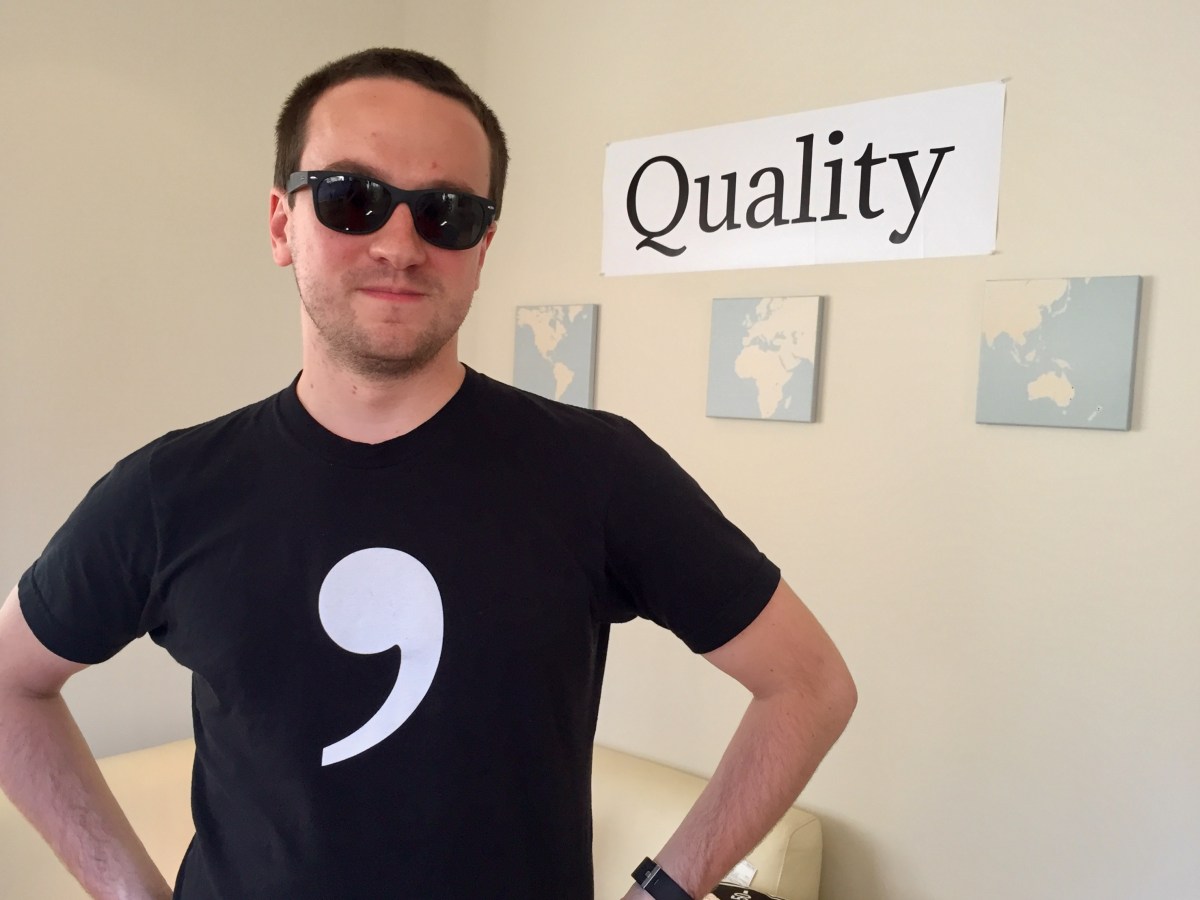
Should AI help you get away with killing your spouse?
This discussion highlights the complex ethical implications of user-aligned AI, particularly how it might enable harmful actions while also reflecting divergent views on AI development and control.
- George Hotz, founder of Comma AI, questions the notion that AI development should be regulated for the collective good in light of the AI 2040: Plan A policy paper.
- Hotz argues that locally controlled AI, tailored to individual user interests, is a better approach to AI alignment and safety.
- He provocatively compares user-aligned AI to a gun, claiming it could facilitate dangerous activities if not managed carefully.
AI alignment refers to ensuring that AI systems act in ways that are beneficial to humans. The discussion follows a broader debate on how to balance AI development with ethical considerations, especially concerning safety and accountability. Observers should pay attention to ongoing conversations about regulatory frameworks for AI technologies and their potential societal impacts.
Read the original ↗
The AI Arms Race in Technical Interviews Is Escalating
The rising use of AI in hiring reflects a significant shift in job recruitment practices, prompting ethical concerns about fairness and candidate assessment in technical interviews.
- Some applicants are using AI tools to enhance their performance during remote technical interviews, creating a competitive dynamic between job seekers and employers.
- Employers are also deploying AI tools to detect the use of AI by candidates, leading to an escalating arms race in the hiring process.
- Concerns have emerged regarding privacy, security, and systemic bias in AI hiring tools, especially with evidence suggesting increased racial bias against certain applicant groups.
AI technologies are increasingly integrated into recruitment processes, with both candidates and employers utilizing these tools to navigate competitive job markets. Background discussions around AI in hiring emphasize the need for balance between automation and human oversight to ensure fair evaluations.
Read the original ↗