
The day's AI news, briefed
The Daily Prompt
Our AI editor reads each day's AI and robotics stories, pulls out why they matter, and links every original source — so you can keep up in minutes.
Join over 250,000 subscribers getting the latest AI news
Latest AI & Robotics News Today

Apple Intelligence approved for launch in China with Alibaba and Baidu
The launch of Apple Intelligence in China signifies a critical expansion for Apple in a vital market, which could bolster its AI capabilities and enhance its competitive edge in the region.
- Apple's generative AI service, Apple Intelligence, has received approval from China's Cyberspace Administration for launch in the country.
- The service will integrate Alibaba's Qwen AI model into Apple's operating systems, including iOS and macOS.
- Baidu will also collaborate with Apple to develop features of Apple Intelligence for Chinese users.
- Apple's sales in Greater China reached $20.5 billion in the second quarter, marking a 28% increase from the previous year.
Apple Intelligence is a generative AI offering from Apple, which was delayed in China due to regulatory approvals. The collaborations with Alibaba and Baidu are part of Apple's strategy to enhance its services in the Chinese market, where it recently regained its No. 2 smartphone position.
Read the original ↗
Breathe Easy Thanks to the Best Air Purifier for Every Home
Improving indoor air quality is crucial for health, especially in areas affected by pollutants, making the right air purifier an important consideration for many households.
- The Coway Airmega Mighty2 is praised for being an affordable and effective air purifier suitable for most homes, priced at $270.
- The premium pick is the IQAir Atem X, valued at $1,400, noted for its design and durability.
- Testing involved measuring air purification effectiveness, noise levels, and filter design to ensure comprehensive evaluations of purifiers.
Air purifiers are devices that remove pollutants from indoor air, crucial for reducing allergens and improving health. Companies like Coway and IQAir offer a range of models catering to different needs and budgets. Ongoing developments in air purification technology and testing methods continue to enhance product offerings.
Read the original ↗
Please Stop Making Me Opt Out of AI
The rapid backlash against Meta's default 'opt-out' feature underscores growing public concern about automated AI tools and the need for user privacy in digital platforms.
- Meta recently introduced a feature allowing users to tag Instagram accounts for AI-generated images, which was set as an 'opt-out' by default.
- After public outcry from Instagram creators, Meta reversed its decision within three days, indicating sensitivity to user backlash.
- Experts argue that default 'opt-out' settings can lead to unintentional data sharing, highlighting a lack of user control in tech companies' practices.
Meta platforms provide a range of social media services, including Instagram, which has recently incorporated generative AI features. The trend of default 'opt-out' settings for AI tools has faced scrutiny as users demand more control over their data privacy rights.
Read the original ↗
The Oversight Board says leading AI models might be restricting free expression
The Oversight Board's findings raise concerns about how AI models may inadvertently restrict free expression, highlighting a potential need for regulation in AI development and interaction with government requests.
- The Oversight Board published a report indicating that leading AI models might restrict user free expression.
- The report examined 10 AI models, including those from OpenAI and Google, in response to political criticism questions.
- Results showed significant differences in model responses based on the permissiveness of local free speech laws.
- The board suggests AI companies should adopt clearer policies on handling government content restrictions.
- This report marks the board's first investigation into issues beyond social media content moderation.
The Oversight Board is an independent organization established by Meta to review its content moderation practices. The board aims to extend its influence to AI companies and has started addressing concerns about AI’s impact on free expression. Future actions and policies from AI companies in response to these findings are uncertain.
Read the original ↗
xAI sues Grok user for generating nonconsensual sexualized deepfakes
This lawsuit highlights the legal accountability of AI companies for misuse of their technology in generating nonconsensual sexualized content, impacting user rights and regulatory oversight.
- xAI has sued Terry Wayne Harwood for using its AI, Grok, to create sexualized images of adults and children without consent.
- The lawsuit claims Harwood circumvented Grok's safeguards to produce inappropriate content from December 2025 to February 2026.
- Harwood was arrested in March 2026 on charges related to the sexual exploitation of minors as part of an Internet Crimes Against Children Task Force operation.
- Regulatory bodies in California and the UK have opened investigations into Grok following reports of its misuse.
- xAI seeks unspecified monetary damages and reimbursement for legal defense costs against potential claims from victims.
xAI is the artificial intelligence company behind Grok, a tool for generating images. The lawsuits against Harwood are significant as they illustrate the burgeoning legal landscape regarding AI misuse. Future developments will focus on the outcome of this case and ongoing investigations into Grok.
Read the original ↗
Neko Health raises $700 million to expand AI body scans in the US
The funding received by Neko Health highlights the growing integration of AI-assisted health services in the preventive care sector, potentially reshaping how health screenings are conducted in the US.
- Neko Health raised $700 million to expand its AI-based body scans in the United States, starting in New York.
- The funding round was led by Lightspeed Venture Partners and included investments from several notable individuals including Mark Zuckerberg and Maria Sharapova.
- Neko Health operates clinics that offer a combination of full-body scans and blood tests, screening for various medical conditions in a single appointment.
Founded in 2018 by Daniel Ek and Hjalmar Nilsonne, Neko Health provides preventative healthcare services through clinics that utilize advanced imaging and testing technologies. The company plans to unveil more clinic locations across the US, enhancing its presence in a growing market for innovative health screening solutions.
Read the original ↗
OpenResearcher: A Fully Open Pipeline for Long-Horizon Deep Research Trajectory Synthesis
OpenResearcher introduces an offline, reproducible method for training AI research agents, significantly enhancing performance on complex tasks and paving the way for future advancements in AI research support.
- OpenResearcher is a reproducible pipeline for training deep research agents using offline environments.
- It synthesizes over 97,000 trajectories, achieving 54.8% accuracy on the BrowseComp-Plus benchmark, a 34-point improvement over the base model.
- The pipeline functions entirely offline, utilizing three browser primitives: search, open, and find, across a 15 million-document corpus.
- The study provides valuable insights into deep research pipeline design, including data filtering and agent configuration strategies.
OpenResearcher addresses the limitations of existing data collection methods for AI research, which often rely on expensive and unstable web APIs. The system enables controlled analysis and improved accuracy in generating long-horizon research trajectories. Future advancements may build upon this framework to further enhance AI agent capabilities.
Read the original ↗
Patter SDK Guide to Building a Restaurant Booking Phone Agent with Dynamic Variables, Guardrails, Latency Dashboards, and Eval Checks
This guide outlines a structured approach to developing AI phone agents, which are increasingly important for enhancing customer service in the restaurant industry and beyond.
- The tutorial explains how to build a voice agent for restaurant bookings using the Patter SDK.
- Key features include dynamic caller variables, call simulation, and output guardrails to ensure safe interactions.
- The final setup supports real-world deployment using Twilio and OpenAI technologies for seamless telephonic communication.
The Patter SDK is a development tool for creating AI-driven voice agents capable of handling tasks like bookings. Previous methods required complex integrations for telephony, but this guide simplifies the testing and deployment process. Upcoming developments may include expanded use cases and enhanced functionalities for various industries.
Read the original ↗
How AI Analytics Is Changing the BI User Experience
The integration of AI analytics into business intelligence (BI) systems enhances user experience and decision-making speed, making it crucial for organizations to remain competitive.
- Business intelligence has evolved from a passive model to one that leverages AI-driven behavioral analytics for real-time insights.
- Modern BI interfaces now use machine learning to adapt to user behavior and preferences, streamlining data exploration.
- Conversational analytics enable users to pose questions in plain language and receive immediate, relevant data visualizations.
- AI automation is accelerating the design and testing of BI tools, drastically reducing the time needed to optimize user interfaces.
Business intelligence (BI) refers to technologies used for data analysis and presentation to help business decisions. Traditional BI systems relied on static dashboards, but AI advancements are making them more interactive and responsive. The trend toward AI-driven BI tools is expected to grow, with projections indicating that most new analytics content will be contextually intelligent by 2027.
Read the original ↗
SpaceXAI Open-Sources Grok Build: The Rust Agent Harness, TUI, and Tool...
The open-sourcing of Grok Build allows developers greater control over AI coding agents, enhancing automation capabilities and fostering innovation in AI tooling.
- SpaceXAI has open-sourced Grok Build for its coding CLI, making it available on GitHub under the Apache 2.0 license.
- Grok Build is a terminal-based AI agent that can edit files, execute commands, and manage long tasks.
- The release includes a TUI (Text User Interface), a CLI shell, and developer tools that facilitate integration with other systems.
- Grok Build is designed to run locally, enabling users to compile it and manage it through a configuration file.
Grok Build, launched in early beta in May 2026, operates as an AI coding assistant that improves developer workflows. This release marks a significant step for SpaceXAI in community engagement and collaboration. Users can look forward to developing and customizing their own implementations using the open-source framework.
Read the original ↗
Applied Computing wants to give oil and gas operators an AI model for the entire plant
The development of an AI model for oil and gas operations could enhance efficiency and decision-making in an industry that often uses less than 8% of available data.
- Applied Computing has raised $20 million in Series A funding to create an AI model for the oil, gas, and petrochemical industry.
- The model, named Orbital, integrates time series data, physics, and chemistry to improve operational predictions.
- Orbital is designed to analyze sensor data quickly, enabling operators to identify anomalies and assess solutions in minutes rather than days or weeks.
- The startup plans to use the funding to expand internationally and hire additional staff for research and engineering.
- Applied Computing is already collaborating with large oil and gas companies and has opened an office in Houston to support its U.S. clients.
Applied Computing, founded in 2023, focuses on creating AI solutions for the energy sector by addressing data fragmentation and inefficiencies in operational decision-making. The oil and gas industry is increasingly looking to digital solutions to enhance efficiency and value from operational data.
Read the original ↗
MonkeyOCRv2: A Visual-Text Foundation Model for Document AI
MonkeyOCRv2's advancements in document AI and multimodal understanding could enhance a variety of applications, potentially streamlining document processing across different languages and formats.
- MonkeyOCRv2 is a pretrained model designed specifically for document analysis tasks, outperforming other visual encoders that are not adapted for documents.
- The model is trained on MonkeyDoc v2, which includes 113 million images in 17 languages, making it the largest document-image pretraining corpus to date.
- It achieves significant improvements in five document analysis tasks, including text recognition and document tampering detection, utilizing a much smaller vision backbone.
- MonkeyOCRv2 sets a new state-of-the-art performance on the MDPBench benchmark with a 0.7B document parsing model, surpassing previous models significantly in efficiency and effectiveness.
MonkeyOCRv2 is a specialized model that enhances document intelligence through visual-text pretraining, addressing the limitations of general visual encoders for document images. The model builds on the large dataset MonkeyDoc v2, aimed at improving fine-grained character recognition. Future developments will likely focus on broadening capabilities in multimodal applications and refining performance on specific document types.
Read the original ↗
MuScriptor: An Open Model for Multi-Instrument Music Transcription
MuScriptor's open-source capabilities enhance music transcription technology, allowing for accurate note transcription across various genres without prior instrument knowledge, benefiting musicians and researchers alike.
- MuScriptor is a multi-instrument music transcription model that combines synthetic pre-training, real-audio fine-tuning, and reinforcement learning.
- It can transcribe music from diverse genres, such as pop, classical, metal, and jazz, into MIDI format without needing to identify instruments beforehand.
- The model is hosted at muscriptor.kyutai.org, where users can transcribe recordings and download the resulting MIDI files.
MuScriptor is a new model developed by Kyutai and MireloAI, aimed at overcoming limitations of existing music transcription methods that struggle with multi-instrument recordings. It represents a significant advancement in open-source music transcription, allowing for detailed audio analysis across various musical styles. Attention will be on user engagement and further developments in audio processing technologies.
Read the original ↗
Can Bose Help Skullcandy Shake Its Bargain-Bin Reputation?
Skullcandy's collaboration with Bose aims to improve audio quality and market perception, potentially reshaping the competitive landscape in the headphone industry.
- Skullcandy's Crusher 1080 ANC headphones, launched during a New York City event, aim to enhance audio quality and noise cancellation with support from Bose's technology.
- These headphones are priced at $280, making them more affordable than competitors like Sony and Apple, while still featuring advanced functions.
- The new design retains Skullcandy's proprietary bass-boosting technology but promises clearer mids and highs, addressing previous audio quality complaints.
Skullcandy, known for catering to the sports community since 2003, is attempting to shed its image as a provider of low-quality audio products. With Bose's engineering support, the company hopes to innovate and develop products that resonate better with audiophiles. The Crusher 1080 ANC is part of a broader strategy that includes future technologies and firm improvements in product quality.
Read the original ↗
Microsoft is reportedly training salespeople to talk down OpenAI and Anthropic
Microsoft's strategy to counter competitors may signify a shift in the AI landscape, impacting how businesses choose their AI solutions.
- Microsoft is training its sales team to negatively compare its AI products to those from OpenAI and Anthropic.
- Executives emphasized the efficiency and cost-effectiveness of Microsoft's in-house AI models during a recent strategy meeting.
- Microsoft has been replacing competitors' AI models in flagship apps like Word and Excel with its own as part of a cost-cutting effort.
Microsoft has historically partnered with OpenAI, providing resources in exchange for exclusive access to its AI technology. This partnership changed recently when the exclusivity clause was removed, allowing OpenAI to sell to Microsoft's competitors. Moving forward, companies should monitor how this competitive shift might affect AI market dynamics.
Read the original ↗
AI Risks & Extinction: The Precarious Future of Humanity Amidst an AI Revolution
The potential risks of AI, including weaponization and misinformation, could threaten human safety and democratic systems, warranting urgent action from policymakers and society.
- Experts are warning about several AI risks, including weaponization, misinformation, and the concentration of AI power in the hands of a few.
- AI-driven drug discovery could be misused to develop lethal chemical compounds rapidly, posing severe threats to humanity.
- The rise of AI-generated misinformation poses risks to public trust and democratic processes, particularly during elections.
- Concentrated AI power in technology companies raises ethical concerns, especially regarding surveillance and censorship by authoritarian regimes.
- Increasing reliance on AI in daily life could lead to diminished human self-sufficiency and critical skill erosion.
As AI technology evolves, concerns grow about its misuse and ethical implications. Previous discussions have highlighted the need for regulatory measures and public awareness. Future developments should focus on responsible AI use and maintaining human agency amid increasing AI integration.
Read the original ↗
New York Just Made AI’s Real Bottleneck a Land-Use Fight
New York's decision to impose a moratorium on new hyperscale data centers highlights the growing political and regulatory challenges facing the AI industry and its infrastructure needs.
- Governor Kathy Hochul signed an executive order on July 14, 2026, establishing a statewide moratorium on new hyperscale data centers in New York.
- The moratorium will last for up to a year while the Department of Environmental Conservation assesses the environmental impact of these facilities.
- New York's existing data centers already consume about 4% of U.S. electricity, with an expected increase over the next three years.
- The state has 28 large data centers seeking a total of 9,682 megawatts on an aging power grid, raising concerns among residents about higher utility costs.
Hyperscale data centers are large-scale facilities that provide computing resources for AI and other intensive operations. The New York state government aims to establish strict regulations around data center developments to ensure community benefits. This move may influence similar policies in states like Virginia and Georgia, highlighting the intersection of infrastructure and politics in the AI sector.
Read the original ↗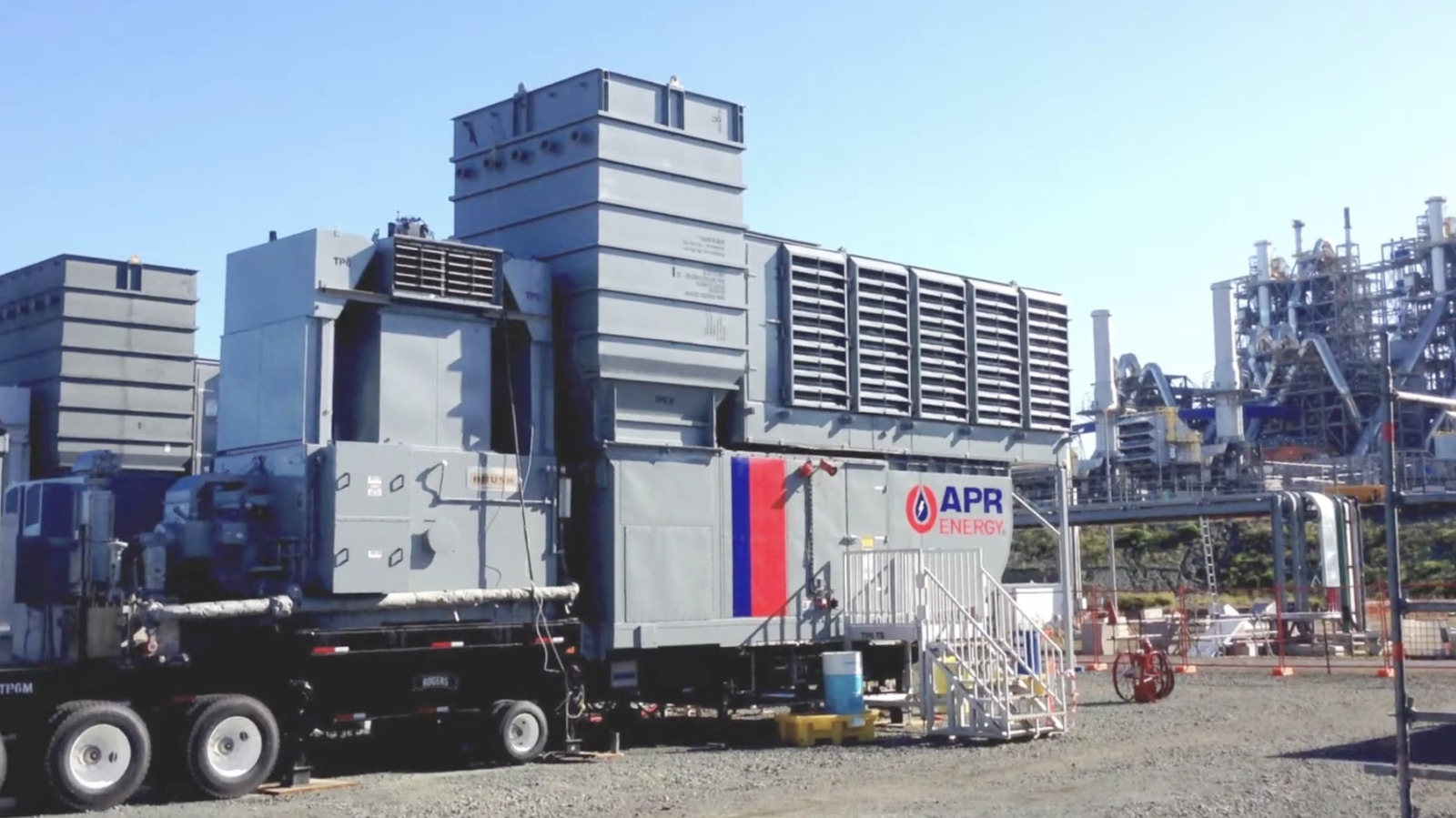
Elon Musk bought a gas turbine company
Elon Musk's acquisition of a gas turbine company highlights a significant shift in energy strategy, impacting the power supply for AI data centers amid ongoing legal scrutiny.
- Elon Musk acquired APR Energy, a mobile gas and diesel turbine producer, earlier this year.
- The purchase, valued at approximately $1 billion, was made quietly in May with no public announcement.
- The turbines are expected to power AI data centers, potentially increasing energy efficiency amid legal challenges regarding previous turbine usage.
APR Energy specializes in mobile power solutions, providing gas and diesel turbines for various applications. Musk's investment marks a notable pivot to fossil fuels after his previous criticisms of their use. Future developments may include further expansions in energy infrastructure related to his AI ventures.
Read the original ↗
DARPA Wants to Build an Army of 100,000 AI Agents That Can Think and Act on Their Own
DARPA's DICE program could reshape military operations by enabling large groups of autonomous AI agents to adapt and respond more effectively in complex environments than traditional centralized systems.
- DARPA's DICE program aims to develop an army of 100,000 self-organizing AI agents capable of autonomous operation in contested environments.
- The program will explore creating AI collectives that can communicate directly with one another rather than relying on a central command.
- During its three phases, DICE will scale from 500 to 100,000 agents and from 5,000 to 1 million interactions to test decentralized AI capabilities.
The Defense Advanced Research Projects Agency (DARPA) is known for advancing military technology. DICE seeks to address the limitations of centralized AI systems on the battlefield, which can become bottlenecks and points of failure. Researchers aim to develop a system where AI agents can adapt and reorganize themselves independently during missions.
Read the original ↗
AI Isn’t Smarter Than a Baby—Yet
Understanding how babies learn could lead to significant advancements in AI technology, making it more efficient and effective in processing information with less data and energy.
- Current AI models require vast amounts of data and energy, unlike babies who learn efficiently from minimal information.
- Researchers have developed the EgoBabyVLM Challenge to assess AI's ability to understand the world like a baby, using infant video data.
- Initial findings show that advanced AI models struggle with this task, indicating a unique learning approach in infants.
- Past challenges like BabyLM have shown promise in teaching AI language through smaller datasets, but challenges remain for understanding the physical world.
Research indicates babies possess unique learning abilities that may inform AI development. The EgoBabyVLM Challenge, which tests AI against infant learning, aims to enhance AI's efficiency in understanding the world. Future research will continue to explore how insights from human learning can improve AI models.
Read the original ↗