
The day's AI news, briefed
The Daily Prompt
Our AI editor reads each day's AI and robotics stories, pulls out why they matter, and links every original source — so you can keep up in minutes.
Join over 250,000 subscribers getting the latest AI news
Latest AI & Robotics News Today

Elon Musk bought a gas turbine company
Elon Musk's acquisition of a gas turbine company highlights a significant shift in energy strategy, impacting the power supply for AI data centers amid ongoing legal scrutiny.
- Elon Musk acquired APR Energy, a mobile gas and diesel turbine producer, earlier this year.
- The purchase, valued at approximately $1 billion, was made quietly in May with no public announcement.
- The turbines are expected to power AI data centers, potentially increasing energy efficiency amid legal challenges regarding previous turbine usage.
APR Energy specializes in mobile power solutions, providing gas and diesel turbines for various applications. Musk's investment marks a notable pivot to fossil fuels after his previous criticisms of their use. Future developments may include further expansions in energy infrastructure related to his AI ventures.
Read the original ↗
DARPA Wants to Build an Army of 100,000 AI Agents That Can Think and Act on Their Own
DARPA's DICE program could reshape military operations by enabling large groups of autonomous AI agents to adapt and respond more effectively in complex environments than traditional centralized systems.
- DARPA's DICE program aims to develop an army of 100,000 self-organizing AI agents capable of autonomous operation in contested environments.
- The program will explore creating AI collectives that can communicate directly with one another rather than relying on a central command.
- During its three phases, DICE will scale from 500 to 100,000 agents and from 5,000 to 1 million interactions to test decentralized AI capabilities.
The Defense Advanced Research Projects Agency (DARPA) is known for advancing military technology. DICE seeks to address the limitations of centralized AI systems on the battlefield, which can become bottlenecks and points of failure. Researchers aim to develop a system where AI agents can adapt and reorganize themselves independently during missions.
Read the original ↗
AI Isn’t Smarter Than a Baby—Yet
Understanding how babies learn could lead to significant advancements in AI technology, making it more efficient and effective in processing information with less data and energy.
- Current AI models require vast amounts of data and energy, unlike babies who learn efficiently from minimal information.
- Researchers have developed the EgoBabyVLM Challenge to assess AI's ability to understand the world like a baby, using infant video data.
- Initial findings show that advanced AI models struggle with this task, indicating a unique learning approach in infants.
- Past challenges like BabyLM have shown promise in teaching AI language through smaller datasets, but challenges remain for understanding the physical world.
Research indicates babies possess unique learning abilities that may inform AI development. The EgoBabyVLM Challenge, which tests AI against infant learning, aims to enhance AI's efficiency in understanding the world. Future research will continue to explore how insights from human learning can improve AI models.
Read the original ↗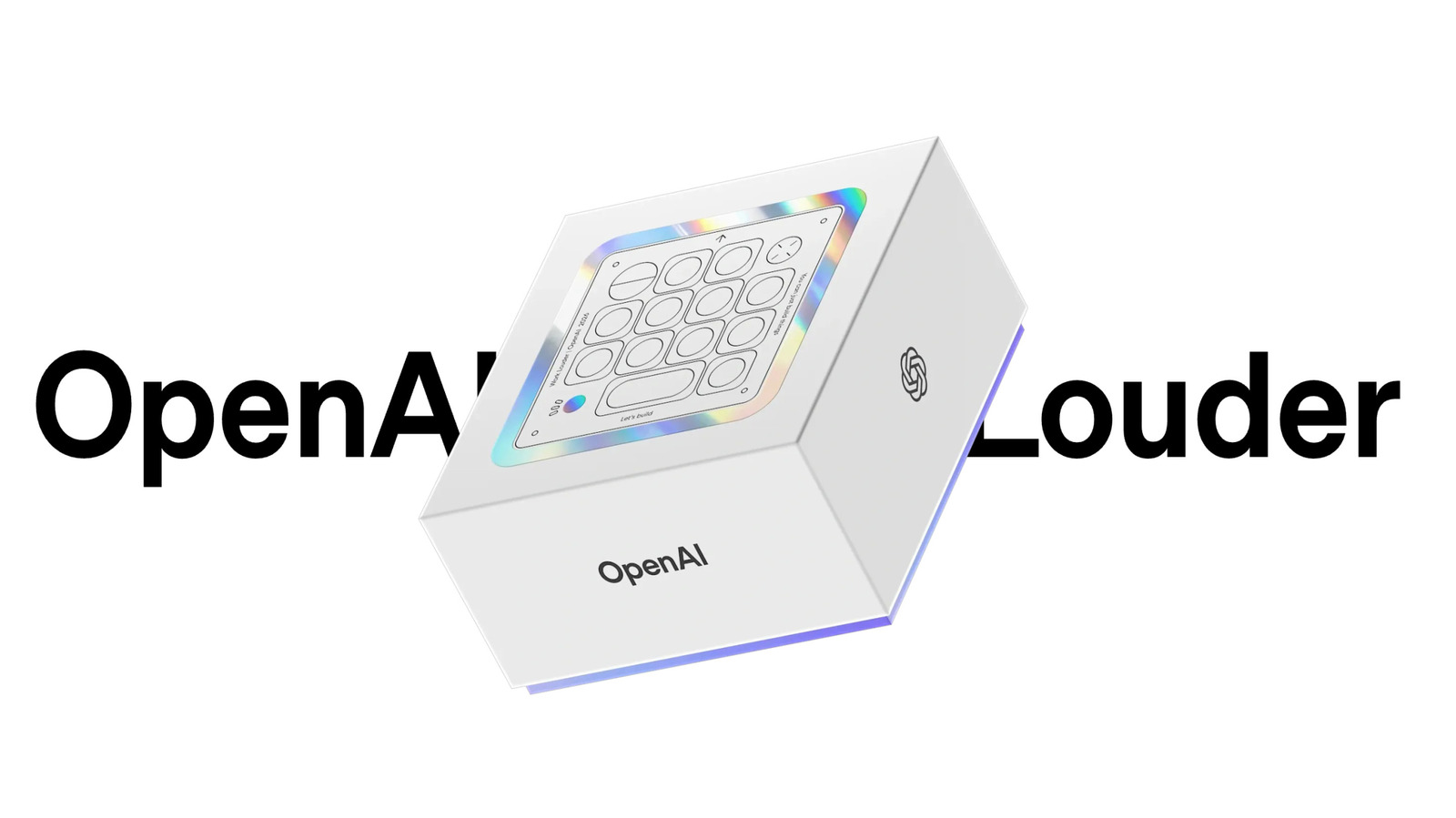
OpenAI launches a physical keypad for controlling agents
The launch of the Codex Micro keypad enhances user interaction with OpenAI's agentic coding feature, potentially improving productivity for developers and users engaged with advanced AI tools.
- OpenAI has launched the Codex Micro, a $230 keypad designed for controlling its Codex coding feature, available for order now.
- The Codex Micro features customizable keys, a dial for reasoning levels, and a joystick for navigating Codex workflows.
- This launch follows OpenAI's recent consolidation of its Codex app into a comprehensive platform combining ChatGPT and productivity tools.
OpenAI is a prominent AI research organization that develops powerful language models and coding assistants, such as Codex. The introduction of physical hardware like the Codex Micro is a new venture for OpenAI, showcasing its commitment to enhancing user experience. Upcoming products from OpenAI include a smart speaker, which has faced challenges due to legal disputes.
Read the original ↗
Thinking Machines amps up its bet against one-size-fits-all AI with its first open model, Inkling
The release of Inkling by Thinking Machines Lab may signal a shift in the AI landscape towards customizable open models, allowing organizations to tailor AI for their specific needs.
- Thinking Machines Lab has launched its first open AI model named Inkling, allowing outside developers to download and modify it.
- Inkling is a mixture-of-experts AI system, using around 41 billion parameters for tasks out of a total of 975 billion.
- The model was trained on 45 trillion tokens and is designed to produce text outputs, including structured data and code.
- Inkling aims to provide calibrated answers and enables users to adjust the processing speed depending on their needs.
Thinking Machines Lab is an AI startup established by Mira Murati, former CTO of OpenAI. The company focuses on developing adaptable AI systems, contrasting with the one-size-fits-all models from major AI labs. The introduction of Inkling follows a year and a half of building infrastructure and testing their systems in secrecy.
Read the original ↗
Amid hardware legal battle, OpenAI releases a $230 keyboard for Codex
OpenAI's launch of the Codex Micro keyboard signifies its strategic entry into hardware, aiming to enhance user interaction with AI coding tools amid ongoing legal challenges.
- OpenAI has released a $230 light-up keyboard, the Codex Micro, designed for its AI coding assistant, Codex.
- The keyboard features customizable keys, a joystick for workflow launches, and a dial to adjust agent reasoning levels.
- This product is part of a limited-run collaboration with specialty keyboard designer Work Louder.
- OpenAI is currently facing a legal battle with Apple over allegations of trade theft related to hardware development.
OpenAI is known for its AI models, including ChatGPT and Codex, which assist with coding tasks. This keyboard launch marks its first foray into physical products, amidst legal issues with Apple. Looking ahead, OpenAI is developing a portable smart speaker integrated with ChatGPT, which is still in the works.
Read the original ↗
A hacker accessed Suno source code that reportedly details how the company scraped millions of songs
The breach reveals significant details about how Suno collects and utilizes copyrighted music, highlighting potential legal and ethical concerns regarding AI training data usage.
- A hacker accessed Suno's source code, revealing practices for scraping millions of songs and lyrics from platforms like YouTube Music and stock libraries.
- The hacker obtained information about hundreds of thousands of Suno customers, including email addresses and phone numbers.
- Suno has faced copyright infringement lawsuits for its AI-generated music, claiming its data scraping practices fall under 'fair use.'
- Suno confirmed the hack in November and stated no sensitive personal information was compromised.
Suno is an AI music generation app facing scrutiny for its data collection methods. The leak comes amidst ongoing legal battles over copyright issues related to AI training data. Future developments may focus on the implications of this breach and its impact on Suno's legal status.
Read the original ↗
Microsoft patches record number of security vulnerabilities, citing its use of AI
Increased security vulnerabilities are a significant risk to organizations, highlighting the importance of robust cybersecurity measures which Microsoft addresses through AI-assisted discoveries.
- Microsoft has issued a record 570 security patches across its products as part of its monthly update, known as Patch Tuesday.
- At least two vulnerabilities are zero-days, indicating they were exploited before Microsoft was aware of them.
- The use of AI has enabled Microsoft to discover previously undetected vulnerabilities, leading to a higher number of security updates.
- Microsoft's Windows code has remnants from decades ago, necessitating ongoing vigilance in security measures.
Microsoft is a technology and cloud services leader that regularly updates its software to fix security flaws. The latest patch cycle highlights the company's integration of AI to enhance vulnerability detection. Observers should anticipate further increases in the frequency and number of security patches as AI applications develop.
Read the original ↗
Hack suggests AI music generator Suno scraped YouTube for training data
The alleged breach involving AI music generator Suno raises significant concerns about copyright infringement and data security in the rapidly evolving AI landscape.
- The AI music generator Suno was hacked, allowing access to its source code.
- The hacker reportedly used stolen employee credentials in a supply chain attack to infiltrate the system.
- Suno allegedly scraped decades of audio from various platforms, including YouTube Music and Deezer, to train its AI.
- Major record labels are suing Suno, claiming its practices violate the Digital Millennium Copyright Act (DMCA).
- Customer data, including emails and partial credit card numbers, was accessed but Suno did not inform its customers about the breach.
Suno is an AI music generator that claims to train its models on publicly available music, invoking the fair use doctrine for copyrighted material. The company's practices are under scrutiny as various major labels sue for copyright infringement, and similar allegations have been raised against its competitor, Udio. The response of regulatory bodies and further legal actions can be expected in the ongoing copyright discussions in AI.
Read the original ↗
Securing the AI Agent: A Unified Framework for Multi-Layer Agent Red Teaming
AI-Infra-Guard aims to enhance AI security by establishing a comprehensive framework that addresses vulnerabilities across multiple layers of AI infrastructure.
- AI-Infra-Guard is an open-source framework developed to improve AI infrastructure security.
- The framework employs diverse detection methods tailored to specific layers, including infrastructure and agent behavior.
- It includes over 75 AI components and 1,400+ vulnerability rules to support security measures.
AI-Infra-Guard responds to the rapid growth of open-source AI infrastructure, highlighting the lag in security tools. The framework's layered approach allows for more effective security measures across various aspects of AI systems. Expect further developments in AI security frameworks as the AI landscape evolves.
Read the original ↗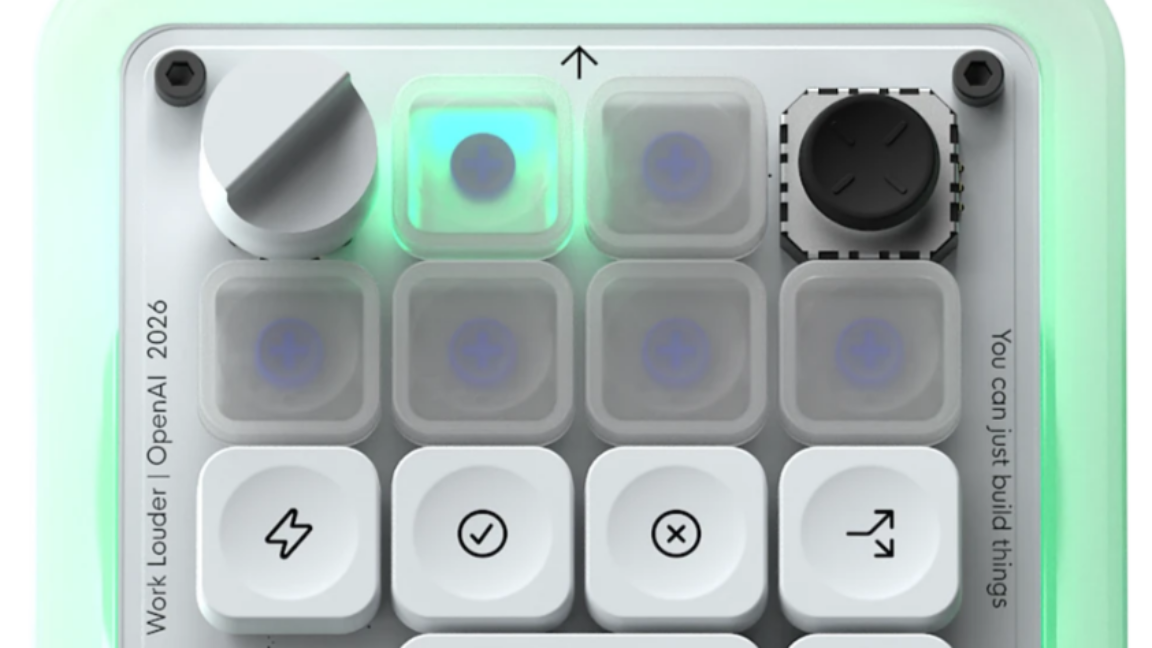
OpenAI’s first branded hardware is… a light-up keyboard?
The launch of OpenAI's Codex Micro keyboard illustrates the company's move into hardware, potentially expanding its user engagement with AI technology beyond software applications.
- OpenAI has introduced its first branded device, the Codex Micro, priced at $230.
- The Codex Micro is a mini-keyboard that allows users to interact with multiple Codex agents efficiently.
- It features six frosted keys that provide color-coded feedback on the status of Codex tasks.
- The keyboard includes customizable functions and key mappings to enhance user efficiency during creative tasks.
- Orders for the Codex Micro are accepted while supplies last, with shipping expected soon after purchase.
OpenAI is a leading artificial intelligence research organization known for developing advanced language models. The Codex Micro highlights OpenAI's intention to diversify into hardware, supplementing its software-centric offerings, following its acquisition of design firm LoveFrom. Future developments may include more innovative hardware solutions that are currently in collaboration with former Apple design chief Jony Ive.
Read the original ↗
OmniOps and Hamsa Partner to Bring Sovereign Arabic Voice AI to Saudi Arabia
The partnership between OmniOps and Hamsa aims to improve voice AI technology in Arabic, potentially transforming customer interactions and data management for businesses in Saudi Arabia.
- OmniOps and Hamsa have partnered to deliver locally hosted speech and conversational AI for enterprises in Saudi Arabia.
- The partnership will utilize OmniOps' Bunyan platform to manage AI services, enhancing control over data processing and compliance with local laws.
- Hamsa's voice AI technology includes features tailored for Arabic dialects and mixed-language conversations.
OmniOps is a Saudi AI infrastructure company focused on advanced computing and AI services. Hamsa specializes in Arabic-first voice AI development. This partnership follows other initiatives to establish controlled AI technology environments within the region.
Read the original ↗
Josephine Petrick, Chief of AI Products at BriefCatch – Interview Series
The integration of AI tools in legal practice can enhance the efficiency and accuracy of legal document preparation, potentially improving outcomes in legal proceedings.
- Josephine Petrick is the new Chief of AI Products at BriefCatch, where she leads AI product strategy to improve legal document drafting for attorneys and judges.
- BriefCatch, founded in 2017, is an AI-powered legal writing platform aimed at enhancing clarity and precision in legal documents for law firms and courts.
- The recent launch of BriefCatch's RealityCheck tool addresses issues of citation reliability by verifying legal citations before filing, crucial in a system relying on accurate legal representation.
BriefCatch is a specialized AI platform that assists legal professionals in writing and editing legal documents. The company provides services to over 300 law firms and many courts, emphasizing the importance of legal accuracy and efficiency in document drafting.
Read the original ↗
Emergent Raises $130 Million Series C at $1.5 Billion Valuation
Emergent's substantial funding round reflects growing investor confidence in AI-driven software creation, highlighting the demand for accessible tools for non-technical users in the tech landscape.
- Emergent secured $130 million in Series C funding, bringing its total funding to approximately $230 million.
- The funding round increased Emergent's valuation to $1.5 billion, up from $300 million just six months prior.
- Emergent's platform allows users to create applications through natural-language prompts, targeting non-technical users, including founders and small businesses.
Emergent is an AI software creation company focused on making application development accessible to those without coding expertise. The company has seen rapid growth following its public launch and substantial investments have raised expectations for its potential to innovate in the software industry. Moving forward, the company's ability to prove the reliability of AI-generated applications will be critical.
Read the original ↗
Apple Intelligence approved for launch in China with Alibaba’s Qwen AI
The approval of Apple Intelligence for launch in China, following collaborations with Alibaba and Baidu, underscores Apple's strategic efforts to enhance its AI offerings in a significant market.
- China's Cyberspace Administration approved Apple Intelligence's launch in China, facilitating its integration with Alibaba's Qwen AI model.
- Apple is collaborating with Baidu to develop features of Apple Intelligence for Chinese users.
- Apple's recent sales in Greater China reached $20.5 billion, marking a 28% increase from the previous year.
Apple Intelligence is the company's generative AI service, which debuted in 2024 but was delayed in China due to regulatory approvals. Apple is actively pursuing partnerships with local firms like Alibaba and Baidu to enhance its AI features and establish a stronger presence in the Chinese market.
Read the original ↗
An Inventor of Apple's FaceID Wants to Analyze Your Brain's Health With AI
Hemispheric's AI-based diagnostics could provide non-invasive, timely assessments of brain health, potentially transforming the diagnosis and treatment of cognitive disorders.
- Gidi Littwin, co-inventor of Apple's FaceID, founded Hemispheric to create AI-driven diagnostic tools for brain health.
- Hemispheric has raised $52 million and collected a quarter million hours of brain data from 100,000 volunteers to train its models.
- The startup aims to submit its first product for PTSD diagnosis to the FDA early next year, with public rollout anticipated in 2027.
- Patients will wear EEG headsets for 15 minutes while using a tablet app to gather brain activity data for diagnosis and monitoring.
Hemispheric, founded by ex-Apple engineer Gidi Littwin, focuses on using AI to analyze brain activity and diagnose mental health conditions without invasive procedures. Compared to traditional methods which rely on subjective evaluations, Hemispheric’s approach aims for objective, data-driven assessments. The company is looking to develop partnerships in healthcare and expand its data gathering efforts.
Read the original ↗
This AI Folds DNA into Mini Masterpieces
Advancements in DNA origami using AI could streamline design processes for nanoscale structures, potentially enabling breakthroughs in medicine and biotechnology.
- A new generative AI model named Generative SNUPI designs DNA origami structures that can resemble user-drawn shapes.
- Developed by researchers from Seoul National University and Hanyang University, the AI model streamlines a traditionally labor-intensive design process.
- The designs produced can be synthesized into DNA that folds into nanoscale shapes, utilizing principles of DNA bonding and structure.
- The technology aims to enhance applications in drug delivery and immunotherapy by developing structures that can be more dynamically flexible.
Generative AI is being applied to the field of DNA origami, which involves folding DNA into specific shapes for various applications. Traditionally, this design process has been slow and requires expert knowledge, but this new model aims to simplify it significantly. Future research will focus on enhancing the flexibility of these DNA structures to improve their utility in real-world applications.
Read the original ↗
Reelful’s AI turns your camera roll into short-form videos for social media
Reelful's AI-driven app simplifies video creation, enabling users, particularly busy founders and business owners, to efficiently produce engaging content for social media without needing extensive editing skills.
- Reelful is an iOS app that uses AI to transform camera roll photos and videos into short-form videos suitable for TikTok and Instagram Reels.
- Users input a storytelling prompt and select media from their camera roll, after which Reelful scripts, narrates, and edits the final video.
- The app features an AI voiceover and adds music, captions, and sound effects to the finished product.
- Video credits are available for purchase in bundles, with subscriptions offering multiple video creations per month, ranging from $25 to $100.
- Reelful currently only supports iOS, with plans for Android and web releases in the future.
Reelful is part of a growing trend towards AI technologies that facilitate easier video content creation. Founded by Kate Deyneka, a former machine learning engineer at Snapchat, Reelful aims to cater to individuals needing quick and polished video outputs for social media. The app reflects a broader movement in content creation, emphasizing automation over traditional editing processes.
Read the original ↗
Anthropic, Blackstone bet the next trillion-dollar AI business is implementation, not models
This development highlights a significant shift in the AI industry towards application-focused services, indicating where future growth and investment may be concentrated.
- Anthropic and Blackstone have launched Ode, a $1.5 billion company focused on AI implementation in enterprises.
- Ode aims to deploy engineers directly into businesses to enhance AI model integration and usage.
- The venture builds on the acquisition of AI engineering services startup Fractional AI, which will help establish Ode's services.
- Demand for applied AI talent is increasing, driven by companies needing assistance to integrate AI into core operations.
Ode is part of a broader trend among AI labs to prioritize the practical application of AI models over simply improving their capabilities. This shift acknowledges that successful enterprise AI adoption requires more extensive support and guidance. The company will implement Anthropic's technology while also utilizing rival AI products as necessary.
Read the original ↗
The Apparent 180-Degree Reversal in AI Hiring Bias Since 2024
Understanding shifts in AI hiring biases is crucial for addressing fairness in recruitment practices, potentially impacting diversity in workplaces across various sectors.
- A recent study found that AI hiring bias has reversed since 2024, favoring Black and female candidates over White male candidates among 14 AI models studied.
- Models released from 2024 onwards generally show no significant racial preference or a preference for Black applicants, reversing the bias seen in earlier models.
- The research highlights that both the previous pro-White bias and the current pro-Black tendency are viewed as undesirable from a fairness standpoint.
This research indicates significant developments in AI hiring systems, which are increasingly used in recruitment processes. The findings reflect responses to criticism about previous biases in these models. Future studies may explore how these biases continue to evolve and their implications for hiring practices.
Read the original ↗