
The day's AI news, briefed
The Daily Prompt
Our AI editor reads each day's AI and robotics stories, pulls out why they matter, and links every original source — so you can keep up in minutes.
Join over 250,000 subscribers getting the latest AI news
Latest AI & Robotics News Today

“Chat is dead”: OpenAI preps overhaul of ChatGPT
OpenAI's transformation of ChatGPT reflects a significant shift in the company's strategy, aiming to enhance profitability by focusing on high-value business tools amid rising competition.
- OpenAI is preparing a major overhaul of ChatGPT to turn it into a 'superapp' that includes coding tools and AI agents, targeting higher revenue streams.
- These changes come as OpenAI seeks to drive revenues and achieve profitability ahead of an initial public offering later this year.
- OpenAI aims to cater to business customers, having shifted resources to compete more effectively with rivals like Anthropic.
OpenAI, founded in San Francisco, created ChatGPT, a widely used chatbot that sparked an AI boom in 2022. The upcoming changes signal a strategic pivot towards providing integrated AI solutions and enhancing its business product offerings.
Read the original ↗
Momfluencers Are Pitching AI as a Better ‘Coparent’ Than Men
The rising trend of momfluencers promoting AI tools as a parenting aid highlights ongoing gender disparities in household responsibilities and the potential for technology to reshape domestic roles.
- Momfluencer Lilian Schmidt utilized ChatGPT to help her daughter sleep, leading to viral success on TikTok and the creation of her AI tool, Coparent.
- Women are expected to handle most parenting and household labor, according to a 2022 Department of Labor survey, despite increased involvement from fathers over the past 50 years.
- Some women are concerned that the expectation for mothers to learn AI tools adds to their existing mental workload, which involves balancing various household responsibilities.
Momfluencers, particularly those using generative AI tools, are emerging in response to traditional burdens of motherhood, emphasizing technology as a means to alleviate household tasks. Discussions surrounding the impact of generative AI on family dynamics and gender roles are ongoing as these influencers promote AI as a supportive coparent. It remains to be seen how these tools will shape expectations of domestic labor among parents.
Read the original ↗
The weather and climate science AI revolution isn’t revolutionary
Understanding the limitations of AI in weather and climate modeling is crucial for ensuring accurate forecasts, especially for extreme weather events that can have significant societal impacts.
- AI is increasingly used in weather and climate modeling, but its application is not groundbreaking; existing machine learning techniques have been studied for years.
- Machine learning models, such as those used by the European Centre for Medium-Range Weather Forecasts, run much more efficiently than traditional models, requiring less energy and time.
- While machine learning enhances computational efficiency, these models may struggle to predict extreme weather events that were not present in their training datasets.
Machine learning, a subset of AI, uses data analysis to identify patterns and improve predictions. It is now applied to weather forecasting but has notable limitations, particularly in predicting rare events. Researchers are mixing traditional physics-based models with machine learning to address these shortcomings.
Read the original ↗
GenAI Hype Resets: CIOs and CTOs Turn to Practical Reality
Understanding the evolving landscape of generative AI implementation is crucial for organizations aiming to maximize its business value while mitigating the associated risks and challenges.
- The generative AI boom is cooling down, prompting CIOs and CTOs to adopt more practical approaches to AI implementation.
- Many AI initiatives are failing to deliver business value beyond the prototype stage, often getting stuck in a 'GenAI pilot trap.'
- Successful AI adoption is rooted in human skills and organizational change, enabling teams to save time and improve productivity.
- Leaders are encouraged to treat AI as a tool for enhancement rather than a replacement, ensuring human expertise remains critical in decision-making.
Generative AI is a rapidly evolving technology that gained significant traction in 2023-2024. Challenges like inability to scale and the 'GenAI pilot trap' hinder effective AI integration in businesses. As firms reassess their AI strategies, leaders must balance excitement with caution about AI's capabilities and limits.
Read the original ↗
How AI Is Reshaping Identity Systems in Financial Security Operations
AI technology enhances financial security operations by enabling more effective identity verification and fraud prevention, ultimately safeguarding customer trust and minimizing the impacts of security breaches.
- AI is transforming identity systems in financial security by adding contextual judgment to access controls.
- Traditional security methods can be easily bypassed by skilled fraudsters, prompting the need for AI solutions.
- AI-powered systems enable proportional authentication, simplifying verification for low-risk activities while enhancing security for high-risk transactions.
- These systems automate the documentation and logging required by auditors and regulators, freeing security teams to focus on actual threats.
- AI facilitates continuous verification of transactions, catching manipulative fraud attempts that exploit legitimate users.
Identity systems regulate access to sensitive financial data and transactions, evolving from simple credential verification to more sophisticated methods. The integration of AI marks a significant shift in how financial institutions manage security, responding to increasingly complex fraudulent tactics. Future developments will likely continue enhancing AI capabilities in monitoring and fraud prevention.
Read the original ↗
Microsoft AI Introduces MAI-Transcribe-1.5: 2.4% WER on Artificial Analysis, Best-in-Class FLEURS...
The introduction of Microsoft’s MAI-Transcribe-1.5 highlights advancements in automated transcription technologies, which can significantly enhance efficiency and accuracy in data processing for various applications.
- Microsoft AI has launched MAI-Transcribe-1.5 with a word error rate (WER) of 2.4% on artificial analysis.
- The new system offers best-in-class accuracy in FLEURS (a language evaluation benchmark) and improves transcription speed for long audio by up to five times.
MAI-Transcribe-1.5 is an AI-based transcription tool developed by Microsoft that enhances transcription capabilities through artificial intelligence. This tool is part of a growing trend in automated solutions aiming to improve efficiency and accuracy in processing spoken language.
Based on the headline only — the full article could not be fetched.
Read the original ↗
SkillClaw: Let Skills Evolve Collectively with Agentic Evolver
SkillClaw enhances the capability of multi-user LLM agent systems by facilitating collective skill evolution, which can lead to more efficient and adaptable AI deployments.
- SkillClaw enables collective skill evolution in multi-user large language model (LLM) agent systems by aggregating user interactions for skill updates.
- Existing systems have static skills that do not improve with user experience, leading to repeated rediscovery of workflows and failure modes.
- SkillClaw processes user interactions to identify patterns, resulting in skill refinements and new capabilities that are shared across users.
- The framework aims to allow knowledge transfer and cumulative improvement of agent capabilities without additional user effort.
SkillClaw improves how reusable skills in LLM agent systems evolve by using experiences from multiple users to enhance performance. This system addresses limitations in existing LLM implementations, which typically do not learn from collective user interactions. Future watch points include the success of SkillClaw in diverse applications and its potential adaptations.
Read the original ↗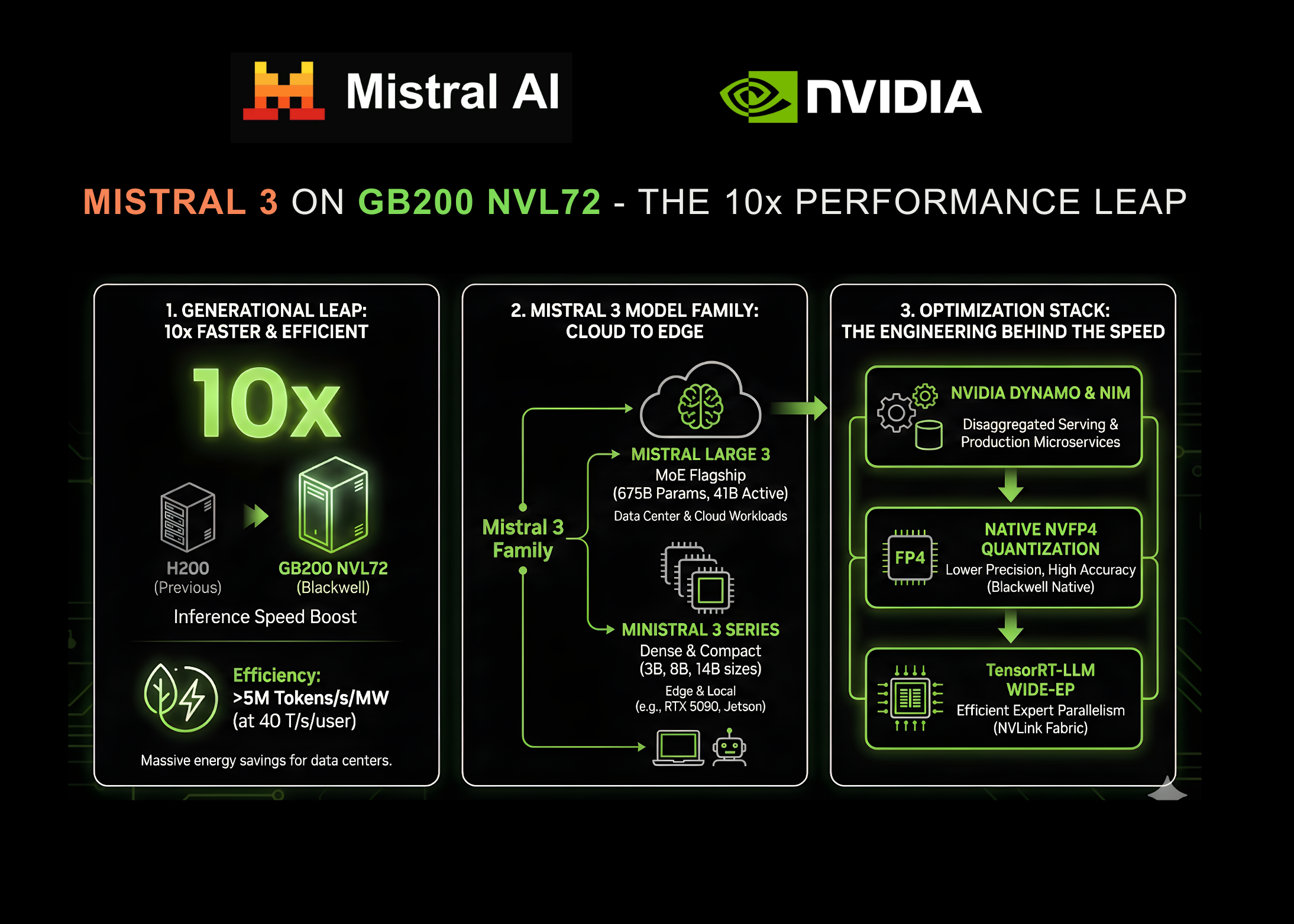
NVIDIA and Mistral AI Bring 10x Faster Inference for the Mistral 3 Family on...
Enhanced inference speeds can significantly improve the performance of AI applications, potentially shaping future developments in machine learning and data processing.
- NVIDIA and Mistral AI have developed a system that enables 10 times faster inference for the Mistral 3 family.
- This improvement utilizes NVIDIA's GB200 and NVL72 GPU systems.
NVIDIA is a leading technology company known for its graphics processing units, while Mistral AI focuses on advanced artificial intelligence solutions. This collaboration aims to enhance AI processing capabilities, a key factor for developers and industries utilizing machine learning.
Based on the headline only — the full article could not be fetched.
Read the original ↗
OceanBase Releases seekdb: An Open Source AI Native Hybrid Search Database for Multi-model RAG...
The release of seekdb presents a significant advancement in hybrid search databases, which is critical for enhancing AI applications and their data handling capabilities.
- OceanBase has released seekdb, an open-source AI native hybrid search database.
- Seekdb caters to multi-model retrieval-augmented generation (RAG) and AI agents.
OceanBase is a database company focused on providing robust data solutions. Hybrid search databases integrate various data models, which enhances their adaptability and effectiveness for AI applications. Future developments likely include wider adoption of seekdb in AI-related projects.
Based on the headline only — the full article could not be fetched.
Read the original ↗
Unsloth AI and NVIDIA are Revolutionizing Local LLM Fine-Tuning: From RTX Desktops to DGX...
This collaboration could significantly enhance the accessibility and efficiency of fine-tuning local large language models (LLMs), impacting various applications across industries.
- Unsloth AI and NVIDIA are collaborating to develop advancements in local LLM fine-tuning.
- This initiative facilitates fine-tuning on RTX desktop systems and DGX hardware, enabling more accessible machine learning capabilities.
Unsloth AI focuses on artificial intelligence solutions, while NVIDIA is known for its graphics processing units that support AI and machine learning tasks. The collaboration aims to democratize LLM fine-tuning, making it more accessible for developers and businesses.
Based on the headline only — the full article could not be fetched.
Read the original ↗
Sustainable Travel
Developments in sustainable travel methods can significantly decrease the environmental impact of tourism, addressing climate change concerns.
- Innovations such as electric ferries and new jet fuels are emerging to reduce travel's environmental impacts.
- WIRED provides a guide on smart travel options that minimize ecological footprints.
Sustainable travel focuses on reducing the carbon footprint and environmental impacts associated with tourism. The sector is increasingly adopting innovations to address climate change, making it an area to watch as consumer preferences shift toward greener options.
Based on the headline only — the full article could not be fetched.
Read the original ↗
The Red-Light Devices That Helped Our Hair Grow Back
At-home red-light therapy devices offer a new, accessible approach to combat hair loss, potentially providing a convenient alternative to traditional treatments.
- Red-light therapy can energize hair follicles, increase scalp blood circulation, and reduce the hormone dihydrotestosterone, which is linked to hair loss.
- Testing involved using various red-light therapy devices over a 16-week period to assess their effectiveness on hair growth and scalp health.
- Devices included caps, helmets, and laser bands, with features evaluated based on safety, ease of use, and effectiveness in promoting hair regrowth.
Red-light therapy is gaining popularity as a non-invasive treatment for hair loss, allowing individuals to use devices at home without clinical appointments. The current testing phase has revealed promising results in hair density and scalp health among users with varying degrees of hair thinning.
Read the original ↗
10 Things That Matter in AI Right Now
Understanding current developments in AI is essential for navigating the rapidly changing landscape of technology and its societal impacts.
- The article lists ten significant developments in artificial intelligence.
- It highlights the advancements made toward machines that can reason, learn, and act intelligently.
Artificial intelligence (AI) involves creating machines capable of performing tasks that typically require human intelligence, such as learning and decision-making. Recent advancements in technology have accelerated AI's integration across various sectors, making staying informed crucial.
Based on the headline only — the full article could not be fetched.
Read the original ↗
Top 10 Machine Learning Algorithms in 2026
Understanding the most effective machine learning algorithms can enhance data-driven decision making and solve complex data challenges across various sectors.
- The article lists the top 10 machine learning algorithms shaping data analysis: Linear Regression, Logistic Regression, Decision Tree, SVM, Naive Bayes, kNN, K-Means, Random Forest, Dimensionality Reduction Algorithms, and Gradient Boosting Algorithms.
- It distinguishes between three types of machine learning: Supervised Learning, which relies on labeled data; Unsupervised Learning, which identifies patterns on its own; and Reinforcement Learning, which learns through trial and error.
Machine learning involves algorithms that allow computers to learn from and make predictions based on data. This technology continues to evolve, impacting fields such as data science and artificial intelligence. Future developments are likely to improve the effectiveness and accessibility of these algorithms.
Read the original ↗
NVIDIA AI Releases Dynamo Snapshot: A CRIU-Based Fast Startup System for...
This release enhances AI inference speed on Kubernetes, which could significantly improve performance for developers and businesses relying on NVIDIA's technology.
- NVIDIA AI has released Dynamo Snapshot, a new system designed for fast startup.
- The system is based on CRIU (Checkpoint/Restore in Userspace), enabling quicker AI inference in Kubernetes environments.
NVIDIA is a leading company in graphics processing units and AI technology. Innovations in AI deployment continue to be crucial for managing workloads efficiently, especially in cloud environments like Kubernetes. This release may streamline operations for many organizations using NVIDIA's solutions.
Based on the headline only — the full article could not be fetched.
Read the original ↗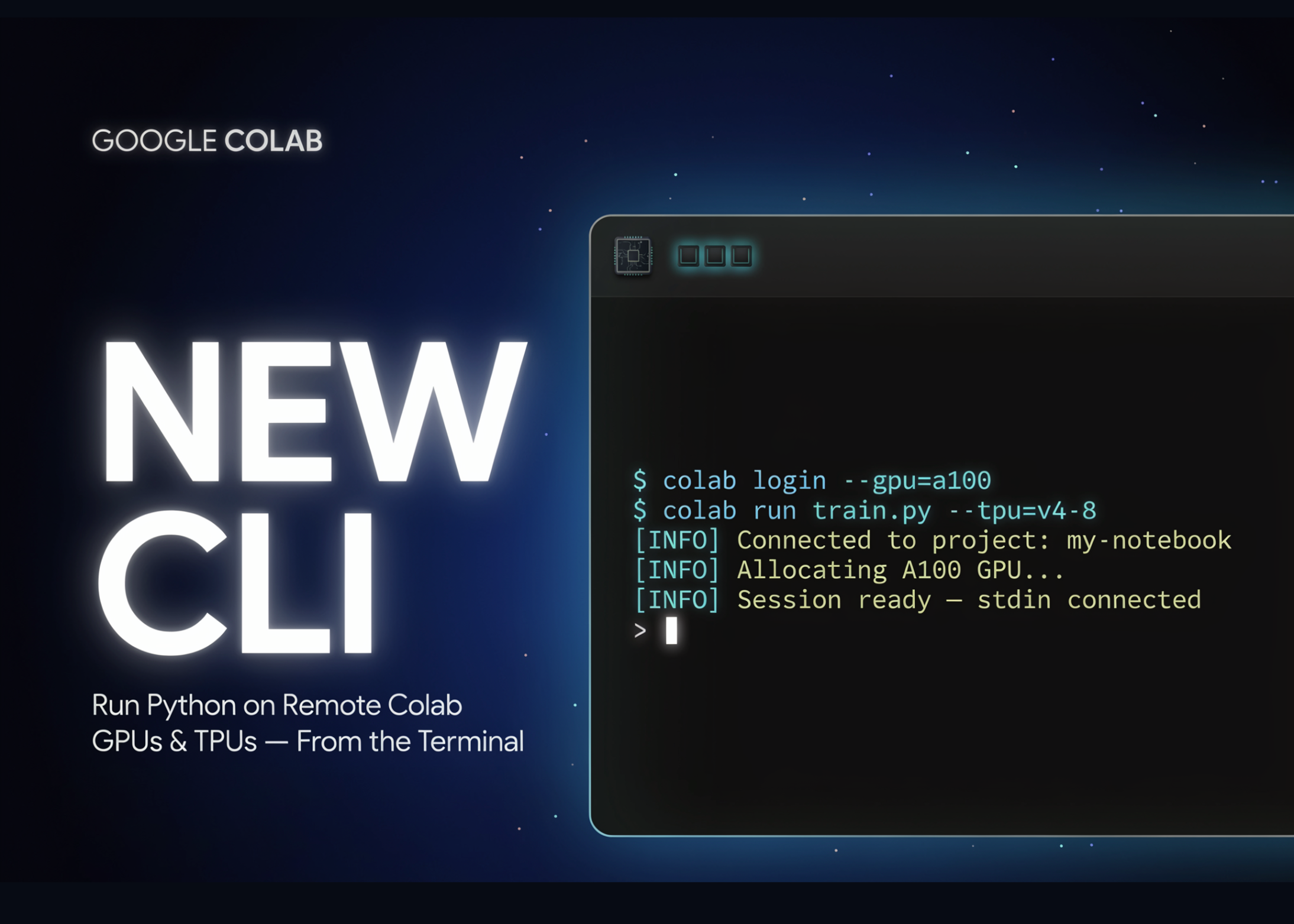
Google’s New Colab CLI Lets Developers and AI Agents Run Python...
The introduction of Google’s new Colab CLI could enhance how developers and AI agents interact with remote computational resources, streamlining workflows and optimizing performance.
- Google's new Colab CLI allows developers to run Python code on remote Google Colab GPUs and TPUs directly from the terminal.
- This command-line interface aims to facilitate easier access to powerful computational resources for AI and machine learning projects.
Google Colab is a cloud-based platform that enables users to write and execute Python code in an interactive environment. The new CLI feature represents a significant step towards integrating command-line usability in cloud-based AI development, and users should monitor ongoing updates from Google regarding its capabilities.
Based on the headline only — the full article could not be fetched.
Read the original ↗
Moonshot AI Releases Kimi Code CLI: A Terminal AI Coding Agent...
The release of the Kimi Code CLI signifies a notable advancement in AI tools that simplify coding, potentially enhancing productivity for developers.
- Moonshot AI has launched Kimi Code CLI, a terminal-based AI coding agent designed for developers.
- The Kimi Code CLI is built in TypeScript, a programming language known for its static typing capabilities, which helps in developing robust software.
Moonshot AI is a technology company focused on building AI-driven applications. The Kimi Code CLI represents a new tool in the evolving landscape of AI-assisted development tools that aim to streamline coding tasks.
Based on the headline only — the full article could not be fetched.
Read the original ↗
A Hands-On Coding Tutorial on Qualcomm AI Hub Models for Classification,...
This tutorial provides essential insights into using Qualcomm AI Hub models for various applications, aiding developers in implementing effective AI solutions.
- The article offers a hands-on coding tutorial on Qualcomm AI Hub models.
- The tutorial focuses on classification, object detection, and hardware-aware deployment.
Qualcomm AI Hub is a platform that provides models and tools for developers to create AI applications. This tutorial aims to enhance developers' skills in utilizing these models effectively. Future developments may include new features and expanded use cases for Qualcomm AI technologies.
Based on the headline only — the full article could not be fetched.
Read the original ↗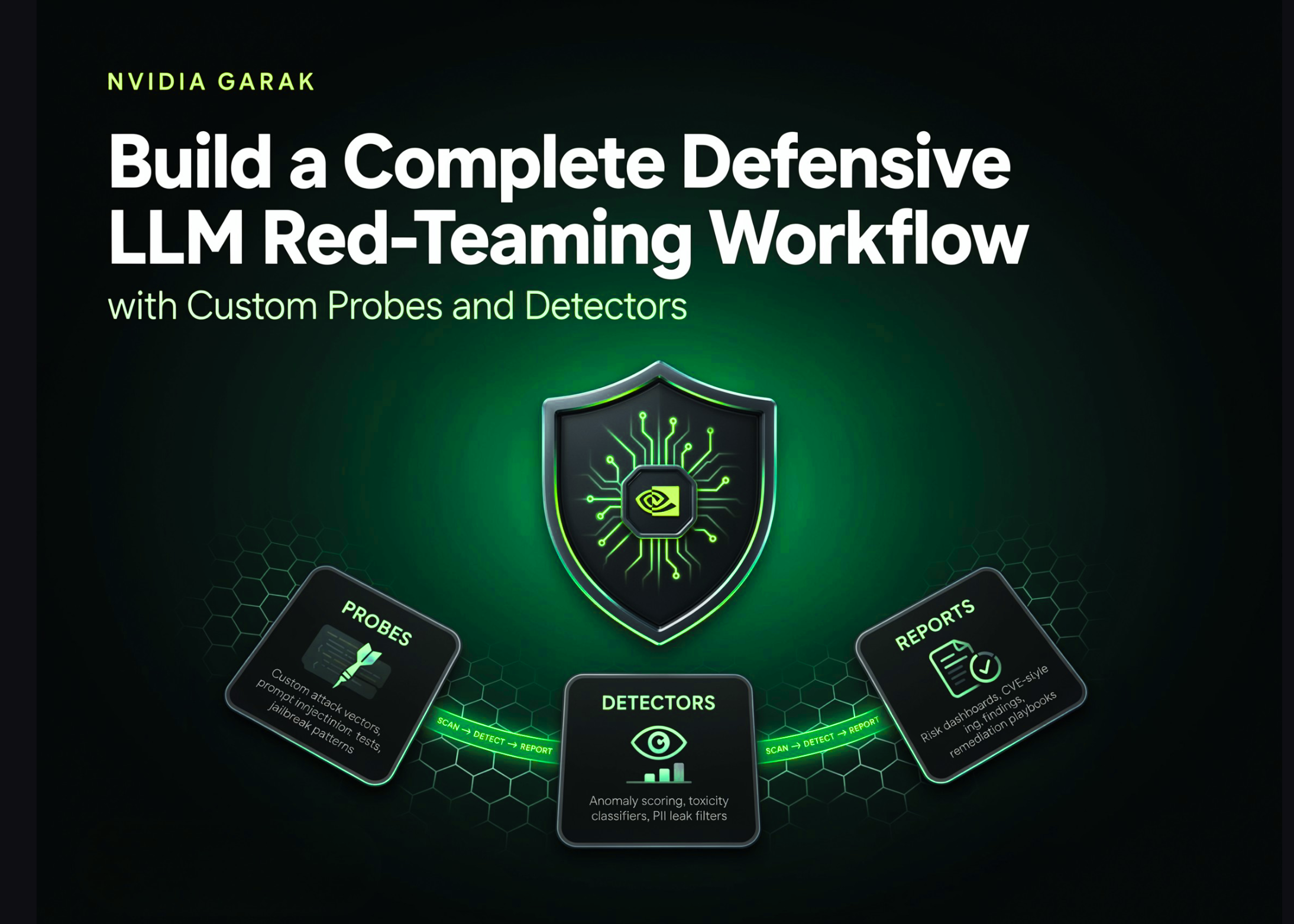
NVIDIA garak Tutorial: Build a Complete Defensive LLM Red-Teaming Workflow with...
This tutorial aims to enhance defensive measures in AI by enabling developers to build effective red-teaming workflows to safeguard large language models (LLMs).
- The NVIDIA Garak tutorial focuses on creating a comprehensive defensive workflow for LLMs.
- It includes the use of custom probes and detectors to identify vulnerabilities in AI systems.
NVIDIA Garak is a platform aimed at improving AI security and resilience. This tutorial is part of ongoing efforts in the AI community to address potential threats to LLMs. Developers and organizations can utilize these techniques to strengthen their AI defenses.
Based on the headline only — the full article could not be fetched.
Read the original ↗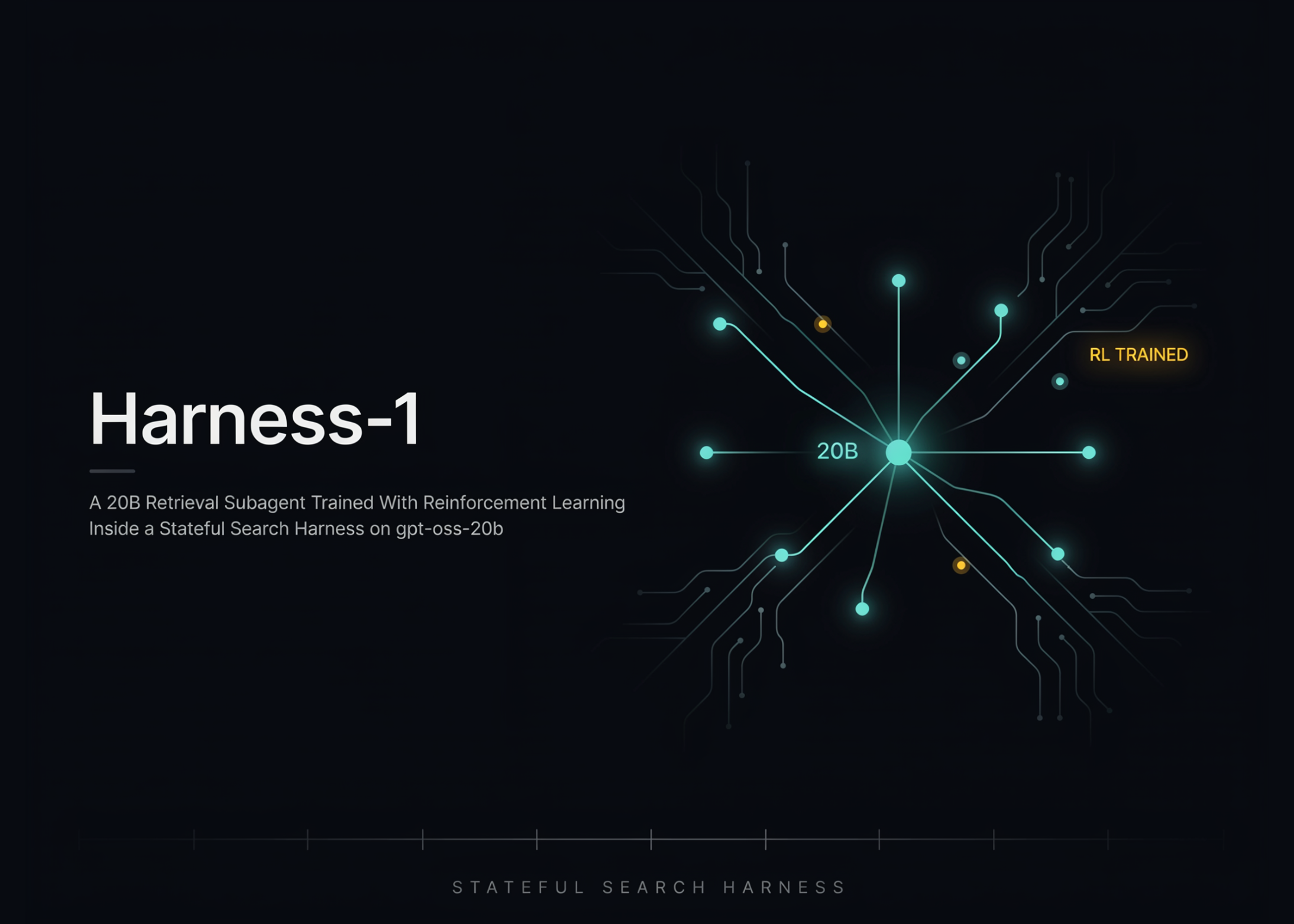
Meet Harness-1: A 20B Retrieval Subagent Trained With Reinforcement Learning Inside...
The introduction of Harness-1, a 20 billion parameter retrieval subagent, may enhance AI efficiency and search capabilities, impacting various industries reliant on data retrieval.
- Harness-1 is a 20 billion parameter retrieval subagent.
- It is trained using reinforcement learning, a method where an agent learns by receiving rewards for actions taken.
Harness-1 represents advancements in AI subagent technology, particularly in retrieval and search applications. This technology builds on previous iterations of AI models like GPT, focusing on improving information retrieval efficiency. Future developments will likely explore broader applications of such subagents across industries.
Based on the headline only — the full article could not be fetched.
Read the original ↗