
The day's AI news, briefed
The Daily Prompt
Our AI editor reads each day's AI and robotics stories, pulls out why they matter, and links every original source — so you can keep up in minutes.
Join over 250,000 subscribers getting the latest AI news
Latest AI & Robotics News Today

Building Trust and Control in the Age of Autonomous AI
As Voice AI increasingly handles customer service interactions, ensuring transparency and accountability in these systems is crucial for maintaining customer trust and avoiding regulatory issues.
- Many enterprises using Voice AI in contact centers struggle to explain AI decisions during customer complaints, leading to accountability concerns.
- Gartner predicts that by 2029, agentic AI will autonomously resolve 80% of common customer service issues, raising questions about oversight.
- Approximately two-thirds of IT leaders feel unprepared to manage the risks associated with AI adoption, impacting customer trust and operational decisions.
Voice AI technology is being adopted rapidly in customer service settings, but many organizations lack adequate governance structures to ensure AI accountability. The effectiveness of Voice AI hinges on maintaining explainability and domain-specific competence to meet customer needs and regulatory compliance.
Read the original ↗
Healthcare AI Works Better When Workflows Work Together
Improving AI integration into healthcare workflows can enhance operational effectiveness, reduce clinician burnout, and streamline patient care, transforming how healthcare services are delivered.
- Healthcare leaders are increasingly using AI to cut costs and speed up operations, but many implementations show limited impact.
- AI improves outcomes when integrated into existing workflows, rather than treated as standalone tools.
- Interoperability, or the ability of systems to exchange data seamlessly, is crucial for effective AI performance in healthcare.
Healthcare AI involves using artificial intelligence technologies to improve various aspects of healthcare delivery. Previous implementations have struggled due to isolated systems. Moving forward, organizations should prioritize integrating AI into effective workflows for better results.
Read the original ↗
Threats Against Politicians Skyrocketed After Meta Changed Its Speech Rules
The increase in threats against politicians following Meta's policy changes signals a significant public safety concern and highlights the consequences of relaxed content moderation on social media platforms.
- Meta overhauled its content moderation rules, claiming to improve free speech, leading to increased abusive behavior on its platforms.
- Research shows that violent threats against politicians, including President Trump, more than doubled in the six months after the rule change.
- Abusive comments targeting lawmakers tripled overall, with threats and hate speech quadrupling during the same period, according to the Center for Countering Digital Hate.
Meta, the parent company of Facebook, adjusted its content rules last year, aiming to limit over-enforcement against political debate. Following these changes, researchers reported a notable rise in violent and abusive comments towards politicians.
Read the original ↗
How an e-scooter founder raised $5 million to build space data centers
The emergence of space-based data centers represents a significant shift in the approach to AI computing resources, driven by the need for scalable and sustainable solutions in a rapidly expanding digital landscape.
- Euwyn Poon, founder of Orbital, raised $5 million to develop space data centers, targeting the AI compute market.
- Orbital emerged from a16z's startup accelerator and aims to launch 10,000 satellites for AI processing.
- The company plans to test its technology using Nvidia hardware on a partner's satellite, with a first spacecraft launch targeted for 2028.
Orbital focuses on deploying data-processing capabilities in space, leveraging the growing demand for AI compute. Previously, Poon founded the e-scooter company Spin, which was acquired by Ford. The market is evolving with several startups exploring space-based computing solutions.
Read the original ↗
TRACER: Trace-Based Adaptive Cost-Efficient Routing for LLM Classification
TRACER's approach enhances efficiency in machine learning (ML) classification by reducing reliance on costly large language model (LLM) calls, enabling cost-effective solutions in AI applications.
- TRACER is an open-source system designed to use production traces to create machine learning surrogates for LLM classification.
- The system activates the surrogate only when its agreement with the original LLM exceeds a user-defined threshold.
- In tests, TRACER achieved up to 100% surrogate coverage on a 150-class benchmark while fully replacing the original model.
- The system provides interpretability by detailing which input regions the surrogate manages and how it evolves as new data is gathered.
TRACER stands for Trace-based Adaptive Cost-Efficient Routing, and it aims to optimize costs associated with LLMs by using already available production data. In previous models, reliance on LLMs for all traffic created significant cost concerns. Future developments may focus on refining the threshold parameters and enhancing interpretability further as more data is used for training.
Read the original ↗
ResearchClawBench: A Benchmark for End-to-End Autonomous Scientific Research
The introduction of ResearchClawBench raises awareness of the current limitations in AI agents' ability to carry out autonomous scientific research effectively.
- ResearchClawBench is a benchmark designed to evaluate AI agents' autonomous scientific research capabilities across 40 tasks in 10 domains.
- The benchmark reveals that current AI systems, such as Claude Code and Claude-Opus-4.7, show low re-discovery accuracy scores of 21.5 and 20.7 respectively.
- Common issues include mismatches in experimental protocol, evidence, and the core scientific conclusions of tasks.
ResearchClawBench is developed to assess the performance of autonomous research agents in replicating findings from existing scientific literature. This benchmark helps identify gaps in AI capabilities and guides future enhancements. As research progresses, tracking improvements in AI performance against this benchmark will be crucial.
Read the original ↗
OpenSkill: Open-World Self-Evolution for LLM Agents
This advancement in self-evolving agents could significantly enhance the adaptability and performance of AI systems in dynamic, real-world environments without relying on pre-existing supervisory structures.
- OpenSkill allows self-evolving agents to acquire skills and verification signals independently from target-task supervision.
- The framework uses open-world resources to develop skills and create a practice environment without predefined goals or success criteria.
- OpenSkill achieved the highest automated pass rates across three benchmarks and two target agents, demonstrating effective skill transfer without model-specific adaptation.
OpenSkill is a new framework designed for large language model (LLM) agents to autonomously evolve by utilizing unstructured resources. Traditional approaches typically depend on supervised learning loops, which are often absent in real-world applications. Future developments may focus on improving the efficiency and effectiveness of these self-evolving frameworks in various operational contexts.
Read the original ↗
Anthropic IPO Outlook: How It Could Shape the Future of AI Investments
The growing investor interest in the Anthropic IPO may influence future funding and development in the rapidly evolving AI sector, affecting long-term technological and economic trajectories.
- The discussion surrounding Anthropic's IPO reflects investors' increasing curiosity about the valuation potential of AI companies.
- AI businesses are gaining market attention for their impact on sectors like automation, productivity, and cybersecurity.
- Investors are emphasizing strong innovation capabilities and strategic partnerships when evaluating AI companies' growth.
Anthropic is an artificial intelligence company that is part of a booming sector, attracting investor interest as businesses adopt advanced AI solutions. As AI technologies integrate into various industries, the potential for public offerings like Anthropic's remains a focal point for market observers.
Read the original ↗
Anticipating and Preventing Metro Platform Tragedies With AI
This AI system could help reduce train station suicides by identifying dangerous behaviors, potentially allowing for timely interventions and saving lives.
- An AI system analyzes subway surveillance footage to identify potential suicide attempts minutes before they occur.
- It tracks specific behaviors such as pacing and lingering near platform edges to assess risk.
- A new study formalizes this effort as Suicide Risk Assessment (SRA), proposing a comprehensive framework for monitoring.
- The framework generates continuously updated risk scores for each passenger by analyzing their movements across the platform.
AI technology is being integrated into public safety measures, particularly at metro platforms where rail suicides have increased in various regions. Previous methods have varied widely, prompting the need for a standardized approach to assess suicide risk. This new study from Canada offers a benchmark that may guide future AI applications in this sensitive area.
Read the original ↗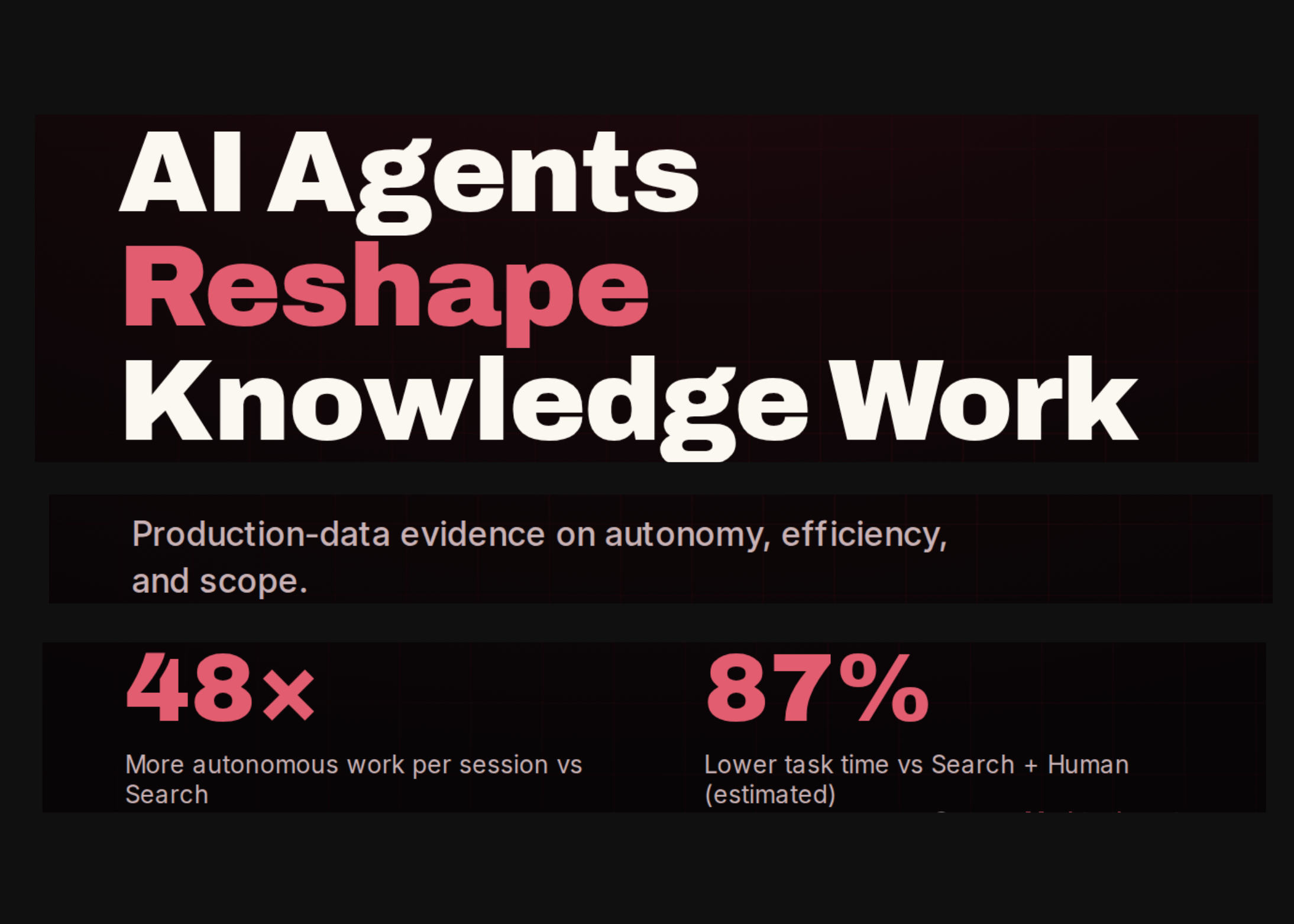
A New Study from Harvard and Perplexity Finds AI Agents Perform 26 Minutes of Autonomous Work per Session vs 33 Seconds for Search
The difference in performance between AI agents and traditional search tools highlights the growing efficiency and capability of AI in executing tasks autonomously.
- AI agents can perform 26 minutes of autonomous work per session.
- Traditional search tools only manage 33 seconds of work per session.
AI agents are software programs designed to complete tasks independently, while search tools typically require user input to generate results. This study from Harvard and Perplexity illustrates a significant advancement in AI capabilities. Future developments may focus on enhancing the effectiveness of AI agents further.
Based on the headline only — the full article could not be fetched.
Read the original ↗
Why Apple’s slow-and-steady AI bet is starting to look pretty smart
Apple's strategic entry into AI, exemplified by enhancements to Siri, could redefine its competitiveness in the market and impact user engagement with its devices.
- Apple has unveiled significant updates to Siri AI, which include new automated features linked to its partnership with Google Gemini.
- The updated Siri will be able to access deep data from user inboxes and provide contextual information based on onscreen awareness.
- Siri's new capabilities are designed to work seamlessly across Apple devices and will be available in beta later this year.
Apple has faced criticism for lagging in AI advancements compared to competitors. The company is now integrating AI features into its software to enhance user experience and maintain market relevance. Observers are watching how well customers receive these updates in light of broader industry concerns about AI's practicality and consumer sentiment.
Read the original ↗
Apple’s WWDC AI demos looked more real after $250M false ad settlement
Apple's improved AI demonstrations are significant as they address reputational risks following a substantial false advertising settlement and aim to restore consumer trust in product capabilities.
- Apple's WWDC 2026 featured enhanced AI-powered Siri, showcasing real-time demonstration videos instead of slick, pre-produced clips seen in previous events.
- The company agreed to a $250 million settlement related to false advertising claims from its 2024 event, without admitting wrongdoing.
- New AI features will be available on various devices, not requiring customers to purchase the latest iPhone, thus expanding accessibility.
- Apple's new features will be supported across multiple devices including iPad models with M1 or later and several Apple Watch models.
Apple's WWDC is the company's annual developer conference where it unveils software and hardware advancements. The 2024 presentation faced criticism for overpromising features that were not delivered on time, leading to a lawsuit. Upcoming expectations include the broader rollout of AI functionalities across Apple's device ecosystem.
Read the original ↗
As OpenAI files for IPO, Sam Altman’s eye-scanning company is doing layoffs, report says
The layoffs at Tools for Humanity signal challenges in the biometric verification market, highlighting risks associated with privacy concerns and financial sustainability in emerging technologies.
- OpenAI has filed for an initial public offering (IPO), marking a significant move in the tech industry.
- Tools for Humanity, Sam Altman's company focused on identity verification through iris scans, is reportedly conducting layoffs due to revenue struggles.
- The company has faced regulatory and ethical issues internationally, leading to actions such as Kenya's ban on its operations.
Tools for Humanity is known for its biometric verification initiative called World, which uses iris scans to validate identities. This comes amid scrutiny over privacy practices and the company's ability to generate revenue after raising $2.5 billion in funding.
Read the original ↗
OpenAI Confidentially Files for IPO on the Heels of SpaceX and Anthropic
OpenAI's confidential IPO filing signals a significant shift in the competitive landscape of AI companies as it prepares to go public amidst record-breaking valuations, affecting employee morale and investment dynamics.
- OpenAI has filed confidential paperwork for an initial public offering (IPO) as the third company preparing for a potential trillion-dollar IPO this year.
- The company aims to bolster employee morale and customer confidence with the IPO after raising $122 billion privately in March.
- OpenAI's revenue ranged between $10 billion and $20 billion last year, but it incurred substantial losses due to high expenses.
- Legislative interest surrounds the IPO, with the Trump administration considering government investment in AI firms going public.
OpenAI is an AI research organization known for developing models like ChatGPT. It transitioned to a for-profit structure in 2019 to enhance funding capabilities while maintaining a nonprofit oversight. Upcoming scrutiny will focus on how the company addresses social impacts of AI as it prepares for public disclosure.
Read the original ↗
Google cuts the price of its AI Plus plan and doubles the storage
Google's reduction of the AI Plus plan price and doubling of storage aims to improve user access and encourage adoption of its AI models amidst increasing competition in the AI space.
- The Google AI Plus plan's subscription price is now $5 per month, reduced from $8 per month.
- Subscribers will receive 400GB of storage, doubling the previous 200GB.
- The plan includes access to features like AI-powered email tools and the new Daily Brief agent.
- This subscription became available in January 2026 to provide cheaper access to Google's Gemini 3 Pro model and other AI tools.
Google's AI Plus plan is part of its efforts to promote access to advanced AI models, such as Gemini. It aims to attract more users by offering enhanced features for a lower price. The plan's launch followed Google's I/O 2026 event, where new features and benefits were announced.
Read the original ↗
OpenAI files SEC paperwork to go public
OpenAI's path to going public could reshape the landscape of AI investment and competition in the industry, especially in light of its massive valuation and financial challenges.
- OpenAI has filed a confidential S-1 form with the SEC as it prepares for a future initial public offering (IPO).
- The company has not proposed a date or price for the IPO at this time.
- OpenAI's valuation has reached $852 billion following new funding from major firms like NVIDIA and Amazon.
- Despite recording $25 billion in annualized revenue, OpenAI could incur losses of up to $115 billion by 2029 due to expenses.
- The company faces significant competition from major players, including Anthropic and Google.
OpenAI is a leading artificial intelligence research company known for developing advanced AI models like ChatGPT. The move to go public follows similar plans by competitor Anthropic and reflects ongoing investor interest in AI technologies. Watching OpenAI's IPO process will provide insights into its financial health and market positioning against competitors.
Read the original ↗
Apple bets cheaper AI will woo small developers
This initiative could significantly reduce financial barriers for small developers, enabling more innovation within the AI landscape as experimentation costs rise.
- Apple announced it will waive cloud API costs for developers with fewer than 2 million first-time App Store downloads.
- This strategy aims to attract newer developers by making access to AI infrastructure more affordable.
- The Foundation Models framework will expand to include image input and support for server model integration, enhancing its usability for complex tasks.
Apple's move is part of its ongoing efforts to support indie developers, similar to its Small Business Program that offers lower commission rates. The initiative reflects a broader trend in the tech industry, where companies are seeking cost-efficient AI solutions amid rising experimentation costs.
Read the original ↗
Following Anthropic, OpenAI files confidentially for IPO
As OpenAI files for an IPO in a competitive market, the outcome may significantly impact investor confidence and market dynamics for AI companies in the future.
- OpenAI has filed confidentially for an initial public offering (IPO), following a similar move by rival Anthropic.
- The company expects its IPO process will take time, as it weighs operational challenges as a private entity against going public.
- OpenAI, valued at $852 billion, cited its ongoing costs for AI research, which could affect its financial sustainability in the public markets.
OpenAI, known for its AI language model ChatGPT, was founded in 2015 and has since evolved from a nonprofit research lab to a commercial entity. The IPO follows a turbulent year for the company, marked by internal governance issues and ongoing legal challenges, highlighting the scrutiny it faces from potential investors.
Read the original ↗
Apple Turns Siri Into a Context-Aware AI Assistant and Unveils an AI Operating System for 2 Billion Devices
Apple's integration of AI into its operating system could reshape user interaction with technology across billions of devices, fundamentally changing how consumers access and manage information.
- Apple has unveiled a context-aware Siri AI assistant that understands personal context and can reference previous interactions across its ecosystem.
- The new AI system is a foundational layer designed for integration across more than 2 billion active Apple devices including iPhone, iPad, and Mac.
- Apple's Foundation Models framework allows developers to build intelligent applications using on-device language models, enhancing privacy and performance.
- Apple emphasizes on-device processing and privacy in its AI strategy, aiming to establish trust as a competitive advantage in the AI market.
Apple is a leading technology company known for its emphasis on user privacy and integrated hardware-software ecosystems. Its latest announcements follow criticism about its AI capabilities compared to competitors. Future developments may focus on further embedding AI within its devices and software for enhanced user experiences.
Read the original ↗
Apple’s iPhone Camera App Is Getting an AI Upgrade in iOS 27
The integration of AI features into Apple's camera app highlights the growing trend of enhanced visual intelligence in everyday devices, influencing user interaction with photography technology.
- Apple's iPhone camera app will feature an AI upgrade in the upcoming iOS 27.
- Siri AI will now be directly embedded in the camera app, providing contextual assistance without needing to use the Camera Control button.
- New AI tools in the Photos app include Clean Up, Extend, and Spatial Reframe, enhancing photo editing capabilities.
- Clean Up removes unwanted objects more effectively using updated AI models, while Extend uses generative AI to add space to images.
- Spatial Reframe allows users to adjust a photo’s perspective, with AI filling in gaps created by the shift.
Apple's iOS 27 will introduce enhanced AI features in the camera and Photos app, reflecting industry trends toward integrating AI for improved user experience. Previous versions of iOS had limited functionality for Siri within the camera app, and Apple aims for broader application across its devices, including smart glasses. Watch for how these updates will impact the competitive landscape in mobile photography.
Read the original ↗