
The day's AI news, briefed
The Daily Prompt
Our AI editor reads each day's AI and robotics stories, pulls out why they matter, and links every original source — so you can keep up in minutes.
Join over 250,000 subscribers getting the latest AI news
Latest AI & Robotics News Today

Microsoft AI chief on why it’s ‘dangerous’ to call AI ‘alive’
Understanding the implications of how AI is characterized may influence public perception, regulation, and the development of future AI technologies, shaping the future of human-AI interaction.
- Mustafa Suleyman, CEO of Microsoft AI, cautioned against labeling AI as 'alive', describing it as a dangerous characterization.
- Suleyman emphasized Microsoft’s evolving focus on developing superintelligence independently from OpenAI.
- The partnership between Microsoft and OpenAI has shifted towards ensuring Microsoft can create its own AI models.
- Suleyman noted that superintelligence is anticipated to be a highly valuable technology in the near future.
Microsoft AI focuses on developing advanced artificial intelligence technologies and has restructured its relationship with OpenAI to pursue superintelligence independently. This shift comes amid significant advancements in AI capabilities and increasing public discourse on AI's role in society.
Read the original ↗
Anthropic’s Claude Fable 5 is a version of Mythos the public can access today
The release of Anthropic's Claude Fable 5 with safety features highlights the ongoing balance between leveraging advanced AI capabilities and ensuring public safety in high-risk applications.
- Anthropic launched Claude Fable 5, its first publicly accessible Mythos model, featuring rigorously tested safety guardrails.
- Fable 5 blocks responses in high-risk areas like cybersecurity and biology, reverting to the less advanced Claude Opus 4.8 when necessary.
- Access to Fable 5 will roll out in stages, initially available at no extra charge until June 22, after which it requires usage credits.
- The model includes mandatory data retention for 30 days to defend against potential security attacks, marking a possible industry trend.
- Pricing for Fable 5 is set at $10 per million input tokens and $50 per million output tokens, double that of Opus 4.8.
Anthropic, known for its AI technologies, previously restricted access to the Mythos model due to cybersecurity concerns. The introduction of Claude Fable 5 symbolizes a significant step toward wider public access, while safety measures remain a priority. Monitoring the impact of these safety features on functionality and access will be important for future AI developments.
Read the original ↗
#501 Musk's $1.75 Trillion Bet Isn't a Rocket Company
Investors should understand the implications of Musk's massive IPO, which primarily funds a high-risk AI initiative amid substantial financial losses from its AI segment.
- SpaceX's IPO is valued at $1.75 trillion, making it the largest initial public offering in history, priced at $135 per share.
- SpaceX's AI division reported a loss of $6.4 billion in 2025, raising concerns about its financial viability.
- The company plans to launch an 'Orbital Data Center System' with up to a million solar-powered satellites to support AI computing in space.
- Musk has integrated his AI ventures, xAI and Grok, into SpaceX, branding them as SpaceXAI with a valuation of around $250 billion.
SpaceX is known for its space exploration technology and has previously achieved significant milestones with its rockets and satellite systems. This IPO marks an ambitious shift towards AI, relying on orbital data centers to overcome terrestrial constraints. Attention will now focus on how the market responds to this unprecedented valuation and futuristic AI strategy.
Read the original ↗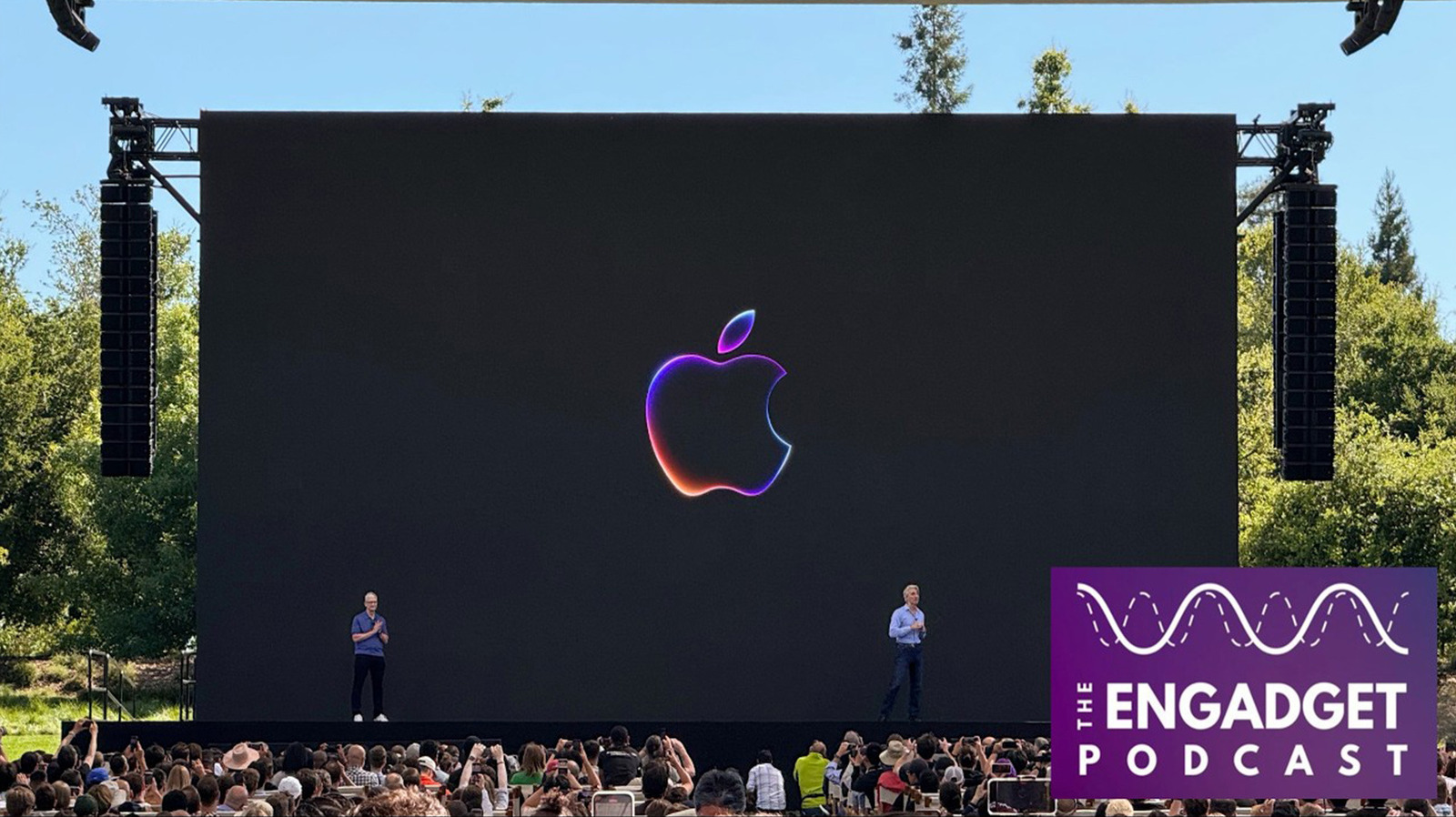
Engadget Podcast: Recapping Apple's Siri AI WWDC 2026 keynote
Apple's developments in Siri AI and child safety features could significantly influence user engagement and industry standards in AI applications and consumer technology.
- Apple's WWDC 2026 keynote focused on significant announcements, particularly regarding Siri AI.
- The podcast discusses how Siri AI compares to other AI tools currently available.
- Additional topics covered include Apple's enhancement of child safety measures and overall speed improvements across its platforms.
Apple is a leading technology company known for its innovative products and services, like the iPhone and Mac. WWDC, or Worldwide Developers Conference, is an annual event where Apple showcases its new software and features. Observers are keen to see how Siri AI's advancements will impact user experience and competitiveness in the AI market.
Read the original ↗
Microsoft’s open source tools were hacked to steal passwords of AI developers
This incident highlights the vulnerability of popular software tools and the potential for significant data breaches affecting AI developers and users of Microsoft's services.
- Microsoft has disabled dozens of its open source projects on GitHub due to a hack that injected password-stealing malware into the code.
- The malware targeted users of AI coding tools associated with Microsoft's Azure service and other development applications.
- Security firms Cloudsmith and OpenSourceMalware reported the hack, indicating it could compromise sensitive credentials for users accessing these tools.
- At least 70 Microsoft projects have been affected, with some repositories restored after investigation while others remain offline.
- Microsoft is currently investigating the breach and has notified a small number of customers who may have been impacted.
Microsoft Azure is a cloud computing service provided by Microsoft, and the affected tools include those used for AI development. This breach follows a recent trend of supply chain attacks on open source projects, with Microsoft experiencing a similar incident earlier this year. Future responses from Microsoft regarding the security of its tools and the extent of the breach are expected.
Read the original ↗
OmniGameArena: A Unified UE5 Benchmark for VLM Game Agents with Improvement Dynamics
The development of OmniGameArena could lead to more effective evaluations of vision-language model agents, improving their performance in interactive gaming environments.
- OmniGameArena offers a unified benchmark for assessing vision-language model (VLM) agents across various game environments including Solo, PvP, and Coop.
- The platform consists of twelve new games developed in Unreal Engine 5, all featuring the same action interface for consistent testing.
- The Improvement Dynamics Curve (IDC) tracks how an agent's performance evolves through self-reflection and adapts to new task variants.
OmniGameArena addresses the need for standardized benchmarks in evaluating VLM agents' performance in games. Prior benchmarks often reported single scores and lacked comprehensive evaluation methods. This initiative aims to enhance how agents are assessed across different gaming contexts.
Read the original ↗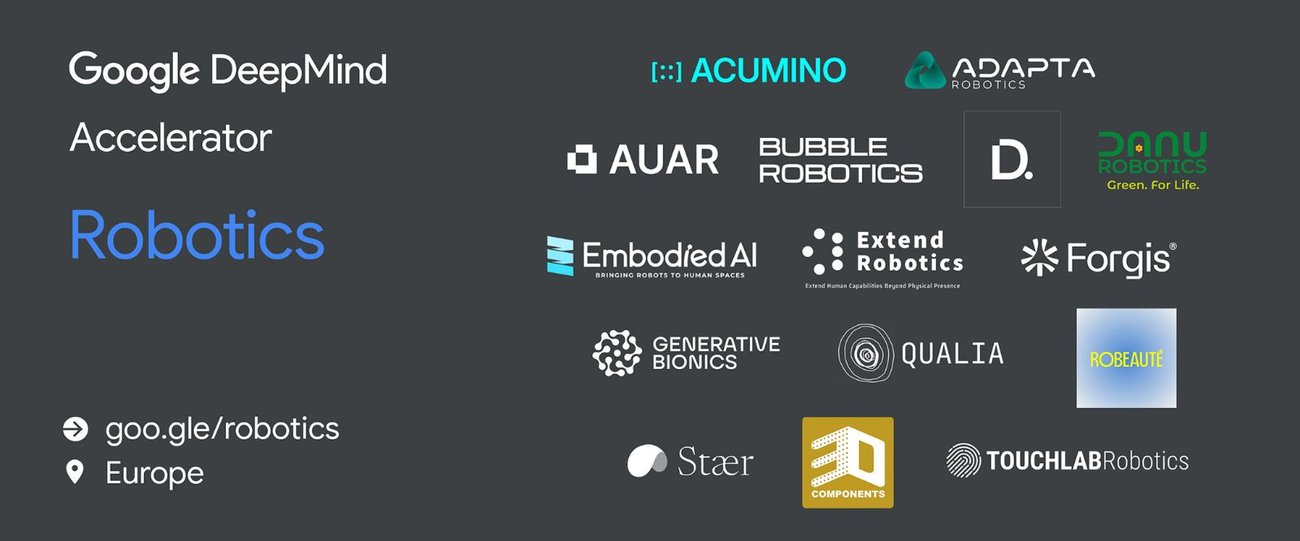
Powering the future of robotics in Europe
The Google DeepMind Accelerator program is crucial for advancing robotics innovation in Europe, providing startups with essential support to transform AI research into practical applications.
- Google DeepMind Accelerator has selected 15 robotics startups across Europe for a three-month mentorship program.
- The program offers technical support and access to AI models to help integrate AI into their robotic products.
- Startups in the cohort are focused on various sectors including healthcare, manufacturing, and climate solutions.
The Google DeepMind Accelerator aims to support early-stage robotics businesses by providing them with technical guidance and tools from Google. This initiative reflects a growing focus on robotics and AI as key areas for technological advancement in Europe. Future developments to watch include the progression of these startups into market-ready solutions and their potential impact across various industries.
Read the original ↗
Beyond the Hype – Where AI Actually Works in Manufacturing
Closing the gap between AI expectations and execution is crucial for manufacturers to leverage technology effectively and enhance productivity.
- Over 80% of U.S. manufacturing leaders plan to increase AI usage within the next two years, yet many lack clear strategies.
- 51% of manufacturers currently use AI, and 80% consider it essential for business expansion or maintenance, according to a NAM survey.
- AI adoption is hindered by readiness gaps, limited leadership input, and uneven integration into daily operations.
- Manufacturers should identify AI's strengths, such as pattern recognition, while avoiding its use in precision control and safety-critical operations.
AI is increasingly viewed as vital for competitiveness in manufacturing, but many organizations face challenges in translating enthusiasm for AI into practical applications. Ongoing surveys show that while adoption is growing, understanding of where AI can effectively be applied remains inconsistent among leaders. Future trends may include more refined strategies for implementing AI in targeted scenarios to maximize benefits.
Read the original ↗
When AI Acts, IT Still Owns the Consequences
The shift in IT governance prompted by AI’s autonomous capabilities necessitates new strategies to maintain accountability and control in the face of unprecedented decision-making speed and complexity.
- Traditional IT governance models are becoming outdated as AI alters how technology operates, demanding rapid decision-making without human oversight.
- A survey revealed that 85% of technology leaders prioritize speed in AI deployment over governance, highlighting a shift in focus towards execution.
- Many organizations lack proper access controls for AI systems, contributing to risks and breaches, as noted in IBM's Cost of a Data Breach Report.
AI technology is increasingly autonomous, prompting executives to rethink their governance strategies in response to faster decision cycles and complex interdependencies. Historically, IT governance involved human oversight at various stages, but this approach may no longer suffice. Future developments will likely focus on establishing new frameworks for accountability and risk management in AI-driven environments.
Read the original ↗
Standard Bots Raises $200 Million Series C at $1 Billion Valuation to Scale AI-Native Industrial Robotics
The $200 million funding positions Standard Bots to significantly impact the industrial robotics market, making automation more accessible and potentially transforming manufacturing processes for a broader range of businesses.
- Standard Bots has raised $200 million in Series C funding, achieving a valuation of $1 billion and joining the unicorn club in the robotics sector.
- The funding round was led by RoboStrategy, with existing investor General Catalyst also participating.
- The company's plans include expanding manufacturing capacity, accelerating product development, and increasing deployment of its AI-native industrial robots in the U.S.
- Standard Bots aims to capture approximately 10% of new industrial robot deployments in the U.S. by next year, serving a range of customers from small manufacturers to major organizations.
Standard Bots specializes in AI-driven industrial robotics that can learn tasks through demonstration rather than traditional programming, making automation accessible to smaller manufacturers. As the robotics sector attracts significant investment, this funding reflects growing confidence in technologies that enhance productivity and reduce reliance on overseas manufacturing.
Read the original ↗
Mesoware Raises $1.5 Million to Simplify Industrial Robotics for Manufacturers
Simplifying the deployment of industrial robotics could enhance automation across various manufacturing sectors, enabling smaller manufacturers to compete more effectively and adapt to changing production requirements.
- Mesoware has raised $1.5 million in a pre-seed funding round led by Pillar VC.
- The company aims to develop an AI-powered robotics platform to simplify industrial automation for manufacturers.
- The platform is designed to reduce the complexity of deploying and scaling robotic systems, particularly for small and mid-sized manufacturers.
- Mesoware's system will support modular hardware and software components that adapt to various manufacturing workflows, enhancing flexibility.
- The platform targets applications in assembly, packaging, and machine tending, focusing on high-mix manufacturing environments.
Mesoware is a California-based startup addressing the complexities of industrial robotics deployment, which often require extensive engineering expertise. The rise of flexible automation solutions reflects a broader trend in manufacturing as companies seek to improve efficiency amidst labor shortages and increasing production variability. Watch for developments in modular robotics as they could change industry practices significantly.
Read the original ↗
Has Microsoft Lost Its Mojo (Again)?
Microsoft's struggle with sales of its AI products and troubles at GitHub highlight the challenges tech companies face in maintaining developer loyalty and market leadership amid fierce competition.
- Microsoft's stock has declined this year despite its focus on AI, particularly the Copilot products.
- GitHub has experienced unprecedented downtime, leading to user complaints and potential attrition of its developer user base.
- Microsoft's new efforts to adopt agentic AI through products like OpenClaw seek to regain momentum in the coding community.
Microsoft is a leading technology company known for its software products and Azure cloud services. The company has been facing increased competition in the AI market, particularly from companies like Anthropic. Monitoring how Microsoft adapts its strategy in response to user feedback and competitive pressures is critical for its future.
Read the original ↗
Artificial Intelligence (458)
AI technology continues to evolve rapidly, influencing creativity and content generation through image creation tools.
- The article discusses artificial intelligence and its applications.
- It highlights free image generators available on Hugging Face, a platform for machine learning models.
Hugging Face is known for hosting various AI models, enabling users to generate images and other media. Exploring AI image generation tools is significant as they democratize access to advanced creative technologies. Monitoring advancements in AI will be essential for understanding future trends in digital content creation.
Based on the headline only — the full article could not be fetched.
Read the original ↗
Beyond Dexterity: Why Contact May Define the Next Era of Robotics
AGILINK's advancements in contact intelligence could significantly enhance robotic manipulation by allowing robots to adapt and respond effectively in complex tasks that involve physical interactions.
- AGILINK demonstrated its OmniHand dexterous hand folding balloons at the 2026 IEEE International Conference on Robotics (ICRA) in Vienna.
- The demonstration highlighted the challenges of long-horizon task execution and contact-rich manipulation, which are crucial for successful robotic interactions.
- AGILINK's new OmniHand 3 Ultra-M features 20 active degrees of freedom and advanced tactile sensors to improve force regulation and contact sensing capabilities.
AGILINK focuses on developing robotic hands capable of intricate manipulations. The company showcased its latest technology at ICRA 2026, reflecting ongoing research in improving robotic dexterity and interaction with objects. Future developments will likely further explore the balance of motion and contact intelligence in robotics.
Read the original ↗
AI Can Help Track the World’s Shrinking Glaciers
The ability to accurately track glacier retreat using AI is crucial for understanding climate change and its impacts on global sea levels.
- A new AI method allows for tracking of glacier calving fronts with minimal data, improving accuracy from over a kilometer to less than 70 meters.
- Researchers successfully mapped glacier dynamics for 145 glaciers in Svalbard over nine years, generating over 203,000 annotations.
- The model can adapt to new regions, reducing reliance on extensive manually labeled data for each glacier.
AI is being implemented to automate the tracking of glacier retreat, an essential task in understanding climate change effects. Traditional methods involve extensive manual labor, while recent advances can significantly enhance efficiency and data quality. Future work will focus on applying this improved model to a larger number of glaciers globally.
Read the original ↗
Sandstone raises $30M to bring AI to in-house legal teams
The funding enables Sandstone to enhance workflow management for in-house legal teams, a sector increasingly recognized for its potential in AI applications.
- Sandstone has secured $30 million in Series A funding, led by Lightspeed Venture Partners.
- The new funding comes six months after a $10 million seed round led by Sequoia.
- Sandstone targets in-house legal teams at small and mid-sized businesses, offering AI-driven workflow automation and relationship management.
Sandstone specializes in AI tools aimed at streamlining the processes of in-house legal departments, diverging from existing tools focused primarily on private practice. The company emphasizes the unique complexities faced by these legal teams, setting it apart in a competitive market that includes notable players such as Harvey and Legora.
Read the original ↗
SenseNova-U1: Unifying Multimodal Understanding and Generation with NEO-unify Architecture
The introduction of SenseNova-U1 could significantly enhance how AI systems integrate and perform multimodal tasks, potentially improving applications in image synthesis and action reasoning.
- Unified vision-language models combine understanding and generation to improve multimodal AI functionality.
- SenseNova-U1 is built on the NEO-unify architecture, allowing these processes to function as a single system.
- Two variants, SenseNova-U1-8B-MoT and SenseNova-U1-A3B-MoT, demonstrate capabilities in text understanding, vision-language perception, and knowledge reasoning.
Unified vision-language models treat understanding and generation as interlinked processes rather than separate tasks. SenseNova-U1 represents a shift from fragmented architectures to a comprehensive multimodal AI system. Future developments will focus on enhancing these unified capabilities in practical AI applications.
Read the original ↗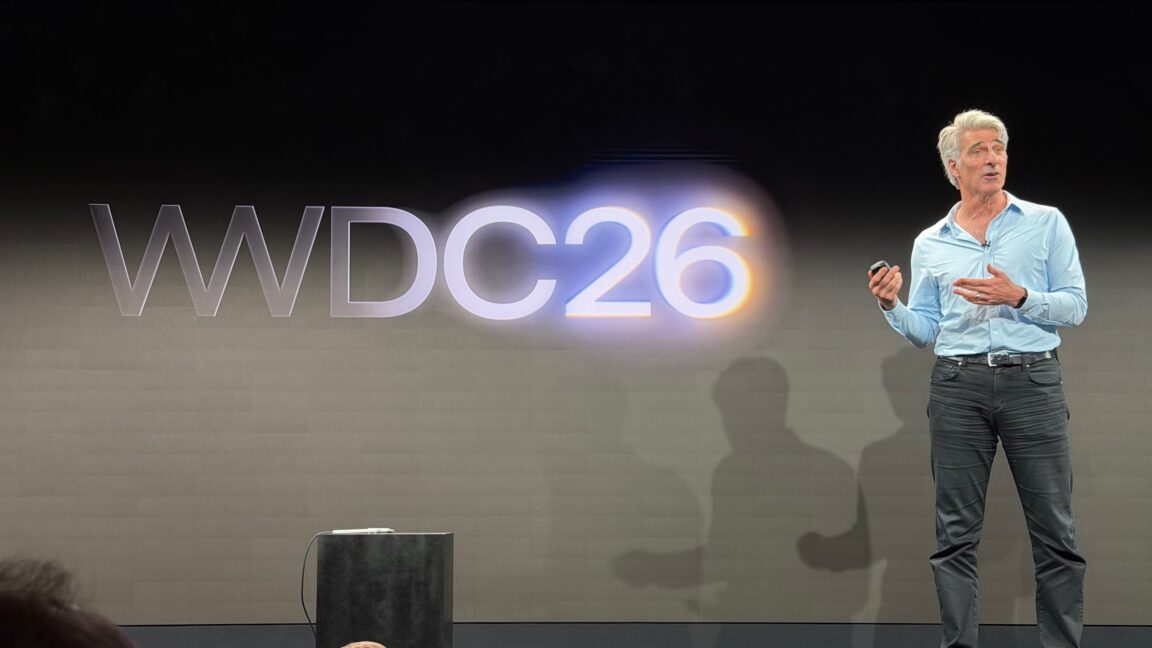
Apple says its AI is still private, even when it’s running on Google’s servers
This development highlights Apple's commitment to user privacy while expanding its AI capabilities, which may set a precedent in the tech industry regarding data security in cloud computing.
- Apple's Siri AI upgrade will utilize Google’s Gemini language models running on Nvidia servers.
- Apple assures that its privacy protocols remain intact despite using third-party cloud services.
- The company is implementing a new version of Private Cloud Compute designed for third-party hardware to maintain security.
Apple's privacy-focused approach has long been a cornerstone of its technology offerings. The integration with Google’s services marks a significant shift as Apple seeks enhanced AI performance without compromising user data confidentiality. It will be important to watch how these privacy measures are received in practice when the new features launch with upcoming OS versions.
Read the original ↗
Measuring the impact of learning with AI in Sierra Leone and beyond
The use of AI in education could significantly enhance student learning and engagement, particularly in underserved regions like Sierra Leone.
- A randomized controlled trial evaluated the impact of AI-guided learning on 1,763 junior secondary students over eight weeks in Sierra Leone.
- Students using the AI tool exhibited significant math score improvements, with gains equating to approximately 1.2 to 2.5 years of progress in learning.
- The AI system engaged students more effectively, with 69% meeting or exceeding usage targets and a notable shift in their approach to math inquiries over the study period.
This study, part of an ongoing effort by Google DeepMind to evaluate AI's role in education, involved collaboration with local educators and NGOs. Follow-up trials are planned in other countries to further assess AI's educational impact.
Read the original ↗
Maor Farid, Founder and CEO of Leo AI – Interview Series
The development of AI specifically for mechanical engineering could significantly enhance industry efficiency, reducing design time and accelerating the introduction of products to market.
- Leo AI is the first AI platform specifically designed for mechanical engineering, enabling teams to create production-ready 3D models in seconds.
- The platform has been adopted by companies including Toyota, HP, and Mobileye, and has grown its annual recurring revenue by 300% in Q1 2023.
- Founded in 2023 by Dr. Maor Farid, Leo AI addresses significant inefficiencies in engineering workflows that have persisted for decades.
Leo AI is an innovative AI tool that focuses on mechanical engineering tasks, allowing engineers to overcome the challenges associated with traditional design processes. The platform integrates physical modeling and expert verification into engineering workflows, a shift from the generic AI models currently in use.
Read the original ↗