
The day's AI news, briefed
The Daily Prompt
Our AI editor reads each day's AI and robotics stories, pulls out why they matter, and links every original source — so you can keep up in minutes.
Join over 250,000 subscribers getting the latest AI news
Latest AI & Robotics News Today

Book Review: The Psychology of AI Adoption at Work: From Resistance to Results by Gleb Tsipursky
Understanding the psychological barriers to AI adoption is crucial for organizations to effectively leverage artificial intelligence, which can significantly improve productivity and competitiveness.
- The Psychology of AI Adoption at Work by Gleb Tsipursky addresses employee resistance to AI adoption in the workplace.
- The book outlines psychological traits that hinder full adoption, such as automation anxiety and status quo bias.
- Tsipursky's work provides strategies for executives to motivate their teams and foster a culture that embraces AI technologies.
This book targets business executives facing challenges in implementing AI due to employee skepticism and fear. The importance of explainable AI and understanding organizational culture is emphasized as key to successful adoption. Upcoming trends to watch include how companies adapt their cultures to embrace AI and enhance productivity.
Read the original ↗
Harbinger raises $240M after expanding into defense
Harbinger's substantial funding round signifies growing interest and investment in electric and defense vehicle technologies, reflecting broader trends in the automotive and defense industries.
- Harbinger raised $240 million in a Series D funding round as the company expands into battery storage and defense applications.
- The funding round was co-led by Tiger Global and Ridgeline, with contributions from FedEx and Fidelity Management among other investors.
- Harbinger has now raised over $650 million total, having previously raised $160 million in Series C funding nearly a year ago.
- The company has revealed plans for a driverless hybrid electric platform for military use, expanding its product offerings beyond electric trucks.
Founded in 2022, Harbinger focuses on electric truck development and has recently expanded into defense applications. The startup has previously gained attention with an order of 2,000 trucks from FedEx and aims to further develop hybrid emergency vehicles.
Read the original ↗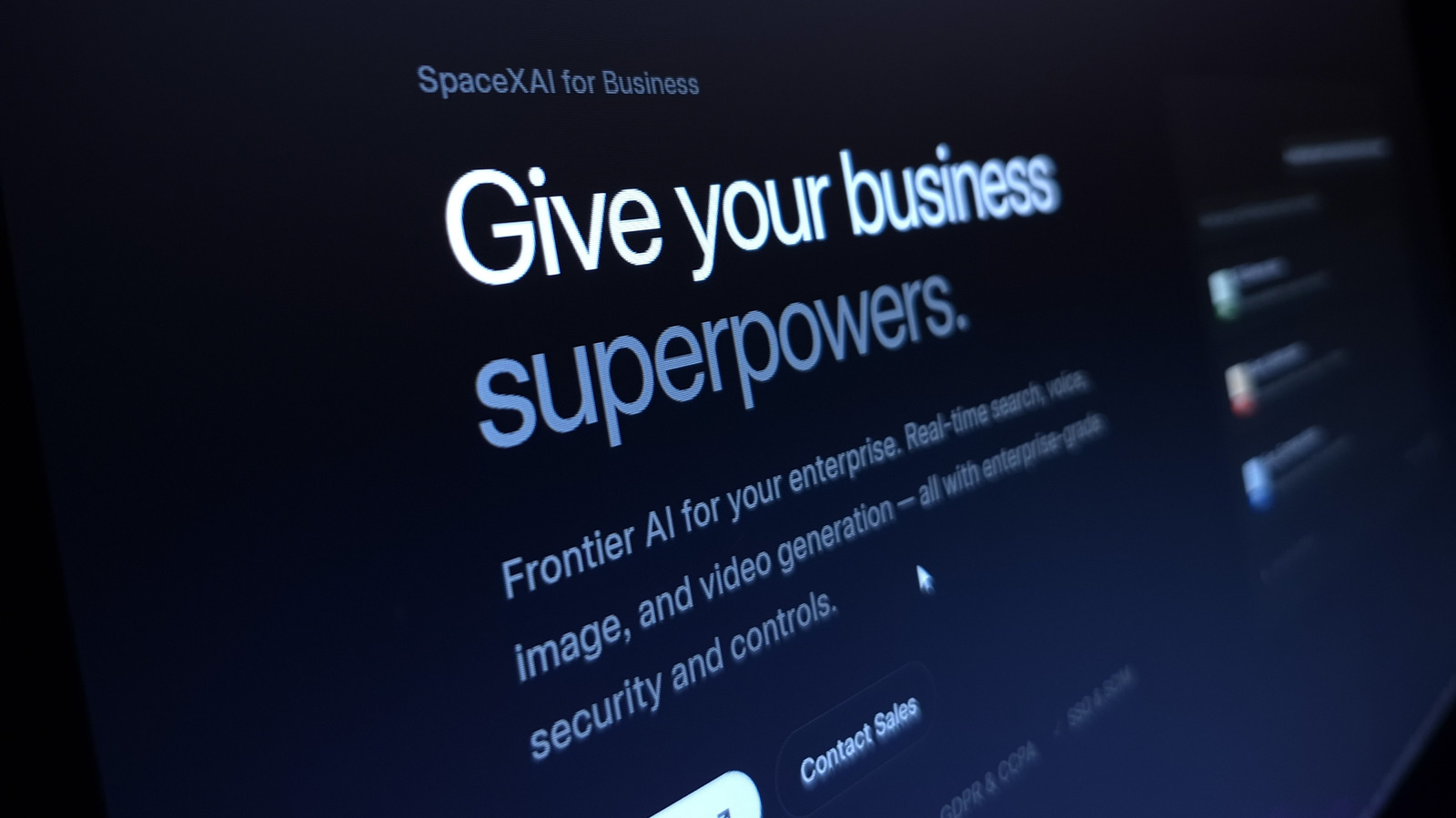
SpaceXAI Grok Bot availability just keeps growing - here's which plans offer it
The expansion of SpaceXAI's Grok Bot availability across various subscription plans illustrates the growing accessibility of advanced AI tools, potentially transforming workflows in diverse sectors.
- SpaceXAI's Grok Bot is now integrated into multiple subscription plans, including SuperGrok and Cursor Pro, increasing its accessibility.
- X Premium+ subscribers can link their accounts for Grok Bot access, while Teams plans also include it at various pricing tiers.
- The bot operates on a cloud computer and can handle multi-step tasks autonomously, but has limits such as dealing with CAPTCHAs.
SpaceXAI's Grok Bot offers users the capability to automate tasks within software environments, leveraging Cursor's cloud technology. The product was introduced in August 2026, following SpaceX's acquisition of Cursor, which supports model training. Future developments may include enhancements to functionality and broader plan options.
Read the original ↗
UK has no plans to slow down AI data center construction
Continued construction of AI data centers in the UK could enhance the country’s technological infrastructure and economic growth, while addressing community concerns through job creation and local investment.
- The UK's growth minister stated that data centers will be treated as essential infrastructure projects.
- AI's growing presence in the UK economy necessitates more data center construction to support demand.
- Government support for data centers will require investments that benefit local communities.
- The UK aims for 6GW of data center computing capacity by 2030 according to its Compute Roadmap.
Data centers provide the infrastructure needed for AI technologies to function effectively. The UK has introduced policies like the 'AI Growth Zones' to facilitate approvals for these projects, amidst some local opposition. The government's approach aims to balance technological growth with community benefits and oversight.
Read the original ↗
Suno AI music generator sued again for copyright infringement
This story highlights ongoing legal disputes over copyright infringement in AI-generated music, impacting the rights of artists and the practices of AI music generators.
- The music rights groups for Elvis Presley and Eminem filed separate lawsuits against Suno for copyright infringement.
- The lawsuits claim Suno's AI music generator produces songs that sound like Presley and mimic Eminem's lyrics.
- Suno stated it prohibits unauthorized use of artists' work and collaborates with third parties to prevent misuse.
Suno is an AI music generator facing multiple lawsuits regarding copyright infringement. This comes amid growing scrutiny over AI's use of artists' work without permission, raising questions about intellectual property rights in the digital age.
Read the original ↗
White House Request Raises US AI Safety Center Independence Concerns
Concerns about the independence of federal AI safety evaluations could affect the integrity of cybersecurity and bioweapons regulations, impacting national security and public trust in AI technologies.
- Officials at the Center for Advancing Innovation and Standards for Super Intelligence, or CAISSI, were asked to report informally to a White House office, raising independence concerns.
- Critics warn that this informal arrangement may lead to politicized decisions on cybersecurity and bioweapons, potentially altering findings to please the technology industry.
- CAISSI has an annual budget of $10 million and serves as a primary government contact for testing and research involving commercial super-intelligence systems.
CAISSI, part of the Commerce Department, is responsible for establishing AI testing standards and conducting evaluations to assess national-security risks. Recent leadership changes and halted reports have prompted congressional questions about its effectiveness. Ongoing discussions about its independence highlight the need for clear governance of AI safety evaluations.
Read the original ↗
AI music can be difficult to detect, but there are some telltale signs
The rise of AI music makes it crucial for listeners to discern the quality and authenticity of songs to avoid being misled by low-quality, generated content.
- AI music has become common on streaming platforms, raising concerns about misleading attribution to real artists and quality.
- Listeners can identify AI-generated music by signs in vocals, lyrics, and instrumentals that differ from human-created compositions.
- Common indicators of AI music include monotonous vocals, lack of dynamic change, simplistic lyrics, and absence of an artist's online presence.
Artificial intelligence in music can involve generating songs entirely or augmenting them with AI tools. Recent scrutiny follows a surge in AI-produced content, capturing attention for its impact on the music industry and artist integrity. Future developments may focus on improving detection tools and understanding AI's role in creative fields.
Read the original ↗
Google AI Releases Elephant-Goldfish Model Plugin for Spec-First Coding
The Elephant-Goldfish Model plugin enhances coding efficiency by introducing structured reviews before code is written, aiming to reduce errors and improve project clarity.
- Google has open-sourced the Elephant-Goldfish Model (EGM) plugin for AI coding agents to improve specification drafting and review processes.
- The EGM plugin uses independent subagents that assess specifications in five review stages before any coding takes place.
- Thousands of Google engineers are reportedly using the EGM plugin, which has been tested with various AI models like Codex and Claude Code.
The Elephant-Goldfish Model plugin is designed as a review layer for AI coding agents, focusing on writing specifications before code execution. It builds on the idea of zero-context agents to identify ambiguities in specifications. The plugin is part of Google's ongoing efforts to enhance AI-driven coding workflows and improve software quality.
Read the original ↗
The game reverse engineering community is the latest casualty of AI
The decline of the game decompilation community due to AI usage highlights significant issues regarding the integrity and purpose of reverse engineering efforts in software development.
- The decomp.dev community announced it is sunsetting, citing AI models as damaging to the community aspect of game reverse engineering.
- Administrator @encounter noted that AI-driven contributions have led to a decline in quality and genuine community engagement.
- Users are rapidly completing decompilation projects using AI without contributing meaningfully, resulting in lower quality outputs.
Decompilation is the process of converting compiled game code back to its original programming format, allowing for modifications and better compatibility with modern hardware. The rise of AI has enabled faster project completions but also introduced challenges such as decreased quality and community involvement. Future developments may see ongoing community fragmentation as AI tools continue to evolve.
Read the original ↗
I Used NYT Cooking’s New AI-Powered Recipe Modifier, and It’s Actually Pretty Good
The introduction of AI-powered recipe modification by the New York Times Cooking app represents a significant shift in food preparation support, attracting attention for its impact on user cooking experiences.
- The New York Times Cooking app released an AI-powered feature for modifying recipes in a beta version for iOS users.
- Subscribers expressed discontent about the AI feature, resulting in the disabling of comments after four days due to negative feedback.
- The AI assists users in customizing recipes by suggesting ingredient swaps and adjustments based on available equipment and dietary needs.
New York Times Cooking is a digital cooking platform that provides tested recipes and cooking guidance. The recent beta feature aims to enhance user cooking flexibility using AI technology, despite concerns from some subscribers. Future developments may depend on user feedback and further integration of AI functionalities.
Read the original ↗
Here Are My Absolute Favorite Computer Speakers, After Testing 30 Pairs
Selecting quality computer speakers can significantly enhance audio experiences across various activities, from gaming to video calls, making the right choice essential for many users.
- The article presents a curated list of recommended computer speakers across multiple budgets and use cases, after testing over 30 pairs.
- Audioengine A2+ is highlighted as the best overall computer speaker, noted for its compact design, clarity, and versatility, costing around $299.
- Kanto UKI speakers are recognized for their compact form and warm sound, priced at $270, making them suitable for small desktops.
- IK Multimedia iLoud Micro Monitors, priced at $300, are recommended for their big sound and compact size, aimed at audiophiles.
Computer speakers enhance audio quality for personal computers and gaming systems, addressing a common issue where sound is often neglected. The market includes various types of speakers, such as soundbars and traditional stereo systems, catering to different preferences. Future reviews may focus on emerging audio technologies and trends in speaker design.
Read the original ↗
What Is AI Red Teaming? How Experts Stress-Test Models and Agents
Understanding AI red teaming is crucial for ensuring the reliability and safety of AI models, as it identifies potential failures and misuse before deployment.
- AI red teaming involves adversarial testing to identify how AI systems can fail or be misused.
- The process is distinct from conventional compliance checklists and emphasizes continuous testing rather than one-time evaluations.
- AI red teaming includes five stages: defining assets, designing attacks, exercising systems, capturing outcomes, and converting findings into controls.
AI red teaming is a method of rigorously testing AI systems to enhance their safety and performance by identifying vulnerabilities. This approach prioritizes ongoing evaluation and clear definitions of assets and hypotheses. As AI technologies evolve, red teaming will become increasingly essential for maintaining responsible deployment.
Read the original ↗
Amazon Builds Home Robotics Team for New-to-World Robot
The creation of Amazon's home robotics team indicates the company's commitment to developing innovative robots for everyday use in residential settings, potentially reshaping household interactions.
- Amazon has formed a home-robotics team and is hiring for a new robot product.
- Job listings reveal a focus on user experience, cloud services, and customer support for the new robot.
- The team will build on existing technology and address challenges in human-robot interaction and operational support.
- Fauna Robotics, recently acquired by Amazon, will contribute its humanoid robot expertise to this effort.
Amazon's new home robotics initiative is part of a broader effort to enhance its robotics capabilities, building on the experience gained from previous products like Astro. The company aims to develop robots that can navigate homes and perform useful tasks in family environments. Future developments should focus on creating practical applications that extend beyond initial offerings.
Read the original ↗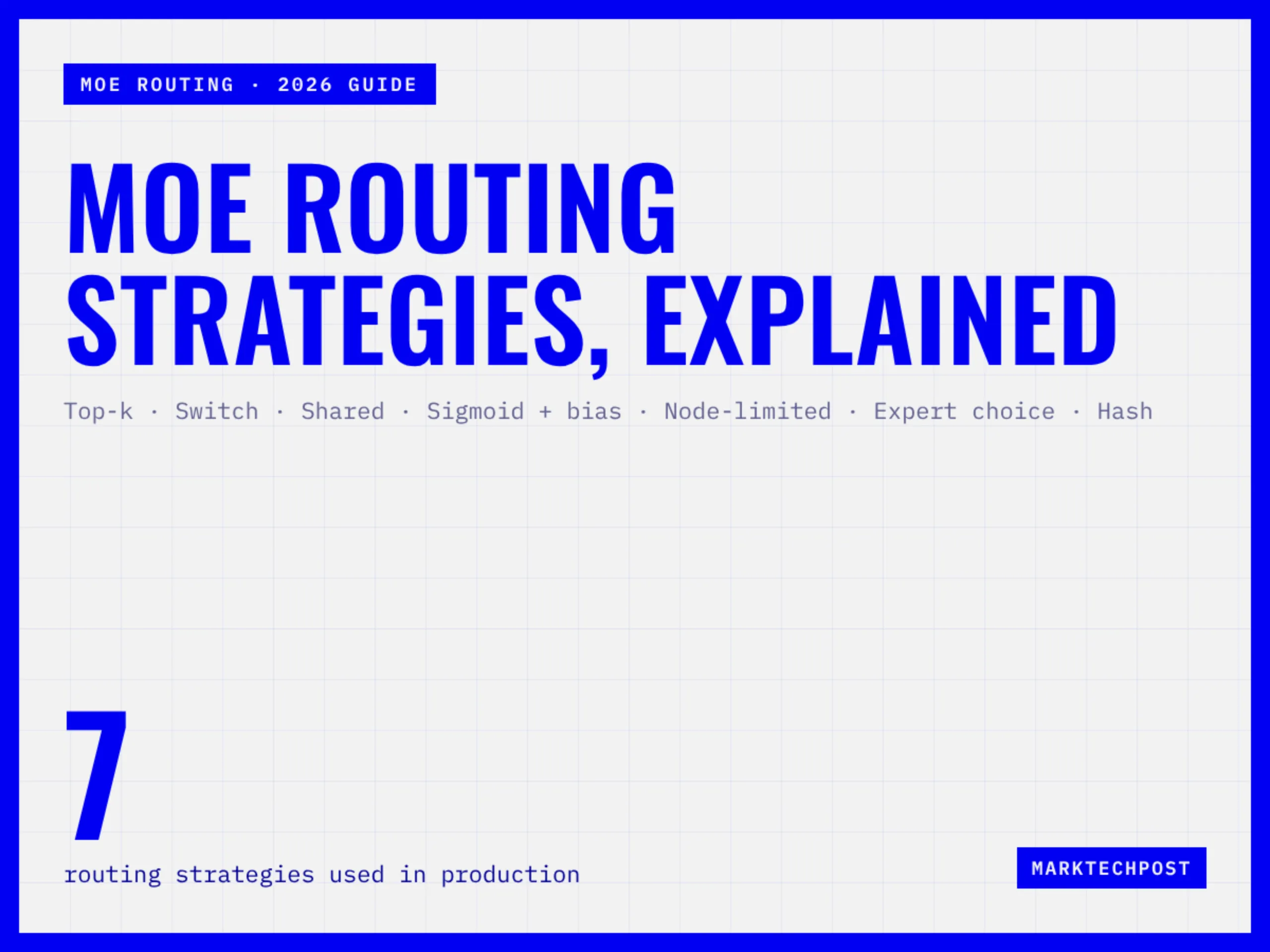
MoE Routing Strategies Explained: Top-K, Expert-Choice, Sigmoid Gating and Dynamic Routing...
Understanding these routing strategies is crucial for optimizing the performance and efficiency of Mixture-of-Experts models in various AI applications.
- Mixture-of-Experts (MoE) models use routers to determine which experts process each token, shaping model performance and resource efficiency.
- Major routing strategies include Top-K, Expert-Choice, and Sigmoid Gating, each affecting model quality and compute costs differently.
- The dominant routing method in 2026 uses Sigmoid scoring with bias balancing, significantly improving load distribution and balancing performance across experts.
Mixture-of-Experts models use a set of expert networks to process data, allowing reduced computation for specific tasks. This article explains various routing strategies that manage how tokens are assigned to these experts. Observers should note the trend towards bias-balanced approaches and possible implications for AI training efficiency.
Read the original ↗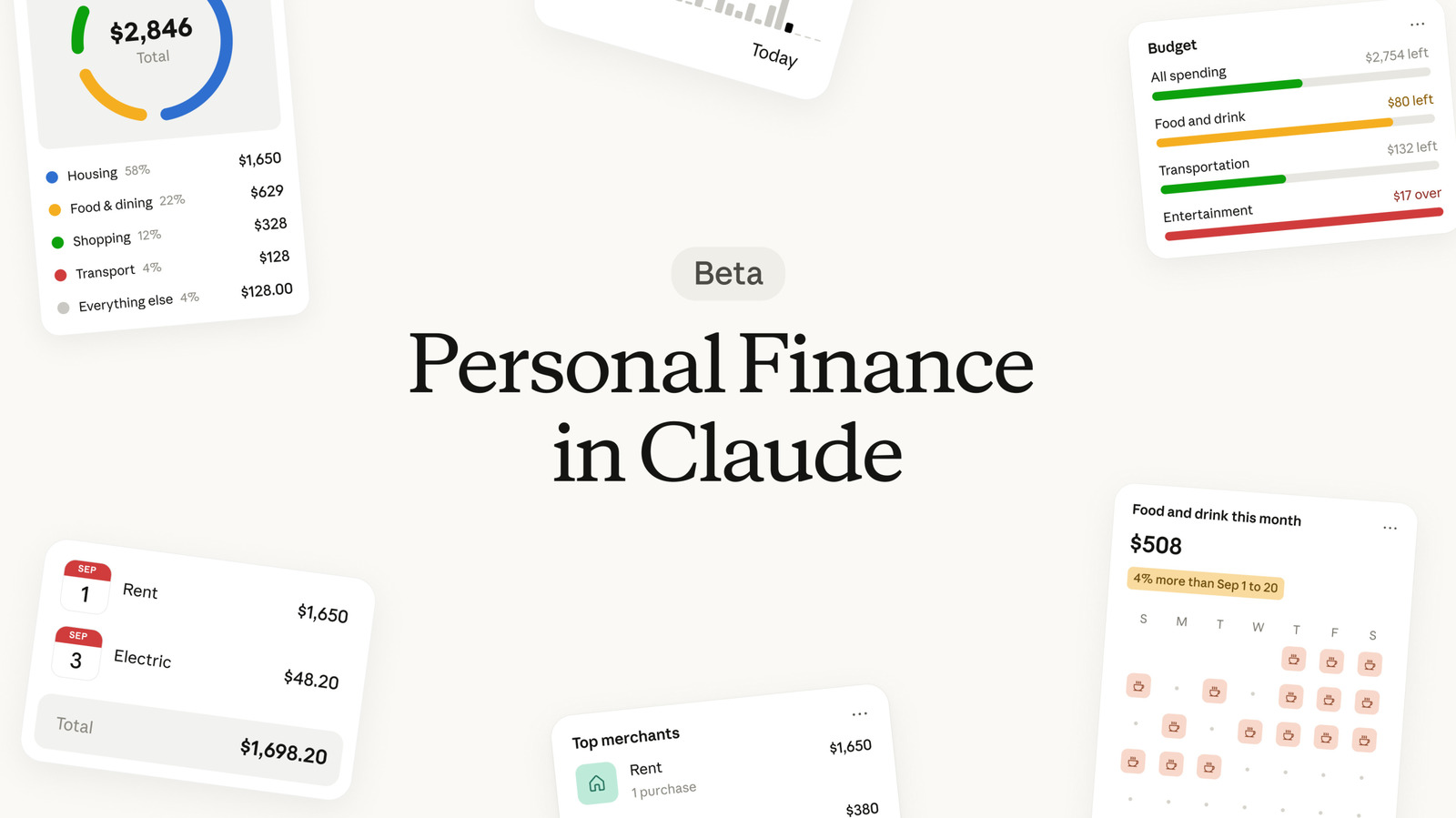
Claude Personal Finance vs. ChatGPT Finances: What sets them apart?
The differences in privacy policies between Claude's Personal Finance tool and ChatGPT's Finances feature could influence user trust and adoption in the personal finance AI sector.
- Anthropic's Claude Personal Finance feature offers users insights into their financial data while ensuring conversations aren't used for model training by default.
- OpenAI's ChatGPT Finances also provides financial insights but users must opt out to prevent their data from contributing to model training.
- Both AI tools require users to link their bank accounts through Plaid for access to financial information, maintaining read-only permissions on user data.
Claude and ChatGPT are AI tools from Anthropic and OpenAI, respectively, designed to assist users with personal finance management. Both tools launched features aimed at providing users insights into their financial situations but differ significantly in their data privacy practices. Future updates may enhance features or expand functionalities for users in financial handling.
Read the original ↗
How to set up SpaceXAI's Grok in Google Workspace (and what it can do)
The introduction of the Grok add-on in Google Workspace enables users to leverage AI capabilities in common productivity tools, potentially enhancing workflow efficiency and document quality.
- SpaceXAI released a free Grok add-on for Google Workspace in July 2026 to integrate AI functionality into Docs, Sheets, and Slides.
- Users can install Grok from the Google Workspace Marketplace or directly within the apps, requiring minimal setup.
- Grok can assist with tasks like answering questions, creating presentations from outlines, and generating content in Google Docs.
- Grok requires extensive permissions for access to users' Google Drive and files it interacts with, raising privacy considerations.
- Grok provides an alternative to Google's Gemini, which is paid and integrated across more Workspace apps but lacks Grok's ability to pull from X.
Grok is an AI chatbot developed by SpaceXAI, designed to enhance productivity in Google Workspace tools. Prior to Grok, users relied on other AI tools, such as Google's Gemini, which has become a paid service since early 2025. Future developments may focus on user feedback and improving integration with more applications.
Read the original ↗
Book Review: Forward Deployed: Inside the Palantir Framework That Solved Enterprise AI by Riste Gramatikov
This book provides insights into how Palantir's forward deployed engineering model can enhance software solutions and create scalable advantages in the AI landscape for businesses.
- The book, 'Forward Deployed: Inside the Palantir Framework That Solved Enterprise AI' by Riste Gramatikov, explores Palantir's unique software development model.
- Palantir embeds software engineers with clients to develop tailored solutions and improve software based on direct customer feedback.
- This approach leads to a compounding feedback loop that enhances the software platform with every deployment, making it more valuable over time.
Palantir Technologies is well-known for its data integration and analysis software, widely used by government agencies and large corporations. The company focuses on customer-specific solutions through Forward Deployed Engineers, countering conventional SaaS practices that separate developers from end users. The book's narrative is based on real-world deployments, offering a detailed understanding of Palantir's operational strategies.
Read the original ↗
China's main intelligence agency reportedly recruited the spy who targeted NVIDIA's CEO
This story highlights the increasing efforts by state actors to gather intelligence on leading figures in the artificial intelligence sector, impacting national security and corporate governance.
- China's Ministry of State Security reportedly recruited Alice Huang to spy on NVIDIA CEO Jensen Huang.
- US officials believe Jensen Huang had a romantic relationship with Alice Huang, which may have influenced her actions.
- Alice Huang's recruitment aimed to gain insights into US artificial intelligence plans and facilitate chip exports to China.
- Megaspeed, where Alice Huang is an executive, was a significant customer of NVIDIA, purchasing billions in AI chips.
China's Ministry of State Security is the country's primary intelligence agency, akin to the CIA in the United States. Prior reports indicated Alice Huang's relationship with Jensen Huang may have been exploited for espionage efforts. Moving forward, scrutiny on corporate ties and espionage risks in the tech industry is expected to increase.
Read the original ↗
Apps for Caregivers Get a Dose of AI, but That Might Not Be Enough
The increasing reliance on caregiver apps highlights the urgent need for better support systems as millions of Americans struggle with the complexities of caregiving and their own well-being.
- In 2025, an estimated 63 million Americans will care for individuals with medical conditions or disabilities, spending an average of 27 hours per week on care.
- Several caregiver apps are emerging, such as Medisafe for tracking medications, Caring Village for managing care tasks, and Mejo for consolidating medical histories.
- AI features in these apps aim to assist caregivers by providing reminders, tracking symptoms, and suggesting questions for medical visits, although most are not FDA-approved medical devices.
Caregiver apps provide tools for families supporting individuals with health needs, but the caregiver crisis remains unresolved, exacerbated by their heavy workload. Users must remain diligent in updating these apps to ensure they receive the intended benefits, amid concerns over data privacy and efficacy.
Read the original ↗
What Is Model Distillation? How Large AI Models Teach Smaller Ones
Understanding model distillation is crucial as it enables effective knowledge transfer from larger AI models to smaller ones, enhancing efficiency and performance in real-world applications.
- Model distillation transfers learned behavior from larger AI models (teachers) to smaller models (students) using various techniques, including teacher outputs and softened probabilities.
- A clear separation between model distillation and simple parameter compression is essential to accurately evaluate AI performance and avoid misleading conclusions.
- The process of model distillation involves five stages: selecting a teacher, generating supervision, training the student model, testing knowledge retention, and iterating on data and objectives.
Model distillation is a technique used in artificial intelligence to efficiently teach smaller models using the knowledge of larger models. This method has gained attention as AI applications grow, highlighting the need for more compact and efficient models without sacrificing capability. Understanding its stages and functions is important for future AI advancements.
Read the original ↗