
The day's AI news, briefed
The Daily Prompt
Our AI editor reads each day's AI and robotics stories, pulls out why they matter, and links every original source — so you can keep up in minutes.
Join over 250,000 subscribers getting the latest AI news
Latest AI & Robotics News Today
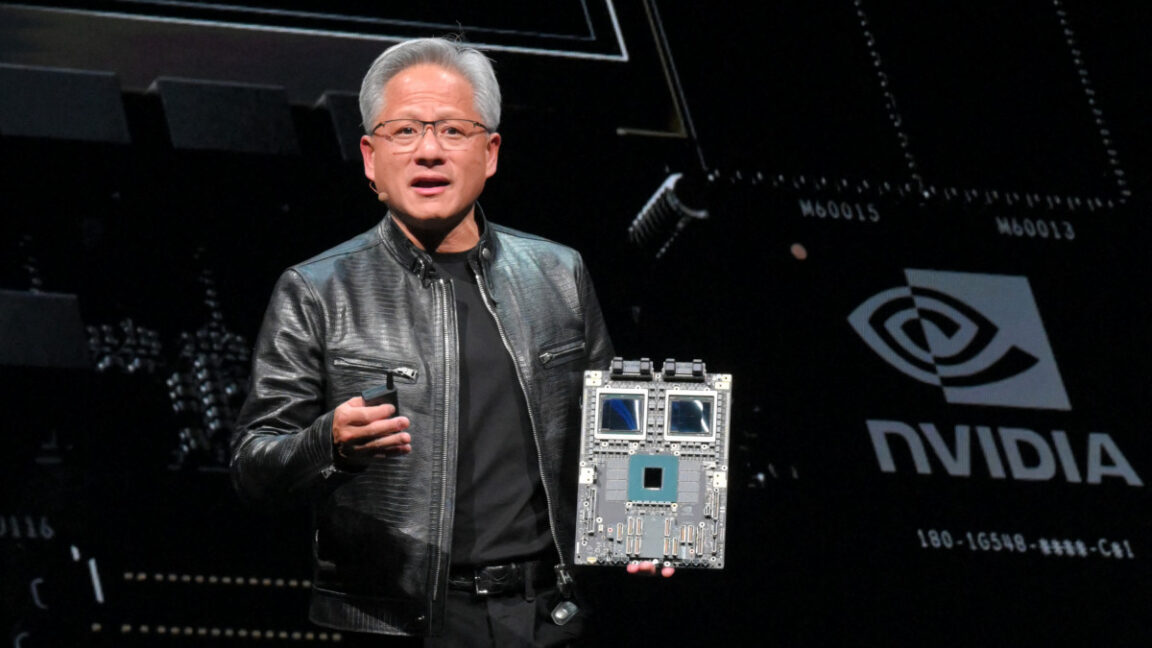
Nvidia CEO’s affair becomes a national security problem
Jensen Huang's admission of an affair raises serious concerns about national security, particularly regarding potential espionage efforts that could affect Nvidia and US-China relations.
- Nvidia's CEO, Jensen Huang, admitted to an affair that the US intelligence community believes involves a Chinese spy.
- Nvidia's board is initiating an independent investigation into possible foreign intelligence efforts targeting Huang.
- The US government had previously investigated Megaspeed, a customer of Nvidia linked to the alleged spy.
- Nvidia's shares dropped over 6 percent following the news of Huang's affair.
Nvidia is a leading technology company known for its AI chips, which play a crucial role in various applications. The firm has faced scrutiny over its dealings with China, particularly in light of national security concerns surrounding advanced technology exports. Going forward, the investigation's findings may impact Nvidia's operations and Huang's leadership.
Read the original ↗
Skyways Starts Production of Its Autonomous Skyreach Cargo Aircraft
The commencement of autonomous cargo aircraft production signifies advancements in drone technology, potentially transforming logistics and delivery services in both defense and commercial sectors.
- Skyways has begun production of its Skyreach autonomous cargo aircraft in Austin, Texas, following its announcement on November 9, 2026.
- The Skyreach aircraft is designed for vertical takeoff and landing, with a flight range exceeding 1,300 miles carrying 10 pounds of cargo.
- Skyways aims to deploy over 1,000 Skyreach aircraft for defense and commercial use within five years, significantly reducing operational costs compared to helicopters.
- Initial customer flights are set to start in December 2026, marking a critical step for operational testing and service repeatability.
Skyreach is a vertical-takeoff-and-landing cargo aircraft developed by Skyways, which leverages advancements from its V3 program. The production follows a $37 million funding award that transitioned the aircraft from prototype to production. Future developments will focus on validating performance specifications during initial customer operations.
Read the original ↗
Q.ANT Opens Photonic AI Hardware Pilot on IONOS Bare Metal
This pilot program enables businesses to test advanced photonic processing for AI, potentially improving computational efficiency and opening new avenues for commercial applications.
- Q.ANT launched a pilot program allowing selected users to test AI workloads on its second-generation photonic processor in Germany.
- Participants must show expertise in handling bare-metal servers and have a concrete use case for their AI applications.
- The NPU performs operations directly in the optical domain, which can result in fewer parameters and operations compared to traditional chips.
- Workloads accepted for the pilot include industrial vision, scientific simulation, and large-language model inference, among others.
- Participants retain ownership of their data and results while contributing aggregated insights to develop the processor.
Q.ANT specializes in photonic computing, using optical technology to enhance AI computations. This pilot follows a prior agreement with IONOS to utilize its bare-metal servers, allowing companies to evaluate photonic processing in real-world scenarios. Observers should watch for metrics on performance and energy efficiency from the pilot results.
Read the original ↗
Expedera Demonstrates Edge AI Subsystem Pairing with Cadence
This integration demonstrates progress in optimizing edge AI performance, which is crucial for the growing demand in diverse applications from smartphones to automotive systems.
- Expedera paired its Origin Evolution neural processing unit (NPU) with Cadence’s Tensilica NeuroEdge 130 AI Co-Processor in a pre-silicon simulation.
- The combined subsystem is designed to enhance performance and power efficiency while reducing latency, cost, and complexity, although specific metrics are not provided.
- This integration can support inference designs for edge nodes, smartphones, automotive systems, and data centers, with potential applications extending to other Tensilica processors.
Expedera’s Origin Evolution launched in May 2025 as a production-ready NPU, while Cadence’s NeuroEdge 130 was introduced the same month for automotive applications. This new pairing represents a validated integration for edge AI solutions, addressing key design challenges in performance and adaptability.
Read the original ↗
How AI-Generated Listings Are Fooling Renters & How to Spot Them
This story highlights the rising threat of AI-generated rental scams, which pose significant risks to renters' financial safety and personal information amidst a digital rental search landscape.
- Generative AI enables scammers to create realistic rental ads and property descriptions quickly, complicating the identification of fraudulent listings.
- Fraudulent listings may feature altered photographs and convincing communications designed to mislead prospective renters.
- Verifying rental listings through independent sources and conducting in-person viewings is essential for safeguarding personal information and finances.
As rental property searches increasingly shift online, generative AI poses new challenges by enabling sophisticated scams that can deceive even savvy renters. Tools for verification, while useful, must be complemented by direct inquiries and due diligence to counteract these advancements. Being aware of common warning signs is crucial for renters navigating this evolving landscape.
Read the original ↗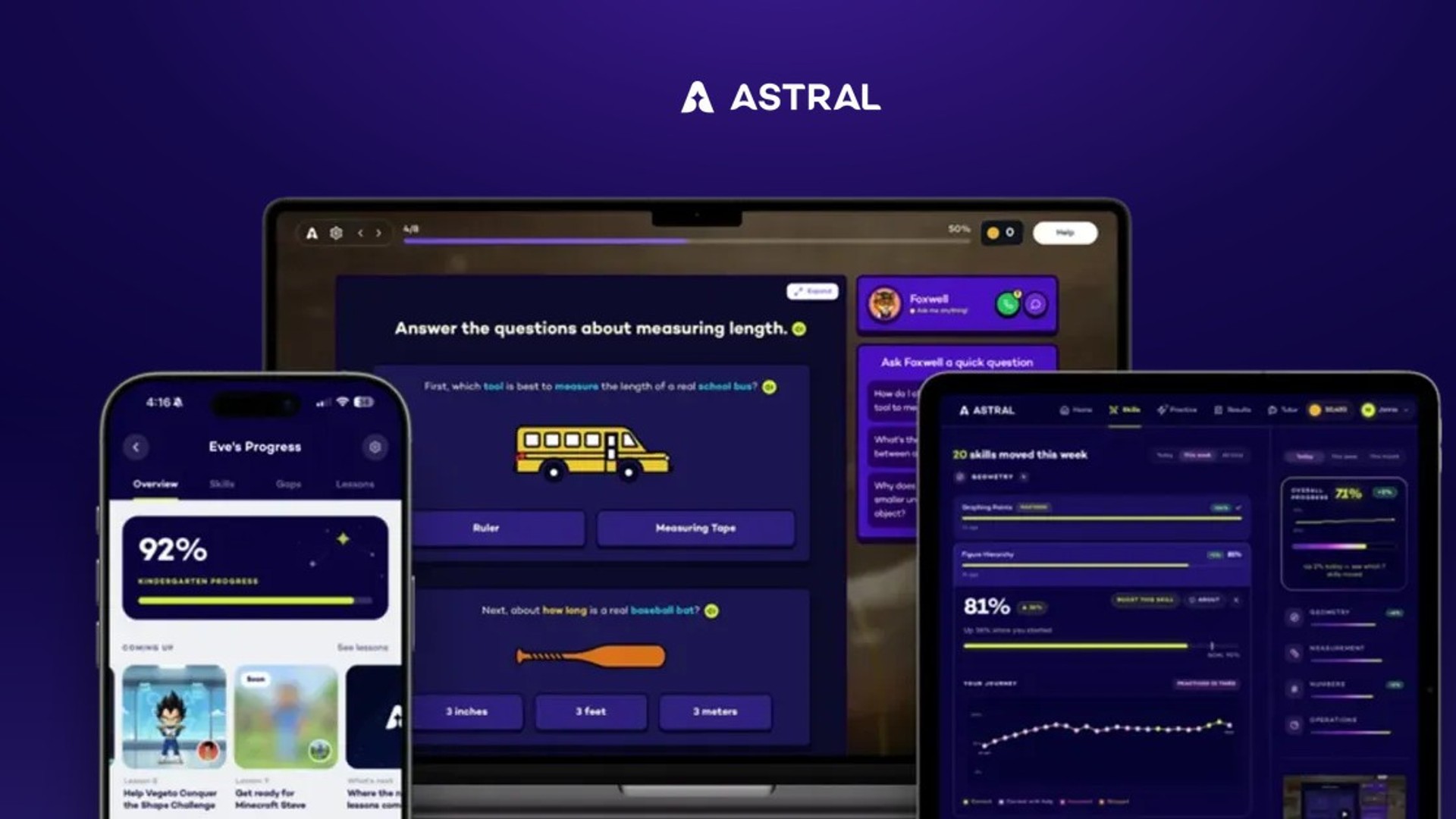
Astral Raises $5.5M in Total Funding to Expand AI Math Tutoring
Astral's funding enables nationwide access to its AI math tutoring platform, potentially transforming educational support for families across the United States.
- Astral raised $5.5 million to expand its personalized AI math tutoring service to families in all 50 states.
- The tutoring service is already used by thousands of families in over 33 states and focuses on grades K-8.
- Funders included MapleVC and Stand Together Ventures Lab, with previous investors participating in this round.
- The product features a conversational placement assessment and real-time lesson tracking, leveraging AI technology from Anthropic and Google Gemini.
- Astral is developing high-school math curriculum while currently providing services through 8th grade.
Astral provides a personalized AI math tutoring program tailored for students in kindergarten through eighth grade. Previously, the company targeted specific states and now aims for national distribution, with plans to extend its curriculum offerings. Key features include a parent dashboard and reassessment of skills to enhance learning effectiveness.
Read the original ↗
Spines Raises $64M Through Series A-1 Equity and Growth Financing
Spines' $64 million funding will enhance its AI-driven publishing platform, potentially transforming the speed and accessibility of self-publishing for authors.
- Spines raised $64 million in funding, comprising a $29 million Series A-1 equity round and a $35 million non-dilutive growth financing facility.
- The equity round was led by Zeev Ventures with participation from several investors, including Aleph and NordStar.
- Spines reports a $50 million revenue run rate and 400% annual growth, with over 8,000 authors currently using their platform.
- The platform utilizes AI agents to handle various publishing tasks, significantly shortening the publishing process from months to weeks.
Spines offers an AI-enhanced publishing platform that assists authors in producing and marketing their books more efficiently. Their approach combines technology and human support, aiming to empower authors rather than replace them. The company plans to expand its language offerings and author base in the coming months.
Read the original ↗
geniosAI Raises $19.1M in Combined Seed and Series A Funding
The funding enables geniosAI to enhance its financial intelligence platform, potentially transforming how investment and corporate finance teams analyze data and make decisions.
- geniosAI has raised $19.1 million in combined seed and Series A funding, emerging from stealth.
- FactSet led the Series A funding, with contributions from Zoom and General Catalyst.
- The platform is aimed at CFO offices and investment professionals, helping with earnings preparation and analysis.
- geniosAI's products focus on preserving institutional context in financial research and modeling.
- CEO Prabhdeep Singh emphasizes the importance of traceability in financial analysis for better organizational decision-making.
geniosAI, based in San Jose, California, provides financial intelligence tools designed for corporate finance and investment teams. The company aims to offer solutions that allow institutions to track and review their analytical processes. Future developments may include broader adoption of its platform across more financial institutions.
Read the original ↗
Coframe Raises $25M Series A, Bringing Total Funding to $35M
Coframe's new funding enables further development of its innovative AI-driven web solutions, enhancing digital interaction and optimization for businesses seeking greater engagement and revenue.
- Coframe has raised $25 million in Series A funding, co-led by Khosla Ventures and Hanabi Capital, bringing its total funding to $35 million.
- The company aims to create dynamic websites and advertisements that continuously learn and improve through AI-driven experiments.
- Leaders from OpenAI, Anthropic, and Google DeepMind participated in the latest funding round, showcasing strong interest in Coframe's technology.
- Coframe claims to have generated over $300 million in additional revenue for its clients, including significant conversion rate improvements.
- The company is also collaborating with OpenAI to optimize ads and landing pages as an integrated learning experience.
Coframe, founded in 2023 by Josh Payne, focuses on automating website and ad creation through a unique AI-driven platform. The recent funding will support its mission to enhance digital experiences. Future developments may include advanced AI agents for marketing optimization.
Read the original ↗
AAA Expands AI Arbitrator to Documents-Only Commercial Cases
The expansion of the AI Arbitrator to broader commercial disputes may streamline resolution processes and potentially reduce costs in business-to-business arbitration.
- The American Arbitration Association is now offering its AI Arbitrator for documents-only commercial disputes involving two parties, expanding the service beyond construction cases.
- The AI system evaluates claims, generates recommendations, and prepares draft awards, with a human arbitrator issuing the final decision after review.
- This expansion introduces a streamlined option for significant volume in AAA's operations, with over $29 billion in B2B claims reported in 2025.
The American Arbitration Association (AAA) utilizes the AI Arbitrator to assist in resolving disputes efficiently. The tool was first deployed in November 2025 for construction-related cases, with ongoing enhancements to improve its performance. Stakeholders will be watching to see if the AI can deliver similar benefits in the newly added commercial contexts.
Read the original ↗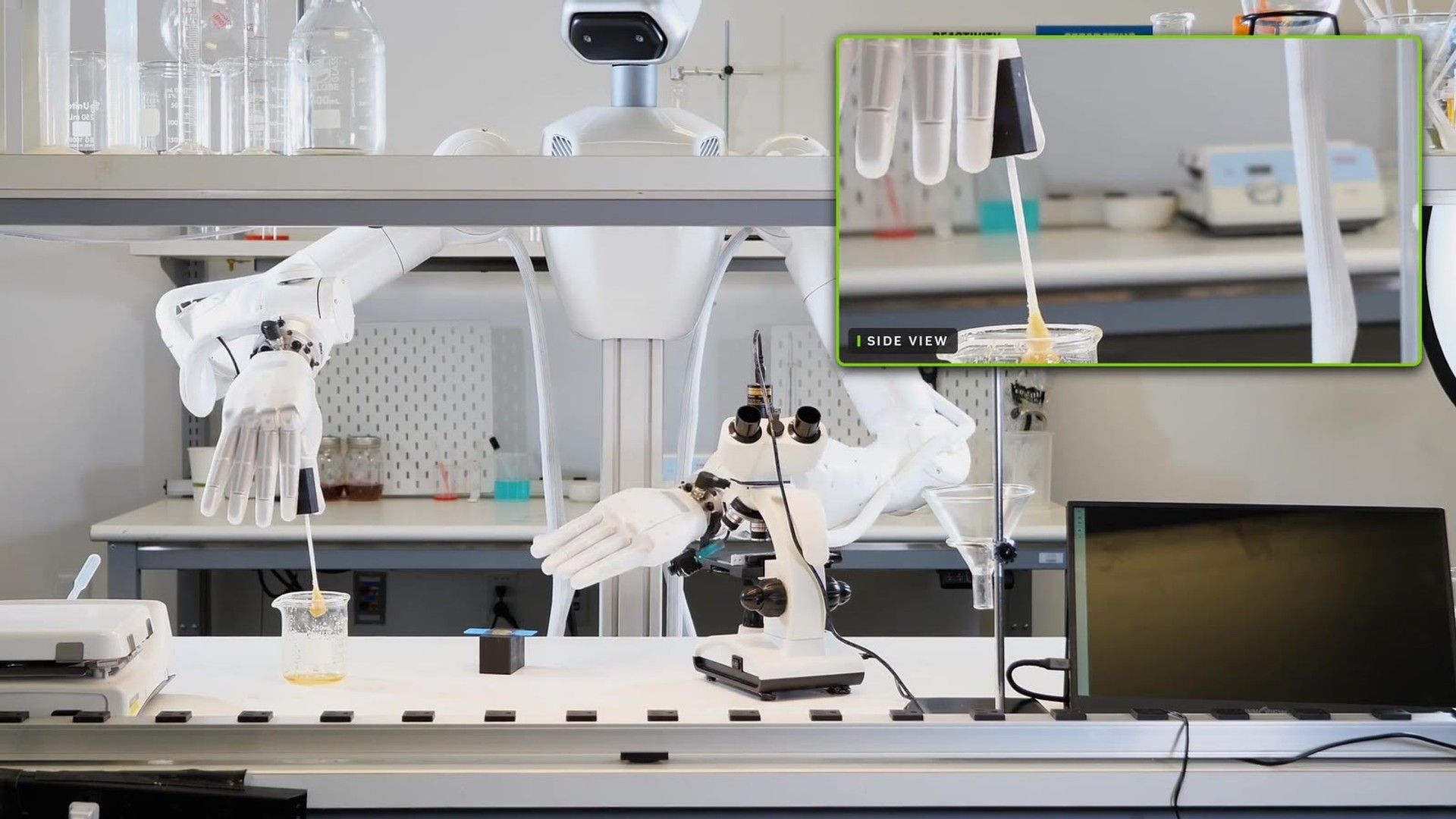
NVIDIA Introduces GR00T 2 for Robots Learning From Human Video
NVIDIA's introduction of GR00T 2 exemplifies significant advancements in robotic learning from human video, potentially enhancing robots' adaptability for various tasks while reducing training time and resource requirements.
- NVIDIA unveiled GR00T 2 at the Conference on Robot Learning in Austin on November 9, 2026.
- The model achieves 40% zero-shot success on 50 tasks that were not included in its training data, highlighting its ability to learn from human video.
- GR00T 2 combines data from 402,730 hours of first-person videos and demonstrations to improve robotic task performance.
- The technology enables tasks to be completed with minimal prior data, averaging 71% success with just one demonstration per task.
- NVIDIA has partnered with companies like Nexuni, Foxconn, and Siemens to explore industrial applications of GR00T 2.
GR00T 2 is a transformer-based model designed for robots to learn from human video and demonstrations, aiming to enhance their task adaptability. Prior to this, NVIDIA's work in robotic learning focused on simulation techniques and task training, laying the groundwork for this new model. Future developments will likely involve refining the model's efficiency and expanding its use cases in real-world scenarios.
Read the original ↗
How to Prompt a ChatGPT Video Workflow for Scenes, Captions and Timing
This article explains how precise prompts can enhance AI video editing workflows, making the process more efficient for content creators.
- Using specific prompts allows for better AI assistance in video editing tasks, including scene organization, caption writing, and timing adjustments.
- Creators can guide the AI by detailing aspects like target audience and available assets, improving video quality and relevance.
- Effective prompts help assure each video scene serves a clear purpose, making edits easier to manage.
AI video editing tools leverage language models like ChatGPT to assist creators in producing organized videos with structured prompts. Past iterations have lacked specificity, leading to less effective results. Future advancements may further refine this technology to enhance usability.
Read the original ↗
King Arthur Baking’s Sourdough Sidekick Got Me Baking Again
The Sourdough Sidekick offers an automated solution for maintaining sourdough starters, potentially increasing the number of home bakers and improving baking outcomes for those who struggle to maintain traditional methods.
- King Arthur Baking and FirstBuild created the Sourdough Sidekick to automate the feeding of sourdough starters.
- The Sidekick features built-in containers for water and flour, and operates through a standard app.
- Firmware updates now allow the Sidekick to dispense water during mixing and recover from power loss for up to 12 hours.
The Sourdough Sidekick is a kitchen appliance designed to simplify the sourdough baking process for individuals who struggle to maintain a traditional starter. This product aims to address common challenges faced by home bakers, especially busy parents. Observers will watch for consumer feedback regarding its effectiveness compared to traditional methods.
Read the original ↗
I Let Pangram Loose on My Gmail Inbox. Here’s How Much AI It Found
The ability to detect AI-generated emails can significantly impact how users manage information and communications in their inboxes, highlighting the growing influence of AI on personal and professional correspondence.
- Pangram has launched a Gmail integration tool that detects AI-generated text in emails.
- Users need a $20-per-month subscription to use the Gmail integration, which scans recent and new messages.
- The tool categorizes emails as AI, human, or mixed, allowing users to manage their inbox accordingly.
- Pangram claims that no email contents are stored or used for training AI models after assessment.
Pangram is an AI text and image detection tool that aims to help users identify machine-generated content. With the rise of AI-generated emails, tools like Pangram's integration serve as a resource for filtering content in personal communication. Users can expect improving accuracy and further developments in AI detection technology.
Read the original ↗
Authors Can Defend Against AI Allegations With ‘Paper Trail’ Tools. Is It Enough?
The increasing scrutiny over AI use in publishing threatens authors' reputations and could reshape industry norms regarding originality and copyright enforcement.
- Authors face allegations of AI usage in their writing, which can severely damage their careers even if unsubstantiated.
- New tools aim to provide a 'paper trail' documenting an author's writing process to counter AI allegations and document authorship.
- Many authors express frustration concerning the burden of proving human creativity against speculative accusations, as seen in the Shy Girl case.
As the publishing industry grapples with AI's impact, concerns over authorship and originality are growing. New software tools are emerging to help authors track their writing processes, but skepticism remains about their effectiveness and the potential for misuse. The industry is currently navigating a landscape of distrust, requiring better tools and standards for verification.
Read the original ↗
What hardware does your PC need to run a local AI model?
Understanding hardware requirements is crucial for individuals and businesses looking to utilize local AI models effectively and economically.
- A 16GB PC can run small AI models with about seven to eight billion parameters, but larger models require more power.
- To run advanced models, at least 32GB of RAM and a graphics card with 16GB of VRAM are necessary.
- Speed for generating tokens is more dependent on memory bandwidth than on processing power, with compressed models being more memory efficient.
AI models vary in size, which affects their performance and the hardware required to run them. With increasing model complexity, users need to invest in more powerful PCs to leverage local AI effectively, rather than relying solely on cloud services.
Read the original ↗
Solv3R: 3D Looped Transformer as a Multi-view Solver
Solv3R facilitates more flexible and efficient 3D reconstruction processes in computer vision, potentially enhancing real-time applications such as augmented reality and robotics.
- Solv3R is a looped transformer that refines multi-view geometry without task-specific training or modules.
- It supports offline, incremental, relocalization, and streaming reconstruction, allowing for dynamic updates.
- The system enables high throughput and reduced cache sizes, improving efficiency in computation.
- Solv3R aims to stabilize reconstructions under continuous iterations while integrating new observations for refinement.
Solv3R enables iterative improvement in multi-view geometric models, a significant advance over traditional fixed-set geometric predictions. It represents a shift towards reusable learning processes in computer vision, potentially influencing future modeling and reconstruction strategies. Upcoming releases include the model's code and additional resources for public access.
Read the original ↗
Bio Search Signs Share-Exchange Deal for Brain-AI Firm InnerEye
The acquisition will enhance Bio Search's capabilities in healthcare AI by integrating real-time brain-signal analysis, potentially improving diagnostic accuracy and expert decision support in medical settings.
- Bio Search has signed a share-exchange agreement to acquire 100% of Israeli firm InnerEye, which develops AI for analyzing brain signals.
- The acquisition is subject to approval from Israeli authorities and is expected to close between December 2026 and early January 2027.
- InnerEye’s technology uses electroencephalogram (EEG) data to interpret cognitive states and improve decision-making models.
- Bio Search aims to combine its existing healthcare AI services with InnerEye's expertise to advance their analytical capabilities and expand into global markets.
Bio Search specializes in healthcare AI and aims to enhance its operations by acquiring InnerEye, which focuses on AI that interprets brain signals. This deal follows a trend of consolidation in the AI health sector, as companies seek to integrate advanced technologies for improved patient care.
Read the original ↗
Devolutions Expands PAM With Device Enrollment and Centralised Software Management
The expansion of Devolutions' Privileged Access Management (PAM) system aims to enhance security and simplify software management for IT teams, ultimately improving efficiency and reducing risks.
- Devolutions announced new device enrollment and centralized software management features for its PAM platform on November 9, 2026.
- The new features intend to integrate with existing mobile device management systems, including Microsoft Intune, allowing administrators to manage software installations without granting local administrator rights.
- The capabilities are expected to become generally available in December 2026, enhancing control over software on enrolled devices and evolving PAM beyond access management.
Devolutions provides solutions for Privileged Access Management, which controls access to sensitive accounts and sessions within organizations. The new features are part of an effort to combine access management with endpoint software control, providing a centralized approach for IT maintenance.
Read the original ↗
Israel’s National AI Directorate Launches Impact-Driven AI Institute
The launch of Israel's National Institute for Impact-Driven AI aims to address significant public sector challenges, potentially improving national services and quality of life through targeted AI solutions.
- Israel's National AI Directorate launched the National Institute for Impact-Driven AI (NIIA) on November 9, 2026, to coordinate efforts on national challenges.
- NIIA plans to tackle 10 to 14 missions annually, with five aimed for production within one year.
- The institute operates across different government ministries, addressing problems that span departmental boundaries, such as healthcare and education.
The National Institute for Impact-Driven AI (NIIA) is part of Israel's Lived AI strategy, established to enhance quality of life through collaborative AI solutions. This initiative formalizes a proposal from Israel's national AI strategic plan, focusing on real-life issues rather than solely technological advancements.
Read the original ↗