
The day's AI news, briefed
The Daily Prompt
Our AI editor reads each day's AI and robotics stories, pulls out why they matter, and links every original source — so you can keep up in minutes.
Join over 250,000 subscribers getting the latest AI news
Latest AI & Robotics News Today

Ardian Raises €1B for Semiconductor Platform to Scale Chip Companies
This funding could significantly enhance the semiconductor industry by addressing capacity limitations and expanding production capabilities, vital for AI and related technologies.
- Ardian has raised €1 billion for Ardian Semiconductor, focusing on the semiconductor value chain.
- The funding includes close to €700 million in fund commitments and co-investments from various investors, including government agencies and sovereign wealth funds.
- The platform aims to target scalable companies primarily in Europe and North America, covering areas such as specialty power and photonics chips.
- Ardian Semiconductor has already made four investments in companies specializing in AI chip design and semiconductor production processes.
Ardian Semiconductor, launched on October 19, 2023, is one of the first private equity platforms dedicated to semiconductors. It partners with Silian Partners, leveraging their industry experience. The platform addresses the growing demand for advanced semiconductor technologies in various sectors, particularly driven by AI applications.
Read the original ↗
Samsung Highlights Physical AI Potential with Hyundai Motor Group
The partnership between Samsung and Hyundai highlights advancements in physical AI, potentially transforming various industries through enhanced robotics and automation technologies.
- Samsung hosted Hyundai Motor Group executives on November 9, 2026, to discuss collaboration in physical AI and future industries.
- Both companies are expanding their cooperation from vehicle electronics to include robotics and energy sectors.
- Samsung showcased its advanced automotive semiconductor technology and solid-state batteries during the event.
- The partnership aims to create synergies in technologies related to electric vehicles and autonomous driving.
- Samsung and Hyundai previously collaborated on connected-car services, enhancing user control over home devices from their vehicles.
Samsung Electronics and Hyundai Motor Group are two major players in the electronics and automotive industries, respectively. They have established a framework for cooperation in areas like electric vehicle batteries and connected car technologies. The ongoing partnership is focused on leveraging each other's strengths to explore opportunities in robotics, AI, and next-generation mobility solutions.
Read the original ↗
Pierre Fabre Taps XtalPi’s AI and Robotics for Drug Discovery
This collaboration aims to accelerate drug discovery for challenging medical targets, addressing significant health issues and potentially improving patient outcomes.
- Laboratoires Pierre Fabre and XtalPi signed an agreement to discover new small-molecule clinical candidates.
- XtalPi will provide AI capabilities and a robotics platform to enhance drug discovery processes.
- Pierre Fabre will focus on advancing compounds in oncology and other therapeutic areas, leveraging its clinical development expertise.
- The partnership targets historically difficult-to-drug areas with unmet medical needs, aiming to produce high-quality clinical candidates.
- The agreement includes upfront and milestone payments, indicating a financial commitment to this research collaboration.
Laboratoires Pierre Fabre is a pharmaceutical company focused on oncology and other therapeutic research. XtalPi specializes in AI and robotics applications in drug discovery. The collaboration will assess the efficacy of XtalPi's designed molecules in clinical development pathways through Pierre Fabre's expertise.
Read the original ↗
SolidUltra Secures €3 Million for Modular Power Transformers Built for AI Data Centers
The development of modular power transformers could significantly improve the efficiency and capacity of AI data centers, responding to rising demand for computational power.
- SolidUltra secured €3 million to develop modular solid-state transformers for AI data centers.
- The French company aims for a commercial launch in 2028, targeting efficient power conversion for high-density computing.
- The technology seeks to replace conventional transformers to reduce losses and space requirements, increasing reliability and expansion capabilities.
SolidUltra, founded in June 2026 in France, focuses on power conversion technology essential for AI infrastructure. As AI computing demands grow, efficient power solutions are crucial for supporting advanced data centers. The company seeks to address inefficiencies in existing power systems with its innovative design.
Read the original ↗
Rebellions to Use NVIDIA NVLink Fusion for Korean Sovereign AI
The collaboration between NVIDIA, Rebellions, and SK Telecom marks a significant step towards establishing Korea's sovereign AI capabilities, integrating local technology with advanced global infrastructure.
- NVIDIA announced a partnership with Rebellions and SK Telecom to develop AI infrastructure using NVLink Fusion and R200 processors, aimed for deployment by 2028.
- Rebellions will integrate its next-generation R200 neural processing units with NVIDIA's MGX architecture to enhance AI performance and efficiency in Korean data centers.
- SK Telecom will connect these systems to its proprietary AI models and public services, supporting tailored applications for Korea's specific needs.
NVIDIA's NVLink Fusion technology allows custom processors to efficiently communicate within a high-bandwidth AI platform. Rebellions is focused on creating energy-efficient processors for AI applications, while SK Telecom seeks to bolster its data center capabilities with local technology. This initiative is part of a broader government-supported strategy to strengthen Korea's AI industry.
Read the original ↗
NVIDIA Deepens Korean Sovereign AI Work on Chips and Rack Systems
This collaboration aims to enhance AI infrastructure in South Korea, integrating advanced chip technology while improving efficiency and accessibility for AI services.
- NVIDIA announced an expanded collaboration with Korea’s Ministry of Science and ICT on November 9, 2026, focusing on AI chips and data centers.
- The project features Rebellions' R200 processors and NVLink-based rack systems, set for deployment in 2028.
- SK Telecom will utilize these systems in its AI data center, enhancing its AI for All initiative with proprietary models and services.
- NVIDIA plans to improve inference efficiency through disaggregated processing, utilizing both GPUs and Rebellions' NPUs for different AI tasks.
- Agent security enhancements will involve Hyundai and AIM Intelligence leveraging NVIDIA's OpenShell for robust agent-control capabilities.
NVIDIA is a leading technology company known for its graphic processing units and AI computing solutions. This partnership with the South Korean government supports the development of local AI capabilities, furthering initiatives for efficient and scalable AI solutions in the region. Future developments will likely cover the completion of hardware integration and AI service deployments.
Read the original ↗
FLEX Teaches Robots to Generalize From Human Corrections
Advancements in the FLEX system could significantly improve how robots adapt to human feedback, potentially enhancing their usefulness in everyday tasks and household settings.
- Researchers from MIT and New York University developed FLEX, a system designed to enable robots to learn from conversational corrections given by humans.
- FLEX separates feature specification from reward optimization, allowing robots to generalize commands based on user intent rather than relying on specific object instructions.
- In tests, FLEX achieved a high average normalized reward across various navigation scenarios, outperforming several comparative systems in adapting to changes in task environments.
FLEX stands for Flexible Feature Editing Pipeline and aims to address limitations in language-guided robotics. This development is part of a broader trend exploring how robots can better understand and adapt to human preferences in real-world settings. Future research will likely focus on improving the system's ability to interpret unique user needs during practical applications.
Read the original ↗
LG AI Research Opens Free API Access to Its K-EXAONE 2.5 Model
The launch of free API access to K-EXAONE 2.5 enables a broad range of developers to innovate with advanced AI technologies, potentially accelerating advancements in software development and automation.
- LG AI Research has announced free API access to its K-EXAONE 2.5 model via the EXAONE API Platform.
- The K-EXAONE 2.5 model features 750 billion parameters designed for service development and research applications.
- This model improves upon its predecessor, K-EXAONE 2.0, particularly in software development and agentic search tasks.
- K-EXAONE 2.5 supports both Korean and English and includes functionalities such as text generation, code generation, and streaming responses.
LG AI Research focuses on advancing AI capabilities, and K-EXAONE 2.5 represents an evolution of its earlier models. The continued development of large-scale AI models is central to enhancing software automation and productivity in various sectors.
Read the original ↗
Kakao Mobility Signs NVIDIA MOU for Level 4 Autonomous Driving
The collaboration aims to enhance the advancement of Level 4 autonomous-driving technology, with potential implications for urban mobility and commercial driverless services in South Korea and beyond.
- Kakao Mobility signed a memorandum of understanding with NVIDIA to develop Level 4 autonomous-driving technology, announced on November 9, 2026.
- The partnership will integrate Kakao's autonomous-driving AI with NVIDIA's computing and safety technology on Kia purpose-built vehicles.
- Kakao Mobility plans to use two NVIDIA DRIVE AGX Thor chips in its autonomous-driving computing unit to enable real-time AI processing.
- The Kia PV5 will be the first vehicle to utilize this combined technology for Level 4 service development.
- Commercialization is a primary objective, alongside the integration and testing of the driving systems in South Korea.
Kakao Mobility develops mobility solutions in South Korea, focusing on AI-based autonomous driving. Their July 2026 partnership with Kia emphasizes creating vehicles designed for autonomy. The collaboration with NVIDIA aims to leverage advanced computing and safety technologies, facilitating future commercial applications.
Read the original ↗
Book Review: The Psychology of AI Adoption at Work: From Resistance to Results by Gleb Tsipursky
Understanding the psychological barriers to AI adoption is crucial for organizations to effectively leverage artificial intelligence, which can significantly improve productivity and competitiveness.
- The Psychology of AI Adoption at Work by Gleb Tsipursky addresses employee resistance to AI adoption in the workplace.
- The book outlines psychological traits that hinder full adoption, such as automation anxiety and status quo bias.
- Tsipursky's work provides strategies for executives to motivate their teams and foster a culture that embraces AI technologies.
This book targets business executives facing challenges in implementing AI due to employee skepticism and fear. The importance of explainable AI and understanding organizational culture is emphasized as key to successful adoption. Upcoming trends to watch include how companies adapt their cultures to embrace AI and enhance productivity.
Read the original ↗
Harbinger raises $240M after expanding into defense
Harbinger's substantial funding round signifies growing interest and investment in electric and defense vehicle technologies, reflecting broader trends in the automotive and defense industries.
- Harbinger raised $240 million in a Series D funding round as the company expands into battery storage and defense applications.
- The funding round was co-led by Tiger Global and Ridgeline, with contributions from FedEx and Fidelity Management among other investors.
- Harbinger has now raised over $650 million total, having previously raised $160 million in Series C funding nearly a year ago.
- The company has revealed plans for a driverless hybrid electric platform for military use, expanding its product offerings beyond electric trucks.
Founded in 2022, Harbinger focuses on electric truck development and has recently expanded into defense applications. The startup has previously gained attention with an order of 2,000 trucks from FedEx and aims to further develop hybrid emergency vehicles.
Read the original ↗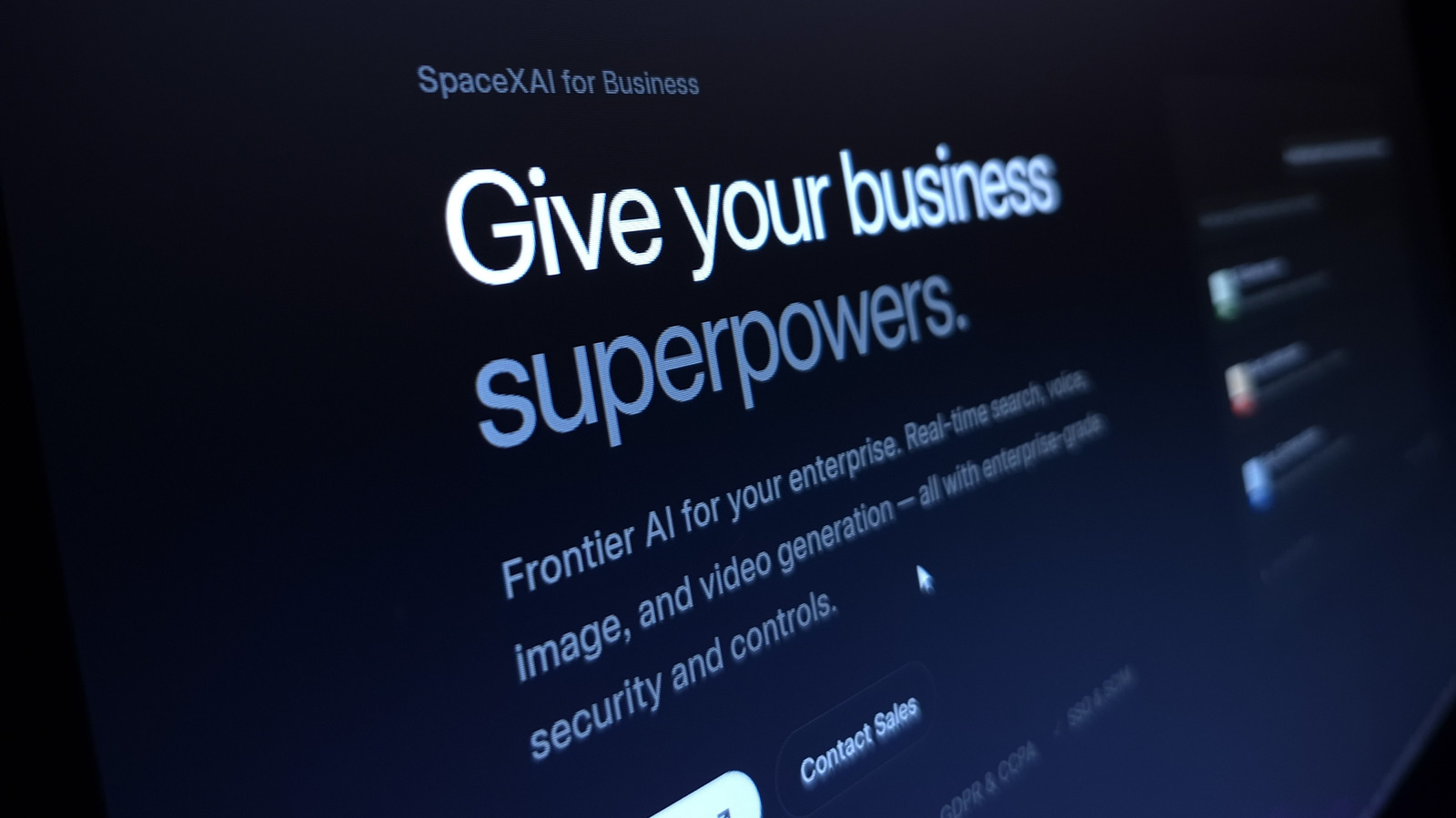
SpaceXAI Grok Bot availability just keeps growing - here's which plans offer it
The expansion of SpaceXAI's Grok Bot availability across various subscription plans illustrates the growing accessibility of advanced AI tools, potentially transforming workflows in diverse sectors.
- SpaceXAI's Grok Bot is now integrated into multiple subscription plans, including SuperGrok and Cursor Pro, increasing its accessibility.
- X Premium+ subscribers can link their accounts for Grok Bot access, while Teams plans also include it at various pricing tiers.
- The bot operates on a cloud computer and can handle multi-step tasks autonomously, but has limits such as dealing with CAPTCHAs.
SpaceXAI's Grok Bot offers users the capability to automate tasks within software environments, leveraging Cursor's cloud technology. The product was introduced in August 2026, following SpaceX's acquisition of Cursor, which supports model training. Future developments may include enhancements to functionality and broader plan options.
Read the original ↗
UK has no plans to slow down AI data center construction
Continued construction of AI data centers in the UK could enhance the country’s technological infrastructure and economic growth, while addressing community concerns through job creation and local investment.
- The UK's growth minister stated that data centers will be treated as essential infrastructure projects.
- AI's growing presence in the UK economy necessitates more data center construction to support demand.
- Government support for data centers will require investments that benefit local communities.
- The UK aims for 6GW of data center computing capacity by 2030 according to its Compute Roadmap.
Data centers provide the infrastructure needed for AI technologies to function effectively. The UK has introduced policies like the 'AI Growth Zones' to facilitate approvals for these projects, amidst some local opposition. The government's approach aims to balance technological growth with community benefits and oversight.
Read the original ↗
Suno AI music generator sued again for copyright infringement
This story highlights ongoing legal disputes over copyright infringement in AI-generated music, impacting the rights of artists and the practices of AI music generators.
- The music rights groups for Elvis Presley and Eminem filed separate lawsuits against Suno for copyright infringement.
- The lawsuits claim Suno's AI music generator produces songs that sound like Presley and mimic Eminem's lyrics.
- Suno stated it prohibits unauthorized use of artists' work and collaborates with third parties to prevent misuse.
Suno is an AI music generator facing multiple lawsuits regarding copyright infringement. This comes amid growing scrutiny over AI's use of artists' work without permission, raising questions about intellectual property rights in the digital age.
Read the original ↗
White House Request Raises US AI Safety Center Independence Concerns
Concerns about the independence of federal AI safety evaluations could affect the integrity of cybersecurity and bioweapons regulations, impacting national security and public trust in AI technologies.
- Officials at the Center for Advancing Innovation and Standards for Super Intelligence, or CAISSI, were asked to report informally to a White House office, raising independence concerns.
- Critics warn that this informal arrangement may lead to politicized decisions on cybersecurity and bioweapons, potentially altering findings to please the technology industry.
- CAISSI has an annual budget of $10 million and serves as a primary government contact for testing and research involving commercial super-intelligence systems.
CAISSI, part of the Commerce Department, is responsible for establishing AI testing standards and conducting evaluations to assess national-security risks. Recent leadership changes and halted reports have prompted congressional questions about its effectiveness. Ongoing discussions about its independence highlight the need for clear governance of AI safety evaluations.
Read the original ↗
AI music can be difficult to detect, but there are some telltale signs
The rise of AI music makes it crucial for listeners to discern the quality and authenticity of songs to avoid being misled by low-quality, generated content.
- AI music has become common on streaming platforms, raising concerns about misleading attribution to real artists and quality.
- Listeners can identify AI-generated music by signs in vocals, lyrics, and instrumentals that differ from human-created compositions.
- Common indicators of AI music include monotonous vocals, lack of dynamic change, simplistic lyrics, and absence of an artist's online presence.
Artificial intelligence in music can involve generating songs entirely or augmenting them with AI tools. Recent scrutiny follows a surge in AI-produced content, capturing attention for its impact on the music industry and artist integrity. Future developments may focus on improving detection tools and understanding AI's role in creative fields.
Read the original ↗
Google AI Releases Elephant-Goldfish Model Plugin for Spec-First Coding
The Elephant-Goldfish Model plugin enhances coding efficiency by introducing structured reviews before code is written, aiming to reduce errors and improve project clarity.
- Google has open-sourced the Elephant-Goldfish Model (EGM) plugin for AI coding agents to improve specification drafting and review processes.
- The EGM plugin uses independent subagents that assess specifications in five review stages before any coding takes place.
- Thousands of Google engineers are reportedly using the EGM plugin, which has been tested with various AI models like Codex and Claude Code.
The Elephant-Goldfish Model plugin is designed as a review layer for AI coding agents, focusing on writing specifications before code execution. It builds on the idea of zero-context agents to identify ambiguities in specifications. The plugin is part of Google's ongoing efforts to enhance AI-driven coding workflows and improve software quality.
Read the original ↗
The game reverse engineering community is the latest casualty of AI
The decline of the game decompilation community due to AI usage highlights significant issues regarding the integrity and purpose of reverse engineering efforts in software development.
- The decomp.dev community announced it is sunsetting, citing AI models as damaging to the community aspect of game reverse engineering.
- Administrator @encounter noted that AI-driven contributions have led to a decline in quality and genuine community engagement.
- Users are rapidly completing decompilation projects using AI without contributing meaningfully, resulting in lower quality outputs.
Decompilation is the process of converting compiled game code back to its original programming format, allowing for modifications and better compatibility with modern hardware. The rise of AI has enabled faster project completions but also introduced challenges such as decreased quality and community involvement. Future developments may see ongoing community fragmentation as AI tools continue to evolve.
Read the original ↗
Here Are My Absolute Favorite Computer Speakers, After Testing 30 Pairs
Selecting quality computer speakers can significantly enhance audio experiences across various activities, from gaming to video calls, making the right choice essential for many users.
- The article presents a curated list of recommended computer speakers across multiple budgets and use cases, after testing over 30 pairs.
- Audioengine A2+ is highlighted as the best overall computer speaker, noted for its compact design, clarity, and versatility, costing around $299.
- Kanto UKI speakers are recognized for their compact form and warm sound, priced at $270, making them suitable for small desktops.
- IK Multimedia iLoud Micro Monitors, priced at $300, are recommended for their big sound and compact size, aimed at audiophiles.
Computer speakers enhance audio quality for personal computers and gaming systems, addressing a common issue where sound is often neglected. The market includes various types of speakers, such as soundbars and traditional stereo systems, catering to different preferences. Future reviews may focus on emerging audio technologies and trends in speaker design.
Read the original ↗
I Used NYT Cooking’s New AI-Powered Recipe Modifier, and It’s Actually Pretty Good
The introduction of AI-powered recipe modification by the New York Times Cooking app represents a significant shift in food preparation support, attracting attention for its impact on user cooking experiences.
- The New York Times Cooking app released an AI-powered feature for modifying recipes in a beta version for iOS users.
- Subscribers expressed discontent about the AI feature, resulting in the disabling of comments after four days due to negative feedback.
- The AI assists users in customizing recipes by suggesting ingredient swaps and adjustments based on available equipment and dietary needs.
New York Times Cooking is a digital cooking platform that provides tested recipes and cooking guidance. The recent beta feature aims to enhance user cooking flexibility using AI technology, despite concerns from some subscribers. Future developments may depend on user feedback and further integration of AI functionalities.
Read the original ↗