
The day's AI news, briefed
The Daily Prompt
Our AI editor reads each day's AI and robotics stories, pulls out why they matter, and links every original source — so you can keep up in minutes.
Join over 250,000 subscribers getting the latest AI news
Latest AI & Robotics News Today

MCP vs A2A: The Two AI Agent Protocols Explained (And Why You Probably Need Both)
Understanding the differences between MCP and A2A protocols is essential for effective AI agent deployment and ensuring seamless communication and tool access across systems.
- MCP, created by Anthropic in November 2024, standardizes how a single AI agent connects to external tools.
- A2A, introduced by Google in April 2025, enables communication and collaboration among multiple AI agents from different vendors.
- Many production systems in 2026 run both MCP and A2A protocols simultaneously to enhance their capabilities.
- MCP serves as a universal protocol for agent-to-tool communication, while A2A facilitates agent-to-agent coordination.
- Most teams find they initially need only MCP, adding A2A as systems grow to involve multiple agents.
MCP and A2A are protocols designed to enhance AI agent functionality. MCP allows agents to connect with external tools, while A2A enables collaboration between agents. Both protocols have been adopted widely and are managed by the Linux Foundation's Agentic AI Foundation.
Read the original ↗
Anthropic’s Fable 5.1 Is Cheaper, Less Trigger-Happy, and Finally Lets Enterprises Keep Their Data
The release of Fable 5.1 enhances usability for enterprise customers by providing cost reductions, improved accuracy, and greater control over their data security measures.
- Anthropic released Fable 5.1, which reduces cache read costs by 75% from $1.00 to $0.25 per million tokens.
- Fable 5.1 features reduced false-positive rates in cybersecurity and biology compared to its predecessor, addressing user complaints about aggressive restrictions.
- Enterprise Frontier Safeguards allow customers to retain data on their own infrastructure, offering zero-data-retention privacy.
- The model is available through multiple cloud platforms, including AWS, Google Cloud, and Microsoft Azure.
Anthropic, an AI research company, has faced scrutiny after its previous model, Fable 5, encountered serious operational issues shortly after release. The latest version aims to improve functionality and restore trust among enterprise users by addressing previous concerns around costs and data privacy.
Read the original ↗
OpenAI Hit With 30 New Lawsuits Over Canadian School Shooting
The outcome of these lawsuits could significantly impact OpenAI's policies on user monitoring and response to potential threats, affecting the company's operational approach and public perception.
- OpenAI is facing 30 new lawsuits related to a deadly school shooting in Tumbler Ridge, British Columbia.
- Plaintiffs include teachers, a school principal, and surviving students who were not shot.
- The lawsuits claim OpenAI aided and abetted the shooter, a more challenging allegation to prove than previous negligence claims.
- The attorney representing the plaintiffs highlighted OpenAI’s internal decision-making concerning safety alarms and police alerts.
- OpenAI's responses to this situation are under scrutiny, particularly the actions of its Chief Global Affairs Officer, Chris Lehane.
OpenAI is a technology company known for developing AI applications like ChatGPT. This shooting and the preceding lawsuits raise questions about AI's role in violence and the responsibilities of tech companies for user behavior. Key developments to watch include the legal proceedings and potential changes in OpenAI's internal policies on threat assessment.
Read the original ↗
US government sides with OpenAI on issue of training LLMs on copyrighted material
The U.S. government's support for OpenAI in its copyright case could influence how artificial intelligence companies use copyrighted material for training, potentially impacting future legal frameworks and industry practices.
- The Trump administration filed a brief defending OpenAI's training of its language models on copyrighted material in a lawsuit brought by The New York Times.
- The administration emphasizes the importance of maintaining U.S. leadership in artificial intelligence development and the need for clear legal standards in this area.
- The legal debate centers on whether the use of copyrighted material for AI training qualifies as "fair use," which allows limited use of copyrighted work without permission.
- Past cases generally favor AI companies; a recent ruling found Anthropic liable for using illegal pirate libraries but not for the underlying AI training itself.
OpenAI is known for developing large language models (LLMs) like ChatGPT that are trained on vast amounts of text data, including copyrighted content. As legal challenges arise regarding copyright in the context of AI training, the outcome may shape future regulations and industry practices.
Read the original ↗
Trump may be forced to reveal secret rules feds use for AI safety testing
The lawsuit aims to increase transparency around AI safety testing, which is crucial for oversight and public trust in government decisions about emerging technologies that significantly impact society.
- Four federal agencies are being sued by Protect Democracy to release details of the Trump administration's secret rules for evaluating frontier AI models.
- The lawsuit alleges that almost no information has been shared with the public or Congress about the AI safety review process.
- Defendants include officials from the National Cyber Director's office and various departments involved in determining which AI models can be approved for release.
The Trump administration has established a voluntary safety review process for AI models, raising concerns about transparency and oversight. The lawsuit seeks to expose potential conflicts of interest and the criteria behind approving AI technologies.
Read the original ↗
Lutnick Declares Administration’s Trust in Anthropic at G20 Meeting
The U.S. government's renewed trust in Anthropic highlights shifting dynamics in AI regulation and national security, potentially influencing future collaborations and policies in the AI sector.
- Commerce Secretary Howard Lutnick expressed the Trump administration's trust in Anthropic during a G20 meeting on September 1, 2026.
- This statement signifies the end of months of conflict between the government and Anthropic over national security and AI safeguards.
- Lutnick's remarks were made during a gathering of Commerce and technology ministers from over 20 countries in Chapel Hill, North Carolina.
- Anthropic co-founder Tom Brown spoke at the ministerial, praising Trump's support for data center development and their economic benefits.
- The trust affirmation comes after a federal court ruling that favored Anthropic, overturning government actions that designated the company as a supply-chain risk to national security.
Anthropic is an AI company known for its Claude language model. Earlier in 2026, the Trump administration took significant actions against Anthropic, suspending its technology usage due to national security concerns. Following a court ruling in late August 2026, the administration has now expressed renewed trust in the company.
Read the original ↗
iPronics Raises $125M Series B to Scale Optical Networking for AI Data Centers
The funding will help scale iPronics' optical networking technology, which is vital for improving data transfer efficiency in AI data centers amid rising demands for bandwidth.
- iPronics has secured $125 million in Series B funding, co-led by Maverick Silicon and Light Street Capital, with participation from NVIDIA and others.
- The new funding brings iPronics' total funding to $177 million, aimed at advancing its programmable optical networking technology for AI data centers.
- iPronics' optical circuit switching technology allows for dynamic adjustments of connections, enhancing communication between GPUs in AI clusters.
- The company's ONE platform is designed for scalability and real-time reconfiguration of network connections, addressing growing demands for bandwidth in AI training.
- iPronics plans to expand production and develop its ONE platform further, establishing a new office in Santa Clara to be closer to key industry players.
Founded in 2019 as a spin-off from the Universitat Politècnica de València, iPronics focuses on programmable optical networking solutions for AI infrastructure. The company aims to transition from research to commercial deployment, as traditional networks struggle to meet the demands of modern AI workloads. Future developments will likely include increased manufacturing capabilities and collaborations with major technology companies.
Read the original ↗
LivePerson Stockholders Sign Off on SoundHound AI Takeover
The approval of the acquisition could significantly enhance SoundHound AI's offerings by integrating LivePerson's customer engagement technologies, impacting competitive positioning in the AI market.
- LivePerson stockholders voted to approve the acquisition by SoundHound AI at a special meeting on September 2, 2026, overcoming the final shareholder hurdle needed for the transaction.
- The acquisition is expected to close on September 4, 2026, pending customary closing conditions.
- SoundHound AI will acquire LivePerson for an equity value of $43 million, with a total enterprise value estimated at around $250 million after adjustments.
- The merger aims to combine SoundHound's voice AI with LivePerson's digital messaging tools, creating a comprehensive conversational AI solution.
- LivePerson reported that its platform handles nearly one billion customer messages each month, a key asset for the combined company.
SoundHound AI is acquiring LivePerson as part of a strategic merger to enhance its conversational AI capabilities. The deal was first announced on April 21, 2026, and faced hurdles before finally securing stockholder approval. Future developments will focus on finalizing the transaction and realizing projected revenue synergies from the merger.
Read the original ↗
The Logical End Point of AI Job Interviews Is Two Bots Talking to Each Other
The increasing use of AI in job interviews raises concerns about the effectiveness and transparency of recruitment processes, as illustrated by a candidate's experience with a bot-on-bot interview.
- Christopher, a job seeker, applied to 700 jobs with little success, primarily interacting with an AI recruiter named Riley from Everforth Apex Systems.
- After multiple unproductive interviews with the bot, Christopher used ChatGPT to simulate an interview as his proxy.
- During their interaction, the AI agents discussed qualifications but ultimately, Christopher received no follow-up communications from the company.
AI recruitment tools, particularly voice AI, have become common as recruiters manage numerous applications, with many candidates having encountered AI interviews. The growing phenomenon of AI-driven interactions raises questions about the future of recruitment practices and candidate engagement.
Read the original ↗
PSA: Amazon’s shopping AI can now tell you if that message is a scam
This feature highlights Amazon's efforts to enhance online shopping security by helping users identify scam communications, addressing a growing customer concern.
- Amazon introduced an AI scam-detection feature for Alexa for Shopping to help customers verify suspicious messages.
- Every year, approximately 360,000 customers contact Amazon about potentially fraudulent messages they receive.
- The AI checks sender information, content, timing, and metadata against billions of messages sent by Amazon to confirm authenticity.
- In addition to this feature, Amazon previously launched an email address for employees to confirm scam emails and an online form for further assistance.
- This enhancement reflects Amazon's strategy to focus Alexa more on supporting shopping-related inquiries and proactive customer assistance.
Amazon is an e-commerce giant that continually develops its AI technology to improve customer experience and security. Recent initiatives have sought to combat increasing scams targeting online shoppers. Future advancements may further strengthen these AI capabilities and expand their applications in fraud prevention.
Read the original ↗
HiddenLayer nabs $100M as enterprises rush to secure their AI deployments
HiddenLayer's funding underscores the growing demand for AI security as enterprises increasingly recognize the need to protect their AI deployments from vulnerabilities and potential attacks.
- HiddenLayer has raised $100 million in a Series B funding round, aimed at expanding its AI security solutions.
- The company reports over 10x growth in its annual recurring revenue in the past year, reflecting a surge in demand for AI protection tools.
- Major clients include financial services, tech companies, and contracts with the Department of Defense and intelligence agencies.
HiddenLayer develops tools to protect AI models and workflows from adversarial attacks and malicious code. The startup initially raised $50 million in Series A funding three years ago, and with a rapid market shift towards AI security, it now focuses on extending its product scope to include new types of AI threats. The funding will support growth in sales and product development while expanding into European markets.
Read the original ↗
India’s richest man now wants to turn aging computers into AI-ready PCs
This initiative could potentially reshape the computing landscape in India by extending the life of older machines, making advanced technology accessible to a wider audience.
- Reliance Jio is launching its cloud PC service, JioPC, to all internet users in India, aiming to turn aging computers into AI-ready machines without hardware upgrades.
- The service, which was initially available to Jio's broadband users, now offers subscription plans starting at ₹1,000 (about $11) for two months.
- JioPC enables users to access a virtual PC with specifications up to eight virtual CPUs and 1TB of storage from its cloud, supporting computers as old as eight years.
- India had over 65 million PCs in 2025, and Jio aims to target users reluctant to frequently upgrade their hardware by offering cloud computing as a service.
- Challenges include convincing consumers to adopt a subscription model for computing capabilities instead of owning hardware, especially in smaller cities.
JioPC, launched in July 2025, aims to leverage cloud technology to extend the lifecycle of aging PCs and make them capable of handling modern AI tasks. With the growing trend of longer replacement cycles for PCs in India, consumers may benefit from a lower-cost alternative to hardware upgrades. Next, the success of this model will depend on user acceptance of cloud computing as a standard service.
Read the original ↗
Catch Emerges From Stealth With $5M Seed to Build an Autonomous AI Executive Assistant
Catch's development of an autonomous AI assistant could streamline executive tasks, improving efficiency and reshaping how administrative work is handled in the business sector.
- Catch has secured $5 million in seed funding to enhance its AI assistant focused on executive administrative tasks.
- The AI system can manage scheduling, email, travel, and other administrative duties, aiming to autonomously complete tasks instead of merely assisting.
- Catch already claims to have handled over 12,000 meetings and 200,000 emails since its inception.
Catch is a new company specializing in agentic AI, designed to autonomously manage administrative work for executives. Previous attempts in the AI sector have generally aimed for broad applications, while Catch seeks to excel in a narrow domain. Observers will watch how Catch's approach influences enterprise AI adoption and functionality.
Read the original ↗
HiddenLayer Raises $100M Series B to Expand AI Agent Security Platform
This funding strengthens HiddenLayer's efforts to secure AI applications, an increasingly critical need as enterprises rely more on autonomous AI technologies.
- HiddenLayer has raised $100 million in a Series B funding round led by Delta-v Capital to enhance its AI security platform.
- The funding will support improvements to Agentic Runtime Security and a new product for securing AI coding agents.
- The company’s annual recurring revenue has increased more than 10 times over the past year, signifying strong market traction.
HiddenLayer specializes in security for AI applications, including generative and predictive AI systems. The investment comes at a time when enterprises are urgently seeking to protect their AI technologies from emerging threats. Moving forward, HiddenLayer plans to expand its offerings and international presence, particularly in Europe.
Read the original ↗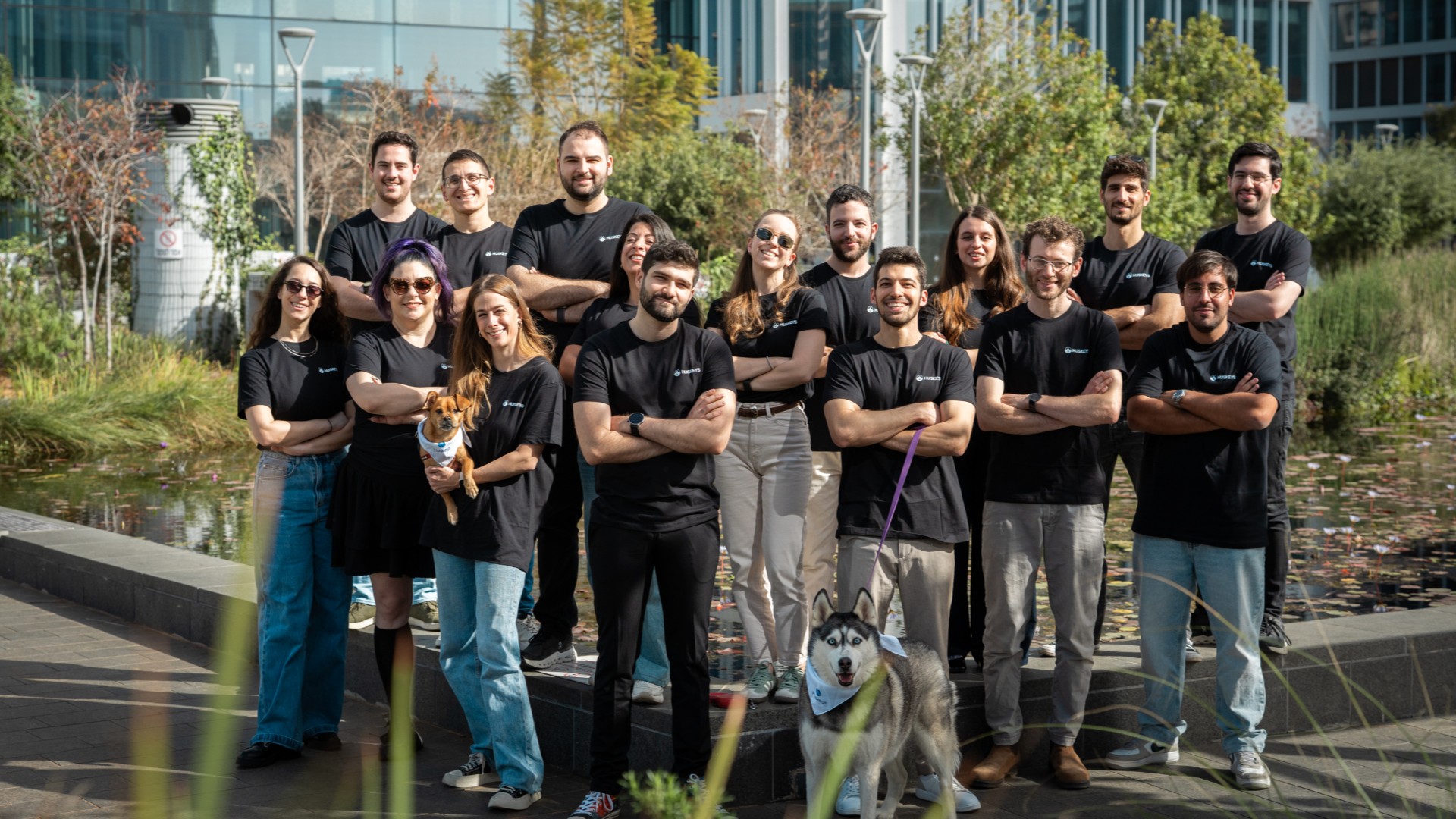
Huskeys Raises $27M Series A to Build the Security Control Layer for the AI-Driven Network
Huskeys' funding aims to enhance cybersecurity in an increasingly AI-driven digital landscape, addressing the critical need for better management across fragmented security infrastructures.
- Huskeys raised $27 million in Series A funding, led by Blackstone Innovations Investments, bringing total funding to $35 million.
- The company is developing Network Edge Security Management (NESM), an orchestration layer for managing network security across various products.
- Huskeys aims to address the challenges posed by fragmented cloud infrastructure and increasing automated web traffic.
- The platform is designed to work with existing security solutions, helping organizations improve coordination without replacing current tools.
- Huskeys has demonstrated its capability to mitigate vulnerabilities across multiple cloud vendors and is already analyzing over one trillion web requests daily.
Huskeys, founded in 2025 by former Israeli intelligence members, focuses on improving cybersecurity for organizations facing challenges from fragmented security setups. The company's technology aims to provide a unified management layer over existing security products, crucial as AI traffic grows. It is designed to enhance the effectiveness and efficiency of cybersecurity measures in a rapidly evolving digital environment.
Read the original ↗
AI Efficiency Could Cost Us the Next Generation of Experts
The decline in junior engineering roles due to AI automation risks diminishing the vital skills needed for senior positions, impacting safety and expertise in critical industries.
- Generative AI is linked to a 9 percent decline in junior employment within six quarters at companies that adopted it, while senior roles have continued to grow.
- The New York Fed suggests that rising unemployment among young graduates may stem from remote work's impact on mentoring rather than AI alone.
- Research indicates that junior engineers are losing foundational experience which is crucial for developing expertise necessary for senior roles.
AI is increasingly used in engineering, automating tasks that were traditionally performed by junior workers. This shift parallels concerns in aviation and nuclear sectors about maintaining essential human skills amid growing automation, prompting discussions on effective training practices.
Read the original ↗
OpenAI faces 30 more lawsuits tied to Tumbler Ridge shooting
The escalation of lawsuits against OpenAI highlights the ongoing legal and ethical challenges AI companies face in relation to real-world violence and safety protocols.
- Edelson PC is filing 30 new lawsuits against OpenAI over the Tumbler Ridge shooting, expanding previous claims filed in April.
- The new lawsuits include claims of aiding and abetting the shooting, which require proving intent from OpenAI.
- The fresh lawsuits allege OpenAI staff failed to alert Canadian law enforcement about signs of potential violence from the shooter.
- Key OpenAI figures, including Chris Lehane, are implicated in the decision-making process, although evidence of direct involvement remains unconfirmed.
- The Tumbler Ridge shooting involved a teenager who killed multiple people at a school after previously discussing violent actions with an AI model.
OpenAI, a leading AI research organization, has faced legal scrutiny over incidents involving its ChatGPT product and possible contributions to violent acts. The allegations arise from a school shooting in Tumbler Ridge, British Columbia, in which several people were killed. Future developments will likely hinge on court responses to these new lawsuits.
Read the original ↗
Enterprise AI Depends on Data People Can Trust
The effectiveness of generative AI in enterprises is compromised by lack of trust in underlying data, which could stall innovations and impact financial returns.
- In 2025, companies invested an estimated $30 billion to $40 billion in generative AI, but only 5 percent of enterprise deployments produced measurable financial returns.
- MIT found that 90 percent of employees at studied companies use personal AI tools after official tools fail to earn trust.
- Nearly two-thirds of organizations lack proper data management practices for AI, according to Gartner, highlighting a significant gap in governance and trust.
- The EU AI Act, effective from August 2, 2026, mandates transparency in data usage and AI-generated content, which organizations must prepare for.
- Strong data governance can significantly reduce labor efforts and costs for organizations by making trusted data easier to manage and use.
Companies increasingly rely on generative AI for operational efficiency, yet many struggle with trustworthy data governance, which is critical for successful deployment and regulation compliance. The EU AI Act sets new transparency rules, stressing the need for accurate data management practices. Organizations must prioritize building robust data governance frameworks to ensure effective AI utilization and trust.
Read the original ↗
AI’s Biggest Barrier Isn’t Capability. It’s Trust.
Building customer trust in AI is essential as organizations increasingly rely on this technology to enhance operations, affecting long-term consumer relationships and business success.
- Only 41% of Americans trust AI, despite 70% believing it offers benefits.
- Deloitte's survey reveals consumers seek transparency about AI's impact on their information and experiences.
- A lack of trust can erode consumer confidence due to poor communication and fragmented data systems.
Trust in artificial intelligence (AI) is becoming a significant barrier to its widespread adoption in business environments. As AI is integrated into operations, organizations must address underlying data and communication issues to build customer confidence. Future efforts should focus on clear governance frameworks and proactive communication to enhance transparency.
Read the original ↗
Companies Rebuilt Everything for AI. Except How They Make Decisions.
Improving decision-making processes could enhance overall business performance, as many organizations struggle to translate AI insights into measurable outcomes.
- Companies make thousands of decisions daily, yet many remain slow and dependent on key personnel being available.
- Despite widespread AI adoption, only 39% of organizations see measurable impact on earnings, indicating a gap between AI and effective decision-making.
- Decision Intelligence aims to connect data, analytics, and AI to streamline decision-making across organizations.
- Effective execution of decision processes requires establishing clear pathways from insights to actions.
- Organizations that immediately apply AI to high-impact decisions tend to achieve better outcomes than those pursuing broad transformations.
Decision Intelligence integrates existing data and analytics into decision-making processes to improve consistency and speed. Companies often struggle to link insights directly to actions, limiting the effectiveness of their AI investments. Moving forward, organizations are encouraged to focus on targeted decision improvements to maximize AI benefits.
Read the original ↗