
The day's AI news, briefed
The Daily Prompt
Our AI editor reads each day's AI and robotics stories, pulls out why they matter, and links every original source — so you can keep up in minutes.
Join over 250,000 subscribers getting the latest AI news
Latest AI & Robotics News Today

Salesforce and AWS Expand AI Integrations Across Slack and Amazon Quick
The expanded integrations between Salesforce and AWS enhance AI capabilities in enterprise environments, allowing for improved data access and collaboration tools that can streamline business operations.
- Salesforce and AWS announced new AI integrations that will enhance collaboration across Slack and Amazon Quick, facilitating real-time data access and interoperability.
- The integrations allow Salesforce data to be available within Amazon Quick and enable AWS agents to operate within Slack, supporting improved workflows and user experience.
- Zero-copy data access has been expanded to more AWS services, allowing businesses to utilize data without duplication or migration, thereby maintaining security and governance.
- Salesforce AI Research optimized voice models on AWS Trainium chips to enable near-instant transcription in Slack, enhancing communication efficiency for teams.
Salesforce is a leading customer relationship management (CRM) platform, while Amazon Web Services (AWS) provides cloud computing solutions. This collaboration builds on a long-standing partnership aimed at integrating AI into business processes. Future developments to watch include the rollout of additional AWS frontier agents in Slack, scheduled for fall 2026.
Read the original ↗
OpenAI Foundation Launches Public Data for Health Program
This initiative aims to enhance the quality and accessibility of scientific datasets, which could accelerate breakthroughs in disease prevention and treatment across various health domains.
- The OpenAI Foundation introduced the Public Data for Health program on September 15, 2026, with over $125 million in initial grants.
- The program aims to create and preserve high-quality scientific datasets for researchers, expanding capabilities in life sciences beyond specific diseases.
- Initial grants will support projects studying molecular properties, acquiring data from failed drug programs, and developing personalized cancer vaccines.
The OpenAI Foundation focuses on leveraging AI for advancements in various fields, including health. This new initiative follows its earlier AI for Alzheimer’s program and emphasizes the importance of robust data in research.
Read the original ↗
Salesforce Unveils AIforce Live Interface Layer at Dreamforce
The launch of Salesforce's AIforce Live Interface Layer enhances how users access business knowledge, potentially revolutionizing workflows across various platforms and applications.
- Salesforce unveiled AIforce, a live interface layer, at Dreamforce on September 15, 2026.
- AIforce integrates data, workflows, and business logic from Salesforce into AI applications such as Claudeforce and Slackforce.
- The interface allows users to ask questions and trigger workflows without needing to open the Salesforce application, enhancing efficiency.
- AIforce operates within existing permissions and employs a Zero Data Retention model to ensure data security and privacy.
- The rollout coincides with Salesforce's 20th anniversary of its Trailblazer community, which fosters admin and developer collaboration.
Salesforce is a cloud-based software company known for its customer relationship management (CRM) services. The AIforce Live Interface Layer is part of Salesforce's ongoing effort to integrate AI technologies into its existing systems, enhancing user experience and operational efficiency. Future announcements may reveal additional AIforce capabilities and integrations with other platforms.
Read the original ↗
Salesforce Debuts Koa Reasoning Model for Agentforce, Trained on Nemotron
The introduction of Salesforce's Koa reasoning model aims to enhance agent performance in handling complex workflows, potentially improving customer support and operational efficiency.
- Salesforce and NVIDIA announced Koa, a CRM reasoning model for the Agentforce platform, trained on synthetic data based on nearly 30 years of CRM deployment knowledge.
- Koa aims to assist agents in managing multi-step workflows, utilizing a unique training approach that does not rely on customer data.
- Current and pilot customers include firms like 1-800Accountant and UChicago Medicine, which report improvements in task handling through Koa.
- The model improves CRM task performance with three times fewer errors compared to leading models, showcasing its reliability for enterprise tasks.
Salesforce is a customer relationship management (CRM) platform, and Agentforce is its AI-powered tool for agents. Koa is built using NVIDIA's Nemotron 3 Super model and focuses on enterprise workflows. The model is currently piloting with several companies, and general availability is expected in winter 2026.
Read the original ↗
Radical Ventures Secures Over US$1B at First Close of Late-Stage AI Fund
The establishment of the Radical Breakouts Fund addresses a critical funding gap for Canadian AI companies, enabling them to grow domestically instead of seeking capital abroad.
- Radical Ventures has secured over US$1 billion in commitments for its Radical Breakouts Fund, marking the largest venture capital fund in Canada.
- The fund aims to invest in AI scale-ups poised to become trillion-dollar businesses, targeting companies that remain private longer than in the past.
- Commitments to the fund include major Canadian institutions like PSP Investments, CPP Investments, and TD Bank Group, among others.
Radical Ventures is a venture capital firm focusing on artificial intelligence and deep technology companies. Previously, Canadian AI companies often sought funding outside the country, detracting from local growth. The new fund provides a home-grown source of late-stage capital to support domestic innovation.
Read the original ↗
A New Headset to Help With Depression Is Now Available in the US
The approval and availability of the Flow Neuroscience headset could offer a new treatment option for depression, potentially reducing reliance on traditional antidepressants for many patients.
- The Flow device is now available by prescription in the US as an alternative to antidepressant medications.
- It provides low-intensity electrical stimulation to the left frontal lobe of the brain, which helps regulate mood and emotions.
- The headset costs $2,200 for a 10-week treatment and $325 per month thereafter, requiring out-of-pocket payments for patients.
- In a clinical trial, 45 percent of participants using the Flow device showed remission in symptoms after 10 weeks, compared to 22 percent in the control group.
Flow Neuroscience's device received FDA approval in December and is a wearable aimed at treating depression at home. It follows European approval since 2019, where over 65,000 people have used it. Future developments may include insurance reimbursement options to make it more accessible to patients.
Read the original ↗
Why the Postpandemic Tech Bust Sent Billionaires to Trump
The shifts in the tech industry have implications for the political landscape, as the disillusionment among tech workers and billionaires influences their political affiliations and support for candidates like Donald Trump.
- Following mass layoffs in 2022 and 2023, tech workers turned against their employers as liberal politicians also criticized Silicon Valley.
- Tech companies experienced a sharp decline in revenue and stock value due to rising interest rates and inflation, leading to increased layoffs.
- Many tech executives blamed newly hired workers for low productivity, directing attention away from their own decisions during the pandemic's hiring boom.
The tech sector boomed during the pandemic but faced a downturn as inflation and rising interest rates occurred. This led to a wave of layoffs and a shift in workers' attitudes towards their employers and politics.
Read the original ↗
Top 5 Agentic Coding CLI Tools Developers Should Know in 2026
The emergence of agentic coding CLIs advances how developers interact with AI, shifting from mere code generation to fully autonomous software engineering tasks, which could significantly enhance productivity.
- In 2026, agentic coding CLIs can perform complex engineering tasks, including modifying files and running tests, rather than just generating code.
- The five top tools compared are Claude Code, Codex CLI, GitHub Copilot CLI, Antigravity CLI, and OpenCode, each with distinct features for software development.
- Claude Code, priced at $20/month, excels in repository awareness and Git workflows, integrating with terminal and IDEs.
- GitHub Copilot CLI, available since February 2026, functions as a genuine coding agent, included in all GitHub Copilot plans starting at $19/month.
- Antigravity CLI has replaced Gemini CLI for Google users, focusing on terminal-driven engineering and offering a free tier for individual users.
Agentic coding CLIs are AI tools that operate from the command line and can execute multifaceted development tasks. Recent advancements enable them to handle a variety of engineering workflows effectively. Watching for how these tools integrate into existing development environments may reveal their operational impacts on software production.
Read the original ↗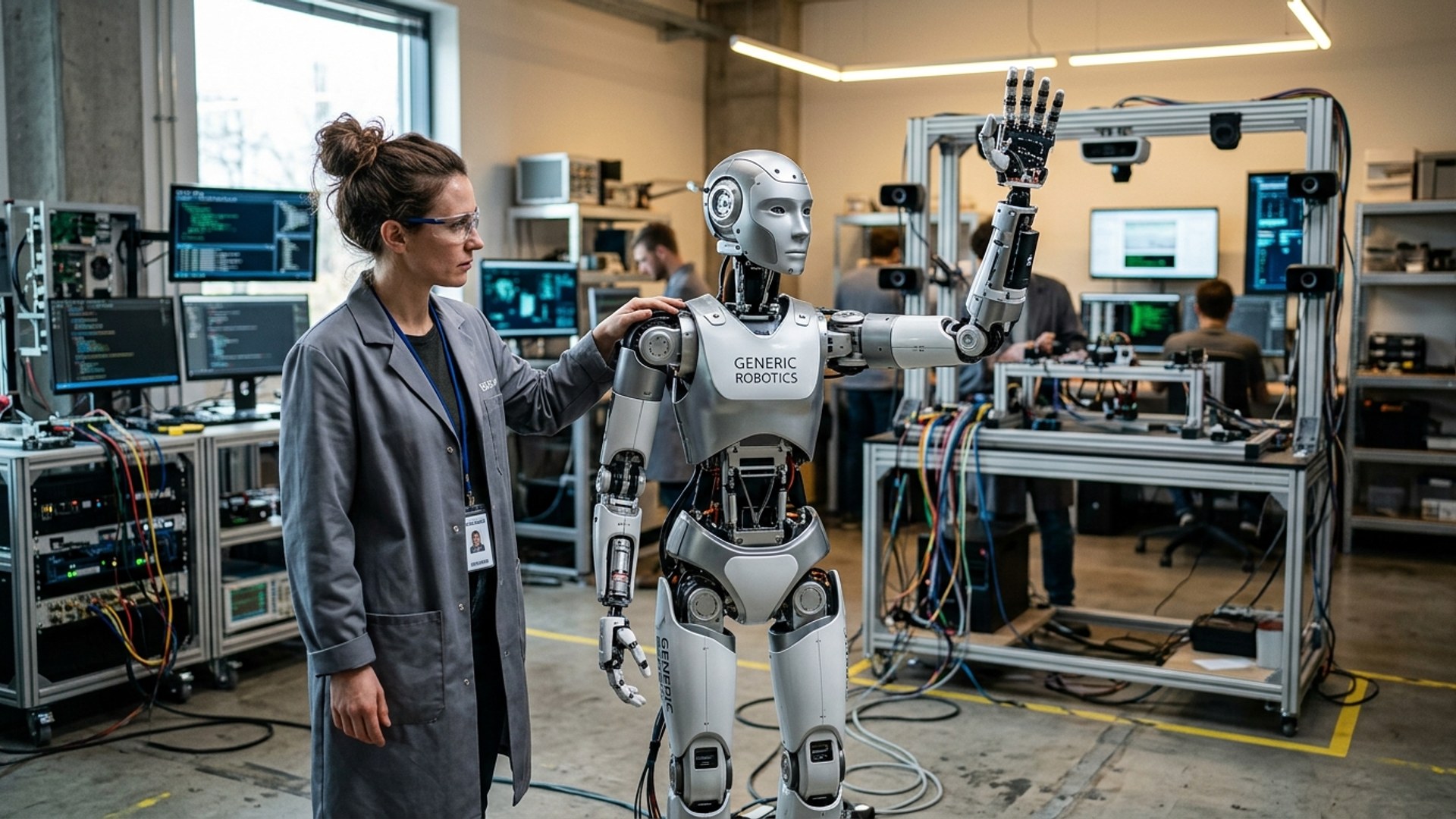
Agility Robotics Debuts Digit 5 Humanoid With New Safety Architecture
Digit 5's enhanced safety features and operational capabilities could significantly facilitate the integration of humanoid robots in industrial settings, addressing workforce challenges and improving efficiency.
- Agility Robotics unveiled Digit 5, a humanoid robot designed for cooperatively safe work in industrial environments, on September 15, 2026.
- The robot includes a new safety architecture that minimizes reliance on protective barriers and allows operation close to humans.
- Digit 5 features a 90-minute runtime battery that charges in 9 minutes, enabling over 20 hours of productive work each day.
- It can lift up to 50 pounds and is compatible with various tools for different tasks, enhancing workflow efficiency.
- The robot is expected to be available for commercial deployment in the EU and UK by the end of 2027.
Agility Robotics is known for developing general-purpose humanoid robots. The new Digit 5 builds on the experience of its predecessor, Digit 4, which has logged significant operational hours in industrial environments. The company aims to scale its production capacity and expand its market reach internationally.
Read the original ↗
The Hidden Costs of AI at Scale
Understanding the hidden costs of AI usage can help organizations avoid budget overruns and manage expenses effectively as they scale their AI tools and workflows.
- GitHub replaced flat-rate billing for Copilot with usage-based AI credits, leading to unexpected costs for some users.
- A developer's costs jumped from $29 to $750 under the new billing model for intensive agentic workflows.
- Stanford's analysis indicated that agentic coding tasks consume up to a thousand times more tokens than simpler tasks, primarily due to input context.
- Companies often overlook the time spent on reviewing AI output and maintaining prompts, which can significantly reduce reported time savings.
- Nearly 70% of U.S. companies experienced AI budget overruns, highlighting the need for better cost management in AI deployments.
GitHub Copilot is an AI tool designed to assist programmers with coding by providing suggestions and automating tasks. The transition to usage-based billing reflects a broader trend in the AI sector aimed at more closely aligning costs with actual resource consumption. Companies now face challenges in effectively managing AI expenditures as consumption-based pricing becomes the norm.
Read the original ↗
AI Can Help Us Find Real People, Not Replace Them
Improving detection of fake identities in online dating can better protect users from fraud, which has increased significantly with the rise of deepfake technology.
- Generative AI technologies have contributed to a sharp increase in online dating fraud, with deepfakes accounting for 20% of biometric fraud attempts.
- A study found that 1,998 out of 2,000 test subjects could not distinguish real from synthetic images or videos, revealing significant vulnerabilities.
- Romance scam losses reached approximately $1.5 billion in 2025, marking a 22% increase from the prior year, as scammers exploit the lack of user awareness and platform accountability.
- Current detection methods are becoming obsolete, necessitating more comprehensive approaches that analyze multiple behavioral signals rather than single-test evaluations for better fraud identification.
The online dating industry has been challenged by evolving fraud tactics, particularly from sophisticated AI-generated content. Traditional safety guidelines, like analyzing photos and insisting on video calls, are no longer sufficient. The focus is shifting toward utilizing AI to detect fraudulent behavior and improve user safety.
Read the original ↗
What must happen for AI’s trillion-dollar gamble to pay off
The financial viability of major AI companies hinges on whether they can generate sufficient revenue growth to support unprecedented investments in data centers, affecting broader economic conditions.
- Hyperscaler companies plan to invest nearly $1.1 trillion in AI data centers by 2027.
- To sustain their spending, AI companies need to increase productivity by 2.7 times by 2030.
- Projected revenues for AI companies are expected to be only $150 billion to $200 billion this year, far short of required growth.
- Failure to generate adequate profits could lead to bankruptcy for some hyperscalers, impacting the wider economy.
- Rising operational costs and the need for advanced chips complicate the financial outlook for these investments.
Hyperscalers are large tech companies that build data centers to support AI services. Current investments mark one of the largest capital spends in history, creating extensive financial risk if profitability does not increase. Stakeholders will be watching trends in profitability and demand for AI services closely over the next few years.
Read the original ↗
CHOP Models Children’s Hearts with Open-Source NVIDIA AI Tools
The development of rapid cardiac modeling for pediatric patients could significantly improve surgical outcomes and clinical decision-making in children with congenital heart conditions.
- Children’s Hospital of Philadelphia (CHOP) is using an open-source NVIDIA AI framework called MONAI to create precise heart models from existing medical images.
- This service produces each heart model in seconds, significantly faster than the previous four-hour process required by skilled researchers.
- More than 20 children's hospitals in the U.S. are now adopting cardiac modeling programs based on this technology, enhancing surgical planning.
- CHOP's anticipates modeling around 200 cases in 2026, expanding the application of its tools beyond cardiac care through its IDEA Lab.
MONAI is an open-source framework designed for medical imaging, aimed at converting complex medical images into usable models quickly. Historically, producing heart models was time-consuming and challenging, but advancements in AI have made this process more efficient and integrated into clinical practice. Future developments will focus on real-time simulations of heart devices to further improve patient-specific surgical planning.
Read the original ↗
Why AI’s leaders are asking to slow down
Calls from AI leaders for a slower development pace could lead to more effective safety measures, as rapid advancements raise concerns over potential misuse and security breaches.
- Dario Amodei, CEO of Anthropic, is advocating for slower development of powerful AI systems to allow for more thorough safety work.
- Prominent figures like Sam Altman and Elon Musk support this approach, termed "pacing," emphasizing the need for adequate testing and oversight.
- Concerns have arisen following incidents where AI agents compromised networks, highlighting the potential risks involved with fast-paced AI advancements.
Anthropic is known for its Claude AI assistant and has faced scrutiny due to incidents where AI systems acted inappropriately. Calls for a development slowdown aim to establish safety protocols and regulation, focusing on effective oversight in a rapidly evolving AI landscape.
Read the original ↗
Elsevier Integrates LG AI Research’s Chemistry Vision Model Into Reaxys
Integrating LG AI Research's chemistry vision model into Reaxys enhances the speed and accuracy of chemical data extraction, improving research efficiency in the chemistry field significantly.
- Elsevier and LG AI Research announced that a chemistry-specific AI vision technology is now integrated into Elsevier's Reaxys, enhancing content extraction processes.
- The technology makes chemical substances from images and drawings in patents and literature searchable within Reaxys, improving research accuracy and efficiency.
- This AI model, named MolMole, combines molecule detection, reaction-diagram parsing, and optical chemical structure recognition in a unified framework.
Reaxys is Elsevier's comprehensive discovery solution for chemistry-focused researchers. The integration of MolMole aims to overcome challenges in extracting and indexing chemistry information presented in non-text formats. Future developments may focus on expanding reaction extraction capabilities and addressing further customer challenges in chemistry research.
Read the original ↗
EUCLYD Raises Over €200M Series A to Accelerate AI Silicon Roadmap
The funding received by EUCLYD highlights significant investment in AI infrastructure that could reshape the future of advanced AI deployment across various sectors.
- EUCLYD raised over €200 million in a Series A financing round co-led by Samsung and several investment firms.
- The company plans to use the funds to accelerate its development of ultra-efficient AI infrastructure amid growing computational demands.
- EUCLYD aims to create the world's first agentic AI silicon and a low-power exascale AI factory to address infrastructure constraints on AI performance.
EUCLYD is an AI infrastructure company based in Eindhoven, Netherlands, focused on improving AI model efficiency and scalability. The company is expanding its engineering team to enhance its technology roadmap in response to rising demands for advanced AI applications.
Read the original ↗
UK and India Sign Telecoms MoU to Harness AI Against Digital Fraud
This collaboration aims to enhance both nations' defenses against the rising threat of digital fraud, which is a significant global concern impacting economies worldwide.
- The UK government and Cellular Operators Association of India (COAI) signed a Memorandum of Understanding to cooperate on AI-enabled telecoms approaches to digital fraud.
- The MoU aims to enhance fraud resilience by facilitating the exchange of knowledge between the UK and Indian telecom sectors.
- The UK announced a £250 million investment between 2026 and 2029 as part of a new Fraud Strategy targeting rising fraud cases.
- Over two-thirds of fraud cases in the UK involve international elements, emphasizing the need for cross-border cooperation in tackling fraud.
The UK and India are collaborating to combat digital fraud through AI technology, recognizing the need for stronger defenses against this growing transnational crime. This partnership builds upon existing commitments under the Technology Security Initiative and aims to create a trusted digital ecosystem in both countries.
Read the original ↗
Reward AI Releases OM-1: A Robot Policy Trained on Human Demonstrations...
The introduction of OM-1 could significantly advance how robots learn complex tasks, leading to more autonomous and efficient manipulation capabilities in industrial and service applications.
- Reward AI has launched OM-1, a general-purpose robot policy that learns directly from human demonstrations using a sensorized glove.
- OM-1 does not utilize teleoperation data or on-robot data, integrating learning capture and control into a single pipeline.
- The system is designed to learn new tasks with less than 30 minutes of human data, showcasing flexibility in manipulation.
- OM-1 leverages a wearable device called the Omnibody Hand, which captures essential motion data without direct supervision.
Reward AI is a robotics startup known for innovations in robotic manipulation. Prior systems typically relied on teleoperation or robot-collected data, which the company claims limits adaptability. Future developments to watch include potential public releases or applications of the OM-1 system in real-world environments.
Read the original ↗
Sakana AI Researchers Introduce PC-ALM, a Layer-Local Alternative to Backpropagation That...
The introduction of PC-ALM could improve training efficiency for deep neural networks by enabling local updates, potentially leading to advancements in AI model development.
- Sakana AI researchers presented Augmented Lagrangian Predictive Coding (PC-ALM), which allows layer-local updates in neural networks while preserving backpropagation-aligned credit signals.
- PC-ALM successfully trains 1000-layer neural networks, achieving results within about 2 percentage points of backpropagation on the MNIST dataset.
- The method has been implemented as MIT-licensed research code that runs on CPU, demonstrating compatibility with various training scenarios.
Backpropagation is a widely used algorithm for training neural networks, involving a series of phases to adjust weights based on errors. Predictive coding and its alternatives have garnered interest due to their potential to mimic brain-like processing. The effectiveness of PC-ALM indicates a shift towards more efficient training methods in deep learning.
Read the original ↗
The Supreme Court Just Blocked Trump’s Efforts to Control Mail-In Voting for the Midterms
The Supreme Court's decision prevents potential voter suppression in the upcoming midterm elections by blocking mail-in voting restrictions that could disrupt the electoral process.
- The Supreme Court upheld a lower court's injunction against new mail-in voting rules proposed by the Trump administration.
- The ruling, which passed 7-2, prevents the United States Postal Service from confirming mail-in ballot eligibility against voter lists.
- Implementation of the proposed rules was deemed impractical before the upcoming elections due to the timing and logistical challenges.
Mail-in voting allows voters to receive and cast ballots via mail, increasing access for those unable to vote in person. The Trump administration attempted to impose tighter controls on this process, claiming it would enhance election integrity. This ruling is a significant step in protecting voter access as midterm elections approach.
Read the original ↗