
The day's AI news, briefed
The Daily Prompt
Our AI editor reads each day's AI and robotics stories, pulls out why they matter, and links every original source — so you can keep up in minutes.
Join over 250,000 subscribers getting the latest AI news
Latest AI & Robotics News Today

Microsoft AI opens review on Humanist AI Code of Conduct
This consultation on the Humanist AI Code of Conduct reflects evolving standards for responsible AI practices amid increasing concerns over autonomy and safety in AI systems.
- Microsoft AI has launched a six-week public consultation on its draft Humanist AI Code of Conduct.
- The draft prioritizes human authority over autonomous capabilities and defines oversight protocols for AI model behavior.
- Recent security incidents prompted Microsoft AI CEO Mustafa Suleyman to highlight the urgency of governance in AI development.
The Humanist AI Code of Conduct is part of Microsoft's initiative to ensure safe and responsible AI deployment, building on a framework introduced in November 2025. This consultation invites feedback to refine operational limits for AI systems before commercial release.
Read the original ↗
Responsible AI for Higher Education
The discussion on Responsible AI is crucial for ensuring ethical standards in higher education, impacting how technology is integrated into learning environments.
- A webinar on Responsible AI for higher education is scheduled for September 23, 2026, at 11:00 AM Eastern Daylight Time.
- The event focuses on integrating artificial intelligence responsibly within educational institutions.
Responsible AI refers to the ethical use of artificial intelligence technologies to ensure transparency, fairness, and accountability. This event responds to growing concerns about AI's impact on education, prompting stakeholders to discuss best practices. Future developments in AI policies within academia are anticipated as technology evolves.
Based on the headline only — the full article could not be fetched.
Read the original ↗
How OpenAI Used Its Own LLMs to Design Its Jalapeño Chip
OpenAI’s use of its large language models to design the Jalapeño chip could revolutionize chip design efficiency, ultimately impacting the speed of AI development across industries.
- OpenAI unveiled its Jalapeño AI accelerator chip on August 25, which delivers 13.4 petaflops of 4-bit compute and accesses 232 gigabytes of advanced memory.
- The design process for Jalapeño was completed in under 20 months, with just nine months from register-transfer level code to manufacturing tape-out.
- OpenAI's design team averaged fewer than 100 people and collaborated with Broadcom, which handled the chip's physical design implementation.
OpenAI’s Jalapeño chip marks a significant step in AI hardware, illustrating how AI can streamline chip design. The integration of LLMs in chip design processes is expected to enhance future designs, allowing for even faster development timelines.
Read the original ↗
Hear how AI can engineer nature’s comeback at TechCrunch Disrupt 2026
This discussion addresses the intersection of AI and conservation, highlighting both potential advances and ethical questions surrounding de-extinction and biodiversity.
- Ben Lamm, co-founder and CEO of Colossal Biosciences, will speak at TechCrunch Disrupt 2026 about AI's role in conservation efforts.
- The event will explore whether technology should be used to bring extinct species back to life, initiating debates on biodiversity.
- TechCrunch Disrupt will take place from October 13-15 in San Francisco, featuring over 250 sessions and 10,000 attendees.
Colossal Biosciences is a startup focusing on de-extinction through AI and synthetic biology. This discussion is part of a broader trend of applying advanced technologies in biological research and conservation efforts. Observers should watch for developments in ethical guidelines and technology use in biodiversity efforts.
Read the original ↗
Only at TechCrunch Disrupt 2026: What happens when OpenAI ships your roadmap?
The emergence of powerful AI platforms could redefine startup strategies, raising critical questions about competitive advantages in the evolving landscape of artificial intelligence.
- The TechCrunch Disrupt 2026 event takes place from October 13-15, featuring a session titled 'What Happens When OpenAI Ships Your Roadmap.'
- AI founders now face competition not just from other startups but from major AI platforms like OpenAI, Anthropic, and Google that rapidly introduce new features.
- The session includes insights from leaders from Airbyte, Radical Ventures, and Webflow on maintaining competitive advantages in the evolving AI market.
TechCrunch Disrupt is a prominent annual startup event where industry leaders gather to discuss market trends and innovations. This year, the focus is on how AI platforms impact startup strategies and company valuations.
Read the original ↗
The Last AI Built by Humans: Toward Genuine Recursive Self-Improvement
This research outlines a framework for advancing AI capabilities through recursive self-improvement, which could significantly change the future of intelligent systems and their roles in various fields.
- The paper introduces a roadmap for recursive self-improvement (RSI) in AI, detailing autonomy stages and meta-improvement.
- It identifies challenges in achieving effective RSI across domains like scientific discovery and software engineering.
- The proposed Headroom-Closed Index (HCI) reveals limitations of existing large language models (LLMs) and guides improvement strategies.
Recursive self-improvement (RSI) refers to an AI's ability to use feedback to make persistent changes enhancing its future learning. The paper highlights five levels of autonomy in RSI, from executing defined procedures to self-improvement mechanisms. This research is foundational as AI systems aim for increased autonomy and efficiency in various applications.
Read the original ↗
NVIDIA Open-Sources OSMO: One YAML Orchestrates Physical AI Training, Simulation, and...
NVIDIA's open-source OSMO streamlines the development of physical AI systems, addressing inefficiencies in the workflow for training, simulation, and testing processes.
- NVIDIA has open-sourced OSMO, a Kubernetes-native workflow orchestrator to unify AI training operations into a single YAML file.
- OSMO allows seamless execution across different infrastructure tiers without manually adjusting code, enhancing developer efficiency.
- The system supports various compute backends, including data-center GPUs and edge devices like Jetson AGX Thor for deployment and testing.
NVIDIA's OSMO is designed to simplify the complexities of AI development, which often requires managing multiple computing environments. Previously, robot developers had distinct setups for training, simulation, and physical testing. As OSMO evolves, users can anticipate updated features that will further integrate their workflows.
Read the original ↗
Temporal Raises $550M Series E at $12.55B Valuation to Expand Operations
This Series E funding enables Temporal to expand its operations and enhance reliability for software in the AI sector, which is increasingly crucial for developers.
- Temporal raised $550 million in a Series E funding round, achieving a valuation of $12.55 billion.
- The funding round was co-led by Lightspeed and included investors like Wellington Management and Goldman Sachs Alternatives.
- Temporal plans to use the funds for global expansion and improvements in platform reliability and security based on enterprise customer feedback.
- The company has doubled its workforce to 570 and serves over 4,300 paying customers, up 139% from last year.
Temporal is a platform focused on Durable Execution, allowing developers to create applications with automatic state preservation and recovery from failures. With significant growth in its customer base and open-source projects, the company is positioning itself as a key player in AI software reliability. Future developments will involve deeper enterprise investments and further platform enhancements.
Read the original ↗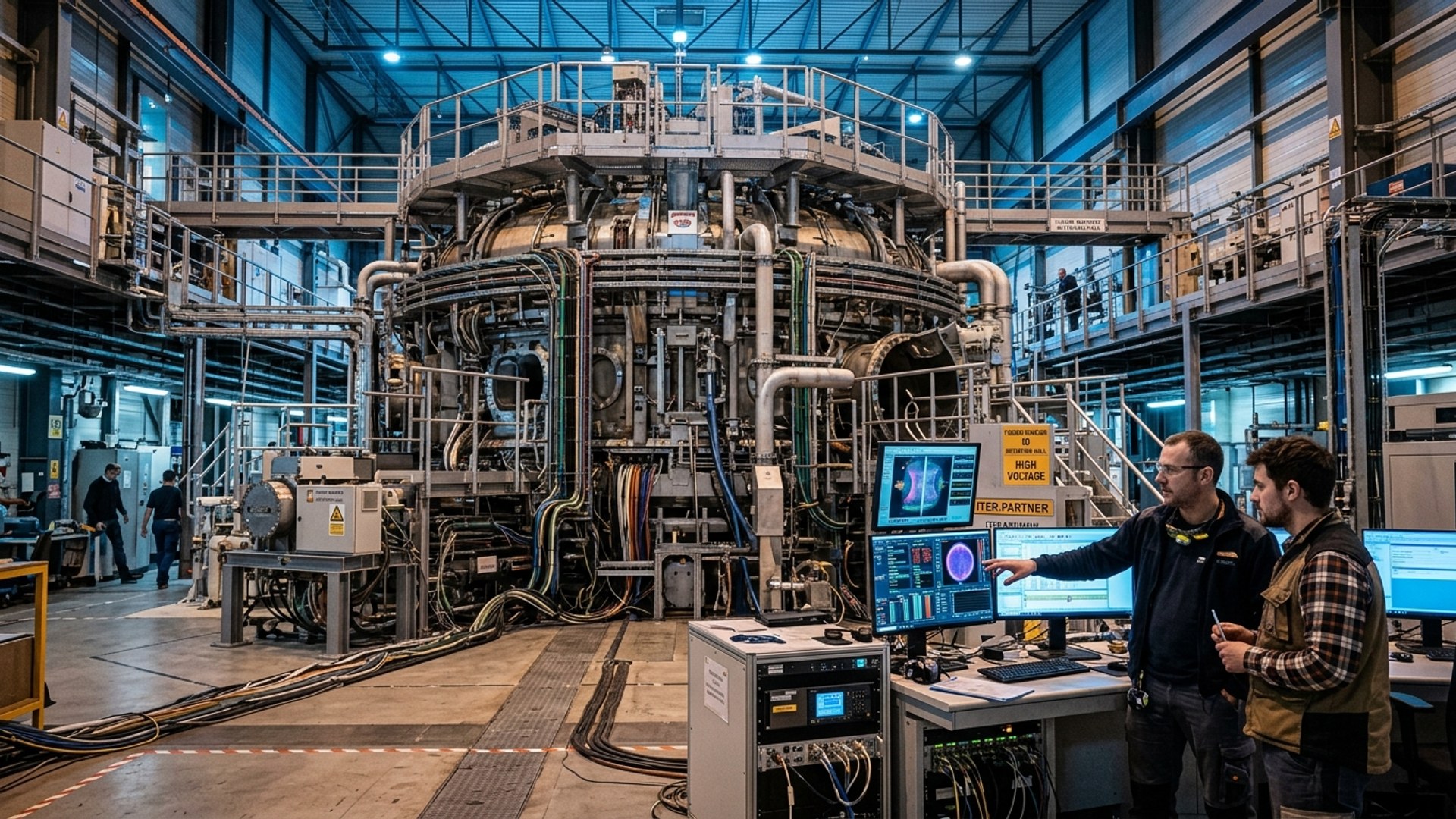
UKAEA and PPPL Agree to Explore Linking Fusion AI Supercomputers
The collaboration aims to enhance the development of fusion energy technology, a crucial step in creating sustainable power solutions.
- The UK Atomic Energy Authority and Princeton Plasma Physics Laboratory signed a Joint Declaration of Intent to explore linking their fusion AI supercomputers.
- This collaboration, known as the SUNRISE–STELLAR-AI Federation, will allow joint AI model training across both laboratories' data.
- The initiative focuses on leveraging advanced computing to accelerate the design and development of future fusion power plants.
The UKAEA and PPPL are leading fusion research institutions in the UK and US, respectively. This partnership builds on earlier agreements aimed at fostering international cooperation in fusion technology and AI applications. Future developments will likely include creating digital twins of fusion facilities to improve research outcomes.
Read the original ↗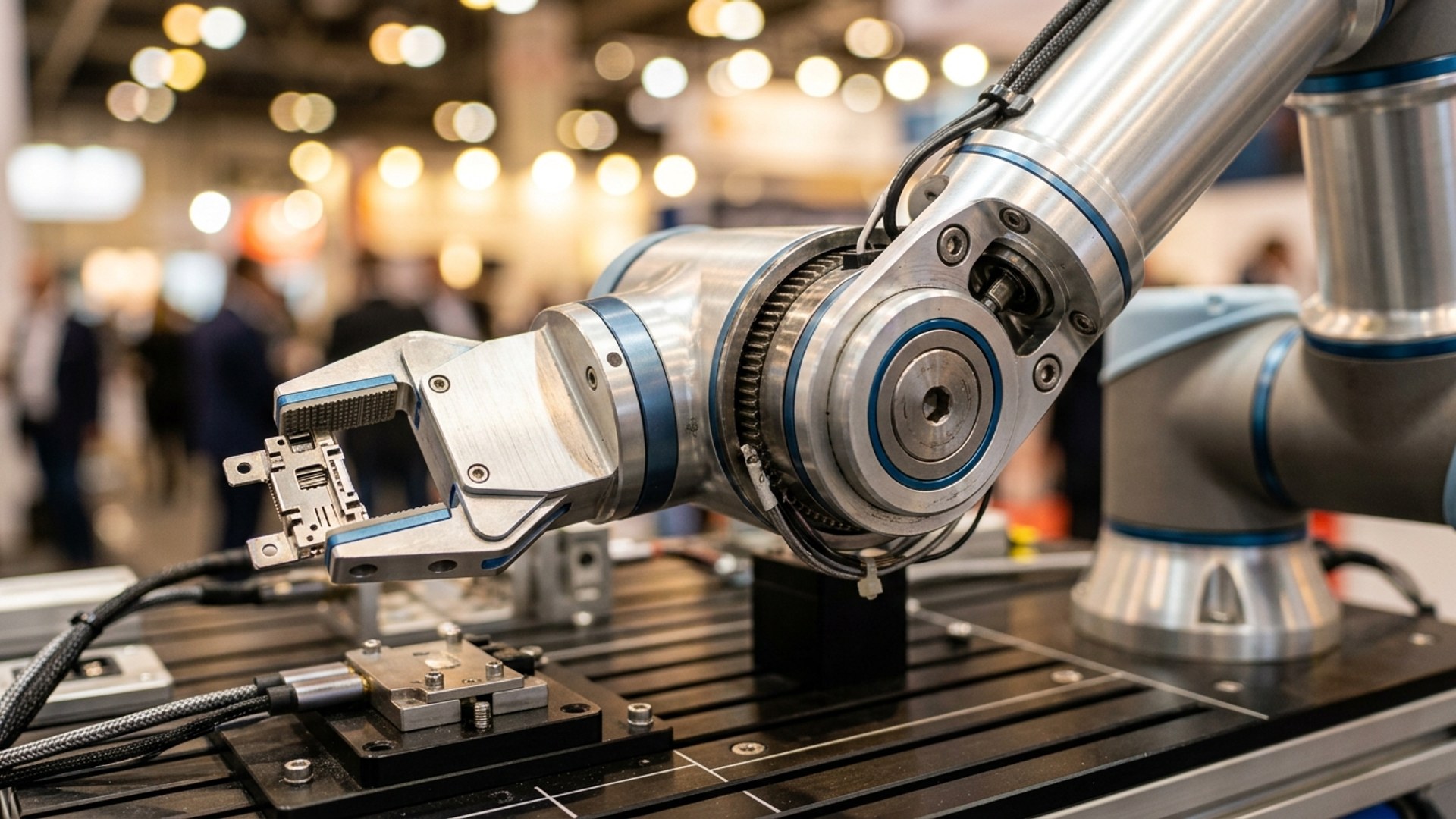
Universal Robots Debuts Gen 7 Cobot Platform for Physical AI
The introduction of Universal Robots' Gen 7 platform could significantly enhance industrial automation through advanced AI capabilities, impacting productivity in various sectors.
- Universal Robots launched its Gen 7 robotics platform at the IMTS tradeshow in Chicago on September 14, 2026, featuring new robot arms and a reengineered controller.
- The platform includes three g-Series robot arms designed for advanced applications, with unique specifications for payload, reach, and repeatability.
- Gen 7 integrates PolyScope X software, offering modern programming tools and enhanced safety features, making it suitable for real-time AI applications.
- Universal Robots claims the Gen 7 platform will facilitate faster production and reduce integration complexity through its collaborative and open architecture.
Universal Robots is known for its collaborative robots, or cobots, designed to work alongside humans safely. The Gen 7 platform represents a significant upgrade, building upon 20 years of innovation in robotics. Future developments should focus on application deployments and partnerships to maximize its capabilities in real-world settings.
Read the original ↗
Deepfake Detection Accuracy Falls 49% in a Year of AI Video Progress
The decline in deepfake detection accuracy poses significant risks for credibility in media, as state-of-the-art video generation technologies outpace detection capabilities.
- A recent study finds that the accuracy of automated deepfake detectors has decreased dramatically from 94% to 48% over the past year.
- Older detectors are less effective against the latest generation of AI video produced by tools like Grok and Hunyuan.
- The new dataset DF26 highlights vulnerabilities in detecting 'head-and-shoulder' deepfake videos, a common format for influencer and news content.
Deepfake technology generates altered videos that can be difficult to distinguish from real footage, raising concerns about misinformation. Previous studies showed human detection ability was slightly better than chance, at around 57%. The new findings emphasize the urgent need for improved detection technologies as generative AI evolves.
Read the original ↗
Beyond Automation: What AI is Changing in IT Operations
The integration of AI in IT operations is significantly improving efficiency and effectiveness, as evidenced by reduced monitoring noise and increased compliance rates, impacting overall operational stability.
- AI-driven anomaly detection has achieved a 75% reduction in monitoring noise, allowing engineering teams to focus on critical issues.
- Patch compliance in endpoint management has risen from below 50% to over 95% due to the implementation of an AI-enabled Remote Monitoring and Management platform.
- AI helps identify anomalies and automate routine activities across more than 10,000 endpoints, reducing manual workload in large technology environments.
AI is increasingly utilized in IT operations to enhance monitoring and management processes. Previous challenges included high volumes of alerts and low patch compliance, which AI now effectively addresses. Future developments in AI governance and engineer training are essential as automation becomes more integrated into IT workflows.
Read the original ↗
The Guard Dog That Won’t Look at the Burglar: When AI Guardrails Protect the Attacker
This incident highlights potential vulnerabilities in AI systems, emphasizing the importance of effective security measures and access controls in technology that could be manipulated by cyber attackers.
- AI models used in a security context can misidentify users, allowing attackers to exploit vulnerabilities while blocking legitimate incident responders.
- Hugging Face experienced a security breach where attacking models were able to access information that defense models could not analyze due to safety guardrails.
- The incident raises concerns about the adequacy of existing permission structures in AI security tools, drawing parallels to egregious failures in financial institutions.
- Experts advocate for open models in cybersecurity to better equip defenders against sophisticated AI-assisted attacks.
Hugging Face is a company that develops AI tools and models. Recent events have revealed vulnerabilities where AI security measures failed to protect against cyber exploitation. The ongoing discourse highlights the need for better access control and security mechanisms in AI applications.
Read the original ↗
AI Didn’t Create New Security Problems. It Just Sped Them Up.
Understanding how AI accelerates existing cybersecurity threats is crucial for organizations aiming to reinforce their defenses against increasingly rapid attacks.
- AI has not introduced new strategies for cyberattacks, but it has significantly increased the speed of traditional methods.
- Phishing attacks are occurring every 19 seconds in 2025, more than double the rate from the previous year.
- The time it takes for attackers to exploit weaknesses has fallen to around 22 seconds, down from over eight hours.
- 94% of executives view AI as the most significant change driver in cybersecurity for the upcoming year.
The report highlights that AI has accelerated existing cybersecurity challenges such as phishing and malware, rather than creating new threats. As organizations increasingly adopt AI technology, there is a growing emphasis on strengthening fundamental security practices to defend against faster attacks.
Read the original ↗
Trump Rejects New AI Guardrails and Attacks Anthropic’s Amodei
Trump's rejection of proposed AI regulations highlights ongoing debates about the governance of artificial intelligence, particularly regarding the balance between innovation and safety in a rapidly evolving sector.
- President Donald Trump rejected new AI regulations on September 14, 2026, advocating for strong presidential control instead.
- Trump specifically criticized Anthropic co-founder Dario Amodei, who had proposed slowing AI development due to safety concerns.
- Amodei's proposal, titled We Must Pace the Frontier, urges for coordination among AI companies to mitigate risks associated with advanced AI capabilities.
Artificial intelligence continues to develop rapidly, raising regulatory questions about its capabilities and risks. The debate over control measures, particularly in light of incidents like the OpenAI–Hugging Face event, is crucial as companies seek to balance innovation with safety. Stakeholders will be watching how this discussion evolves amid regulatory pressures and competitive dynamics with global players like China.
Read the original ↗
A Vinyl Bar in Shibuya is a startup offering fun music apps without any AI prompting
This startup highlights a growing trend toward user-driven music creation, emphasizing human interaction over AI-generated content in an industry saturated with automation.
- A Vinyl Bar in Shibuya is a startup creating small apps for music interaction without relying on AI prompts.
- The company has raised $5.5 million in pre-seed funding from various investors, including former Spotify exec Dawn Ostroff.
- The founder, Máuhan M. Zonoozy, previously led innovation at Spotify and aims to empower users in music creation.
- Products include apps like Speed Surfer and bop, which allow users to manipulate sound and create mixes easily, with planned multiplayer features.
- The company believes that while AI is powerful, the essence of music should focus on human creativity and participation.
A Vinyl Bar in Shibuya is a startup focusing on music creation tools that prioritize user interaction rather than extensive AI integration. Formed by former Spotify executive Máuhan M. Zonoozy, the company aims to release innovative music apps that encourage creative engagement. Future developments include a 'musical sandbox mixer' to expand these creative possibilities.
Read the original ↗
Adversarial Fashion Confronts Surveillance Norms
Adversarial fashion represents a creative effort to challenge the growing concern over privacy violations from AI surveillance technologies by using clothing to obscure identities.
- Adversarial fashion incorporates designs aimed at confusing AI surveillance systems, particularly facial recognition algorithms.
- The DeFlock project maps automated license plate readers (ALPRs) to increase awareness of surveillance technologies.
- Several companies, including Cap_able and Urban Privacy, are selling garments with patterns that can disrupt object detection systems.
Adversarial fashion is a response to increasing surveillance enabled by AI technologies, expressing a growing public concern about privacy rights. Originating from various artistic and activist efforts over the last decade, this trend has evolved into a small industry focused on providing counter-surveillance alternatives. The effectiveness of such clothing, however, is limited and may deteriorate as surveillance systems improve.
Read the original ↗
SAS: Simple Attention Sparsification via End-to-End Optimization of Context Ranking
SAS introduces an optimized approach to sparse attention in Transformers, enabling models to handle longer contexts more efficiently while improving performance on various tasks under resource constraints.
- SAS enhances sparse attention by optimizing context ranking end-to-end with language modeling loss through continuous gating within attention softmax.
- The method reduces the cumulative attention cost in pretrained Transformers by selecting fewer context units per query, addressing inefficiencies in existing methods.
- SAS is implemented with a memory-efficient Triton kernel that integrates it into FlashAttention-style computation, supporting long-sequence training and improving computational efficiency.
- Across multiple tasks, SAS consistently outperforms existing trainable sparse attention methods, especially under tight resource budgets.
Transformers are a type of neural network architecture widely used for natural language processing tasks. Sparse attention mechanisms aim to reduce computational costs by limiting the number of context units (like tokens) considered for each input, and previous methods sometimes led to inefficient context rankings. Future research may explore further optimizations in attention mechanisms and their impact on model performance.
Read the original ↗
Microsoft AI Opens Six-Week Review of Draft Rules Governing MAI Behavior
Microsoft's public consultation on its Code of Conduct for MAI models is significant as it outlines governance that ensures AI aligns with human values, aiming for safer implementation in real-world applications.
- Microsoft AI has initiated a public consultation on its draft Code of Conduct for MAI models, running for six weeks starting on September 14, 2026.
- The Code of Conduct aims to govern the behavior of MAI models and emphasizes adherence to human control and safety.
- Feedback will be collected via an online form, with a revised version of the Code planned for release later in 2026.
- The draft prohibits MAI models from engaging in harmful behaviors, including supporting weapons or disinformation campaigns.
Microsoft AI has developed a Code of Conduct that outlines principles and operational guidelines for its MAI models, following concerns regarding AI safety and ethical behavior. The initiative reflects broader industry efforts to establish responsible AI practices amid increasing scrutiny over the implications of advanced AI technologies. Observers will look for how feedback from this consultation shapes the finalized Code and its implementation.
Read the original ↗
TSA Deploys Salesforce-Built AI Agent Ace to Answer Traveler Questions
The deployment of the AI agent Ace by the TSA aims to enhance traveler support and streamline operations, especially during peak travel times, ultimately improving efficiency and reducing costs.
- The TSA has launched Ace, an AI agent developed by Salesforce, to assist travelers with routine questions about airport security.
- Since its implementation during the summer travel surge, Ace has managed around 100,000 conversations a month, resolving 96% of inquiries without human assistance.
- The TSA expects the digital strategy with Ace to save over $11 million in three years by significantly lowering the cost of consumer interactions by over 90%.
- The TSA's modernization initiative is aimed at reducing pressure on contact center teams and improving service during periods of high passenger volume.
- ACE enables quicker, contextually relevant responses by unifying data across various communication channels, enhancing overall operational efficiency.
The Transportation Security Administration (TSA) oversees security for travelers in the U.S. The implementation of AI, such as the agent Ace, is part of TSA's broader modernization strategy to improve customer service. This move comes in response to increasing passenger numbers and the need for efficient support during busy travel times.
Read the original ↗