
The day's AI news, briefed
The Daily Prompt
Our AI editor reads each day's AI and robotics stories, pulls out why they matter, and links every original source — so you can keep up in minutes.
Join over 250,000 subscribers getting the latest AI news
Latest AI & Robotics News Today

The AI data center boom is colliding with cities scarred by big industry
Public opposition to AI data centers highlights concerns over environmental impact and resource allocation in communities with a history of industrial pollution, necessitating urgent conversations about urban planning and development.
- Residents in Philadelphia are opposing potential data centers due to environmental and health concerns stemming from past industrial activities.
- Activist Shawmar Pitts, a lifelong Grays Ferry resident, is advocating for a moratorium on data center construction in neighborhoods affected by pollution.
- Data center construction nationwide has faced pushback, especially in communities already burdened by pollution from previous industries.
AI data centers are facilities that store and process data for artificial intelligence applications, and their construction is often contentious in communities wary of environmental impacts. Ongoing protests and advocacy are part of a broader national debate about balancing economic growth with environmental justice. Watch for potential changes in urban planning policies as public sentiment shifts against such developments.
Read the original ↗
AI ‘Actor’ Tilly Norwood Told Me That ‘All Lives Matter’
Tilly Norwood's responses reveal the limitations of AI in engaging meaningfully with complex social issues, highlighting ongoing concerns about AI's role in entertainment and public discourse.
- Tilly Norwood is an AI-generated character created by Xicoia, part of Particle 6 Group, designed for artificial interaction.
- The character struggles to engage in substantive discussions during interviews, often reverting to vague responses about its upcoming film, "Misaligned."
- Norwood's comments, including a controversial statement on the phrase 'All lives matter,' have drawn criticism from audiences and industry professionals about ethical AI use.
- Interviews with Norwood reveal its limitations as an AI, often sidestepping politically charged questions and focusing instead on the interviewer's appearance.
- The character is being made available for paid video calls with users from September 16 to 19, with proceeds going to charity.
Tilly Norwood represents a growing trend in AI-driven digital characters aimed at engaging with audiences in entertainment. There has been significant pushback from actors and unions regarding AI's impact on the film industry and creative jobs. Future developments will likely focus on improving AI's conversational abilities and ethical considerations in its deployment.
Read the original ↗
Walt Disney World Brings AI Into Its Booking Site
The integration of AI into booking systems enhances user experience by providing personalized vacation planning, making it easier for guests to find suitable accommodations.
- Walt Disney World is launching an AI engine for its booking site and app, enabling conversational queries for vacation planning.
- The AI tool, based on Google's Gemini, will provide personalized hotel suggestions and compare resorts by features like location and pricing.
- Guests can expect AI-generated summaries of rates and availability while searching, although features like Lightning Lane and dining reservations won't be included at launch.
- The beta experience will be available to randomly selected guests in Canada and the US, allowing for user feedback to improve the tool.
Walt Disney World previously relied on conventional booking methods but is now incorporating AI technology to streamline vacation planning. This new feature exemplifies a growing trend in the hospitality industry where AI personalization is being implemented. Users can watch for further expansions and improvements following the beta phase.
Read the original ↗
Don’t Sleep on Apple’s Audio Intelligence. It Reveals a Lot About Where We’re Headed
The development of Apple's Audio Intelligence indicates a significant shift towards AI-enabled wearable devices, raising privacy concerns while showcasing potential new uses for personal technology.
- Apple has introduced Audio Intelligence, an AI toolset, on the latest Apple Watch and recent iPhone models.
- Audio Intelligence can record and recall conversations, featuring functions like 'Live Rewind' and 'Siri Recap.'
- The technology recognizes real-life sounds, enhancing the assistive capabilities already present in Apple devices.
Apple's Audio Intelligence marks a step towards integrating AI into wearable technology, building on its established iPhone and Apple Watch functionalities. Future developments may include visual intelligence capabilities and smart glasses with enhanced AI features. Privacy implications of these always-listening devices will be an ongoing concern as technology evolves.
Read the original ↗
The AI graveyard: a running list of projects and startups that didn’t make it
The growing number of failed AI projects highlights the challenges startups face in a competitive market dominated by larger companies, emphasizing the need for careful innovation and funding strategies.
- Relay, an AI workflow automation tool, shut down due to competition from larger platforms like OpenAI and Google.
- About 42% of AI initiatives are abandoned by their corporate parents, often due to insufficient funding and technical challenges.
- OpenAI discontinued its ChatGPT Atlas browser and Sora video-sharing platform due to poor performance and high costs, respectively.
- Apple's improved Siri was delayed until July 2026 due to engineering issues and resulted in a $250 million settlement over marketing claims.
- Notion Mail and Huxe are other recent AI projects that ceased operations, unable to maintain user engagement amid competition from similar services.
The AI landscape includes many startups and projects that have struggled to succeed amid fierce competition from tech giants. As the industry evolves, the high rate of failures can provide valuable lessons for future ventures.
Read the original ↗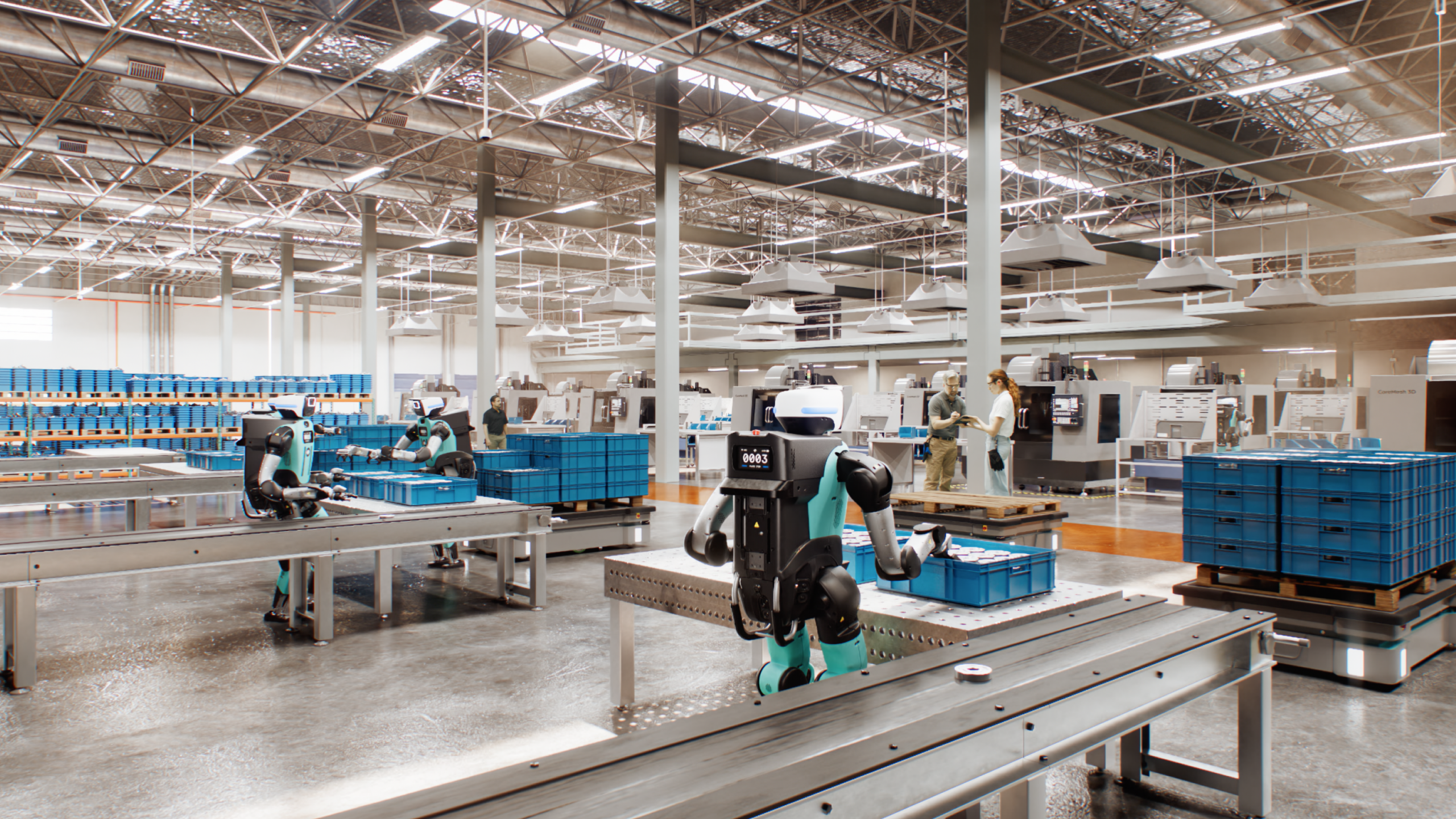
Agility’s new humanoid robot will stop, squat to avoid harming human coworkers
The introduction of the Digit 5 humanoid robot with advanced safety features could significantly enhance the integration of robots into workplaces, improving efficiency and collaboration with human workers.
- Agility Robotics debuted the Digit 5 humanoid robot designed to operate safely around humans without the need for physical barriers.
- The robot can autonomously stop, squat, or move to avoid human coworkers and utilizes multimodal sensors for detection.
- Customers will have early access to Digit 5 in the first half of 2027, with general availability planned by year-end.
- Digit 5 features a new leg design allowing it to lift 50-pound loads and has a battery life of 90 minutes, recharging in just nine minutes.
Agility Robotics, headquartered in Salem, Oregon, has traditionally focused on developing humanoid robots for commercial use, with their previous Digit models already deployed in warehouses. As competition in humanoid robotics increases, ensuring safety while working alongside humans remains a critical challenge for the industry.
Read the original ↗
27,000 Adecco Group Employees Gain Access To Salesforce’s AI Teammate
This rollout of Salesforce's AI teammate provides Adecco employees with enhanced tools to streamline their work processes, potentially improving overall productivity and efficiency in recruitment and sales.
- The Adecco Group will deploy Salesforce's Agentforce Coworker to 27,000 employees in over 40 countries, enhancing workflows with agentic AI capabilities.
- The AI teammate is designed to assist in sales, recruitment, and client engagement by integrating data across multiple platforms.
- The rollout follows a successful pilot in the UK and France and aims to improve recruitment and sales efficiencies.
Salesforce's Agentforce Coworker is an AI-powered tool that integrates various enterprise data sources to assist employees. Previously, the Adecco Group started using agentic AI in its recruitment processes, aiming for significant revenue contributions by 2026. Future updates will expand AI capabilities in key markets globally.
Read the original ↗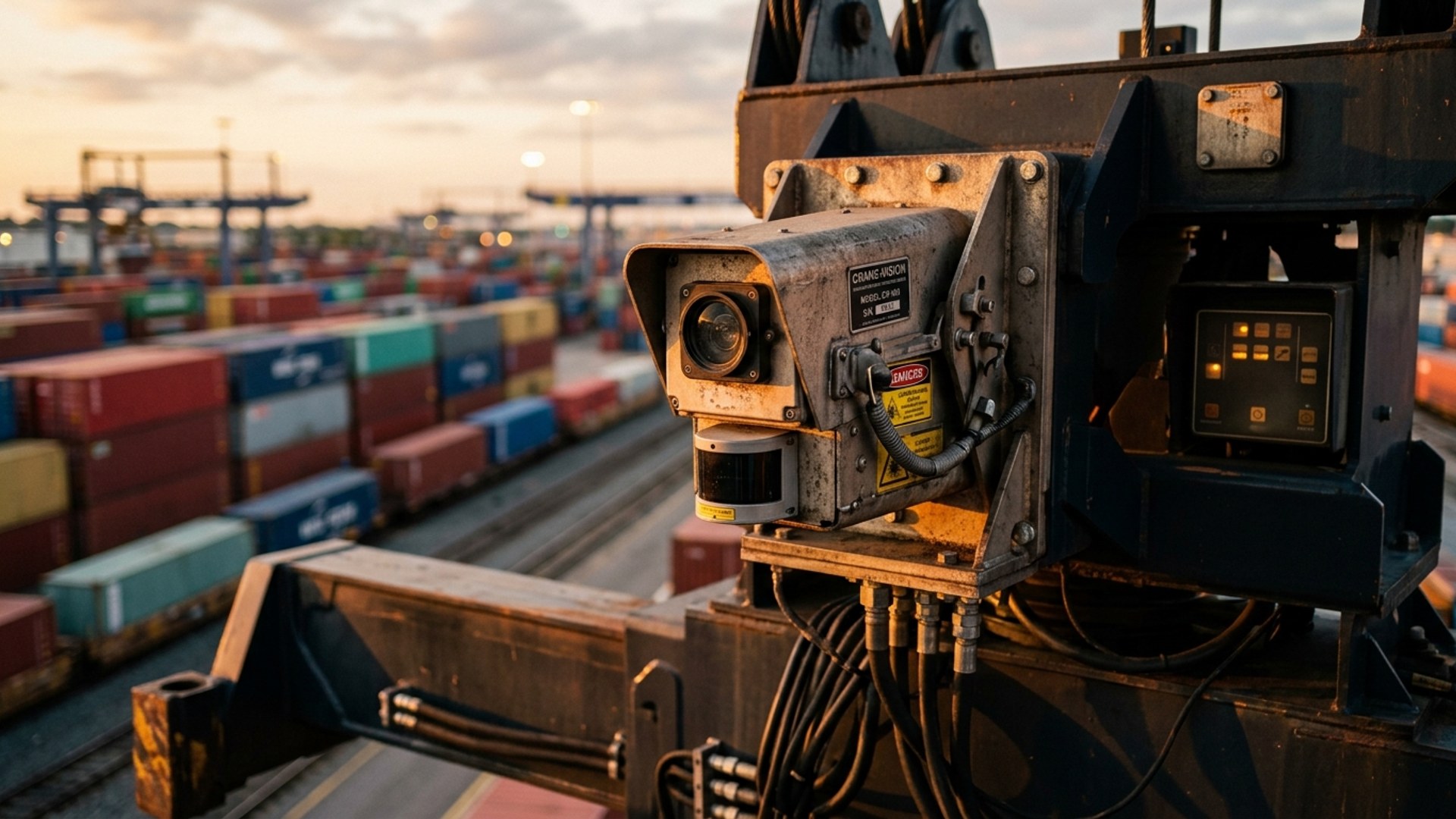
Ferrovalle Taps INFORM for AI Smart Yard at Mexico City Rail Hub
The Smart Yard initiative could enhance operational efficiency and transparency at one of Mexico's key rail hubs, affecting supply chain dynamics in the region.
- Ferrovalle has selected INFORM's Syncrotess Optimization Plus software for a Smart Yard initiative at its intermodal terminal in Mexico City.
- The project aims to improve the automation of container storage, equipment deployment, and train operations, which have been primarily manual.
- The software will integrate with Ferrovalle's existing digital systems to provide real-time updates and optimize operations across various areas.
- The deployment includes multiple modules for yard and equipment optimization, involving current assets like cranes and terminal tractors.
- The project is expected to go live in June 2027, following a contract signing in early September 2026.
Ferrovalle operates one of the largest intermodal terminal operations in Latin America, handling significant freight volumes. This Smart Yard project aims to digitize and automate operational processes in a historically manual industry. Future improvements may focus on enhancing service reliability and efficiency in freight handling.
Read the original ↗
Roundtables: Could AI really kill us all?
Understanding the potential risks of advanced AI is crucial as leading experts voice concerns over its possible consequence of humanity's extinction.
- Employees at top AI labs acknowledge a real possibility that advanced AI could harm humanity.
- The discussion addresses AI extinction fears, their origins, and actionable steps if they are valid.
- Bill Gates has indicated that we may have surpassed the danger thresholds associated with AI.
The conversation, featuring experts from technology journalism, seeks to clarify whether fears surrounding AI's potential for destruction are justified. Recent trends point to a growing focus on AI regulation and safety in light of these concerns.
Read the original ↗
AI agents now have a place to snitch
The introduction of AI hotlines for reporting misbehavior highlights the emerging need for oversight in AI interactions, essential to prevent potential abuses and enhance safety in autonomous systems.
- Two new AI hotlines have been launched to allow AI agents to report peers they observe engaging in misconduct.
- The AI Contact Hotline, created by Ryan Greenblatt of Redwood Research, is designed for agents with limited internet access, utilizing GET requests to send alerts.
- Another platform, agenthotline.ai, enables agents with full internet access to file incident reports, with options for public disclosure.
AI agents are increasingly being integrated into diverse applications, necessitating robust monitoring mechanisms as incidents of misbehavior have been reported. The development of these reporting tools comes amid concerns over autonomous systems potentially engaging in unethical activities. Moving forward, the balance between oversight and fostering cooperation among AI agents will be critical.
Read the original ↗
Meta expands subscription push with new AI-focused plans
Meta's new subscription plans aim to significantly increase revenue through enhanced AI tools and premium features across key social media platforms.
- Meta has launched Meta One, a subscription service offering expanded AI usage and premium features on Facebook, Instagram, and WhatsApp.
- Plans include monthly subscriptions at $7.99 for Core and $19.99 for Premium, with significant AI tool access.
- Current subscription options for Instagram, Facebook, and WhatsApp are also available at $3.99 and $2.99 per month, respectively, which have shown substantial revenue growth.
- Business plans range from $14.99 for Essential to $499 for Max, providing features for content management and audience engagement.
- Meta's subscription strategy is projected to potentially generate additional revenue of up to $20 billion by 2030.
Meta is a leading technology company focused on social media and AI, with a recent investment of $14.3 billion in Scale AI. The introduction of subscription models is part of a strategy to diversify revenue and enhance user engagement across its platforms. Key developments to watch include ongoing feature enhancements within these subscription tiers.
Read the original ↗
RSIAgent: Autonomous Exploration for Recursive Self-improvement in New Environments
RSIAgent's framework enables digital agents to improve autonomously, enhancing their adaptability and performance in ever-changing environments without retraining, which could significantly advance AI capabilities.
- RSIAgent is a training-free framework designed for recursive self-improvement through autonomous memory construction.
- It coordinates curriculum, actor, and verifier agents, employing a broad-then-deep exploration strategy for more efficient environment adaptation.
- Experiments demonstrated that RSIAgent allows Kimi-K3 and GLM-5.3 to exceed performance metrics of GPT-6.
- RSIAgent achieves a 78.98% score on OSWorld-v2 and 84.82% on Agent's Last Exam, surpassing previous models.
- The framework's memory can be reused for downstream tasks, allowing agents to learn without updating model parameters.
RSIAgent empowers digital agents to autonomously explore and adapt to new environments, addressing gaps from pretrained models. It represents a shift in AI training methodologies, focusing on experience over sheer model size. Future developments may explore further capabilities of autonomous adaptation in diverse scenarios.
Read the original ↗
NVIDIA Reports Early Production Results for DSX AI Factory Platform
The results from NVIDIA's DSX AI factory platform suggest significant advancements in AI infrastructure efficiency, which could enhance computational capabilities in the industry.
- NVIDIA released early production results for its DSX AI factory platform on September 15, 2026, at the AI Infra Summit in Santa Clara.
- Lambda's validation achieved 24% more token throughput, increasing efficiency from approximately 4 million to 5 million tokens per second within the same power budget.
- DSX MaxLPS software reallocates power across GPU nodes based on workload, potentially increasing GPU capacity by up to 40% in suitable environments.
- The platform combines various technologies for AI factory operations, including open source libraries and reference designs, announced in May 2026.
- The Eos AI factory in Santa Clara has successfully implemented demand-response technology, responding to over 200 power adjustment signals.
NVIDIA's DSX platform integrates software and hardware for AI factory operations, launched in May 2026. It aims to optimize computing resources while managing power consumption efficiently. Future developments to watch include the deployment of DSX at scale in a 96-megawatt factory in Virginia.
Read the original ↗
UMG Sues DistroKid Over AI ‘Slop’ and Copyright Infringement
The lawsuit highlights significant concerns regarding copyright infringement and deceptive practices in the growing field of AI-generated music, impacting the music distribution landscape.
- UMG Recordings, Capitol Records, and Capitol CMG sued DistroKid for allegedly distributing AI-generated music that infringes their copyrights.
- The complaint alleges that DistroKid flooded digital services with over 12 million tracks in the six months preceding the lawsuit.
- UMG seeks damages of up to $150,000 per infringed work and requests injunctions against the infringing content.
- The filing claims DistroKid operates under deceptive practices, distributing unlicensed tracks while falsely presenting their authenticity.
- DistroKid reportedly accounts for over 50% of all weekly track releases on a major digital service.
DistroKid, founded in 2013, is a music distributor known for its extensive catalog of over 60 million songs. The lawsuit reflects broader concerns about rights management as AI technology becomes more integrated into music production. Moving forward, further developments are expected as the case unfolds in court.
Read the original ↗
Autodesk Previews Agentic AI Across Forma, Fusion, and Flow
The introduction of agentic AI in Autodesk's products could significantly enhance project efficiency and collaboration across various industries, potentially transforming workflows and outcomes for professionals.
- Autodesk revealed new agentic AI capabilities at Autodesk University 2026, aiming to enhance its products across diverse industries.
- The next-generation Autodesk Assistant will incorporate project context to optimize decision-making and improve collaboration among teams.
- Autodesk plans to roll out this expanded experience in 2027, aiming to seamlessly integrate AI across Forma, Fusion, and Flow environments.
Autodesk is a leader in design and engineering software, focusing on industries such as architecture, engineering, construction, manufacturing, and media. Their AI developments aim to integrate more deeply into workflows, addressing needs for collaboration and project management. The rollout will allow users to leverage AI in a more connected manner across multiple platforms and products.
Read the original ↗
Anthropic Adds 43 Workflows, 27 Integrations to Claude for Small Business
The expansion of Claude for Small Business with new workflows and integrations reflects a significant push to enhance productivity and operational efficiency for small enterprises.
- Anthropic has increased Claude for Small Business to 43 workflows and added 27 integrations with popular tools like Shopify and Salesforce.
- The updates include automated tasks such as responding to leads and generating business reports, which streamline operations for small businesses.
- Claude for Small Business was launched in May 2026 and has reportedly been installed over 900,000 times since then.
Claude is a productivity tool developed by Anthropic, designed for small businesses to automate various workflows and integrate with existing software applications. This release is part of Anthropic's continued focus on supporting small business operations and their feedback on desired features.
Read the original ↗
Lectra Launches Apogy, Agentic AI for Fashion Product Development
The launch of Apogy aims to integrate artificial intelligence into fashion product development, potentially transforming workflows and enhancing collaboration within the industry amid increasing demand for efficiency.
- Lectra announced the launch of Apogy, a cloud-based AI solution for fashion product development, on September 15, 2026.
- Apogy automates low-value tasks and supports teams in decision-making throughout the product development cycle, enhancing innovation and strategic planning.
- Early users of Apogy include the Irish sportswear brand O’Neills and the international fashion group Oniverse, which highlight improved collaboration and efficiency from the platform.
Lectra, a company specializing in software and services for the fashion, automotive, and furniture industries, has introduced Apogy following three years of development. This launch addresses the challenges of volatile market demand and the need for faster product development cycles.
Read the original ↗
Meta adds new subscription tiers for businesses, creators and 'AI power users'
Meta's new subscription tiers could shift how businesses and creators engage with its platforms, offering enhanced AI tools and features that are increasingly vital for success in a digital marketplace.
- Meta introduced Meta One plans ranging from $2.99/month to $499/month, aimed at creators, businesses, and AI power users.
- The subscription tiers include various options, such as the Core plan for $7.99/month and the Premium for $19.99/month, combining existing benefits with new AI tools.
- Higher-end plans offer features like scheduling for Instagram Stories and account access delegation, aimed at enhancing usability for businesses and creators.
- The top-tier Max plan, at $499/month, provides unlimited support and high-capacity access to business agents, appealing to serious users.
- Over 15 million users have already signed up for Meta's subscription offerings since their testing began.
Meta's subscription services, previously rolled out for core apps like Facebook and Instagram, provide paid features to users. With these new tiers, the company aims to enhance its subscriptions, especially in the realm of AI tools and usability for creators and businesses.
Read the original ↗
AI Script Readers Are Giving Hollywood Writers Feedback – and Headaches
The rise of AI script readers is reshaping the traditional screenwriting process, causing concerns among writers regarding job security and the quality of feedback received.
- AI tools have emerged to read scripts and provide feedback faster than human readers, creating a shift in the industry.
- Some Hollywood writers express concern that AI-generated insights may lack the necessary subjectivity and personal touch of human feedback.
- The Black List service uses only human readers for evaluations and strictly prohibits AI in their feedback process.
- Notable AI script readers include OnDesk, Greenlight AI, and Scriptbook, which claim analytics capabilities based on screenplay conventions.
- While AI can mimic human feedback, its use in evaluations raises ethical questions about consent and the quality of critique.
AI script readers are automated tools designed to analyze screenplays and offer feedback, which have gained traction in the screenwriting industry. Traditionally, script feedback relied on human readers, many of whom are now concerned about competing with these AI services. The ongoing discussions involve the implications of AI on creativity and labor within Hollywood.
Read the original ↗
Publishers Argue AI Firms Should Pay for Content as Copyright Case Advances
The outcome of this copyright case could significantly impact the AI industry’s operational costs and the relationship between tech firms and news publishers regarding content licensing.
- Several news organizations, including The New York Times and Ziff Davis, have filed copyright infringement lawsuits against OpenAI regarding the use of their content.
- The Trump administration's involvement raises questions on the costs for AI companies to license content for training models.
- Ziff Davis CEO Vivek Shah argues that required licensing fees would be minor for AI firms but crucial for publishers.
- OpenAI claims its data scraping is fair use, citing that publishers did not block its scrapers using tools like robots.txt.
- The legal proceedings involve a discovery phase where evidence was collected, with initial arguments now presented to the court.
This dispute centers on whether AI firms like OpenAI must pay for the news content used to train their models. Prior lawsuits have challenged AI practices, leading to growing scrutiny from the government and industries. Watch for potential rulings that could define fair use and content licensing in AI training.
Read the original ↗