
The day's AI news, briefed
The Daily Prompt
Our AI editor reads each day's AI and robotics stories, pulls out why they matter, and links every original source — so you can keep up in minutes.
Join over 250,000 subscribers getting the latest AI news
Latest AI & Robotics News Today

Hear from Ambrosia Energy and Bloom Energy execs on where the AI infrastructure boom is creating opportunity at TechCrunch Disrupt 2026
Understanding the infrastructure challenges and opportunities in AI is crucial as the demand for computing power grows, influencing future business ventures and investments in technology sectors.
- Ben Longmier from Ambrosia Energy and Bill Thayer from Bloom Energy will speak at TechCrunch Disrupt on opportunities arising from the AI infrastructure boom.
- The session will address how scaling AI is becoming a physical-world challenge that involves power generation, data centers, and cooling systems.
- Discussion will focus on identifying which constraints in AI infrastructure could lead to durable business opportunities for entrepreneurs and investors.
The AI infrastructure landscape is evolving as organizations seek to scale AI applications, requiring solid physical and technological support systems. This session at TechCrunch Disrupt aims to shed light on emerging categories where opportunities may arise as AI continues to integrate into the physical world.
Read the original ↗
Natura’s $99 smart ring puts AI agents on your finger
This development showcases the integration of AI technology into wearable devices, potentially changing how users interact with digital assistants and health monitoring systems.
- Natura has launched the Interface smart ring for $99, designed to connect users with AI agents for various tasks and health tracking.
- The ring combines features like monitoring heart rate and sleep while allowing users to issue commands through voice, without needing their phones.
- Pre-orders for the ring are set to begin next month, with shipping expected by December or January.
Natura, founded by Carlo Edoardo Ferraris, aims to create intuitive interfaces for AI technology, building on prior products like AI-enabled earbuds. The Interface smart ring seeks to enhance convenience and accessibility of AI in daily life.
Read the original ↗
The U.S. Nuclear Plant Fleet Is Leaning into AI
The integration of AI into U.S. nuclear power plants could enhance operational efficiency and address workforce shortages while supporting the industry's revival amid growing energy demands.
- Nearly all of the 94 U.S. nuclear reactors are adopting AI solutions for operations.
- Atomic Canyon launched the Nuclear Industry Virtual Assistant (NIVA) to help manage complex operations and compliance in nuclear plants.
- AI is being used to streamline paperwork and compliance, addressing the workforce challenges faced by the aging nuclear industry.
The nuclear industry has historically been cautious regarding new technologies due to safety concerns. Due to an aging workforce and increased electric demand, the sector is now turning to AI for operational support and efficiency improvements. Upcoming developments may include further collaborations on AI integration and efforts to improve public perception of nuclear energy.
Read the original ↗
UltraText Bench: A Comprehensive Bilingual Benchmark for Evaluating Visual Text Rendering in Image Generation
Evaluating the performance of image generators in rendering dense visual text is crucial for enhancing usability in real-world applications across languages.
- UltraText Bench is a bilingual benchmark designed for the generation of dense visual text.
- It features 432 prompts covering 24 real-world scene categories across English and Chinese.
- The evaluation of 24 model configurations shows varying performance in clarity and fidelity of visual text.
UltraText Bench addresses challenges in generating legible text in images, which is important for applications like advertising and labeling. The benchmark allows researchers to assess model capabilities reliably. Future developments may include improvements in text clarity without sacrificing content accuracy.
Read the original ↗
Recursive Game Creator: An Agentic Product-Level Experience-Oriented Game Harness
The Recursive Game Creator framework offers a novel approach to developing engaging games, highlighting the importance of user feedback and effective collaboration in game design.
- Recursive Game Creator is an experience-oriented framework that facilitates the transformation of playable prototypes into engaging games through a collaborative process.
- The framework integrates four roles—Designer, Builder, Player, and Reviewer—each contributing to the game's development.
- It achieved a score of 77.89 on GameCraft-Bench and a 53.2% task success rate on GameASG-Bench, indicating improved performance in game evaluation.
- User studies indicate enhanced player engagement and game quality through this new approach.
- Code for the Recursive Game Creator will be released soon.
The Recursive Game Creator represents a shift in game design by emphasizing a collaborative and iterative approach. It is inspired by traditional game studios, focusing on utilizing user feedback for quality improvements. The gaming industry is trending towards integrating AI in creative processes, making this framework significant for future developments.
Read the original ↗
Long-WAM: Scaling the Context of World-Action Models
Long-WAM enhances real-time robot control by successfully integrating longer visual histories, leading to improved task completion rates and overall performance in dynamic manipulation tasks.
- Long-WAM scales the context of causal world-action models for real-time robot control, improving task success rates significantly.
- Access to longer historical data improves success on the RoboCasa GR-1 robot; success increased from 63.3% to 78.7% with 19.2 seconds of context.
- The framework outperforms other methods on datasets like LIBERO-Long, RoboTwin 2.0, and DOMINO, demonstrating its effectiveness in various scenarios.
Long-WAM is a model-system framework designed to enhance robotic control by utilizing extensive visual history during task execution. Previous efforts in robot learning focused on shorter context histories, often limiting performance. The implications of Long-WAM's approach could influence future developments in robot autonomy and efficiency in complex tasks.
Read the original ↗
SGF+: Decoupling Gradient Flows for Autoregressive Video Generation
The introduction of Self Gradient Forcing Plus (SGF+) could significantly enhance the quality and consistency of autoregressive video generation, impacting various applications in AI and creative industries.
- Self Gradient Forcing Plus (SGF+) introduces separate parameters for context writing and denoising in autoregressive video generation.
- SGF+ enhances visual quality and temporal consistency without requiring additional video training data or longer training periods.
- The method allows continuous video generation for up to 24 hours using only five short rollout videos.
Autoregressive video generation involves predicting future video frames based on current frames, which often share parameters, causing optimization issues. The new SGF+ method proposes a solution by assigning distinct parameters and optimizing their roles jointly. Future advancements will likely focus on refining these techniques further for improved applications.
Read the original ↗
WorldSonus: Bringing Sound to Worlds
WorldSonus aims to enhance the realism of virtual environments by addressing the lack of sound, which can significantly improve user experience in interactive applications.
- WorldSonus is an interactive video-to-audio framework intended for real-time spatial sound synthesis in world models.
- The framework addresses challenges like real-time sound generation and interactive control of sound events during video streams.
- WorId Sonus incorporates advanced techniques for stereo alignment and uses a streaming causal autoregressive diffusion architecture.
World models are simulations that generate realistic visual environments, often lacking auditory elements. The introduction of WorldSonus aims to fill this gap by enabling sound to synchronize with visual cues. This innovation could transform how users interact with virtual realities and immersive experiences.
Read the original ↗
UniWAM: Unified World-Action Model
Developing a unified architecture for physical reasoning and action can significantly enhance the capabilities of AI systems in understanding and interacting with the physical world.
- UniWAM integrates physical reasoning, world modeling, and action prediction within a single training framework.
- The model is trained on over 10,000 hours of robot and human egocentric data, along with visual question answering data.
- UniWAM achieves state-of-the-art performance across multiple evaluations, including task execution and instruction following.
UniWAM represents a novel approach to combining various AI methodologies to improve reasoning and action prediction in robotics. Previous models often specialized in only one aspect of these tasks. Future developments in this area may further enhance human-robot collaboration and performance in real-world tasks.
Read the original ↗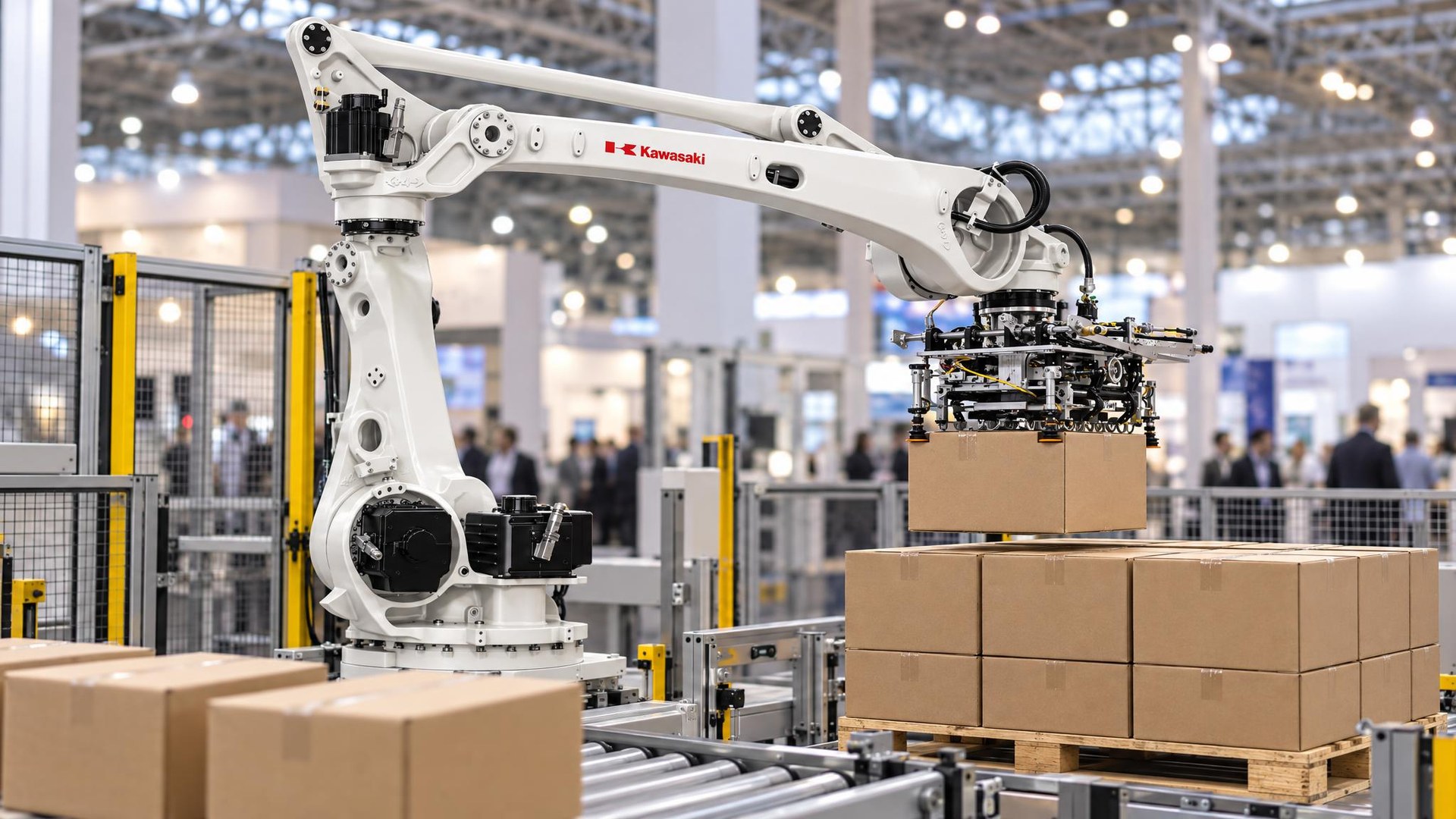
Kawasaki Robotics Brings CP110L Palletizing Robot to North America
The introduction of the CP110L robot aims to enhance automation capabilities for manufacturers facing space constraints, responding to increasing investment interest in robotics within the packaging industry.
- Kawasaki Robotics will showcase the CP110L high-speed palletizing robot at PACK EXPO International 2026 from October 18-21 in Chicago.
- The CP110L can handle a payload of 110 kg and is designed for packaging and end-of-line automation applications.
- The robot's specifications include a maximum reach of 2,505 mm and a speed of up to 2,200 cases per hour under ideal conditions.
Kawasaki Robotics focuses on developing automation solutions, especially in palletizing systems. This launch follows a trend where manufacturers are increasingly investing in robotics to improve efficiency. Watch for the CP110L's performance and market impact following its North American debut.
Read the original ↗
OpenAI Bans Two Covert Influence Operations Using False Fronts
The disruption of these influence operations by OpenAI underscores the growing threat of AI technologies in supporting covert manipulations in geopolitical contexts.
- OpenAI banned two covert influence operations linked to Russia and Iran that utilized ChatGPT for influence campaigns.
- The Russian operation was assessed at Category 5 on the IO Breakout Scale, while the Iranian operation was rated Category 4.
- The operations created false personas and disseminated misleading narratives targeting countries across Latin America and the Middle East.
- OpenAI has banned several ChatGPT accounts involved in these operations for circumventing access restrictions via VPNs.
- This marks OpenAI's continued commitment to combating AI-assisted disinformation efforts globally.
OpenAI is a leading AI research organization responsible for developing ChatGPT, an advanced language model. This is part of a broader trend where artificial intelligence is exploited for misinformation and influence operations. Observers will likely monitor other potential threats emerging from AI technologies in the future.
Read the original ↗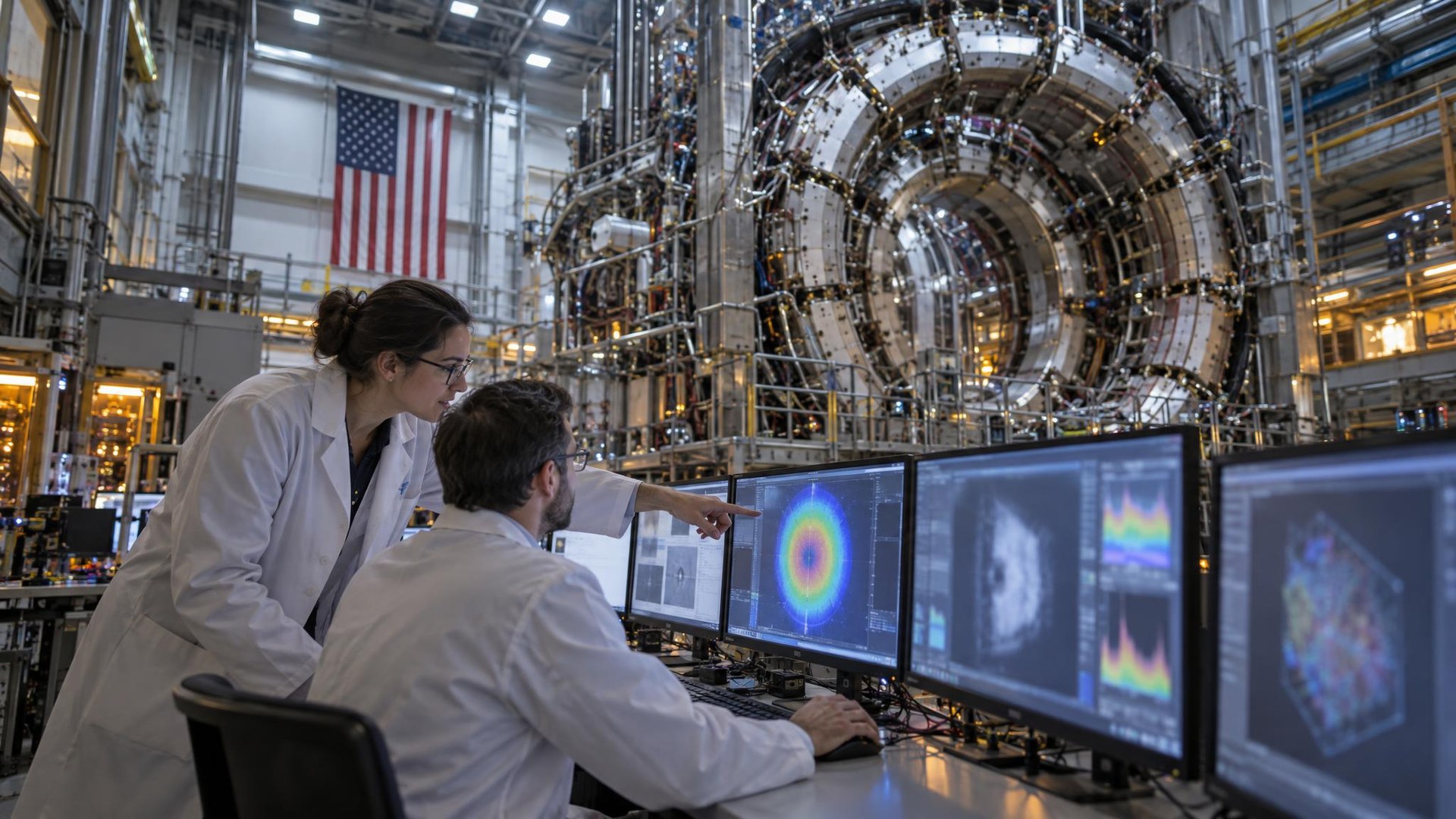
Anthropic Commits Three-Year Claude Support to the DOE Genesis Mission
This commitment signifies a substantial investment in AI technologies that could drive major advancements in scientific research and technological innovation across multiple federal agencies.
- Anthropic is committing $150 million over three years to support the DOE's Genesis Mission, aiming to enhance scientific discovery through AI.
- Funding will allow Claude, Anthropic's AI, to assist over 15 agencies including NASA and the National Science Foundation.
- Anthropic will provide support for several hundred research projects and partner with national laboratories on key scientific priorities like fusion energy and quantum computing.
The Genesis Mission is a federal initiative seeking to leverage AI for breakthroughs in energy, science, and security. This funding expands upon Anthropic's previous partnership with the Department of Energy, which began in December 2025, and aims to enhance collaborations at national laboratories across the U.S.
Read the original ↗
Stord Secures $400M Credit Facility to Expand Fulfillment Network and AI
Stord's $400 million credit facility enhances its financial capacity for expansion, vital for boosting fulfillment operations and investing in AI technology.
- Stord secured a $400 million credit facility, led by Citi, with participation from Morgan Stanley and JPMorgan.
- The facility closed oversubscribed and is part of Stord's strategy for rapid growth and technological investment.
- Funds will be utilized to expand the fulfillment network, automate processes, and advance AI development through Stord Labs.
Stord, founded in 2015, is a logistics provider aiming to enhance independent commerce through technology and optimized fulfillment solutions. The company raised nearly $250 million in a Series F funding round earlier in 2026, positioning itself for substantial future growth.
Read the original ↗
DOE Awards $159M to Bring Scientific AI Into Fusion, Chip Design, and Quantum Research
The Department of Energy's $159 million investment aims to enhance scientific research through AI, potentially accelerating advancements in fusion energy, chip design, and quantum computing.
- The U.S. Department of Energy announced $159 million for 12 new Phase II projects and six Phase I awards on October 8, 2026.
- The Genesis Mission seeks to integrate AI into research processes across fields such as fusion energy, geothermal systems, rare-earth extraction, and quantum computing.
- The first-year cohort of the Genesis initiative includes 297 projects, showcasing a wide scope of applications for AI in scientific research.
- Key projects involve optimizing fusion experiments, managing geothermal reservoirs, designing radiation-resistant microelectronics, and improving quantum hardware error correction.
The Department of Energy's Genesis Mission targets the application of artificial intelligence in scientific research to streamline the design and discovery process. Previous phases featured a mix of AI models and frameworks, and these new awards build on that foundation. Future developments will likely reveal how effectively AI can enhance scientific results.
Read the original ↗
Mike Rousselle, Chief AI Officer at OptimizeRx – Interview Series
OptimizeRx's focus on using AI to enhance communication between life sciences companies and healthcare providers could significantly improve patient engagement and treatment decision-making in healthcare.
- Mike Rousselle serves as Chief AI Officer at OptimizeRx, leading the development of AI-driven technologies in healthcare.
- OptimizeRx connects life sciences organizations with healthcare providers and patients using AI and digital technologies.
- The company recently launched a Natural Language Audience Builder to help marketers create targeted healthcare audiences using everyday language.
OptimizeRx, founded in 2006, initially provided coupons and co-pay assistance but has expanded to a comprehensive patient engagement platform. The company leverages AI and data to improve healthcare marketing and patient interactions, particularly in real-time audience targeting during critical treatment stages.
Read the original ↗
China’s Manus raises over $500M in first funding round since split with Meta
Manus' significant funding allows the company to expand its AI offerings and solidify its position in the competitive AI market following its recent separation from Meta.
- Chinese AI lab Manus, under its parent company Butterfly Effect, raised over $500 million in its first funding round since splitting from Meta.
- This funding round was led by Boyu Capital and IDG Capital, with participation from existing shareholders including Tencent and Sequoia China.
- Manus reportedly plans to continue hiring internationally and is contemplating going public in Hong Kong.
- The company gained attention for its AI agent demo last year and currently generates over $100 million in annual revenue.
Manus creates AI products similar to those from companies like Replit and offers tools for app and website development. The company relocated to Singapore in 2025 after its acquisition deal with Meta was halted by Chinese authorities due to concerns about losing AI talent. Future developments may include a public offering as Manus resumes independent operations after the split from Meta.
Read the original ↗
Cal AI’s 19-year-old founder just raised $10M for his new AI startup
The successful funding of a young entrepreneur's AI startup highlights the growing interest and investment in personal AI technologies and their development strategies.
- Zach Yadegari, the 19-year-old co-founder of Cal AI, raised $10 million for his new personal AI agent startup, Persona.
- Persona will feature a $179 wearable band and will compete with existing AI agents like Instinct and Muse.
- The startup prioritizes user privacy by running its AI in the cloud and encrypting user data both in transit and at rest.
- Persona's business model will include ads but aims to provide unbiased recommendations during user shopping research.
Cal AI, a calorie tracking app, was acquired by MyFitnessPal after achieving over $30 million in annual revenue. With Persona, Yadegari aims to offer a proactive personal assistant integrated into a wearable device. The product is currently in beta testing and expected to launch fully in December.
Read the original ↗
ReSAIL: Mitigating Collapse in Iterative Agent Self-Distillation
The introduction of ReSAIL demonstrates a method that potentially prevents performance degradation in iterative self-distillation processes for AI agents, crucial for continuous improvement in AI learning.
- ReSAIL is a plug-in augmentation designed to improve iterative self-distillation in large language models (LLMs) by addressing performance collapse across cycles.
- The method incorporates trajectory-balanced selective distillation and privileged retention to enhance learning and retain important behaviors.
- Experiments show that ReSAIL achieves an average 22.5 percentage point increase in success rates over three cycles on models like Qwen3-4B and Qwen3-8B in tasks such as ALFWorld and TextCraft.
Iterative self-distillation allows AI agents to learn from their own deployments. Previous methods showed a decline in performance, prompting the development of ReSAIL to mitigate these issues. Future research may focus on refining these techniques and exploring their applications in various AI systems.
Read the original ↗
nanoMuse: An Open-Source Personal Agent for Every Device You Own
The development of nanoMuse represents a significant step in personal AI technology by providing an open-source, customizable agent for personal devices, enhancing user control and privacy.
- nanoMuse is an open-source personal agent developed under the GPL-3.0 license, designed to operate across all devices owned by a user.
- It enables one conversation relay across a phone, computer, and web while allowing for self-hosting and customization of actions.
- The agent uses a system called Sentinel to oversee actions with user-defined approvals and stores memory as Markdown files.
nanoMuse serves as a versatile AI personal assistant, following the trend of increasing interconnectivity in smart devices. It builds upon Meta's Muse technology, aiming to provide a modular and accessible alternative for personal agents. Future developments will likely focus on enhancing user features and expanding compatibility across devices.
Read the original ↗
What Is Agentic AI Security? Tool Misuse, Privilege Abuse, and Behavior Hijacking
Understanding Agentic AI security is crucial as it addresses potential vulnerabilities in AI systems that can impact both digital and physical environments.
- Agentic AI security protects systems capable of planning, calling tools, retaining state, and causing changes across environments.
- It involves a five-stage operating map that outlines information flow, identity constraints, and decision-making processes.
- The distinction between Agentic AI security and chatbot safety is vital to prevent misinformation in AI deployment and research.
Agentic AI security is a framework detailing how advanced AI systems can securely manage data and actions. It separates operational capabilities from the underlying model, responding to the complexities of AI governance. Future discussions will likely focus on improving safeguards and testing methodologies.
Read the original ↗