
The day's AI news, briefed
The Daily Prompt
Our AI editor reads each day's AI and robotics stories, pulls out why they matter, and links every original source — so you can keep up in minutes.
Join over 250,000 subscribers getting the latest AI news
Latest AI & Robotics News Today

Brian Chesky interview: AI agents need their own operating system
As AI continues to integrate into consumer applications, exploring the need for an AI-native operating system could reshape user interfaces and enhance functionality in industries like travel.
- Airbnb recently introduced an AI-powered search feature as part of its fall update, marking a significant advancement in its AI strategy.
- CEO Brian Chesky stated that chatbots are not suitable for travel discovery due to limitations in options presented during interactions.
- Chesky emphasized the importance of collaborative interfaces for group trip planning and plans to investigate such designs over the next few months.
- Chesky believes the industry lacks a true operating system for AI, which hinders interoperability between applications and agents.
- The company is preparing for voice agents to enhance user experience in search and customer service, expecting to roll them out this fall.
Airbnb is a global online marketplace for lodging, primarily focused on vacation rentals. The company has been cautious in its approach to AI but is now pushing for advancements in AI interfaces. Observing trends in AI technology, it is crucial to monitor how these developments will affect user interactions with travel services in the future.
Read the original ↗
Imagine3D-LLM: Teaching MLLMs to Imagine 3D Scenes Before Answering
The development of Imagine3D-LLM addresses significant challenges in spatial reasoning for multimodal large language models, potentially improving their ability to understand and generate three-dimensional scenarios.
- Imagine3D-LLM aims to enhance spatial reasoning in multimodal large language models (MLLMs) by integrating 3D awareness during processing.
- The model learns to create compact 3D representations from multi-view images to assist in answering queries about spatial layout.
- It employs a joint training approach that reinforces cross-frame correspondence by focusing on summary tokens derived from images.
Multimodal large language models combine text and image data to enhance understanding, but they face challenges in reasoning about three-dimensional environments. Previous methods have attempted to inject 3D understanding, but gaps remain in achieving human-like spatial reasoning. Future developments may focus on refining these approaches to bridge the existing gaps in capabilities.
Read the original ↗
RSIGame: Autonomous Agentic Game Development with Recursive Self-improvement
The introduction of RSIGame could significantly enhance the quality of automatically generated games, fostering advancements in autonomous game development methodologies.
- RSIGame is an autonomous game development framework designed for recursive self-improvement in game generation.
- It organizes development into local and global loops, allowing for structured exploration and quality tracking.
- Across 140 benchmark tasks, RSIGame consistently enhances game quality even with budgetary constraints.
- Post fine-tuning, the Qwen 3.8-27B model achieves performance matching GPT-5.5 while using 11 times fewer generation tokens.
RSIGame represents a shift in game development, utilizing advancements in large language models to automate and improve game creation. Previous methods faced challenges in maintaining game quality, but RSIGame's structured loops aim to address these issues. Future developments may focus on expanding its application and refining its methodologies.
Read the original ↗
Bloomberg Closes Acquisition of AI Private Markets Platform Canoe
Bloomberg's acquisition of Canoe enhances its capabilities in data management for private markets, potentially streamlining workflows for institutional investors and impacting the financial services sector.
- Bloomberg completed its acquisition of Canoe on October 1, 2026, following a definitive agreement announced on July 29, 2026.
- Canoe is an AI-powered platform that automates private markets data collection and delivery, improving the integration of this data into Bloomberg's PORT Enterprise system.
- The acquisition aims to provide a unified view of data across public and private markets and enhance investment lifecycle processes through improved data management and AI tools.
- Bloomberg plans to develop Canoe's capabilities, increase its global reach, and enhance pre-investment intelligence and data infrastructure.
- The partnership was preceded by an April 2026 agreement, where Canoe's data began to integrate with Bloomberg's services, benefiting over 800 clients.
Bloomberg is a global leader in financial data and analytics, known for its financial terminal services. Canoe Intelligence specializes in automating the processing of complex private markets data for financial clients. The acquisition represents a strategic move to strengthen Bloomberg's offerings in private market data management and analytics.
Read the original ↗
AdventHealth Makes OpenEvidence Available Across Clinical Roles
The integration of OpenEvidence into AdventHealth's workflows aims to enhance clinical decision-making, ultimately improving patient care by saving time for healthcare professionals.
- AdventHealth has made OpenEvidence accessible to various clinical roles, enhancing their ability to find current medical evidence efficiently.
- The integration is embedded within existing electronic health record workflows to streamline clinician access to research and guidelines.
- The initiative reflects AdventHealth's commitment to blending technology with compassionate patient care.
- OpenEvidence has previously partnered with other major institutions, emphasizing its growing role in clinical decision support.
AdventHealth is a non-profit healthcare system in the U.S. that seeks to provide holistic care. The implementation of OpenEvidence is part of a broader trend in healthcare towards utilizing AI for improved clinical decision-making. Future developments to monitor include additional partnerships and expansions of OpenEvidence across healthcare settings.
Read the original ↗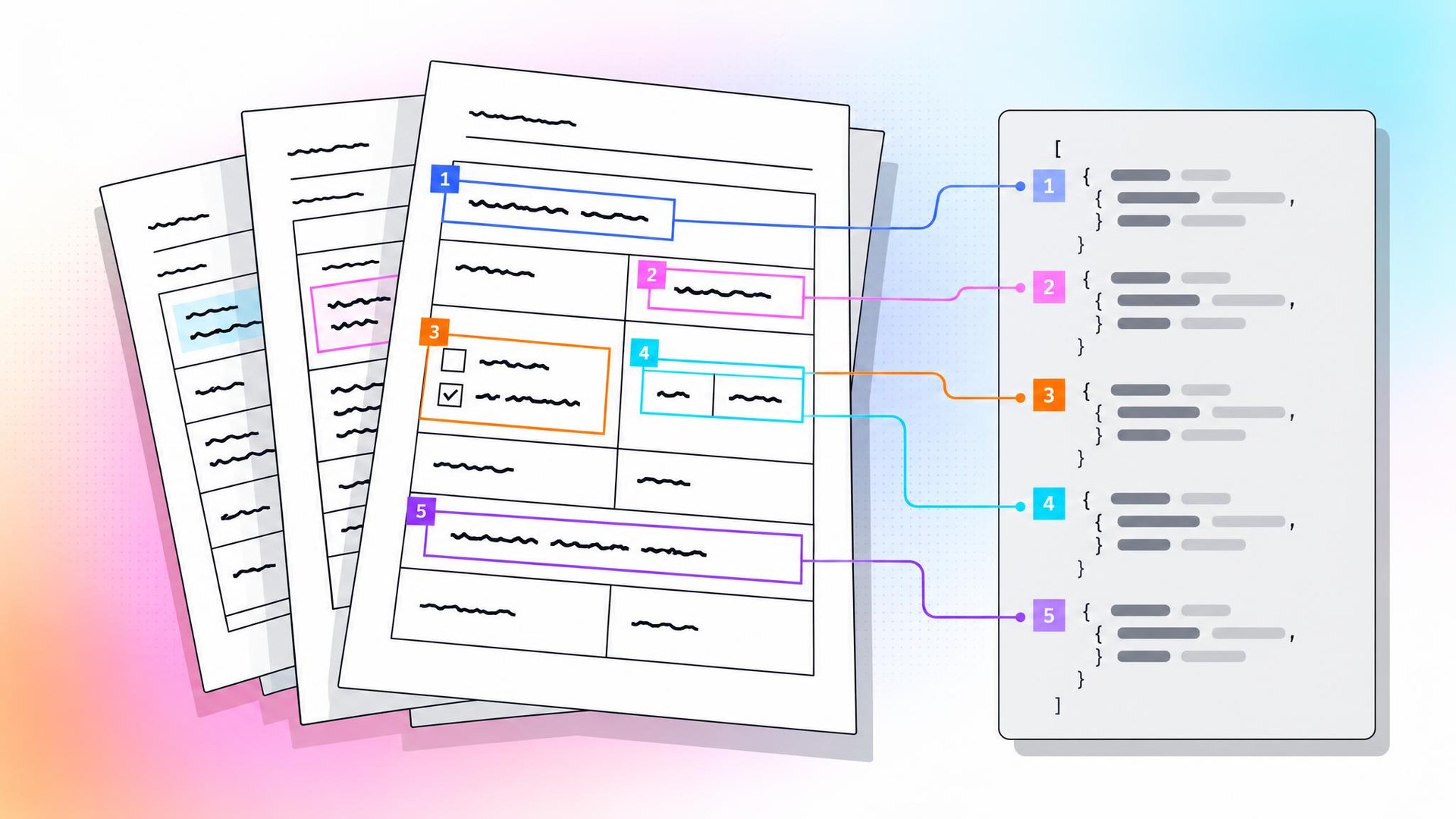
LlamaIndex Launches Extract V2.5 With Accuracy and Grounding Gains
LlamaIndex's Extract v2.5 enhances document extraction capabilities, potentially improving efficiency for businesses handling large volumes of data without increasing costs.
- LlamaIndex launched Extract v2.5 on October 1, 2026, featuring improvements in accuracy across all extraction tiers while maintaining current pricing.
- The overall value F1 score increased from 87.1 to 93.9 for the Cost Effective tier and from 95.1 to 96.4 for the Agentic Plus tier.
- The new version introduces a Structural Reasoning capability that optimizes extraction based on document complexity and layout.
- LlamaIndex reported significant score increases for long-list tasks and extracted records that span multiple pages, showcasing improved performance in complex scenarios.
- Extract v2.5 adds native spreadsheet extraction and enhances grounding accuracy for citations, aiding user review processes.
LlamaIndex specializes in document extraction using schema-based methods, aiming to streamline data processing for enterprises. The company's ExtractBench benchmark allows performance evaluation of its extraction agents. Future developments may focus on further enhancing extraction accuracy and user interface improvements.
Read the original ↗
Ai2 Releases Olmo-Core 3, Open Training Stack for Trillion-Parameter MoEs
Olmo-core 3 enhances large language model training capabilities, allowing researchers to develop more advanced models with trillion-parameter architectures, significantly impacting future AI applications.
- The Allen Institute for AI released Olmo-core 3 on October 1, 2026, featuring an upgraded mixture-of-experts system with over one trillion parameters.
- The new framework aims to improve computational efficiency and reduce costs associated with scaling MoE models.
- Olmo-core 3 enables training throughput of 52,000 tokens per second per GPU, a significant improvement over the previous implementation's 19,400 tokens.
- The release includes a technical report, an interactive demo, and open source code for wider community use.
Olmo-core is part of the Allen Institute for AI's large language model development framework, previously utilizing fully sharded data parallelism. The latest release moves towards distributed data parallelism, enhancing performance for large-scale models. Future iterations aim to integrate these advancements into the next-generation Olmo model.
Read the original ↗
How to Stop Losing Money on AI pilots: Three Mistakes and What to Do Instead
Understanding common pitfalls in AI integration can help financial companies avoid wasteful spending and improve operational efficiency, as most current AI pilots fail to deliver measurable profits.
- 95% of corporate AI pilots have no measurable effect on profits, according to a recent MIT study.
- The global spending on AI reached $1.76 trillion last year and is projected to rise to $2.59 trillion by 2026.
- A primary issue with failed AI projects is their poor alignment with existing daily business operations, often encountering legacy systems and untrained personnel.
- Companies often treat AI as a mere add-on instead of revamping processes to fully integrate it, risking exacerbation of existing inefficiencies.
- Another mistake involves underestimating regulatory compliance burdens and failing to adequately train staff for new AI roles.
The financial industry is rapidly adopting artificial intelligence, but most AI pilots are ineffective due to misalignment with business operations. Companies are advised to examine and improve their operational models rather than just implementing AI solutions. Future efforts should focus on integrating AI effectively into workflows and enhancing employee training.
Read the original ↗
Why Procurement Is Becoming AI’s Most Powerful Regulatory Tool
Understanding how procurement departments shape AI regulations is crucial for organizations navigating compliance in a rapidly evolving technological landscape.
- California's procurement rules require state entities to assess risks related to generative AI purchases, increasing scrutiny for moderate- and high-risk uses.
- The state's guidance mandates ongoing evaluation of GenAI technology post-purchase, reflecting the need for continuous risk assessment.
- Procurement processes in California may influence regulatory practices in other states, highlighting the importance of understanding local compliance requirements.
Procurement departments are increasingly becoming integral to AI governance as they set specific rules for vendor contracts. California is leading with regulations aimed at ensuring responsible AI use, while private-sector teams also seek greater transparency around AI technologies used by suppliers. Observing how other states adopt similar practices will be essential as AI governance evolves.
Read the original ↗
DARPA Wants Aircraft Flying 460 MPH at 40,000 Feet to Create 3D Images of What’s Hidden Underground
This initiative highlights DARPA's drive to develop advanced technologies for underground exploration, which could have significant implications for both resource identification and military surveillance operations.
- DARPA plans to develop a high-altitude aircraft system capable of generating 3D images of subterranean structures at 40,000 feet and 460 mph.
- The system requires a modular radio-frequency sensing technology capable of fast deployment on existing fixed-wing aircraft without extensive modifications.
- Initial results from high-altitude flight tests are expected within 15 months, with complete 3D reconstruction by month 18.
- This technology may support critical-mineral exploration but could also have potential military intelligence applications.
- Proposed requirements suggest the demand for significant engineering solutions, as operating at higher altitudes increases power needs dramatically.
DARPA focuses on advancing military technology through innovative research, seeking to enhance capabilities in subsurface imaging. Current techniques typically require closer proximity to targets, limiting their efficiency. Future developments may reveal more about potential military uses.
Read the original ↗
Hearing tech startup Legato launches its AI hearing glasses
Legato's launch of AI-powered hearing glasses aims to improve accessibility to hearing care, potentially impacting users with hearing loss by offering a more comfortable and socially acceptable alternative to traditional devices.
- Legato's AI-based hearing glasses, named Legato Frames, are now available for purchase starting at $999.
- The glasses incorporate hearing-assistance technology into eyewear frames and are designed for adults with up to moderate levels of hearing loss.
- Legato Frames use AI to amplify voices while reducing background noise, featuring a dual-speaker system that minimizes sound leakage.
- The startup, founded by former Bose employees, recently emerged from stealth with $12 million in funding and aims to change the landscape of hearing technology.
- Available styles support prescription lenses and have a battery life of 10-12 hours, offering Bluetooth streaming for calls and music.
Legato is a startup focused on audio technology, specifically hearing care products integrated into eyewear. The company aims to address issues associated with traditional hearing aids, such as stigma and comfort, by providing a more discreet solution. Future developments to watch include user adoption and any potential expansions in features or product lines.
Read the original ↗
Why Do AI Models Hallucinate? Causes, Detection, and Mitigation
Understanding AI hallucination is crucial in improving AI system reliability and safety by addressing its root causes and enhancing detection and correction mechanisms.
- AI hallucination refers to outputs from AI systems that lack supporting evidence or are fabricated by the model.
- The article outlines a five-stage operational map for AI hallucination, detailing how systems generate and commit to plausible outputs.
- It emphasizes the need for clear distinctions between AI hallucination and factual mistakes caused by errors in databases.
- Successful detection and correction of AI hallucination depend on careful monitoring and validation throughout the output process.
AI hallucination is a phenomenon where AI systems generate incorrect or fabricated information. This issue raises concerns about the safety and reliability of AI in practical applications. Further exploration of guidelines and standards is necessary to mitigate its impact.
Read the original ↗
Kyndryl Opens First U.S. AI Innovation Lab in Dallas–Fort Worth
The establishment of Kyndryl's AI Innovation Lab aims to bolster local job creation and enhance AI capabilities across various sectors, contributing to the growing technology ecosystem in Texas.
- Kyndryl announced the opening of its first U.S. AI Innovation Lab in the Dallas–Fort Worth area on October 1, 2026.
- The investment in the lab is expected to create as many as 300 skilled jobs in AI, technology consulting, and design engineering over the next four years.
- The lab will focus on helping customers modernize technology environments to enable AI capabilities, which is a major driver of modernization, surpassing cost reduction.
- Kyndryl will partner with local organizations to provide AI training and expand access to technology skills in the region.
Kyndryl is a global technology company specializing in IT infrastructure services, consulting, and engineering. The establishment of the Dallas lab is part of Kyndryl's broader strategy to enhance AI capabilities through collaboration and innovation. Future developments to watch include the lab's impact on local workforce development and technological advancements in various sectors.
Read the original ↗
Preply Study Finds AI Is Expanding Learning—But Not Real-World Mastery
The discrepancy between easy access to learning through AI and the actual ability to apply skills in real-life situations highlights a significant gap that can impact workforce readiness.
- Preply's report states that 88% of surveyed professionals use AI as part of their learning processes.
- Forty-nine percent have maintained a learning routine for months but struggle to apply their skills in real situations.
- Daily AI users were almost twice as likely to state they were learning faster than expected compared to non-users (60% vs. 31%).
- The report identifies a 'Progress Gap' where increased learning activity does not consistently lead to better application of skills.
- Ninety percent of respondents prefer AI to support rather than lead their learning efforts.
Preply conducts annual surveys to assess the impact of AI on professional learning. The findings indicate that while AI facilitates information access, it does not guarantee effective skill application. Upcoming evaluations will focus on how to integrate practical applications within learning programs.
Read the original ↗
DeepKeep Adds Runtime Guardrails for AI Coding Agents With AI Lens for Developers
The introduction of AI Lens for Developers provides companies with critical oversight and control over AI coding agents, addressing newfound security risks associated with autonomous developer tools.
- DeepKeep launched AI Lens for Developers to enhance visibility and policy control over AI coding agents on developer machines.
- The new product helps security teams trace actions of coding agents, which can modify files and execute commands, mitigating risks.
- AI Lens functions as a lightweight plug-in that inspects coding-agent activities before and after execution, enabling real-time decisions on commands.
DeepKeep is a company founded in 2021 that focuses on AI security, offering tools for monitoring and controlling AI activities. The AI Lens aims to bridge the gap in security oversight rendered by increasingly autonomous coding agents, highlighting the need for continuous tracking and preventive measures.
Read the original ↗
Predicting Violence in Advance With AI
Advancements in AI to predict pre-violent behavior could enhance public safety measures, potentially reshaping how law enforcement addresses violence in public spaces.
- Research from the University of Alabama focuses on predicting violent behavior before it occurs using AI.
- The study trained a model on video footage prior to violent incidents, seeking recurrent pre-violent characteristics.
- AI analyzed a combination of body motion, facial demeanor, and audio signals to achieve high prediction accuracy.
AI technology is increasingly utilized in public safety, particularly for monitoring and predicting violence. Previous studies primarily focused on identifying violence as it occurs, while this research aims to anticipate violence by understanding pre-incident behavior patterns. The field is evolving with ongoing research into more accurate detection methods.
Read the original ↗
When Your AI Data Becomes Evidence
Organizations must ensure they have solid audit trails for AI systems to meet legal compliance and avoid challenges during regulatory scrutiny or litigation.
- Many organizations struggle to create reliable records of the data AI systems use and the decisions they make.
- Current U.S. privacy and securities laws can apply to AI data, emphasizing the necessity for compliance even without a comprehensive federal AI law.
- Existing legal precedents for digital communications will likely influence how AI data is treated in courts regarding evidence and recordkeeping.
The rise of AI technology in enterprises has created complex data environments, often leading to fragmented data governance. Companies must now implement stringent policies to maintain accurate records of AI interactions to comply with existing laws and prepare for future regulations.
Read the original ↗
Honda, Redwire Pair Robotic Hand and Arm for Space Station Research
The collaboration between Honda and Redwire aims to enhance automation in future commercial space stations, potentially improving efficiency and reducing demands on astronauts' time during research operations.
- Honda and Redwire are developing a robotics solution for commercial space stations, combining Honda's multi-fingered robotic hand with Redwire's STAARK robotic arm.
- The system is designed to automate research tasks, reducing crew time needed for experiments in low Earth orbit.
- Honda's robotic hand features 16 actuated joints and is capable of precise manipulation, having completed extensive durability testing.
- Redwire's STAARK Arm is modular and has the ability to autonomously track and grasp dynamic objects, enhancing operational efficiency.
Honda is partnering with Redwire, a company specialized in space and defense technology, to develop robotic solutions for commercial space stations as NASA transitions from the International Space Station. This collaboration focuses on improving research capabilities and reducing astronaut workload through automation. The upcoming International Astronautical Congress will provide a platform to showcase their joint innovations.
Read the original ↗
Infosys and Columbia University Launch Enterprise AI Research Center
The establishment of a research center by Infosys and Columbia University aims to accelerate the development of responsible AI technologies, addressing critical industry needs and ensuring sustainable innovation.
- Infosys and Columbia University announced a collaboration on October 1, 2026, to create the Infosys Topaz – Columbia University Enterprise AI Center in New York City.
- The research center will focus on three key themes: AI-first experiences, responsible and sustainable AI, and AI for marketing.
- The center aims to attract business leaders and support workshops, co-innovation sessions, and research collaboration across industries.
- The collaboration is designed to promote the responsible deployment of generative AI and agentic AI technologies at enterprise scale.
Infosys is an IT services company with a focus on enterprise AI innovations, while Columbia University contributes academic research in technology. This collaboration builds on Infosys' track record of partnering with educational institutions to advance AI applications. Future developments will likely include specific research outcomes and innovations stemming from this partnership.
Read the original ↗
CellCarta, Imagene AI Broaden Ties on AI Biomarkers, Companion Diagnostics
This expanded collaboration aims to enhance the accuracy and efficiency of biomarker and companion diagnostic programs, potentially accelerating drug development in biopharma.
- CellCarta and Imagene AI are expanding their collaboration to benefit biopharma companies with AI-powered biomarker and companion diagnostics programs.
- Work is already underway with two global pharmaceutical companies focusing on immunohistochemistry diagnostics and lung cancer biomarker prediction.
- The partnership combines Imagene AI’s assay development capabilities with CellCarta’s clinical infrastructure and regulatory expertise for comprehensive program support.
CellCarta specializes in companion diagnostics and laboratory services, while Imagene AI provides AI tools for assay development. Their collaboration follows a previous alliance in July 2026 under CellCarta's Digital Pathology and AI Consortium to enhance biopharma capabilities.
Read the original ↗