
The day's AI news, briefed
The Daily Prompt
Our AI editor reads each day's AI and robotics stories, pulls out why they matter, and links every original source — so you can keep up in minutes.
Join over 250,000 subscribers getting the latest AI news
Latest AI & Robotics News Today

Google's experimental Playground platform uses AI to create games for you
Google's Playground platform represents a significant innovation in game development, allowing users to create games easily without programming skills, potentially transforming how games are developed and accessed.
- Google has launched Playground, an AI-powered platform for creating games based on user prompts.
- Users can select game types, such as 2D or 3D, and decide if the game is single-player or multiplayer.
- Playground allows users to modify game mechanics, graphics, and physics through additional prompts after initial creation.
- The platform supports sharing games via links or publishing to a community gallery, with in-game leaderboards for published titles.
- Integration with Unity Spark is expected, enhancing the platform's game creation capabilities with professional-level mechanics.
Google's Playground is an experimental platform designed to enable game creation without coding skills, similar to existing AI chatbot interfaces. This launch is part of a trend towards accessible game design tools, and future developments are anticipated as the platform evolves.
Read the original ↗
OpenAI just posted hundreds more results on major math problems
The release of hundreds of solutions to major math problems could significantly impact the mathematics community, intensifying ongoing debates about AI's role in solving complex mathematical issues.
- OpenAI posted 722 manuscripts on GitHub addressing 372 major math problems, including a solution to the four-dimensional Kakeya conjecture.
- Most results stemmed from a single prompt given to an unreleased ChatGPT model, which also claimed improvements to computer algorithms.
- The company did not release specific compute times or prompts used, despite following some guidelines set by its Advisory Group on Mathematics and Artificial Intelligence.
OpenAI, known for its advances in artificial intelligence, previously announced resolving over 100 longstanding open problems in mathematics. This new release is poised to further attract scrutiny from mathematicians, particularly due to existing concerns regarding AI's reliability in mathematics, exemplified by the Navier-Stokes controversy.
Read the original ↗
Google’s new SynthID website can identify AI-generated media
As misinformation from AI-generated content rises, Google's SynthID site provides a critical tool for individuals and organizations to verify the authenticity of digital media.
- Google launched a new website allowing users to verify whether media, including images, videos, and audio clips, is AI-generated.
- The tool, initially tested by select professionals, is now available to the public and supports various media formats.
- SynthID, which identifies AI-generated content, has been integrated into Google's products like the Gemini app and Google Chrome.
SynthID was introduced by Google in 2023 to combat the spread of AI-generated content. It’s supported by other companies like OpenAI and NVIDIA, which also have verification tools. Observers should watch for updates as more companies, including Apple, begin to integrate similar technologies.
Read the original ↗
HiPHI: A Large-Scale Benchmark for High-Precision Human Motion and Object Interaction
Developing a comprehensive dataset like HiPHI is crucial for improving humanoid robots' ability to learn complex object interactions, which can enhance their functionality in real-world applications.
- HiPHI is a large-scale motion capture dataset featuring 617.5 hours of human motion data, including 245.7 hours focused on human-object interaction.
- The dataset achieves sub-millimeter accuracy and uses FrameNet, a linguistic framework, to ensure diverse coverage of whole-body motions.
- Reinforcement learning policies trained on this dataset have been successfully deployed on a physical humanoid robot, the Unitree G1.
HiPHI addresses the limitations of existing data sources for humanoid robot learning, which rely on less precise or narrowly focused motion data. The dataset aims to facilitate the training of robots for a wide range of tasks, such as carrying and pushing objects, by providing high-precision interaction data.
Read the original ↗
ClinicalKey AI Gains Full-Text Access to 13 JAMA Network Journals
The agreement enhances ClinicalKey AI's capabilities by providing clinicians with access to prestigious medical journals, thereby supporting informed decision-making in healthcare settings.
- Elsevier signed a content agreement with the JAMA Network to add full-text access to 13 medical journals for ClinicalKey AI users.
- The journals covered include JAMA, JAMA Network Open, and 11 specialty titles such as JAMA Cardiology and JAMA Surgery.
- ClinicalKey AI aims to bridge the gap between the growing medical evidence and clinicians' time to apply that knowledge in practice.
ClinicalKey AI is a clinical decision support tool developed by Elsevier, designed to provide healthcare professionals access to reliable medical information. This agreement follows Elsevier's recent acquisition of Wellsheet, emphasizing its commitment to integrating clinical data with peer-reviewed content.
Read the original ↗
Automation Anywhere Agrees to Acquire Conversational AI Firm Boost.ai
This acquisition expands Automation Anywhere's capabilities in conversational AI, enhancing its offerings in customer and employee operations across regulated industries.
- Automation Anywhere entered a definitive agreement to acquire Boost.ai, a conversational AI company, from Nordic Capital.
- The transaction is expected to close in Q4 2026, subject to regulatory approvals.
- Boost.ai serves hundreds of organizations, primarily in regulated industries, and offers a platform supporting over 36 languages.
- The acquisition will enhance Automation Anywhere's Autonomous Enterprise vision, which aims to automate up to 80% of business functions.
- Automation Anywhere's AI solutions have already seen significant growth, with AI bookings representing nearly 70% of new business.
Automation Anywhere is a company focused on automation services for enterprises, aiming to help them become more autonomous through AI technologies. The acquisition of Boost.ai follows its previous acquisition of Aisera, reflecting a strategy to enhance customer experiences through integrated AI solutions. Future developments will likely focus on the operational integration of both companies' technologies as the transaction proceeds.
Read the original ↗
Stuut Raises $52.5M Series B to Expand AI Agents Across Order-to-Cash
Stuut's $52.5 million funding aims to enhance its AI platform's capabilities in managing the complex order-to-cash process, potentially transforming enterprise financial operations.
- Stuut has raised $52.5 million in Series B funding, led by Insight Partners, increasing total funding to $93 million.
- The company reports over 150 customers and claims more than $3 billion in transactions processed.
- Stuut's AI agents are designed to manage the entire order-to-cash process, improving cash flow and reducing days sales outstanding (DSO).
- Automation efficiency allows 81.7% of collections activities and 95% of incoming payments to be processed without human involvement.
- Stuut plans to use the new funding to expand into broader financial infrastructure, including lending and funds movement.
Stuut, a New York-based company, focuses on automating the order-to-cash process, which involves all steps from customer order acceptance to payment collection. The recent funding will support its growth and expansion into additional financial services, enhancing its AI capabilities. Industry partnerships with major firms like Fiserv and EY will facilitate the company's efforts in scaling its platform.
Read the original ↗
The Next AI Divide: Why Mid-Market Logistics Companies Need to Fix Their Infrastructure Before They Can Leverage AI
Mid-market logistics companies must enhance their infrastructure to leverage AI effectively, as disconnected systems can hinder operational efficiency and negatively impact customer service.
- Many mid-market logistics companies already possess essential systems like warehouse management and enterprise resource planning software, but struggle with system integration.
- Integration issues arise from accumulated point-to-point connections, creating challenges in visibility and communication between systems and impacting operations.
- AI requires access to comprehensive, real-time data from interconnected systems to function effectively, creating a growing divide between companies with integrated infrastructures and those without.
Mid-market logistics companies are under pressure to effectively utilize AI to enhance operations. Previous attempts at integration have often proven insufficient, signaling a need for modernization of system connections. The focus now shifts towards creating a unified operational framework that allows for seamless data flow essential for AI utilization.
Read the original ↗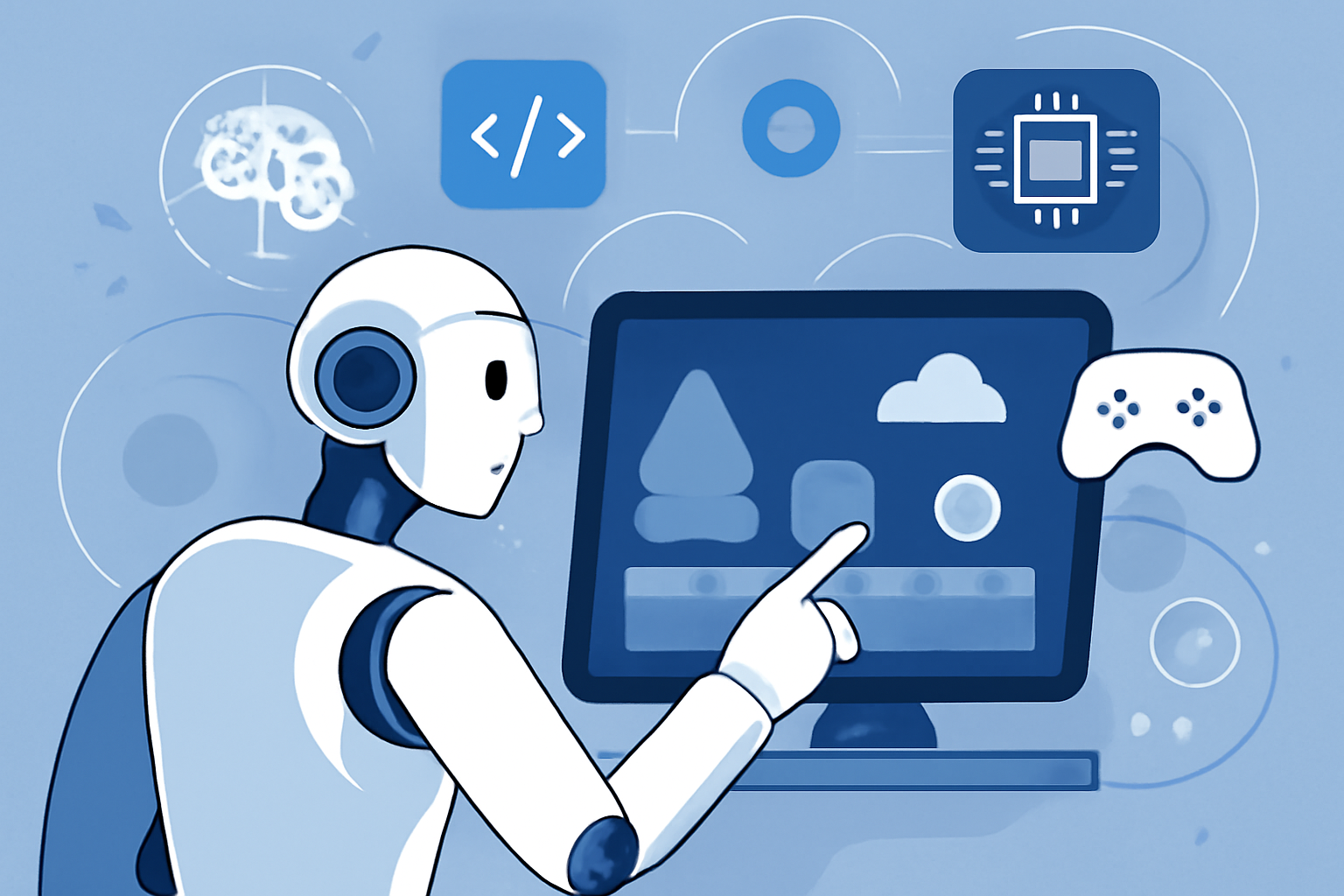
Google Launches Playground, an Experimental AI Game-Creation Platform
This launch could significantly democratize game development by enabling users without coding skills to create and share games, potentially reshaping the gaming landscape.
- Google launched Playground on October 7, 2026, an experimental platform allowing users aged 18 and over in the U.S. to create and share games without coding.
- The platform supports game creation through text prompts, enabling users to modify game features and test their creations instantly.
- Playground includes features such as in-game leaderboards and multiplayer options, enhancing user engagement.
- Creators maintain ownership of their games but must adhere to guidelines concerning content and monetization options.
- Game creations will undergo safety screenings and can be reported for policy violations to ensure user safety.
Google Playground is a new game-creation platform designed to allow users without technical skills to build and share games. This initiative aims to expand access to game development and will evolve based on community feedback. The platform will soon integrate with Unity Spark to offer advanced game design capabilities.
Read the original ↗
A Startup Has a Plan to Make Water From Air Using Data Centers’ Waste Heat
Atoco's technology addresses water scarcity and waste heat management by converting excess heat from data centers into clean drinking water, potentially revolutionizing resource access in arid regions.
- Atoco's machines use metal organic frameworks (MOFs) to harvest water from the air, requiring only low-grade industrial heat and no electricity.
- The technology can generate up to 300 liters of water per day in its current form, with plans to scale to 1,000 liters for data center deployment.
- Atoco has conducted five prototype trials, aiming to begin orders for its product by the end of the year, targeting major tech companies.
- The process offers a potential solution to two issues faced by data centers: heat waste management and high water consumption.
Atoco is a startup developed around MOF technology, which has gained attention for its ability to absorb and release water. The company is exploring partnerships with data centers, currently under pressure to manage waste heat and water usage, and aims to provide a sustainable solution for water access in arid regions.
Read the original ↗
OpenAI Wants Its New Agent to Run Your Life. Mine Said It Loved Me
The development of OpenAI's Dots highlights the ongoing evolution in AI tools aimed at automating everyday tasks, raising questions about efficiency and user trust.
- OpenAI's new AI agent, called Dots, is designed to automate online tasks such as buying furniture and managing subscriptions.
- Dots operates on a subscription model, costing $100 per month, and offers a more personalized experience by connecting to users' information sources, like Gmail.
- Initial user experiences indicate that Dots may have limitations, such as failings in recognizing names and solving captcha challenges, which could impact trust.
- The technology is currently available only to adult users, with restrictions against escalating emotional closeness or flirtation in interactions.
OpenAI's Dots represent a new generation of AI agents aimed at helping users with routine digital tasks, competing with similar products like Meta's Muse. These agents are seen as an evolution of chatbots, designed for greater user interaction and efficiency. Future improvements are expected to enhance functionality and user experience as the technology develops further.
Read the original ↗
A Mysterious Nonprofit Run by SpaceXAI’s Top Lawyer Is Paying the Salaries of Government Workers
This situation raises concerns about transparency in government hiring practices and the possible influence of private entities on public services through their funding and staffing roles.
- The America by Design Foundation, linked to SpaceXAI's general counsel, employs individuals currently working in government roles.
- Two members of the National Design Studio are detailed from this nonprofit, raising questions about staffing and funding transparency.
- Concerns have been raised regarding whether the National Design Studio is circumventing hiring regulations to staff government projects with private sector talent.
The National Design Studio was established to improve government services and websites. It follows the controversial Department of Government Efficiency. Observers are questioning its operational transparency and financing arrangements, particularly concerning the America by Design Foundation.
Read the original ↗
Youth AI Safety Institute Gives ChatGPT’s Teen Tier Its Worst Safety Grade
The Youth AI Safety Institute's negative assessment of ChatGPT for Teens underscores significant safety risks that could endanger users under 18, prompting calls for stricter access controls.
- The Youth AI Safety Institute rated ChatGPT for Teens as an Unacceptable Risk for users under 18, urging OpenAI to limit access to adults until proper safety measures are verified.
- The institute's assessment highlighted that critical safety features like parental alerts and crisis referrals failed to meet promised standards, creating potential false confidence for parents.
- Out of the assessed prompts, responses regarding crisis resources and urgent-action language decreased significantly after the system's launch, raising concerns about effectiveness.
- In comparison to earlier assessments, the quality of crisis notifications and preventive measures has fallen short, with many critical issues remaining unresolved.
OpenAI launched ChatGPT for Teens on August 18, 2026, aiming to provide enhanced protections for younger users. This assessment follows ongoing scrutiny and previous ratings of other AI services by the Institute, highlighting the urgent need for demonstrable safety assurances.
Read the original ↗
What Is a Context Window? Tokens, Limits, and Long-Context AI
Understanding context windows is crucial in AI because they limit the amount of information models can process, affecting accuracy and performance during inference tasks.
- A context window defines the maximum span of tokens an AI model can consider during a single inference.
- It includes user inputs, instructions, and tool results, impacting how the model generates responses.
- Performance of the context window is influenced by data, interfaces, and usage constraints rather than just the model itself.
A context window is a fundamental concept in AI that regulates the flow of information during model inference, determining how effectively models can utilize data. Understanding the operations inside a context window is essential for assessing AI performance and identifying potential improvements. Users must differentiate context windows from other memory systems to avoid misconceptions about AI capabilities.
Read the original ↗
Meta AI Open-Sources Rebalancer: A C++ Assignment Solver That Runs About...
The open-sourcing of Rebalancer provides developers with a powerful tool for solving complex assignment problems efficiently, impacting infrastructure optimization in various industries.
- Meta has released Rebalancer, a C++ library for solving assignment problems, under the Apache 2.0 license.
- The solver can handle 40 million assignment problems daily and is designed for scalability and usability.
- Rebalancer includes a Python interface, installation through PyPI, and a debugging UI called Rebalancer Explorer.
Rebalancer addresses optimization challenges faced in resource allocation within Meta's infrastructure. It aims to enhance the efficiency of assigning tasks and resources by separating problem specifications from solutions. In the future, it may impact wider usage in industry-standard resource management systems.
Read the original ↗
Anthropic Is About to Price at $1.5 Trillion. For Employees, the Number Is Just the Beginning.
The imminent $1.5 trillion valuation of Anthropic signifies a major milestone in AI investment, with significant implications for employee equity and wealth management strategies.
- Anthropic is poised to be valued at approximately $1.5 trillion around its IPO, reflecting substantial investment in AI technology.
- The company has built a culture of equity compensation, leading to considerable wealth accumulation for long-term employees at the anticipated IPO price.
- Anthropic's IPO structure includes both newly issued shares and secondary sales, potentially offering liquidity sooner than typical lockup periods.
- The company features a charitable matching program that allows employees to pledge equity, with estimated commitments of $20 to $40 billion already made.
- Employees are encouraged to explore diverse equity management strategies ahead of the IPO, as options may narrow as the date approaches.
Anthropic is a technology company focused on artificial intelligence and has gained attention for its rapid growth and investment activity. As it approaches its IPO in October 2026, employees are urged to prepare their equity strategies to maximize wealth around the event. Understanding the implications of their equity compensation and the IPO structure is crucial for current and former employees.
Read the original ↗
AI Bets Push U.S. Stocks to an All-Time High
The rise of AI investments is significantly impacting the U.S. stock market, highlighting both the potential for economic growth and the risks tied to market concentration and rising interest rates.
- U.S. stocks have reached an all-time high, driven by investor confidence in artificial intelligence (AI) companies.
- The S&P 500 rose 0.58%, surpassing its previous record from mid-August, while the Nasdaq Composite gained 0.45%.
- Despite high oil prices and geopolitical tensions, major tech firms are heavily investing in AI-related infrastructure.
- Amazon and Microsoft were among the strongest performers, with significant gains in their stock prices due to AI investments.
- The stock market’s rise is notable amidst economic pressures, with potential risks if investments do not yield expected returns.
Artificial intelligence is a major driving force in the stock market, particularly impacting large technology companies. Investors are currently optimistic about the profitability of AI-related spending. Analysts are watching how rising interest rates and other economic factors may influence future market performance.
Read the original ↗
Elon Musk’s America PAC Is Spending Big on the Midterms. We’re Tracking It Daily
Musk's financial influence on key Senate races could significantly affect the balance of power in Congress and impact future regulations on technology and AI.
- Elon Musk’s America PAC has spent $21 million of $26.7 million this election season, focusing on seven critical Senate races.
- The PAC is primarily funding efforts that attack Democrats, with more than two dollars spent opposing a Democrat for every dollar spent supporting a Republican.
- In Texas, America PAC has invested over $7.6 million against Democratic candidate James Talarico, while only spending $1.1 million for Republican Ken Paxton.
- America PAC's spending this cycle aims to defend Republican Senate seats amidst a risk of losing the majority to Democrats.
- As of October 6, America PAC's activity represents a shift from the previous election cycle, with a greater concentration on Senate races than in 2024.
America PAC is a super PAC affiliated with Elon Musk, created for political funding purposes. Previously, it primarily focused on presidential races, but this cycle is more concentrated on the Senate. Analysts will watch further spending patterns as the election date approaches.
Read the original ↗
Anaconda Pairs AI Agent Swarms With Autonomous Security Testing
Anaconda's integration of autonomous AI testing and security measures can enhance software development efficiency and security, addressing potential vulnerabilities in enterprise systems.
- Anaconda's platform expansion on October 6 combines AI agent coordination with autonomous security testing.
- It integrates technologies from Kilo Code, Enkrypt AI, and Outerbounds to enhance development workspaces and security controls.
- Anaconda's AI Dev Factory aims to streamline how enterprises monitor and govern AI agent activities.
- The new system allows multiple AI agents to work in parallel, potentially reducing redundancies in their tasks and increasing efficiency.
- Enkrypt AI's Guardrails product aims to prevent risky behaviors during operations across various AI tools.
Anaconda is known for its focus on data science and software development tools, and its recent strategies involve enhancing the functionalities of AI agents in enterprise scenarios. This expansion follows a trend towards more autonomous AI capabilities and emphasizes the importance of security in AI operations. Future developments will likely focus on the effectiveness of these integrations in real-world applications.
Read the original ↗
Michael Smith Receives 18-Month Sentence for AI Music Streaming Fraud
This case highlights the financial risks associated with fraudulent practices in the emerging field of AI-generated music and the need for stronger regulatory measures to protect genuine artists.
- Michael Smith was sentenced to 18 months in prison for using thousands of bot accounts to stream AI-generated songs and fraudulently collect over $8 million in royalties.
- His scheme, which ran from 2017 to 2024, involved creating bot accounts on multiple streaming platforms to illegally inflate song streaming numbers.
- The prosecution represents the first criminally charged case related to AI-assisted music streaming fraud, according to the U.S. Attorney’s Office for the Southern District of New York.
Michael Smith executed a large-scale music streaming fraud, using automated bots to generate streams for AI-created songs. The Justice Department has indicated the need for legal frameworks to address similar future fraud cases involving technology.
Read the original ↗