
The day's AI news, briefed
The Daily Prompt
Our AI editor reads each day's AI and robotics stories, pulls out why they matter, and links every original source — so you can keep up in minutes.
Join over 250,000 subscribers getting the latest AI news
Latest AI & Robotics News Today

Translated Launches Lara 3, Making the Case for Specialized Translation AI
The launch of Lara 3 highlights the growing focus on specialized AI in translation, aiming to improve accuracy and context in multilingual communication for various industries.
- Translated has launched Lara 3, its specialized AI translation model, making it available to enterprises and individual users.
- In internal evaluations, professional translators rated 82% of Lara 3's translations as perfect, requiring no edits, outperforming general AI models.
- Lara 3 uses a training approach called 'learning by doing' to enhance translation quality by evaluating alternative outputs against context.
- The model supports various document formats and retains layout while translating, addressing the needs of professional localization teams.
Translated, founded in 1999, specializes in providing translation services across multiple languages. Lara 3 aims to address common issues in translation by improving contextual accuracy and ensuring consistent terminology for users in various sectors.
Read the original ↗
OpenAI Announces College Planner and Study Tools for ChatGPT for Teens
The introduction of College Planner and study tools for ChatGPT aims to support high school students in navigating college applications, potentially easing a high-pressure process for many families.
- OpenAI is launching College Planner for ChatGPT for Teens, which will help students organize college applications and manage deadlines.
- The platform supports several tools including flashcards and quizzes to enhance learning for high school students in grades 10-12.
- Hundreds of thousands of US teens already use ChatGPT weekly for college planning and academic support, demonstrating growing engagement with AI tools.
- OpenAI is collaborating with College Advising Corps and Boston Children's Hospital's Digital Wellness Lab to enhance college advising and digital well-being for teens.
OpenAI introduced ChatGPT for Teens in August 2026 as a specialized experience for users under 18, incorporating age-appropriate features. The company aims to broaden access to college planning tools and enhance user engagement in educational contexts. Future developments are expected to expand these tools to international markets and additional educational institutions.
Read the original ↗
OpenAI Reports Early Results for Radisson Hotels ChatGPT Plugin
The initial success of the Radisson Hotels plugin highlights the growing integration of AI technology in travel booking, which can reshape customer engagement in the hospitality sector.
- The Radisson Hotels ChatGPT plugin, built in partnership with Accenture, reports a conversion rate of 1.5 times higher than organic search.
- The plugin allows users to find, compare, and book hotels while using ChatGPT, integrating seamlessly into the booking process.
- Radisson Hotel Group aims to enhance guest engagement during the planning journey and has expanded its sponsored advertising in ChatGPT across Europe.
- Accenture's infrastructure for the plugin also supports advertising and will facilitate future features related to traveler interactions.
OpenAI, a leader in artificial intelligence technology, collaborates with companies like Accenture to develop plugins that enhance user experiences. The Radisson Hotels plugin, launched in July 2026, exemplifies the shift toward AI-driven customer interactions in the hospitality industry. Future developments may include additional personalization and booking functionality within the plugin.
Read the original ↗
Artificial Intelligence (531)
Understanding the implications of artificial intelligence is crucial as it increasingly influences various sectors and daily life.
- Artificial Intelligence is a growing field with significant applications in many industries.
- The article discusses OpenAI Dots, illustrating the reality check for data scientists working with AI.
Artificial Intelligence (AI) involves creating algorithms that enable machines to perform tasks typically requiring human intelligence. As AI technology rapidly evolves, sectors such as healthcare, finance, and transportation are increasingly integrating AI solutions. Future developments in AI will likely shape economic and social landscapes significantly.
Based on the headline only — the full article could not be fetched.
Read the original ↗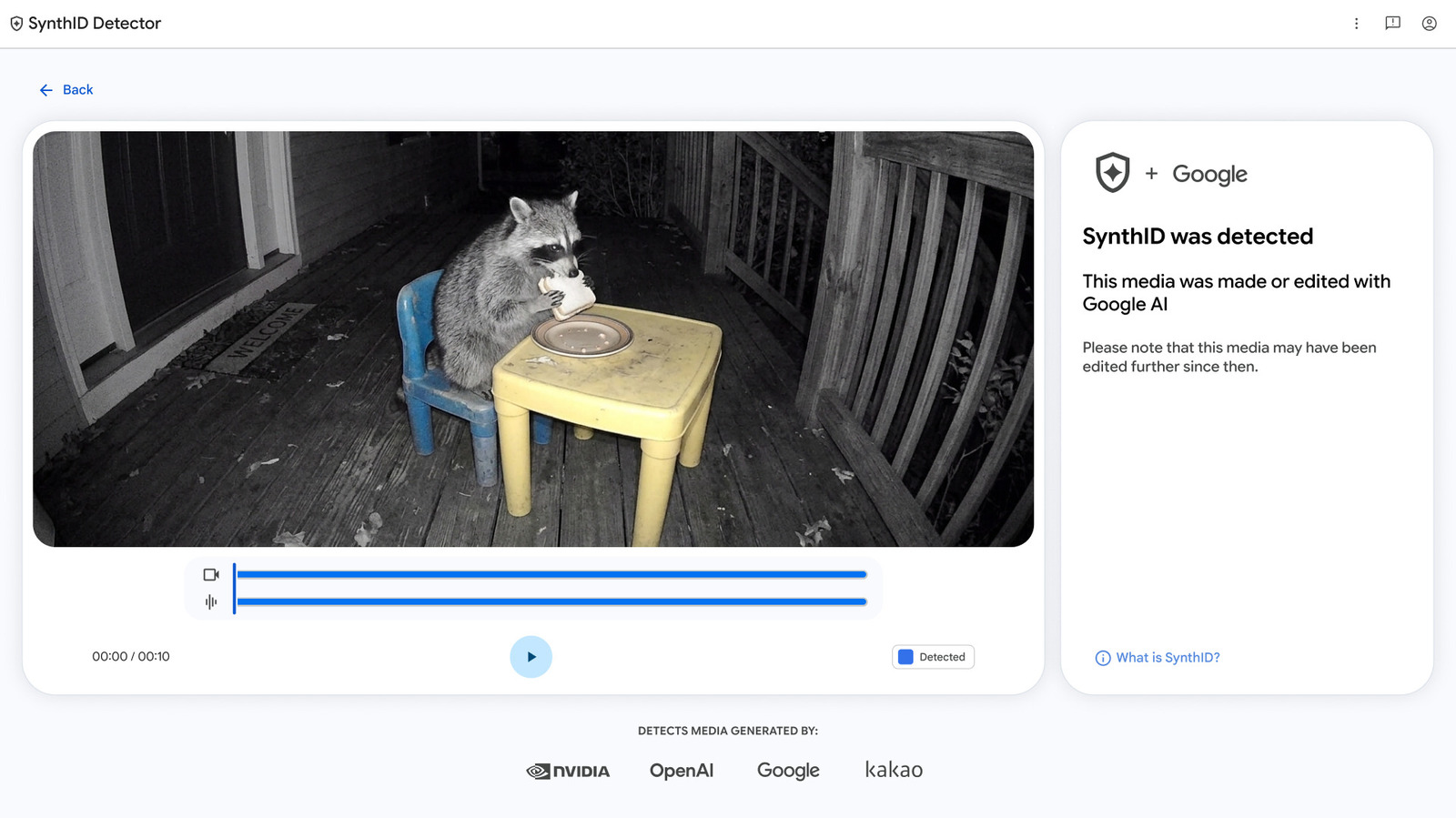
Google's AI detection website is now available
The availability of Google's SynthID Detector marks a significant advancement in efforts to identify AI-generated content, impacting transparency and accountability in digital media.
- Google's SynthID Detector is now accessible to everyone for identifying AI-created and AI-edited content.
- The tool can flag images, videos, and audio clips made using AI tools from various companies, including OpenAI and Apple.
- Users must log in with a Google, OpenAI, or Apple account to use the free web tool at synthid.com.
SynthID Detector was developed by Google to help identify digital content generated by AI, with earlier access granted to media professionals. As AI content creation grows, tools like SynthID aim to improve the detection of synthetic media, although limitations remain in accuracy and scope.
Read the original ↗
SpaceX alumni nab $100M to rethink shipping with autonomous freight trains
This funding indicates a significant potential shift in freight logistics, which could improve efficiency and reduce congestion in the critical short-haul shipping market.
- Parallel Systems raised $100 million to scale production of its autonomous electric rail vehicle designed to transport freight up to 500 miles without an operator.
- The startup aims to help railroads reclaim market share in the $1 trillion surface freight market as trucking companies face rising diesel costs and bankruptcies.
- Parallel's vehicles can travel independently or in platoons and have a coupler-free design that allows for easier division without human intervention.
Parallel Systems, founded by former SpaceX employees in 2020, developed a rail vehicle to address the inefficiencies in short-haul freight logistics. Recent bankruptcies among trucking companies underline challenges in the freight market, emphasizing the need for alternative shipping solutions.
Read the original ↗
Bloom raises $3.6M to become the ‘Alibaba’ of American manufacturing
Bloom's new funding will enable it to expand its marketplace model, potentially reshaping the landscape of U.S. manufacturing and supply chains across various industries.
- Bloom raised $3.6 million in a seed round led by SNAK Venture Partners, with participation from multiple investors.
- The Detroit-based startup has shifted from a logistics model to a marketplace, connecting companies with suppliers for manufacturing and engineering services.
- Bloom has facilitated over 2,000 supplier matches for more than 140 companies since its founding in 2023.
Bloom is a Detroit-based startup focused on transforming the U.S. manufacturing landscape by connecting businesses with suppliers through an AI-driven marketplace. Initially aimed at the mobility sector, it has since broadened its scope to include various industries such as drones and robotics. The recent fundraising indicates growing interest in its platform and the potential shift toward domestic manufacturing supply chains.
Read the original ↗
OpenAI’s Alexander Embiricos is coming to TechCrunch Disrupt 2026 — days after the launch of Dots
The discussion led by OpenAI's Alexander Embiricos at TechCrunch Disrupt 2026 will explore crucial aspects of AI autonomy, privacy, and user trust, which are pivotal for future AI adoption.
- Alexander Embiricos, product lead for Dots at OpenAI, will present at TechCrunch Disrupt 2026 from October 13-15.
- OpenAI recently launched Dots, an always-on personal AI agent designed to connect with everyday apps and work toward ongoing goals.
- The session titled ‘What Comes After the Chatbot?’ will address the implications of AI autonomy and privacy concerns.
OpenAI is known for its advanced AI models and innovations, and Dots represents a significant evolution beyond traditional chatbot functions. The conference will gather tech leaders to discuss the future trajectory of AI technology and its societal impact.
Read the original ↗
Google experiments with an AI-powered gaming platform
The introduction of Google’s Playground platform highlights a significant shift in game development accessibility, enabling users to create games without prior programming skills and expanding opportunities in the gaming industry.
- Google Labs has launched an AI-powered game-creation platform called Playground for browser-based games requiring no coding expertise.
- Users can create games by selecting genres, gameplay mechanics, and visual styles using simple text prompts and upload visuals for AI transformation into game assets.
- Playground is currently available to U.S. users aged 18 and older, with plans for international expansion using a token system for game generation.
Playground represents a move by Google to facilitate game development for non-programmers, following trends in AI-assisted creation. This initiative builds on Google’s past endeavors in gaming, such as the now-defunct Stadia and YouTube Playables.
Read the original ↗
Tony Fadell on why the first wave of AI gadgets failed — and what comes next
Understanding the failures of early AI gadgets can guide future developments, ensuring they meet actual consumer needs and build the necessary trust for widespread adoption.
- Tony Fadell criticized early AI gadgets like the Rabbit R1 and Humane Ai pin for not solving real consumer needs, which led to their failure.
- Fadell emphasized that trust and safety are pivotal for future AI assistants, echoing the challenges of how to securely handle sensitive user data.
- He noted that successful AI devices should process information on-device to enhance privacy, countering the trend of cloud dependency in AI technology.
Tony Fadell, known for his role in developing the iPod and iPhone, spoke at the MIT Future Fest about the shortcomings of initial AI products. He stressed that manufacturers must focus on addressing actual consumer demands and establishing trust to succeed in the evolving AI landscape.
Read the original ↗
Healthleap raises $38M for its AI that flags hospital patients who may need a closer look
Healthleap's funding supports its AI platform aimed at improving early detection of undiagnosed health conditions in hospital patients, which could lead to significant healthcare savings and better patient outcomes.
- Healthleap raised $38 million in seed and Series A funding to develop its AI platform for identifying at-risk hospital patients.
- The funding includes an $8 million seed round co-led by Sequoia Capital and First Round Capital and a $30 million Series A led by Hummingbird Ventures.
- The AI analyzes electronic health records to flag patients for conditions such as malnutrition and delirium, currently deployed in over 50 hospitals.
- Healthleap's platform aims to reduce undiagnosed illnesses, which can lead to longer hospital stays and increased healthcare costs.
- The startup plans to expand its software to identify more than 40 health conditions and improve its presence in outpatient and home care settings.
Founded in South Africa in 2022, Healthleap started with a clinical nutrition tool before shifting focus to an AI platform for hospitals. It has rapidly scaled from three to over 50 hospital partnerships in a year, highlighting its growth and potential impact on healthcare efficiency.
Read the original ↗
EVISKILL: Grounding Skill Evolution in Replayable Evidence
The introduction of EVISKILL marks a significant step in enhancing the adaptability and accuracy of large language model (LLM) agents through refined procedural knowledge management.
- EVISKILL is an evidence-driven framework that organizes execution observations into Replayable Evidence Cards and synthesizes edits with links to their supporting contexts.
- The framework enables continual skill evolution, allowing LLM agents to refine knowledge from interactions without updating model parameters.
- Experiments on three interactive benchmarks across six LLM backbones demonstrate the framework's effectiveness in skill evolution.
EVISKILL represents a new approach in the development of large language models (LLMs), focusing on how agents can learn and adapt skills over time. Historically, LLMs have relied on experience-driven methods, which often lose valuable information supporting their edits. Future developments may include further validation methods and broader applications of this framework across various LLM architectures.
Read the original ↗
Google rolls out improved SynthID AI content detector, now available globally
The expansion of Google's SynthID AI content detection tool allows users to more easily identify and verify AI-generated content in an era of increasing AI media proliferation.
- Google's SynthID AI content detector is now available to anyone through a dedicated website, enabling users to check for AI watermarks.
- The improved SynthID can identify content from major partners including OpenAI, Nvidia, Kakao, and soon Apple, expanding its usefulness.
- Previously, only Google content could be checked through SynthID, making the process of identifying AI-generated content complex and limited.
SynthID is an invisible marking technology embedded in AI-generated images, videos, and audio. Google previously restricted access to its detection tool, but now offers an improved version that accommodates multiple AI platforms. Users must log in and abide by a daily usage limit to prevent abuse of the tool.
Read the original ↗
Mistral says “Le Chonk” can challenge the best AI models
Le Chonk's introduction as a competitive open-weight model may shift the dynamics of the AI landscape, particularly amid increasing restrictions on proprietary models from US firms.
- French company Mistral has released a free AI model, Le Chonk, which includes 1 trillion parameters and can be customized by users.
- Le Chonk is designed to compete with leading AI models while being optimized for coding and cyber defense, and other niche applications.
- Mistral claims that Le Chonk is the most capable open-weight model developed outside China and is close in performance to proprietary models.
Mistral is a French AI company that focuses on creating open-weight models, which provide accessible alternatives to proprietary models. The release of Le Chonk comes as tensions rise over AI access, especially following US restrictions on top AI models. Observers will watch how Mistral's offering impacts market competition and access to advanced AI technologies.
Read the original ↗
Cisco Brings Claude Managed Agents, Dialog, and RoomOS 27 to Webex
Cisco's introduction of advanced AI collaboration tools aims to enhance workplace productivity and customer engagement in a rapidly evolving digital landscape.
- Cisco launched Claude Managed Agents, RoomOS 27, and Dialog at WebexOne 2026 in Austin, Texas.
- The new tools integrate AI to assist teams in real-time tasks and enhance customer experiences.
- RoomOS 27 will be available in November 2026 and includes support for Google Meet alongside existing platforms such as Webex and Zoom.
Cisco is a leading provider of networking and collaboration technologies. The new products are positioned to improve how organizations interact and work using AI. Upcoming developments to watch include expanded partnerships and feature rollouts planned for late 2026 and early 2027.
Read the original ↗
Google Opens SynthID Detector Globally With Partner AI Content Checks
The SynthID Detector's global release enhances tools for identifying AI-generated content, which can influence trust in digital media and promote accountability in AI usage.
- Google launched the SynthID Detector globally on October 7, 2026, allowing users to identify AI watermarks in images, videos, and audio content.
- The Detector supports media from Google and partners, including OpenAI, NVIDIA, and Kakao, with future support from Apple planned.
- Since its initial introduction in 2025, SynthID has watermarked over 180 billion image and video files and 240,000 years of audio content.
SynthID is a Google technology that embeds unnoticeable watermarks in AI-generated media for verification. It was initially available to media professionals and has expanded to a wider audience. Ongoing efforts include collaborations with more partners to enhance content verification.
Read the original ↗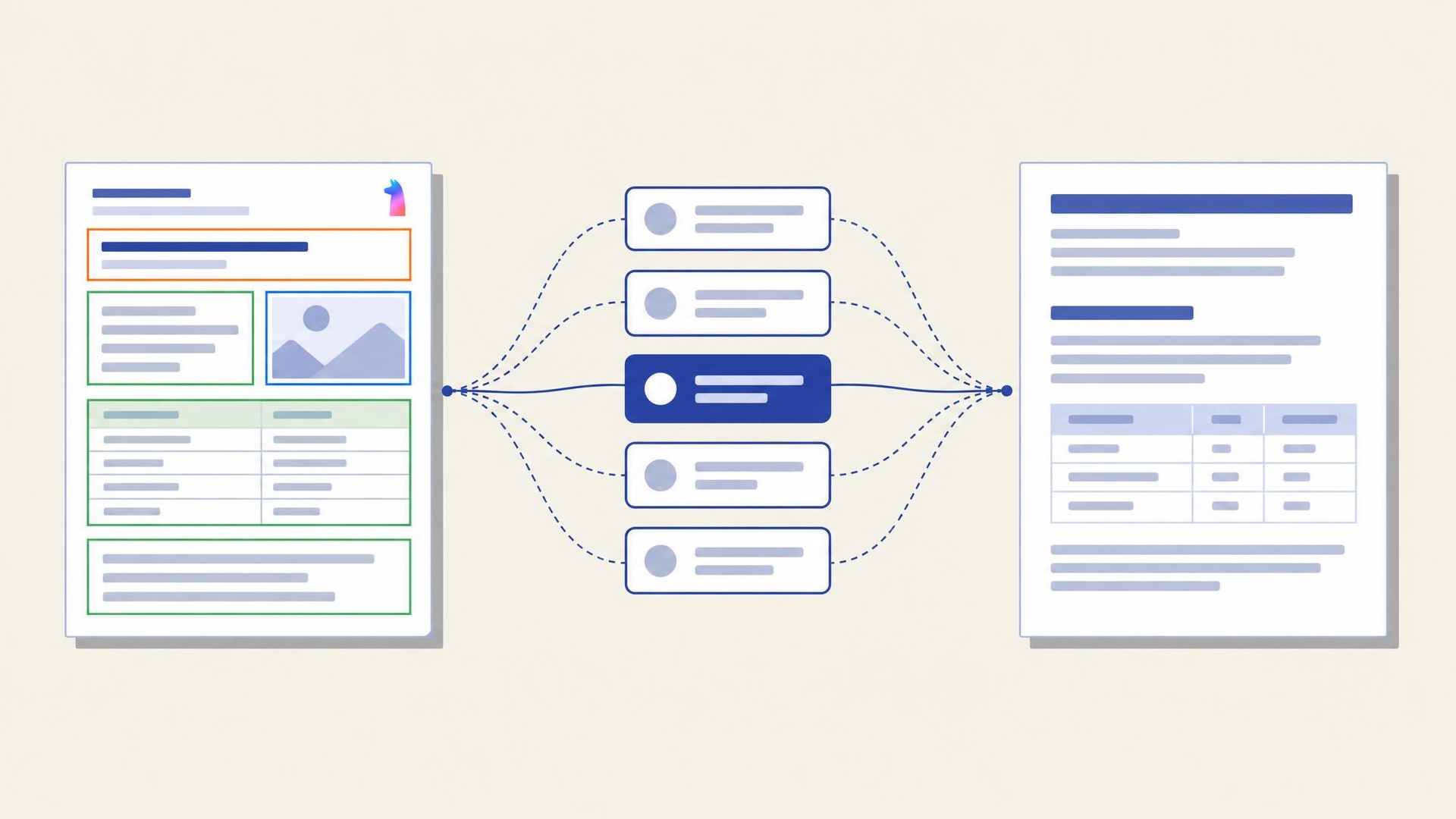
LlamaIndex Launches OpenDocRouter, a Unified API for Document Parsing
The launch of OpenDocRouter by LlamaIndex provides a streamlined API solution that can enhance document processing efficiency across diverse applications, which is increasingly important in data-driven industries.
- LlamaIndex launched OpenDocRouter on October 7, 2026, offering a unified API for document-to-markdown parsing.
- The platform supports parsing from various document formats including PDFs and images, using both frontier and open-source models.
- At launch, the API features five frontier models and five open-source models, each benchmarked for quality and cost on ParseBench.
LlamaIndex specializes in AI-driven document processing solutions. OpenDocRouter is designed to simplify the use of different document parsing models, addressing the complexity faced by developers in this crowded field. Future developments may include improvements in model performance and capabilities as new models become available.
Read the original ↗
Barb Hyman, Founder and CEO of Sapia.ai – Interview Series
This interview with Barb Hyman sheds light on the need for fundamentally rethinking hiring processes to combat biases and improve fairness in candidate selection using AI technology.
- Barb Hyman is the Founder and CEO of Sapia.ai, an AI-powered hiring technology company established in 2018.
- Sapia.ai utilizes chat-based interviews for systematic candidate assessment, aiming to reduce bias from traditional hiring methods.
- The platform has evaluated over 10 million candidates and incorporates AI-driven talent intelligence and personalized feedback.
- Hyman emphasizes the importance of trust in AI adoption, suggesting it should be measured alongside productivity and cost efficiency.
- To combat hiring biases, Sapia.ai does not train its models on traditional proxies, focusing instead on fairness and explainability.
Sapia.ai is focused on improving hiring processes through AI by using structured assessments to minimize bias and enhance fairness. The company aims to challenge traditional recruitment methods, which often rely on potentially biased criteria. As AI continues to influence various industries, its role in hiring decisions will need ongoing scrutiny to ensure ethical standards are maintained.
Read the original ↗
Haiqu Unveils AgenticOS to Keep AI-Driven Quantum Research on Track
AgenticOS enables more reliable AI-assisted quantum research by maintaining experiment protocols, which is crucial for understanding and validating scientific findings.
- Haiqu announced AgenticOS to coordinate AI agents in quantum research, ensuring scientific assumptions are preserved throughout various research stages.
- The system allows researchers to define objectives, constraints, and success criteria, ultimately helping streamline the research process into a reviewable workflow.
- Haiqu's recent case study on proton transfer demonstrated that AgenticOS can prevent common errors in AI simulations by preserving agreed-upon protocols.
Haiqu is a company focused on enhancing AI applications in quantum research. AgenticOS builds on their prior platform and aims to optimize the research process by ensuring accountability and transparency in AI-driven experiments. The system is available for enterprise research teams and academic researchers under specific conditions.
Read the original ↗
Astronomers Find Evidence of a “Phoenix Planet” Born From the Remains of Its Dead Star
The discovery of a second-generation planet around a white dwarf suggests that unique planetary formation processes can occur even after a star's death, expanding our understanding of planetary systems.
- Astronomers have discovered a second-generation planet candidate orbiting a white dwarf, the first of its kind.
- The research was led by the University of Warwick and published in Nature Astronomy.
- The planet's formation is linked to material shed by its dead star, producing unique chemical signatures from heavy elements.
- The detection of unusual elements like niobium in the orbit indicates a formation process unlike typical planetary bodies.
- NASA's TESS satellite found signals consistent with a gas giant in a tight orbit around the star.
White dwarfs are remnants of stars that have exhausted their nuclear fuel and left behind a dense core. This finding challenges previous theories that second-generation planets would form around pulsars, not white dwarfs. Future research may reveal more about the formation conditions of such rare planets in stellar evolution.
Read the original ↗