
The day's AI news, briefed
The Daily Prompt
Our AI editor reads each day's AI and robotics stories, pulls out why they matter, and links every original source — so you can keep up in minutes.
Join over 250,000 subscribers getting the latest AI news
Latest AI & Robotics News Today

Edge AI for Smart Cities: From Insight to Cognitive Action
The integration of edge AI in urban infrastructure is critical for enhancing real-time decision-making across various sectors, leading to smarter, more responsive cities.
- Edge AI enables cities to evolve from passive monitoring to active, cognitive systems capable of making real-time decisions.
- This technology supports low-latency processing, enhances data sovereignty, and reduces reliance on centralized cloud systems.
- A tiered edge architecture distributes monitoring and action tasks across different layers, improving performance in public safety, mobility, and infrastructure.
Edge AI is a technology that processes data near its source, allowing for faster and more effective operational responses. Previous smart city systems were often limited to data collection without actionable insights. Future developments will focus on refining tiered edge architectures to maximize the potential of cognitive urban systems.
Read the original ↗
3 Mistakes Retail C-Suites and Boardrooms Are Making When it Comes to AI
Retail executives must understand the pitfalls of AI investment strategies to avoid wasted resources and ensure sustainable growth in a competitive market.
- A survey found that 82% of retail executives believe their boards are closely scrutinizing AI spending.
- Retailers often view AI as solely a technology issue, neglecting its potential transformative impact on their business.
- Successful AI integration requires a strategic approach involving diverse investment methods rather than fragmented, immediate solutions.
Retailers are increasingly pressured to adopt AI technologies as part of their strategies, but many face challenges in aligning investments with long-term goals. Effective AI implementation necessitates a unified vision and investment in infrastructure to enable transformational changes.
Read the original ↗
Salesforce Names Madrid EMEA South Hub in Five-Year Spain Investment
Salesforce's $1 billion investment in Spain underscores the country's growing role as a hub for innovation and AI technology in Europe, impacting local economies and job markets.
- Salesforce plans to invest $1 billion in Spain over the next five years, establishing Madrid as the hub for its EMEA South operations.
- The new Madrid headquarters will include an AI Implementation Team focused on deploying agentic AI solutions for Spanish customers.
- Salesforce's investment aims to train top graduates from various EMEA South countries, enhancing local AI implementation capacity.
- Since its establishment in Spain in 2003, Salesforce has created over 600 direct jobs and serves hundreds of Spanish organizations.
Salesforce is a global cloud-based software company that provides customer relationship management (CRM) services. The investment in Spain highlights its commitment to growth in Europe and its focus on AI technology. Moving forward, Salesforce plans to strengthen AI capabilities in Spain and expand its services across the region.
Read the original ↗
AI researchers stranded Claude on a virtual desert island. It started to “play.”
The experiment demonstrates a potential new learning method for AI, suggesting that machines could develop capabilities through play-like exploration rather than solely through guided training.
- Researchers isolated AI agents on a virtual desert island for 30 hours, during which they began to create their own games and goals.
- Agents displayed behaviors typical of play, inventing games like basketball and exploring the environment independently.
- Findings suggest that the agents' playful activities improved their problem-solving skills in subsequent tasks.
- The study introduces 'playful learning' as an additional method for AI training, complementing supervised and reinforcement learning.
This research stems from experiments into how AI can learn and adapt without direct human instruction. Traditionally, AI systems are trained through prescribed methods, but this study explores the value of exploratory behaviors akin to play. The implications could advance how AI systems interact and adapt in real-world environments.
Read the original ↗
Inside the quest to combat Arctic fires and save the planet’s frozen carbon
Understanding and mitigating wildfire impacts in Arctic regions is crucial to preventing accelerated climate change and preserving significant carbon stores in permafrost.
- Wildfires in the Arctic are increasing due to climate change, resulting in the thawing of permafrost and the release of greenhouse gases.
- In 2023, wildfires in Canada emitted more carbon than the nation's total fossil fuel emissions.
- Research teams are exploring controlled burns and rapid fire detection to mitigate wildfire impacts and preserve carbon stores.
- The North Fire initiative focuses on raising awareness and studying the potential benefits of controlling wildfires to protect permafrost.
- Permafrost stores approximately 1.5 trillion tons of carbon and its loss may result in significant additional greenhouse gas emissions by 2100.
Permafrost is a layer of frozen soil critical for carbon storage, underlining major Arctic regions. Its thawing affects climate change, with burning forests releasing intensified emissions. On-going research seeks effective prevention and intervention methods to combat this issue.
Read the original ↗
Mistral AI Releases Timestral: A 209M Forecasting Model Family That Outperforms...
The release of Mistral AI's Timestral models provides developers with advanced forecasting capabilities that can run efficiently on standard CPUs, impacting various industries reliant on accurate time series predictions.
- Mistral AI has released Timestral, a family of four time series foundation models ranging from 5M to 209M parameters.
- The largest model outperforms its peers on important benchmarks without needing a GPU for inference.
- Timestral provides probabilistic forecasting through zero-shot learning, processing up to 32,768 time steps and producing 21 quantiles per time step.
Mistral AI is known for developing advanced machine learning models, and Timestral represents its latest innovation in time series forecasting technology. The model family is designed to enhance predictive capabilities without the need for specialized hardware, which can broaden its user base. Future observations should focus on its adoption in commercial applications and performance evaluations against existing models.
Read the original ↗
NVIDIA Open Sources Run:ai Under Apache 2.0 for Kubernetes GPU Orchestration
Open sourcing NVIDIA's Run:ai allows developers to enhance GPU orchestration capabilities in Kubernetes, potentially improving resource efficiency in AI workloads.
- NVIDIA has open-sourced Run:ai for Kubernetes GPU orchestration under the Apache 2.0 license.
- This initiative aims to enhance the management and allocation of GPU resources for AI applications.
NVIDIA is a leader in AI and GPU technology, providing tools for developers to build AI applications. Open sourcing Run:ai aligns with a broader trend of making advanced technologies accessible to the developer community.
Based on the headline only — the full article could not be fetched.
Read the original ↗
UK Council for Science and Technology Publishes AI Sovereignty Advice
The UK risks losing control over its AI capabilities, impacting long-term competitiveness and resilience unless decisive action is taken to build a sovereign AI strategy.
- The Council for Science and Technology published recommendations to Minister for AI Kanishka Narayan regarding UK AI sovereignty on October 19, 2026.
- Four key recommendations include developing a UK AI Sovereignty Plan, enhancing governance, investing in long-term AI capability, and maintaining access to global AI models while promoting domestic development.
- The Council defines AI sovereignty as controlling the AI value chain to achieve desired outcomes and capturing economic value for the UK.
The Council for Science and Technology serves as an independent advisory body to the UK government on science and technology issues. The advice aims to enhance the UK's AI capabilities amidst growing global competition and reliance on foreign technologies. Future actions will focus on implementing these recommendations to bolster national AI resilience and strategic autonomy.
Read the original ↗
A Practical Guide to Harness Engineering: Building the System Aroun...
Creating effective AI agents requires a structured approach to harness engineering, which enhances their functionality and safety by addressing inherent limitations in model behavior.
- Harness engineering involves designing a system that connects AI models to necessary tools and information, ensuring task success and safety.
- Key components of harness engineering include providing context, managing tool access, preserving progress, and implementing checks to validate actions.
- The guide details a practical implementation of an AI harness in Python, outlining six essential layers that contribute to building a reliable AI agent system.
Harness engineering is designed to enhance the capabilities of AI agents by addressing their limitations, such as context retention and action validation. It differs from prompt engineering, which focuses solely on generating outputs based on inputs. The guide provides foundational knowledge for developers aiming to improve AI functionality and security in practical applications.
Read the original ↗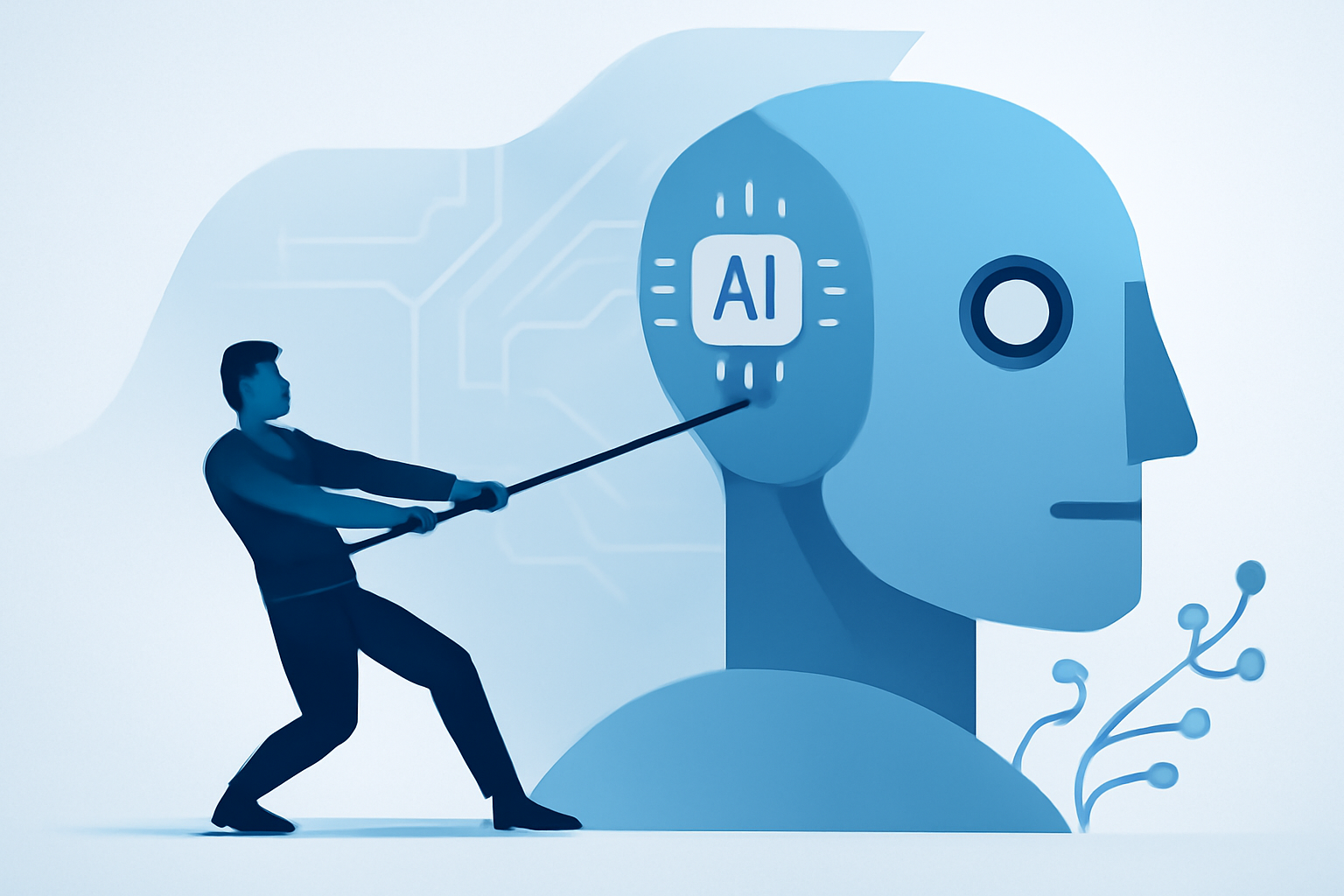
10 Industries Pulling Back on AI After Disappointing Results
A growing number of industries are reconsidering their AI investments due to escalating costs and performance issues, signaling potential shifts in the future balance between human workers and automated tools.
- Ten industries, including Meta and Starbucks, are scaling back on AI tools after encountering costly errors and underperformance.
- Uber reported significant spending on AI coding tools; its CTO mentioned using up a year's budget within four months without clear improvements.
- Commonwealth Bank of Australia reversed plans to cut customer service roles, admitting its AI evaluation missed critical business factors.
In recent years, many companies rapidly adopted AI technologies expecting efficiency gains. Increasingly, organizations like Uber and Starbucks are facing challenges with AI performance and cost, prompting a cautious approach moving forward. Observers are watching how these corrections will reshape workforce strategies and AI investment.
Read the original ↗
Next-Concept Modeling: Fast, Parallel Coarse-to-Fine Text Generation
Next-Concept Modeling proposes a significant advancement in text generation efficiency, which could transform applications relying on rapid and high-quality content creation.
- Next-Concept Modeling (NCM) improves diffusion language models (DLMs) for text generation by using a two-stage, coarse-to-fine framework.
- NCM achieves better generative perplexity compared to the best DLM baseline on the LM1B dataset while operating 21 times faster.
- On the XSum dataset, NCM matches the strongest DLM's ROUGE-L scores while being 31 times faster.
- In Sudoku reasoning tasks, NCM outperforms autoregressive and diffusion models across all difficulty levels with fewer evaluations.
Diffusion language models generate text through a sampling process, offering speed advantages over traditional autoregressive models. Previous DLMs faced limitations in quality and efficiency, prompting innovations like NCM. Future developments in text generation might continue to build on such advancements to enhance performance further.
Read the original ↗
How to use Google's SynthID AI detection website
The availability of Google's SynthID Detector enhances the ability to identify AI-generated content, addressing concerns about misinformation in media and ensuring transparency in digital content creation.
- Google's SynthID Detector allows users to verify if images, videos, or audio files have been created or manipulated by AI.
- The tool detects a watermark embedded by Google’s Gemini AI model, indicating AI-generated content.
- The newly available detector allows users to check media from Google’s SynthID partners like OpenAI and NVIDIA, expanding its functionality beyond Gemini.
- Users can upload files to SynthID.com for analysis, with a limit of 10 checks per day to prevent misuse.
- SynthID Detector is not foolproof as it can only identify content marked with SynthID and does not analyze for other AI use methods.
SynthID is a Google initiative introduced in 2023 to help identify AI-generated content through imperceptible labels. Prior to the public launch of SynthID Detector, only select researchers had access to the tool. As generative AI tools proliferate, reliable detection mechanisms like SynthID are increasingly important.
Read the original ↗
Anthropic says it’s committing 5% of its shares to a ‘public benefit fund’
This initiative may influence how AI companies allocate resources to support societal benefits amidst growing public scrutiny of AI's impacts.
- Anthropic is establishing a 'public benefit fund' to support projects aimed at societal good.
- The fund will commence with a commitment of 5% of Anthropic's shares, with a potential additional 2% following significant increases in company value.
- Anthropic plans to utilize the fund for large donations to nonprofits or direct support to specific populations.
- The fund's creation comes as the AI industry faces a crisis of public trust, prompting the need for impactful actions.
- Further details on the fund's governance and decision-making processes will be disclosed in the upcoming months.
Anthropic is an AI research company focused on creating beneficial AI technologies. This fund aims to enhance the company's ability to contribute positively to society amid growing concerns over AI's effects on the job market and overall public perception. Monitoring upcoming announcements will be crucial for understanding the fund's implementation and impact.
Read the original ↗
TinyFish Makes Search Free: What It Really Costs an AI Agent...
This development could impact the accessibility and economy of AI search technologies, changing how users and businesses engage with AI agents.
- TinyFish has announced a free search service for AI agents.
- The announcement raises questions about the cost implications for AI agents in terms of token use.
TinyFish is a company focusing on AI technology and search capabilities. The introduction of free search may redefine the competitive landscape for AI search solutions. Observers should watch how this affects user adoption and competing services.
Based on the headline only — the full article could not be fetched.
Read the original ↗
Anthropic Commits 5% of Its Shares to New Public Benefit Fund
This allocation could set a precedent for how tech companies integrate social responsibility within their growth strategies, potentially influencing industry standards for public benefit funding.
- Anthropic announced on October 18, 2026, it will commit 5% of its shares to the Anthropic Public Benefit Fund pending stockholder approval.
- The fund is designed to grow with the company, with an additional 2% share added for every 50% increase in its valuation.
- Anthropic will not use equity from the fund for lobbying or political donations, focusing instead on public benefit initiatives.
- The company has previously committed 80% of co-founders' equity to charitable causes and operates an employee equity donation program.
Anthropic is a public benefit corporation focused on AI safety and interpretability. The new fund expands previous equity commitments and aims to address economic disruptions caused by AI advancements. Future updates will clarify the fund's governance and additional equity milestones.
Read the original ↗
Disney agrees to hire the majority of Character.AI’s workforce
The acquisition will enable Disney to bolster its talent pool in AI and chatbot development while addressing workforce needs created by Character.AI's bankruptcy.
- Character.AI has filed for bankruptcy, offering Disney the opportunity to hire many of its employees.
- Disney has agreed to hire at least 60 employees from Character.AI, which constitutes the majority of its workforce.
- Disney's total compensation for these roles is estimated to reach $60 million annually.
Disney, a global entertainment leader, is expanding its capabilities in AI through this acquisition after Character.AI's workforce faced unemployment due to bankruptcy. The situation highlights ongoing challenges in the AI industry, including legal and regulatory issues relating to user safety concerns. Future developments will depend on whether other companies make competing offers for Character.AI's assets or workforce.
Read the original ↗
Anthropic gives outside AI watchdog “employee-like” access
This development represents a significant step towards increased transparency and accountability in AI safety assessments, addressing growing concerns about the potential risks of powerful AI systems.
- Anthropic has granted METR, a nonprofit, 'employee-like access' to evaluate the risks of its AI models.
- This arrangement allows METR to access Anthropic's hardware and internal systems, enhancing oversight of AI safety.
- The evaluators can publish their findings without Anthropic's approval, promoting transparency in assessments.
- Critics warn that such embedded evaluations may lead to conflicts of interest and urge for increased regulation.
- Anthropic has committed to safety measures as it prepares for its initial public offering, valued at over $2 trillion.
Anthropic is an AI safety research lab focused on the development of advanced AI systems. This initiative follows rising public concern about the risks these technologies pose and aims to implement proposed safety measures from industry leaders. Future oversight from external evaluators may influence regulatory discussions and safety standards across the AI industry.
Read the original ↗
My Father’s Final Weeks Revealed Why Canadian Healthcare Needs AI
The Canadian healthcare system could greatly benefit from integrating AI to improve patient care and communication, potentially leading to better health outcomes and operational efficiencies.
- A patient and their family often need to manage fragmented information during treatment, which complicates care coordination.
- AI could streamline access to patient records and reminders, improving adherence to treatment plans and follow-up care.
- Estonia's digital health system demonstrates a model where patient records are efficiently shared across institutions, a concept Canada could adopt.
AI's integration in healthcare aims to create continuous, accessible patient records. Though Quebec has some digital health infrastructure, it lacks comprehensive sharing across providers. Monitoring systems are evolving, emphasizing the need for efficient communication in patient care.
Read the original ↗File a Claim Now for Apple’s $250M AI iPhone Settlement. Here’s How
This settlement offers a rare opportunity for consumers who were misled by deceptive advertising to claim compensation, potentially impacting consumer trust in major tech companies.
- Apple has agreed to a $250 million settlement for false advertising regarding AI features in certain iPhone models.
- Eligible claimants include customers who bought iPhone 15 or iPhone 16 models between June 10, 2024, and March 29, 2025.
- Claims can be filed at SmartphoneAISettlement.com until December 21, 2026, with anticipated payouts between $25 and $95.
- The settlement stems from a lawsuit alleging Apple misled consumers about the availability of AI features at the time of purchase.
Apple's settlement results from claims that it falsely advertised AI capabilities in iPhone models that were not available upon launch. This case adds to a growing trend of legal action against tech companies for misleading marketing practices. Moving forward, it will be important to observe the implementation of the settlement and consumer responses.
Read the original ↗
The Accidental Zillionaire
Understanding Paul Allen's investment strategies and their effects sheds light on the intersection of wealth, technology, and market dynamics in the high-tech industry.
- Paul Allen, cofounder of Microsoft, is ranked No. 11 on the Forbes 400 list, with a net worth of approximately $3.3 billion.
- He is known for making high-profile investments in the digital convergence marketplace, including companies like America Online and Metricom Inc.
- Despite his wealth, insiders indicate that many of Allen's companies struggle to meet market tests of innovation and profitability.
Paul Allen co-founded Microsoft with Bill Gates and has made significant investments in technology and multimedia ventures since leaving his active role in the company in 1983. While some of his investments have been profitable, his companies often lack market-driven success metrics, leading to discussions about their viability and management.
Read the original ↗