
The day's AI news, briefed
The Daily Prompt
Our AI editor reads each day's AI and robotics stories, pulls out why they matter, and links every original source — so you can keep up in minutes.
Join over 250,000 subscribers getting the latest AI news
Latest AI & Robotics News Today

Databricks Open-Sources Omnigent: A Meta-Harness That Composes, Governs, and Shares AI Agents Across Claude Code, Codex, and Pi
The open-sourcing of Omnigent enables more effective collaboration and sharing among AI agents, potentially accelerating advancements in artificial intelligence.
- Databricks has open-sourced Omnigent, a meta-harness for AI agents.
- Omnigent enables the composition, governance, and sharing of AI agents across various platforms, including Claude Code, Codex, and Pi.
Databricks is a data and AI company that focuses on providing an environment for big data analytics and machine learning. Open-sourcing tools like Omnigent is part of a broader trend toward collaborative AI development. Future developments should include how the industry adopts and utilizes this meta-harness for improved AI agent collaboration.
Based on the headline only — the full article could not be fetched.
Read the original ↗
As Anthropic suspends access to new models, India debates its AI future
The suspension of access to Anthropic's AI models raises critical questions about India's reliance on foreign technology and the need for domestic AI development amid geopolitical tensions.
- Anthropic suspended access to its latest AI models for foreign nationals following a U.S. government directive, affecting even its foreign national employees.
- The announcement renews discussions in India about the country's dependence on foreign AI technology, especially as it is seen as one of the largest markets for AI.
- Some Indian leaders are calling for accelerated development of domestic AI capabilities and reliance on open source alternatives to mitigate technology dependence.
Anthropic is a prominent AI company known for its advanced models like Fable 5 and Mythos 5. As part of a broader initiative, it recently partnered with Tata Consultancy Services to promote AI adoption in India. India, the second-largest market for AI after the U.S., faces challenges in building its own AI infrastructure amidst increasing foreign reliance.
Read the original ↗
KPMG pulls report on AI usage due to apparent hallucinations
The retraction of KPMG's AI report highlights the ongoing challenges in ensuring AI-generated content is accurate, which raises concerns about reliance on AI in professional contexts.
- KPMG has retracted a report on AI usage due to inaccuracies reported by organizations cited in the document.
- Research group GPTZero noted that AI hallucinations, or false information generated by AI, were responsible for the inaccuracies in the report.
- Organizations including UBS and the U.K.'s National Health Service claimed the report contained misleading claims about their AI usage.
KPMG is a professional services firm that provides audit, tax, and advisory services. The retracted report was published in October 2025 and aimed to discuss AI advancements. This incident follows similar issues faced by other firms, such as EY, which also pulled a report due to inaccuracies.
Read the original ↗
Amazon CEO reportedly raised Anthropic model concerns before government crackdown
The restriction on Anthropic's models due to security concerns raises significant implications for AI accessibility and development amidst government scrutiny over potential cyber threats.
- Amazon CEO Andy Jassy allegedly alerted U.S. government officials about security risks associated with Anthropic's Claude Fable 5 model.
- Following these concerns, Anthropic restricted global access to both Claude Fable 5 and Mythos 5 models.
- An Amazon spokesperson noted discussions on security risks with governments are common, but specifics are kept confidential.
- Anthropic claims the concerning capabilities are also present in other publicly available models.
Anthropic is an AI research company known for developing advanced machine learning models. This incident reflects the growing scrutiny on AI technologies from government authorities, particularly relating to security and potential misuse. Observers are watching how these developments might affect AI innovation and regulatory policies.
Read the original ↗
OpenAI faces investigation from state attorneys general
The investigation into OpenAI by state attorneys general could affect the company's operations and regulatory environment, given the focus on data handling and advertising practices.
- A coalition of state attorneys general has initiated an investigation into OpenAI, focusing on various topics including advertising and consumer data handling.
- The New York attorney general has issued a subpoena demanding documents related to the investigation.
- OpenAI has faced other legal challenges, including a lawsuit from Florida's attorney general over safety concerns and allegations regarding the treatment of minors and data usage.
OpenAI is a leading artificial intelligence research organization known for developing AI technologies, including the ChatGPT chatbot. This investigation comes amid broader scrutiny of AI technologies and their societal impacts. Stakeholders are watching how OpenAI responds and the potential implications for AI regulation and public trust.
Read the original ↗
HRM-Text: Efficient Pretraining Beyond Scaling
This development could democratize access to advanced language model training, enabling more researchers to engage with foundational AI work without needing extensive resources.
- HRM-Text uses a Hierarchical Recurrent Model architecture to enhance language modeling efficiency with lower computational costs than traditional methods.
- The model is trained on instruction-response pairs rather than raw text, reducing training requirements to about $1,500 and only 40 billion tokens.
- Despite having 1 billion parameters, HRM-Text achieves competitive performance on various benchmarks while using significantly fewer training tokens compared to standard models.
HRM-Text represents a novel approach in the field of AI language modeling by utilizing hierarchical recurrent computation for training. Traditional large language models rely heavily on vast amounts of raw text and computing power, while HRM-Text's design aims to reduce these demands significantly. Ongoing developments in efficient pretraining methods may influence future research and application in natural language processing.
Read the original ↗
SpaceX is now a public company valued for its AI potential, so what comes next?
SpaceX's public trading introduces new pressures from investors focused on profitability, potentially reshaping its strategic priorities towards AI services rather than its previous government contracts.
- SpaceX became publicly traded on the NASDAQ, initially valued at nearly $1.8 trillion and experiencing a 19% increase on its first trading day.
- Elon Musk's stake in SpaceX made him the world's first trillionaire, while many employees became millionaires due to stock options.
- Investors are primarily interested in SpaceX's potential for profit through AI services rather than its space missions for NASA.
- Revenue from AI contracts is projected to surpass government contracts with NASA, fundamentally transforming SpaceX's business focus.
- The company's future development priorities may shift towards profit-generating activities, influencing its commitments to NASA's Artemis program.
As a private company, SpaceX focused on government contracts and its Falcon rockets, but its public offering alters its financial dynamics. Investors will closely monitor how SpaceX balances its contract fulfillment for NASA with expanding its AI capabilities. The effectiveness of the Starship rocket will be crucial for both NASA's lunar ambitions and SpaceX's profitability.
Read the original ↗
“Her Brain Had Been Intentionally Removed”: An Unsettling Iron Age Burial Practice Has Been Uncovered in Scotland
This discovery sheds light on complex and previously unknown burial practices of Iron Age Britons, enhancing understanding of ancient funerary rituals and social structures.
- Archaeologists discovered 2,000-year-old human remains in a cairn in Sutherland’s Loch Borralie, Scotland, revealing new insights into Iron Age burial practices.
- Cuts in the skull of a female skeleton suggest that her brain was intentionally removed before burial, indicating complex mortuary processing.
- Isotope testing and DNA mapping show that the remains of both the female and a nearby teenage boy had distant origins, with family connections spreading as far as 140 miles away.
- The exceptionally preserved remains provide rare evidence of funerary rituals in a region where such findings are uncommon due to unsuitable soil conditions.
The study published in Antiquity highlights how Iron Age Britons engaged in elaborate burial practices, previously undocumented in archaeological findings. This area of Scotland has provided rare well-preserved skeletal remains due to favorable environmental conditions, offering opportunities to explore ancient customs.
Read the original ↗
Transformers on the Moon? Japan Reveals Details of Tiny Shape-Shifting Rover’s Historic Lunar Exploration
The successful deployment and operation of Japan's shape-shifting rover may revolutionize future planetary exploration by enabling robotic access to previously unreachable environments.
- Japan's JAXA space agency launched the SLIM mission over two years ago, featuring a tiny, autonomous shapeshifting rover on the Moon.
- The rover, named LEV-2, transforms from a sphere to a wheeled robot that autonomously navigates lunar terrain and captures images.
- The mission showcases the potential for swarms of small robots to explore scientifically valuable areas inaccessible to larger spacecraft.
- LEV-2 completed autonomous exploration tasks and transmitted data back to Earth before losing communication after over 100 minutes of operation.
The Smart Lander for Investigating Moon (SLIM) mission is designed to explore the lunar surface and test new robotic technologies. Previous lunar missions typically relied on larger vehicles, limiting access to certain regions. Future developments may focus on enhancing the capabilities of small, autonomous robots for more efficient exploratory missions.
Read the original ↗
Visual Language Models Train Robots to Read Human Emotions
Improving robots' ability to understand human emotions is crucial for their effective integration into workplaces, influencing future collaboration and productivity.
- Researchers from Monash University trained collaborative robots to read human emotions using a visual language model that considers facial expressions and contextual factors.
- The study evaluated over 40 volunteers' interactions with robots, comparing conventional AI systems to VLMs in emotional prediction accuracy.
- The VLM achieved a score of 0.86 in emotion recognition, outperforming conventional AI's score of 0.77, indicating better understanding of human interactions.
- Participants preferred robots that provided emotionally adaptive apologies when mistakes occurred, but functionality remained the priority in assessing trust.
- While VLMs match third-party observations of emotions well, they struggle with accurately predicting individuals' self-reported feelings.
Visual language models (VLMs) combine visual and textual information to improve understanding of human reactions. Previous research focused mainly on enhancing physical robot capabilities, neglecting emotional interaction. Further developments in emotional AI will be crucial for robots effectively collaborating with humans in diverse environments.
Read the original ↗
A report on the benefits of AI was reportedly full of AI hallucinations
The presence of inaccuracies in a widely-cited KPMG report highlights concerns about trustworthiness in AI-generated content and its potential to misinform other research and reports.
- A KPMG report published in October 2022 was found to contain numerous inaccuracies and fake citations regarding the capabilities of agentic AI.
- Investigators discovered that only five out of 45 citations in the report accurately referred to real sources.
- Claims made in the report, including those about Emirates and UBS, were deemed factually incorrect by the respective companies involved.
- KPMG has removed the flawed report and is reviewing the circumstances surrounding its publication.
- GPTZero warned that such inaccuracies could lead to further misinformation in AI-related research.
KPMG is one of the largest accounting firms globally, known for producing influential reports in the professional services sector. This incident raises issues about the reliability of information from major firms, highlighting the challenges of verifying AI-generated content. Monitoring how companies respond to this scrutiny will be crucial for maintaining standards in AI documentation.
Read the original ↗
How the Startup Mentality Failed Kids in San Francisco
The challenges faced by Willie Brown Middle School highlight the difficulties in implementing innovative educational programs, particularly in underserved communities.
- Willie Brown Middle School was built with $54 million funding and was designed to focus on STEM education.
- The school faced severe issues with safety and staff turnover, leading to plummeting enrollment within its first year.
- Only 70 students enrolled for the second year, significantly below the 100 available seats, indicating a crisis in the school's viability.
Willie Brown Middle School was intended to provide high-quality education in San Francisco's Bayview district but struggled due to chaos and safety concerns. The school's creation reflects ongoing attempts to improve educational equity for socio-economically disadvantaged students in a city with stark education disparities.
Read the original ↗
How Can Soccer Players Bend Their Shots in Midair?
Understanding the physics behind soccer shots enhances appreciation for athlete skills and could inform coaching techniques and sports equipment design.
- World Cup 2026 will showcase remarkable soccer skills, including players bending the ball midair to evade defenders.
- Fluid dynamics, the study of objects in a fluid like air, explains how a soccer ball curves after being kicked.
- The Magnus force, caused by a spinning ball interacting with air, allows players to change the ball's trajectory during flight.
Soccer players use precise techniques to manipulate the ball's flight path. Fluid dynamics principles reveal how factors like spin and air resistance influence shot accuracy. This knowledge can aid future training and performance analysis.
Read the original ↗
Rivian’s CEO on Tesla’s Cybertruck, Ferrari’s Luce, and What Happens If the R2 Fails
Rivian's future hinges on the success of its upcoming R2 SUV, which could affect the company's operational strategy and technological developments if it fails to meet market expectations.
- Rivian CEO RJ Scaringe highlighted the company's $3.6 billion loss in 2025 and a total expenditure of nearly $25 billion since its inception.
- Rivian's new R2 SUV is critical to the company's hopes for significant sales growth, which is vital given its current scale and expenses.
- Volkswagen's $5.8 billion investment in Rivian aims to collaboratively develop software and technology for electric vehicles, highlighting Rivian's industry relevance.
- Uber has announced an investment of up to $1.25 billion in Rivian to help develop 50,000 autonomous robotaxis, showcasing confidence in Rivian's technology.
Rivian Automotive, founded by Scaringe in 2009, focuses on electric vehicles and made headlines with its IPO in 2021. The company has faced significant financial challenges, and its future depends heavily on the launch of its R2 SUV, which is designed to appeal to a broader customer base.
Read the original ↗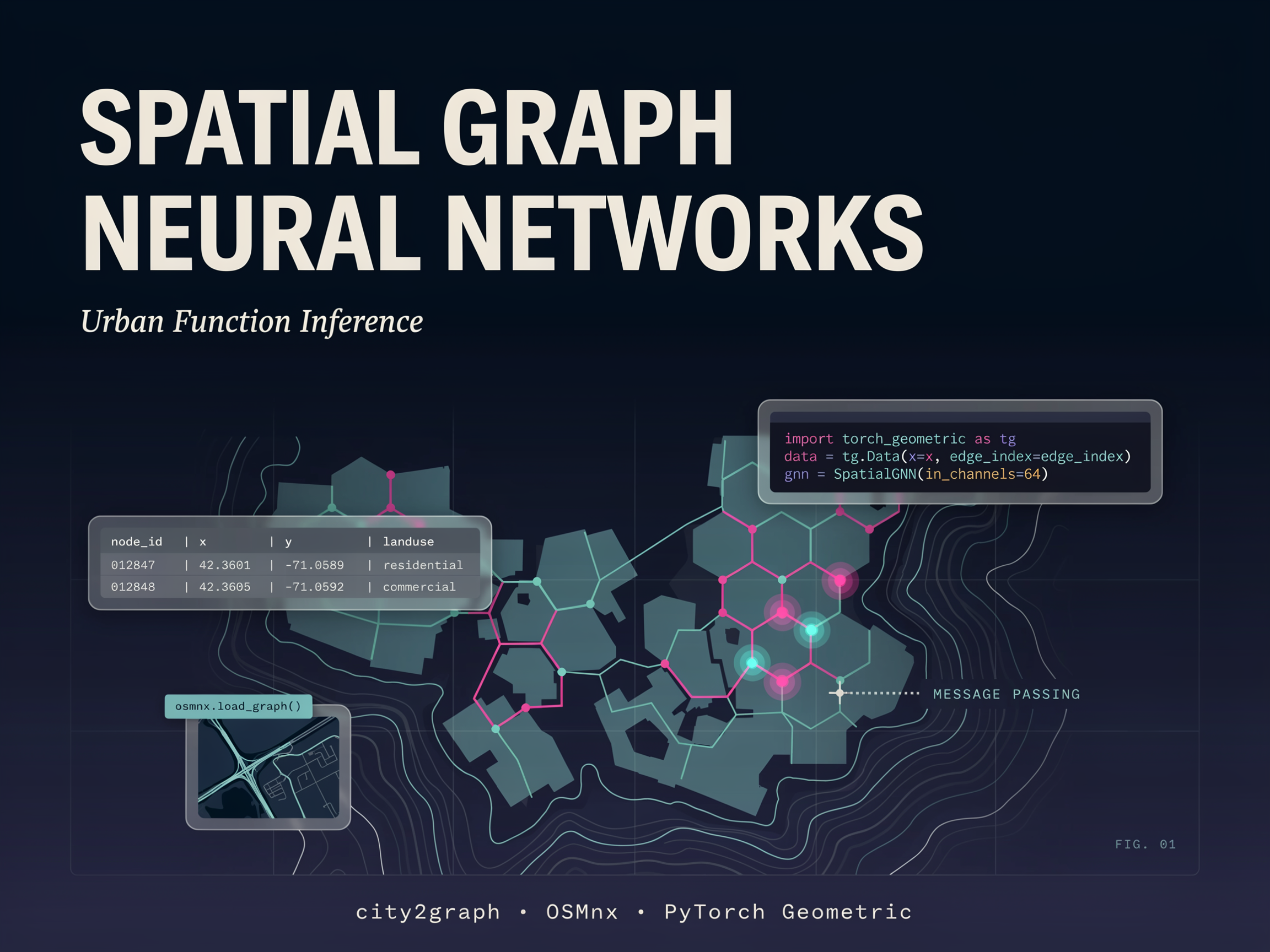
A Coding Implementation on Spatial Graph Neural Networks for Urban Function Inference Using city2graph, OSMnx, and PyTorch Geometric
This story highlights advancements in urban analytics, which can greatly influence city planning and development strategies.
- The article discusses a coding implementation using Spatial Graph Neural Networks, a type of machine learning model suited for graph-structured data.
- It focuses on urban function inference, a process that determines the roles of different areas in a city, using specific tools like city2graph, OSMnx, and PyTorch Geometric.
Spatial Graph Neural Networks are increasingly being utilized for modeling complex urban environments. These technologies build on existing frameworks to improve urban data analysis. Future applications may enhance decision-making in urban design and infrastructure development.
Based on the headline only — the full article could not be fetched.
Read the original ↗
Moonshot AI Releases Kimi K2.7-Code: a Coding Model Reporting +21.8% on Kimi Code Bench v2 Over K2.6
The release of Moonshot AI's Kimi K2.7-Code may enhance coding efficiency in AI applications, suggesting significant advancements in programming models.
- Moonshot AI has released Kimi K2.7-Code, a new coding model.
- Kimi K2.7-Code reports a +21.8% improvement on the Kimi Code Bench v2 compared to K2.6.
Moonshot AI is a technology company focused on developing advanced AI models for various applications, particularly in coding. The Kimi Code Bench is a standard for evaluating coding model performance. The release of Kimi K2.7-Code indicates ongoing competition in AI model capabilities and benchmarks.
Based on the headline only — the full article could not be fetched.
Read the original ↗
Anthropic Disables Claude Fable 5 and Mythos 5 After US Government Order
The disabling of Claude Fable 5 and Mythos 5 highlights the impact of government regulation on AI technologies and their operations.
- Anthropic has disabled its AI models, Claude Fable 5 and Mythos 5, following an order from the US government.
- This action demonstrates the increasing influence of government oversight on artificial intelligence development.
Anthropic is an AI company known for developing advanced generative AI models. The government order is part of a broader trend of regulatory scrutiny aimed at AI technologies. Observers should watch for further developments in policy that could affect AI operations.
Based on the headline only — the full article could not be fetched.
Read the original ↗
OpenAI is facing investigation from a group of state attorneys general
State attorneys general are examining OpenAI's practices, which could lead to increased regulatory scrutiny affecting how AI technologies are developed and managed in the future.
- OpenAI is under investigation by a coalition of state attorneys general seeking documents about the company's activities and impact on users.
- The subpoena covers aspects such as advertising, user engagement, data handling, and protections for minors and seniors.
- OpenAI has committed to engaging constructively with state AGs after receiving the subpoena.
- Previously, other tech companies faced scrutiny regarding children's safety and chatbot interactions.
OpenAI is a notable AI research organization known for its products like ChatGPT. Recent scrutiny follows broader regulatory interest in AI technologies and their impacts. Upcoming developments to watch include potential regulatory changes and OpenAI's public offering plans.
Read the original ↗
Anthropic blocks all customers' access to Fable 5 and Mythos 5
This decision to block access to Fable 5 and Mythos 5 highlights the increasing scrutiny of AI technologies amid national security concerns and signals potential regulatory challenges ahead for AI firms.
- Anthropic has suspended all access to its AI models Fable 5 and Mythos 5 due to a government directive concerning national security issues.
- The US government ordered the suspension of access for foreign nationals, which applies to all users, including Anthropic employees.
- Fable 5 was launched on June 9, and its capabilities exceed those of previous models, including Mythos.
- Anthropic believes the government's concerns are related to a potential jailbreak method that was communicated to them.
- Other AI models from Anthropic remain available while the suspension affects only Fable 5 and Mythos 5.
Anthropic is an AI company that recently introduced advanced models aimed at improving cybersecurity and general AI capabilities. The restrictions follow growing government interest in evaluating AI technologies for security implications. Future actions from regulatory bodies regarding AI access and security protocols are anticipated based on this incident.
Read the original ↗
Anthropic Says It’s Taking Claude Fable 5 Offline to Comply With US Government Order
This development highlights the increasing tension between AI technology firms and government regulations regarding national security and oversight of advanced AI systems.
- Anthropic is disabling its AI models, Claude Fable 5 and Mythos 5, due to a US government export control directive citing national security concerns.
- The directive requires Anthropic to suspend access to all foreign nationals, including its own foreign employees, despite the company's previous compliance efforts.
- This incident follows earlier tensions between Anthropic and the Trump administration, which designated the company a 'supply chain risk'.
- Anthropic launched Claude Fable 5 with safeguards against sensitive topics earlier this week, just before the shutdown order was received.
- The government indicated it was concerned about a method to 'jailbreak' Claude Fable 5 but did not provide specific details.
Anthropic is an AI research company known for developing models like Claude. The company has been in conflict with the US government regarding the use and control of its technology, particularly in relation to national security. Observers will watch for further developments in regulatory actions and Anthropic's responses in the AI landscape.
Read the original ↗