
The day's AI news, briefed
The Daily Prompt
Our AI editor reads each day's AI and robotics stories, pulls out why they matter, and links every original source — so you can keep up in minutes.
Join over 250,000 subscribers getting the latest AI news
Latest AI & Robotics News Today

Nordic Startup IntuiCell Unveils World’s First Digital Nervous System for AI
This innovation may fundamentally change artificial intelligence by enabling machines to learn autonomously like biological organisms, potentially overcoming limitations of traditional AI models.
- IntuiCell has created the first functional digital nervous system for AI, enabling autonomous learning through interaction with the environment.
- The system mimics biological learning processes, contrasting conventional models that rely on large datasets and static algorithms.
- The company's robot dog, Luna, demonstrates this technology by learning to stand without pre-programmed instructions, akin to a newborn animal.
- IntuiCell’s architecture parallels a biological spinal cord and thalamocortex, allowing real-time adaptation and learning from experience.
IntuiCell is a Nordic startup emerging from Lund University, focused on advancing AI capabilities through bio-inspired systems. The company plans to enhance AI's learning abilities by involving real-world training methods and aims to complete its system within two years.
Read the original ↗
How NVIDIA Isaac GR00T N1 Is Redefining Humanoid Robotics
NVIDIA's open and customizable GR00T N1 model could transform humanoid robotics by reducing development time and costs, enabling greater versatility in real-world applications across various industries.
- NVIDIA has introduced the Isaac GR00T N1, the world's first open and customizable foundation model for humanoid robotics.
- GR00T N1 incorporates a dual-system design inspired by human cognition, enabling robots to handle both quick reactions and complex tasks.
- The model allows developers to create robots that can adapt to various environments and tasks with minimal reprogramming required.
- NVIDIA provides GR00T N1 freely to the global robotics community, promoting innovation among startups and researchers.
- Companies like Boston Dynamics and Agility Robotics are already testing GR00T N1 for applications in manufacturing and healthcare.
NVIDIA specializes in AI and robotics technologies and aims to enhance humanoid robot capabilities. The GR00T N1 model simplifies robot development by providing pre-built frameworks for reasoning and movement. Its open-access nature allows widespread collaboration in the field.
Read the original ↗
The Rise of Smarter Robots: How LLMs Are Changing Embodied AI
The integration of large language models into embodied AI is enhancing robot adaptability and user interaction, reflecting significant progress in the capability of machines to operate effectively in human environments.
- Recent advances in large language models (LLMs) are improving embodied AI, making robots smarter and more adaptable.
- Embodied AI refers to AI systems in physical forms that can perceive and interact with their environment, enhancing real-world application capabilities.
- LLMs allow robots to interpret natural language commands, improving user-friendliness and decision-making in complex tasks.
Embodied AI has long aimed to create robots that interact with the physical world, moving beyond traditional AI confined to digital spaces. Recent developments in LLMs are making robots more capable of learning and adapting. Watch for continued integration of LLMs to advance robotic functionalities and real-world applications.
Read the original ↗
Is Robot Exploitation Universal or Culturally Dependent?
Cultural attitudes toward artificial agents influence their acceptance and integration in society, impacting the effectiveness of autonomous technologies across different regions.
- A study indicates that people in Japan treat AI with respect similar to humans, while Americans often exploit AI for personal gain.
- Research involved experiments comparing human and AI interactions among participants from Japan and the U.S., revealing differing attitudes toward cooperation and exploitation.
- Japanese participants reported feeling guilt when exploiting AI, unlike American participants, who felt greater negative emotions when exploiting humans.
This study from researchers at LMU Munich and Waseda University examines cultural differences in human interaction with AI, challenging the belief that exploitation of AI is universal. Future research may explore attitudes in a wider range of cultures.
Read the original ↗
Worms, Springs, and Soft Robots: Tiny Creatures Inspire Giant Leaps
This development demonstrates significant potential for soft robots, which could carry out complex tasks in environments inaccessible to traditional robotics, impacting fields such as disaster response and medicine.
- Georgia Tech researchers developed a 5-inch long soft robot that can jump 10 feet high without legs, inspired by the jumping motion of nematodes.
- The SoftJM robot stores elastic energy by bending and releases it for powerful jumps, similar to how a spring operates.
- Soft robotics allows these flexible machines to adapt to their surroundings, making them suitable for challenging environments such as disaster zones.
Soft robotics is a growing field focused on creating robots from flexible materials that can imitate natural movements. Previous advances include robots inspired by various animals. Future developments may explore new applications in search-and-rescue, medicine, and space exploration.
Read the original ↗
Gemini Robotics: AI Reasoning Meets the Physical World
The development of Gemini Robotics is significant as it bridges the gap between AI reasoning and physical interaction, enhancing the capabilities of robots in complex, real-world tasks.
- Google has introduced Gemini Robotics, a suite of AI models designed to enable robots to perform complex physical tasks by merging AI reasoning with the physical world.
- Gemini Robotics, built on Gemini 2.0, allows robots to understand visual inputs, process language, and execute physical actions in real time.
- The models employ embodied reasoning, enabling robots to detect objects, predict movements, and adapt to dynamic environments without extensive retraining.
Gemini Robotics extends the capabilities of advanced AI models to robotics, addressing challenges in spatial reasoning and physical interaction. Its development signifies progress in creating robots suitable for everyday applications in homes and industries. Future advancements may lead to more widespread use of robotic technologies.
Read the original ↗
NVIDIA Cosmos: Empowering Physical AI with Simulations
NVIDIA Cosmos enhances the development of physical AI systems by providing scalable, cost-effective synthetic data generation, which is crucial for advancing technology in robotics and autonomous vehicles.
- NVIDIA's Cosmos platform uses advanced physics simulations to generate realistic synthetic data, facilitating the training of physical AI systems like robots and autonomous vehicles.
- The platform offers Generative World Foundation Models (WFMs) that simulate physical environments and interactions, reducing costs and accelerating development processes.
- Cosmos is open source, enabling developers to customize models for specific applications in industries like transportation, healthcare, and robotics.
NVIDIA's Cosmos addresses the challenges of collecting expensive and limited real-world data for training physical AI systems. The platform's use of simulations offers a safer and more efficient approach, with early adopters leveraging it for projects across various industries. Its development could significantly enhance AI training capabilities and applications in the near future.
Read the original ↗
How AI is Ushering in a New Era of Robotic Surgery
The integration of AI in robotic surgery has the potential to broaden access to advanced surgical care, enhancing outcomes and reducing errors for patients worldwide.
- AI is transforming surgical robotics, enhancing precision and control in the operating room, and addressing gaps in access to surgical care.
- The surgical robotics market is projected to grow from over $10 billion in 2023 to over $14 billion by 2026, driven by advances in automation and AI technology.
- Companies like Intuitive Surgical, Medtronic, and Stryker are leading the development and adoption of robotic-assisted surgeries, which increased by 738% from 2012 to 2018.
Medical robotics began in the 1980s with laparoscopic tools for minimally invasive surgery. The introduction of AI is expected to significantly enhance surgical precision and patient outcomes, with ongoing developments likely to improve global access to surgical care.
Read the original ↗
Can Robots Really Boost ROI in Warehouses and Factories?
Understanding the true costs of robot integration is crucial for businesses aiming to enhance efficiency and productivity, particularly in sectors relying heavily on automation.
- Managers often underestimate the downtime and maintenance needs of robots, which can significantly affect productivity.
- Robots may require up to 35% more units to operate efficiently, leading to increased costs for maintenance and infrastructure.
- Space for charging stations and docking areas must be factored into ROI calculations, as it reduces available storage capacity.
Robots are increasingly used in warehouses and factories to boost efficiency. However, their integration involves hidden costs such as downtime during charging and the need for additional backup systems. Tracking these costs is essential for accurate ROI assessments.
Read the original ↗
AI-Enabled Collaborative Mobile Robots: The Human-Friendly Path to Manufacturing Automation
The adoption of AI-enabled collaborative mobile robots can significantly improve manufacturing efficiency and safety by allowing automation that complements rather than replaces human workers.
- The global collaborative robot market is projected to reach 735,000 units by 2025, highlighting the growing trend towards automation.
- Collaborative robots, or 'cobots', are designed to work alongside humans, enhancing safety and reducing injury risks on manufacturing floors.
- AI-powered cobots can quickly adopt tasks through intuitive 'learning by demonstration', eliminating the need for specialized programming.
- Cobots can scale with business needs, allowing firms to gradually automate processes without extensive modification to existing layouts.
Collaborative robots (cobots) are emerging as valuable tools in manufacturing, designed to work alongside human operators while ensuring safety and efficiency. The trend reflects a shift towards automation that enhances human capabilities, making it easier for firms to adopt new technologies without significant upfront investment. Future developments are set to further integrate AI advancements, increasing cobots' capabilities in various industries.
Read the original ↗
Meta V-JEPA 2: The AI Model Bringing Common Sense to Robots
Meta's V-JEPA 2 model enhances robot adaptability, crucial for deploying robots in unpredictable real-world environments, thereby advancing the field of robotics and AI significantly.
- Meta's V-JEPA 2 model is trained on over one million hours of video to help robots predict physical interactions.
- The model enables robots to perform zero-shot planning, allowing them to handle tasks in unfamiliar environments without prior training.
- V-JEPA 2 utilizes self-supervised learning, where it learns directly from raw video data without human annotations.
- It enhances action prediction and world modeling, making robots more efficient in real-time navigation and task execution.
Meta's V-JEPA 2 represents a significant advancement in AI, focusing on enabling robots to understand and predict physical interactions. Previous models often required labeled data and struggled with generalization. The continued development of V-JEPA 2 may lead to improvements in robot versatility and safety in various applications.
Read the original ↗
China Warns of Bubble Risk as 150 Companies Flood Humanoid Robot Market
China's warning about a potential bubble in the humanoid robotics market raises concerns about sustainability amid rapid investment and competition in this emerging industry.
- China's National Development and Reform Commission cautioned about a market bubble risk in the humanoid robotics industry due to over 150 companies producing similar products.
- The spokesperson emphasized that the sector should balance growth speed with bubble risk, noting that the technology and business models are not yet mature.
- Despite regulatory concerns, investor interest remains high, with the Solactive China Humanoid Robotics Index increasing by approximately 38.91% this year.
- UBTech Robotics reported significant commercial traction, securing orders exceeding 800 million yuan for its Walker series, with plans for increased production capacity.
- Industry-wide shipments of humanoid robots are projected to exceed 10,000 units in 2025.
Humanoid robotics is recognized as a key strategic priority for China, alongside other advanced technologies. The industry has seen a massive influx of investment, with many startups emerging, creating potential market saturation. Observers will watch for regulatory impacts and market consolidation efforts as the government seeks to promote sustainable growth in this sector.
Read the original ↗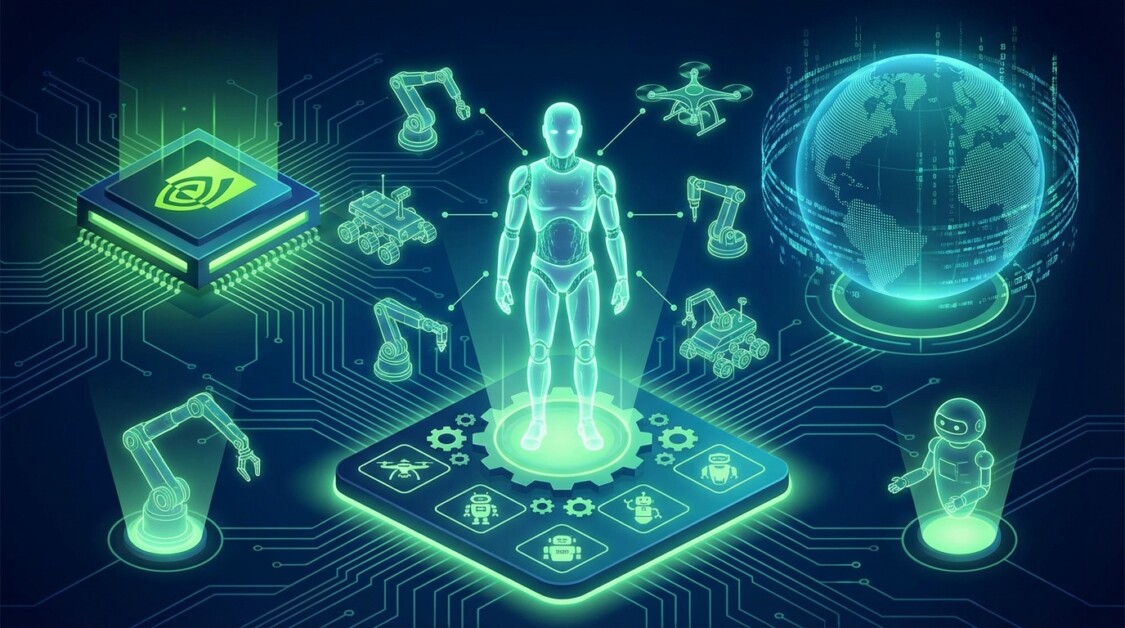
Nvidia Unveils Full-Stack Robotics Platform
This development positions Nvidia as a key player in the expanding field of generalist robotics, affecting how robots learn and operate across various tasks globally.
- Nvidia launched a comprehensive robotics platform at CES 2026 that integrates open foundation models, simulation tools, and edge hardware.
- The initiative aims to create a universal platform for generalist robotics, comparable to Android in smartphones.
- Key features include the Isaac GR00T N1.6 model for humanoid robots and the Cosmos foundation models for training infrastructures.
Nvidia's robotics platform seeks to advance robotic capabilities beyond simple tasks, leveraging synthetic data for improved learning. The company collaborates with major industry players to enhance the ecosystem and drive innovation in physical AI applications.
Read the original ↗
Robot‑as‑a‑Service (RaaS): The Next Frontier in Robotics
Robot-as-a-Service (RaaS) is transforming automation access for businesses, enabling flexible deployment without substantial upfront investment, which could reshape industries reliant on robotics.
- Robot-as-a-Service (RaaS) allows companies to 'hire' robots on a subscription basis instead of purchasing them outright.
- RaaS includes the robot, AI software, and ongoing support, shifting costs from capital expenditure to manageable operational expenses.
- This model significantly lowers barriers to automation, permitting quick deployment and scaling of robotic solutions in diverse sectors like healthcare and retail.
Robot-as-a-Service (RaaS) is a business model offering robotic capabilities as an on-demand service. It builds on Software-as-a-Service (SaaS) concepts, allowing businesses to utilize advanced robotics without the complexities or costs of ownership. Watch for its continued expansion across different industries as adoption grows.
Read the original ↗
Siemens, NVIDIA, and Humanoid Bring Physical AI to the Factory Floor
The successful deployment of the HMND 01 Alpha humanoid robot signifies a major advancement in integrating AI and robotics into real-world manufacturing, potentially enhancing efficiency in industrial operations.
- Siemens has deployed the HMND 01 Alpha humanoid robot at its facility in Erlangen, Germany, for real operational tasks in logistics.
- The robot autonomously handles tote movement, achieving around 60 tote movements per hour and maintaining high operational uptime.
- This integration of robotics with AI and industrial automation represents a shift towards more adaptable systems in unpredictable manufacturing environments.
Siemens, NVIDIA, and Humanoid are collaborating to advance humanoid robotics within the industrial sector. Previously, humanoid robots focused on experimental tasks, but recent technological improvements allow them to meet practical production demands. Continued deployment in factories aims to facilitate broader adoption of AI-driven machines in dynamic workflows.
Read the original ↗
AGIBOT Signals a Turning Point for Humanoid Robotics at APC 2026
AGIBOT's approach to humanoid robotics signifies a critical shift towards scaled production and real-world applications, setting new standards for efficiency and integration in robotics.
- AGIBOT's Partner Conference in Shanghai highlighted a major move towards large-scale deployment of humanoid robots, emphasizing productivity in various industries.
- Founded in 2023 by Peng Zhihui, AGIBOT focuses on creating a complete ecosystem of hardware and AI for advanced robotics.
- The company's integrated approach connects data collection, training, and deployment, allowing robots to learn from real-world experiences instead of relying solely on pre-programmed behavior.
AGIBOT is a new robotics company that has quickly advanced from development to mass production, aiming to establish itself in the competitive humanoid robotics market. With a focus on building integrated systems, AGIBOT represents a broader trend in China's robotics industry towards practical, wide-scale applications. Future developments will likely emphasize continuous learning and human-robot collaboration in various industries.
Read the original ↗
Humanoid Secures Major Manufacturing Deal With Schaeffler to Deploy Thousands of Robots
This agreement signifies a shift towards real-world application of humanoid robots in industrial settings, potentially transforming manufacturing operations and addressing labor shortages.
- Humanoid has secured a deal with Schaeffler to deploy thousands of wheeled humanoid robots across its factories in Germany by 2032.
- The first deployment phase will commence between December 2026 and June 2027 at two Schaeffler sites.
- Schaeffler will also be the preferred supplier for actuators, essential components that control robot movements, through 2031.
Humanoid, founded in 2024, focuses on integrating robots into existing industrial environments. The deployment of humanoid robots addresses labor shortages and enhances factory efficiency.
Read the original ↗
Robot.com Enters the Humanoid Robotics Race With the Launch of R-noid
The introduction of R-noid signifies a significant strategic shift in humanoid robotics, positioning Robot.com to address ongoing labor shortages in various industries through practical automation solutions.
- Robot.com has launched R-noid, a humanoid robot designed for labor-intensive tasks in logistics, hospitality, healthcare, and manufacturing.
- R-noid combines a humanoid upper body with a wheeled base for improved stability and reliability, featuring dual arms and a maximum vertical reach of two meters.
- The robot is integrated with technologies from partners like FieldAI and Physical Intelligence for improved autonomy and task management, allowing it to interpret natural-language instructions.
- R-noid is deployed for roles including assistant, picker, packer, folder, and host, with early deployments already ongoing in various settings such as golf course operations and warehouses.
- Robot.com operates a Robot-as-a-Service model for R-noid, lowering barriers to adoption and positioning the company for recurring revenue and operational data access.
Robot.com, founded in 2017 as Kiwibot, has developed delivery robots and now expands into humanoid robotics with R-noid. The humanoid robotics market is rapidly evolving, focusing on robots that can perform specific, useful tasks rather than just demonstrations. Ongoing competition among multiple companies highlights a push toward practical humanoid solutions in workplaces facing staffing challenges.
Read the original ↗
Nvidia wants to cut data center water use, but that’s not the same as fixing AI’s water problem
Nvidia's new cooling system may significantly reduce water use in data centers, but does not address the broader issue of water consumption linked to fossil fuel energy production.
- Nvidia announced a warm-water cooling system that aims to eliminate nearly all water usage inside data centers.
- The system allows coolant to be reused, potentially achieving a 100% reduction in on-site water use in favorable climates.
- However, much of the water usage comes from electricity generation, primarily from fossil fuels, which are not addressed by this system.
Nvidia's cooling system is designed to improve efficiency in data centers by using a closed-loop coolant system. While the system promises to cut water use significantly, the reliance on fossil fuel power plants means overall water consumption remains a concern. Future developments will need to account for the total water footprint including energy production.
Read the original ↗
AI chipmaker Groq confirms $650M raise, re-staffs after Nvidia’s $20B not-acqui-hire deal
The success of Groq's funding and restructuring efforts could significantly impact competition in the AI hardware landscape, particularly in inference technology.
- Groq has raised $650 million in a funding round led by Disruptive and Infinitum, confirming previous reports.
- The funding comes six months after Nvidia signed a licensing agreement with Groq and poached key executives including its founder.
- Groq has pivoted to its neocloud business, which has expanded to 13 data centers across various regions, serving over five million developers.
- New executives, including COO Alan Rice, CTO Sinclair Schuller, and CPO Rakesh Malhotra, have joined Groq following the Nvidia deal.
Groq is an AI chipmaker best known for its language processing unit, used for inference. The company was valued at $6.9 billion after a funding round in September and recently pivoted to focus on cloud services in response to competition from Nvidia.
Read the original ↗