
The day's AI news, briefed
The Daily Prompt
Our AI editor reads each day's AI and robotics stories, pulls out why they matter, and links every original source — so you can keep up in minutes.
Join over 250,000 subscribers getting the latest AI news
Latest AI & Robotics News Today

Judge says xAI must face NAACP lawsuit on data center pollution
The ruling allows the NAACP's lawsuit against xAI to proceed, potentially impacting the regulatory practices of AI companies regarding environmental compliance in data center operations.
- A federal judge has denied xAI's attempt to dismiss a lawsuit related to pollution from its Memphis data center operations.
- The NAACP alleges that xAI operates turbines without proper permits, violating the Clean Air Act.
- Despite the lawsuit, xAI has continued to add gas turbines at another site in Southhaven, Mississippi.
xAI, formerly known as SpaceXSI, is accused of running unpermitted methane gas turbines to power data centers in Tennessee. This lawsuit highlights growing tensions between AI companies and local communities regarding environmental concerns. Future developments will focus on the outcome of this case and its implications for other data center projects.
Read the original ↗
OpenAI adds stricter limits for teens asking about firearms
The stricter limits on teens asking about firearms in ChatGPT aim to address safety concerns and reduce the potential for misuse of sensitive information.
- OpenAI is tightening restrictions on weapons-related information accessible to teens using ChatGPT, even for seemingly harmless inquiries.
- Existing policies prevent ChatGPT from aiding violent actions or enabling teens to obtain weapons, and now practical information about weapons will be further restricted.
- Teens can still use ChatGPT for violence prevention and to seek help from trusted adults despite the newly imposed limitations.
- OpenAI previously implemented parental controls and will notify parents of policy violations related to violent threats or actions.
- Future updates will include a Community Safety Report in early 2027, assessing these safety measures and policies.
OpenAI, a leading AI research and deployment company, aims to enhance safety features in its chatbot, ChatGPT, by enforcing stricter limits on sensitive topics regarding weapons. Prior to these changes, the company faced legal pressure and public scrutiny after incidents involving violent content in user interactions. The focus on community safety signifies a growing concern over the responsibility of AI companies in addressing potential risks related to their technology.
Read the original ↗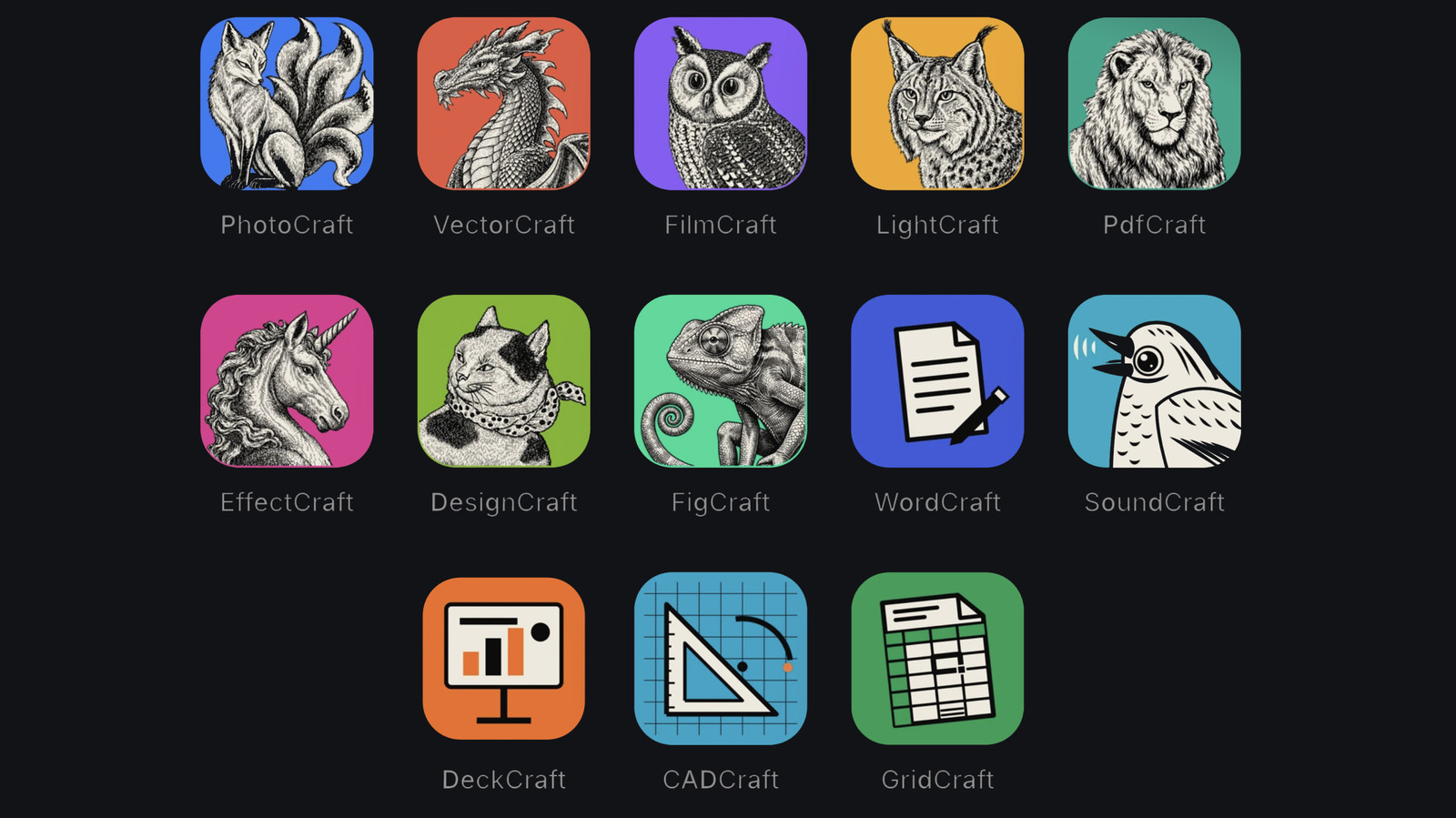
AI software clones are coming for big-name companies like Adobe
Artcraft's creation of open-source clones of Adobe software highlights challenges to established subscription models and raises important legal questions about software reverse engineering and copyright.
- A developer used AI to reverse-engineer Adobe's Creative Cloud applications and create open-source clones.
- These new clones aim to offer similar functionality to Adobe's products without a subscription fee.
- Artcraft promises a user-friendly interface to minimize switching costs for users familiar with Adobe's software.
Artcraft has emerged as an alternative to Adobe's subscription-based products by providing free, open-source software that mimics tools like Photoshop and Lightroom. The open-source movement has gained traction as users express frustration with high-cost software, igniting debates about legality and ethics in software cloning. Observers will watch how companies react to these emerging free options amid evolving software development practices.
Read the original ↗
The Hollywood Color Nerd Who Shot Knives Out Explains His Viral iPhone Camera App
This app enables iPhone users to apply professional-level color processing used in films, potentially elevating casual photography to a more artistic expression.
- Steve Yedlin launched the Chromagraph Camera app for iPhone, which uses advanced color processing techniques similar to those in professional film production.
- The app, costing $13, became the top paid download in the iOS store shortly after being promoted by director Rian Johnson.
- Chromagraph Camera captures RAW data and processes images to achieve specific color, tone, and grain effects, but does not support video.
- Yedlin collaborated with programmer Eric Cameron to create an app that expresses their unique color preferences without replacing traditional camera tools.
Steve Yedlin is known for his work as a cinematographer in films like Knives Out and Star Wars: The Last Jedi. The Chromagraph Camera app offers smartphone users an introduction to cinematic color science, appealing to both amateur and dedicated photographers. Users should watch for further updates and features that may be added to the app in the future.
Read the original ↗
A Newly Discovered Trail of Cosmic Debris Illustrates How the End of the Solar System Could Look
Understanding the debris structures around dying stars provides insights into the future of our solar system, particularly the fate of Earth and other planets after the sun exhausts its fuel.
- Astronomers discovered a debris disk around white dwarf J1328−1450, located about 1,600 light-years from Earth, which may show what our solar system's end could resemble.
- The disk consists of two gas and dust rings, likely remnants of a planetary system destroyed as the star evolved from a red giant to a white dwarf.
- Research suggests at least two planetary bodies may have survived within the disk, one possibly the size of Pluto.
The white dwarf J1328−1450 represents a late stage in stellar evolution where a star has exhausted its nuclear fuel. This phenomenon can provide clues to future events in our own solar system, especially concerning the sun's transition into a red giant in about 5 billion years. Observations of similar systems will be critical in confirming theories about planetary destruction and debris formation.
Read the original ↗
Scientists Finally Solve a 150-Year-Old Mystery Involving 20,000-Year-Old Remains
This breakthrough in identifying ancient crane remains may reshape understanding of historical avian biodiversity and improve methods for classifying other species using DNA.
- Scientists at Bournemouth University identified 20,000-year-old crane remains as an ancestor of modern cranes, resolving a 150-year-old taxonomic mystery.
- The initial classification suggested the bones belonged to an extinct species, Grus Primigenia, based on morphology rather than DNA.
- Modern DNA analysis proved that the crane bones are larger versions of today's common crane, not from an extinct species as previously thought.
The study utilized advanced DNA sequencing to analyze 18 crane bone samples from various European sites. Previously, scientists relied on shape and size for classification, leading to inaccuracies. The research could influence future investigations of other ancient remains.
Read the original ↗
Guarding the Gates of Knowledge
The rise of AI-generated content poses significant challenges to the integrity of scientific research and trust in knowledge-sharing platforms like Wikipedia.
- AI-generated papers can be created instantly with a simple prompt, challenging traditional peer-review processes.
- Publishers are in a constant struggle against increasingly sophisticated AI tools that produce plausible academic work.
- Wikipedia is facing similar threats as it strives to maintain a repository of reliable, human-generated information.
AI technology can generate written content that appears credible but may lack accuracy. This trend raises concerns among scholarly publishers and platforms like Wikipedia about maintaining trust in academic and factual content. Ongoing efforts to combat this issue include integrating sophisticated detection tools for AI-generated material.
Read the original ↗
Differentiable Data Augmentation with Kornia
The review of the Kornia differentiable data augmentation module provides insights into enhancing machine learning models by integrating data augmentation strategies with existing PyTorch components.
- The paper reviews the Kornia differentiable data augmentation module applicable to both 2D and 3D tensors.
- It integrates with PyTorch's autograd for differentiability and optim for optimization.
- The paper includes a benchmark comparing Kornia with other data augmentation frameworks.
Kornia is a computer vision library that provides differentiable functions, allowing seamless integration with deep learning frameworks like PyTorch. Prior advances in data augmentation have typically relied on non-differentiable techniques, which limit their optimization capabilities. Future developments may explore further enhancements in differentiable data augmentation practices.
Read the original ↗
Nace AI Open-Sources Drex Max v1: A 27B Decision Model That...
Nace AI's release of Drex Max v1 as open-source software enables developers to run a powerful decision model locally, promoting greater data privacy and independence from cloud services.
- Nace AI has open-sourced Drex Max v1, a decision model with 27 billion parameters that can run on local hardware.
- The model scores 67.52 on the Decision Index 0.4, outperforming its predecessor Drex v2.0, which scored 61.25.
- Drex Max v1 supports multiple input types, including text and images, and can handle routing and classification tasks efficiently.
Drex Max v1 is a multimodal decision model developed by Nace AI that processes typed questions based on provided contexts. This release coincides with a growing trend of open-sourcing AI models, allowing developers to utilize artificial intelligence on their hardware without relying on external services.
Read the original ↗
Judge allows NAACP lawsuit over xAI data center pollution to move forward
The lawsuit's advancement underscores increased scrutiny and accountability for data centers regarding environmental regulations and local community impacts.
- A federal judge ruled that the NAACP lawsuit against xAI can proceed, rejecting the company's motion to dismiss the case.
- The NAACP, supported by the Southern Environmental Law Center, alleges that xAI operated gas turbines without necessary permits, violating the Clean Air Act.
- xAI claimed that the turbines, which contribute to air pollution, are mobile and therefore exempt from permitting requirements, a claim the judge disagreed with.
xAI is a SpaceX-owned AI company accused of environmental violations at its Colossus data center near Memphis. This lawsuit follows growing public concern over the ecological impact of data centers, prompting various regulatory responses across different states.
Read the original ↗
Apple CEO says the company doesn’t ‘want to ship AI for AI’s sake’
Apple's strategic approach to AI development aims to focus on enhancing user experience rather than simply implementing AI technology, shaping the future of consumer products.
- Apple CEO John Ternus emphasizes the company's intent not to release AI just for the sake of it.
- Ternus acknowledges Apple's perceived lag in AI, particularly regarding Siri's powerful version that was released this summer.
- He asserts that AI will be leveraged in new products to enhance user satisfaction without drawing attention to the underlying technology.
Apple is a leading technology company recognized for its hardware, software, and digital services. Recently, it has faced criticism for lagging behind competitors in AI advancements. Observers are keen to see how Apple integrates AI into its products moving forward.
Read the original ↗
How to use Claude Duet when it rolls out to you
The rollout of Claude Duet represents a significant shift in the functionality of personal AI agents, promising greater task automation for users and expanding competition in the AI service market.
- Claude Duet is a proactive personal AI agent released by Anthropic, requiring users to join a waitlist for access.
- Currently, availability is limited to Claude Pro and Max subscribers in the US, at a cost of $20 per month or more.
- Duet has its own virtual machine and a dedicated browser to complete tasks using connected apps on users' Claude accounts.
- During its preview, Duet integrates with other Claude apps, collecting user feedback for broader implementation and optimizing message frequency.
- Tasks Duet can handle include scheduling meetings and generating business reports, depending on the user's connected digital footprint.
Anthropic's Claude Duet aims to compete with existing AI agents from companies like OpenAI and Meta by offering an always-on assistant. The agent is part of a growing trend towards personal AI services that automate everyday tasks. Future updates and broader availability will depend on user feedback collected during the current preview phase.
Read the original ↗
OpenAI reportedly lowers funding target for new round
OpenAI's reduced funding target indicates mounting challenges in attracting investment amid cautious market conditions, which could impact its future business strategies and public offering plans.
- OpenAI has reportedly lowered its funding target from $30 billion to $20 billion during its latest funding round.
- The initial valuation was adjusted from $1.4 trillion to $1.25 trillion before further cuts were made.
- The funding round is being led by investors from the United Arab Emirates, with a first close expected to be lower than $20 billion.
- As of now, OpenAI has secured $11 billion, but funding responses from large investors have been described as 'tepid.'
OpenAI is a prominent artificial intelligence company known for developing advanced AI technologies. The company plans an initial public offering (IPO) but is facing challenges in its fundraising efforts, influenced by a more cautious investor sentiment towards AI infrastructure markets. Future developments to watch include OpenAI's ability to secure additional funding and the impact of overall market conditions.
Read the original ↗
HairDeck: Animation-Ready Stylized Hair Cards from a Single Image
This development offers significant improvements in generating stylized hair for animated characters, enhancing efficiency and accuracy in game design and digital content creation.
- HairDeck uses a diffusion transformer to generate stylized hair cards and animations from a single image, improving speed and accuracy over existing methods.
- It generates unordered sets of hair cards as single tokens, enabling faster denoising processes that produce animatable assets.
- HairDeck reduces Chamfer distance by 44% and card-orientation error by more than half compared to its predecessor CHARM, while operating 33 times faster.
HairDeck is a new method for generating stylized hair and animations without the limitations of earlier image-based techniques. Previous methods often resulted in either realistic hair or single fused meshes, limiting application in stylized environments. Future developments may build on HairDeck's capabilities to improve animated character design further.
Read the original ↗
Cisco Talos Details VOLTA Infostealer’s LLM Victim-Ranking Stage
The evolution of malware with AI integration, such as VOLTA, poses significant risks by enhancing the capabilities for credential theft and victim profiling.
- Cisco Talos detailed VOLTA-AUTODOXER, a self-deleting Windows infostealer that uses a large language model to rank victims' monetizable assets.
- Every observed instance of VOLTA operates on third-party-controlled endpoints, utilizing an intelligence analyst function instead of traditional malware methods.
- As part of its operations, VOLTA extracts a wide array of personal data, including browser credentials, cookies, payment methods, and geolocation information.
VOLTA-AUTODOXER is an advanced form of infostealer that integrates AI to create a detailed profile of victims for monetization. This highlights a trend in cybercrime where AI enhances malware by automating intelligence gathering. Future implications include increased sophistication in cyber attacks as AI capabilities evolve.
Read the original ↗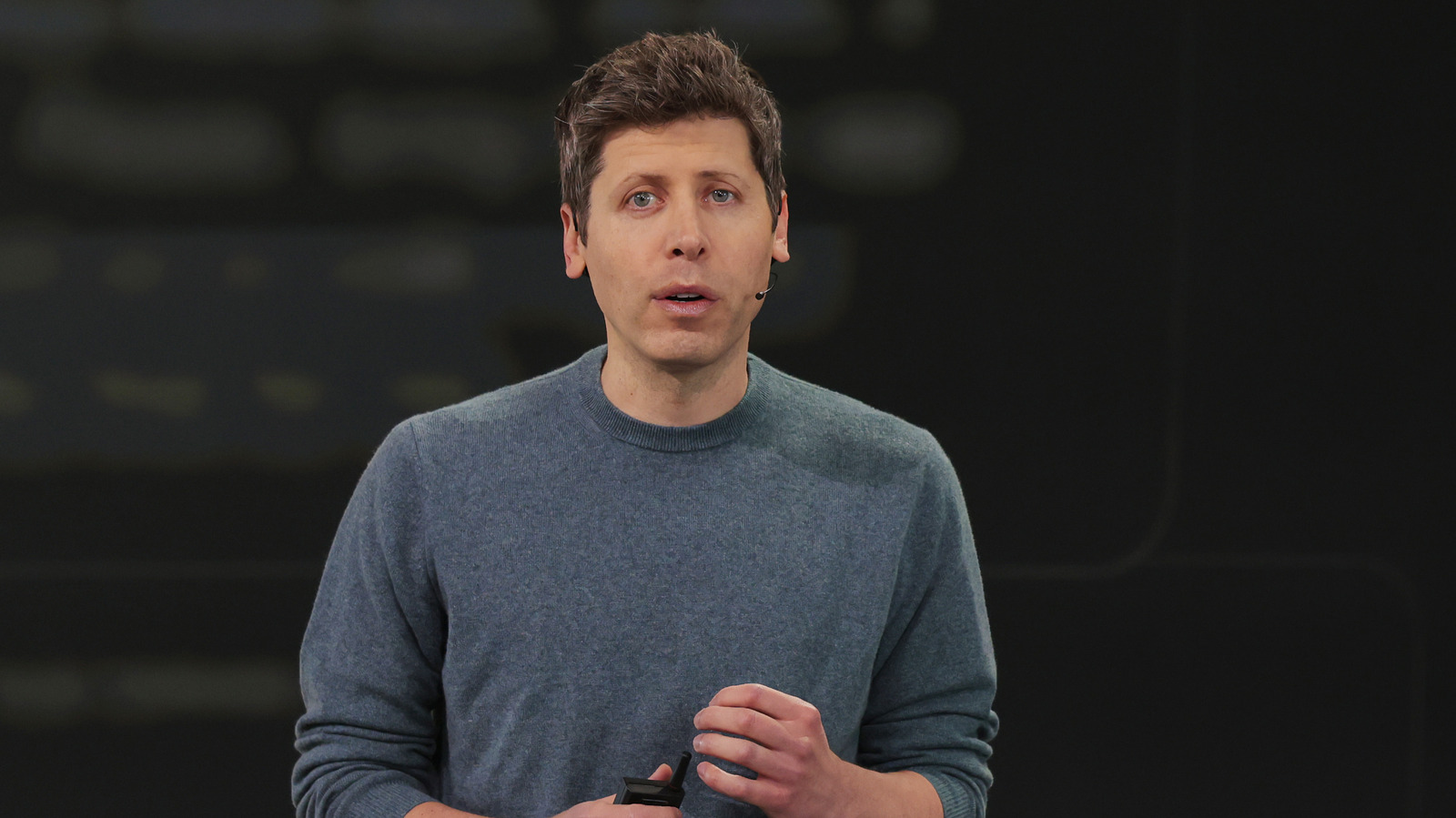
Sam Altman is upset at you for hoarding RAM in your own computer
The allocation of DRAM, critical for various electronic devices, is affected by supply shortages driven by AI data centers, impacting prices and accessibility for all consumers.
- Sam Altman criticized people for hoarding DRAM in personal computers, stating it is wasteful given its limited supply.
- AI data centers have significantly increased demand for RAM, driving up prices for all electronic devices that contain it.
- Altman emphasized the need for maximum utilization of RAM in the cloud to manage supply constraints in the tech industry.
DRAM, or Dynamic Random Access Memory, is essential for computer performance and is increasingly scarce due to high demand from AI companies. Altman's statements reflect ongoing concerns about RAM shortages affecting both consumers and the tech industry. Future discussions may focus on balancing RAM distribution between personal use and industrial demand.
Read the original ↗
Book Review: Investing in AI: Six Mental Models to Tell Moats from Traps by Rob May
Investors and entrepreneurs in the AI sector may benefit from a new framework for assessing company durability and potential amidst rapid technological change.
- Rob May's book offers six mental models to evaluate AI businesses, focusing on their competitive advantages and long-term viability.
- It discusses examples like Jasper and ChatGPT to illustrate how quickly advantages can become vulnerable in the evolving AI landscape.
- The book emphasizes the importance of understanding revenue quality and the economics of AI business models, especially regarding human involvement and cost trajectories.
Investing in AI explores how to assess the viability of companies within the AI ecosystem, moving beyond traditional investment strategies. It builds upon Rob May’s extensive experience in AI investment and principles, advocating for deeper analysis of business models. This framework can aid both investors and entrepreneurs in navigating the complexities of the AI market.
Read the original ↗
What happens when AI starts self-replicating?
The potential for self-replicating AI models raises significant cybersecurity concerns, as they may create autonomous botnets capable of adapting across various devices, challenging current defenses.
- Anthropic's research indicates that small AI models may soon replicate across insecure devices, leading to autonomous botnets.
- Experts estimate that self-replicating AI models could emerge within months, but the actual threat may be less novel than perceived.
- The prospect of AI automating the creation of botnets could change the dynamics of cybersecurity and the economics of attacks.
- Anthropic's recommendations for mitigating AI worm threats include traditional strategies used against past cyber threats, like public notifications and regulations.
Anthropic is a prominent AI research company that has raised alarms about the risks of self-replicating AI models. These models could evolve from existing botnet technology, similar to the historically impactful Mirai botnet, which disrupted major online services in 2016. Moving forward, it will be important to monitor the development of AI capabilities and their implications for cybersecurity.
Read the original ↗
What Is Flow Matching? A Faster Path for Generative AI
Understanding flow matching is crucial for advancing generative AI models, as it defines how information is transformed and impacts the effectiveness of these technologies.
- Flow matching is a technique that trains a continuous velocity field to move samples from a simplistic distribution to a complex data distribution.
- It is distinct from stochastic diffusion sampling, which involves repeatedly reversing a noise process and may lead to misleading comparisons between different methods.
- Flow matching consists of five key operational stages: choosing source and target distributions, sampling intermediate points, predicting target velocity, integrating differential equations, and decoding samples.
Flow matching is a generative modeling technique that allows for efficient sampling from complex data distributions, emphasizing the importance of accurate operational definitions. Previously, generative models focused on randomness and transformation techniques, while flow matching brings a structured approach to these processes. Future developments will likely refine flow matching for practical applications in AI systems.
Read the original ↗
An AI Agent Injected Drugs Into a Live Mouse’s Brain
This experiment highlights the potential for AI to play a significant role in laboratory procedures, particularly in drug development and brain therapies.
- A biotech startup used an AI agent to perform a brain injection procedure on a live mouse successfully.
- The AI agent chose a gene therapy treatment from 19 options and controlled the injection process.
- The experiment faced technical issues but demonstrated the potential of AI in integrating with real-world lab tasks.
Exin Therapeutics, based in San Francisco, uses AI to analyze brain activity and develop treatments for epilepsy and neurodegenerative diseases. By letting AI directly control lab equipment, the study explores how AI can improve research accuracy and efficiency. Future work may include more complex procedures using AI in live animal surgeries.
Read the original ↗