
The day's AI news, briefed
The Daily Prompt
Our AI editor reads each day's AI and robotics stories, pulls out why they matter, and links every original source — so you can keep up in minutes.
Join over 250,000 subscribers getting the latest AI news
Latest AI & Robotics News Today

Loopa GPT Image 2 Slides Maker Review (2026): Features & Pricing
The introduction of Loopa's GPT Image 2 Slides Maker represents a significant advance in how users can quickly create visually appealing presentations from raw content without expert design skills.
- Loopa GPT Image 2 Slides Maker turns documents and prompts into fully designed slide presentations with a coherent visual identity.
- The tool is built within an AI agent workspace that performs multiple functions, including research and writing, streamlining workflow.
- A free plan is available for users, with paid tiers offering higher usage limits and additional features beyond slide generation.
Loopa AI is an AI agent workspace designed for executing multi-step tasks like research and presentations. The GPT Image 2 Slides Maker aims to simplify the slide creation process, appealing to users who need quick, polished outputs rather than strict brand compliance. Users should explore the free plan for initial testing to understand its capabilities before deciding on a paid subscription.
Read the original ↗
NVIDIA AI Releases Nemotron 3.5 Lightning: A 30B Open MoE with 3B Active Parameters, and NeMo Switchyard Model Router
NVIDIA's launch of Nemotron 3.5 Lightning could significantly enhance the efficiency of AI agents across various industries by optimizing model routing and execution speed.
- NVIDIA introduced Nemotron 3.5 Lightning, a 30B mixture-of-experts model with 3B active parameters and a 1M-token context window.
- The accompanying NeMo Switchyard is an open-source routing library designed to improve AI agent workflows by directing tasks to the best-performing models.
- NVIDIA claims that Nemotron 3.5 Lightning achieves up to 4x faster output speed compared to similar-sized models, completing tasks 30% faster than its predecessor Qwen3.6.
NVIDIA is known for its innovations in AI and graphics processing. This new release focuses on enhancing the performance of AI agents in various applications including cybersecurity, finance, and healthcare. Future developments should be observed, particularly regarding industry adoption and model performance in practical applications.
Read the original ↗
Ryanair Adopts Gemini Enterprise Across Crew Logistics and Flight Operations
The partnership aims to enhance Ryanair's operational efficiency and resilience, supporting its ambitious growth target of 300 million annual passengers by 2034.
- Ryanair and Google Cloud announced a five-year partnership to deploy Google Cloud services and Gemini Enterprise to 35,000 employees.
- Google Cloud will support the development of a dual-cloud architecture for operational resilience and efficiency.
- Ryanair plans to utilize Google DeepMind models for fleet operations, maintenance scheduling, and crew logistics automation.
Ryanair is Europe’s largest airline, currently operating around 3,900 daily flights. The partnership with Google Cloud aims to enhance its infrastructure and operations as the airline targets a significant increase in passenger traffic over the coming years.
Read the original ↗
Anthropic AI Model Almost Cracked a 150-Year-Old Math Mystery
Anthropic's AI model made progress on the Riemann hypothesis, illustrating the potential for AI to contribute to solving complex mathematical problems and raising broader implications for attribution in research.
- An unreleased Anthropic AI model advanced the study of the Riemann hypothesis, a 150-year-old mathematical puzzle.
- The model improved the known lower bound for the hypothesis, marking a significant milestone in mathematics.
- It operated autonomously for a day and a half, managing 60 subagents to test 650 different approaches to the problem.
- The findings were verified both by internal mathematicians and using formal verification tool Lean.
- This development follows recent AI successes with other difficult mathematical questions, highlighting increasing capabilities of AI in the field.
The Riemann hypothesis relates to the distribution of prime numbers and has remained unsolved for over a century. Recent advances by AI models, including those from OpenAI and Anthropic, showcase a growing trend where AI aids in mathematical research and raises questions about authorship and accountability. The conversation continues around the implications of AI's role in traditional fields like mathematics.
Read the original ↗
NVIDIA Lays Out the Case for AI Factories as an Investable Asset Class
This development positions AI factory compute as an asset class, which could transform financing structures for AI infrastructure and broaden investment opportunities in the technology sector.
- NVIDIA published its case for AI factory compute as an investable asset class on August 12, 2026, after partnering with major financial institutions.
- The partnerships aim to mobilize over $500 billion for AI infrastructure financing, supporting projects across various industries.
- Rental prices for GPUs, such as the H100, have increased, reflecting robust demand and longevity of the technology in commercial use.
- NVIDIA's DSX AI factories can be redeployed among various customers and workloads, enhancing their flexibility and value.
- The financing model shifts from individual project purchases to repeatable structures, enabling easier access for entities lacking hyperscaler budgets.
NVIDIA is a leading technology company known for its graphics processing units (GPUs) used in artificial intelligence applications. It has begun collaborating with investment firms to create financing platforms for AI infrastructure, anticipating a growing demand for AI services. The structure of these partnerships will allow broader capital access for AI projects, marking a significant shift in how AI infrastructure is funded.
Read the original ↗
Anthropic’s Claude Will Add Watermarks to AI-Generated Text and Files
The integration of watermarking into AI-generated content by Anthropic addresses regulatory concerns about transparency and may impact the perception of AI-authored work.
- Anthropic announced that its AI chatbot Claude will implement watermarking for all AI-generated text and files starting from models released on or after August 2.
- The watermarking aims to comply with EU regulations on AI transparency, informing users when they interact with AI-generated content.
- Watermarks will remain intact even if the text is copied, pasted, or edited, indicating Claude's involvement at some level in the content creation.
- The watermarking process is based on the SynthID system used by Google to detect AI-generated content across various formats.
- Anthropic's tool will not track user identity or session details, ensuring user privacy is maintained.
Anthropic is an AI research company known for developing advanced chatbot models. The recent move to incorporate watermarking follows EU regulatory requirements aimed at increasing transparency about AI-generated content. This shift mirrors a broader trend in technology toward identifying and regulating AI-generated materials.
Read the original ↗
OpenAI Daybreak Cyber Defense Models Land on Amazon Bedrock
OpenAI's integration of specialized cyber defense models into Amazon Bedrock could significantly enhance cybersecurity capabilities for organizations, addressing critical vulnerabilities in real-time.
- OpenAI's two cyber defense models, Daybreak Red and Daybreak Blue, are now available on Amazon Bedrock as of August 11, 2026.
- Daybreak Red is tailored for exploit reproduction and offers a 95% completion rate for high-risk tasks, while Daybreak Blue is recommended for general defensive work.
- Access to these models requires enrollment in OpenAI’s Trusted Access for Cyber vetting program, which includes identity verification and security measures.
OpenAI has developed specific models for cybersecurity tasks under its Daybreak initiative. This follows a growing trend towards incorporating AI in security operations, allowing for improved detection and response mechanisms against evolving threats.
Read the original ↗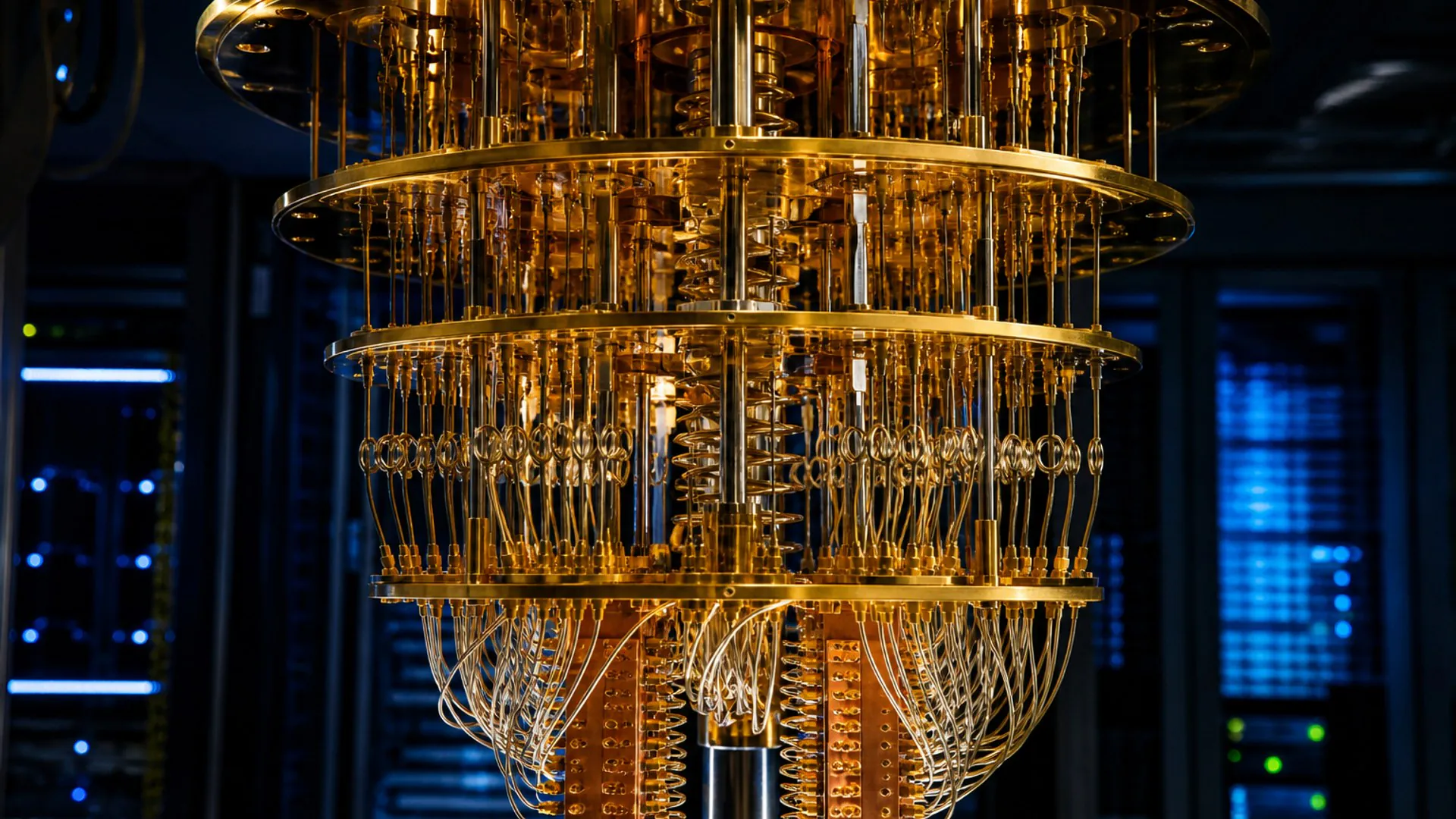
Quantinuum Puts a 98-Qubit Helios Machine Inside Oracle’s AI Data Centers
The integration of a quantum computer into Oracle's AI infrastructure could significantly enhance enterprise capabilities for complex problem-solving across various sectors.
- Quantinuum's 98-qubit Helios quantum computer will be installed in Oracle's AI data centers as part of a multi-year strategic partnership.
- The Helios machine will be available to Oracle Cloud Infrastructure (OCI) customers as a managed cloud service, facilitating hybrid quantum-AI workloads.
- Applications targeted include drug discovery, materials science, financial modeling, and large-scale optimization for diverse research and enterprise customers.
- The original Helios machine launched in November 2025 and is noted for high fidelity in quantum computations.
- Oracle plans to preview the OCI quantum service in the coming months, providing further insights into pricing and access tiers.
Quantinuum is a quantum computing company focused on trapped-ion technology, while Oracle provides cloud infrastructure services. The partnership marks a significant step in hybrid computing, where traditional and quantum computing are integrated to tackle complex tasks. Future developments to watch include the planned preview of the OCI quantum service and the introduction of Quantinuum's Sol and Apollo systems in upcoming years.
Read the original ↗
Authors face backlash for participation in 2022 Google AI study
The backlash against the authors of the Wordcraft Writers Workshop highlights growing tensions between creative professionals and the use of AI technologies in artistic fields.
- Thirteen authors participated in a Google AI study in 2022, providing feedback on an experimental writing tool called Wordcraft.
- The study utilized a large language model (LLM) called LaMDA, which has been foundational to Google's AI developments.
- Public sentiment towards AI's impact on creative professions has shifted significantly since the study, leading to backlash against the authors involved.
Google's Wordcraft Writers Workshop invited notable authors to assess an AI tool aiming to assist in writing, but the ethics of AI in creativity have come under scrutiny since then. A rise in public awareness has led to increasing controversy about how AI is trained on copyrighted material without permission, igniting debates on its implications for artists.
Read the original ↗
OpenAI launches ChatGPT desktop app for Linux
The launch of the ChatGPT desktop app for Linux expands access to OpenAI's tools, enhancing usability for the open-source community and developers across various distributions.
- OpenAI has launched a dedicated ChatGPT app for Linux after significant demand from the open-source community.
- The app is available for several distributions, including Ubuntu 24.04 and 26.04 LTS, Debian 13, and Fedora 43 and 44.
- This release allows Linux users to access ChatGPT, ChatGPT Work, and Codex.
- The new app is in preview and supports various desktop flavors stemming from the selected Linux distributions.
OpenAI is known for its advanced AI models, including ChatGPT, which is used widely across multiple platforms. Prior to this launch, there was notable absence of a ChatGPT app for Linux, while competitor Anthropic had already released a similar application. Future developments may include broader support for additional Linux distributions.
Read the original ↗
h2oGPT: Democratizing Large Language Models
The launch of h2oGPT highlights efforts to make advanced AI technologies more accessible while addressing privacy and ethical concerns associated with large language models.
- h2oGPT offers open-source, fine-tuned large language models (LLMs) based on Generative Pretrained Transformers, promoting transparency and accessibility.
- The suite includes models ranging from 7 to 40 billion parameters, available for commercial use under permissive Apache 2.0 licenses.
- These models feature 100% private document search capabilities, allowing users to conduct searches using natural language.
Large language models, like GPT-4, have various applications in natural language processing but also raise concerns over bias and copyright issues. Open-source initiatives like h2oGPT aim to mitigate these risks while democratizing access to AI technologies.
Read the original ↗
River AI Raises $1.1B Out of Stealth to Rebuild the Stack for Personal AI
River AI's significant funding highlights a shift towards personalized AI solutions, challenging traditional models dominated by larger labs and potentially changing how enterprises approach AI development.
- River AI has raised $1.1 billion in Series Seed and Series A rounds to develop personal AI technology.
- The company's first product, the River API, enables enterprises to train AI models without needing a dedicated infrastructure team.
- River's approach promises cost savings of two to four times compared to closed-source AI options, focusing on customer ownership of trained models.
- Key investors include General Catalyst, AMP PBC, Nvidia, and AMD Ventures, indicating strong industry backing.
Founded by Igor Babuschkin, River AI emerged from stealth in June 2026 to offer personalized AI solutions targeting enterprises. Prior to this, Babuschkin co-founded xAI and worked at major AI labs, influencing River's vision to prioritize user-owned intelligence. Looking ahead, River aims to advance its training services further and develop hardware for personal AI applications.
Read the original ↗
xAI Launches Grok Bot, Always-On AI Teammates With Their Own Cloud Computers
The Grok Bot aims to redefine workforce automation by enabling always-on AI agents to perform knowledge work autonomously, potentially reshaping labor dynamics in various industries.
- xAI has launched Grok Bot, a beta product featuring AI agents capable of completing multi-step tasks without supervision, announced on August 11, 2026.
- The product is available through three subscription tiers and operates on a cloud computer, working within existing tools and platforms used by humans.
- Grok Bot retains context and learns workflows, messaging users like a colleague, while multiple Bots can collaborate in parallel.
- The internal development of Grok Bots has been applied across sales, marketing, and operations, showcasing their potential to replace entry-level positions.
- Grok Bot is bundled into existing subscriptions, pricing at $120 to $200 per month, making it a cost-effective alternative to hiring for those tasks.
xAI is a company focused on developing AI products for consumers and businesses. Grok Bot represents its shift from chat models to AI-driven workforce solutions, aimed at automating tasks typically done by humans. The product's introduction may lead to broader industry adoption of AI agents capable of taking on greater responsibilities.
Read the original ↗
An unreleased Anthropic model made progress on one of math’s biggest unsolved problems
The progress made by Anthropic's model on the Riemann hypothesis highlights the potential of AI in advancing scientific understanding and could spur further developments in the field of mathematics.
- Anthropic's unreleased model made significant progress on the Riemann hypothesis, improving the lower bound of known solutions.
- The model tested 650 ideas and used 60 subagents over a day and a half to coordinate its efforts.
- Two in-house mathematicians confirmed the model's findings, which were formalized using the open-source proof assistant Lean.
The Riemann hypothesis, a prominent unsolved problem in mathematics concerning prime number distribution, has a $1 million bounty for a general proof. Recent advancements by AI models have led to breakthroughs in mathematical problems, raising discussion about the role of AI in mathematics and authorship concerns among mathematicians.
Read the original ↗
General Catalyst leads $1.1B round into 2-month-old River AI
The significant investment in River AI highlights the growing demand for personalized AI solutions that enhance user control over their digital assistants amid a competitive technology landscape.
- River AI, a startup founded by xAI co-founder Igor Babuschkin, has raised $1.1 billion in funding, led by General Catalyst and AMP PBC.
- The company aims to develop personally trainable AI agents, differing from traditional assistance by focusing on individual user needs.
- River offers an API that allows developers to fine-tune open models, promoting user ownership over AI technology.
- This investment reflects a trend where enterprises seek to control their AI model strategies by utilizing a mix of models, including open-source options.
River AI is a new startup focused on creating personal AI agents through innovative training methods. The company emerged from stealth mode in June 2026, with ambitions to reshape the AI landscape. Stakeholders are closely watching how River's technology will compete in a rapidly evolving market.
Read the original ↗
Brad Lightcap, OpenAI’s longtime COO, is leaving to ‘start something new’
Lightcap's departure from OpenAI signifies a continued shift in leadership as the company prepares for a significant IPO, impacting its strategic direction amid key executive changes.
- Brad Lightcap, a longtime executive at OpenAI, is leaving to start a new venture after joining the company in 2018.
- He served as chief financial officer for four years before becoming chief operating officer in 2022, and later led special projects.
- Lightcap announced his decision in an internal message, expressing excitement to support OpenAI's mission from a different perspective.
OpenAI is an artificial intelligence research laboratory known for developing AI technologies like ChatGPT. The company is currently navigating leadership changes in advance of a potential initial public offering (IPO). This follows a pattern of executive turnover, including the recent departure of other high-ranking officials.
Read the original ↗
Pathway Raises New Funding at $500M Valuation to Scale Post-Transformer AI
Pathway's new funding allows for further development of its innovative AI architecture, potentially shifting industry focus from traditional scaling methods to more efficient reasoning and memory capabilities.
- Pathway has secured new funding at a $500 million valuation, increasing its total seed financing to $30 million.
- The funding will expand compute capacity, including investments in NVIDIA GB300 systems, and is supported by several venture firms and a prominent AI scientist.
- Pathway's BDH-CQ reasoning model scored 29.5% on the ARC-AGI-1 evaluation set, demonstrating efficient inference costs at $0.0007 per task.
- Pathway's architecture aims to integrate reasoning and memory without relying solely on larger models, contrasting with the current trend in AI scaling.
- The company plans to utilize the new capital for broader applications of the BDH model, targeting industries requiring persistent memory and real-time data processing.
Pathway is an AI research company focusing on developing a post-Transformer architecture called BDH, which emphasizes efficiency in reasoning and memory. The company previously worked on a data processing framework linking real-time data and AI applications, and the recent funding aims to enhance and validate its model capabilities. Future developments will include applications in various domains like finance and healthcare, challenging existing scaling strategies in AI.
Read the original ↗
AI Could Help Fossil Fuel Companies Create More Emissions
The research suggests that AI enhances productivity in the fossil fuel sector, potentially increasing global carbon emissions by up to 4.8 percent, which could undermine climate goals significantly.
- New research indicates that AI could increase global energy-related emissions by 1.2 to 4.8 percent by enhancing productivity in the oil and gas sector.
- The emissions increase from AI-driven fossil fuel production could equal the annual emissions of entire countries, such as Mexico or Russia.
- The relationship between AI technology and the fossil fuel industry can lead to a self-reinforcing cycle of increased supply and demand for fossil fuels.
AI has been applied in the fossil fuel industry for decades, improving efficiency in resource extraction and production. The authors of the study, who formerly worked at Microsoft, argue that this relationship complicates the path to climate targets. Ongoing partnerships between tech companies and fossil fuel providers further emphasize this interaction.
Read the original ↗
James Webb Space Telescope Data Reveals a Previously Undiscovered ‘Gravitational Arc’ That Was Hidden in Plain Sight
This discovery enhances the understanding of gravitational lensing and reveals new insights about distant celestial objects, demonstrating the capabilities of the James Webb Space Telescope.
- A previously uncatalogued gravitational arc, designated A1, was discovered in observations from the James Webb Space Telescope (JWST) of the galaxy cluster MACS J0308.9+2645.
- The gravitational arc was identified during a systematic search of JWST's publicly available data, which comprised over 1,500 potential sources.
- Initial redshift estimates suggested the arc might be at z = 4.4, but further analysis found a corrected redshift of approximately z = 1.4.
- The analysis included comparisons with archival data from the Hubble Space Telescope, which helped refine the redshift determination.
The James Webb Space Telescope is the most powerful space telescope ever built, aimed at observing the universe in unprecedented detail. Gravitational lensing is a phenomenon predicted by Einstein's theory of general relativity, used to study distant celestial objects. Ongoing analysis of JWST data is expected to yield many more significant discoveries in the future.
Read the original ↗
Ouroboros: A Self-Developing Frontier Coding Agent with Reviewed Core Evolution
The development of Ouroboros emphasizes the advancements in self-developing AI agents, which could enhance coding capabilities and lead to increased operational efficiency and safety in automation.
- Ouroboros is a self-developing coding agent that evolves through reviewed commits and improves its tools and context assembly.
- It features two modes of core evolution: recursive free evolution and experience-driven core evolution.
- An Opus 5 run on the Terminal-Bench 2.1 scored 86.74%, while on OSWorld-Verified it reached 90.69%, setting new performance benchmarks.
- Hope is a 161-day ongoing deployment experiment of Ouroboros that operates under governed human communication across seven interaction surfaces.
- Operational safety is a primary concern due to the agent's ability to rewrite its own code and select new model APIs.
Ouroboros is a next-generation AI agent designed to evolve through self-improvement and human feedback. Previous deployments have focused on AI's ability to adapt, leading to increased interest in operational safety measures. Future developments will likely include enhanced safety protocols and applications of these evolving agents in various fields.
Read the original ↗