
The day's AI news, briefed
The Daily Prompt
Our AI editor reads each day's AI and robotics stories, pulls out why they matter, and links every original source — so you can keep up in minutes.
Join over 250,000 subscribers getting the latest AI news
Latest AI & Robotics News Today

Spirit Airlines Wants to Sell Its Data to Google. Former Flight Attendants Are Freaked Out
The sale of Spirit Airlines' employee data to Google raises important questions about worker privacy and the handling of sensitive information in AI training, highlighting a significant gap in current data protection laws.
- Google's $10 million bid for Spirit Airlines' data includes 34 years of airline records but promises to exclude customer information.
- The sale has provoked objections from the Association of Flight Attendants, representing over 5,500 former employees, citing concerns over sensitive personal data.
- This incident marks a growing tension between labor unions and corporations regarding employee privacy in the age of AI.
- Legal experts underscore the inadequacy of existing laws to protect workers' data, particularly in bankruptcy situations.
Spirit Airlines has filed for bankruptcy, allowing it to sell assets, including its data. The proposed sale to Google is under legal scrutiny due to potential privacy violations affecting former employees.
Read the original ↗
AI Companion Robots Are Closing the Human Connection in Modern Homes
AI companion robots like Ollobot's OlloNi SS1 have the potential to alleviate loneliness for millions of people living alone by offering emotional support and social interaction.
- Ollobot's OlloNi SS1 is designed to provide emotional support and companionship through proactive interactions and advanced mobility.
- The global AI companion market is expected to grow from $48 billion in 2026 to $318 billion by 2033, indicating a significant demand for these technologies.
- Modern companion robots focus on emotion-oriented design, incorporating psychological research to enhance user experience and reduce feelings of loneliness.
Ollobot has developed the OlloNi SS1 as part of a new generation of AI companion robots, which aim to address social isolation through more engaging interactions. Previous companion robots often failed to maintain user interest, leading to many being unused after initial novelty wore off. Future advancements are expected to enhance their capabilities further in addressing loneliness and emotional voids.
Read the original ↗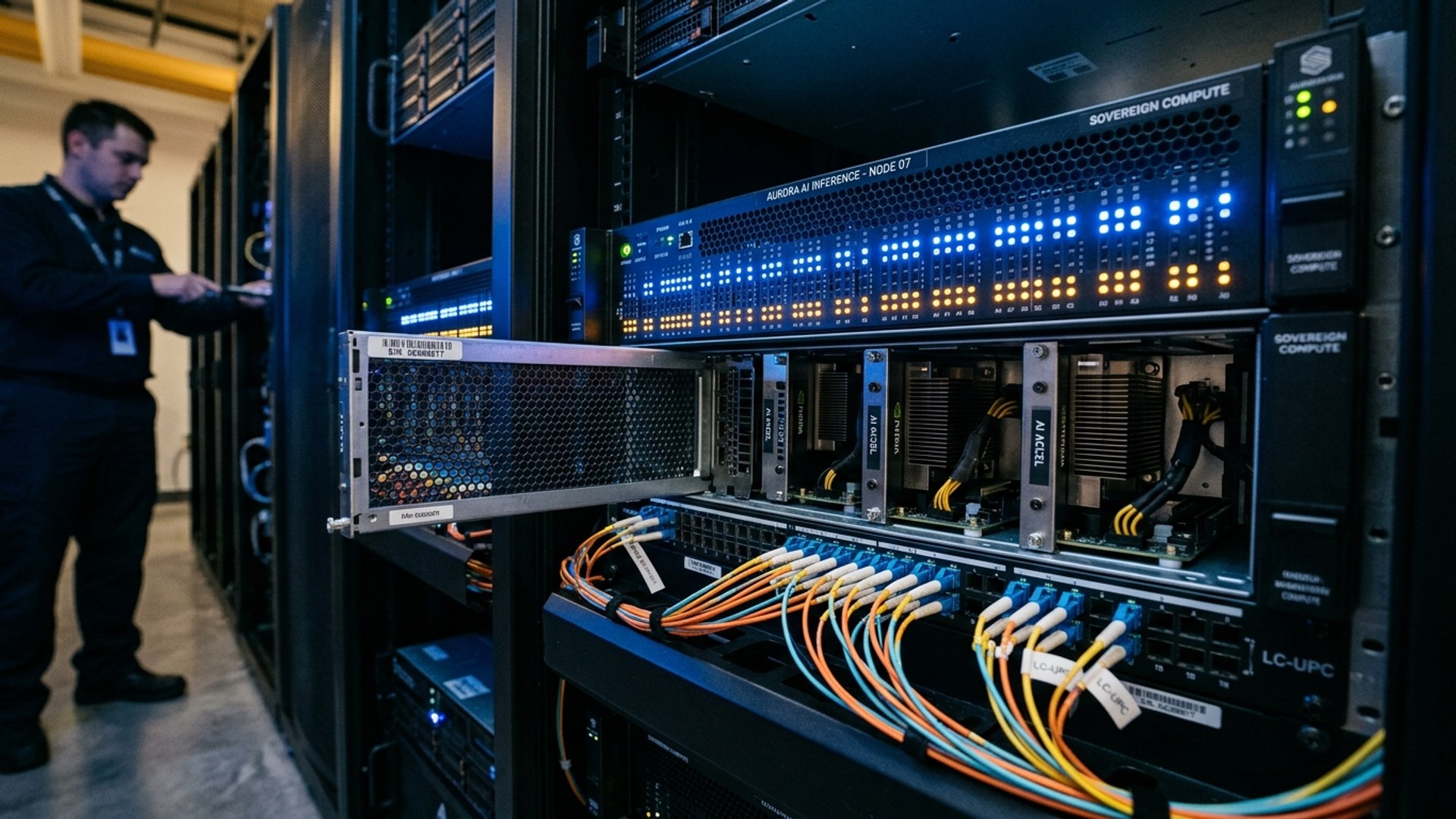
SCX.ai Partners With DDN to Scale Australia’s Sovereign AI Inference Cloud
This partnership enhances Australia's domestic AI infrastructure, addressing data sovereignty and performance needs for local enterprises and government agencies amidst rising data security concerns.
- SCX.ai and DDN partnered to expand Australia's largest sovereign AI inference cloud, beginning on August 24, 2026.
- The collaboration integrates SCX's ASIC-accelerated infrastructure with DDN's Infinia data platform to improve AI inference performance.
- SCX's first operational AI node is at the Equinix SY5 data center in Sydney, aimed at supporting a national sovereign AI inference network.
SCX.ai is a sovereign AI infrastructure company focused on domestic AI workloads, while DDN specializes in data systems. This partnership follows SCX's recent public listing and enhances its capabilities against international data compliance challenges. The next steps include deploying additional nodes throughout Australia.
Read the original ↗
Sentante’s Endovascular Robot Enters Commercial Use in Vascular Surgery
The deployment of Sentante’s endovascular robot marks a significant advancement in medical robotics, potentially enhancing surgical precision and safety in vascular procedures through integrated AI data collection.
- Sentante has begun commercial use of its CE-marked endovascular robotic platform for vascular surgery and interventional radiology, following a regulatory clearance obtained in May 2026.
- The robot records detailed procedure data as multi-modal training data, allowing for future AI-driven assistance in endovascular procedures.
- Its design includes force and torque sensing for tactile feedback, mimicking hand movements for ease of use without retraining clinicians, and compatibility with standard catheter systems.
- Sentante's commercial launch follows a year of clinical trials reporting 100% technical success and no device-related complications.
Sentante, founded in 2017, focuses on developing robotic systems for medical applications, particularly in vascular surgery. The company's endovascular robot aims to enhance both the efficacy of procedures and the training of AI systems through accumulated procedural data. Future developments to watch include the introduction of AI features and expansions into neurovascular interventions.
Read the original ↗
Situational Awareness, star AI hedge fund that nearly imploded, now being probed by the SEC
The investigation into Situational Awareness highlights the risks associated with AI investments and the regulatory scrutiny that can arise from significant financial downturns.
- Situational Awareness, an AI-focused hedge fund, experienced a significant loss in value due to a downturn in AI stocks at the end of July.
- The Securities and Exchange Commission is investigating the firm by subpoenaing banks that managed the fund's trading and funding.
- Federal regulators have advised these banks to preserve any information related to the hedge fund, although Situational Awareness has not been accused of wrongdoing.
Situational Awareness is an AI hedge fund that gained attention for its aggressive investments in AI technologies but recently faced financial difficulties. The firm's management has indicated it will cooperate with regulatory requests as it navigates this inquiry, which may reflect broader concerns within the AI investment space.
Read the original ↗
Food Recalls Are in the News Again. Here’s How I Keep My Eggs Salmonella-Free
The rise in salmonella outbreaks highlights the need for safe egg preparation methods to protect public health, particularly as food recalls increase.
- The FDA reports recent salmonella outbreaks linked to various foods, including eggs from Midwest Poultry Services, affecting major grocery brands like Kroger.
- The USDA estimates potentially 3 million contaminated eggs are produced annually in the U.S., necessitating consumer awareness and safe handling practices.
- Sous vide cooking can pasteurize eggs at precise temperatures, making them safer for raw or minimally cooked dishes, according to experts.
Salmonella is a bacteria often associated with outbreaks linked to eggs, leading to severe illness. A 2009 USDA safety requirement aimed to reduce contamination, but challenges remain. Consumers are advised to ensure safe cooking methods, especially for dishes using raw eggs.
Read the original ↗
ChatGPT vs. Gemini: Which Chatbot Is Better at Seeing the World Around You?
The comparisons between ChatGPT and Gemini highlight the evolving landscape of AI chatbots, particularly in multimodal understanding, which is crucial for user interactions with technology.
- ChatGPT has been the most popular chatbot, but Gemini is gaining traction since its release.
- Gemini excels in multimodal capabilities, particularly in image recognition, outperforming ChatGPT in several tests.
- While free versions are capable, premium plans offer significant differences, with Gemini providing extra cloud storage and subscriptions for more advanced features.
ChatGPT, developed by OpenAI, is recognized for its text capabilities and was released earlier than Gemini, Google's chatbot. Gemini's preinstallation on Android devices may increase its popularity as it offers strong image processing features and additional services with its paid options.
Read the original ↗
AI is hitting entry-level jobs hardest, Stanford study finds
The findings underscore potential long-term implications for entry-level job opportunities, particularly for younger workers, as AI continues to reshape labor markets.
- A Stanford study reveals that employment for workers ages 22 to 25 in AI-exposed occupations is 19% lower than in less exposed fields.
- From 2022, employment in AI-impacted roles has decreased by about 11%, while it has increased by 10% in jobs with less AI impact.
- The study highlights that lower hiring rates, rather than firings or resignations, are primarily driving the decline in entry-level jobs in AI-affected sectors.
The study updates previous research analyzing the effects of AI on jobs, focusing on younger workers facing heightened risks of employment loss. It suggests a divide based on how occupations are affected—those fully automated versus those where AI aids human workers. Monitoring future trends around hiring practices and labor market adjustments in response to AI will be crucial.
Read the original ↗
OpenAI Brings GPT-5.6 Model Family to AWS’s Kiro
The integration of OpenAI's GPT-5.6 models into AWS’s Kiro enables developers to leverage advanced AI for more efficient coding, potentially lowering development costs significantly.
- OpenAI's GPT-5.6 model family, which includes Sol, Terra, and Luna, is now available in Amazon Web Services' Kiro development environment.
- Joint testing on Terminal-Bench 2.1 showed that task costs were reduced by approximately 82% when using the GPT-5.6 models in Kiro.
- Kiro transforms high-level project requirements into actionable development tasks, optimizing the performance of the GPT-5.6 models during coding.
- OpenAI and AWS have established a deep partnership, including a $138 billion multi-year agreement that enhances their collaboration in AI development.
Amazon Web Services (AWS) designed Kiro as a spec-driven development environment to facilitate AI-assisted coding. OpenAI's GPT-5.6 models are now integrated into Kiro, which aims to improve efficiency in development. Observers should monitor the ongoing performance optimizations and how this affects the broader development landscape.
Read the original ↗
Top AI Tools to Clone Your Voice in 2026: 12 Platforms Tested and Compared
The rise of AI voice cloning tools in 2026 is reshaping audio production, offering significant advancements in efficiency and accessibility for various users, from content creators to developers.
- AI voice cloning in 2026 requires as little as 3 seconds of audio to generate synthetic duplicates indistinguishable from originals.
- ElevenLabs has been identified as the best overall tool for voice cloning, praised for its quality and accessibility.
- Fish Audio is noted as the best value for developers, offering cost-effective solutions without compromising quality.
- Descript stands out for podcasters, allowing users to edit transcripts and regenerate audio without re-recording.
- Resemble AI prioritizes security, featuring compliance tools and neural watermarking for audio files.
AI voice cloning technology allows users to create synthetic versions of their voices for various applications, including entertainment and accessibility. As these tools evolve, developers and content creators are seeking the best options tailored to their needs. Future developments may focus on enhancing security, affordability, and ease of use.
Read the original ↗
Instinct’s powerful AI assistant is raising privacy and security concerns
The rise of AI personal assistants like Instinct brings significant privacy and security risks, prompting concerns about the trade-offs between convenience and user data protection.
- Instinct is a new AI personal assistant under private testing, praised for its capabilities but criticized for privacy concerns.
- The assistant can access a user's applications and devices, including email and location, raising trust issues.
- Its terms of service grant the AI extensive licenses to user data, prompting concerns about security and unauthorized actions.
- Users have reported issues with Instinct retaining access to their data even after requests to delete it.
- Despite significant interest and early investment, Instinct has not publicly addressed these privacy concerns.
Instinct is created by Spear Street Technology and is currently in private beta testing. The assistant connects with various user applications to perform tasks, raising questions about data privacy. The evolution of personal AI tools highlights the need for a balance between functionality and user trust.
Read the original ↗
Mistral and HUMAIN Team on Sovereign AI for Saudi Arabia and the Region
This collaboration aims to establish local and secure AI infrastructure in Saudi Arabia, enhancing control over data and operations for various vital industries in the region.
- Mistral and HUMAIN announced a collaboration to develop sovereign AI solutions in Saudi Arabia, valuing the partnership in the hundreds of millions of Euros.
- The partnership focuses on infrastructure and advanced model development, specifically targeting industries like cybersecurity and telecommunications.
- Mistral plans to utilize HUMAIN's local data centers to meet increasing compute demands and to enhance the performance of AI models in Arabic.
Mistral is a Paris-based developer of open-source AI models and infrastructure, while HUMAIN is a Public Investment Fund company focused on AI solutions and infrastructure development in Saudi Arabia. This collaboration aims to enhance the region's technological capabilities by creating localized AI solutions that meet strict security and compliance needs across several industries.
Read the original ↗
How to cancel your ChatGPT subscription (and why you might want to)
Understanding how to cancel a ChatGPT subscription is crucial for users who want to manage their costs and data privacy effectively.
- Canceling a ChatGPT subscription requires navigating to settings on the platform used for the subscription.
- OpenAI's agreement with the US Department of Defense has led to a significant increase in app uninstalls, indicating user concerns about privacy.
- Users may want to delete their account separately from canceling their subscription to ensure data is erased appropriately.
OpenAI's ChatGPT is a conversational AI service offering different subscription tiers, including free and paid plans. Changes such as the retirement of specific models can affect the value of a subscription. Keeping informed about service changes and pricing is key for users evaluating their subscription options.
Read the original ↗
How to Stop AI Chatbots From Training on Your Personal Data
Understanding how to manage personal data in AI chatbot interactions is crucial for maintaining privacy and control over one's information amidst growing digital surveillance.
- Most AI chatbots default to using conversation data for training, raising privacy concerns for users discussing sensitive topics.
- Users can adjust settings in their Google and AI chatbot accounts to prevent their data from being used for model training.
- Meta offers limited options for data protection, with no guaranteed opt-out method for AI model training.
- OpenAI and Anthropic allow users to disable data usage for AI training and delete past chat history, but deleted data may still be retained for 30 days.
AI chatbots have become integral tools in information access and assistance. Users may not realize their conversations are often stored and utilized by companies for training purposes, leading to concerns about data privacy. It is important for users to be proactive in managing their settings to safeguard their personal information.
Read the original ↗
Nvidia senior manager linked to Supermicro scheme smuggling AI servers to China
Illegal export of advanced AI servers to China undermines U.S. national security and complicates compliance for tech companies, making this investigation significant for industry regulations.
- Taiwan has indicted nine individuals, including an Nvidia senior manager and two Supermicro employees, for allegedly helping to smuggle AI servers to China.
- The suspects are charged with breach of trust and document forgery after they allegedly falsified export documents.
- Since 2022, U.S. regulations require a license to export semiconductors to China to protect national security.
- Taiwan's investigation found that co-conspirators exported 74 out of 130 AI servers to Chinese customers despite strict export controls.
Nvidia is a leading manufacturer of AI chips, while Supermicro supplies computing infrastructure. The two companies face scrutiny following allegations of facilitating illegal exports to China amid heightened U.S. export controls. This investigation follows previous efforts to tighten enforcement and prevent unauthorized access to advanced technology by foreign entities.
Read the original ↗
Lancium and NVIDIA Partner to Deploy Gigawatt-Scale AI Factories
The partnership between Lancium and NVIDIA aims to enhance AI computing capabilities by rapidly increasing access to significant energy resources necessary for powering large-scale AI factories.
- Lancium and NVIDIA have formed a strategic collaboration to utilize Lancium's energy infrastructure for deploying NVIDIA's AI factory technology.
- Under the agreement, Lancium will provide 4 gigawatts of leased capacity and a pipeline of over 15 gigawatts of powered land for AI computing.
- NVIDIA's DSX platform, which includes technologies for energy-efficient GPU management, will be implemented on Lancium's campuses.
- NVIDIA has also taken an equity stake in Lancium, enhancing their combined efforts in the AI infrastructure sector.
Lancium specializes in energy infrastructure, particularly for AI data centers, while NVIDIA develops accelerated computing solutions for AI. This partnership follows NVIDIA's trend of investing in companies controlling energy resources and comes amid a push to establish large-scale, power-ready data centers.
Read the original ↗
What It Takes to Be an Adaptable Engineer
This article highlights the evolving expectations for engineers in a rapidly changing job market driven by AI, emphasizing the need for adaptability in skills and roles.
- The AI boom has introduced new tools and raised expectations for engineers, making it critical for them to be adaptable in their work.
- Samantha Brunhaver defines adaptability as the ability to recognize changes and respond effectively, which varies across industries.
- Job markets are experiencing rapid skill turnover, with an estimated 39 percent of workers' core skills expected to change by 2030, according to the World Economic Forum.
- Educators are encouraged to provide diverse real-world experiences to better prepare students for the workforce adaptation required by AI.
- Older core skills, such as problem-solving and communication, remain relevant despite changes in the tools engineers use.
Adaptability is increasingly vital for engineers due to rapid advancements in AI technology, which is reshaping various sectors. Traditionally focused on technical skills, educational programs now face challenges in effectively preparing graduates for a dynamic job environment. Future developments will likely involve more emphasis on soft skills and adaptability in engineering curricula.
Read the original ↗
Self-driving Cars Could Someday Take Requests
Integrating natural language requests into self-driving cars could enhance user experience by allowing passengers to influence driving styles, potentially improving comfort and safety during travel.
- Researchers at Delft University of Technology are developing techniques that allow passengers to adjust an autonomous vehicle's driving behavior using natural-language inputs.
- The system uses a large language model to translate user requests into adjustments for a motion-planning algorithm, ensuring safe driving while accommodating passenger preferences.
- Testing in a driving simulator demonstrated the system's ability to modify vehicle parameters based on user intent, such as increasing speed for urgency or ensuring smoothness for comfort.
Autonomous vehicles rely on motion planners to navigate safely, but current systems do not allow for real-time adjustments based on passenger feedback. Previous research has explored using language models for vehicle control, but this new approach focuses on adapting driving style to user preferences while ensuring safety. Future developments will likely center on refining these systems and addressing safety verification.
Read the original ↗
OpenAI is building AI agents for everything. Will everyone use them?
The development of AI agents like OpenAI's ChatGPT Work could revolutionize how professionals manage digital tasks, impacting productivity across various industries and professions.
- OpenAI is developing ChatGPT Work to allow professionals to use AI agents for complex digital workflows across various applications like email and project management.
- The product is available for $20 a month and aims to provide non-engineers with similar functionalities that software engineers have with AI tools.
- As of June, 98% of OpenAI employees used Codex, while only 17% of organizational subscribers and less than 1% of individual subscribers utilized similar tools, highlighting a market challenge.
- Industry analysts suggest that reaching new professions is crucial for OpenAI to justify its substantial investments in AI technology and training.
OpenAI is focused on creating AI applications that can assist users in completing complex tasks. The company's aim is to expand beyond software engineering into broader professional areas, as its current tools struggle for mainstream adoption.
Read the original ↗
Valor, Point72 back General Intuition at $6B valuation as AI startup pushes into robotics
The significant valuation boost for General Intuition indicates strong investor confidence in the potential of AI-driven robotics, highlighting a growing trend in the tech industry.
- General Intuition is negotiating funding at a $6 billion pre-money valuation from investors like Valor Ventures and Point72 Ventures.
- The company previously raised $320 million at a $2.3 billion valuation just weeks prior.
- General Intuition leverages gameplay data to develop foundation models for AI agents that can navigate through space and time.
- CEO Pim de Witte spun out General Intuition from the video game clip-sharing platform Medal last October.
- The startup plans to enhance its model and expand its workforce with the new funds.
General Intuition specializes in developing AI agents capable of generalizing across tasks. Founded by CEO Pim de Witte, the company has attracted significant investment interest due to its innovative approach in AI and robotics. Observers should watch how this funding round impacts its technological developments and market position.
Read the original ↗