
The day's AI news, briefed
The Daily Prompt
Our AI editor reads each day's AI and robotics stories, pulls out why they matter, and links every original source — so you can keep up in minutes.
Join over 250,000 subscribers getting the latest AI news
Latest AI & Robotics News Today

OpenAI’s GPT-6 Astra Reaches General Availability on Amazon Bedrock
The general availability of OpenAI's GPT-6 Astra on Amazon Bedrock signifies a significant advancement in AI capabilities for various professional applications, impacting industries that rely on data analysis and software development.
- OpenAI's GPT-6 Astra is now generally available on Amazon Bedrock, as announced by AWS on September 8, 2026.
- The model supports a context window of up to 1 million input tokens, allowing for extensive data analysis and contract review.
- GPT-6 Astra introduces advanced caching features to optimize workflows and reduce processing costs for recurring tasks.
- It has achieved a Critical classification in cybersecurity capabilities, which includes real-time misuse monitoring safeguards.
- Pricing for GPT-6 Astra is set at $10 per million input tokens and $50 per million output tokens.
OpenAI, a leader in artificial intelligence, has developed the GPT-6 Astra model, designed to improve data processing and software quality. Previously, OpenAI launched GPT-5 models, setting high benchmarks in AI capabilities. Future developments may include broader access and enhanced functionalities as part of AWS services.
Read the original ↗
Muse, Meta’s New Personal AI Agent, Needs You to Trust It
Muse's launch could impact how users automate digital tasks while raising concerns about data privacy and security, which are critical in maintaining user trust for AI technologies.
- Meta has released Muse, a personal AI agent available for iOS, Android, and WhatsApp users, aimed at automating various digital tasks.
- Muse utilizes a Secure VM architecture to isolate user activities and enhance privacy, addressing past trust issues for Meta.
- The AI agent is designed for easy use with natural language prompts, performing tasks like booking travel and making purchases.
- Users can access Muse for free, but extensive digital task automation may require an AI subscription plan.
Muse is Meta's latest personal AI tool from its Superintelligence Labs, aimed to compete with existing AI agents like OpenClaw and Instinct. Built with a focus on privacy, Muse employs unique security features to restore user confidence in Meta's technology. Ongoing developments in AI privacy standards may emerge from this launch, particularly with the upcoming Confidential VM technology.
Read the original ↗
Cognition hits $48B valuation, signaling investors believe AI coding is far from a winner-take-all market
Cognition's increasing valuation indicates investor confidence in a competitive AI coding market, suggesting opportunities for multiple significant players rather than a monopoly.
- Cognition raised $2 billion at a $48 billion valuation, up from $26 billion just four months prior.
- Annualized run-rate revenue grew from $492 million to $900 million since the last fundraise.
- Cognition's revenue multiple currently exceeds that of its competitor, Cursor, which sold to SpaceX for $60 billion.
- The company anticipates reaching $4 billion to $5 billion in annualized revenue by the end of 2026.
Cognition, founded in 2024, develops an AI coding assistant called Devin and serves clients such as NASA and Goldman Sachs. Previously, Cursor aimed for significant fundraising before its acquisition by SpaceX, highlighting competition in AI-driven coding solutions. Future developments to monitor include Cognition's revenue growth and operational challenges associated with compute resources.
Read the original ↗
Hackers are stealing Claude tokens from subscribers
The theft of tokens from Claude subscribers highlights vulnerabilities in AI service security, potentially impacting many users and trust in technology companies.
- Hackers have been stealing Claude tokens from users by compromising session keys.
- Anthropic temporarily suspended affected accounts and issued refunds while investigating the unauthorized access.
- Many users reported unusual token consumption patterns, indicating widespread security issues with the service.
Claude is an AI service provided by Anthropic that relies on tokens for usage tracking. Recent reports of token theft have prompted the company to investigate security measures to prevent unauthorized access. Ongoing attention will be on how Anthropic addresses these concerns and improves user security moving forward.
Read the original ↗
Why this month’s Microsoft patch release is a doozy
The surge in patched vulnerabilities highlights an urgent response to increasing cybersecurity threats, particularly from AI-assisted attacks.
- Microsoft's September patch fixes a record 972 vulnerabilities, including 112 rated as critical.
- This marks a significant increase from the 570 and 620 vulnerabilities patched in the previous two months.
- Major vulnerabilities include two zero-days in the Windows update service and significant issues in Exchange Server and Microsoft Authenticator.
Microsoft's monthly patch releases have become crucial for addressing vulnerabilities in its software ecosystem amidst rising cybersecurity threats. The current increase aligns with an industry-wide response to the anticipated rise in AI-enabled attacks, prompting greater urgency in vulnerability management.
Read the original ↗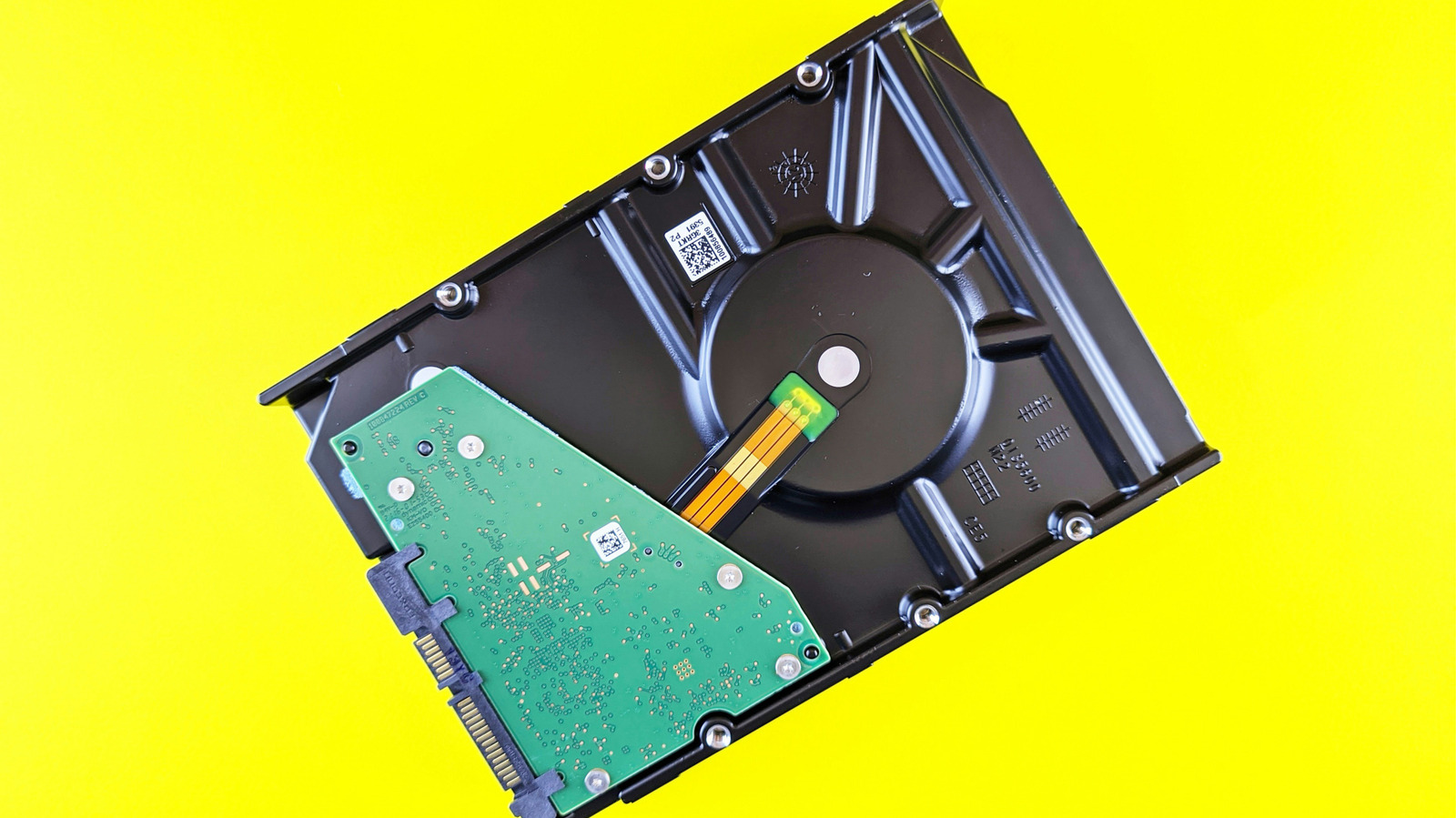
The rise in drive prices is being driven by AI and even HDDs can't hide
The price surge in storage drives due to AI data centers affects consumers and businesses, complicating decisions on purchasing necessary technology.
- Solid-state drives (SSDs) and hard drives (HDDs) have doubled in price due to increased demand from AI data centers.
- A 2TB SSD that cost $120 to $200 last year now approaches or exceeds $400.
- Prices for HDDs have also risen, with 4TB models increasing from about $120 to $240 and 8TB models rising from around $200 to $400.
The rapid growth of AI data centers has led to a substantial increase in demand for computer storage components, affecting both SSDs and HDDs. Prices for these drives have significantly risen over the past year, causing consumers to reassess their storage options and priorities.
Read the original ↗
Meta debuts its Muse AI agent. Will consumers trust it?
Muse's introduction represents a significant test of consumer trust in Meta as the company asks users to share more personal data than ever before.
- Meta introduced its Muse AI agent, which assists consumers with various everyday tasks by connecting to their personal apps and services.
- The AI agent requires users to trust Meta with access to sensitive information, including email, calendars, and payment details.
- Muse is initially available online, via iOS and Android apps, and through WhatsApp, with plans to expand to Meta’s AI glasses.
- The service features both free and paid subscription plans, with the potential for additional features as users pay more.
- Meta has faced significant scrutiny and legal challenges regarding user privacy, raising questions about trust in its new AI offerings.
Muse is Meta's new personal AI agent designed to assist with daily tasks and workflows, marking the company's largest consumer AI initiative. Previously, Meta has been embroiled in lawsuits and controversies over data privacy, which heightens scrutiny over its latest technology. Observers will watch for consumer reception and ongoing developments in privacy safeguards around Muse.
Read the original ↗
Update to Google’s AI weather model improves forecast accuracy
Improvements in AI weather forecasting models can enhance the accuracy and frequency of weather predictions, benefiting various sectors dependent on precise weather data.
- Google has released version 3 of its WeatherNext model, which now incorporates satellite weather data.
- The update allows for hourly forecast updates instead of relying solely on reanalysis data produced every six hours.
- WeatherNext 3 achieved approximately a 5% improvement in upper atmosphere condition accuracy and up to 30% better surface temperature predictions.
- The model is designed to calculate specific conditions by considering whether a location is land or ocean and its elevation.
Google's WeatherNext model utilizes AI, or machine learning, to enhance weather forecasting by processing data more efficiently. Previous versions relied heavily on reanalysis data, which may have less detail. The latest version aims to provide better predictions through increased data inputs and improved model algorithms.
Read the original ↗
“This is the AI men actually use”: Meta ads pushed apps nudifying real teens
The prolonged presence of AI-generated child sexual abuse material in Meta's ads raises serious concerns about the adequacy of its content moderation systems and the safety of young users.
- Meta took several days to remove multiple ads on Facebook and Instagram that contained AI-generated child sexual abuse material (CSAM).
- An investigation revealed that 332 ads featuring CSAM were not detected by Meta this year, predominantly promoting nudifying apps designed to alter images of minors.
- Some ads included real child images, which were manipulated into explicit content, effectively violating federal child pornography laws.
- Despite claiming to have improved ad detection systems, many ads continued to circulate alarmingly after Meta's earlier attempts to address the issue.
- Regulators and lawmakers are now investigating the presence of these inappropriate ads, raising questions about Meta's ad approval process and possible favoritism towards certain advertisers.
Meta is the parent company of Facebook and Instagram, popular social platforms where user-generated content is shared. Previous concerns regarding child safety and exploitation on these platforms have led to regulatory scrutiny and a substantial settlement. Meta's response to reported violations and the effectiveness of its content moderation systems will be critical in this ongoing situation.
Read the original ↗
Frontier AI Will Create More Million-Dollar One-Person Businesses
The rise of AI capabilities is paving the way for individuals to efficiently manage million-dollar businesses, potentially transforming the entrepreneurial landscape by reducing the need for large teams.
- Advancements in AI are enabling more individuals to successfully operate million-dollar businesses independently, increasing opportunities for solo entrepreneurs.
- Improvements in AI tools can help streamline various business processes including customer understanding, proposal preparation, and service delivery.
- A survey by Anthropic indicates that 82% of respondents believe AI has expanded their work scope, highlighting its potential to increase productivity.
AI technology has rapidly evolved, allowing individuals to automate tasks traditionally requiring multiple contractors. This growing trend can significantly alter how small businesses operate, bringing new market opportunities as they become more efficient in service delivery.
Read the original ↗
OpenAI Releases ChatGPT Images 2.5 With Sketch and Two New API Models
The release of ChatGPT Images 2.5 enhances image generation capabilities and offers better reliability for developers, impacting how visual content is created and edited across various platforms.
- OpenAI introduced ChatGPT Images 2.5, a new image model, on September 8, 2026, which improves image quality and editing speed.
- The model features reduced generation latency by up to 50% compared to the previous version, Images 2.0.
- OpenAI also launched two new API models, GPT-Image-2.5 Flare and GPT-Image-2.5 Sunburst, each designed for different visual workflows.
- ChatGPT Images 2.5 will roll out to all ChatGPT users on desktop, mobile, and web, along with new user features like Sketch for direct drawing in chats.
- Pricing for the new models is set with specific rates for image and text inputs and outputs as detailed on OpenAI's pricing page.
OpenAI is a leader in AI and machine learning technology, well-known for its advancements in natural language processing and image generation. Previous versions of the ChatGPT Images model set a standard for generating and editing images based on user prompts. Upcoming developments may focus on improving user interactivity and content safety mechanisms.
Read the original ↗
OpenAI Just Claimed a Huge Math Discovery. Some Academics Are Crying Foul
The controversy surrounding OpenAI's claim to solve a major mathematical problem raises questions about intellectual property and data use in AI research, highlighting the need for clarity in collaboration.
- OpenAI announced it has found an AI-generated solution to the Navier-Stokes equation, a significant unsolved problem in mathematics.
- Tristan Buckmaster claims that OpenAI hastily moved to solve the problem after learning about his work with Levent Alpöge.
- OpenAI utilized over 10,000 agents working for more than 50 hours to tackle the problem, requiring millions of dollars in computing power.
- Buckmaster alleges OpenAI attempted to influence credit regarding the discovery, and his requests for clarification were not fully addressed.
- OpenAI executives denied any direct use of Buckmaster and Alpöge's work in crafting their solution.
The Navier-Stokes equation describes fluid motion and is one of the seven unsolved problems in the Clay Millennium Prize, each worth $1 million. Previously, AI models had offered promises in tackling such complex problems, with OpenAI now at the forefront. The outcome of this dispute may influence future collaborations in AI and mathematical research.
Read the original ↗Coding With OpenAI’s Codex Micro Keypad: The Vibes Are Bad
The Codex Micro sold out in 12 hours, highlighting consumer interest in specialized AI hardware, despite critiques of its practicality and value.
- The Codex Micro is a 12-key keypad designed for professional coders using OpenAI's Codex software.
- It sold out in approximately 12 hours at a price of $230 before taxes and shipping.
- The device features customizable keys and provides visual indicators for AI agent statuses.
- Users must be experienced with Codex to fully benefit from the keypad's functionalities.
- Critics describe the Codex Micro as potentially more of a novelty item than a necessary tool for developers.
OpenAI's Codex is a program designed to assist with coding tasks, particularly for developers working with AI agents. The Codex Micro keypad represents OpenAI's first venture into specialized hardware for AI applications. Observers are watching to see how OpenAI navigates future hardware releases amid skepticism regarding their necessity.
Read the original ↗
Chrome is now shipping updates every 2 weeks as AI changes the security landscape
This shift to a two-week release cycle for Chrome enhances security and allows faster updates to address emerging threats in a rapidly evolving AI landscape.
- Chrome has changed its release schedule from four weeks to two weeks, beginning with the launch of Chrome 153 on desktop, iOS, and Android.
- The new release cycle aims to respond quicker to security threats and incorporate features more rapidly due to competition from AI-assisted browsers.
- This change helps to minimize the 'N-day' patch gap, reducing the time between vulnerability detection and patch deployment.
Chrome is the most widely used web browser globally. Google has previously adjusted its release strategies to manage security patches more effectively, first moving from six weeks to four weeks in 2021. Competitors like Mozilla and Microsoft are also adopting similar faster release cycles in response.
Read the original ↗
Google Cloud races to catch up in the AI deployment wars with Accenture deal
This collaboration between Google Cloud and Accenture aims to enhance AI deployment in enterprises, addressing challenges that hinder return on investment in AI technology.
- Google Cloud and Accenture have formed a joint unit to assist enterprises in adopting Google’s AI tools.
- The new unit, named Accenture Gemini Enterprise Business Group, focuses on deploying engineers into businesses as part of AI integration efforts.
- Google will train up to 1,000 FDEs (forward-deployed engineers) from Accenture to develop customized AI applications.
- This initiative is part of Google’s strategy to compete with rivals in the fast-evolving AI sector, which include OpenAI, Anthropic, and Microsoft.
Google Cloud and Accenture are combining efforts to facilitate the integration of AI technologies in businesses, addressing deployment difficulties. This initiative is one of several by Google aiming to enhance its AI offerings and counteract competition from established and newer companies in the AI space.
Read the original ↗
OpenAI fought dirty on career-making math problem, says NYU mathematician
The controversy surrounding OpenAI's approach to solving a major mathematical problem highlights ethical concerns in AI collaboration and the competitive landscape in research.
- NYU mathematician Tristan Buckmaster announced three proofs related to the Navier-Stokes existence and smoothness problem, a major unsolved issue in theoretical mathematics.
- Buckmaster claims OpenAI used information from his work to advance their solution to the same problem, raising ethical questions about research integrity.
- OpenAI announced a full proof of the Navier-Stokes problem shortly after Buckmaster's findings, utilizing significant computing resources worth $22.5 million.
- The Navier-Stokes problem is one of seven Millennium Prize problems, with a $1 million reward for a solution, relating to fluid mechanics in theoretical physics.
The Navier-Stokes existence and smoothness problem is central to understanding fluid dynamics but remains unsolved. This incident marks a significant moment in the ongoing debate about AI's role in mathematics and research ethics.
Read the original ↗
AI Slop Is Changing How Engineers Review Code
As the volume of AI-generated code increases, the ability to effectively review and trust this code will significantly impact software development efficiency and the future training of engineers.
- AI tools can now produce thousands of lines of code in minutes, but this requires careful review due to potential errors and vulnerabilities.
- A survey indicated that developers estimate AI contributes to 42 percent of the code added to shared codebases, yet 96 percent expressed distrust in its output.
- AI code-review startup CodeRabbit raised $143 million, claiming to perform over 2 million code reviews weekly for clients like Nvidia and BMW Group.
- As AI-generated code volume increases, Bonterra reported a tenfold rise in changes entering review, causing review times to triple, making thorough inspections impractical.
AI coding tools have advanced to generate substantial amounts of code quickly, influencing how engineering teams approach code reviews. The need for new review strategies arises from developers' concerns over the reliability of AI-generated output, particularly with more entry-level engineers relying on AI assistance.
Read the original ↗
New Accenture Gemini Enterprise Business Group Targets Agentic AI Scaling
The formation of the Accenture Gemini Enterprise Business Group aims to significantly enhance the deployment and scaling of agentic AI for enterprises, potentially improving business outcomes across industries.
- Accenture and Google Cloud launched the Accenture Gemini Enterprise Business Group to aid enterprise clients in scaling agentic AI on Google Cloud.
- The initiative plans to establish a 1,000-person workforce for forward deployed engineers to support these efforts.
- The new group combines Accenture's professional expertise with Google Cloud's full-stack AI capabilities to deliver transformative solutions.
- Previous collaborations include a successful deployment for YouTube that improved customer sentiment and reduced handling times during high-demand events.
Accenture is a global professional services company that provides a range of services in technology and consulting. Google Cloud offers a suite of tools and services for building and deploying applications using advanced AI. This initiative builds on past collaborations between both companies aimed at facilitating AI application development and scaling.
Read the original ↗
Inbursa Legal Team Turns to Harvey AI for Litigation and Court Notices
The adoption of Harvey AI by Inbursa signifies a growing trend in the financial sector towards leveraging AI to enhance legal efficiency and decision-making capabilities.
- Grupo Financiero Inbursa has deployed Harvey's AI platform across its legal team to improve operational efficiency.
- The rollout begins with litigation operations and aims to streamline workflows like contract review and regulatory analysis.
- The implementation follows workshops to identify key areas for impact, allowing the legal team to manage thousands of court notices annually.
Grupo Financiero Inbursa is one of Mexico's largest financial institutions, managing various financial entities. Harvey provides AI solutions specifically for legal services, aiming to simplify complex legal tasks.
Read the original ↗
Buckmaster and Alpöge Post AI Fluid Blowup Proofs, Dispute OpenAI Contact
The developments in mathematical proofs related to fluid dynamics prompt critical discussions about the intersection of AI and mathematical research, particularly concerning intellectual property and collaboration ethics.
- Tristan Buckmaster and Levent Alpöge posted three preprints establishing finite-time blowup for key fluid dynamics equations.
- Buckmaster recounts OpenAI claiming an internal model produced a comprehensive proof for the Navier–Stokes equations, a major unsolved problem in mathematics.
- The authors utilized AI, including Claude and Codex, significantly throughout their research, indicating growing reliance on LLMs in academia.
Tristan Buckmaster is a mathematician at NYU, and Levent Alpöge is a researcher at Anthropic, collaborating on fluid dynamics equations. The Clay Mathematics Institute's Millennium Prize includes the unsolved Navier–Stokes existence and smoothness problem, raising ongoing interest and scrutiny over related mathematical advances.
Read the original ↗