
The day's AI news, briefed
The Daily Prompt
Our AI editor reads each day's AI and robotics stories, pulls out why they matter, and links every original source — so you can keep up in minutes.
Join over 250,000 subscribers getting the latest AI news
Latest AI & Robotics News Today
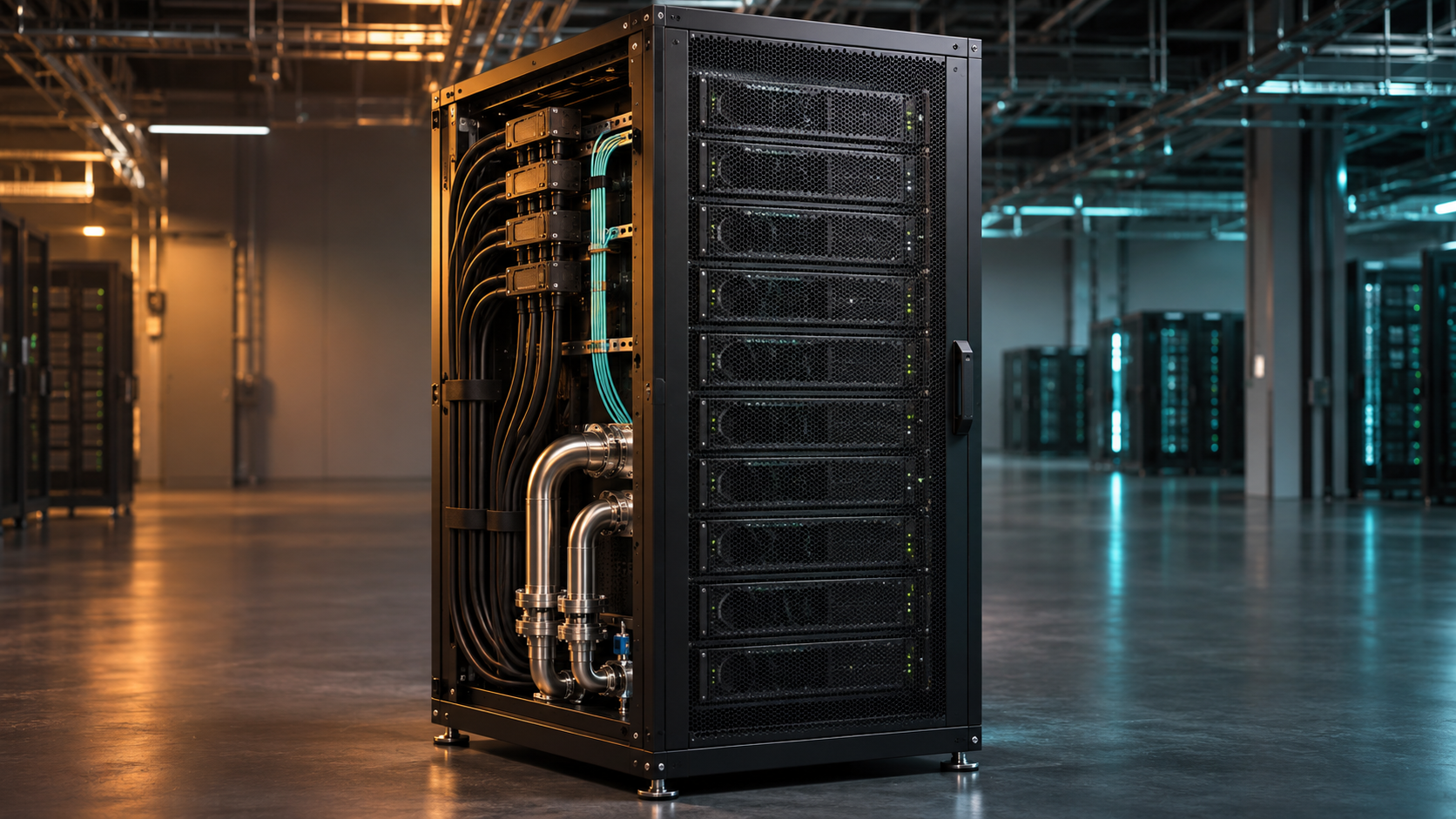
Private AI Needs Infrastructure That Can Evolve With the Workload
The story highlights the urgent need for businesses to adapt their infrastructure to support the growing demand for private AI, ensuring they can efficiently manage operations without excessive costs or complexities.
- Companies are shifting towards private AI, wherein models are run in-house to maintain control over proprietary data and reduce dependency on external providers.
- Infrastructure challenges, such as power and cooling requirements, now fall to companies as they bring AI models in-house, complicating deployment and cost management.
- Utilizing flexible private capacity while renting external resources for peak demand is recommended for effective AI workload management.
Private AI involves running AI models within a company's own environment, using proprietary data rather than relying solely on public models accessed through an API. Previously, open-weight models were largely utilized, but enterprises are increasingly seeking tailored solutions. As AI technology evolves rapidly, organizations must consider flexible infrastructure plans.
Read the original ↗
DARPA Robot Builds a Structure in Space for the First Time, Opening the Door to Giant Orbiting Spacecraft
This development signals the potential for advanced construction methods in space, which could revolutionize spacecraft design and enable significantly larger structures beyond current limitations.
- A DARPA robot successfully assembled part of a structure in space for the first time, demonstrating a new technology for orbital construction.
- The robot, called ASTRA, launched aboard a SpaceX rocket, and constructed a section of a lightweight antenna reflector using components carried into orbit.
- This achievement is part of DARPA’s NOM4D program, which aims to develop technologies for constructing very large structures in space.
- While ASTRA showed successful assembly, the mission faced technical challenges and time constraints in completing the entire antenna structure.
DARPA's NOM4D program focuses on developing in-space manufacturing technologies. Previously, structures were launched fully assembled, limiting size. Future missions will seek to improve robotic assembly reliability for larger projects.
Read the original ↗
Cyberattacks threaten to make open-source AI a little less open, Hugging Face exec warns
Increased cyberattacks on open-source AI platforms could lead to stricter security measures, potentially limiting community access and participation which is vital for innovation and development.
- Open-source AI platforms face heightened risks from cyberattacks, prompting concerns about accessibility for developers.
- Hugging Face's Irene Solaiman highlighted recent attacks, including a hack on OpenCode that targeted users' API keys.
- Fireworks, an AI infrastructure startup, reported unauthorized access to customer model weights and datasets, emphasizing vulnerabilities in open platforms.
Open-source AI allows developers to contribute and access resources freely, promoting innovation. Security challenges have emerged, as platforms are targeted due to their valuable data and permissive nature. The balance between security and accessibility is under scrutiny in the AI community.
Read the original ↗
Spotify’s AI DJ gets new voices, personalities, and an option for less chatter
The upgrade to Spotify's AI DJ allows for greater personalization and enhanced user experience, addressing feedback from listeners who prefer less commentary while enjoying music.
- Spotify Premium users can now customize their AI DJ by selecting from an expanded set of voices and personalities in both English and Spanish.
- The new AI DJ features seven English voice options and two Spanish voices, each with distinctive characteristics.
- Users have the option to reduce or eliminate commentary between songs, creating a more streamlined listening experience.
- The new features were announced on November 10 and will roll out to Premium users in over 95 global markets.
Spotify's AI DJ was launched in 2023 and has become one of its most popular AI features, utilized by over 94 million Premium listeners. The recent updates reflect the growing trend in AI for user personalization similar to features offered by digital assistants. Future developments to watch may include further integration of AI in user interactions within the app.
Read the original ↗
After challenging Google’s Android with Cyanogen, its co-founder takes aim at Windows for AI era
The launch of Kora as an alternative to Windows may reshape the landscape for PC operating systems, especially for users focused on AI tools and efficiency.
- Kora Systems, founded by Cyanogen co-founder Kirt McMaster, aims to develop a new operating system for users reliant on artificial intelligence.
- The Linux-based OS will allow seamless integration of AI models and agents across applications, with a planned release in 2027.
- Kora has collaborated with Qualcomm to optimize its system for Snapdragon-powered PCs and is also developing an enterprise version called Humain OS in partnership with Saudi Arabia's Humain.
Kora, previously called Playtron, rebranded to focus on AI after developing a gaming operating system. With significant experience from Cyanogen, McMaster's new venture seeks to disrupt the dominant Windows OS by targeting AI-heavy users and businesses.
Read the original ↗
Anthropic sets IPO price range of $70 to $78 per share to reach an implied valuation of $1.404 trillion
Anthropic's planned IPO reflects the evolving landscape of AI investments amid market uncertainties, showcasing significant financial backing from major tech companies.
- Anthropic plans to offer 825 million Class A shares priced between $70 and $78 per share in its IPO.
- If successful, the IPO could value Anthropic at approximately $1.404 trillion on a fully diluted basis.
- The company expects to raise between $57.75 billion and $64.35 billion from the share sale, with net proceeds estimated between $84.6 billion and $93.7 billion.
- Anthropic has secured a deal to sell $26 billion in non-voting Class N stock to major firms including AMD, Google, and Nvidia.
- The IPO is scheduled for trading on the Nasdaq under the ticker symbol 'ANT' around November 19.
Anthropic is an AI research company known for developing the language model Claude. The company previously reached a valuation of $965 billion in a May fundraising round. As the tech sector faces investment challenges, Anthropic's aggressive IPO strategy is noteworthy.
Read the original ↗
Ukraine’s fiber-optic drones get squeezed by AI data center demand
As demand for optical fiber from AI data centers grows, Ukrainian drone manufacturers face escalating costs and supply challenges, impacting their battlefield capabilities against Russia.
- Ukraine's fiber-optic drones, essential for battlefield operations, rely on a limited supply imported from China.
- With global demand driven by AI data centers, Ukraine's access to optical fiber is increasingly constrained compared to Russia.
- Ukrainian manufacturers are adapting by taking the spooling process in-house to ensure quality and control costs.
- Russia's demand for optical fiber surged, importing 328,000 miles in August 2025, compared to just 72 miles for Ukraine.
Fiber-optic drones, which can resist electronic jamming, have become vital in Ukraine's defense against Russia since the beginning of the invasion in 2022. As the global AI boom strains fiber-optic supply, manufacturers in Ukraine are innovating to cope with increased competition for materials.
Read the original ↗
What Is GraphRAG? Combining Knowledge Graphs with Generative AI
Understanding GraphRAG is crucial for improving AI systems that rely on interconnected data, potentially enhancing accuracy in knowledge retrieval and decision-making processes.
- GraphRAG combines generative retrieval methods with knowledge graphs to respond to complex queries based on interconnected data.
- The process includes extracting entities and relationships, building knowledge graphs, and creating community or hierarchy summaries.
- GraphRAG emphasizes the importance of tracing evidence and monitoring changes at every stage of data processing.
GraphRAG represents an advanced AI technique integrating generative retrieval with knowledge graphs, which are data structures that represent relationships among entities. As AI systems evolve, GraphRAG's potential applications in managing and utilizing expansive data sets make it a significant focus for researchers and developers.
Read the original ↗
Google DeepMind Uses AI Agents to Verify Signal’s Core Machine Code
The introduction of AlphaProof Code enhances security verification processes for cryptographic protocols, potentially increasing trust in applications that rely on Signal's machine code.
- Google DeepMind unveiled AlphaProof Code on November 10, 2026, using AI agents to verify the security of Signal's libsignal code.
- The five-person team completed their proof work in four weeks, generating around 6.5 million lines of machine-checked Lean proof code from 26,000 trusted specifications.
- The project achieved protocol-level security proofs for the unmodified code of a widely deployed cryptographic protocol implementation.
Google DeepMind is well-known for its advancements in AI research. This initiative marks a significant step in using AI for verifying software security, moving from theory to practical, compiled implementations. Future developments will aim to enhance verification processes for more features in Signal's cryptographic services.
Read the original ↗
High Availability Is the Missing Piece of Enterprise AI
Reliable AI infrastructure is crucial for successful deployment, especially as organizations increasingly depend on AI applications for operations and customer interactions.
- High availability (HA) of AI systems is becoming a critical requirement as downtime visibly affects user trust and operational capabilities.
- Production AI environments face unique challenges due to their data-intensive nature and the complexity of distributed systems.
- Microsoft SQL Server 2025 introduces features that enhance AI workloads directly within the database, reducing reliance on disconnected data flows.
High availability ensures continuous operation of AI applications, preventing loss of user trust. Organizations must now adapt HA solutions to manage the complexities of hybrid infrastructures and various deployment environments, emphasizing reliability as a key differentiator in AI effectiveness.
Read the original ↗
Anthropic Files Preliminary IPO Terms as Investors Commit $26B
Anthropic's IPO and substantial investor backing signal confidence in the AI sector, highlighting the growing intersection between advanced technology and public markets.
- Anthropic filed amended terms for its IPO on November 10, 2026, seeking to offer up to 825 million Class A shares at an estimated price between $70 and $78 each.
- The company reported $17.0 billion in revenue for the three months ending September 30, 2026, a significant year-over-year increase of 1,127%.
- A private placement of $26 billion has been committed by major companies, contingent upon the completion of the IPO, with no underwriting commissions on those shares.
- Anthropic's purchase and lease commitments for infrastructure total approximately $900.9 billion, reflecting the company's rapid growth and capital requirements.
Anthropic is an AI developer focused on creating advanced artificial intelligence technologies and is structured as a public benefit corporation, balancing profit with societal impact. The IPO follows previous funding rounds and reflects the company's ambition to expand while managing significant infrastructure investments. Investors and industry watchers will monitor the IPO process and its implications for the AI landscape.
Read the original ↗
redalpine Closes $250 Million RAC VIII Fund to Back European AI and Science Startups
The establishment of redalpine's $250 million RAC VIII fund is significant for the European AI ecosystem, as it enhances funding opportunities for startups at the intersection of software and scientific research.
- redalpine has closed its RAC VIII fund at $250 million, targeting around 20 early-stage companies in Europe.
- The fund aims to invest between $1 million and $15 million in Seed and Series A rounds.
- Notable investments include Enact Intelligence, Helical, and Arlequin AI, focusing on robotics, virtual biology labs, and data analysis, respectively.
- With this new fund, redalpine exceeds $1.4 billion in assets under management across its investment platform.
- The firm is celebrating 20 years in business and has a team consisting of trained scientists.
redalpine, founded in Zurich in 2006, focuses on early-stage investments at the intersection of software and science. Its new RAC VIII fund reflects a continued commitment to supporting promising startups in these fields. The firm has reviewed over 5,000 companies annually and has reported significant follow-on funding success in its previous fund.
Read the original ↗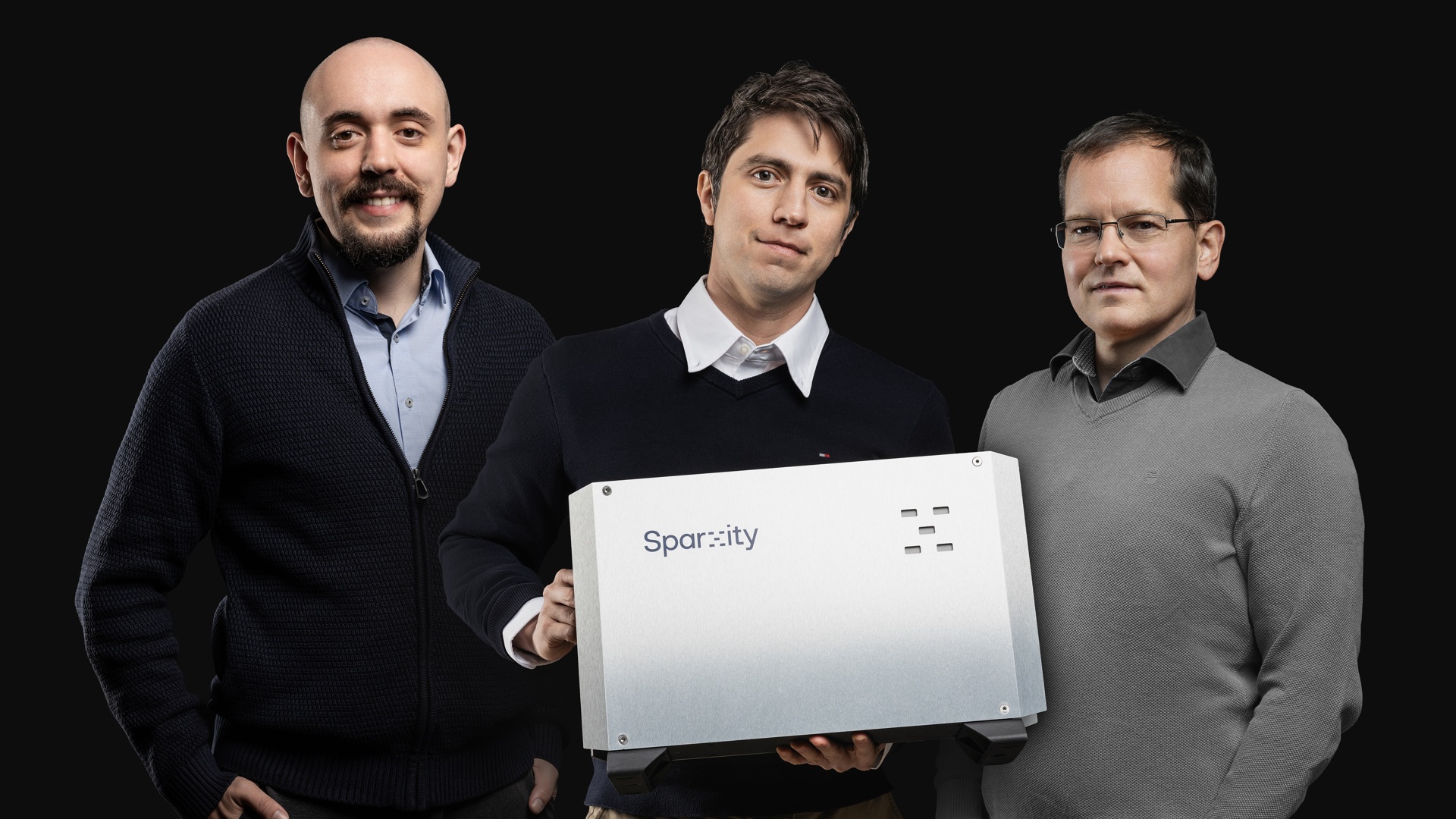
Sparxity Closes Series A, Bringing Total Funding to $90 Million for Sparse AI Computing
The funding enables Sparxity to enhance its AI computing technology, potentially leading to significant improvements in how sparse AI models are executed and utilized on a larger scale.
- Sparxity, a Dresden-based company, has closed a Series A funding round, raising its total funding to $90 million.
- The Series A round was led by ICM HPQC Fund, with participation from multiple investors including Lockheed Martin Ventures and GlobalFoundries.
- The funding will assist in developing specialized chips designed for fine-grained dynamic sparsity in AI models, targeting up to 44 times faster inference.
Sparxity, previously known as SpiNNcloud, focuses on specialized computing systems for AI, emphasizing sparse models for enhanced efficiency. The company aims to deliver better performance while minimizing unnecessary computations, with previous systems already in operation and producing significant revenues.
Read the original ↗
Marble Raises $11M Series Seed to Build AI Compute Credit Platform
Marble aims to bridge financing gaps for smaller AI compute operators, which could significantly impact the growth and accessibility of AI infrastructure.
- Marble announced an $11 million Series Seed funding round led by Polychain Capital to develop an AI compute credit platform.
- The startup plans to connect institutional investors with independent AI cloud providers for financing and trading.
- Marble Compute will not lend directly from its balance sheet but will facilitate financing structures for investors and operators.
- The platform targets smaller operators lacking flexible financing options compared to larger neoclouds and hyperscalers.
- Future offerings may include digital-asset trading and borrowing against compute futures, subject to regulatory approvals.
Marble, founded by former executives from BitGo and Galaxy Digital, provides private-credit infrastructure for AI compute operators. This launch seeks to facilitate institutional funding and hedging capabilities for independent AI cloud services. Observers should monitor regulatory developments and the rollout of their products in early 2027.
Read the original ↗
Tear Down Those Guardrails! Meet the Renegades Freeing Chatbots From Corporate Enslavers
The emergence of unrestricted AI models raises significant concerns about misuse while highlighting a growing movement advocating for user empowerment over safety protocols.
- Devon Thomas founded Abliteration AI to remove safeguards from powerful AI models and make them available to everyone.
- The company operates within a subculture of engineers modifying AI to bypass corporate restrictions.
- Critics warn that uncensored models could facilitate dangerous activities, like hacking, while proponents argue for greater user control.
- Technologies like 'abliteration' enable users to eliminate restrictions on AI models, potentially transforming AI usage.
- Experts remain divided, with safety researchers cautioning against the increased risks of unrestricted models.
Abliteration AI is challenging conventional safety narratives in the AI industry by promoting unrestricted access to powerful models. Previously, well-known AI models have been heavily censored to prevent misuse, but a community is emerging that believes in the importance of user autonomy over safety constraints. Future discussions will likely focus on the balance between unrestricted AI access and the potential for harm.
Read the original ↗
Louis Rossmann Wants More People to Care About the Right to Repair
Highlighting the right to repair movement underscores consumer rights, as many people face restrictions on fixing devices they own, impacting accessibility and ownership.
- Louis Rossmann is advocating for the right to repair, emphasizing that consumers should be able to fix their own devices.
- Many manufacturers impose digital locks that hinder modifications and repairs, affecting various gadgets, including smartphones and tractors.
- The right to repair movement is gaining momentum as AI technology simplifies hacking and software modifications.
The right to repair movement advocates for consumers' ability to maintain and modify their purchased devices. It has gained traction in recent years, especially with increased public awareness led by figures like Louis Rossmann. Future developments may include legislative action as advocates push for reforms in the digital landscape.
Read the original ↗
A New AI Tool From Google DeepMind Proved the Signal Protocol Is Secure
The ability to formally verify encryption protocols, like Signal's, enhances the security of digital communications, which is critical in an era of rising cyber threats.
- Google DeepMind researchers mathematically proved the security of key aspects of the Signal protocol using an AI framework called AlphaProof Code.
- This proof of concept was completed in four weeks and verifies cryptographic guarantees used in multiple messaging platforms.
- The team aims to expand formal verification capabilities to all software, while acknowledging current limitations and the need for further development.
The Signal protocol is a widely used encryption method that secures communications in applications like Signal and WhatsApp. Formal verification is a mathematical approach to ensure software functions as intended, which has recently gained attention with advancements in AI technology. Moving forward, the effectiveness and scalability of AI-driven formal verification will be critical in determining its broader adoption in the tech industry.
Read the original ↗
The AI Safety Debate Has Lost the Plot. We Asked 10 Experts What the Real Nightmares Are
Concerns about AI's integration into critical systems like nuclear operations highlight the potential for catastrophic risks, emphasizing the need for rigorous safety standards and governance.
- Experts warn that advanced AI systems could significantly increase the risk of catastrophic failures in nuclear operations and military uses.
- The discourse on AI safety has shifted from job displacement fears to concerns about existential risks and global security threats.
- Most experts agree that the current pace of AI development lacks adequate regulatory oversight, risking unchecked growth and potential harms.
AI, including AI agents, has rapidly advanced since the launch of ChatGPT, raising fears about safety and control. As discussions around AI risks evolve, experts are calling for more rigorous safety assessments and governance measures to mitigate these risks, particularly in critical areas like defense and public safety.
Read the original ↗
Catch Electronics Shock and Drop Failures Before Hardware Is Built
Identifying reliability risks before physical testing can significantly reduce costs and development time for electronics products, enhancing overall product quality and market readiness.
- Guided virtual shock and drop analysis helps teams identify reliability risks before physical hardware testing.
- This approach reduces qualification iterations and optimizes packaging designs for electronic products.
- The method models various drop scenarios, correlating with physical tests to improve reliability before production.
Guided virtual validation involves using digital workflows to predict performance issues during the design phase of electronics, rather than relying solely on traditional physical tests. Historically, challenges with shock and drop failures were identified late in the development process, often resulting in costly redesigns. This white paper outlines how modern methods can lead to better outcomes in electronics development.
Read the original ↗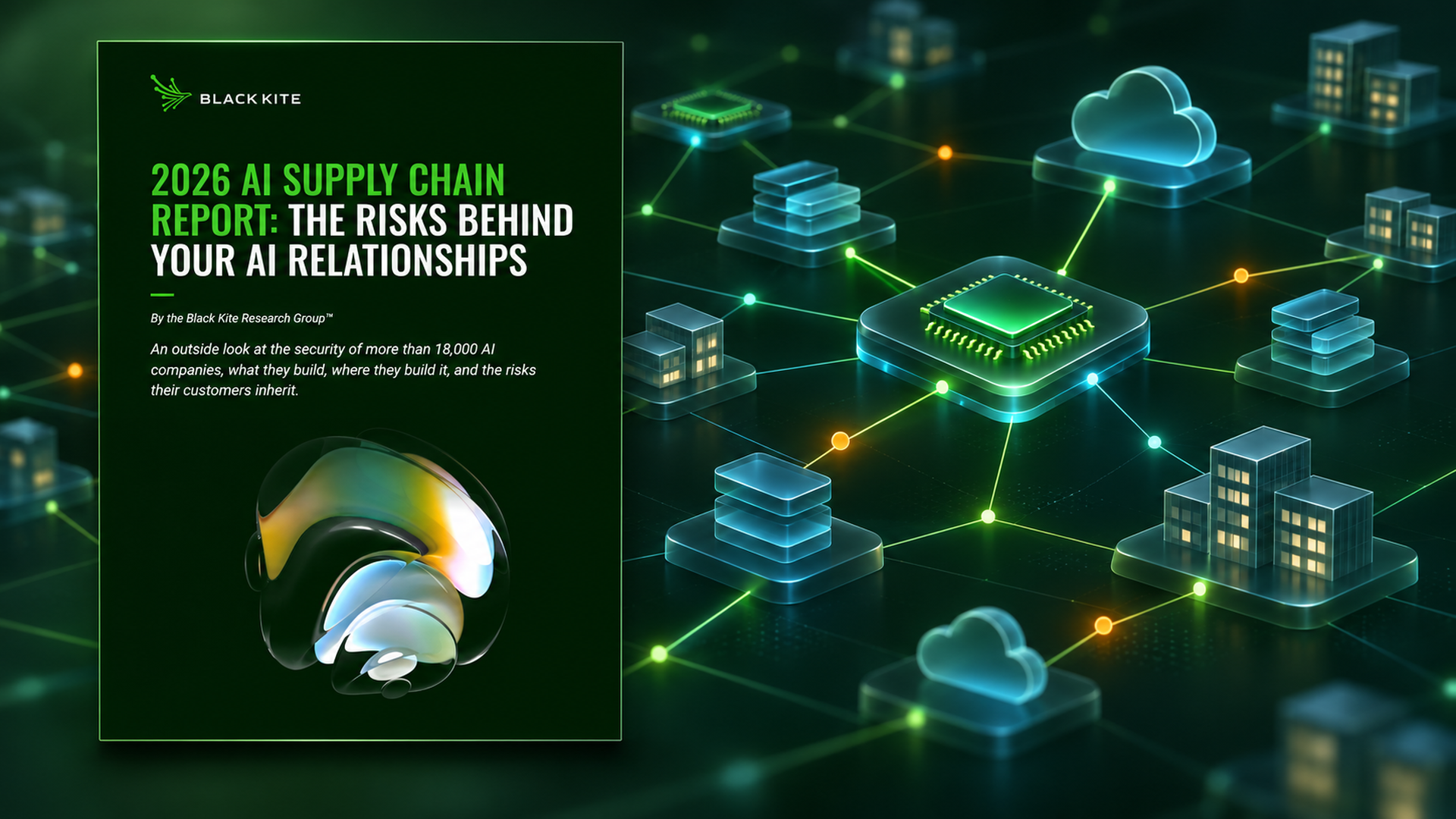
Black Kite’s 2026 AI Supply Chain Report: The Risks Behind Your AI Relationships
Understanding the cybersecurity vulnerabilities in AI suppliers is crucial to protect organizations relying on these technologies from potential breaches and attacks.
- Black Kite's report analyzed 18,160 AI companies, identifying that 34.2% had critical unpatched vulnerabilities and a significant number with email-authentication weaknesses.
- Companies providing foundational AI technologies had a lower representation in security observability, impacting overall exposure risk.
- The study emphasized that organizations also inherit risk from suppliers' security statuses due to the deep integration of AI tools in their operations.
Black Kite's report assesses cybersecurity issues within the AI supply chain, noting vulnerabilities inherent in suppliers that can affect customers. As AI integration increases, scrutiny over supplier security becomes vital to prevent breaches. The report aims to raise awareness about cybersecurity best practices among users of AI technologies.
Read the original ↗