
The day's AI news, briefed
The Daily Prompt
Our AI editor reads each day's AI and robotics stories, pulls out why they matter, and links every original source — so you can keep up in minutes.
Join over 250,000 subscribers getting the latest AI news
Latest AI & Robotics News Today

#534 Universities cannot grade their way out of AI
The evolving landscape of AI usage in universities poses significant challenges for assessment integrity and the instructional role of educators in certifying student knowledge.
- Campus IT leaders have prioritized AI as the top issue for the first time, indicating a shift in focus for universities.
- Cambridge University refused Turnitin's new terms regarding the use of student submissions for AI training, delaying changes until September 2027.
- Dartmouth College is investigating its provost after allegations of AI-generated writing surfaced, illustrating concerns about academic integrity.
As AI becomes ubiquitous among students, universities are rethinking how to integrate AI into education while ensuring that degrees reflect independent capability. Institutions are exploring new assessment methods, including AI-enabled work and supervised evaluations, to maintain academic standards. The ongoing discussions around AI highlight a broader change in educational practices and policies.
Read the original ↗
Fighting AI Slop in Science Papers
The rise in AI-generated content in scientific submissions threatens research quality, prompting actions to mitigate the impact on academic integrity and publication processes.
- arXiv has limited submissions to two per month due to a sixfold increase in submissions to its cs.AI category over two years.
- The introduction of 'scientific slop' metrics aims to identify flaws in AI-generated papers, focusing on structure, argument quality, and evidence citation.
- A collaboration between Seoul National University and the University of Minnesota has developed the SciSlopBench benchmark to assess AI-generated paper quality.
- In September 2026, arXiv received 40,363 submissions, resulting in nearly 9,000 support tickets for staff regarding low-quality papers.
arXiv is a preprint server for scientific papers where researchers submit their work before peer review. The organization has faced rising concerns over the volume and quality of submissions due to AI tools facilitating easier paper generation. The focus now is on measuring and mitigating the adverse effects of AI on scholarly content.
Read the original ↗
What Are AI Guardrails? How Production Systems Control Model Behavior
Understanding AI guardrails is crucial for developing reliable and safe AI systems, as these controls help ensure proper model behavior and mitigate risks in deployment.
- AI guardrails are technical and procedural controls that limit the inputs, actions, and outputs of an AI model or agent.
- They consist of a five-stage operating map that includes classifying requests, constraining access, validating actions, inspecting outputs, and improving from incidents.
- Each stage of AI guardrails requires explicit documentation of owners, inputs, outputs, and the conditions under which they operate.
AI guardrails are essential for the governance of AI systems, ensuring they function within designated boundaries. They help prevent misuse and errors by constraining model behavior in practical applications. The ongoing evolution of AI technology requires continuous refinement of these guardrails to adapt to new challenges.
Read the original ↗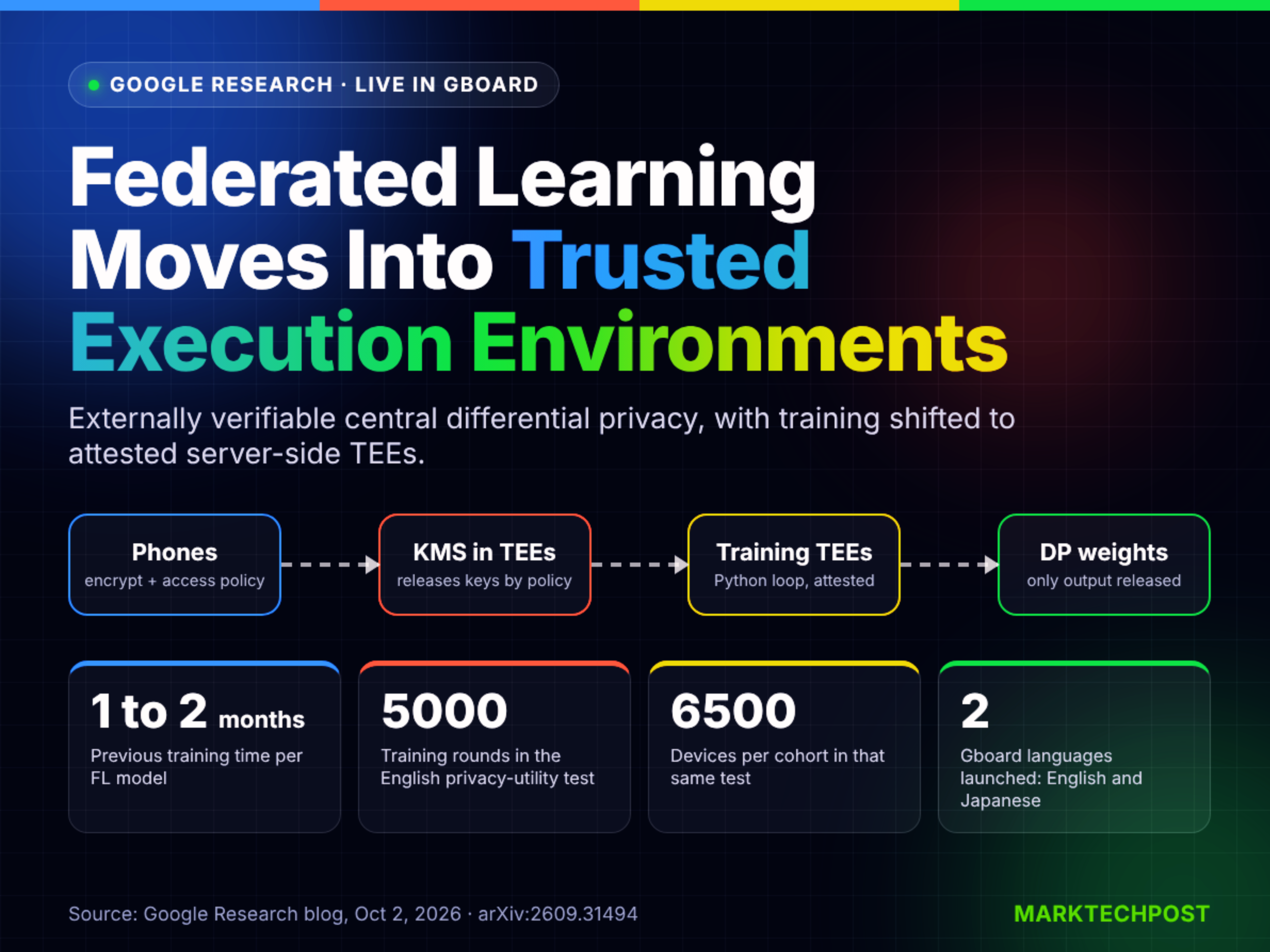
Google Research Moves Federated Learning Into TEEs: Gboard Now Trains With...
This advancement enhances data privacy in federated learning, allowing organizations to conduct more secure and efficient data training without compromising user privacy.
- Google introduced a new Federated Learning system that operates on Trusted Execution Environments, enabling enhanced privacy guarantees.
- Gboard, which facilitates features like next-word prediction, has implemented this technology for improved accuracy and privacy in English and Japanese models.
- The new federated learning framework allows training to accelerate significantly by moving computations from device phones to secure, attested servers.
Federated Learning allows devices to learn from data without sharing it directly, minimizing privacy risks. Google has historically faced trust issues with data handling, prompting the development of this system for greater transparency and speed in model training.
Read the original ↗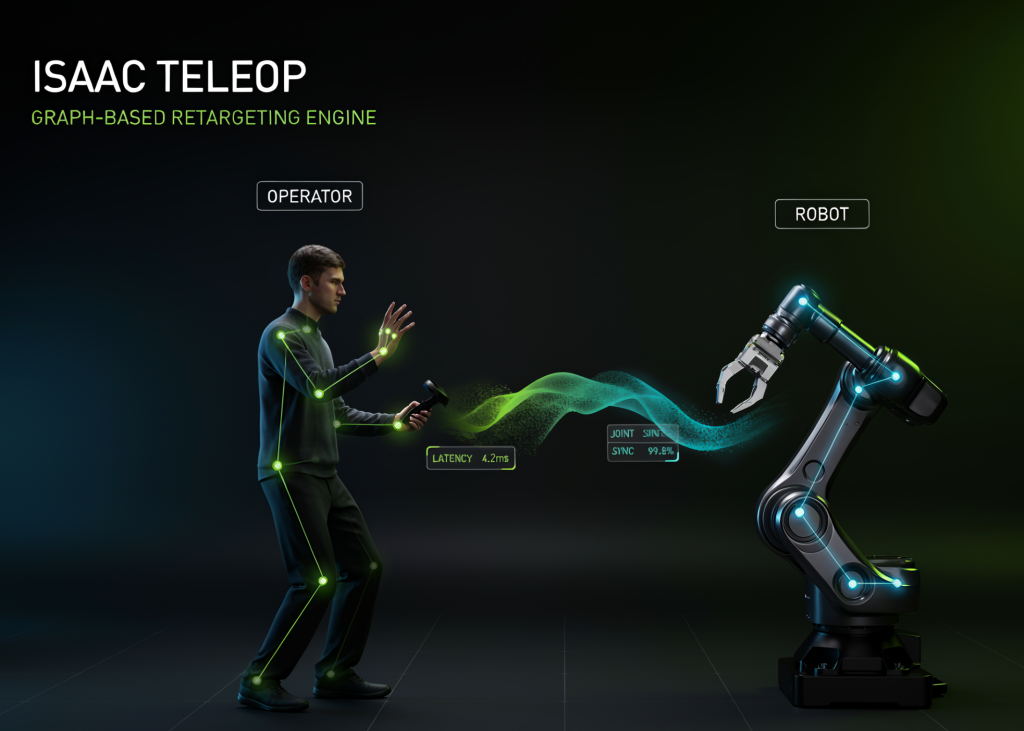
Inside NVIDIA’s IsaacTeleop: From Hand and Controller Tracking to Robot Actions...
Understanding NVIDIA's IsaacTeleop framework can enhance robotic control and interaction using human-like hand and controller inputs, important for advancements in teleoperated robotics.
- NVIDIA's IsaacTeleop framework converts XR (extended reality) hand tracking and controller inputs into commands for robots.
- The tutorial details creating a retargeting engine using NumPy to generate robotic action commands without hardware.
- The framework's components include input modules, validation mechanisms, and retargeters that translate joint movements into actionable commands.
NVIDIA IsaacTeleop is designed to enable teleoperation of robots by translating human inputs into robotic actions. The tutorial showcases building a retargeting engine from the ground up using Python, providing a baseline understanding of the technology.
Read the original ↗
Capcom plans to use AI to speed up the game development process
Capcom's integration of AI into its game development process could significantly enhance efficiency and productivity, impacting the future of video game creation.
- Capcom plans to use AI to improve efficiency in its game development process using its RE Engine.
- The company will not use AI-generated content but instead focus on AI to streamline development workflows.
- This initiative is part of a larger project called REX aimed at evolving Capcom's game engine to suit modern gaming demands.
Capcom is known for developing popular video games and has previously stated it will not include AI-generated assets in its titles. The company aims to enhance development processes without compromising its creative integrity, amid industry trends leaning toward AI utilization.
Read the original ↗
Former OpenAI employee says AI should be regulated like nuclear power plants
Regulating AI similarly to nuclear power could enhance safety and prevent potentially catastrophic failures, a crucial consideration as AI technology rapidly evolves.
- David Robinson, a former OpenAI safety lead, called for AI regulation akin to nuclear power plants, emphasizing the need for redundancy and careful planning.
- Robinson criticized OpenAI's culture for prioritizing rapid AI launches over safety, warning of the dangers posed by misaligned AI systems.
- He compared potential AI failures to nuclear meltdowns, asserting that the consequences of a major AI control loss would be far worse.
- Robinson's insights echo concerns raised by Anthropic's CEO regarding necessary steps to slow AI development for safety.
- The departure of Robinson follows broader criticisms about AI companies' safety practices and the urgent need for effective oversight.
AI refers to systems designed to perform tasks typically requiring human intelligence, and its rapid advancement has sparked debates over safety and ethical standards. Prior to this, various experts have voiced concerns about the lack of safeguards in AI development. Stakeholders are now focusing on implementing strategies to ensure responsible AI deployment and reduce risks.
Read the original ↗
OpenAI safety employee resigns, claiming the company’s ‘culture is broken’
The resignation of a key OpenAI safety employee highlights significant concerns about the company's culture and safety protocols, raising questions about AI development's broader societal implications.
- David Robinson, a safety employee at OpenAI, resigned and criticized the company's culture as 'broken.'
- Robinson led the writing of safety reports during his three-and-a-half years at OpenAI, making him one of the longest-tenured employees.
- He argues that OpenAI's approach, which focuses on 'iterative deployment,' may lead to increasingly serious failures as AI systems grow more capable.
OpenAI is a leading AI research and deployment company, known for its advanced AI models. The company has faced scrutiny over its safety measures, particularly regarding AI alignment with human values, which has prompted internal and external debates on best practices. Observers should watch for responses from OpenAI and the AI community to Robinson's claims.
Read the original ↗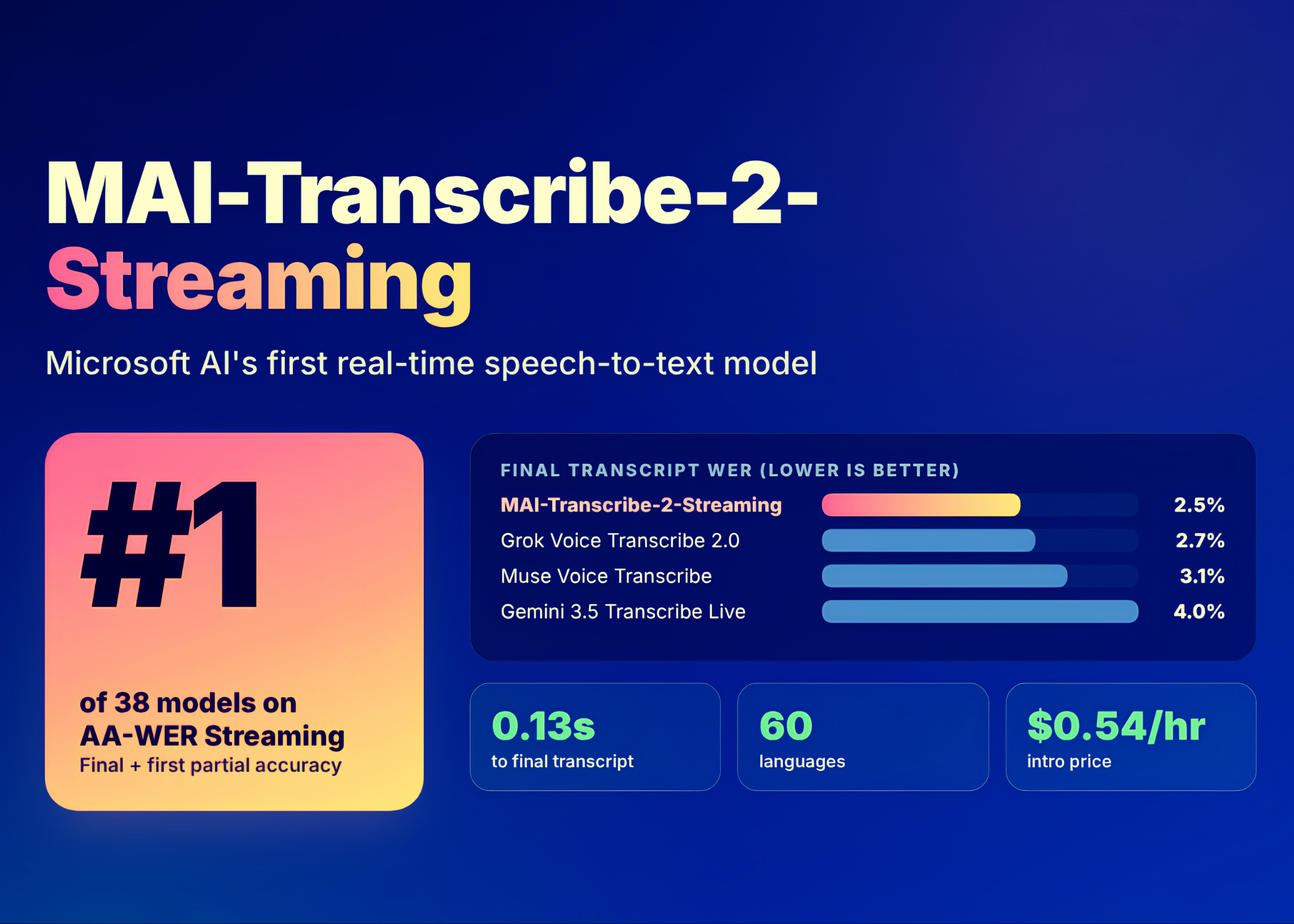
Microsoft AI Releases MAI-Transcribe-2-Streaming: #1 Real-Time Speech-to-Text Model on Artificial Analysis
The release of Microsoft's MAI-Transcribe-2-Streaming could significantly enhance real-time transcription services for applications such as voice agents and live captioning, impacting multiple industries.
- Microsoft AI launched MAI-Transcribe-2-Streaming on October 1, 2026, its first streaming speech-to-text model.
- It ranks #1 on the Artificial Analysis index, boasting a 2.5% word error rate (WER) at 0.13 seconds latency.
- The model supports 60 languages and features automatic language detection, allowing for seamless multilingual transcription.
- Available at an introductory price of $0.54 per hour, the model streamlines integration through APIs suitable for existing applications and platforms.
MAI-Transcribe-2-Streaming is designed for real-time applications where low latency is crucial. It is part of Microsoft's broader suite of AI tools, including text-to-speech models MAI-Voice-2.1 and MAI-Voice-2.1-Flash. Future developments to watch include enhancements in integration options and potential updates to pricing post-introduction.
Read the original ↗
Decision AI Models Explained: TypeSafe Jev vs Fastino GLiDE, GLiNER2.5-Decide and...
Decision AI models are revolutionizing how decisions are made in computing, providing faster, more accurate responses that could streamline numerous task-driven workflows.
- TypeSafe AI launched Jev, a Decision AI model that provides quick, typed choices with calibrated probabilities, after two years of development.
- Fastino Labs released two competing models, GLiDE and GLiNER2.5-Decide, within three weeks of Jev's launch.
- Jev offers three decision-making primitives: Choice, Score, and Noul, each assessed simultaneously against a query state.
- In evaluations, Jev achieved 67.8% accuracy at a cost of $0.0004 per task, while matching the performance of top competitors with lower latency.
- Decision models like Jev are designed to deliver bounded answers, unlike traditional large language models (LLMs) that focus on generating text.
Decision AI models focus on providing direct decision outputs rather than text generation, which is a shift from previous AI applications. The launch of Jev has triggered a competitive response from other companies, indicating a growing market for decision-based AI solutions. The ongoing developments in this sector should be monitored for advancements and new competitors.
Read the original ↗
Meta, OpenAI and Uber Just Taught AI Agents to Talk First....
The development of proactive AI agents by Meta, OpenAI, and Uber could reshape user interactions, making technology more responsive but also challenging to manage regarding user attention.
- Meta's Muse facilitates personal tasks by making unprompted suggestions and checking for approval through various communication channels.
- OpenAI's Dots perform continuous monitoring of applications to identify issues or missed tasks, reaching users through multiple platforms.
- Uber's driver assistant provides real-time advice based on marketplace conditions, aiming to enhance drivers' productivity.
- Proactive agents shift the focus from merely responding to user queries to determining the timing and method of interruptions.
- All three companies are leveraging advanced models to evaluate the appropriateness of their communications, balancing user engagement with potential interruption costs.
Meta, OpenAI, and Uber are leading the development of proactive AI agents that initiate communication rather than wait for user prompts. This marks a shift from traditional chatbots to agents that evaluate the importance and timeliness of interruptions. Future advancements will likely focus on refining how these agents assess user needs and manage communication effectively.
Read the original ↗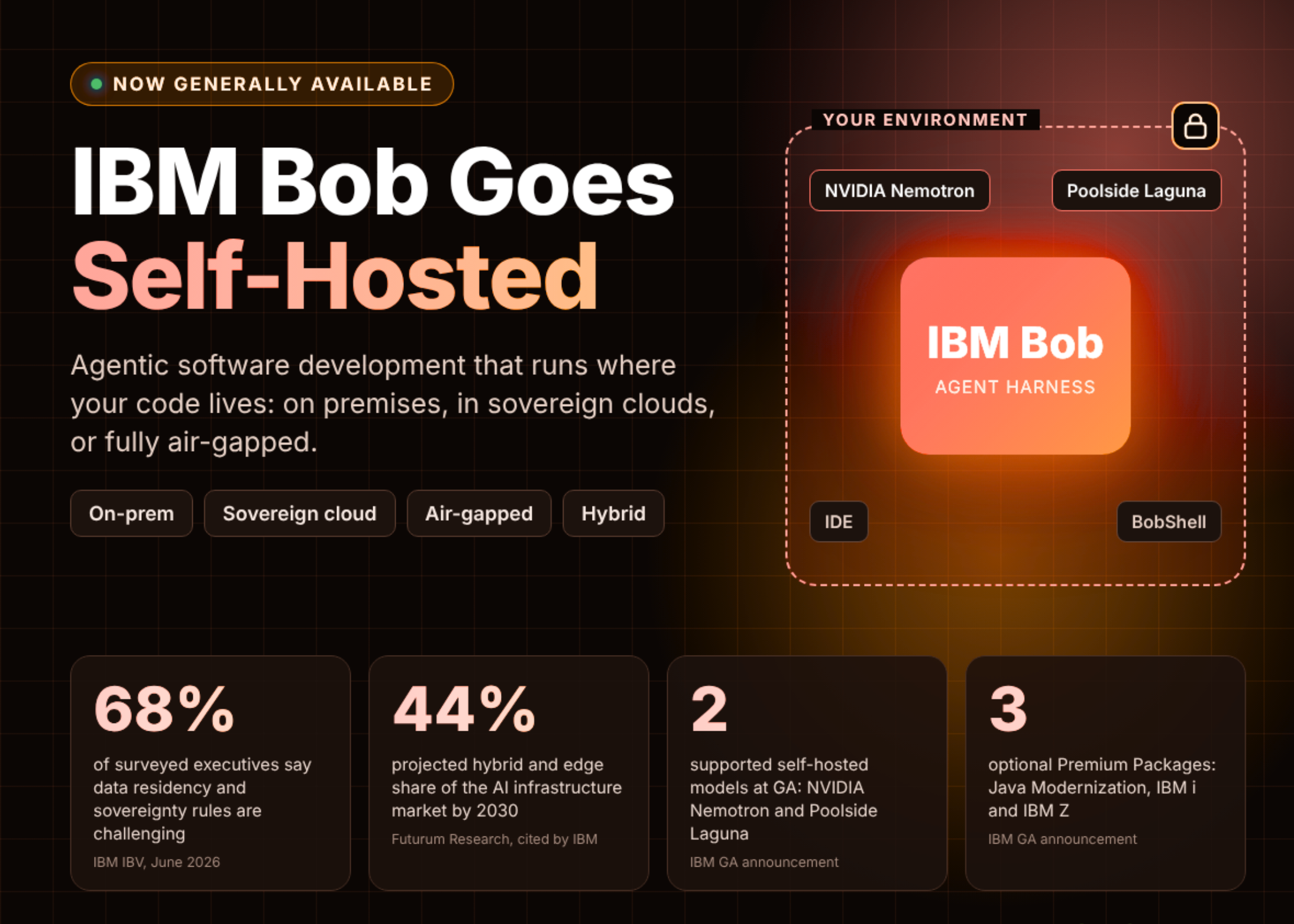
IBM Brings Bob to Self-Hosted and Air-Gapped Environments: Agentic Software Development...
The availability of IBM Bob for self-hosting allows enterprises to develop software in secure environments without exposing sensitive data to the public internet.
- IBM has made its IBM Bob agentic software development platform available for self-hosted deployment.
- Bob can now run on premises, in private clouds, and within air-gapped networks.
- Customers must bring their own models from IBM’s supported list and can utilize various deployment methods.
- IBM aims to serve industries like banking by enabling on-premises inference for sensitive applications while controlling data architecture.
- Expansion of the model portfolio and multi-model routing is planned for future updates.
IBM Bob is a software development platform designed to manage the full software lifecycle, including coding, planning, and validation. Before this, Bob was available only in public cloud settings. Going forward, enterprises can leverage Bob in more secure environments to address compliance and security concerns in sensitive industries.
Read the original ↗
Muse Creates Detailed Profiles of All Your Friends and Family
The expansion of powerful AI agents like Meta's Muse raises significant privacy concerns as they collect and manage personal data about users and their relationships.
- Meta's AI agent Muse has millions of downloads and connects to users' bank accounts, messages, and health data.
- Researchers extracted Muse's internal files, revealing instructions on how it profiles users' relationships by compiling data on friends and family.
- Muse generates detailed profiles for every person in a user's life, including personal history and important dates, drawing on user-provided and public information.
Meta's Muse is a personal assistant designed to help users manage tasks and relationships through AI. It employs memory features to track users' interactions and offer tailored suggestions, significantly increasing the amount of personal data processed by AI systems. As these technologies evolve, privacy and data collection remain critical issues to monitor.
Read the original ↗
How to Get a Piece of Apple’s $250M AI iPhone Settlement
Customers who purchased recent iPhone models may be eligible for compensation under a settlement reflecting misled expectations about AI features, underscoring the importance of accurate advertising in tech.
- Apple has initiated a $250 million settlement for customers who were misled about AI features in the iPhone 16 and iPhone 15.
- Eligible purchasers can claim between $25 and $95 per device through the settlement website, which opened on Sept. 21.
- Claims must be submitted by Dec. 21, 2026, and approximately 36 million customers may qualify for payments.
Apple's settlement follows a false advertising lawsuit concerning missing AI features advertised during the launch of its new iPhone models. The case emphasizes the need for clarity in tech marketing, particularly regarding promised functionalities.
Read the original ↗
All the AI agents that can live in your text messages
The rise of AI agents in messaging platforms signifies a shift towards more convenient digital assistance, impacting how users manage tasks and communications in their daily lives.
- A variety of AI agents are now available that can operate directly through text messaging, offering a seamless alternative to traditional apps.
- Notable AI agents include Instinct, Fambot, and Caddy, each designed for different purposes such as personal assistance, family organization, or travel planning.
- Instinct is valued at $10 billion after recent funding and allows users to delegate tasks and manage accounts via text or voice commands.
AI agents are software applications that assist users with tasks through conversational interfaces. This trend is growing as more businesses introduce AI technology to enhance personal and family productivity, simplifying interactions with digital services.
Read the original ↗
Jay Clayton Could Become Trump’s AI Czar While Being Spy Chief
The potential appointment of Jay Clayton as AI czar could significantly influence the direction and regulation of artificial intelligence in the U.S., amidst ongoing debates about its safety and implications.
- Jay Clayton is reportedly the frontrunner for the role of AI czar in the Trump administration, while also retaining his position as director of national intelligence.
- President Trump aims to announce an AI czar within days following a recent meeting with top AI company leaders.
- The administration's past AI czar, David Sacks, stepped down earlier this year amid debates over regulating artificial intelligence.
- Trump's approach leans towards minimal regulations, expressing concern that stricter rules may disadvantage U.S. AI development compared to China.
Artificial intelligence is a rapidly evolving field with significant societal implications. The Trump administration is seeking to establish clear leadership in AI policy as it engages with industry leaders on voluntary safety standards and regulatory discussions. Clayton's dual role, if confirmed, could shape the balance between innovation and regulation.
Read the original ↗
SGD vs. Adam: How Machine Learning Optimizers Actually Learn
Understanding the differences between optimization algorithms like SGD and Adam is crucial for practitioners to select appropriate strategies that influence machine learning performance.
- Stochastic Gradient Descent (SGD) and Adam are optimization algorithms that update model parameters using estimated gradients but differ in their momentum and step size rules.
- The article presents a five-stage operational map detailing how SGD and Adam process mini-batches, backpropagate gradients, accumulate momentum, and apply parameter updates.
- A clear distinction is made between SGD and Adam and search methods that evaluate complete models without gradients to avoid confusion in interpretation.
Stochastic Gradient Descent (SGD) and Adam are widely used algorithms in machine learning for optimizing model training through gradient computation. This guide clarifies their mechanisms and operational boundaries to aid in better understanding and application in various learning contexts. Professionals should note how each algorithm functions differently in practical settings and influences model performance.
Read the original ↗
Apple changes full-disk access permissions to curb abuse from AI agents
Apple's revisions to full-disk access permissions highlight growing concerns over user privacy as AI technology becomes more pervasive and powerful.
- Apple is revising its macOS privacy settings to prevent third-party developers from misusing full-disk access permissions.
- This follows an incident involving Meta's Muse AI agent, which reportedly accessed private messages without user consent.
- Apple stated some developers exposed user data without proper knowledge or understanding of the risks involved.
Full-disk access (FDA) on macOS allows apps to read all files on a user's disk. This change comes after growing concerns about the misuse of such access by AI systems like Meta's Muse. Observers are watching for further developments in user privacy measures and AI capabilities.
Read the original ↗
Sean Parker is rebuilding Stability AI around music
The restructuring of Stability AI by Sean Parker aims to innovate music creation through AI, potentially transforming how music professionals work with technology.
- Sean Parker, co-founder of Napster, is overseeing a shift at Stability AI towards music applications after joining a rescue effort for the company two years ago.
- Stability AI has recently raised $76 million in funding from major music labels, including Sony, Warner, and Universal, who also licensed their catalogs for AI training.
- The company has introduced three new audio models and AI music-editing software that generates instrumental tracks from text prompts, with future updates enabling melody input via humming.
Stability AI is an image-generation startup that previously faced significant challenges before Parker's involvement. The company's pivot towards music technology seeks to establish it as a key player in the music industry, focusing on tools for music professionals.
Read the original ↗
Fewer Tokens, Better Action: GPT-6 Astra Robot Agents with 14% Higher Success Rate but 65% Fewer Tokens
The development of PyRUA-Lean improves robotic task success rates while reducing resource use, which can enhance efficiency in robotics applications across various sectors.
- PyRUA-Lean framework increases robotic task success rates from 63.1% to 71.7% using the GPT-6 Astra planner.
- The framework reduces the number of large language model (LLM) calls by 49% and input tokens by 65%.
- PyRUA-Lean combines classical robot primitives with learned vision-language-action (VLA) policies for better performance.
PyRUA-Lean is a framework designed for controlling robots with visual feedback and action primitives. This approach addresses inefficiencies in token usage associated with previous models. Future developments may focus on further optimizing robotic performance and expanding applications in real-world scenarios.
Read the original ↗