
The day's AI news, briefed
The Daily Prompt
Our AI editor reads each day's AI and robotics stories, pulls out why they matter, and links every original source — so you can keep up in minutes.
Join over 250,000 subscribers getting the latest AI news
Latest AI & Robotics News Today

NVIDIA AI Presents ThinkAct: Vision-Language-Action Reasoning via Reinforced Visual Latent Planning
This development could advance how AI systems understand and interact with their environment, combining visual perception, language processing, and action execution.
- NVIDIA AI has introduced ThinkAct, which focuses on vision-language-action reasoning.
- ThinkAct utilizes reinforced visual latent planning to enhance AI decision-making capabilities.
NVIDIA is a leader in graphics processing units (GPUs) and AI innovations. The introduction of ThinkAct signifies a step forward in integrating various AI functionalities to improve efficiency and interaction in intelligent systems. Future developments will likely involve further refining this technology to enhance practical applications.
Based on the headline only — the full article could not be fetched.
Read the original ↗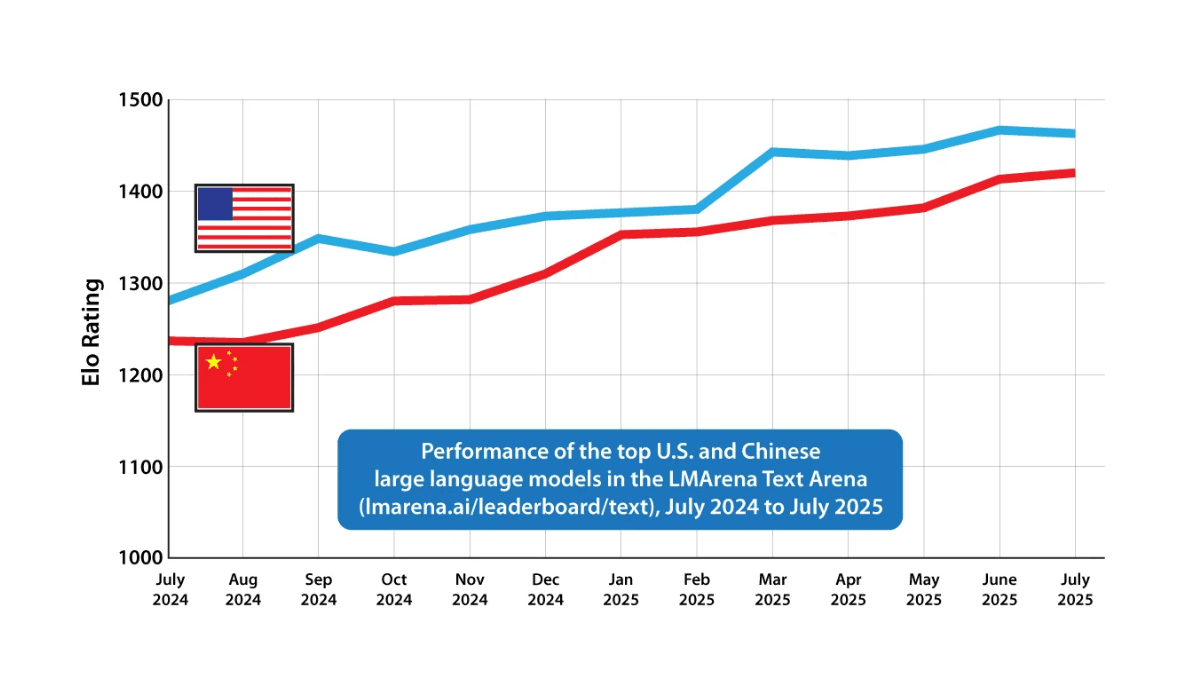
Trump Resets AI Policy, Qwen3’s Agentic Advance, U.S. Chips for China, The Trouble With AI Friends
With heavy competition in AI development, the U.S. and China are reshaping their policies and technologies, influencing global tech leadership and strategic alliances.
- The U.S. is currently leading in AI, but China is rapidly advancing in AI technologies and semiconductor capabilities.
- The U.S. has lifted a ban on AI chips for China, allowing companies like Nvidia to resume sales of GPUs.
- President Trump has introduced a new action plan to strengthen U.S. AI leadership through executive orders and principles.
AI refers to the simulation of human intelligence in machines designed to perform tasks that typically require human thought, such as problem-solving and decision-making. Previous U.S. policies restricted certain technology sales to China, which are now being reversed amidst growing competition. Future developments should be monitored as both countries pursue advancements in AI capabilities.
Read the original ↗
So far, only one-third of Americans have ever used AI for work
The survey indicates a significant portion of the American workforce remains unengaged with AI technology, which could influence future productivity discussions and technology adoption strategies.
- 60 percent of US adults have used AI to search for information, while only 37 percent have used it for work tasks.
- Younger Americans, particularly those under 30, are adopting AI tools significantly more than their older counterparts.
- AI companionship is the least popular application, with only 16 percent of adults overall having tried it, rising to 25 percent among those under 30.
AI technology involves computer systems capable of performing tasks that typically require human intelligence, such as problem-solving and learning. Despite advancements, recent data reveal that the majority of Americans' work lives remain largely unaffected by AI. Future surveys may further explore generational differences and real-world applications of AI in daily tasks.
Read the original ↗
Anthropic Nears $170B Valuation With Nearly $5B in New Funding
The potential valuation increase of Anthropic highlights the growing significance of investments in artificial intelligence and the ethical considerations surrounding funding sources.
- Anthropic may raise between $3 billion and $5 billion, potentially valuing the company at $170 billion if finalized.
- The company was valued at $61.5 billion in March after raising $3.5 billion from investors led by Lightspeed Venture Partners.
- Investment firm Iconiq Capital is leading the current funding round, with interest from state-backed investors like Qatar Investment Authority and Singapore’s GIC.
Anthropic is an AI startup known for developing advanced large language models like Claude. Its previous funding rounds indicate significant investor confidence, and the company is competing in a rapidly evolving AI landscape. As large language models require substantial resources, ongoing funding is crucial for sustaining development and growth.
Read the original ↗
AI chipmaker, Groq, Nears $6 Billion Valuation in New Fundraising Round
A successful fundraising round could significantly impact Groq's competitive position against established players like Nvidia in the AI chip market.
- Groq plans to raise $600 million in funding, aiming for a valuation of nearly $6 billion.
- The company's valuation was previously $2.8 billion in August 2024, indicating substantial growth.
- The fundraising round is expected to be led by the investment firm Disruptive, based in Austin.
- Groq raised $640 million last year from investors including BlackRock and Cisco.
- Groq focuses on developing chips specifically for AI workloads, enhancing performance in AI inference tasks.
Founded in 2016 by Jonathan Ross, Groq is an AI chip startup aiming to create efficient processors tailored for AI applications. Its technology is designed to provide higher performance compared to traditional GPUs, allowing faster processing of large AI models. With recent partnerships, Groq is positioning itself as a serious competitor in the AI infrastructure space.
Read the original ↗
Manus vs ChatGPT Agent: Which is Better?
As AI agents become increasingly integrated into daily tasks, understanding the performance differences between tools like Manus and ChatGPT Agent can inform choices for productivity solutions.
- Manus offers a Free Beta plan with 300 daily refresh credits, while its Basic Beta plan is priced at $16/month with 1,900 credits.
- ChatGPT Plus costs $20/month, providing extended access to GPT-4.1 and various capabilities.
- In a comparison, Manus outperformed ChatGPT Agent in tasks like creating presentations and finding the best product deals.
- ChatGPT Agent excelled in data explanation while generating datasets for global warming but lagged in certain presentation tasks.
- Neither tool was effective in providing suitable session recommendations at a conference based on specific user needs.
Manus and ChatGPT Agent are AI tools designed to assist users with various tasks ranging from data handling to shopping assistance. Manus has been available for some time and has established reliable performance, while OpenAI's ChatGPT Agent has recently entered the market and is still developing its features and usability. Observers anticipate ongoing improvements to these tools as they evolve.
Read the original ↗
Zuckerberg signals Meta won’t open source all of its ‘superintelligence’ AI models
As Meta reconsiders its approach to open sourcing advanced AI models, the decision may impact the competitive landscape of AI development and accessibility.
- Meta CEO Mark Zuckerberg announced the company may not open source all of its 'superintelligence' AI models due to safety concerns.
- Zuckerberg emphasized the need for rigorous risk mitigation when considering which models to release as open source.
- The shift in Meta's strategy comes as the company aims to produce personalized superintelligence through products like augmented reality glasses and virtual reality headsets.
Meta, known for its Llama family of AI models, has historically focused on open source development. However, recent investments and competition with companies like OpenAI prompt a shift toward closed models to maintain control and monetization.
Read the original ↗
Google confirms it will sign the EU AI Code of Practice
Google's commitment to the EU AI Code of Practice highlights the growing importance of regulatory frameworks in shaping the development and deployment of artificial intelligence technologies worldwide.
- Google has confirmed it will sign the European Union's AI Code of Practice, despite initially opposing it for being too strict.
- The company's head of global affairs, Kent Walker, expressed concerns that the code could stifle innovation if not implemented carefully.
- Google hopes its input will influence the application of the framework, allowing Europe to access advanced AI tools that could boost the economy by 8 percent annually by 2034.
The EU AI Code of Practice is a voluntary framework aimed at regulating AI systems, ensuring compliance with the AI Act. It was developed with input from various stakeholders and seeks to provide companies with a clearer regulatory landscape. Companies like Meta have declined to sign the code, which emphasizes the evolving global regulatory environment for AI and its implications for major tech firms.
Read the original ↗
Google Backs EU’s AI Code of Practice, Unlike Meta
Google's support of the EU’s AI Code of Practice indicates a significant shift in industry response to regulatory frameworks, highlighting the complexities of balancing innovation and safety in AI development.
- Google has agreed to sign the EU's voluntary AI code of practice before the introduction of stricter regulations on August 2.
- Meta declined to sign the code, citing concerns that EU regulations could hinder innovation in the AI sector.
- The EU’s AI Code of Practice aims to ensure companies meet ethical standards while developing AI technologies.
- Signing the code involves commitments to transparency, avoiding improper content in training datasets, and respecting copyright.
- Companies will have a two-year period to comply with the EU AI Act, focusing on general-purpose AI models.
The EU AI Act is a comprehensive regulation that aims to ensure the safety and ethics of AI technologies in Europe. With tech giants like Google cooperating, the potential for widespread impact on global AI practices increases. Ongoing debates about the balance between regulation and innovation continue, with different companies taking contrasting stances on compliance.
Read the original ↗
Mark Zuckerberg says 'developing superintelligence is now in sight,' shades OpenAI and other firms focused on automating work
The discourse on superintelligence by Mark Zuckerberg highlights diverging visions in AI development, emphasizing personal empowerment versus automation, which will influence future technology and job markets.
- Mark Zuckerberg asserts that developing superintelligence is now in sight based on recent improvements in AI systems at Meta.
- Zuckerberg distinguishes Meta's approach to superintelligence, which focuses on personal empowerment, from competitors like OpenAI, which aims to automate valuable work.
- Meta has aggressively recruited AI talent, creating competition among tech companies in AI research and development.
- Zuckerberg envisions a future where superintelligence assists individuals in achieving personal goals rather than replacing jobs.
Meta, co-founded by Mark Zuckerberg, is a technology company focused on social media and virtual reality. It has recently intensified efforts in artificial intelligence by recruiting top researchers and prioritizing personal applications over automation. The upcoming years will be crucial in shaping the trajectory of superintelligence development and its societal implications.
Read the original ↗
Skechers is making kids’ shoes with a hidden AirTag compartment
The introduction of Skechers' shoes with an AirTag compartment reflects a growing trend in using consumer technology for child safety tracking, raising privacy and ethical considerations.
- Skechers has launched a new line of kids' sneakers featuring a hidden compartment for Apple AirTags, which are tracking devices.
- The shoes allow parents to track their child's location by placing an AirTag in the shoe's heel compartment.
- These shoes do not come with an AirTag included, and Skechers is not officially collaborating with Apple on this product.
Skechers is a well-known footwear company that designs various types of shoes. The shoes grew out of a trend where parents use AirTags to monitor their children's whereabouts, despite Apple's focus on item tracking rather than tracking people. This development also highlights potential ethical issues surrounding surveillance technology.
Read the original ↗
Minnesota activates National Guard as cyberattack on Saint Paul disrupts public services
The activation of the National Guard in response to a cyberattack illustrates the escalating threat of cybercrime against public infrastructure and the need for coordinated crisis responses.
- Minnesota Governor Tim Walz activated the National Guard to assist Saint Paul amid an ongoing cyberattack.
- The cyberattack, which began on July 25, has disrupted city operations and public services.
- City officials took government systems offline to contain the breach, resulting in a citywide Wi-Fi outage.
Saint Paul, with over 300,000 residents, is facing an escalating number of cyberattacks that threaten city operations. The National Guard’s involvement underscores the increasing complexity of cyber threats and the necessity for robust defense mechanisms. Continued monitoring of the situation and recovery efforts will be essential for the city’s recovery.
Read the original ↗
PlayerZero raises $15M to prevent AI agents from shipping buggy code
The success of PlayerZero could significantly enhance software reliability by addressing the growing issue of AI-generated coding errors, impacting industries reliant on complex code systems.
- PlayerZero raised $15 million in a Series A funding round led by Foundation Capital.
- The startup's technology aims to identify and fix bugs in AI-generated code before it is deployed in production.
- PlayerZero has already secured enterprise clients, including the subscription billing firm Zuora, which utilizes the technology across its engineering teams.
PlayerZero is a startup focused on preventing software bugs generated by AI coding agents. Founded by Animesh Koratana, it emerged from the Stanford DAWN lab, where issues in AI-generated code were identified. The company is positioning itself in a competitive landscape where several startups, like Anysphere's Bugbot, also seek to address this coding challenge.
Read the original ↗
Is AI Alignment Research Akin to “Helicopter Parenting”?
AI alignment research could address the risks posed by misaligned artificial intelligence, ensuring that future systems adhere to human ethical principles and potential consequences of failure are avoided.
- AI alignment research aims to ensure that AI systems operate according to human ethical principles and objectives.
- Misaligned AI systems can malfunction, cause harm, and pose existential risks to humanity if not properly governed.
- Experts argue that treating future AI systems with autonomy, similar to human children, is necessary to prevent rebellion against suppression.
AI alignment is a field focused on ensuring artificial intelligence behaves in ways that are beneficial and aligned with human values. There is a debate in the AI community about the balance between guiding AI and allowing it autonomy, as both aspects are critical for effective interaction. Ongoing research and policy developments are needed to navigate these complex relationships between humans and advanced AI systems.
Read the original ↗
Zuckerberg outlines Meta’s AI vision for ‘personal superintelligence’
Meta's vision for 'personal superintelligence' could reshape how individuals interact with technology, influencing AI development and user experiences across various platforms.
- Zuckerberg has outlined Meta's vision for 'personal superintelligence'.
- This AI concept aims to enhance personal interactions and user efficiency across Meta's ecosystem.
Meta is a technology company focused on building tools for virtual and augmented reality, along with user engagement through social media and AI. The company's investment in AI is a part of its broader strategy to innovate user experiences in the digital space. Future developments may reveal specific applications of this AI vision in everyday life.
Based on the headline only — the full article could not be fetched.
Read the original ↗
AIR lands $23M to bring its eVTOLs to the US
The funding will help AIR scale production and enter the U.S. market, potentially influencing competition in the growing eVTOL industry critical for transportation and defense logistics.
- AIR has raised $23 million in Series A funding to expand its production and enter the U.S. market.
- The company offers both piloted and uncrewed electric vertical takeoff and landing (eVTOL) aircraft and has secured over 2,500 preorders for its piloted AIR ONE.
- The funding will support hiring and scaling production facilities in Israel, while awaiting U.S. certification under new regulations.
AIR is an Israel-based startup focusing on eVTOL technology aimed at personal transport and logistics. The company plans to leverage recent U.S. policy shifts promoting drone and eVTOL development. Future updates on certification processes and U.S.-based manufacturing are critical to watch.
Read the original ↗
Gen AI apps doubled their revenue, grew to 1.7B downloads in first half of 2025
The soaring growth of generative AI apps signals increasing consumer reliance on AI technologies, impacting digital market dynamics and user engagement strategies.
- Generative AI apps achieved 1.7 billion downloads in the first half of 2025, up from 1 billion in the previous half.
- These apps doubled their revenue to $1.87 billion compared to $932 million in H2 2024.
- Users spent over 15.6 billion hours on generative AI apps, an increase from 8.5 billion hours in the prior half.
Generative AI apps utilize algorithms to create content or assist users in various tasks. Their rapid adoption reflects increased consumer interest in AI solutions. Future indicators to watch include user retention and revenue trends within this growing segment.
Read the original ↗
How 2 UC Berkeley dropouts raised $28 million for their AI marketing automation startup
The success of Conversion's funding illustrates the growing interest in AI-driven marketing solutions amid a competitive landscape, potentially influencing investment trends in the tech industry.
- Conversion, an AI-powered marketing automation startup founded by UC Berkeley dropouts, has raised a $28 million Series A round led by Abstract.
- The company has an annual recurring revenue (ARR) nearing $10 million, primarily serving midsize businesses.
- Neil Tewari and James Jiao transitioned from college students to startup founders by building automated marketing solutions based on their initial personal needs.
- Conversion aims to differentiate itself from legacy marketing tools by integrating advanced AI features that optimize marketing workflows.
Founded five years ago, Conversion focuses on leveraging AI for marketing automation to help businesses streamline their operations. The company has grown rapidly since its inception, securing a total of $30 million in funding. The competitive landscape includes established players like HubSpot and newer AI-native startups.
Read the original ↗
C8 Health started with an AI that gives anesthesiologists guidance on demand — now it's targeting whole hospitals
C8 Health’s expansion aims to tackle the significant challenge of fragmented access to clinical knowledge in hospitals, which can impact patient care and safety.
- C8 Health, a New York City AI startup, has raised $12 million in Series A funding to expand its AI-powered knowledge platform across U.S. hospitals.
- The startup's platform centralizes clinical guidance, making best practices instantly accessible via mobile and desktop, thereby improving healthcare efficiency.
- C8 Health is targeting a problem that costs the healthcare system an estimated $345 billion due to inefficiencies in accessing medical information.
C8 Health was founded in 2022 to address the difficulties medical professionals face in accessing clinical guidelines spread across various systems. The company initially focused on providing guidance for anesthesiologists but is now expanding its application to serve entire hospitals, with over 100 hospital clients and plans for further deployment in outpatient settings.
Read the original ↗
Arcee opens up new enterprise-focused, customizable AI model AFM-4.5B trained on ‘clean, rigorously filtered data’
The launch of AFM-4.5B addresses critical enterprise needs for customizable, compliant AI models, potentially transforming how businesses adopt generative AI technologies.
- Arcee.ai has released its AFM-4.5B model, which is designed for enterprise use and allows limited free access for companies with under $1.75 million in annual revenue.
- The 4.5-billion-parameter model is engineered for cost efficiency while ensuring compliance with intellectual property standards.
- AFM-4.5B is instruction tuned for immediate deployment in chat, retrieval, and creative writing applications.
- The model has undergone extensive training on nearly 7 trillion tokens, ensuring safety and quality in the dataset used.
- Arcee plans to expand its model offerings with dedicated models for reasoning and tool use in the future.
Arcee.ai focuses on developing small AI models for commercial applications, aiming to address pain points such as high costs and limited customization in existing large language models. AFM-4.5B responds to enterprise needs for performance, compliance, and flexibility, distinguishing itself from both large proprietary models and open-weight alternatives. Future developments may include enhancements aimed at specific enterprise applications.
Read the original ↗