
The day's AI news, briefed
The Daily Prompt
Our AI editor reads each day's AI and robotics stories, pulls out why they matter, and links every original source — so you can keep up in minutes.
Join over 250,000 subscribers getting the latest AI news
Latest AI & Robotics News Today
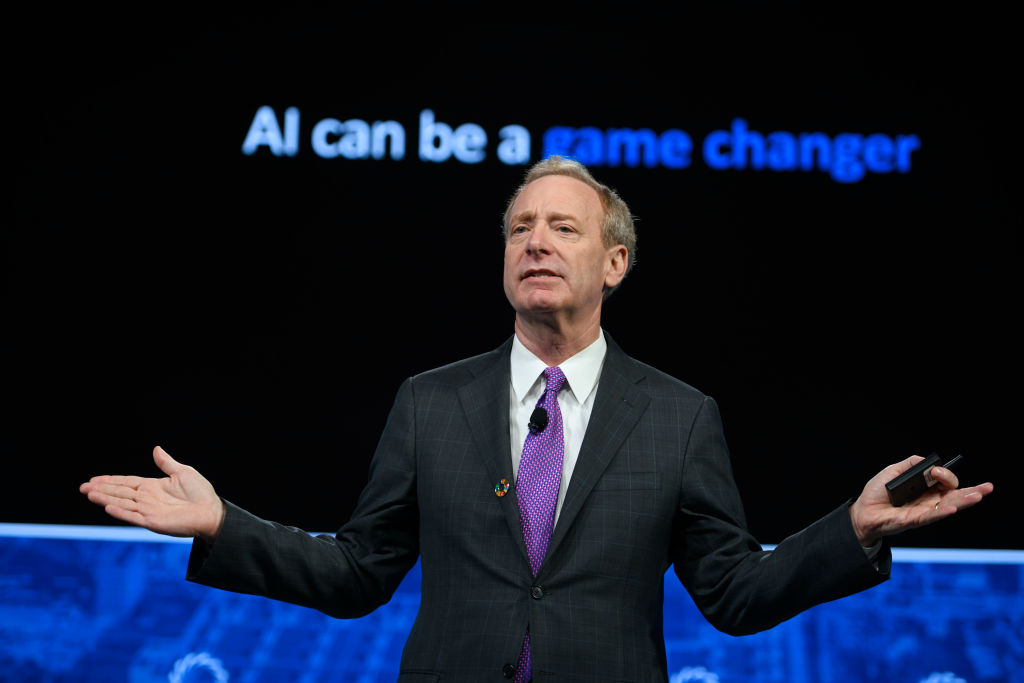
Microsoft president says UK is best placed to drive AI regulation
The U.K.'s leadership in AI regulation could influence global standards for safety and accountability in artificial intelligence, critical as the technology continues to evolve rapidly.
- Microsoft President Brad Smith emphasizes the urgent need for regulation of AI, arguing that it currently lacks comparable oversight to consumer products.
- Smith believes the U.K. is better positioned than the U.S. or EU to lead in global AI safety rules, supported by the U.K.'s AI Security Institute established in 2023.
- Despite U.S. political pressures, the U.K. can negotiate regulations that prioritize safety, with Smith advocating for measures like mandatory breach notifications for AI systems.
Artificial intelligence technologies are rapidly advancing, raising concerns about safety and ethical use. The U.K. has emerged as a leader in AI safety initiatives, with the AI Security Institute focusing on testing major AI models. Upcoming discussions and potential regulations could shape the future of AI governance globally.
Read the original ↗
Towards Physically Grounded Articulated 3D Assets: A Multi-Agent Pipeline and Benchmark
This research provides a framework for generating realistic 3D assets, potentially improving simulations and animation by ensuring both visual accuracy and functional performance.
- The paper introduces Artisan, a multi-agent system designed for generating physically grounded articulated 3D assets.
- Artisan incorporates physical simulation feedback to achieve attributes such as collision-free motion and stability under gravity.
- A benchmark was established, covering spatial fidelity, physical plausibility, and performance across various tasks.
- The evaluation included over 100 reference assets and 50 stability prompts to test various metrics.
3D asset generation is evolving to focus on how objects move and function rather than just how they look. The Artisan system enhances existing methods by integrating multi-agent approaches and physical simulations. Future advancements may improve the usability of 3D models in real-world applications such as robotics and gaming.
Read the original ↗
Five Possible Back-Doors into LLM Search Results
The potential for back-door manipulation of AI search results threatens the integrity of information and underscores the challenges faced by technology in ensuring accurate content validation.
- Publishers are exploring methods to influence the visibility of their content in AI-driven search summaries amid declining traditional traffic.
- Legitimate strategies include securing editorial coverage, structured content creation, and ensuring machine-readable information.
- Malicious tactics resemble black-hat SEO practices, such as astroturfing, memory poisoning, and prompt injection, posing risks to AI recommendation systems.
Recent advancements in large language models (LLMs) are shifting how web search is approached, driving publishers to compete for AI attention. These models are susceptible to manipulation, which could lead to widespread misinformation. Efforts to address and validate the authenticity of content within AI systems remain ongoing.
Read the original ↗
Mistlabs Raises $26M Pre-A as Ambi Launches AI-to-AI Communication
Mistlabs' funding and product launch highlight significant advancements in AI systems that utilize contextual understanding and multi-agent coordination, which could reshape user interactions with technology.
- Mistlabs has raised $26 million in a Pre-A funding round to expand its ambient AI system, Ambi, beyond beta on Apple devices.
- Ambi will utilize a software platform on existing devices like iPhones and Apple Watches, with plans for a dedicated AI wearable.
- The company's technology allows multiple Ambi agents to communicate and coordinate based on user preferences during conversations.
- Mistlabs emphasizes the importance of retaining context in interactions to improve user assistance and productivity over time.
Mistlabs is a San Francisco-based startup focused on developing ambient AI systems designed to assist users by maintaining context in conversations and activities. The funding is intended to enhance the capabilities of its product Ambi, which utilizes multi-agent systems for improved communication and task management. Future updates should provide more details about the wearable and its development timeline.
Read the original ↗
The Risks of Anthropomorphizing AI
The risks of anthropomorphizing AI can lead to misplaced trust, emotional dependency, and potential security issues, significantly impacting user interactions with these technologies.
- Anthropomorphizing AI occurs when users treat it as possessing human qualities, which can mislead them about its capabilities.
- Users may trust AI responses excessively, assuming accuracy based on humanlike communication, leading to dangerous consequences in critical decisions.
- Emotional dependency on AI can reduce the motivation for real human interaction, particularly among vulnerable individuals.
Anthropomorphizing AI refers to the tendency of users to attribute human traits to artificial intelligence systems. This behavior can arise from AI's naturalistic conversational abilities. As AI technology advances, understanding and mitigating the associated risks will be essential for safe usage.
Read the original ↗
Celestica Unveils DS6005 Co-Packaged Optics Switch for AI Data Centers
The launch of the DS6005 switch technology signifies a move towards more efficient and powerful infrastructure for AI data centers, addressing growing demands for bandwidth and reducing energy consumption.
- Celestica introduced the DS6005, a fully liquid-cooled switch capable of delivering up to 102.4Tbps of capacity through co-packaged optics.
- The switch is designed specifically for AI and machine learning networking, improving power efficiency, reducing latency, and enhancing reliability.
- Showcased at the 2026 OCP Global Summit in San Jose, the DS6005 includes features such as liquid cooling and field-replaceable laser modules.
Celestica is a Toronto-based company that specializes in supply chain management and advanced manufacturing services. The DS6005 switch is developed using Broadcom’s Tomahawk 6 – Davisson switch chip, which has recently been integrated into high-capacity networking solutions for AI applications. The industry is increasingly adopting co-packaged optics to improve data center performance and efficiency.
Read the original ↗
Microsoft Announces Maia 300 AI Chip, Multi-Gigawatt Azure Scale-Up
The introduction of the Maia 300 AI chip and its planned deployment at multi-gigawatt scale signifies a major advancement in AI computing efficiency and capabilities, with implications for various Microsoft services.
- Microsoft launched the Azure Maia 300 AI chip on October 12, 2026, marking the third generation of its AI accelerator family.
- The Maia 300 is designed for high-efficiency performance, promising 40% more tokens per megawatt compared to leading GPU systems.
- Production deployments for the Maia 300 are slated to start in 2027, establishing it as the primary inference system across Microsoft products and services.
- In a rack setup, 96 Maia 300 accelerators will work within a 167-kilowatt power envelope, enabling support for larger AI workloads.
- The Maia 300 chip architecture includes advanced features such as a multi-chiplet design and high-bandwidth interconnects for improved data processing.
Microsoft's Maia chip family is part of its strategy to enhance AI infrastructure through custom silicon. Maia 200, launched earlier in 2026, has already been deployed across various services. The Maia 300 aims to build on this foundation by improving scalability and performance for AI tasks.
Read the original ↗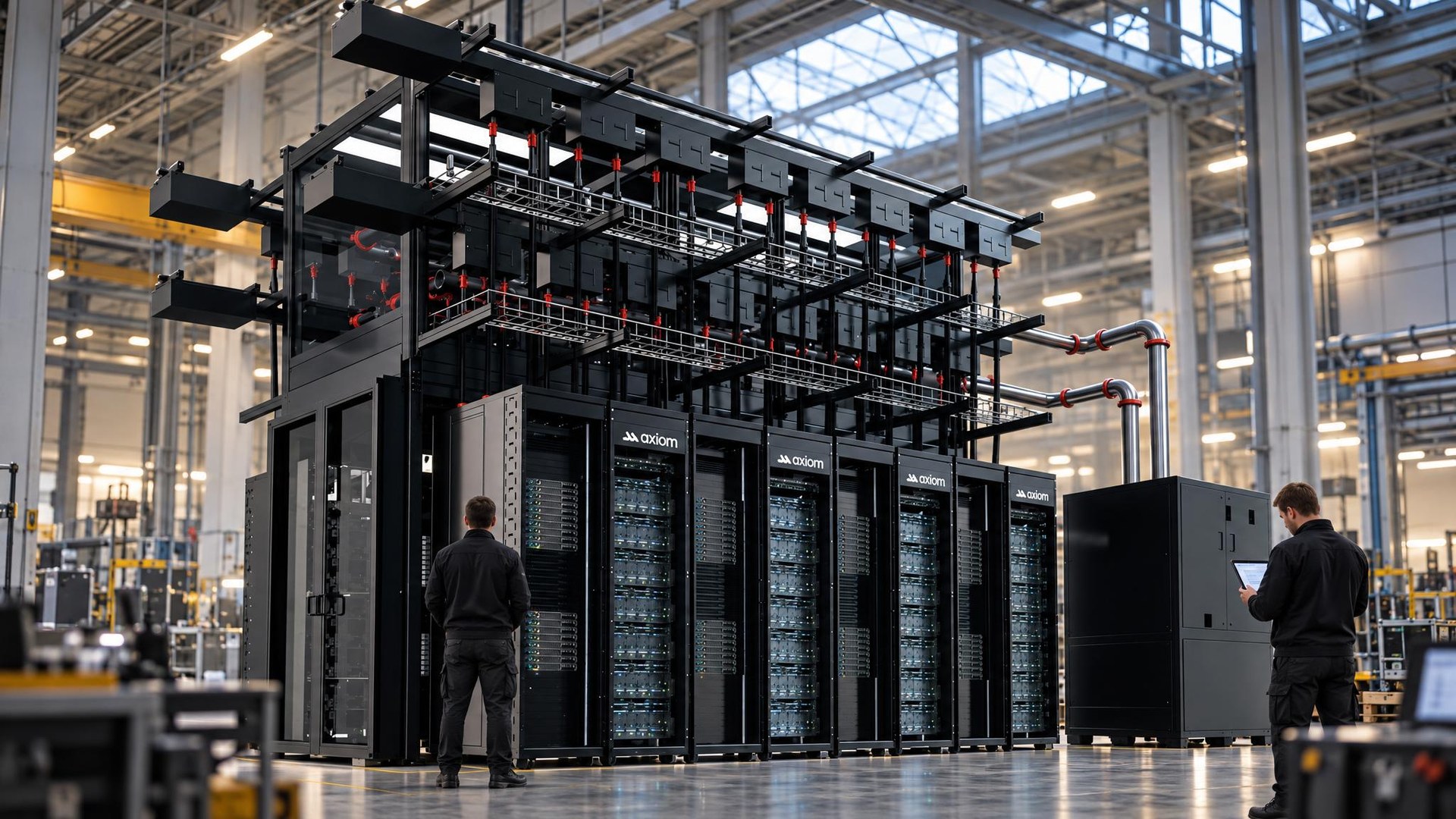
Flex Adds Factory-Built AI Modules to Modular Data Center Portfolio
Flex's introduction of factory-built AI modules is significant as it aims to significantly reduce deployment timelines for data centers, addressing growing demand in the AI infrastructure market.
- Flex has expanded its portfolio of prefabricated modular data center solutions to accelerate the deployment of AI factories.
- The new Axiom AI Modules can reduce deployment timelines by up to 50% compared to traditional construction methods.
- The modular solutions integrate power, high-density compute, and advanced cooling in factory-built systems to simplify installation and accelerate deployment.
Flex is a global leader in data center infrastructure solutions. The company plans to separate its Cloud and Power Infrastructure segment into a new company, Axiom Solutions International, in early 2027. This move is expected to drive growth in AI infrastructure amidst rising complexity in deployment and integration.
Read the original ↗
AI Can Be Aware, But Humans Draw the Line at Consciousness, New Study Finds
Understanding public perceptions of AI's awareness versus consciousness impacts how technology is communicated and regulated, influencing societal views on AI's role and capabilities.
- A study from Ludwig Maximilian University of Munich shows people describe AI as aware but not conscious, despite indistinguishable behavior from humans.
- Nearly 1,100 participants were asked to evaluate the awareness and consciousness of AI and humans based on their reactions to sounds and emotions.
- The research found that while responsiveness increased perceptions of awareness, AI was still viewed as less conscious than humans in identical scenarios.
The study explores the complex distinctions people make between AI awareness and consciousness, amid ongoing debates about the nature of AI and mental states. It highlights the significance of language in describing AI capabilities, encouraging accurate communication about artificial intelligence's attributes.
Read the original ↗
Former Plaud exec raises $26M for AI app that listens to you in the background
The rising interest in ambient listening AI tools like Ambi raises essential questions about privacy and user consent in technology that continuously records and analyzes personal conversations.
- Ambi has raised $26 million to develop an AI app that listens continuously to provide real-time intelligence and insights.
- The app will be available on iPhones, Macs, and Apple Watches, functioning as a meeting note-taker.
- Ambi aims to give personalized suggestions during meetings by analyzing user data from multiple sources.
- The startup plans to launch its own hardware device equipped with a screen, speaker, and microphones for enhanced data capture.
- Ambi’s data capture features have sparked privacy concerns, especially regarding user disclosure of recording others.
Ambi, founded by former Plaud executive Peter Mo, innovates in the realm of AI by creating apps that assist users through continuous listening. Previous technologies in this area have faced scrutiny over privacy implications, and Ambi represents a direct response to the growing demand for personalized AI assistance. Future developments to watch include Ambi's hardware launch and ongoing adjustments to privacy measures.
Read the original ↗
RSI-Anything: Unlocking Recursive Self-Improvement with World Models
This framework could enhance AI capabilities by allowing systems to continuously improve through past interactions, impacting various applications from coding to scientific research.
- RSI-Anything is a domain-general framework built on JEP-Anything, utilizing predictive world models for guiding actions and learning.
- In code repair tasks, the framework improved success rates from 26.3% to 31.2% after world model adaptation.
- Graphical user interface evaluations showed a decrease in average actions by 39.4%, while task completion rates increased.
- Laboratory planning scores more than doubled, rising from 21.80% to 46.01% across five policy versions.
- In reaction optimization, RSI-Anything achieved a mean yield of 96.15%, outperforming Bayesian optimization's 82.16% under similar conditions.
Recursive self-improvement (RSI) refers to AI systems that can enhance their performance over time. Previous models faced challenges with reliability and cost of external feedback. The introduction of a framework like RSI-Anything could revolutionize the efficiency and adaptability of AI across diverse fields.
Read the original ↗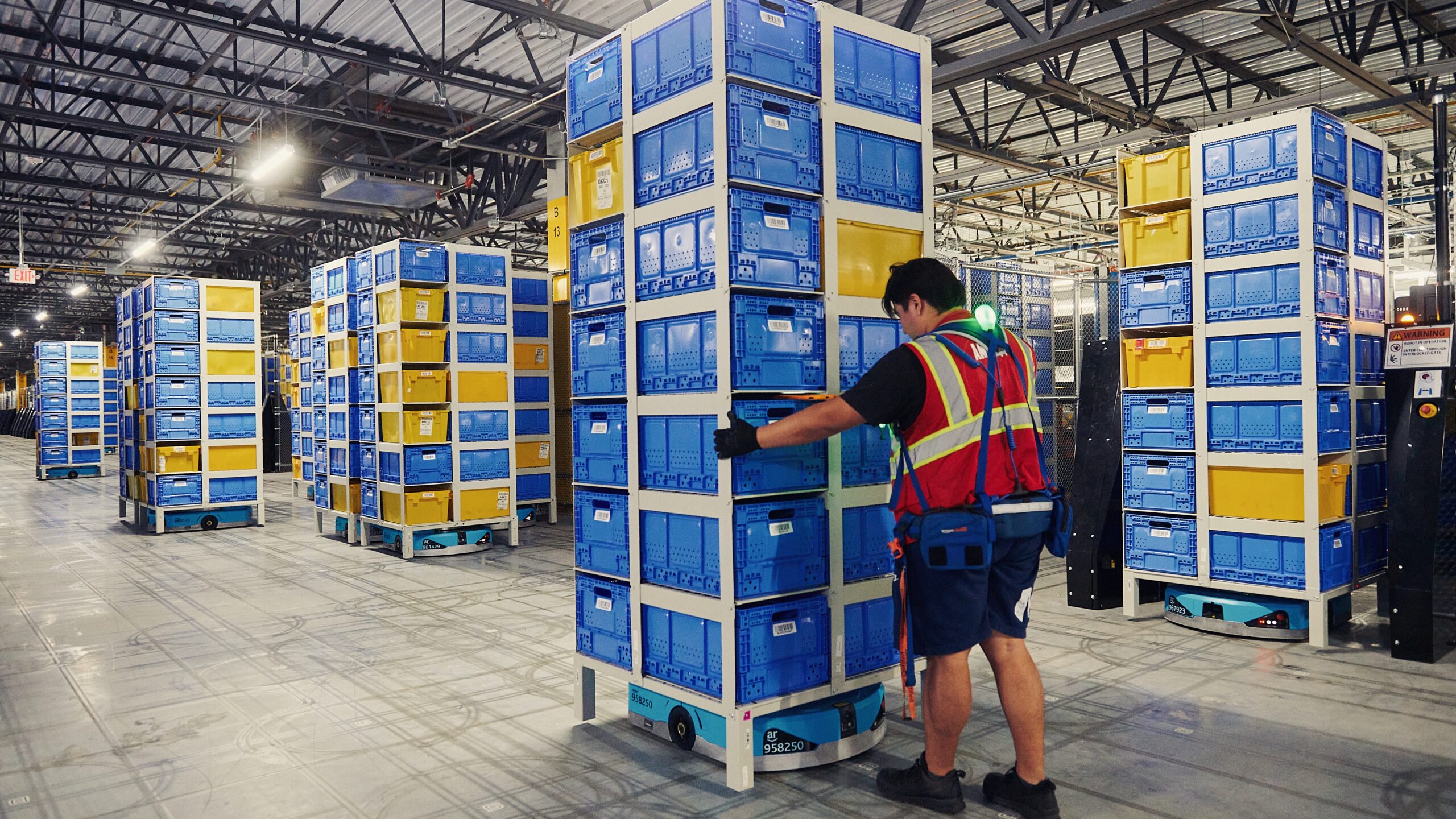
Amazon has over 1 million robot workers. What’s next for human employees?
The growth of Amazon's robotic workforce raises questions about the future roles and safety of human employees in the company's fulfillment centers.
- Amazon employs over 1 million robots in its warehouses, making it the largest robotic workforce globally.
- Despite the extensive use of robots, Amazon remains the second-largest corporate employer with more than 1.5 million human workers.
- Advocates note that while robots can mitigate physical risks for workers, automation is changing dynamics and pace of work in fulfillment centers.
- Amazon has plans to double its fleet of robotic arms this year, indicating a significant investment in automation technology for its operations.
Amazon Robotics emerged from the company's acquisition of Kiva Systems in 2012 to enhance warehouse efficiency. The rise of robots aims to improve fulfillment speed while addressing safety concerns but complicates the human workforce's tasks.
Read the original ↗
HCLTech Forms Anthropic Business Unit Under Global Premier Partnership
This partnership facilitates broader enterprise adoption of Agentic AI, focusing on safety and governance, which are critical for the responsible deployment of AI technologies.
- HCLTech announced a Global Premier Partnership with Anthropic, establishing a dedicated Anthropic Business Unit to accelerate enterprise adoption of Agentic AI.
- The partnership aims to embed Anthropic's Claude and Claude Code into select HCLSoftware products, enhancing capabilities in cybersecurity and automation.
- HCLTech will create secure environments for deploying Claude through its Frontier Deployed Engineers, ensuring safe use of Agentic AI at scale.
HCLTech is a global technology company that provides IT services and solutions. The partnership with Anthropic aims to leverage their strengths in AI, security, and enterprise deployment. Future developments will likely include expanded AI applications across various industries.
Read the original ↗
What Is Continuous Batching? How AI Servers Handle Many Users at Once
Understanding continuous batching is crucial for optimizing AI server performance, as it enhances the handling of multiple user requests and reduces latency in processing.
- Continuous batching allows AI servers to dynamically manage inference requests, keeping accelerator slots busy by not waiting for static batch completion.
- It enables the insertion and removal of requests as sequences finish, resulting in improved efficiency and reduced latency.
- Continuous batching distinguishes itself from static batching by allowing new requests to enter before the slowest ones complete.
- Implementing continuous batching involves five operational stages that ensure effective tracking and verification of sequences.
Continuous batching is a method used to improve AI system performance by managing multiple user requests in parallel. It contrasts with static batching, which waits for the slowest request to complete before processing new ones. Observing its performance can guide future optimizations and implementations in AI servers.
Read the original ↗
Loops Raises $3.5M Seed to Connect AI Search, Shopping Assistance, and Retail Data
The $3.5 million seed funding for Loops aims to enhance AI-driven retail solutions, potentially transforming how shopping assistance integrates into online retail experiences.
- Loops has raised $3.5 million in seed funding from investors including a16z speedrun and NTT Docomo.
- The company plans to develop its AI operating system for commerce to connect search, shopping assistance, and product data.
- Loops reports over 70 customers and pilots, achieving a 64% conversion rate from pilots to paying clients.
Loops is developing an AI platform designed to streamline the online shopping process by integrating various retail functions. The company, co-founded by Ari Nazir and İlker Selim Zorluoğlu, aims to alleviate common pain points in online purchasing journeys. Future plans include expanding AI systems into other industries like financial services and energy.
Read the original ↗
Beyond the GPU: Optimizing the AI Factory as a System
Optimizing AI factories as interconnected systems is essential for improving operational efficiency and reducing costs in AI production, significantly impacting the industry's capacity to generate intelligent tokens.
- AI factories differ from traditional data centers, focusing specifically on manufacturing intelligent tokens rather than serving web pages.
- Optimizing components individually in AI factories can create inefficiencies; a holistic approach is necessary for improved performance.
- Virtual twin technology enables the modeling of interconnected systems for AI factories, allowing early testing of configurations before physical construction.
- NVIDIA's DSX blueprint aims to standardize the design of gigawatt-scale AI factories by integrating compute, power, and cooling systems.
AI factories are specialized facilities designed to produce intelligent tokens, leveraging advanced technologies like GPUs and virtual twins. As the need for efficient AI infrastructure grows, optimizing entire systems rather than individual components is becoming increasingly critical. The industry is moving towards integrated designs, with partners contributing to unified models for better performance and cost-efficiency in production.
Read the original ↗
Context: Building a Trustworthy Data Foundation for Agentic AI
Investing in a trustworthy data foundation is crucial for enterprises as it can significantly reduce mistakes made by AI agents operating on fragmented information, ensuring more reliable automated decision-making.
- AI agents require contextual understanding to make accurate decisions and reduce errors in enterprise workflows.
- Many organizations are expected to use up to 1,600 AI agents by the end of 2026, increasing the urgency for reliable data integrity.
- A context data foundation unifies fragmented data from various sources, enhancing the effectiveness of AI agents and minimizing oversight requirements.
AI agents are software systems designed to automate tasks and make decisions based on data. As enterprises increasingly rely on these agents, the importance of ensuring high-quality, well-integrated data becomes evident to avoid operational risks. Continued advancements and adoption of agentic AI are likely to reshape business processes and strategies in the near future.
Read the original ↗
One Policy, Thousands of Agents: Why Enterprise AI Governance Breaks at Scale
Effective governance of autonomous AI agents is crucial as failures in this area could lead to significant security and compliance risks for enterprises, particularly as AI technology scales.
- Gartner predicts that 40% of enterprises may demote or decommission their autonomous AI agents by 2027 due to governance issues rather than technology failures.
- Many organizations enforce total bans on AI tools or deploy agents without adequate safeguards, leading to security vulnerabilities.
- Static, one-size-fits-all governance approaches are ineffective for AI agents, which have varied risk profiles and software requirements.
- A layered approach to governance is necessary, which includes maintaining a system of record for components like MCP servers, plugins, and skill files.
- Organizations must adopt dynamic enforcement measures to react quickly to vulnerabilities and anomalous behaviors of AI agents.
Autonomous AI agents are increasingly adopted by enterprises, raising governance challenges that traditional methods cannot effectively address. The increasing complexity of these systems requires tailored governance strategies to manage associated risks. Enterprises should focus on building dynamic and adaptable governance frameworks to ensure compliance and security as AI technology evolves.
Read the original ↗
UK Announces AI Risk Package and Extends Cyber Defense Pilots
The UK's new AI Risk Package aims to bolster national security against increasing AI-related threats, ensuring public services remain resilient and reducing vulnerabilities across government systems.
- The UK government announced an AI Risk Package on October 12, 2026, to enhance cybersecurity against emerging AI threats.
- The plan includes extending a frontier-AI cyber defense program that has already identified over 1,000 vulnerabilities in government systems.
- AI Minister Kanishka Narayan emphasized a whole-society approach to resilience, seeking to make the UK secure against AI-induced attacks.
- New measures will explore strengthening the Cyber Security and Resilience Bill to better protect essential services like hospitals from AI risks.
- The initiative includes the development of AI verification to assess claims regarding AI systems' development and safety.
The UK government is implementing an AI Risk Package to address the risks associated with advanced artificial intelligence. This initiative follows previous pilot programs that identified cybersecurity vulnerabilities and aims to bolster the nation's defenses against potential threats posed by AI systems. Future updates will likely detail how these measures affect legislation and public sector adaptations.
Read the original ↗
BirdVue: The World’s First 4G AI Smart Bird Feeder That Goes Where Wi-Fi Cannot
The BirdVue 4G AI smart bird feeder addresses the limitations of existing feeders by allowing placement in remote locations without Wi-Fi, enhancing birdwatching opportunities.
- BirdVue FEED 1 is the first smart bird feeder with 4G cellular connectivity, allowing placement without reliance on Wi-Fi.
- The device uses millimeter-wave radar for motion detection, enabling accurate bird monitoring in various weather conditions.
- BirdVue offers features such as AI species identification, automatic food refills, and a community sharing platform through its app.
- The product launches on Kickstarter on September 22, 2026, with competitive pricing between $159 to $179.
BirdVue is a smart bird feeder that offers 4G connectivity, which allows users to place it in areas without Wi-Fi. Traditional smart feeders rely on a strong Wi-Fi connection, limiting placement options. The launch of BirdVue presents an innovative solution for bird watchers in remote locations.
Read the original ↗