
The day's AI news, briefed
The Daily Prompt
Our AI editor reads each day's AI and robotics stories, pulls out why they matter, and links every original source — so you can keep up in minutes.
Join over 250,000 subscribers getting the latest AI news
Latest AI & Robotics News Today

Databricks will bake OpenAI models into its products in $100M bet to spur enterprise adoption
Databricks' $100 million investment in integrating OpenAI's models is a significant move towards mainstream enterprise adoption of advanced AI technology, impacting data management and AI application development.
- Databricks is incorporating OpenAI's GPT-5 model into its products as part of a $100 million multi-year deal.
- This agreement emphasizes the growing demand for generative AI tools that securely leverage corporate data.
- Databricks' AI product, Agent Bricks, enables organizations to create AI apps using OpenAI's models, accessible via SQL or API.
Databricks is a data and AI platform focused on simplifying data analysis and management. This deal with OpenAI follows a similar agreement with Anthropic earlier this year, both targeting enterprise customers. The partnership aims to drive the integration of AI tools within corporate environments.
Read the original ↗
VideoGen-of-Thought: A Collaborative Framework for Multi-Shot Video Generation
This development could significantly improve the quality of automated video content creation, enhancing narrative coherence in multi-shot videos.
- VideoGen-of-Thought (VGoT) generates high-quality, multi-shot videos by dividing the process into structured components: script, keyframe, and shot-level generation.
- The framework uses identity-preserving (IP) embeddings and a cross-shot smoothing mechanism to ensure visual consistency and logical storytelling across shots.
- VGoT outperforms current video generation models that typically struggle with maintaining storyline continuity in longer videos.
Video generation technology has advanced primarily in generating short clips, but longer, narrative-driven videos remain challenging. VideoGen-of-Thought presents a structured framework designed to address these challenges by improving multi-shot video coherence. Future developments in this area will likely focus on refining narrative techniques and integration of emerging AI capabilities.
Read the original ↗
Human Brain Evolution May Explain the High Prevalence of Autism, New Study Finds
This study suggests that the increased prevalence of autism in humans may be an evolutionary trade-off linked to traits that enhance human intelligence, potentially shifting the understanding of autism's origins.
- Researchers from Stanford University found that specific brain cells underwent accelerated evolutionary changes in humans compared to other primates.
- These changes are tied to a down-regulation of genes associated with autism, suggesting a link to natural selection and human intelligence.
- The study proposes that the unique traits of humans may have increased vulnerability to autism due to these genetic shifts.
The research published in Molecular Biology and Evolution explores the evolutionary history of brain cells and how changes in gene expression may have affected autism prevalence. Prior studies focused on environmental and genetic factors, while this study introduces an evolutionary perspective. Future research is necessary to deepen understanding of these findings.
Read the original ↗
Spotify to label AI music, filter spam and more in AI policy change
These policy changes by Spotify aim to enhance transparency in music creation and reduce the impact of spam and fraud in the evolving landscape of AI-generated music.
- Spotify announced updates to its AI policy, including a music spam filter and labeling for AI-generated tracks.
- The company will adopt the DDEX standard for transparency in AI music credits, allowing detailed disclosures on AI use in music creation.
- Unauthorized AI voice clones or deepfakes will be explicitly prohibited on the platform.
- Spotify aims to combat music spam, targeting fraudulent uploads and improving content recommendations.
- Fifteen labels and distributors have committed to adopting the DDEX labeling system.
Spotify is a leading music streaming service. Its updated AI policies come amid a rise in AI-generated music, leading to concerns over transparency and content quality. Stakeholders will watch how effectively Spotify implements these changes and how the broader music industry responds.
Read the original ↗
DeepMind’s robotic ballet: An AI for coordinating manufacturing robots
RoboBallet's development accelerates the automation of manufacturing by enabling robots to coordinate tasks efficiently, potentially improving production speed and flexibility in industrial settings.
- Google's DeepMind has developed an AI named RoboBallet to allow manufacturing robots to coordinate their tasks autonomously.
- RoboBallet addresses three complex problems: task allocation, scheduling, and motion planning, which are typically handled manually.
- The AI system uses graph neural networks to optimize robot trajectories while avoiding collisions and obstacles.
- Initial tests show RoboBallet's task efficiency approaches that of human engineers, significantly speeding up programming times.
- RoboBallet could facilitate real-time design adjustments of work cells, enhancing industrial workflow.
DeepMind is a subsidiary of Google focused on artificial intelligence research. RoboBallet automates robot coordination in manufacturing, streamlining processes that traditionally require extensive manual planning. Future developments may address limitations in obstacle representation and the integration of various robot types.
Read the original ↗
Luminar Neo Review (2025): Is It the Best AI Photo Editor Yet?
Luminar Neo offers an accessible and efficient photo editing experience, potentially changing how enthusiasts and semi-professionals approach their editing tasks.
- Luminar Neo is a photo editing platform created by Skylum Software, designed to make professional-level edits accessible to users of varying skill levels.
- The software features AI tools that perform complex edits in just a few clicks, including automatic subject recognition and one-click enhancements.
- It is available on multiple platforms, including Mac, Windows, iOS, and Android, with different pricing plans ranging from $79 to $129.
- Luminar Neo significantly reduces editing time, allowing users to complete tasks in under five minutes that would typically take 30-40 minutes.
- The Luminar Mobile app provides a simplified editing experience, enabling users to apply key features on the go.
Luminar Neo is an AI-powered photo editor aimed at making complex editing tasks simpler and faster for users. Traditional editing software often requires extensive time and technical knowledge, while Luminar Neo leverages AI to streamline this process. Photographers seeking efficient tools for high-quality edits should monitor Luminar Neo's developments as it gains traction in the market.
Read the original ↗
EaseMate AI Math Solver & Calculator
EaseMate AI Math Solver transforms how students and professionals approach math homework and problem-solving, potentially improving learning efficiency and accessibility in educational settings.
- EaseMate AI Math Solver uses AI and Optical Character Recognition (OCR) technology to solve math problems from scanned images or PDFs instantly.
- It provides detailed, step-by-step solutions to enhance understanding, making it more than just a calculation tool.
- The application can interpret various types of math problems, including algebra, geometry, and calculus, catering to different levels of difficulty.
EaseMate AI Math Solver is an advanced tool designed to help users solve mathematical problems quickly and clearly. Traditional methods of solving math often involve manual entry and lack detailed explanations, making them less efficient. EaseMate aims to enhance learning by providing not only solutions but also educational support in mathematics and other subjects.
Read the original ↗
UniPixel: Unified Object Referring and Segmentation for Pixel-Level Visual Reasoning
UniPixel's capability to integrate pixel-level perception with broader visual understanding represents a significant advancement in multi-modal AI, enhancing tasks that require detailed visual reasoning.
- UniPixel is a large multi-modal model designed for unified object referring and segmentation tasks in images and videos.
- The model combines pixel-level perception with general visual understanding, facilitating fine-grained visual reasoning.
- It has been validated across 10 benchmarks, demonstrating strong performance in tasks like pixel-level referring, segmentation, and a new PixelQA task.
UniPixel builds on recent advancements in large multi-modal models (LMMs), which excel in holistic image understandings, but often lack pixel-level capabilities. This innovation aims to unify these independent tasks, improving applications in visual reasoning. Future developments in this area may further enhance model capacities and applications.
Read the original ↗
SIM-CoT: Supervised Implicit Chain-of-Thought
Improving the performance and stability of implicit Chain-of-Thought methods could lead to more efficient and effective large language models, impacting a range of applications in AI.
- SIM-CoT is a training module that provides step-level supervision to enhance the performance of implicit Chain-of-Thought methods in large language models.
- The method addresses instability in training by aligning implicit tokens with explicit reasoning steps using an auxiliary decoder, which is removed during inference.
- Tests showed that SIM-CoT improved accuracy significantly, increasing the baseline performance by +8.2% on GPT-2 and +3.0% on LLaMA-3.1 8B.
Implicit Chain-of-Thought methods aim to improve reasoning efficiency in large language models by using fewer tokens. Previous approaches struggled with performance gaps due to unstable latent representations. Researchers introduced SIM-CoT to enhance supervision and stability, promising better application outcomes.
Read the original ↗
Meta FAIR Released Code World Model (CWM): A 32-Billion-Parameter Open-Weights LLM, to Advance Research on Code Generation with World Models
The release of Meta's Code World Model aims to enhance research in code generation by providing researchers with a significant open-source resource.
- Meta has released the Code World Model (CWM), featuring 32 billion parameters and open-weight architecture.
- This LLM (Large Language Model) is designed to advance research in code generation utilizing world models.
Meta is a leading technology company known for its advancements in artificial intelligence. The CWM release is part of a broader trend toward open-source AI models aimed at facilitating research. Future developments may focus on improving coding efficiency and capabilities in AI-driven development tools.
Based on the headline only — the full article could not be fetched.
Read the original ↗
How to Build an End-to-End Data Science Workflow with Machine Learning,...
Understanding how to build a comprehensive data science workflow is crucial for leveraging machine learning and improving interpretability, which can enhance decision-making processes.
- The article discusses building an end-to-end data science workflow using machine learning.
- It emphasizes the importance of workflow interpretability and assistance from AI technologies like Gemini.
Data science workflows involve collecting, processing, and analyzing data to extract insights. With the increasing complexity of data, utilizing machine learning and AI assistance has become essential for effective implementation. Future developments may focus on enhancing these tools for better interpretability and usability in diverse applications.
Based on the headline only — the full article could not be fetched.
Read the original ↗
How Far are VLMs from Visual Spatial Intelligence? A Benchmark-Driven Perspective
The findings highlight the significant limitations in visual spatial reasoning capabilities of current vision-language models, which are crucial for developing advanced autonomous systems.
- This research investigates the capabilities of vision-language models (VLMs) in performing visual spatial reasoning (VSR), a key requirement for autonomous systems.
- The authors introduce SIBench, a new benchmark that includes nearly 20 open-source datasets across 23 tasks, to aid future research in VSR.
- Experimental results show that while VLMs excel in basic perceptual tasks, they struggle with more complex reasoning tasks like numerical estimation and temporal dynamics.
Visual spatial reasoning (VSR) is essential for embodying intelligence in machines. Previous advancements have not yet enabled VLMs to achieve human-level spatial intelligence, presenting major challenges for future development.
Read the original ↗
Logics-Parsing Technical Report
The development of Logics-Parsing enhances document parsing capabilities, crucial for effectively processing complex document structures, which could impact various fields reliant on accurate data extraction.
- Logics-Parsing is an end-to-end Large Vision-Language model (LVLM) that uses reinforcement learning to improve document parsing.
- It optimizes layout analysis and reading order inference, yielding state-of-the-art performance on document analysis tasks.
- The model will be evaluated using LogicsParsingBench, a curated dataset of 1,078 page-level PDF images covering nine major categories and over twenty sub-categories.
- The model's versatility is enhanced by incorporating diverse data types like chemical formulas and handwritten Chinese characters.
Logics-Parsing represents a significant advancement in LVLM technology, which integrates data recognition tasks into a single model for efficient processing. The report discusses how this model addresses limitations in handling complex document layouts. Future developments will focus on the release and validation of LogicsParsingBench to assess model performance across a variety of document types.
Read the original ↗
Google’s Agent Payments Protocol (AP2): The New Way AI Agents Pay...
The introduction of Google's Agent Payments Protocol (AP2) represents a significant advancement in secure AI-driven financial transactions, potentially altering online commerce practices.
- Google has launched the Agent Payments Protocol (AP2), which enables secure AI-assisted payments across various platforms.
- AP2 incorporates existing protocols to create a transaction-agnostic trust layer for users, merchants, and payment networks.
- The protocol facilitates transactions using credit cards, bank transfers, and cryptocurrencies while ensuring authorization and accountability with cryptographic proof.
AP2 aims to transform how payments are handled by using AI agents, offering a system that eliminates reliance on humans for purchase confirmations. Collaborated with over 60 companies, AP2 is designed to become an open standard for payment processing, enhancing trust in agent-driven commerce.
Read the original ↗
How to Master Advanced TorchVision v2 Transforms, MixUp, CutMix, and Modern CNN Training for State-of-the-Art Computer Vision?
Understanding advanced techniques in deep learning is crucial for improving performance in computer vision applications, which are increasingly central to various industries.
- The article discusses mastering advanced TorchVision v2 transforms, including MixUp and CutMix.
- It emphasizes modern training methods for convolutional neural networks (CNNs) to achieve state-of-the-art results in computer vision.
TorchVision is a popular library in the PyTorch ecosystem that provides tools for computer vision tasks, including datasets and various image transformations. MixUp and CutMix are data augmentation techniques designed to improve model generalization. Future trends should focus on refined training strategies that enhance the accuracy of computer vision models.
Based on the headline only — the full article could not be fetched.
Read the original ↗
4KAgent: Agentic Any Image to 4K Super-Resolution
The introduction of 4KAgent marks a significant advancement in image enhancement technology, demonstrating its ability to transform low-resolution images across multiple applications, which could benefit various industries.
- 4KAgent is a super-resolution system that enhances low-resolution images to 4K using three main components: Profiling, Perception Agent, and Restoration Agent.
- The system can upscale images with severe degradation from as low as 256x256 to photorealistic 4K quality.
- 4KAgent has been evaluated across 11 task categories and 26 benchmarks, setting new performance records in various imaging domains including medical imaging.
- It features a specialized face restoration pipeline that significantly improves facial details in portrait and selfie photos.
- The 4KAgent will release its code, models, and results for public access.
4KAgent represents a technological innovation in the field of image restoration and super-resolution, which enhances image quality from low to high resolutions. It integrates advanced components to tailor restoration processes effectively. Ongoing research and developments in vision-focused autonomous agents are expected to build upon this capability.
Read the original ↗
Neon, the No. 2 social app on the Apple App Store, pays users to record their phone calls and sells data to AI firms
The rise of Neon illustrates how users increasingly trade their privacy for financial incentives, raising significant concerns about data exploitation in the era of AI.
- Neon Mobile, the second most downloaded social app on the Apple App Store, pays users to record phone calls and sells the data to AI companies.
- The app offers 30 cents per minute for calls between Neon users and a maximum of $30 per day for calls to non-users.
- Neon's terms of service allow extensive use of collected voice data, potentially enabling its sale and misuse.
- Legal experts warn that while the app claims to record only one side of conversations, it may be a way to circumvent wiretap laws.
Neon Mobile is gaining attention as a social app that incentivizes users to record calls for data monetization. This trend raises ongoing questions about privacy and consent in the rapidly advancing field of AI and data collection practices. The situation underscores a shift in societal attitudes towards personal data ownership and privacy.
Read the original ↗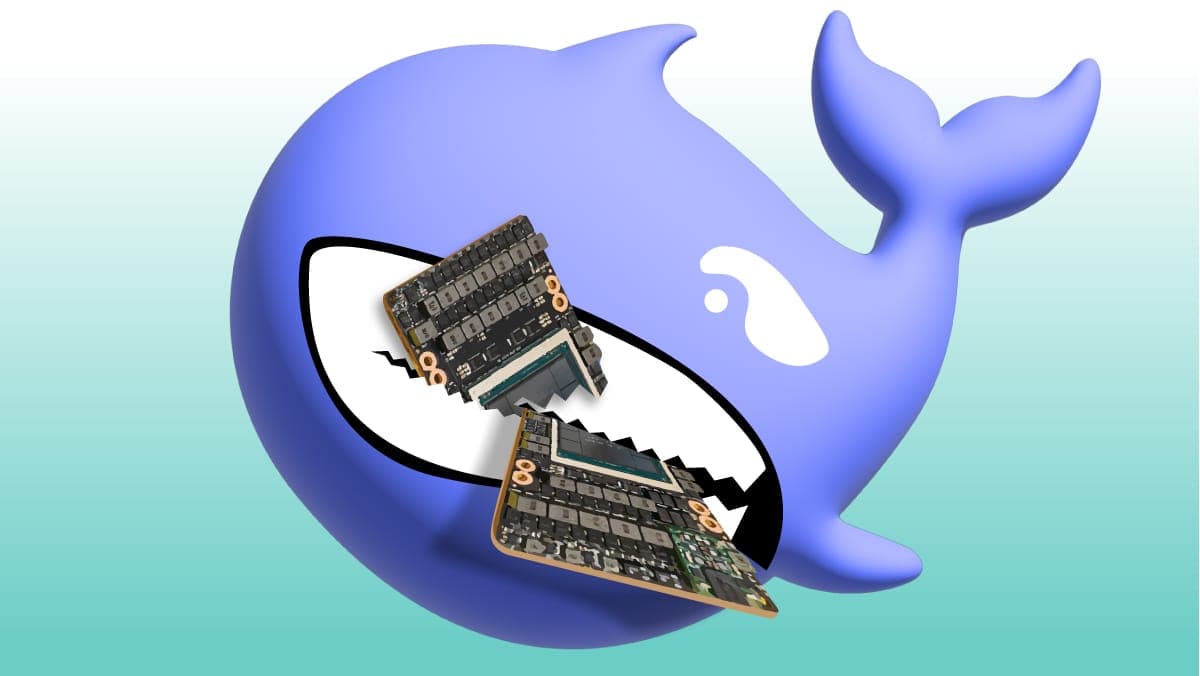
AI Agents Spend Money, Online Betting Automates, ChatGPT Users Shift, Reinforcement Learning Accelerates
The shift toward domestic AI chip production in China, coupled with advancements in AI technology, underscores the evolving landscape of global tech competition and the implications for the semiconductor industry.
- China has barred its major tech companies from purchasing Nvidia chips, indicating a move towards self-sufficiency in its semiconductor industry.
- AI tools for online sports betting are now being implemented to enhance prediction accuracy and manage users' bets.
- A new reinforcement learning technique has been developed to optimize the selection of training examples, thereby speeding up the fine-tuning of language models.
- Recent studies show that ChatGPT users have shifted demographics, with a higher proportion of young female users seeking information.
China is making strides in its domestic semiconductor capabilities, particularly in AI chip production, as it aims to reduce reliance on foreign technology. The ongoing advancements in AI leverage diverse applications, including sports betting and user engagement metrics, reflecting the rapid evolution of AI technologies. Future developments will likely focus on improving AI efficiency and expanding its application across industries.
Read the original ↗
Cohere hits $7B valuation a month after its last raise, partners with AMD
Cohere's increased valuation and partnership with AMD highlights its competition with major AI firms and its position in the rapidly evolving enterprise AI landscape.
- Cohere raised an additional $100 million, raising its valuation to $7 billion, after a $500 million round announced in August.
- The company's AI models now run on AMD's Instinct GPU, which competes with Nvidia's products.
- AMD is also an investor in Cohere and will use its models internally as a customer.
Cohere, founded in 2019 by one of the authors of the transformer paper, focuses on enterprise AI models. The company aims to provide AI solutions that keep data secure and in local control, amidst rising competition from firms like OpenAI and Anthropic.
Read the original ↗
Microsoft adds Anthropic’s AI to Copilot
This integration marks a significant shift in Microsoft's AI strategy, diversifying its offerings beyond OpenAI and enhancing competition in the AI assistant space.
- Microsoft will integrate Anthropic's AI models into its Copilot starting Wednesday.
- Users of Copilot will now have access to both OpenAI's models and Anthropic’s Claude Opus 4.1 and Claude Sonnet 4.
- This move follows a recent agreement for Anthropic’s AI to be used in Microsoft Office 365 applications.
Microsoft previously relied heavily on OpenAI for its Copilot AI assistant. The integration of Anthropic’s models reflects a broader trend of AI companies diversifying partnerships and technology. Future developments may focus on how this impacts user experience and market competition.
Read the original ↗