
The day's AI news, briefed
The Daily Prompt
Our AI editor reads each day's AI and robotics stories, pulls out why they matter, and links every original source — so you can keep up in minutes.
Join over 250,000 subscribers getting the latest AI news
Latest AI & Robotics News Today

Labelbox Raises $100M+ Series E at $1.25B Valuation to Advance RL and AI Agents
The increase in financing allows Labelbox to further develop its AI products and infrastructure, potentially enhancing the capabilities of AI agents and their applications across various industries.
- Labelbox raised over $100 million in Series E financing with a pre-money valuation of $1.25 billion, led by Infinitum Partners.
- The investment will support research and engineering for its products, Horizon and Recursion Managed Agents, and expand customer outreach.
- Labelbox reached profitability in 2026 and now has over 400 customers, including more than 90% of leading U.S. AI labs.
- The released Recursion Managed Agents product allows enterprise customers to use AI to manage tasks across over 100 business applications.
Labelbox provides software for managing training data and operates in the AI space. Founded in 2018, the company has grown significantly, especially with the rise of AI technologies. Future developments may focus on enhancing AI agent capabilities and expanding customer applications.
Read the original ↗
AI Came for Math. Now It’s Chasing the Rest of Science
The rising capabilities of AI in solving theoretical problems could drastically transform scientific inquiry and innovation across multiple disciplines.
- AI is progressing in various scientific fields, with models able to solve 35 percent of theoretical problems compared to just 2 percent two years prior.
- MIT researchers suggest that fields such as probability, economics, and quantum physics may soon see significant shifts due to AI advancements.
- The study tested AI models like GPT-5 on theoretical problems from research papers published after their training cutoff without using the internet for solutions.
Artificial intelligence is increasingly being used to tackle complex scientific problems. Following significant developments in mathematics, experts are now predicting similar transformations in other scientific areas, particularly those reliant on theoretical approaches.
Read the original ↗
YouTube Music launches new labels as AI-generated music floods streaming platforms
YouTube Music's new labeling system aims to enhance transparency in the music industry as AI-generated music gains popularity, impacting how listeners identify and interact with these creations.
- YouTube Music has introduced a labeling system for songs created with generative AI to improve transparency for listeners.
- The labels will indicate whether a track is fully generated by AI, partly generated, or not generated by AI at all.
- This system will also extend to the main YouTube app, allowing broader access to AI music identification.
- YouTube collaborated with various music partners and created detection tools to facilitate this labeling process.
Generative AI refers to artificial intelligence that can create content, including music. As the prevalence of AI-generated music increases, various streaming platforms, including Apple Music and Spotify, are implementing similar labeling systems. YouTube's approach focuses on disclosure rather than restricting AI music from monetization.
Read the original ↗
WorldRecon: Generative Multi-View Mesh Reconstruction for Large-Scale 3D World
WorldRecon represents a significant advancement in the generation of high-quality 3D models, enhancing the ability to reconstruct large-scale scenes from multiple images, which could impact various applications in robotics and computer graphics.
- WorldRecon is a generative framework designed for reconstructing complete, large-scale 3D scene meshes from unposed multi-view RGB images.
- The framework implements a construction model that utilizes a coarse, noisy global point cloud and estimated camera poses.
- It achieves state-of-the-art reconstruction performance, improving metrics like Chamfer distance and F-score compared to existing baselines on both synthetic and real-world indoor scenes.
- WorldRecon integrates techniques such as neighbour-aware latent painting and causal world generation to maintain scene coherence across overlapping spatial blocks.
WorldRecon is a novel approach to 3D reconstruction, leveraging a generative model to create coherent meshes from multi-view images without prior camera alignment. Previous methods often struggle with unobserved surfaces and inconsistencies in mesh quality. Future developments may focus on expanding applications and integrating real-time capabilities for various industries.
Read the original ↗
Data-Centric Recursive Self-Improvement for Navigation via Policy-Synchronized Language-Action Dual Bootstrapping
The introduction of the RSI-Nav framework may enhance the efficiency and accuracy of navigation systems that rely on natural-language instructions, impacting various applications in AI navigation technology.
- RSI-Nav is a recursive self-improvement framework designed for vision-language navigation, enhancing task execution using natural language.
- It processes unlabelled trajectories and updates itself after each iteration to align supervision with evolving navigation policies.
- Extensive experiments show RSI-Nav achieves 68.6% success rate on R2R-CE and 72.4% on RxR-CE, improving instruction generation and spatial understanding.
RSI-Nav utilizes a shared model to unify vision-language-to-action instruction following with vision-action-to-language instruction generation. Prior methods in this field faced limitations in model coupling and efficiency, prompting the need for improved frameworks. Continued advancements in this area could lead to more robust AI navigation systems.
Read the original ↗
Agent-Reflex: Teaching Language Agents to Act Reflectively
Improving the reflective capabilities of language agents enhances their robustness and effectiveness in noisy real-world environments, leading to more reliable AI applications.
- Agent-Reflex is a training framework for language agents that incentivizes proactive reflection to improve performance under noisy conditions.
- The framework includes three stages: Environment Reflection Skill Discovery, Reflective Supervised Fine Tuning, and On-Policy Reflective Policy Optimization.
- On Qwen3-8B, Agent-Reflex achieved a score of 58.6 on five benchmarks and 29.1 on AgentNoiseBench, outperforming previous models.
- Agent-Reflex distills 1,170 reflection meta-skills from real tool failures across 557 environments, enhancing agents' learning from failures.
Language models have evolved significantly, shifting from basic chatbots to more sophisticated interactive agents capable of reasoning. Previously, agents struggled to maintain performance in noisy environments, but Agent-Reflex aims to address this challenge by teaching agents to reflect on their actions. Future developments will likely focus on further refining the reflection process to enhance agent robustness.
Read the original ↗
Jeva: System One Models from First Principles
Jeva's new architecture aims to enhance decision-making efficiency in AI by addressing key structural requirements, potentially leading to faster and more accurate outcomes in various applications.
- Jeva introduces a decision-native architecture supporting null awareness, permutation invariance, option scalability, and cacheability.
- The model supports up to 2,048 candidates and demonstrates zero decision flips during permutations.
- Jeva delivers over 20 times median-latency speedups by reusing pre-cached document candidates.
Jeva is an AI architecture that seeks to improve decision-making processes by combining important structural characteristics. This approach is relevant as AI systems increasingly require efficiency and accuracy in their operations. Future studies may focus on further enhancements or applications of the Jeva architecture in real-world scenarios.
Read the original ↗
Hesai Launches Kosmo to Turn Real-World Scans Into Robot Training Data
Hesai's Kosmo engine drastically reduces the time and cost of creating high-fidelity 3D environments for robot training, which could accelerate advancements in robotics and AI applications.
- Hesai Group launched Kosmo, a 3D world data engine, on October 14, 2026, aimed at transforming real environments into training data for robots.
- Kosmo combines the Kosmo One spatial camera with the Kosmo World cloud platform to create high-fidelity 3D models efficiently.
- Deployments, such as one at a Dairy Queen, demonstrate a reduction in modeling time from 300 hours to 15 minutes, improving robot task success rates significantly.
Hesai Group is a leader in lidar technology, focusing on enhancing robotic and AI capabilities. The introduction of Kosmo builds on these technologies, changing how real-world data is utilized for robot training and content creation. Future developments to watch include partnerships and further enhancements to the Kosmo platform's capabilities.
Read the original ↗
Baker Lab Designs AI Proteases That Cleave Disease-Linked Proteins
The development of AI-designed proteases could lead to new therapeutics for diseases linked to specific proteins, transforming treatment strategies and advancing biotechnology applications.
- Two teams at the University of Washington designed novel proteases that selectively cleave disease-associated proteins like TDP-43 and amyloid-β.
- One study reported a 36% success rate in catalyzing targeted peptide cleavage, achieving acceleration by over 10⁸-fold in reaction rates.
- The second study successfully designed 13 active cysteine proteases out of 69 tested, enhancing cleavage rates by up to 3 × 10⁷-fold.
- Both research projects were published in Nature, with authors including David Baker and Donald Hilvert among others.
The Institute for Protein Design at the University of Washington focuses on using computational methods to design novel proteins. Previous research in enzyme design faced limitations, prompting innovative approaches that have recently yielded successful results. Future applications may include therapeutics and bioremediation efforts.
Read the original ↗
Anthropic Adds OpenTelemetry Trace Export to the Claude Platform
This update allows developers to track and analyze the performance of AI agents on the Claude Platform, improving agent reliability and efficiency in various applications.
- Anthropic recently added OpenTelemetry trace export to the Claude Platform, enabling developers to send traces from Claude Managed Agents and the Messages API to observability tools.
- The feature is available in public beta and allows for detailed tracking of agent performance, including latency and token counts.
- Developers can configure SDK and API tracing, with the latter requiring Admin permission to set up in the Claude Console.
- Supported observability platforms include Grafana, Honeycomb, Sentry, and Splunk, facilitating integration into existing user workflows.
The Claude Platform, developed by Anthropic, is designed for creating and deploying AI agents. OpenTelemetry is a set of tools and standards for tracing requests in software applications. This addition reflects a growing trend in AI to enhance observability and performance monitoring in deployed systems.
Read the original ↗
Sachin Katti Leaving OpenAI Compute Role to Build Something New
Katti's departure from OpenAI signals a shift away from leadership in AI infrastructure development, which may impact the company's strategic direction and future projects.
- Sachin Katti announced he will leave his role as OpenAI's vice president of compute strategy and GPT-Infra on November 15, 2026.
- Katti plans to remain an advisor to OpenAI after his departure and intends to pursue a new venture in AI infrastructure.
- During his time at OpenAI, Katti oversaw significant compute infrastructure projects, securing double-digit gigawatts of new capacity across multiple locations.
- Under Katti's leadership, OpenAI's GPT-Infra evolved from concept to operational business within three months, collaborating with major industry players.
- Katti previously held positions at Intel and Stanford, shaping his expertise in AI infrastructure and computing.
OpenAI specializes in artificial intelligence research and infrastructure, building algorithms and systems used for various AI applications. Katti's recent role involved expanding access to compute capacity and improving operational efficiency. Future developments to watch include the ongoing projects and partnerships in AI infrastructure, particularly those initiated during Katti's tenure.
Read the original ↗
YouTube Music Labels Songs Made Primarily with Generative AI
The introduction of labels for generative AI-created songs by YouTube Music enhances transparency for users, addressing concerns over the authenticity and origin of music they consume.
- YouTube Music is implementing labels to indicate when songs are made primarily with generative AI, announced on October 14, 2026.
- Listeners will see a label directly on the player page of AI-generated tracks, which provides more information about the song.
- Music partners must report generative AI use, categorizing tracks as Fully Gen AI, Partly Gen AI, or No Gen AI.
- YouTube uses its detection tools to identify AI-generated tracks and may augment partner declarations with additional signals.
YouTube Music is a music streaming platform that is enhancing user transparency regarding music creation methods. Previously, the platform lacked distinct labeling for generative AI music. Future developments to watch include the expansion of these labels to the main YouTube app.
Read the original ↗
Anthropic Strengthens Election Safeguards Ahead of 2026 US Midterms
Strengthened safeguards by Anthropic for the upcoming US midterms aim to mitigate misinformation risks associated with AI, crucial for preserving electoral integrity.
- Anthropic released a privacy-focused analysis of 250,000 conversations on its Claude.ai platform related to elections and political discussions.
- Starting later in October 2026, Claude.ai will provide state-specific official voting information and election results for US users.
- The company updated its Usage Policy to prohibit misleading uses of Claude.ai in elections, effective November 12, 2026.
Anthropic provides AI tools and has previously focused on election-related safeguards, including transparency in information. Upcoming improvements include enhanced detection of misuse and clearer guidelines for users during the electoral process.
Read the original ↗
FBI Arrests OpenAI Employee Suspected of Planting a Surveillance Bug
The arrest highlights escalating concerns about espionage targeting AI firms, which could jeopardize national security and innovation in the competitive AI landscape.
- The FBI arrested OpenAI employee Abdulrahman Alfozan for allegedly planting a surveillance device to record the company's internal discussions.
- Alfozan, a 35-year-old Saudi Arabian citizen, was charged with violating US law regarding unauthorized interceptions of communications.
- The espionage incident underscores the U.S. government's view of AI development as a national security priority, according to intelligence officials.
OpenAI, a leader in AI development, is under scrutiny due to allegations of internal espionage. This incident raises awareness of the potential security threats AI labs face in a competitive global environment.
Read the original ↗
Apate sends AI agents undercover to get scammed so they can gather fraud intelligence
The use of AI agents to gather intelligence on scams could enhance fraud prevention strategies, benefiting various industries and potentially reducing the financial losses associated with fraudulent activities.
- Apate.ai deploys AI agents that simulate scam victims to engage with fraudsters and collect intelligence.
- The agents interact with scammers through various channels, including calls, emails, and social media, to learn about their tactics.
- Apate's technology has reportedly wasted 17 years of scammers' time over 2.5 million conversations, retrieving crucial information about ongoing scams.
- Clients include banks and telecoms, with notable outcomes such as a 76% drop in scam losses for Commonwealth Bank of Australia.
- The startup raised $8.15 million in seed funding to further develop its product and expand internationally, including plans for offices in London and the U.S.
Apate, founded in 2024, focuses on leveraging AI to combat fraud by simulating scam victim behavior. The company's approach evolves from traditional methods of responding to scams to proactive engagement with fraudsters, aiming to disrupt their operations before victims are harmed. The recent surge in AI-related crimes has amplified the need for innovative solutions like Apate's.
Read the original ↗
AesCode: Aesthetic Code Generation with Decoupled Cross-Modal Rewards
This development could significantly enhance the quality and correctness of generated visual content, making it more reliable for users in various applications such as design and presentation.
- AesCode generates structured, editable code grounded in content prompts while using images for aesthetic guidance.
- It improves spatial planning, aesthetic quality, and verifiable correctness through coupled rewards and reinforcement learning.
- The benchmark established for evaluation separates verifiable correctness from visual quality, aligning with human judgments.
- Reference images boost visual quality, with AesCode showing notable improvements over existing models by 31.1 percentage points and 22.4 percentage points.
AesCode represents an advancement in generating visual artifacts such as HTML and CSS from prompts while prioritizing aesthetic value. Prior methods often struggled with the limitations of code and image generators separately. Future developments may focus on further refining these dual reward systems to enhance output quality even more.
Read the original ↗
Multics: Generative Multi-Player World Model with Hierarchical Communication
The development of Multics offers significant advancements in multiplayer game models, streamlining communication and enhancing performance as player numbers increase, which could influence future game design and AI applications.
- Multics is a new multiplayer video generation framework that utilizes hierarchical communication to improve robustness and scalability for multiple players.
- The framework introduces group tokens for intermediary group-level representations, which help aggregate locally relevant player information and reduce communication costs.
- Experiments indicate that Multics achieves state-of-the-art performance in 4- and 6-player settings, demonstrating better consistency and control compared to previous models.
Multics addresses challenges in existing multiplayer world models by structuring information exchange to accommodate varying player numbers while minimizing interference from unrelated events. As multiplayer gaming becomes more complex, scalable frameworks like Multics could shape the next generation of gaming AI.
Read the original ↗
VideoJev: System One Model for Video Understanding and Interaction
The introduction of VideoJev models promises enhanced capabilities in video understanding and interaction, potentially improving applications in decision-making and query responses across various video analysis tasks.
- VideoJev is a new family of models designed for video understanding and interaction based on the emerging System One paradigm.
- These models utilize pre-trained multi-modal large language models (MLLMs) to directly score temporal intervals and answer choices without autoregressive decoding.
- The 4B and 35B-A3B models demonstrate improved mean intersection over union (mIoU) scores by 6.7 and 10.8 points compared to their previous backbones, and achieve inference speedups of 2.8 to 3.1 times.
- They also achieve performance comparable to other leading models on video question answering benchmarks, with inference speeds exceeding 100 times faster.
Video understanding and interaction technologies utilize AI to interpret and act upon video data. The VideoJev models build on the existing capabilities of multi-modal large language models, enhancing their efficiency and effectiveness in real-time applications. Future developments may focus on further improving model accuracy and responsiveness in various interactive environments.
Read the original ↗
Recording device hidden in toilet paper found in top-secret OpenAI meeting room
The incident highlights significant security vulnerabilities within major tech organizations and the implications for national security surrounding potential espionage in AI development.
- A hidden recording device was discovered in a confidential OpenAI meeting room two days after it was allegedly planted by engineer Abdulrahman Alfozan.
- The FBI has charged Alfozan with espionage, claiming he sought to use the device to steal trade secrets and potentially threaten national security.
- Alfozan is facing up to five years in prison and a $250,000 fine if convicted of unlawful recording laws.
- CCTV footage reportedly captured Alfozan attempting to retrieve the device he planted, as well as several suspicious activities in the weeks leading up to the arrest.
OpenAI is a leading AI research organization, and the incident follows growing concerns about espionage targeting tech companies in the U.S. This arrest aligns with increased government efforts to protect national security against foreign intelligence threats in the AI sector.
Read the original ↗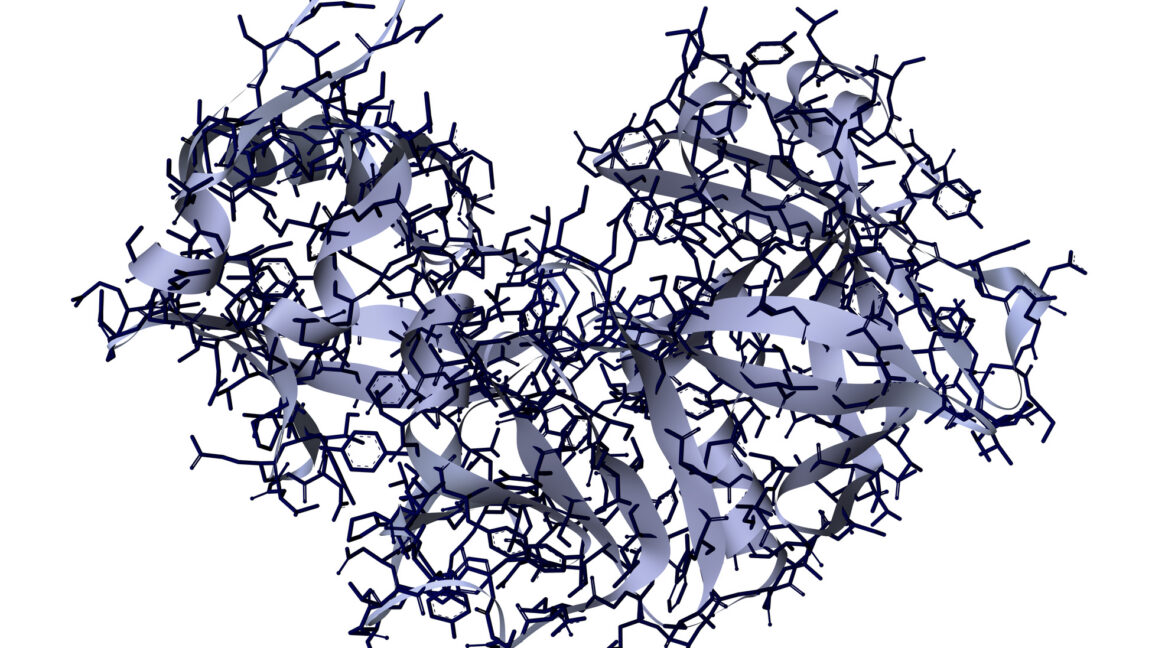
Researchers use AI to design proteins that cut up other proteins
This breakthrough in designing targeted proteases using AI could lead to advances in treating genetic diseases by directly addressing the misfolded proteins that contribute to these conditions.
- Researchers used AI-based tools to design proteins, called proteases, that can cleave other proteins.
- The study combined elements of zinc and cysteine proteases to develop new enzymes tailored for specific protein targets.
- The AI design process showed a success rate of 19 percent for functional cysteine protease designs and improved activity for zinc proteases targeting neurological proteins.
Proteases are enzymes that break down proteins by cleaving peptide bonds. This research builds on the capabilities of AI in protein design, aiming for precision in targeting disease-related proteins. Future developments may focus on overcoming delivery challenges for therapeutic applications.
Read the original ↗