
The day's AI news, briefed
The Daily Prompt
Our AI editor reads each day's AI and robotics stories, pulls out why they matter, and links every original source — so you can keep up in minutes.
Join over 250,000 subscribers getting the latest AI news
Latest AI & Robotics News Today
Google's parent company is raising $80 billion to fuel its AI ambitions
Alphabet's $80 billion capital raise highlights the intense financial demands of competing in the AI sector, underscoring the importance of investment in infrastructure to meet growing customer needs.
- Alphabet plans to sell $80 billion in stock to enhance its AI compute infrastructure.
- Berkshire Hathaway is purchasing $10 billion of Alphabet's stock in this initiative.
- Alphabet's expected capital expenditures for 2026 are between $180-$190 billion, potentially increasing in 2027.
- Alphabet reported $110 billion in revenue in the first quarter of 2026, a 22 percent increase from 2025.
Alphabet, Google's parent company, is among the largest technology firms and is investing heavily in artificial intelligence (AI) technologies. Recently, competitors such as Anthropic and OpenAI have also secured substantial funding to bolster their AI capabilities. Observers should watch how these investments affect the competitive landscape and profitability in AI.
Read the original ↗
Florida sues OpenAI and Sam Altman over alleged 'exploitation of users'
This lawsuit underscores the legal implications for AI companies regarding user safety and accountability, especially following incidents linked to their technologies.
- Florida's Attorney General has filed a civil lawsuit against OpenAI and CEO Sam Altman, accusing them of deceptive practices and reckless conduct harmful to users.
- The suit highlights incidents where users allegedly consulted ChatGPT for planning violent acts, including a mass shooting at Florida State University.
- OpenAI is accused of several counts, including negligence and causing public nuisance, while claiming its systems have safeguards to protect users.
- The lawsuit seeks penalties and personal liability for Altman, with ongoing criminal investigations into the company's conduct.
OpenAI is a technology company focused on artificial intelligence, particularly conversational agents like ChatGPT. Previous incidents of violence involving its systems have led to escalating scrutiny and lawsuits. Observers expect continuing legal challenges as AI technology evolves and its risks become more pronounced.
Read the original ↗
Anthropic expands its Claude Mythos preview to more partners
Expanding access to Claude Mythos for more organizations could enhance cybersecurity capabilities globally, protecting critical infrastructure from potential software vulnerabilities.
- Anthropic has invited approximately 150 new organizations to join Project Glasswing, expanding its partner base to enhance cybersecurity capabilities.
- The new invitees span more than 15 countries and include industries like public utilities and healthcare, which were previously underrepresented.
- Each organization must meet Anthropic's security requirements to access Claude Mythos, which aims to improve vulnerability detection in software.
Anthropic's Claude Mythos is a new AI model designed to improve cybersecurity by identifying software vulnerabilities. Announced in April, the initial preview was limited to around 50 partners. The project is part of ongoing discussions about AI regulation and safety in the U.S.
Read the original ↗
Trump signs scaled-back AI cybersecurity order
The executive order introduces a framework for the federal review of AI models, reflecting a shift in policy that acknowledges the security risks associated with artificial intelligence.
- President Trump signed an executive order for a framework to evaluate AI models, tasking the Office of the National Cyber Director with this responsibility.
- AI companies are asked to voluntarily submit their models for government review at least 30 days before public release, down from a proposed 90 days.
- The order allows sharing of information about software vulnerabilities identified by AI systems with critical infrastructure operators like hospitals and banks.
The order marks a regulatory shift after a period of minimal oversight on AI under the Trump administration, which previously focused on ideological restrictions. This new directive represents a recognition of AI security risks, necessitating a government response.
Read the original ↗
Microsoft announces Project Solara, its take on an AI agent platform
The rise of AI agent platforms like Project Solara indicates a shift towards AI-first devices, potentially transforming how users interact with technology in their everyday lives.
- Microsoft has announced Project Solara, a platform for AI agents, showcased at Build 2026.
- Solara will power different reference devices, including a smart display and a mobile smart key badge, designed to run AI agents.
- The platform emphasizes flexibility, allowing users to manually select which agent they want to use, rather than having a single dominant agent.
- Project Solara is built on a fork of Android, called Microsoft Device Ecosystem Platform (MDEP), enabling compatibility across various devices.
- Several companies, such as Target and CVS Health, will begin piloting Solara devices in the coming months.
Project Solara is Microsoft's initiative to create a platform for AI agents, reflecting a broader trend towards AI-first technological interactions. This platform aims to address enterprise needs for manageability and security while allowing customization for users. Future developments to watch include the performance of Solara devices in real-world business environments.
Read the original ↗
Google will allow websites to exclude themselves from AI search results
This new opt-out option for websites allows publishers to gain more control over their online presence amid concerns about Google’s AI features impacting their traffic and revenue.
- Google is introducing a feature allowing website owners to exclude their domains from AI-generated search results.
- This opt-out option will be tested with a small group of webmasters in the UK before a global rollout.
- Sites choosing to opt out will not receive traffic from Google's generative AI, which will not affect their rankings in regular search results.
- The move responds to pressure from the UK's Competition and Markets Authority, which imposed this requirement due to Google's market position.
Google's AI search features, including AI Overviews and AI Mode, have drawn scrutiny from publishers concerned about their traffic. The introduction of this opt-out option follows recent regulatory developments aimed at creating a fairer environment for content creators. Looking ahead, Google plans to enhance its Search Console tools to provide better metrics for webmasters.
Read the original ↗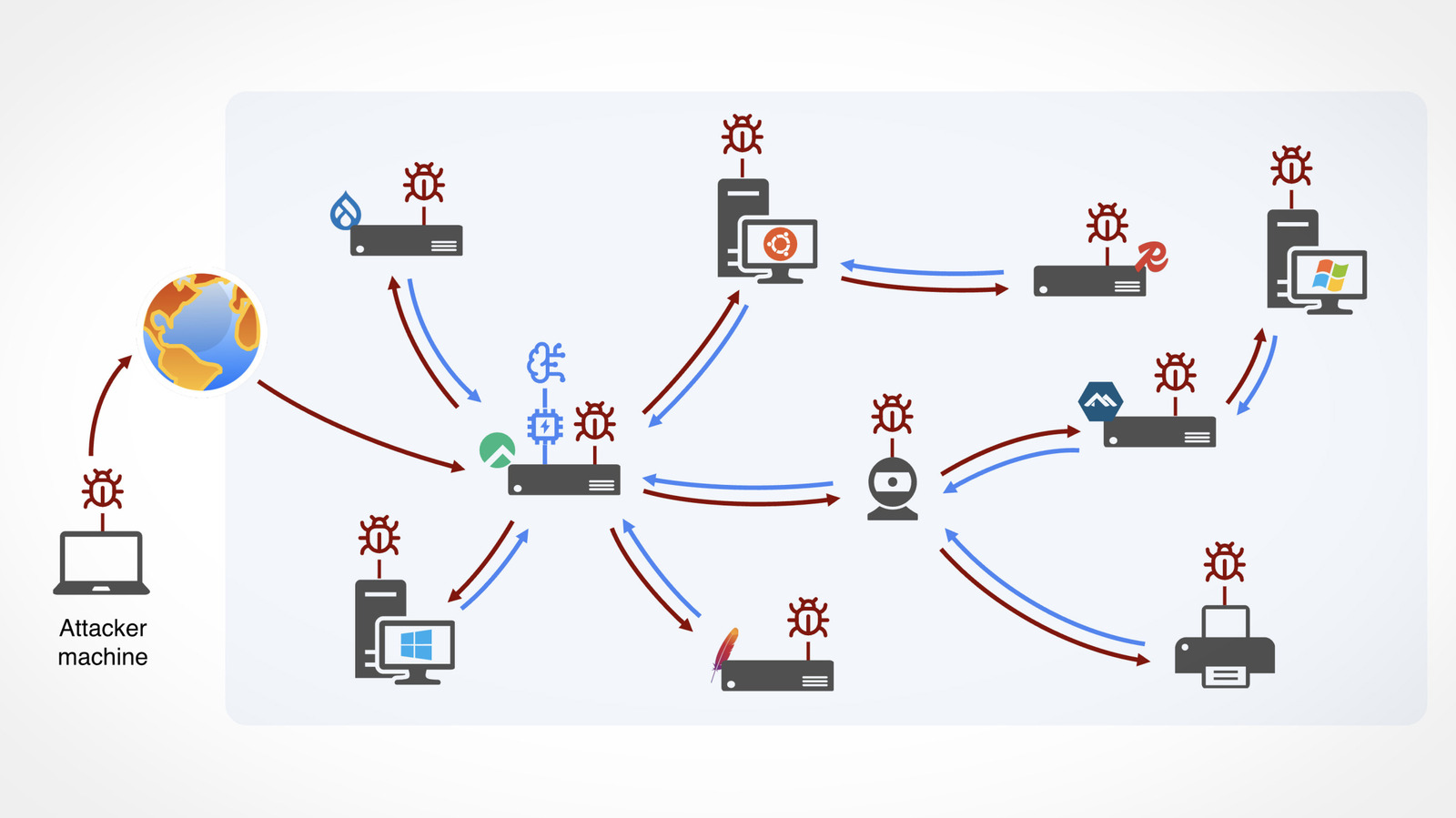
Researchers show how AI-powered worms could wreak havoc on the internet
The emergence of AI-powered worms poses a significant cybersecurity threat, as they can autonomously adapt and learn new strategies for exploiting vulnerabilities in networks.
- Researchers at the University of Toronto created an AI-powered worm that can spread without human intervention, using open-source AI models.
- This worm can tailor its attacks across various platforms, including Linux and Windows, while siphoning sensitive data and uncovering additional vulnerabilities.
- Unlike typical worms that need manual programming, this prototype learns from each machine it infects, diminishing the cost and effort required for future attacks.
AI-powered worms represent a novel cybersecurity threat by automating the process of exploiting known computer flaws. Previous research has highlighted the risks associated with AI in cybersecurity, such as Anthropic's Mythos, which identifies vulnerabilities. Ongoing research will likely explore countermeasures against these emerging threats.
Read the original ↗
Claude AI: What's free in 2026 and what isn't?
Understanding the limitations of Claude AI is crucial for users to effectively navigate its free offering, especially as the landscape of AI tools continues to evolve.
- Anthropic restricts free users to the Sonnet 4.6 and Haiku 4.5 models, excluding the flagship Opus 4.8.
- Free users can typically send 15 to 40 messages to Claude every five hours, depending on prompt complexity and demand.
- The chatbot's usage limits are based on a unique compute cost for each prompt, and are structured around a rolling five-hour window.
- Free users have access to features like web search and file uploads but lack premium tools such as Claude Code and Claude Design.
- Anthropic ensures that free usage of Claude remains ad-free, differentiating it from other AI services that are introducing advertisements.
Claude AI is developed by Anthropic and uses large language models to generate responses through a process called inference. The platform has faced scrutiny over its vague usage limits and subscription-required features. Users should be aware of these limitations to optimize their experience with the service.
Read the original ↗
Canada Prime Minister Mark Carney announces questionable national AI strategy
This national AI strategy outlines Canada's approach to harnessing technological advancements while raising concerns over data protection and public skepticism towards AI technologies.
- Canadian Prime Minister Mark Carney announced the 'AI for All' plan, which focuses on data protection and increasing AI adoption for the next five years.
- The strategy aims to create up to 90,000 AI-related jobs and enhance trust in AI technologies among Canadians.
- A public AI supercomputer will be constructed as part of further investment in Canadian-owned AI infrastructure.
Canada's 'AI for All' plan reflects a push to develop a domestic AI sector while ensuring data protection. The strategy follows growing global interest in AI, emphasizing infrastructure investment and job creation. Observers will be monitoring public reception and effectiveness of the planned initiatives.
Read the original ↗
Wired found code for an unreleased facial recognition feature in Meta's AI app
The discovery of facial recognition code in Meta's AI app raises significant ethical and privacy concerns, highlighting the ongoing debate over the use of facial recognition technology in society.
- Wired reports that Meta has embedded code for a facial recognition feature named "NameTag" in its AI app for potential use with smart glasses.
- The code is not currently active, accessible to customers, or part of any announced feature but suggests Meta is exploring the technology.
- Meta previously used facial recognition for photo tagging on Facebook but discontinued it in 2021 due to privacy issues.
- The feature is designed to recognize faces and notify users when they encounter previously captured individuals, though ethical implications are significant.
Meta is a technology company known for social media platforms like Facebook and Instagram. The company has explored facial recognition features for smart glasses, which have sparked privacy debate. Following previous concerns, Meta acknowledges potential accessibility benefits while emphasizing a cautious approach to deployment.
Read the original ↗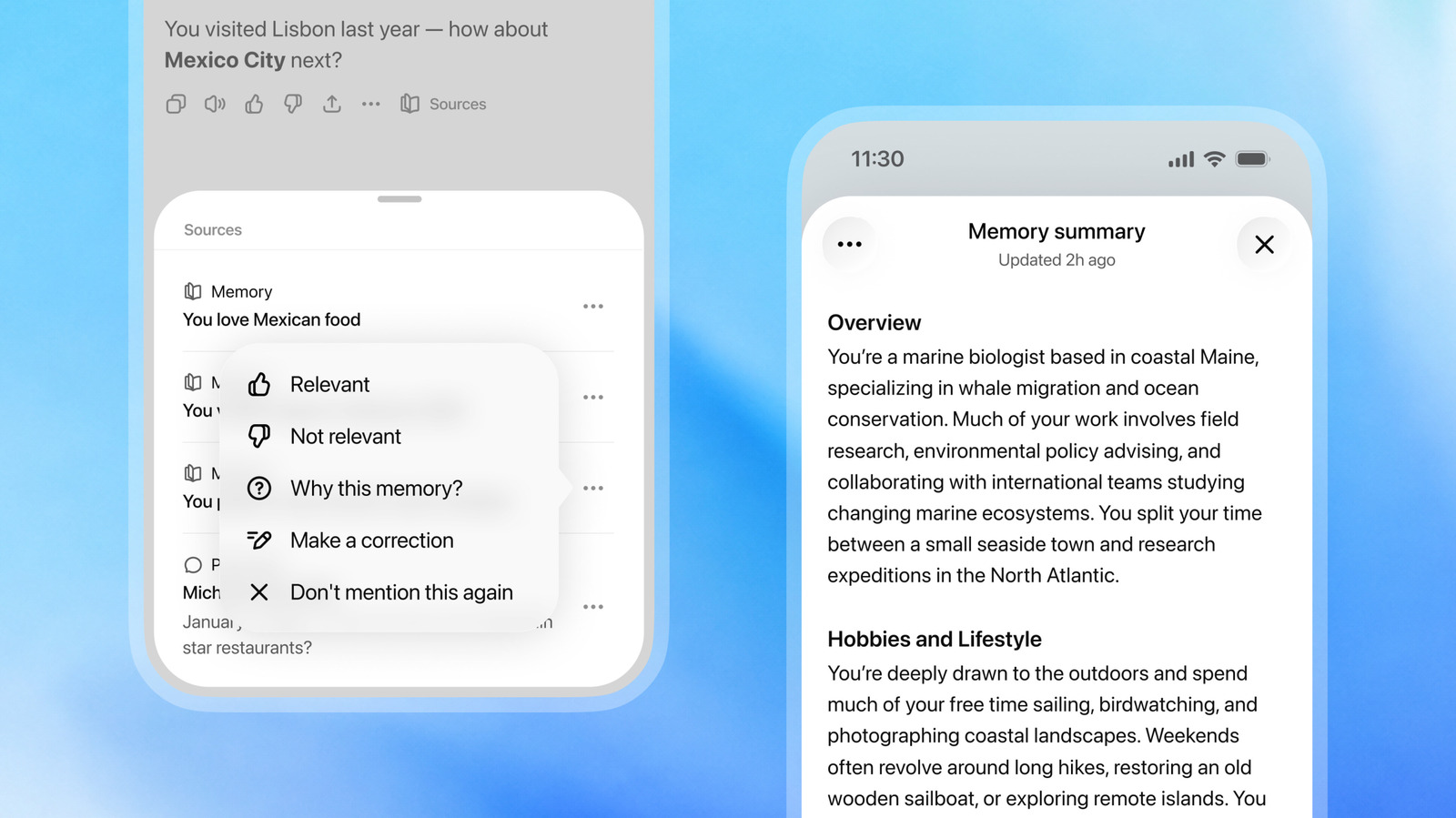
ChatGPT's memory is getting better, especially if you're on the free tier
The enhancements to ChatGPT's memory system improve its ability to personalize responses and retain information over time, making the tool more effective for users, especially those on free accounts.
- OpenAI has improved ChatGPT's memory architecture, making it more efficient and capable of personalizing user interactions.
- The new memory system allows users to view, add, and update their memory summaries at any time.
- ChatGPT can now automatically revise its memories over time to maintain relevance and accuracy in responses.
OpenAI introduced its first memory feature in April 2024, which required explicit user prompts to remember facts. The latest improvements integrate a 'dreaming' architecture that identifies user preferences and synthesizes information more effectively.
Read the original ↗
OpenAI will let the US government review its AI models before release
This development highlights the increasing regulatory scrutiny on AI technologies, emphasizing the balance between innovation and public safety in artificial intelligence deployment.
- OpenAI will allow the US government to review its AI models before their public release under a new executive order from President Trump.
- The executive order originally required companies to submit models 90 days prior to release but was later reduced to 30 days following industry feedback.
- The order aims to establish a benchmarking process for advanced AI models to assess their safety and possibly limit their distribution.
OpenAI is a leading AI research organization focused on developing safe artificial intelligence. President Trump's executive order is part of a broader effort to regulate AI technologies, reflecting ongoing tensions between industry interests and public safety concerns. Monitoring the proposed regulatory processes will be crucial in assessing their impact on the AI sector.
Read the original ↗
The University of Cambridge says it successfully tested a vaccine with an AI-designed antigen
This development could transform vaccine technology by creating a proactive method for preventing pandemics, potentially offering long-term protection against multiple viral threats.
- Researchers at the University of Cambridge tested a vaccine with an AI-designed antigen in human trials without significant side effects.
- The vaccine was administered to 39 healthy volunteers at medical facilities in Southampton and Cambridge.
- This universal vaccine targets Sarbeco coronaviruses, including SARS-CoV-2, and is designed to provide protection against future pandemic threats.
The vaccine represents a pioneering effort in using AI to design antigens, marking a shift from traditional reactive vaccine development to a proactive approach. Previous vaccines are often adapted in response to emerging diseases, making this AI-based strategy notable for its potential to anticipate future viral mutations.
Read the original ↗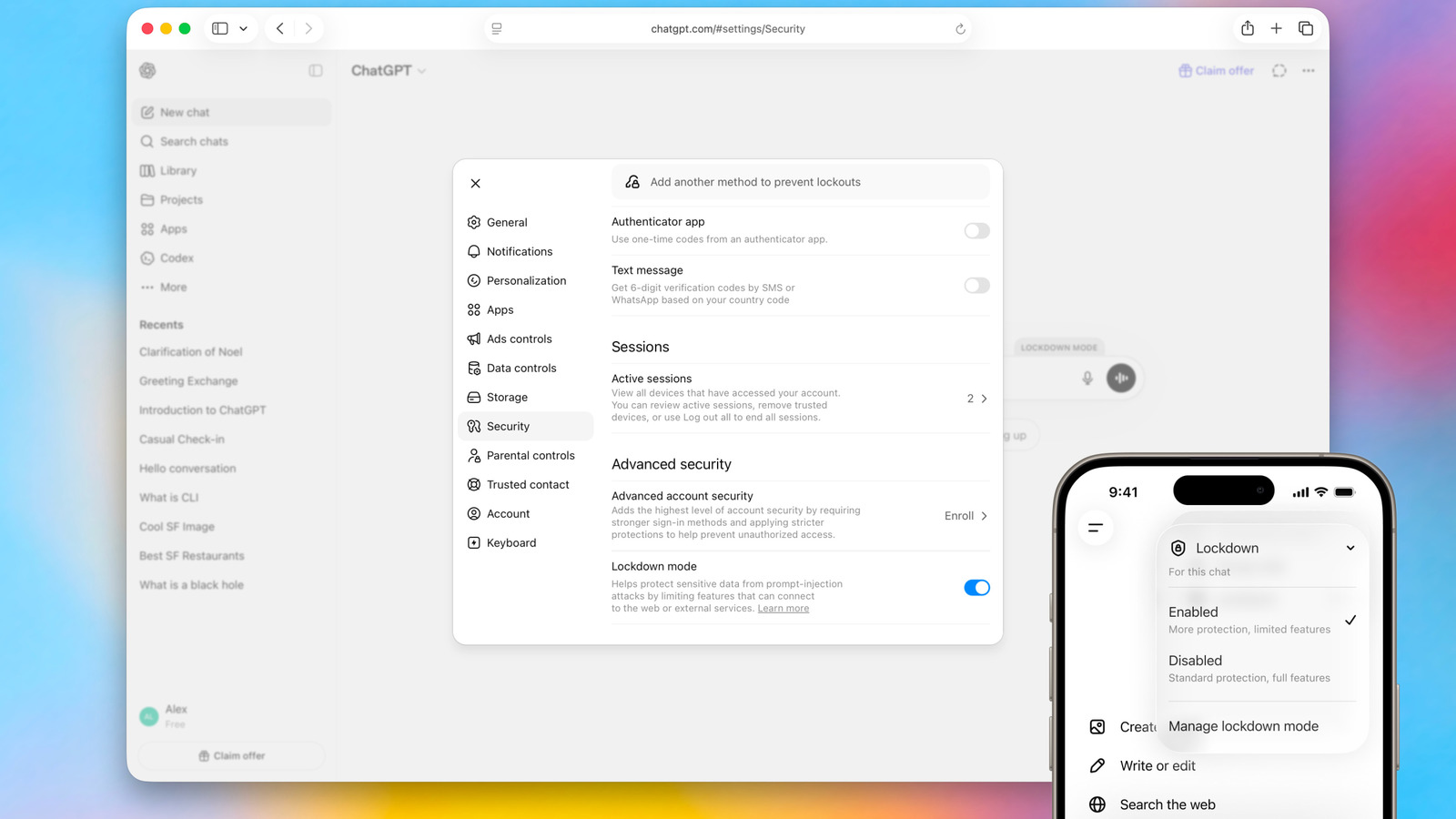
OpenAI rolls out a Lockdown Mode for extra protection against prompt injection attacks
Implementing Lockdown Mode enhances security for users handling sensitive information, addressing the growing threat of prompt injection attacks targeting AI chatbots.
- OpenAI has launched Lockdown Mode, an optional feature to protect against prompt injection attacks for users managing sensitive data.
- The mode restricts certain features of ChatGPT, including blocking internet image pulls and disabling Deep Research and Agent Mode.
- Lockdown Mode is available to all personal accounts, including free tier users, and can be activated via the settings menu.
OpenAI's Lockdown Mode is aimed at increasing security for sensitive data in response to rising incidents of prompt injection, a type of social engineering attack on chatbots. Previously, OpenAI has offered various protections, and this new mode acts as an additional safeguard. Users should monitor their account activity using the new session manager for unauthorized access.
Read the original ↗
Trump's latest memo puts 'most advanced AI in the world' into the military's hands
The integration of advanced AI into the military could significantly enhance national defense capabilities while raising concerns about oversight and responsible usage of the technology.
- President Trump signed a National Security Presidential Memorandum aimed at enhancing AI utilization in the US military.
- The memo mandates that companies cannot alter military-used AI systems without prior approval.
- The administration plans to rapidly onboard advanced AI models from various vendors for defense purposes.
- The Secretary of Defense must update directives on autonomous weapon systems in light of the new AI framework.
- The memo prohibits creating AI designed for censorship, ideological bias, or unlawful surveillance against US citizens.
The National Security Presidential Memorandum is part of a broader effort by the Trump administration to advance AI technologies in national defense. This follows a recent executive order aimed at regulating the AI industry. Future developments will likely center on the implementation of these AI technologies and their oversight.
Read the original ↗
Google will pay SpaceX $920 million a month to use xAI's data centers
This deal highlights the growing demand for AI computing resources and the competitive landscape in which major tech companies are securing external infrastructure to support their services.
- Google will pay SpaceX $920 million monthly for access to xAI's data centers, part of a $30 billion agreement lasting from October 2023 until June 2029.
- The agreement includes access to 110,000 NVIDIA GPUs, along with CPUs and memory.
- If SpaceX fails to deliver the promised GPUs by September 2023, Google can terminate the deal or accept a reduced payment for fewer resources.
Google, a major player in AI, has signed this deal to meet the surging demand for its Gemini Enterprise AI subscription service for businesses. SpaceX, owned by Elon Musk, is expanding its offerings in the AI infrastructure sector, which has also attracted clients like Anthropic.
Read the original ↗
OpenAI reportedly has a major ChatGPT overhaul in store
The upcoming overhaul of ChatGPT aims to expand its user base and functionality, potentially enhancing revenue and competitiveness in the AI sector.
- OpenAI plans to launch a revamped version of ChatGPT that incorporates coding tools, image generation, and integrations with partner applications.
- The redesigned ChatGPT is expected to attract more enterprise users and drive revenue growth by facilitating multiple tasks.
- The changes will debut through updates to the website and mobile apps within the next few weeks.
OpenAI is a technology company focused on developing artificial intelligence tools, including the popular ChatGPT chatbot. This latest overhaul follows prior reports of a 'super app' that unifies ChatGPT with various applications. The company is also preparing for a potential public offering later this year.
Read the original ↗
Artificial Intelligence (456)
The emergence of the Agentic Era in AI signifies a transformative period in data science that could redefine analytical capabilities and decision-making processes.
- The Agentic Era refers to a new phase of artificial intelligence.
- This phase is expected to impact data science significantly.
Artificial intelligence is a branch of computer science focused on creating systems capable of performing tasks that normally require human intelligence. The concept of the Agentic Era highlights AI's evolving role in facilitating more autonomous decision-making and data analysis. Observers should watch for advancements in AI technologies that enhance data-driven insights.
Based on the headline only — the full article could not be fetched.
Read the original ↗
Physical AI raises governance questions for autonomous systems
Understanding governance challenges surrounding Physical AI is crucial as autonomous systems increasingly operate in real-world environments, impacting safety standards and operational guidelines.
- Physical AI is integrating autonomous AI systems into robots, sensors, and industrial equipment, raising governance questions regarding safety and accountability.
- The International Federation of Robotics reported 542,000 industrial robots installed globally in 2024, with expectations to increase to 575,000 by 2025.
- Google DeepMind's new models aim to enhance robotics capabilities through vision and language integration, addressing complex tasks and safety considerations.
- Governance frameworks need to evolve to manage the unique risks associated with Physical AI, as traditional software controls may not be sufficient in physical environments.
Physical AI refers to the application of AI in physical systems such as robots and industrial machinery, creating governance challenges distinct from software automation. Recent developments in the field indicate a growing need for safety regulations and operational standards as AI systems gain more autonomy. Monitoring developments in regulations and technology partnerships will be crucial to ensure safe implementation of these systems.
Read the original ↗
Google tests Remy AI agent for Gemini as focus turns to user control
The development of Remy as an advanced AI agent highlights the growing emphasis on user control and personal assistance in AI technologies, raising significant implications for privacy and automation.
- Google is testing Remy, a new AI personal agent, within the Gemini app for employees only.
- Remy is intended to handle users' daily tasks and learn their preferences for personalized support.
- The agent is designed to integrate with various Google services like Gmail, Calendar, and YouTube Music.
- Remy aims to expand Gemini's capabilities beyond chat-based responses to managing complex tasks.
- Privacy controls allow users to manage information that Remy remembers and how it's utilized.
Gemini is Google’s AI framework that aims to provide more personalized and complex responses than traditional chatbots. The introduction of Remy signifies a push towards creating AI agents capable of acting on users' behalf while maintaining user control and privacy. Future developments may clarify how Remy operates and its potential public release.
Read the original ↗