
The day's AI news, briefed
The Daily Prompt
Our AI editor reads each day's AI and robotics stories, pulls out why they matter, and links every original source — so you can keep up in minutes.
Join over 250,000 subscribers getting the latest AI news
Latest AI & Robotics News Today

Agility is the first pure humanoid robot company on the stock market. Are you buying?
Agility becoming the first pure-play humanoid robot company publicly traded amplifies investor interest in robotics, signaling a significant shift in the industry as it seeks capital for future innovation.
- Agility is going public through a reverse merger, raising $465 million in capital from a special purpose acquisition company (SPAC).
- The company has secured $300 million in planned contracts for its new robot model, Digit 5, which can operate safely around humans.
- Agility's robots have been deployed in various industrial settings, including partnerships with companies like Toyota and Mercado Libre.
- In the first half of 2026, Agility earned $174,000 but incurred a loss of $362 million, raising concerns about its financial sustainability.
- Digit 5 is expected to be demonstrated at CES 2027, with wide availability anticipated by the end of that year.
Agility, spun out from Oregon State University in 2015, specializes in humanoid robotics, specifically its Digit robots designed for repetitive industrial tasks. The company is taking advantage of the increasing investment in physical AI technologies and aims to expand its customer base while improving robot capabilities.
Read the original ↗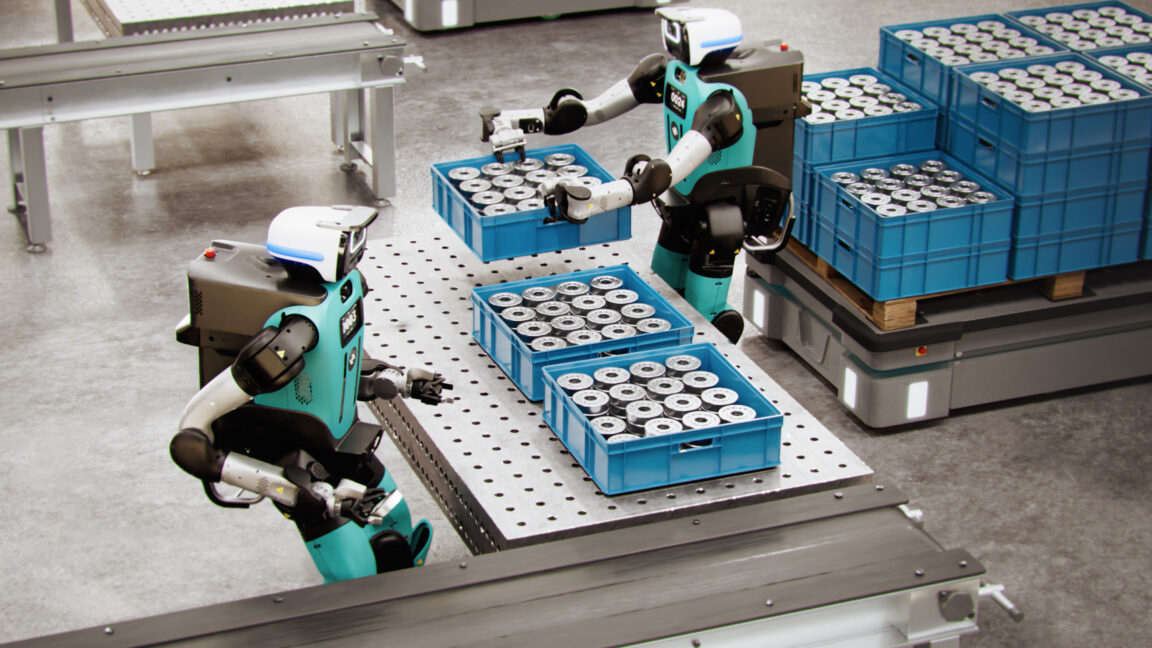
Agility Robotics’ Nasdaq debut invites scrutiny of humanoid robot market
Agility Robotics' IPO on Nasdaq highlights potential growth and challenges in the commercially unproven humanoid robot market, affecting future investments and industry standards.
- Agility Robotics became the first dedicated humanoid robot manufacturer to go public in the U.S. on November 5, 2026.
- The company revealed financial details on its humanoid robot business, particularly a subscription model costing around $8,500 per month per robot.
- Agility's Digit 5 robot is set for deployment starting in 2027 and features advancements like fast-charging technology and safety systems for working alongside humans.
- The company has recorded net losses since inception, with $1.8 million in revenue against a $140 million operating loss in 2025.
- Competition is intensifying in the humanoid robotics sector from well-established companies with greater resources and market presence.
Agility Robotics specializes in humanoid robots, having led the first full-time commercial deployment in 2024. The company plans to increase production at its Oregon facility while facing significant competition and operational challenges in the rapidly evolving robotics market.
Read the original ↗
OpenAI Publishes Community Compact and AI Campus Policy Blueprint
This policy blueprint aims to establish standards for energy use and community engagement in AI campus development, potentially influencing industry practices and local governance.
- OpenAI published a National Community Compact and Compute Campus Policy Blueprint on November 5, 2026, setting commitments for future campuses it owns.
- The compact mandates that OpenAI pay for all electricity and infrastructure costs related to its campuses and engage with local communities during planning.
- OpenAI plans to report annually on its progress and provide site-specific plans addressing construction impacts and resource use.
- The blueprint encourages policymakers to adopt similar energy and engagement standards across the AI industry, promoting broader accountability.
- Local investments highlighted include an $80 million commitment in Effingham County, Georgia, to support community-driven initiatives.
OpenAI is a leader in artificial intelligence development, and the new policies build on previous commitments aimed at sustainability and community involvement. This initiative follows OpenAI's earlier Stargate Community commitments and advocates for industry-wide standards on energy use and public engagement.
Read the original ↗
Polar Secures Over €1B in 2026 Funding for AI Data Centers
This funding marks a significant investment in developing AI-ready data centers in Europe, potentially enhancing local infrastructure for artificial intelligence applications.
- Polar DC Group Limited secured over €1 billion in funding commitments during 2026 to accelerate its European AI-ready data-center platform.
- The funding includes an initial €75 million facility from Palistar Capital, targeting early-stage land acquisition and project design.
- An €800 million Nordic bond announced in June 2026 supports contracted Norwegian projects and refinancing efforts at the Drangedal campus.
- DRA02, part of the Tørdal campus expansion, aims for completion in late 2027 and will provide an additional 40MW of IT capacity.
Polar DC Group Limited focuses on developing data centers optimized for artificial intelligence workloads. This funding supports their growth plans in Europe, particularly in Finland and Germany, while also enhancing facilities in Norway. Observers should watch for the progress of their projects in these regions, particularly DRA02's upcoming phase.
Read the original ↗
Baidu Releases ERNIE 5.5 Flash Base for Further Training
The release of ERNIE 5.5 Flash Base marks a significant advancement in AI training models, providing a benchmark for future innovations and research in domain adaptation and software engineering.
- Baidu's ERNIE Team unveiled ERNIE-5.5-Flash-Base on November 5, 2026, offering a model with 280 billion total parameters and 14 billion activated per token.
- The checkpoint serves as a pre-training end-point for developers to adapt the model for specific tasks and conduct controlled training comparisons.
- The design utilizes a mixture-of-experts model, activating only a subset of experts to optimize computational efficiency and reduce workload during training and inference.
- The accompanying FlashMask repository supports enhanced GPU configurations, delivering speed gains in model training compared to previous versions.
- The model is governed by a specific license that restricts its use based on geography and commercial revenue thresholds.
ERNIE is a series of AI models developed by Baidu, focusing on natural language processing. Previous iterations have shown advancements in training efficiency and model capabilities. The new ERNIE 5.5 Flash Base is aimed at providing researchers with a solid foundation for further training work without repeating extensive prior runs.
Read the original ↗
How AI-Powered Automation Can Solve the Payment-Posting Bottleneck
Implementing AI-driven solutions for payment posting may significantly reduce costs and inefficiencies in healthcare billing, impacting financial health and operational effectiveness for providers.
- The healthcare industry has historically relied on manual payment posting processes, despite electronic payments being sent through standard formats like EDI 835.
- Providers reported losing over $48 billion to claims denials and bad debt in 2025, largely due to manual handling of payment and denial processes.
- A large language model automates payment posting by interpreting payer codes and rules, using insights from experienced billers to improve efficiencies.
- A healthcare billing company now posts 85% of payments automatically, reducing posting errors by 95% and enhancing claims processing.
- This system allows for real-time visibility into exceptions and their resolutions, optimizing financial management and reducing reliance on manual labor.
The shift to electronic payments in healthcare, represented by EDI 835 files, aimed to streamline billing processes but still leaves significant manual tasks. The introduction of AI solutions, particularly large language models, aims to automate these tasks while maintaining human oversight, leading to improved efficiency in revenue cycles. Potential future developments include expanding AI applications in revenue cycle management across more complex healthcare billing scenarios.
Read the original ↗
How AI Video Clippers Pick Highlights (and When They Get It Wrong)
Improving the selection of video highlights through AI can enhance content engagement and save creators significant editing time.
- AI video clippers utilize a speech-first pipeline to select video highlights based on audio transcriptions and emotional scoring.
- Highlight accuracy initially ranges from 50% to 70%, improving to 75% to 90% after several uses as the system learns creator styles.
- The technology mainly favors short, emotionally intense, and quotable segments, often overlooking visually significant moments.
- Major tools include Opus Clip and Vizard, each with different strengths in transcription accuracy and clip boundary quality.
- Most tools require human review before publishing, as AI can misinterpret context and relevance in selected clips.
AI video clippers are tools designed to extract highlight clips from longer videos, primarily by analyzing audio. Existing models are trained heavily on social media content, favoring engagement over content depth. Future improvements may focus on enhancing context understanding and visual integration in content selection.
Read the original ↗
Top AI Browser Extensions That Are Actually Worth Installing
With many AI browser extensions available, understanding which tools optimize productivity without excessive resource use is crucial for informed choices.
- The article reviews major AI browser extensions for Chrome and Edge, highlighting those that effectively enhance productivity.
- Sider is the most popular extension, facilitating simultaneous chats with multiple AI models from a single interface.
- Monica offers a comprehensive suite of features including image generation and writing templates, but can feel cluttered for users needing fewer options.
- Merlin distinguishes itself with a keyboard-first activation model, offering a generous free tier with query limitations based on model use.
- HARPA is unique for its web automation capabilities, allowing users to programmatically interact with pages, making it suitable for privacy-sensitive tasks.
AI browser extensions assist users in various tasks like summarization and content translation without leaving their web pages. With numerous options available, this guide categorizes tools to help users select extensions that meet their specific needs and efficiency.
Read the original ↗
AutoStore Moves Into Pallet Robotics With Agreement to Buy Logiqs
The acquisition enables AutoStore to expand its automation capabilities, enhancing its fulfillment platform and potentially improving operational efficiency for customers in multiple sectors.
- AutoStore has agreed to acquire Logiqs BV for up to €30 million, with the transaction expected to close in the fourth quarter of 2026.
- Logiqs specializes in roaming pallet automated storage and retrieval systems (AS/RS), enhancing AutoStore's product offerings.
- The acquisition will integrate Logiqs' technology into AutoStore's platform, aimed at addressing broader customer needs over time.
AutoStore is a developer of automated warehouse solutions focused on enhancing efficiency in order fulfillment. This acquisition represents a strategic move into pallet-handling robotics, which is a new area for the company, and may influence its competitive position in the market.
Read the original ↗
Google AI Research Releases Agile Deliberation Framework for Gray-Area Image Classifiers
The Agile Deliberation framework can enhance the accuracy of image classifiers for subjective concepts, improving content moderation and user experience in AI applications.
- Google Research released the Agile Deliberation framework for developing image classifiers focused on subjective concepts like health and inspiration.
- The framework integrates with Gemini 2.5 Pro and Flash, without requiring fine-tuning, and operates on a Jupyter or Colab notebook.
- Testing showed an average F1 score improvement of 10.5 points over zero-shot baselines, with notable increases in precision but a decrease in recall.
- Users reported lower effort and stress when utilizing Agile Deliberation compared to traditional methods of prompt editing.
- The tool emphasizes finding boundaries of subjective concepts by retrieving borderline images instead of relying solely on classifier confidence.
Agile Deliberation is designed to improve image classification for vague concepts by engaging users in defining these concepts through multiple interactions. Prior methods often assumed clarity in concept boundaries, which Agile Deliberation addresses by incorporating user feedback for more accurate classifications. Future developments may include broader applications of this framework in various AI and content moderation tasks.
Read the original ↗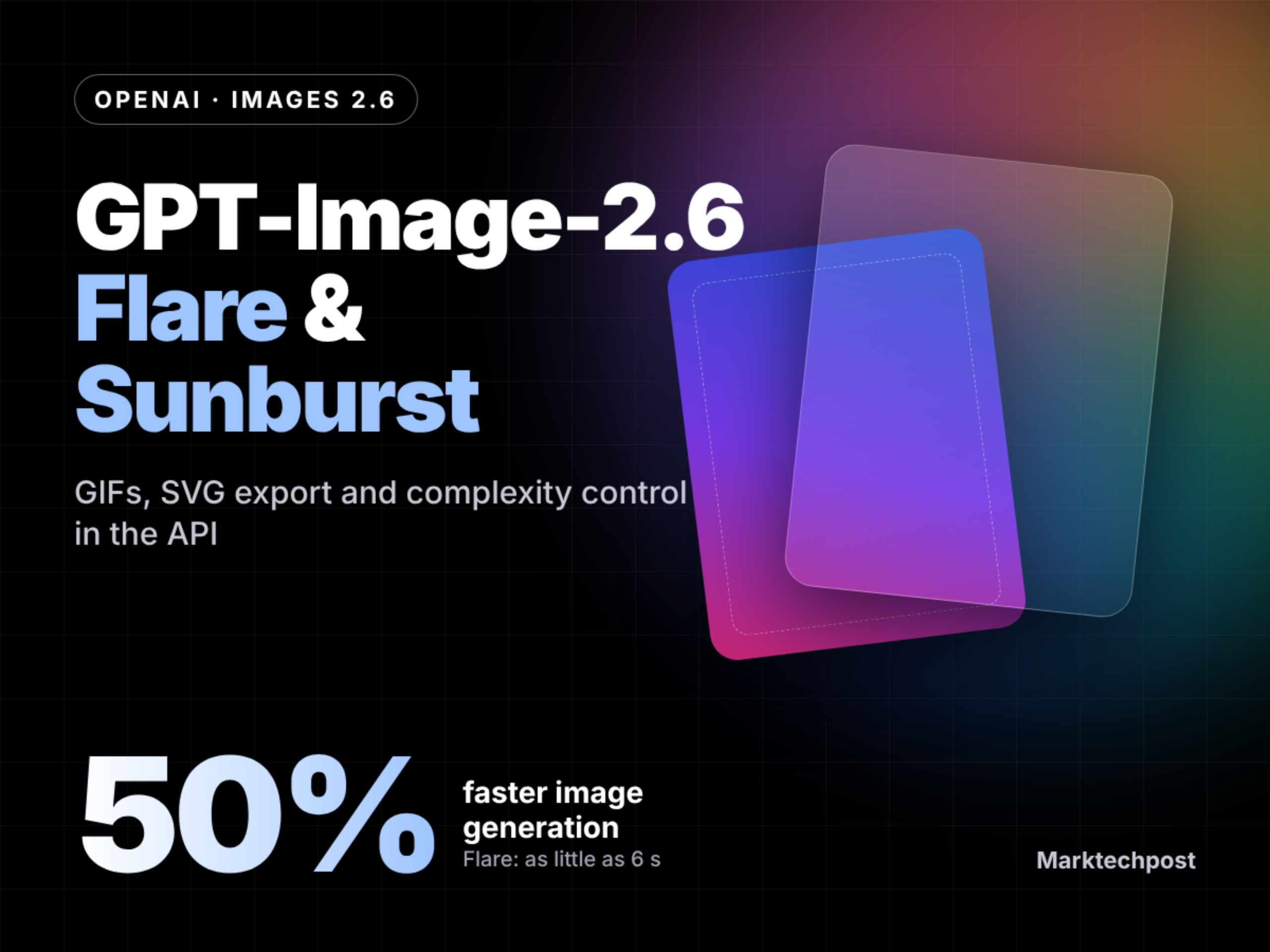
OpenAI Launches GPT-Image-2.6 Flare and Sunburst: Adds GIFs, SVG Export and...
The release of OpenAI's GPT-Image-2.6 update introduces support for GIFs and SVG export, enhancing creative possibilities for users and developers in digital content creation.
- OpenAI has launched GPT-Image-2.6, named Flare and Sunburst.
- The update adds features including GIF support and SVG export.
OpenAI is a leading artificial intelligence company known for its advancements in machine learning and natural language processing. This update follows previous iterations of GPT-Image that focused on generating images from text queries. The enhancements in this version aim to expand the tools available for users in visual content generation.
Based on the headline only — the full article could not be fetched.
Read the original ↗
OpenAI’s Enterprise Sales Take Majority as Brockman Sees IPO Readiness
OpenAI's shift to majority enterprise sales highlights its evolving business model, which may influence its readiness for a potential IPO amid growing competition and investment in AI infrastructure.
- OpenAI President Greg Brockman stated that enterprise sales now account for the majority of the company’s revenue.
- He indicated that OpenAI might be ready for an initial public offering (IPO) in 2027.
- The company reported over 900 million weekly active ChatGPT users, boosting enterprise sales performance.
- Enterprise revenue surpassed earlier expectations, moving beyond 40% contribution earlier this year.
- OpenAI has recently secured $122 billion in funding and expanded its credit facility, enhancing its financial position.
OpenAI is a leading AI research organization known for developing the ChatGPT model. The company's pivot towards enterprise sales reflects its broader strategy to capitalize on growing demand from businesses for AI tools. Observers are watching for OpenAI's possible IPO as competition intensifies in the AI sector, particularly from companies like Anthropic, which may go public sooner.
Read the original ↗
Apple is reportedly cutting budgets for its internal AI usage
These budget cuts may signal a shift in how tech companies allocate resources for AI, impacting innovation and development in the field.
- Apple has reduced the daily spending cap for its engineering teams on AI from $300 to $200, as reported by Bloomberg.
- Further cuts are expected, potentially lowering some spending allowances to $100 a day.
- Outside of engineering, Apple may introduce a daily AI spending limit as low as $25.
- This decision reflects a trend among companies to reconsider AI expenditures amid unclear productivity gains.
Apple has been actively integrating AI into its engineering processes, but reports indicate a significant re-evaluation of its internal AI budget is underway. The tech industry has recently seen companies move from aggressive AI adoption to more cautious spending practices due to financial concerns.
Read the original ↗
OpenAI Pipeline Finds 948 Linux Kernel Privilege Escalation Flaws
Identifying and addressing vulnerabilities in the Linux kernel is crucial for enhancing cybersecurity across numerous systems that rely on this foundational software.
- OpenAI's prototype pipeline discovered 948 unique local privilege escalation vulnerabilities in the Linux kernel during a research run in mid-October 2026.
- The pipeline automates several stages of vulnerability research, including discovery, validation, and patch generation for human review.
- Only 3.1% of the vulnerabilities found were a result of incorrect model analysis, indicating high accuracy in the research process.
The Linux kernel is a critical component of many operating systems, including Android and cloud servers. OpenAI previously reported on vulnerability research that uncovered 24 local privilege escalation exploits. The Daybreak initiative seeks to combine AI and expert review to improve vulnerability management in software systems.
Read the original ↗
Amodei Wins Dismissal of Direct Copyright Claim with Leave to Amend
The dismissal of the direct copyright claim against Dario Amodei allows for potential revision of allegations while addressing broader copyright issues in AI output generation.
- Judge Eumi K. Lee dismissed the direct copyright infringement claim against Anthropic co-founder Dario Amodei on November 4, 2026, with leave to amend.
- The original complaint named Anthropic, Amodei, and Benjamin Mann as defendants, focusing on allegations of copyright infringement through torrenting.
- Amodei's motion argued that the allegations unfairly attributed unlawful copying to him rather than contributory liability to others.
- Anthropic's separate motion sought dismissal of claims regarding output and copyright-management information (CMI), which have not yet been resolved.
Dario Amodei is a co-founder of Anthropic, a company focused on developing AI technologies. The case involves copyright claims related to the use of music lyrics in AI training, which has raised questions about copyright law in the context of machine learning. Future developments will clarify how parties can amend their claims and the viability of ongoing disputes over AI-generated outputs.
Read the original ↗
Cat Wu to Lead Product Management for OpenAI’s Core Products
Cat Wu's appointment to lead product management at OpenAI is significant as it underscores the company's commitment to enhancing user control and scalability in AI development.
- Cat Wu announced her new role in product management for OpenAI's Core Products on November 5, 2026.
- Wu previously worked at Anthropic, where she contributed to the Claude Code project, enhancing AI usage and capabilities.
- Her goal at OpenAI is to develop agents that empower users and facilitate workflows, providing more control and efficiency.
OpenAI is a prominent AI research organization known for creating scalable AI technologies that support millions of users. Wu's background in AI development at Anthropic positions her to further enhance OpenAI's mission of user-centered AI solutions. Future developments may include the implementation of persistent environments for AI agents through the planned Ona integration.
Read the original ↗
Snap has more than 30 million paid subscribers across Snapchat+ and other plans
The growth in Snap's paid subscribers highlights a successful monetization strategy through AI-driven features, showcasing a potential new revenue stream for social media platforms amid advertising challenges.
- Snap has more than 30 million paid subscribers across its various subscription plans, including Snapchat+ and the ad-free Platinum tier.
- The company reported an 84 percent increase in its non-advertising revenue year-over-year during its third-quarter earnings announcement.
- Snapchat+ was launched in 2022, offering users additional features such as insights into story re-watches, followed by Lens+ for AI-powered augmented reality effects.
- Lens+ has seen subscriber growth of nearly 600% since January 2026, indicating strong user interest in its AI features.
- Snapchat currently boasts 977 million monthly users, with a shift to monthly active user reporting set for 2027.
Snap is a multimedia messaging app that includes features like Stories and augmented reality lenses. While traditionally known for its ad revenue, Snap is diversifying its income through subscription plans. Future developments to watch include how they handle legal challenges and expand their subscription services.
Read the original ↗
Disneyland Is Training a Class of AI Robot Interns
The introduction of AI robot interns could enhance operational efficiency and guest experiences at Disneyland, representing significant advancements in robotics applications within theme parks.
- Disneyland is testing AI robot interns designed to assist with parking and backstage operations.
- FieldAI is developing autonomous robots that can guide visitors and collect real-time data without GPS.
- Physical Intelligence (Pi) is deploying robots to help Disney cast members with sorting and managing 3D glasses used in attractions.
Disneyland is collaborating with AI companies to enhance park operations with robotic technology. FieldAI and Pi are leveraging their expertise from other industries to improve guest experiences and staff workflows in the theme park environment.
Read the original ↗
Cult Phone-Maker Nothing’s Mystery Screenless AI Device Is Coming Next Month
The launch of Nothing's first AI-native product next month highlights the growing interest and demand for standalone AI devices designed for productivity.
- Nothing's first standalone AI device is set to launch next month, according to CEO Carl Pei.
- The product will be a screenless tool designed for workplace productivity, emphasizing aesthetics and functionality.
- Standalone AI devices are becoming increasingly prevalent, but a breakout consumer product is still awaited.
Nothing is a British startup known for its stylish audio products and smartphones, catering to consumers seeking alternatives to mainstream brands. The company is now venturing into the standalone AI device market, aiming to merge beauty with functionality in workplace tools.
Read the original ↗
Nothing CEO says company’s mysterious AI-first device is dropping next month
The announcement of a new AI-first device from Nothing may signal a significant shift in personal technology, emphasizing AI's role in enhancing productivity without traditional screen interfaces.
- Nothing's CEO Carl Pei announced that the company's first AI-native product will ship in December.
- The product is described as a screenless tool designed to boost productivity and is distinct from a traditional app.
- Pei has previously teased the development of AI-linked smart glasses and earbuds without confirming their release dates.
Nothing is a smartphone startup known for its unique product designs, such as the Nothing Phone. The CEO's ongoing hints about AI products suggest the company is attempting to innovate within the tech landscape. Observers should watch for the official reveal of this new device and any further announcements related to AI technologies from the company.
Read the original ↗